
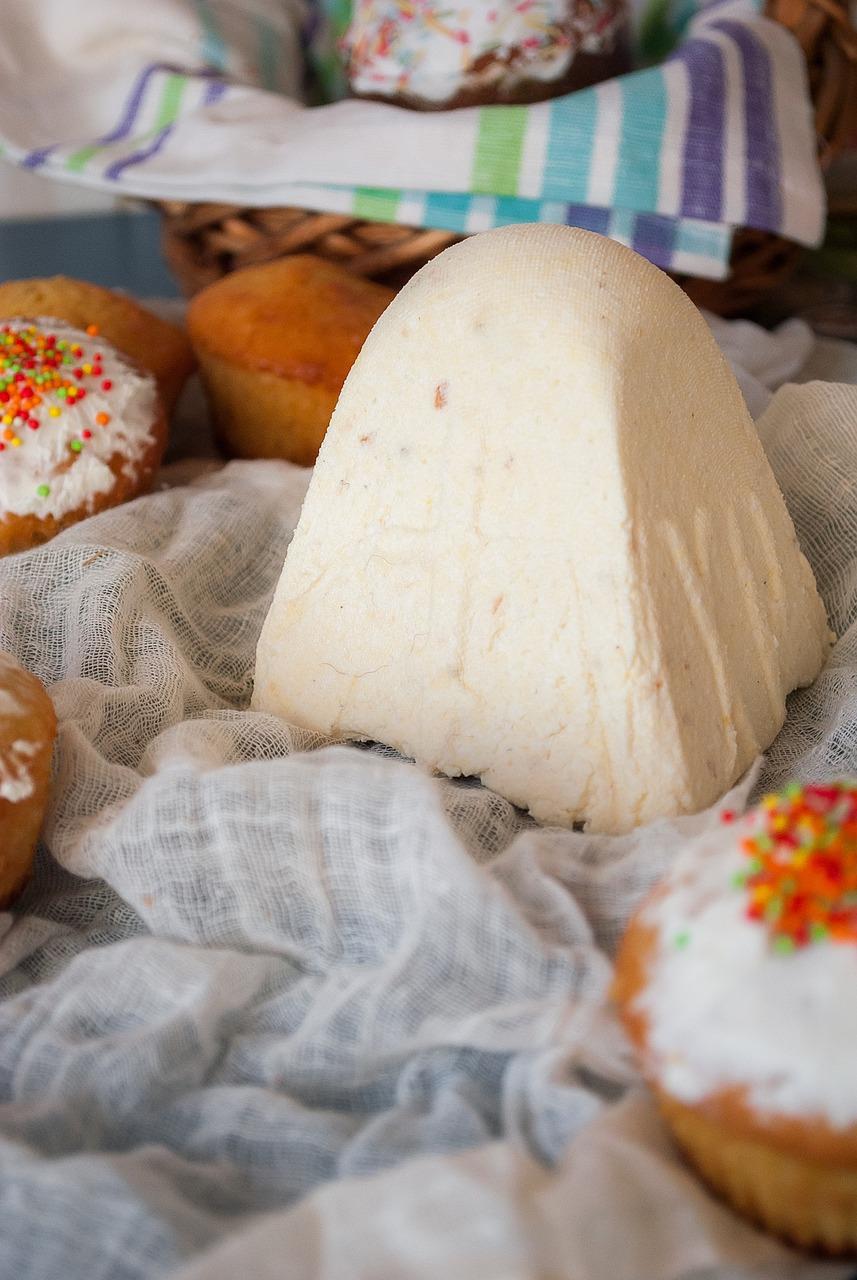
Paskha
Paskha (пасха): pressed Easter pyramid of sweet tvorog custard with butter, cream and dried fruit


Next to the kulich on every Russian Easter table stands a white pyramid stamped with the letters ХВ, for 'Christ is risen', cut into thin wedges and spread on slices of the sweet bread. Old recipes stir raw yolks and cream straight into the curd; this is a cooked paskha (zavarnaya), where yolks, cream and sugar are first heated into a custard, which is safer and keeps longer. Use pasteurised tvorog, cream and eggs, and check the tvorog label if you want it rennet-free. The texture is dense and smooth like a firm cheesecake filling, sweet with vanilla, raisins, candied peel and almonds. Where most people go wrong is skipping the sieving; unsieved curd stays grainy whatever else you do. Chef's tip: no pyramid mould? A new, clean flowerpot or a sieve lined with muslin works, with a weight on top overnight in the fridge.
- Total time
- 700 min
- Difficulty
- medium
- Serves
- 12
Ingredients
For the paskha
- 2 ⅞ oz raisins
- 6 ½ oz caster sugar
- 1 pinch salt
- 5 ½ oz unsalted buttersoftened
- 2 tsp vanilla extract
- 2 ⅛ oz candied peelfinely chopped
- 1 ⅜ oz blanched almondschopped
- 1 lemonfinely grated zest
To decorate
- 1 oz glacé cherries or whole almonds (optional)
Shop this recipe on Amazon
What you'll need
Spices & pantry
Fresh ingredients (4)
Links open Amazon in a new tab. As an Amazon Associate, WhatToEat.Today earns from qualifying purchases.
Method
0/7 doneStep 1: If the 2 ¼ lb full-fat tvorog (farmer's cheese), pasteurised looks wet, drain it in a muslin-lined sieve in the fridge for an hour. Press it through a fine sieve twice, until completely smooth.
20 minStep 2: Pour boiling water over the 2 ⅞ oz raisins, leave for 5 minutes, then drain and dry them well on kitchen paper.
5 minStep 3: Whisk the 4 egg yolks, 6 ½ oz caster sugar and 1 pinch salt in a heavy pan, then whisk in the ¾ cup double cream, pasteurised. Cook over a low heat, stirring constantly, for 8–10 minutes, until the custard thickens, coats the back of a spoon and reaches 176°F. Do not let it boil.
10 minStep 4: Take the pan off the heat and beat in the 5 ½ oz unsalted butter a piece at a time, then the 2 tsp vanilla extract, until smooth. Cool for 10 minutes, until just warm.
10 minStep 5: Beat the custard into the sieved curd in three batches until smooth, then fold in the raisins, 2 ⅛ oz candied peel, 1 ⅜ oz blanched almonds and 1 lemon.
5 minStep 6: Line a paskha mould or a new clean flowerpot with two layers of damp muslin. Fill with the mixture, fold the cloth over, put a saucer and a 1 kg weight on top and stand it on a plate in the fridge for at least 10 hours, ideally overnight; the whey drips out and the paskha firms.
10 minStep 7: Unwrap, turn out onto a plate and peel away the muslin. Decorate with 1 oz glacé cherries or whole almonds. Keep chilled and eat within 4 days.
5 min
Nutrition per serving
- Calories
- 330 kcal
- Protein
- 11 g
- Carbs
- 24 g
- Fat
- 21 g
- Fibre
- 1 g
Nutrition values are estimates.
KrazyBadal
Good to know
- How long does paskha take?
- About 700 minutes in total: 680 minutes to prepare and 20 minutes to cook.
- How many people does it serve?
- 12 as written. Change the servings above the ingredients and every amount scales to match.
- Is it vegetarian?
- Yes. It has no meat or fish.
- Is it gluten free?
- Yes, as written. Check the labels on stock, sauces and spice mixes, which sometimes contain gluten.
- Can I make it ahead?
- Yes. It keeps well, so you can cook it earlier in the day or the day before and reheat it.
- What can I use instead of caster sugar?
- Caster sugar, same amount.
- What can I use instead of double cream, pasteurised?
- Whipping cream, same amount (less rich; whips softer).
Reviews
No reviews yet. Be the first to cook it.
Rate this recipe
Sign in to rate and review this recipe.
You might also like
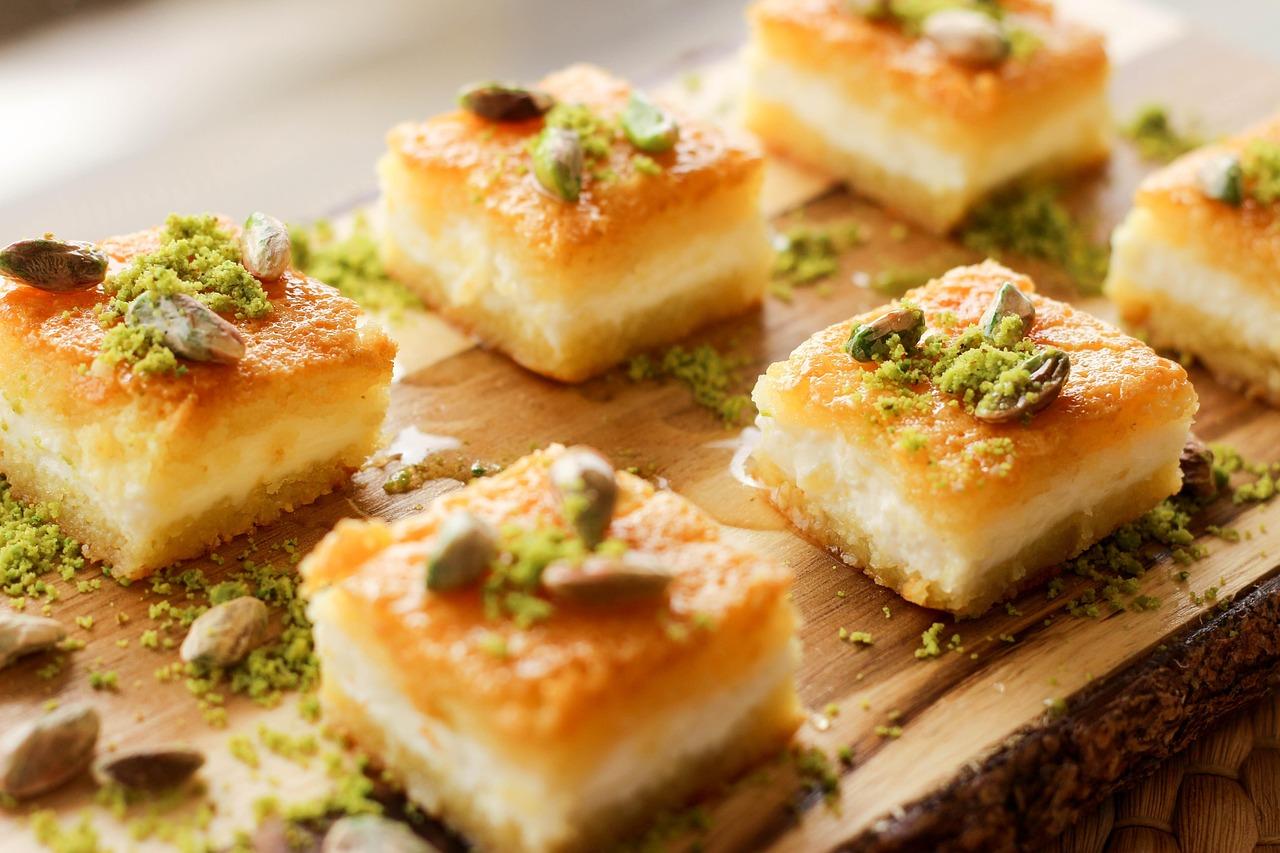
Baklava
The famous layered pastry: crisp sheets of buttered fillo sandwich a filling of almonds, pistachios and cashews spiced with cinnamon, cardamom and saffron. After baking, the hot baklava is soaked in a syrup of sugar, honey, lemon, rose and cardamom and decorated with almond and pistachio flakes. Cut into 40 diamonds; serve with fresh cream or ice cream.

Undu walalu
Walalu means bangles, and these dark, sticky rings of fried urad dal soaked in kithul treacle are a sweet that Sinhala families bring out for Avurudu and for special almsgivings, often made in large batches by an aunt known for her steady hand. A thick, fluffy paste of ground black gram is piped into loops and fried until crisp, then plunged straight into warm treacle, so the rings stay crunchy on the outside while drinking up the syrup. They taste a little like a darker, smokier jalebi, with a toffee finish from the palm treacle. Watery batter is what ruins them; it spreads into flat blobs, so grind the soaked dal with as little water as possible and beat it until light. This recipe uses no asafoetida, so it is naturally gluten free. Chef's tip: pipe the rings onto small squares of baking paper and lower them into the oil paper and all; the paper peels away in seconds.
 Sri Lankan


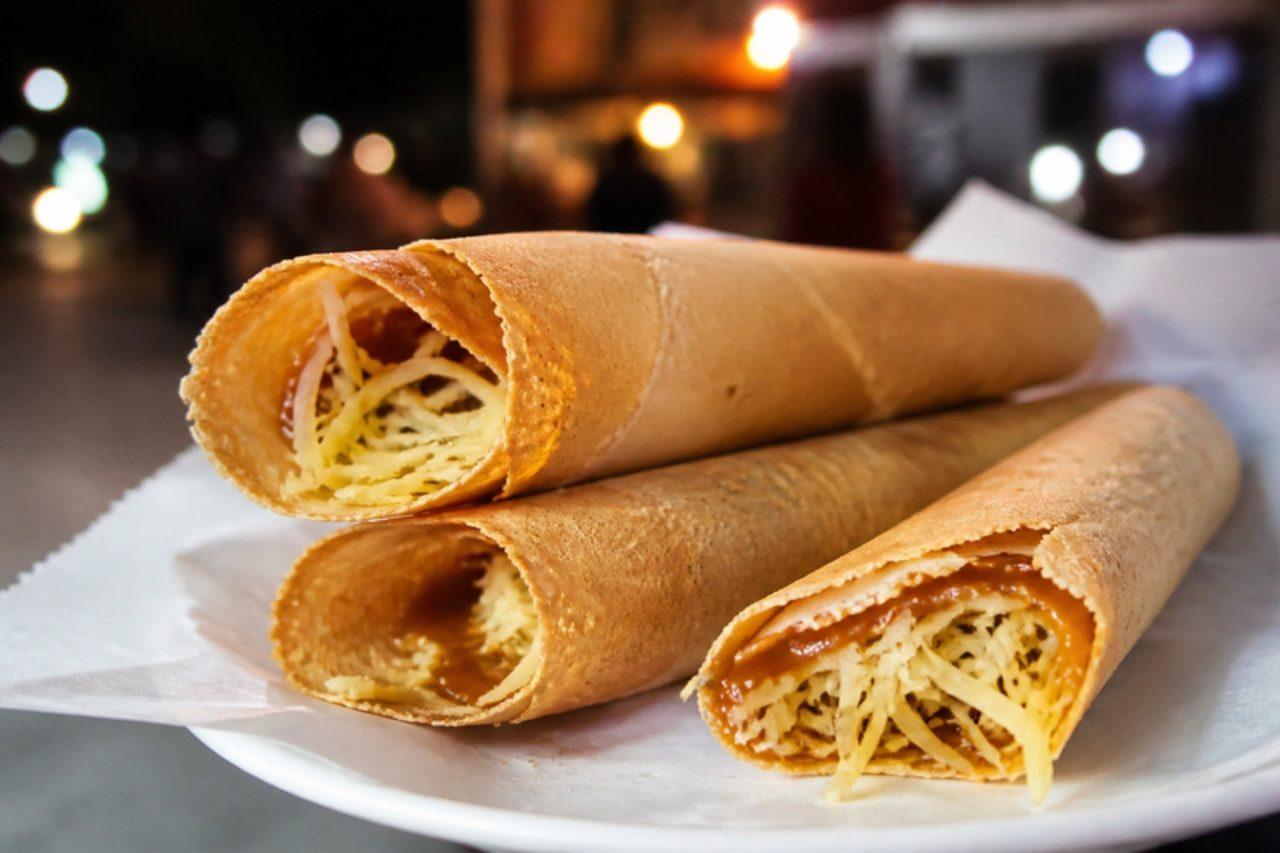
Marquesitas
Evening in Mérida's Plaza Grande means the smell of marquesitas: thin batter pressed in hot hinged irons until crisp, then rolled like a cigar around grated Edam cheese and a sweet filling such as cajeta, chocolate-hazelnut spread or jam. Edam came to the Yucatán through the port trade with the Netherlands and became part of the local cooking, and the salty-sweet combination is the whole point. At home you can cook them in a thin, wide frying pan. Edam is usually made with animal rennet, so check the label or use a vegetarian Gouda-style cheese. Chef's tip: roll while the crêpe is still in the pan and hot; within seconds it hardens and will crack.
 Mexican