
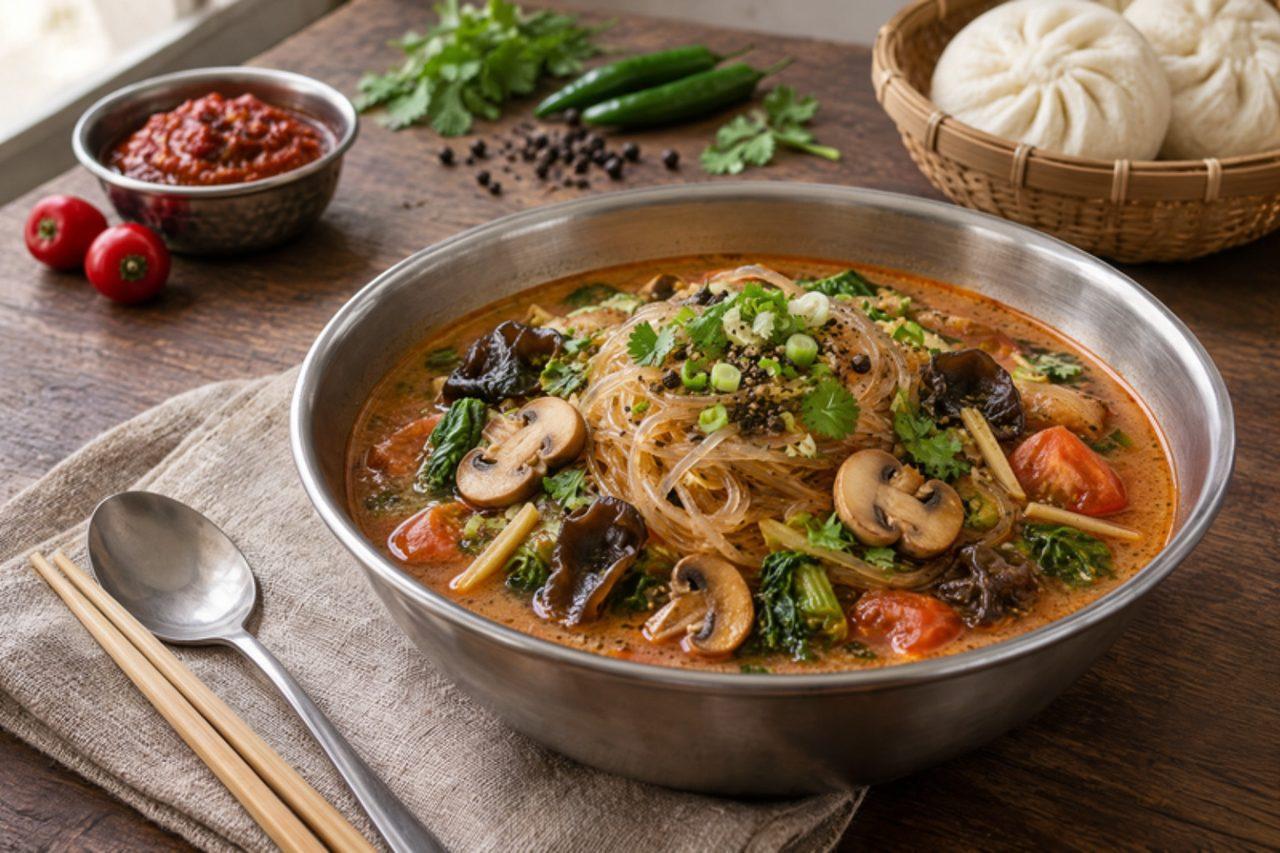
AI-generated image
Phing tarkari
फिंग तरकारी: Sikkimese glass noodles in a light, peppery tomato and mushroom gravy


In Gangtok kitchens phing tarkari turns up beside rice on ordinary weeknights and at Losar and Dashain spreads, the slippery noodles soaking up a thin, gingery gravy studded with mushrooms and greens. Phing are mung-bean glass noodles, and Sikkimese cooks treat them more like a vegetable than pasta, so the dish is spooned over rice rather than eaten as a noodle bowl. The usual mistake is boiling the noodles first: they turn to mush, so only soak them in warm water and let them finish in the gravy for the last few minutes. Chef's tip: snip the soaked noodles into 10 cm lengths with kitchen scissors so they mix evenly and are easy to serve.
- Total time
- 28 min
- Difficulty
- easy
- Serves
- 4
Ingredients
For the tarkari
- 2 tbsp mustard or sunflower oil
- 1 onionthinly sliced
- 1 tbsp gingergrated
- 3 garlic cloveschopped
- 2 green chilliesslit
- 2 tomatoeschopped
- ½ tsp ground turmeric
- 5 ½ oz button or shiitake mushroomssliced
- 3 ½ oz spinach or mustard greensroughly chopped
- 1 ¾ cups hot water
- 1 tsp salt
- 2 spring onions (optional)sliced
Shop this recipe on Amazon
Spices & pantry
Fresh ingredients (7)
Links open Amazon in a new tab. As an Amazon Associate, WhatToEat.Today earns from qualifying purchases.
Method
0/7 doneStep 1: Cover 3 ½ oz glass noodles (mung bean vermicelli) with warm (not boiling) water and soak until soft and pliable but still springy. Drain and cut into 10 cm lengths.
10 minStep 2: Heat 2 tbsp mustard or sunflower oil in a wide pan over medium heat. Fry 1 onion until soft and golden at the edges.
5 minStep 3: Add 1 tbsp ginger, 3 garlic cloves and 2 green chillies and stir for 1 minute until the raw smell goes.
1 minStep 4: Add 2 tomatoes, ½ tsp ground turmeric and 1 tsp salt. Cook, pressing the tomatoes with the spoon, until they collapse into a loose sauce.
4 minStep 5: Add 5 ½ oz button or shiitake mushrooms and cook until they release their juices and shrink a little.
3 minStep 6: Pour in 1 ¾ cups hot water and bring to a simmer. Stir in 3 ½ oz spinach or mustard greens and 3 ½ oz glass noodles (mung bean vermicelli) and cook just until the noodles turn glassy and the greens wilt; the gravy should stay thin and soupy.
3 minStep 7: Season with ½ tsp black pepper or ground timur, scatter over 2 spring onions and serve hot with steamed rice.
1 min
Nutrition per serving
- Calories
- 190 kcal
- Protein
- 4 g
- Carbs
- 30 g
- Fat
- 7 g
- Fibre
- 3 g
Nutrition values are estimates.
KrazyBadal
Good to know
- How long does phing tarkari take?
- About 28 minutes in total: 10 minutes to prepare and 18 minutes to cook.
- How many people does it serve?
- 4 as written. Change the servings above the ingredients and every amount scales to match.
- Is it vegan?
- Yes. It has no meat, fish, dairy or eggs.
- What can I use instead of onion?
- 2 shallots per onion.
- What can I use instead of garlic cloves?
- ½ tsp garlic paste or ⅛ tsp garlic powder per clove.
Reviews
No reviews yet. Be the first to cook it.
Rate this recipe
Sign in to rate and review this recipe.
You might also like

Boiled pasta
The basic method for any dried pasta, from penne to spaghetti. A large pan of salted boiling water keeps the pasta from sticking, and you cook it only until just done, with a little bite left. Use it in salads, bakes or with any sauce.
 Italian


Masala khakhra
Khakhra are thin chapaties roasted slowly on a griddle until they turn crisp, like a cracker. This masala version adds gram flour, fresh fenugreek, turmeric and chilli to the wheat dough. They are a light Gujarati breakfast or tea-time snack, and lovely with pickle, chutney or a smear of butter. You can also make them in a roti maker.

Sabudana khichdi
Sabudana khichdi is the dish that sees Maharashtra through every vrat (fast), from Navratri to Ekadashi, but it's so good that people eat it any day of the week. Soaked sago pearls are tossed in a pan with crushed roasted peanuts, cubes of potato, cumin and green chilli until each pearl turns glassy and separate, then finished with lemon and coriander. It's soft, chewy, nutty and gently hot. Fasting rules vary from family to family, so check yours; this version uses rock salt and no asafoetida, onion or garlic. Traditionally it's cooked in ghee; use ghee instead of oil if you aren't keeping it vegan. Chef's tip: soak the sago in just enough water to cover by the height of the pearls themselves, no more; too much water is the reason khichdi turns into one sticky lump.
