
AI-generated image
Pirarucu de casaca
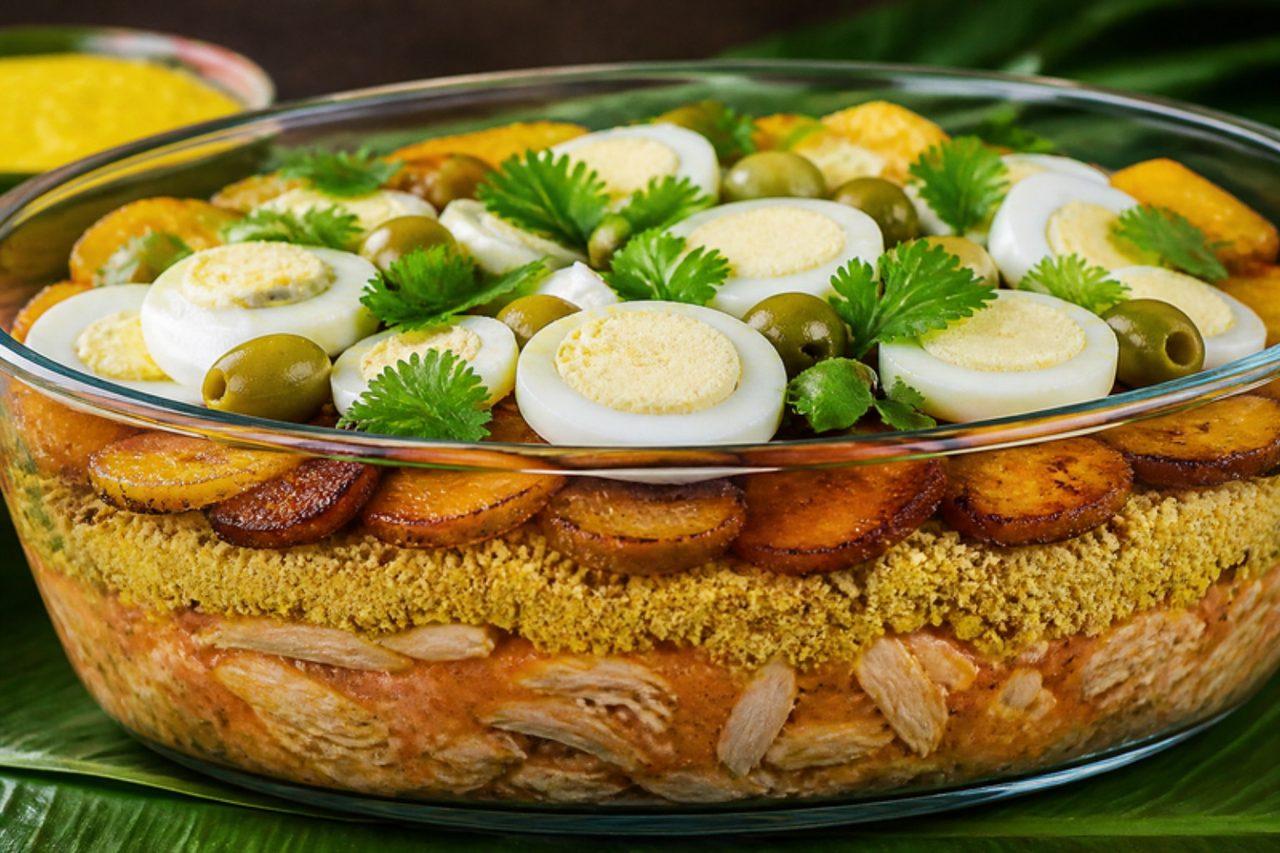
Pirarucu de casaca: layers of shredded dried pirarucu, farofa, fried plantain and raisins
 Brazilian
A party dish from Manaus and the Amazonas interior, pirarucu de casaca (pirarucu in a coat) is built in a big dish for birthdays and Christmas: a bed of buttery-looking farofa, a layer of shredded salt pirarucu cooked with tomato and coconut milk, golden slices of fried plantain, more farofa, and a scattering of raisins, olives, egg and herbs. Each spoonful is salty, sweet and crunchy at once. Pirarucu, the giant Amazon fish, is sold salted and dried like cod; salt cod is the easy substitute. Allow 24 hours to soak the fish in the fridge. A common slip-up is under-soaking, which makes the dish too salty to eat; taste a flake before you cook. Chef's tip: use very ripe, black-skinned plantain, fried slowly, so it caramelises and balances the salt of the fish.
- Total time
- 85 min
- Difficulty
- medium
- Serves
- 6
Ingredients
For the fish
For the farofa
For the layers
Shop this recipe on Amazon
Spices & pantry
Fresh ingredients (8)
Links open Amazon in a new tab. As an Amazon Associate, WhatToEat.Today earns from qualifying purchases.
Method
0/8 doneStep 1: Drain 1 ⅓ lb salted dried pirarucu, cover with fresh water in a pan, bring to the boil and simmer for 10 minutes until it flakes. Drain, cool, then shred finely, removing skin and bones.
15 minStep 2: Heat 4 tbsp olive oil in a frying pan over a medium heat and soften 1 onion, 3 cloves garlic, 2 tomatoes and 1 green pepper for 8 minutes.
8 minStep 3: Add the fish and ¾ cup coconut milk and cook for 5 minutes, stirring, until moist but not wet. Stir in 3 tbsp fresh coriander.
5 minStep 4: For the farofa, heat 5 tbsp vegetable oil in a wide pan over a medium heat, fry 1 onion for 4 minutes, then add 10 ½ oz farinha de mandioca and ½ tsp salt and toast for 5 minutes, stirring, until golden and sandy.
9 minStep 5: Fry 2 very ripe plantains in 4 tbsp vegetable oil on a medium-low heat for 3–4 minutes a side until deep golden and soft.
8 minStep 6: Heat the oven to 350°F (325°F fan). In a 30 x 20 cm dish, spread half the farofa, then the fish, then the plantain, then the rest of the farofa.
Step 7: Scatter over 1 ¾ oz raisins, 2 ⅛ oz green olives and 3 eggs and bake for 15 minutes until hot right through.
15 minStep 8: Finish with 3 spring onions and serve warm with white rice and a green salad.
Nutrition per serving
- Calories
- 560 kcal
- Protein
- 32 g
- Carbs
- 58 g
- Fat
- 22 g
- Fibre
- 5 g
Nutrition values are estimates.
KrazyBadal
Good to know
- How long does pirarucu de casaca take?
- About 85 minutes in total: 40 minutes to prepare and 45 minutes to cook.
- How many people does it serve?
- 6 as written. Change the servings above the ingredients and every amount scales to match.
- What can I use instead of onion?
- 2 shallots per onion.
- What can I use instead of garlic?
- ½ tsp garlic paste or ⅛ tsp garlic powder per clove.
Reviews
No reviews yet. Be the first to cook it.
Rate this recipe
Sign in to rate and review this recipe.
You might also like
Singapore chilli crab
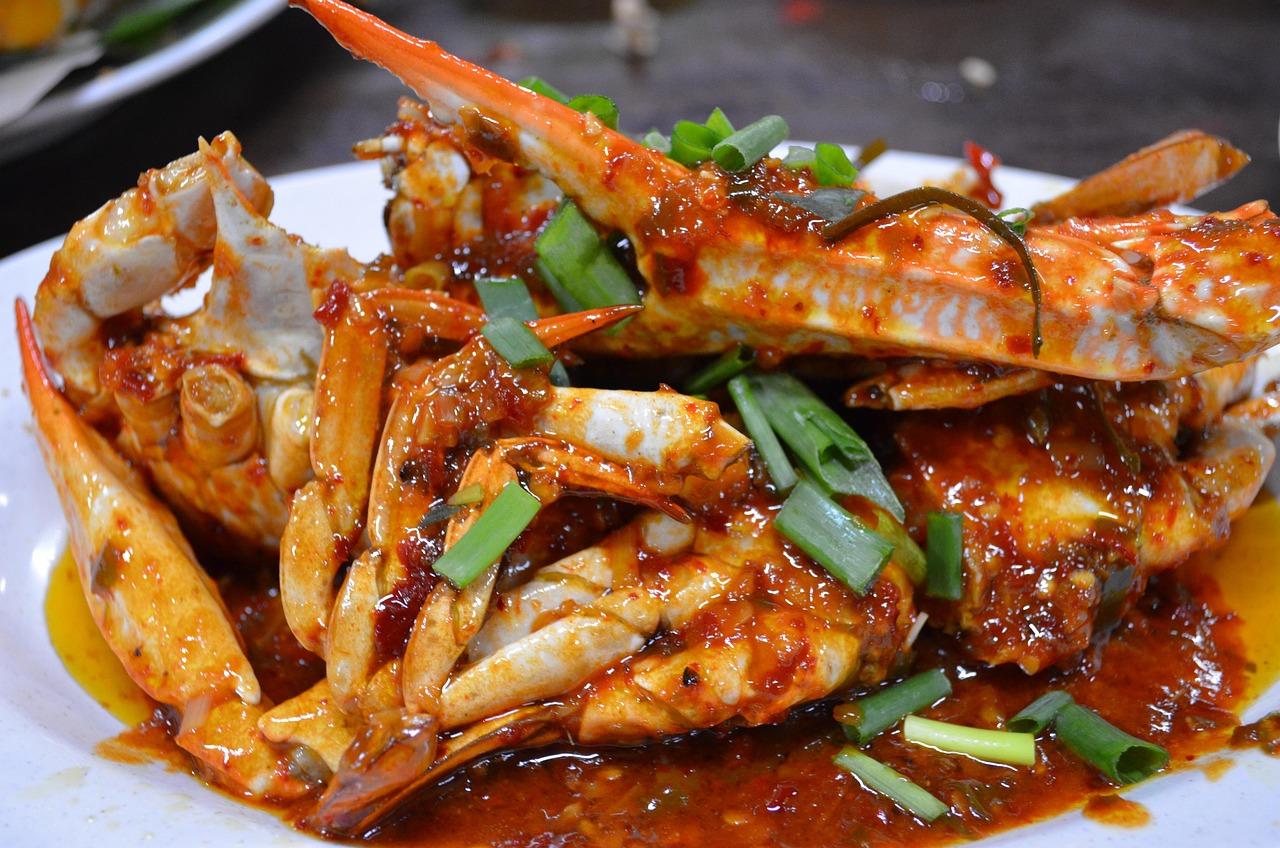
Chilli crab was first sold from a pushcart on the Kallang river in the 1950s and is now the dish visitors queue for along Singapore's East Coast seafood strip. Big mud crabs are cut up, wok-fried and simmered in a thick, sweet, tangy and gently hot sauce of chilli, tomato and garlic, which is then silked with beaten egg. Everyone eats with their hands and mops up the sauce with fried or steamed mantou buns. It is a weekend or celebration meal, messy and loud. Buy crabs live or freshly cooked the same day from a fishmonger you trust. Discard any live crab that doesn't move, smells of ammonia or has a cracked, leaking shell. The common mistake is boiling the sauce after adding the egg, which scrambles it into lumps; pour it in a thin stream over a low heat. Chef's tip: ask the fishmonger to clean and quarter the crab for you, and crack each claw lightly with the back of a cleaver so the sauce soaks in.
 Singaporean

Pão de queijo
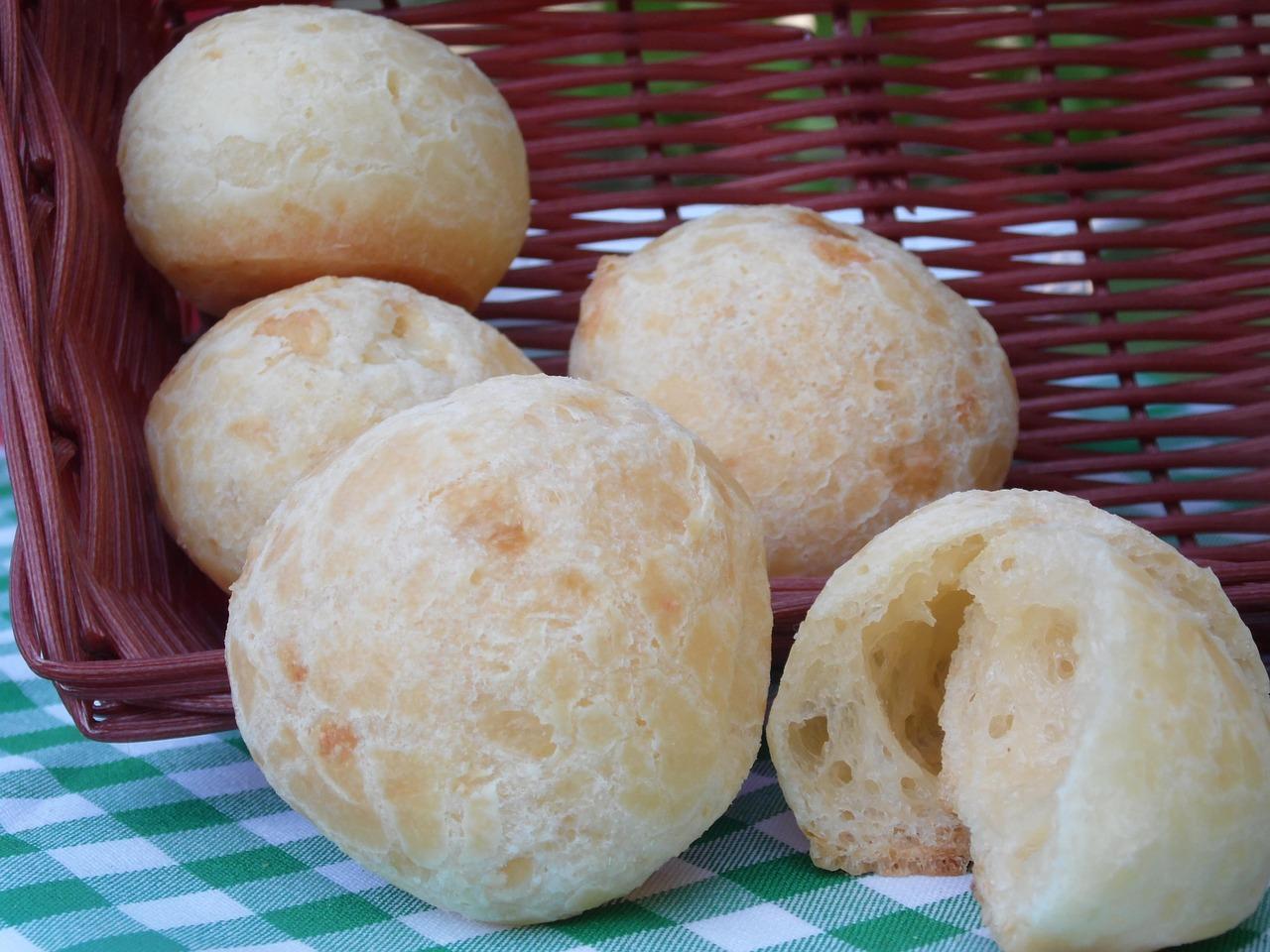
Pão de queijo comes from Minas Gerais, where every café and grandmother's kitchen has a tray in the oven for breakfast or afternoon coffee. Made with cassava starch (polvilho) instead of wheat flour, the little rolls are crisp and golden outside and stretchy, cheesy and almost hollow inside. Mineiros use queijo minas meia-cura; a mix of Parmesan-style cheese and mozzarella is the closest match elsewhere. Chef's tip: pour the boiling milk and oil over the starch (escaldar). Scalding cooks part of the starch, and that's what gives the chewy, elastic inside; and use some sour starch (polvilho azedo), which makes them puff up tall.


Limonada suíça
Limonada suíça is the creamy, frothy limeade served in juice bars and lunch counters all over Brazil. Despite the name ('Swiss lemonade'), nobody knows of any Swiss link, and it's made with whole Tahiti limes, blended briefly, skin and all, then strained and sweetened with condensed milk. It's cold, zingy and pale green, perfect with a hot lunch. Chef's tip: blend for no more than 10–15 seconds. Lime peel gives the drink its wonderful perfume, but blended too long it releases bitterness from the pith; serve it straight away for the same reason.