
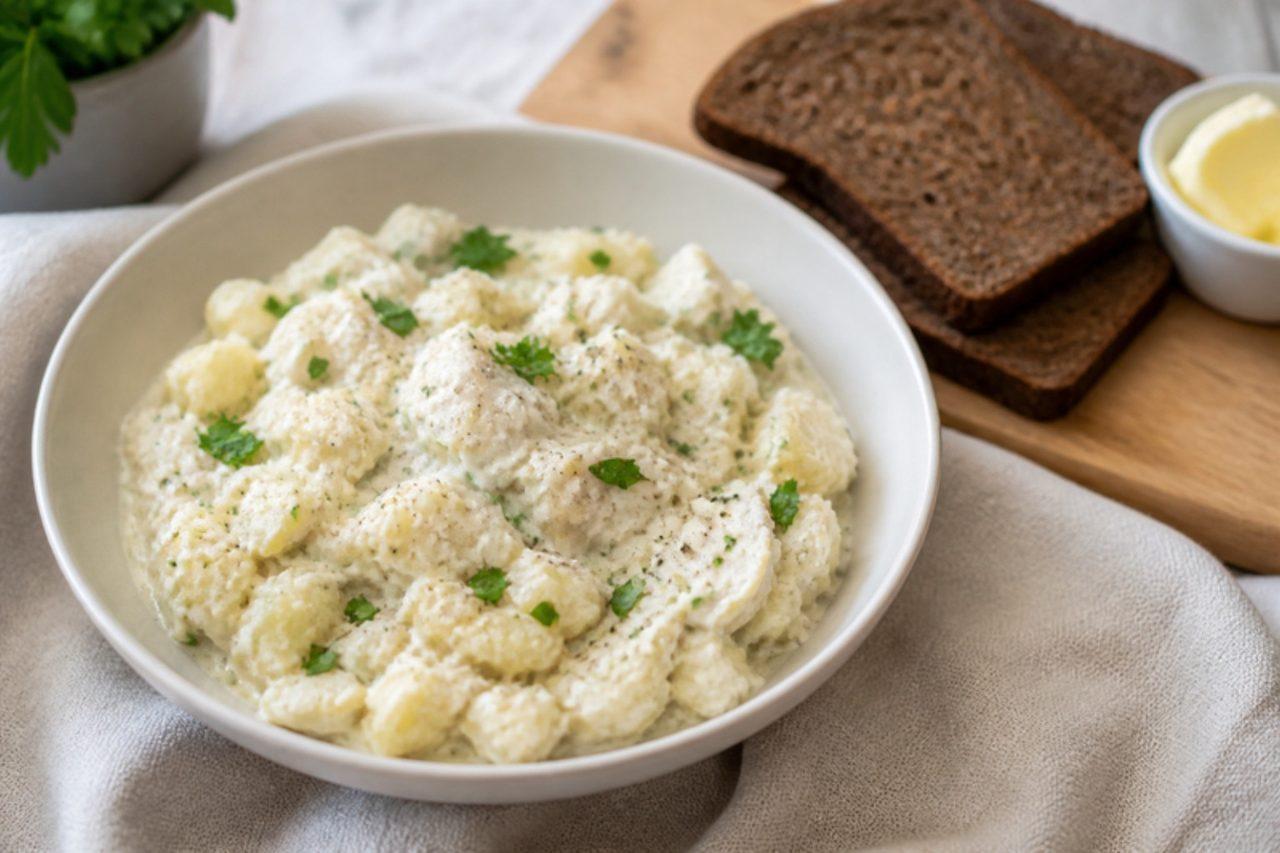
AI-generated image
Plokkfiskur
Plokkfiskur: Icelandic flaked cod and potato in a creamy white sauce
Plokkfiskur, 'picked fish', is the thrifty Icelandic way to use leftover boiled cod or haddock: the fish is flaked and folded with potatoes into a thick, peppery white sauce with onion, then eaten with dark, sweet rúgbrauð (rye bread) and butter. Reykjavík cafés serve it at lunch, and every Icelandic home makes it on Monday after Sunday's fish. A common mistake is mashing the fish into paste; it should stay in flakes. Chef's tip: lots of black pepper and a little chopped chives lift it, and a grating of cheese browned under the grill makes a fine variation. The fish should be opaque and flaking before it goes into the sauce.
- Total time
- 40 min
- Difficulty
- easy
- Serves
- 4
Ingredients
For the fish
- 1 ⅛ lb cod or haddock fillet
- 1 ⅛ lb potatoespeeled
- 6 ¼ cups water
- 1 tsp salt
For the sauce
- 1 ⅜ oz butter
- 1 onionfinely chopped
- 1 oz plain flour
- 1 ¾ cups whole milk
- 1 tsp black pepper
- ⅛ oz fresh chiveschopped
To serve
- 4 slices dark rye breadbuttered
Shop this recipe on Amazon
Fresh ingredients (4)
Links open Amazon in a new tab. As an Amazon Associate, WhatToEat.Today earns from qualifying purchases.
Method
0/5 doneStep 1: Boil 1 ⅛ lb potatoes for 15–20 minutes, until tender, then dice.
20 minStep 2: Poach 1 ⅛ lb cod or haddock fillet in 6 ¼ cups water with 1 tsp salt for 6–8 minutes, until opaque and flaking. Drain and break into large flakes.
8 minStep 3: Soften 1 onion in 1 ⅜ oz butter for 5 minutes. Stir in 1 oz plain flour, then whisk in 1 ¾ cups whole milk and simmer for 4 minutes until thick.
9 minStep 4: Fold in the potatoes and fish gently with 1 tsp black pepper. Common mistake: mashing it to paste.
Step 5: Scatter with ⅛ oz fresh chives and serve with 4 slices dark rye bread.
Nutrition per serving
- Calories
- 420 kcal
- Protein
- 30 g
- Carbs
- 36 g
- Fat
- 17 g
- Fibre
- 3 g
Nutrition values are estimates.
KrazyBadal
Good to know
- How long does plokkfiskur take?
- About 40 minutes in total: 15 minutes to prepare and 25 minutes to cook.
- How many people does it serve?
- 4 as written. Change the servings above the ingredients and every amount scales to match.
- What can I use instead of potatoes?
- Sweet potato, same weight (sweeter, cooks a little faster).
- What can I use instead of butter?
- The same weight of ghee or coconut oil (for frying and most baking).
Reviews
No reviews yet. Be the first to cook it.
Rate this recipe
Sign in to rate and review this recipe.
You might also like
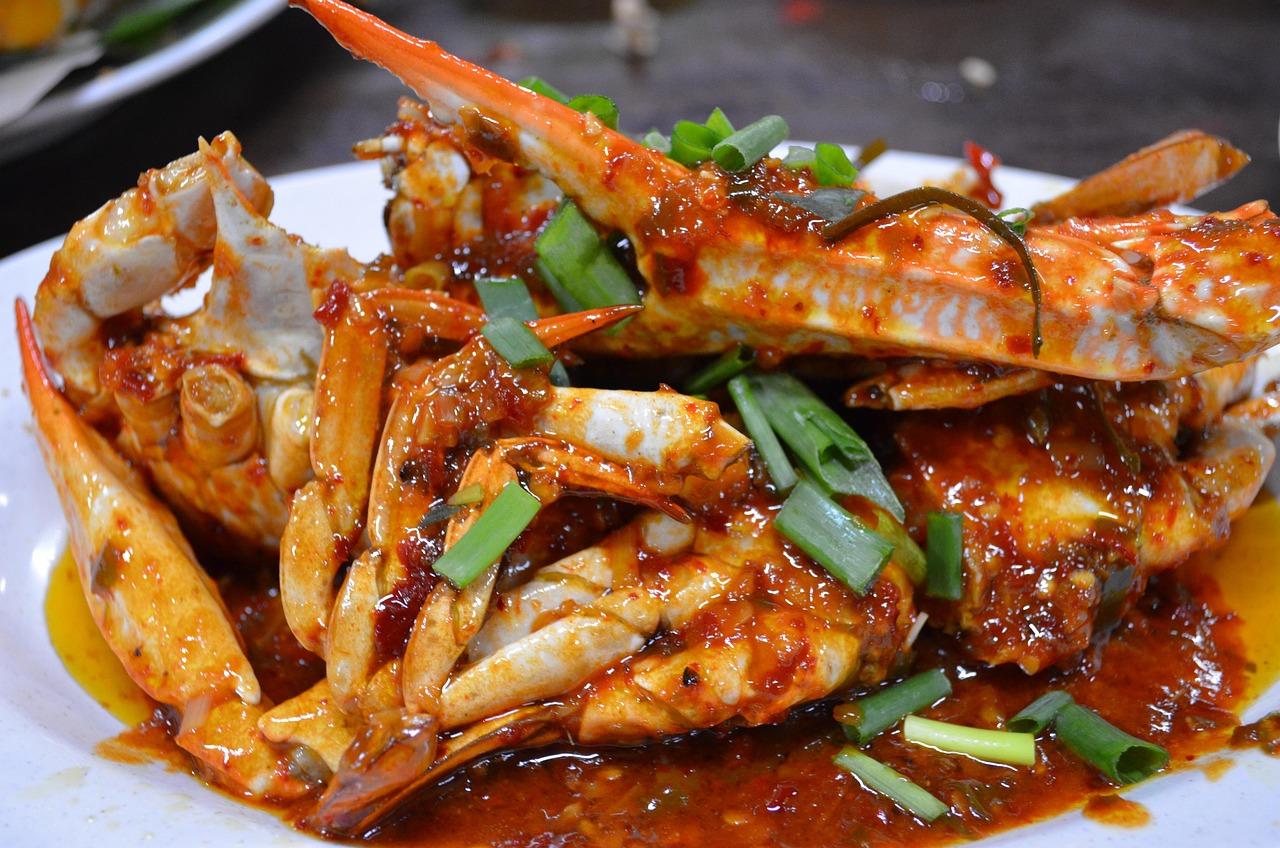
Singapore chilli crab
Chilli crab was first sold from a pushcart on the Kallang river in the 1950s and is now the dish visitors queue for along Singapore's East Coast seafood strip. Big mud crabs are cut up, wok-fried and simmered in a thick, sweet, tangy and gently hot sauce of chilli, tomato and garlic, which is then silked with beaten egg. Everyone eats with their hands and mops up the sauce with fried or steamed mantou buns. It is a weekend or celebration meal, messy and loud. Buy crabs live or freshly cooked the same day from a fishmonger you trust. Discard any live crab that doesn't move, smells of ammonia or has a cracked, leaking shell. The common mistake is boiling the sauce after adding the egg, which scrambles it into lumps; pour it in a thin stream over a low heat. Chef's tip: ask the fishmonger to clean and quarter the crab for you, and crack each claw lightly with the back of a cleaver so the sauce soaks in.
 Singaporean


Lussekatter
Before dawn on 13 December, Lucia Day, children in white gowns walk through Swedish homes, schools and offices carrying candles and trays of lussekatter: golden saffron buns twisted into an S with a raisin in each curl. The saffron colour and the light are meant to chase away the darkest days of winter. A common mistake is adding the saffron dry, which leaves the buns pale and streaky. Chef's tip: grind the saffron with a sugar cube and melt it into the warm butter and milk, so the colour spreads evenly.
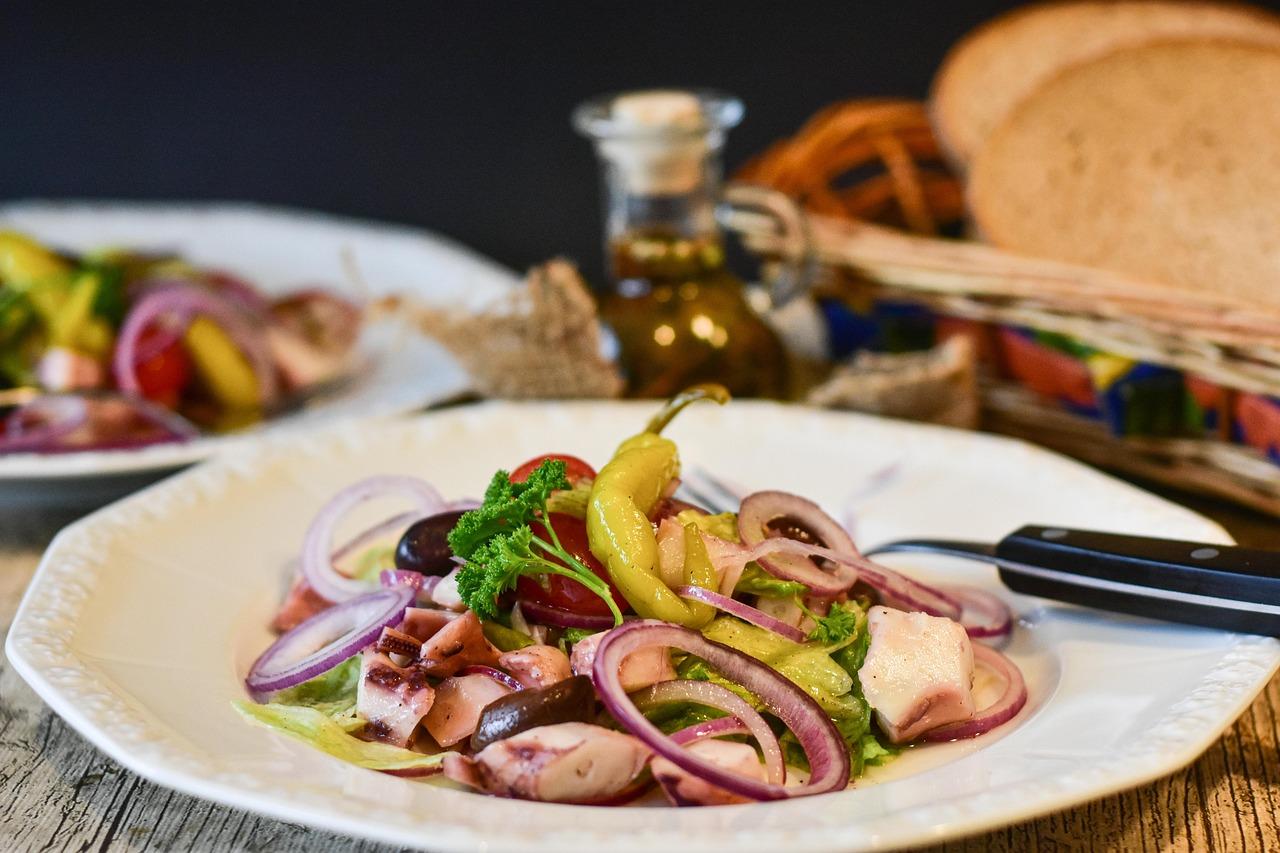
Tunisian octopus salad
Fishermen of the Kerkennah islands, off Sfax, still catch octopus in clay pots laid on the shallow seabed, and in winter the season's catch turns up in harbour cafés and home kitchens as this simple salad. The octopus is simmered slowly until tender, cooled in its broth, then sliced and tossed with red onion, plenty of parsley, lemon juice and good olive oil, with a little harissa if you like. It is light, clean and briny, eaten as a starter with bread or on a summer table of salads and grilled fish. Buy octopus from a reputable fishmonger; frozen and thawed octopus is often more tender than fresh. A common mistake is boiling the octopus at a rolling boil, which makes it rubbery; keep it at a gentle simmer until a knife slides in easily. Chef's tip: let the cooked octopus cool in its cooking liquid for 20 minutes before slicing; it stays juicy rather than tightening up.
 Tunisian
