
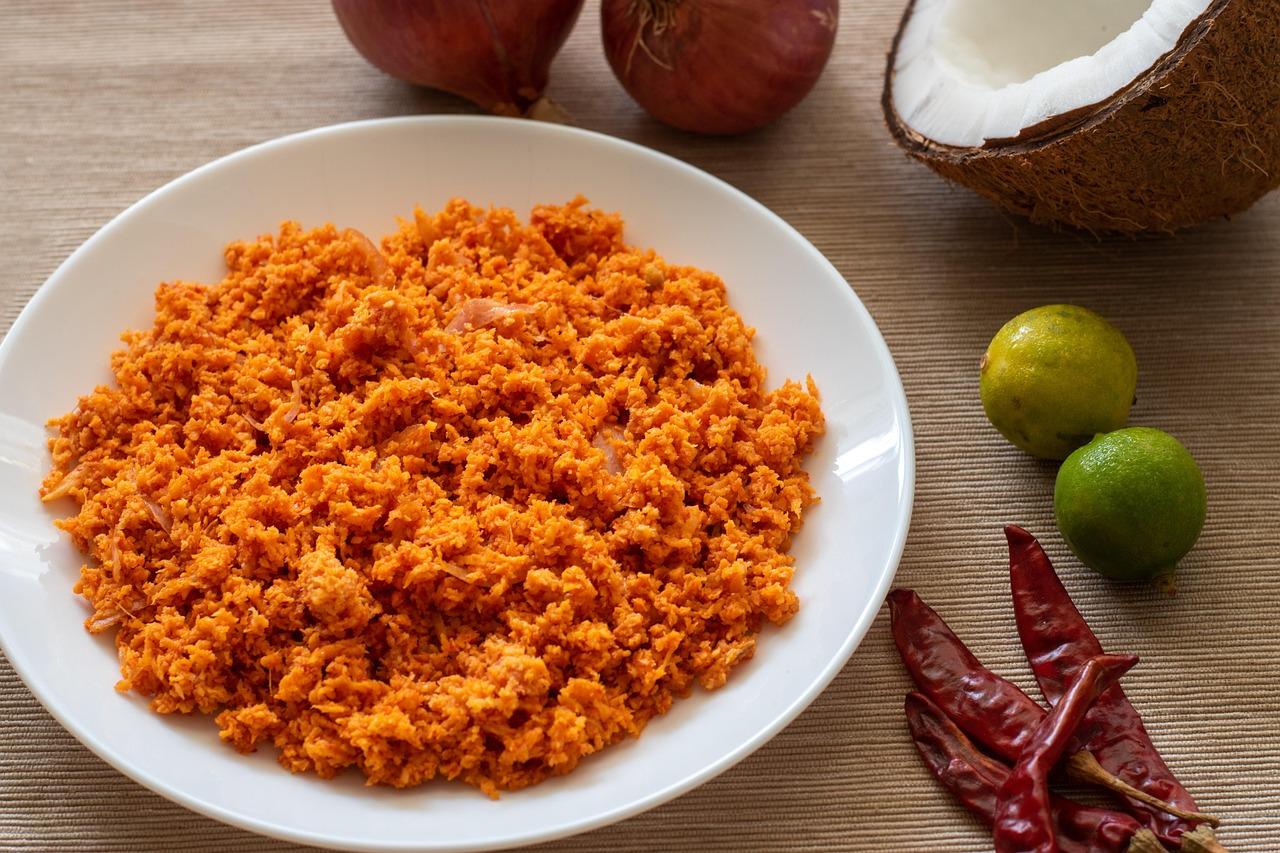
Pol sambol
Coconut and chilli relish
Pol sambol: freshly grated coconut rubbed with chilli, red onion and lime, Sri Lanka's favourite relish



Pol sambol sits on the table at almost every Sri Lankan meal, from breakfast hoppers and string hoppers in a Kandy home to a rice packet bought at a roadside kade. Grandmothers grind it on a stone (miris gala) so the chilli and onion bruise into the coconut, and it turns a bright brick red, hot, sour and salty all at once. Most island recipes add a spoonful of Maldive fish (dried tuna flakes); we leave it out to keep it vegetarian and add a little extra onion and lime for depth. A common mistake is using dried desiccated coconut straight from the packet, which tastes dusty; fresh or frozen grated coconut gives the proper moist texture. Chef's tip: rub the chilli, onion and salt together first with your fingers until they turn juicy, then work in the coconut so every flake turns red.
- Total time
- 10 min
- Difficulty
- easy
- Serves
- 4
Ingredients
- 5 ½ oz freshly grated coconutfresh or thawed frozen
- ½ red onionvery finely chopped (or 4 shallots)
- 2 tsp dried red chilli flakesSri Lankan or Kashmiri; use less for mild
- ½ tsp chilli powder
- 2 tbsp lime juiceabout 1 lime
- ¾ tsp salt
- ¼ tsp ground black pepper (optional)
Shop this recipe on Amazon
What you'll need
Spices & pantry
Fresh ingredients (2)
Links open Amazon in a new tab. As an Amazon Associate, WhatToEat.Today earns from qualifying purchases.
Method
0/4 doneStep 1: Put ½ red onion, 2 tsp dried red chilli flakes, ½ tsp chilli powder and ¾ tsp salt in a mixing bowl. Rub them together with your fingertips (wear a glove if you're sensitive) for about 1 minute, until the onion softens and starts to look wet and red.
1 minStep 2: Add 5 ½ oz freshly grated coconut and keep rubbing and squeezing for 2–3 minutes. Every shred should turn an even orange-red and the mixture should feel moist and hold together loosely when pressed. Don't use a food processor on full speed: it turns the coconut to paste.
3 minStep 3: Squeeze in 2 tbsp lime juice and add ¼ tsp ground black pepper if using. Mix, taste and adjust: it should be hot, sharp and salty, with the sweetness of the coconut coming through.
Step 4: Serve straight away with hoppers, string hoppers, kiri bath, bread or rice and parippu. It's best the day it is made; keep any leftovers covered in the fridge and use within a day.
Nutrition per serving
- Calories
- 150 kcal
- Protein
- 2 g
- Carbs
- 7 g
- Fat
- 13 g
- Fibre
- 4 g
Nutrition values are estimates.
KrazyBadal
Good to know
- How long does pol sambol take?
- About 10 minutes in total.
- How many people does it serve?
- 4 as written. Change the servings above the ingredients and every amount scales to match.
- Is it vegan?
- Yes. It has no meat, fish, dairy or eggs.
- Is it gluten free?
- Yes, as written. Check the labels on stock, sauces and spice mixes, which sometimes contain gluten.
- Is it very spicy?
- It has some heat. Use less chilli for a milder version, or more if you like it hot.
- What can I use instead of red onion?
- White onion or shallots, same amount (soak raw onion in cold water for 10 minutes to soften it).
- What can I use instead of chilli powder?
- Cayenne, half the amount (hotter).
Reviews
No reviews yet. Be the first to cook it.
Rate this recipe
Sign in to rate and review this recipe.
You might also like
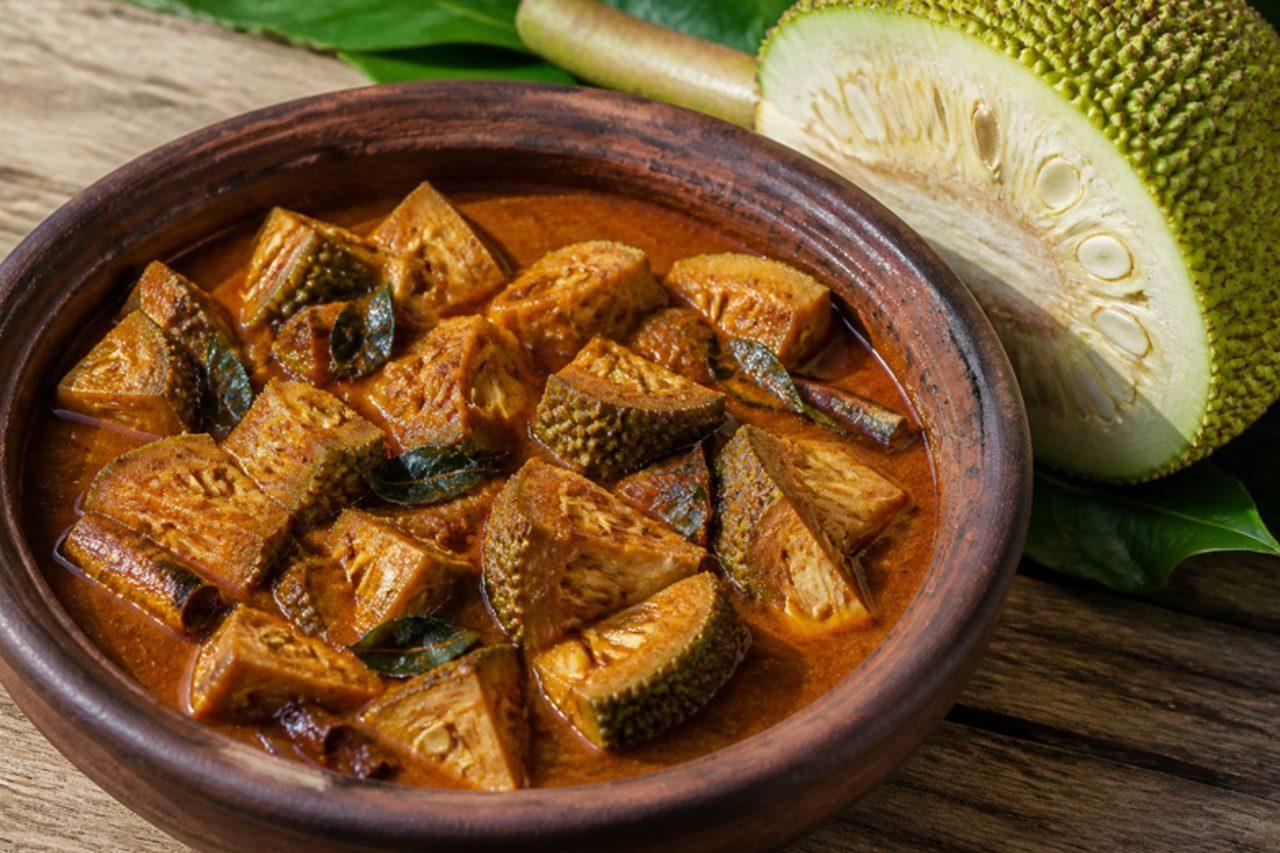
Polos curryYoung green jackfruit curry
Polos is the tiny unripe jackfruit picked in the Western and Sabaragamuwa provinces long before it sweetens, and cooked low and slow it becomes one of the island's most loved festival curries, especially at Sinhala and Tamil New Year in April and at wedding lunches. The firm, pale flesh soaks up a very dark roasted curry powder, garlic, ginger, goraka (a smoky souring fruit) and coconut milk until it turns almost black-brown and tastes rich, sour and meaty. Fresh polos is hard to find abroad; tinned young green jackfruit in brine works well. A frequent mistake is not cooking it long enough, which leaves it squeaky; the pieces must be soft enough to break with a spoon. Chef's tip: oil your hands and knife before cutting fresh jackfruit; the sticky white sap washes off oiled skin but not dry skin.



Undu walaluFried urad dal rings in treacle
Walalu means bangles, and these dark, sticky rings of fried urad dal soaked in kithul treacle are a sweet that Sinhala families bring out for Avurudu and for special almsgivings, often made in large batches by an aunt known for her steady hand. A thick, fluffy paste of ground black gram is piped into loops and fried until crisp, then plunged straight into warm treacle, so the rings stay crunchy on the outside while drinking up the syrup. They taste a little like a darker, smokier jalebi, with a toffee finish from the palm treacle. Watery batter is what ruins them; it spreads into flat blobs, so grind the soaked dal with as little water as possible and beat it until light. This recipe uses no asafoetida, so it is naturally gluten free. Chef's tip: pipe the rings onto small squares of baking paper and lower them into the oil paper and all; the paper peels away in seconds.
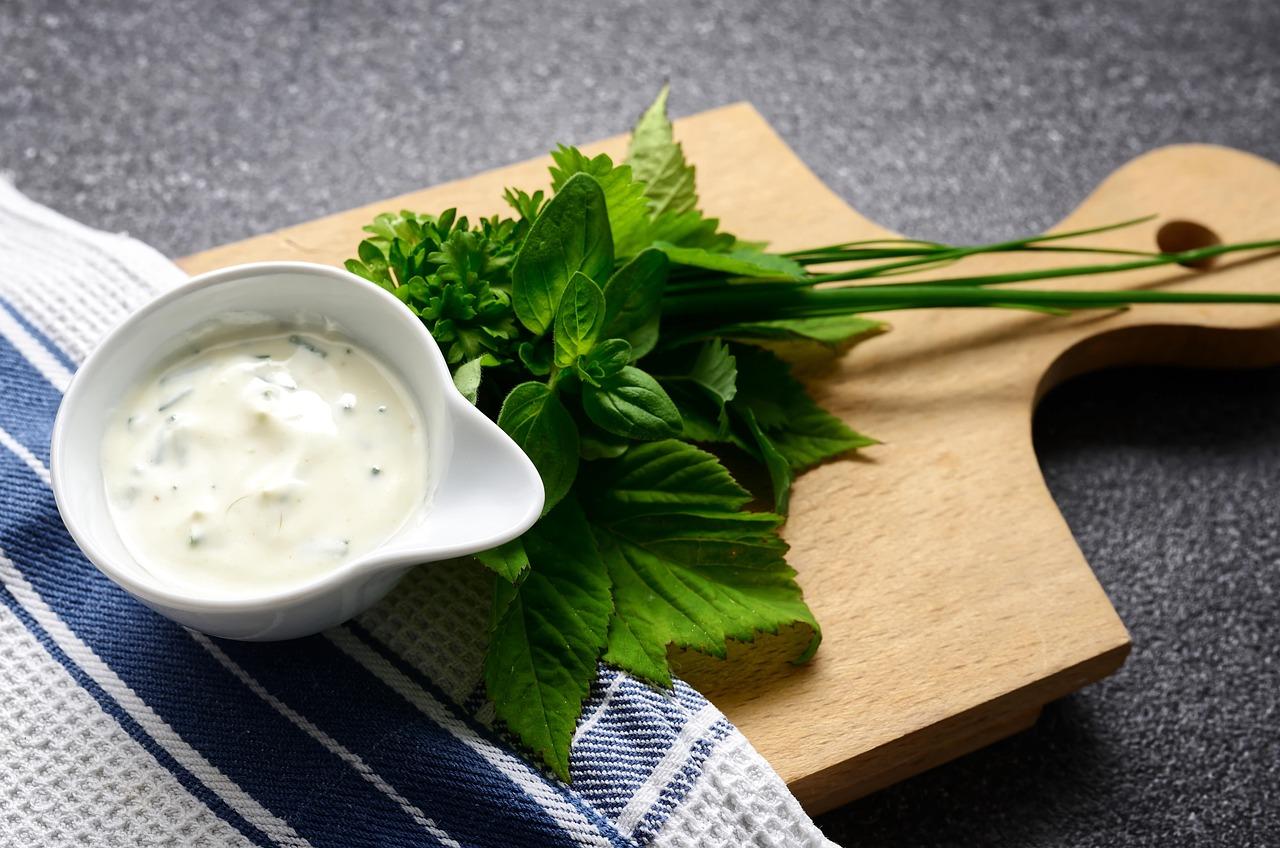
Sour cream dip
A simple, tangy dip made with thick home-made cottage cheese (hung yogurt) or ready-made sour cream, seasoned with garlic, chilli, black pepper and vinegar. Serve it cold with crisps, nachos and jacket potatoes. The book's other dips use this as their 'sour cream'.