
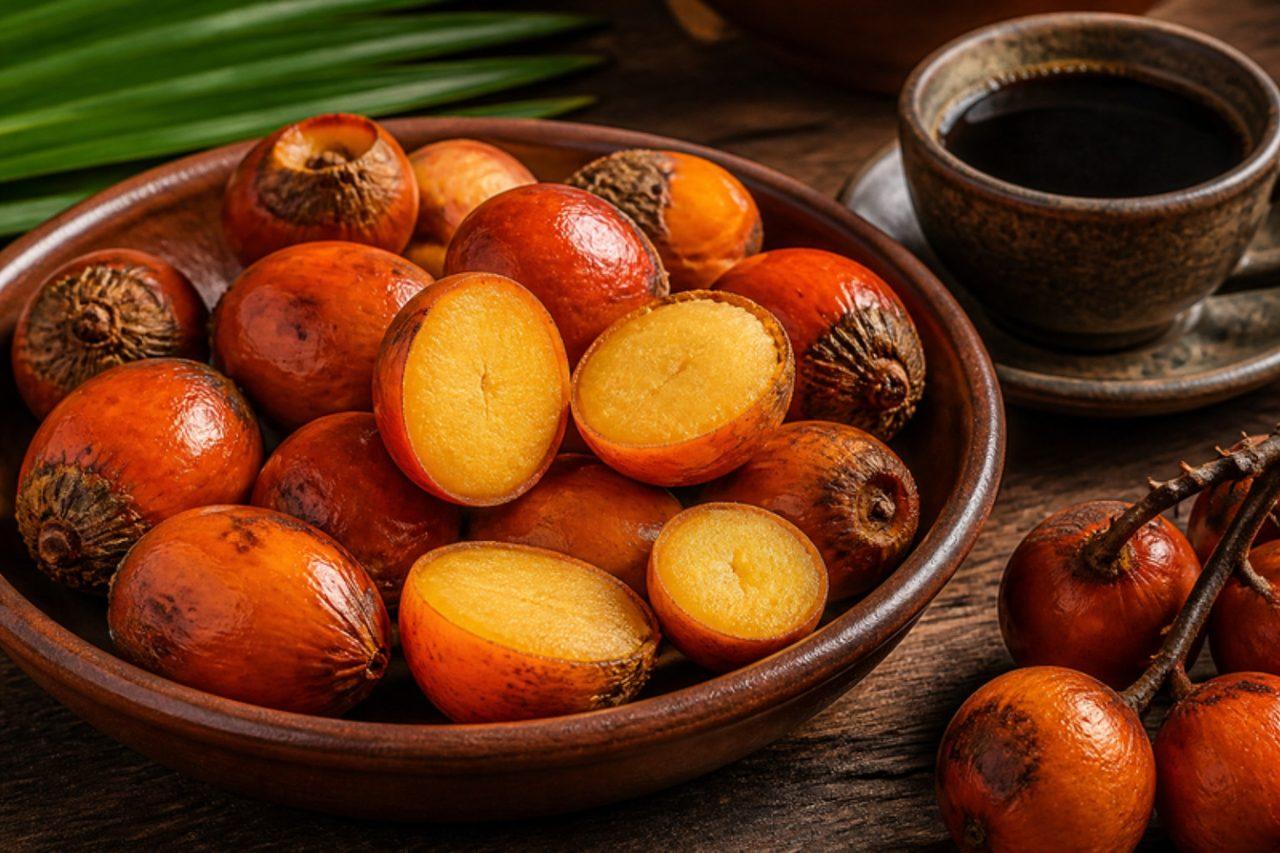
AI-generated image
Pupunha cozida
Pupunha cozida: Amazon peach-palm fruits boiled in salted water, eaten with morning coffee



From Belém to Manaus, the breakfast table in pupunha season (roughly December to April) holds a bowl of these orange and red palm fruits, boiled in salted water and peeled at the table. Their flesh is dense, starchy and slightly oily, somewhere between chestnut, sweet potato and egg yolk, and it is eaten with black coffee or café com leite, sometimes with a smear of butter or a drizzle of honey. Street sellers and markets sell them cooked in bunches. Look for fresh or frozen pupunha (chontaduro) in Brazilian and Colombian shops. The fruit must be cooked; raw it irritates the mouth. The common misstep is cooking it too briefly, which leaves the flesh hard and astringent; it needs a long boil until a knife meets no resistance. Chef's tip: cook more than you need and slice the leftovers into salads or fry them in oil like chips the next day.
- Total time
- 55 min
- Difficulty
- easy
- Serves
- 6
Ingredients
Shop this recipe on Amazon
Links open Amazon in a new tab. As an Amazon Associate, WhatToEat.Today earns from qualifying purchases.
Method
0/4 doneStep 1: Pull 2 ¼ lb fresh pupunha (peach-palm) fruits off the bunch if needed, discard any split or mouldy fruits and rinse well.
Step 2: Put the fruits in a large pan with 10 ½ cups water and 1 tbsp salt. Bring to the boil over a high heat.
8 minStep 3: Cover partly and simmer for 40–50 minutes, topping up with boiling water so they stay covered, until a knife slides into the thickest fruit with no resistance and the skins start to split.
45 minStep 4: Drain and leave until cool enough to handle. Peel off the thin skin with your fingers, halve the fruits and pick out the stone. Serve warm with coffee.
Nutrition per serving
- Calories
- 190 kcal
- Protein
- 2 g
- Carbs
- 30 g
- Fat
- 7 g
- Fibre
- 4 g
Nutrition values are estimates.
KrazyBadal
Good to know
- How long does pupunha cozida take?
- About 55 minutes in total: 5 minutes to prepare and 50 minutes to cook.
- How many people does it serve?
- 6 as written. Change the servings above the ingredients and every amount scales to match.
- Is it vegan?
- Yes. It has no meat, fish, dairy or eggs.
- Is it gluten free?
- Yes, as written. Check the labels on stock, sauces and spice mixes, which sometimes contain gluten.
Reviews
No reviews yet. Be the first to cook it.
Rate this recipe
Sign in to rate and review this recipe.
You might also like

Coastal Mombasa mix
A Mombasa street-food bowl: chickpeas and potato simmered in coconut milk with raw mango and chilli, ladled into small bowls and topped with crisp lentil fritters, crunchy chevdo and red, green and tamarind chutneys. Make the fritters and chevdo ahead and assemble at the table. It's sweet, sour, hot and crunchy all at once.

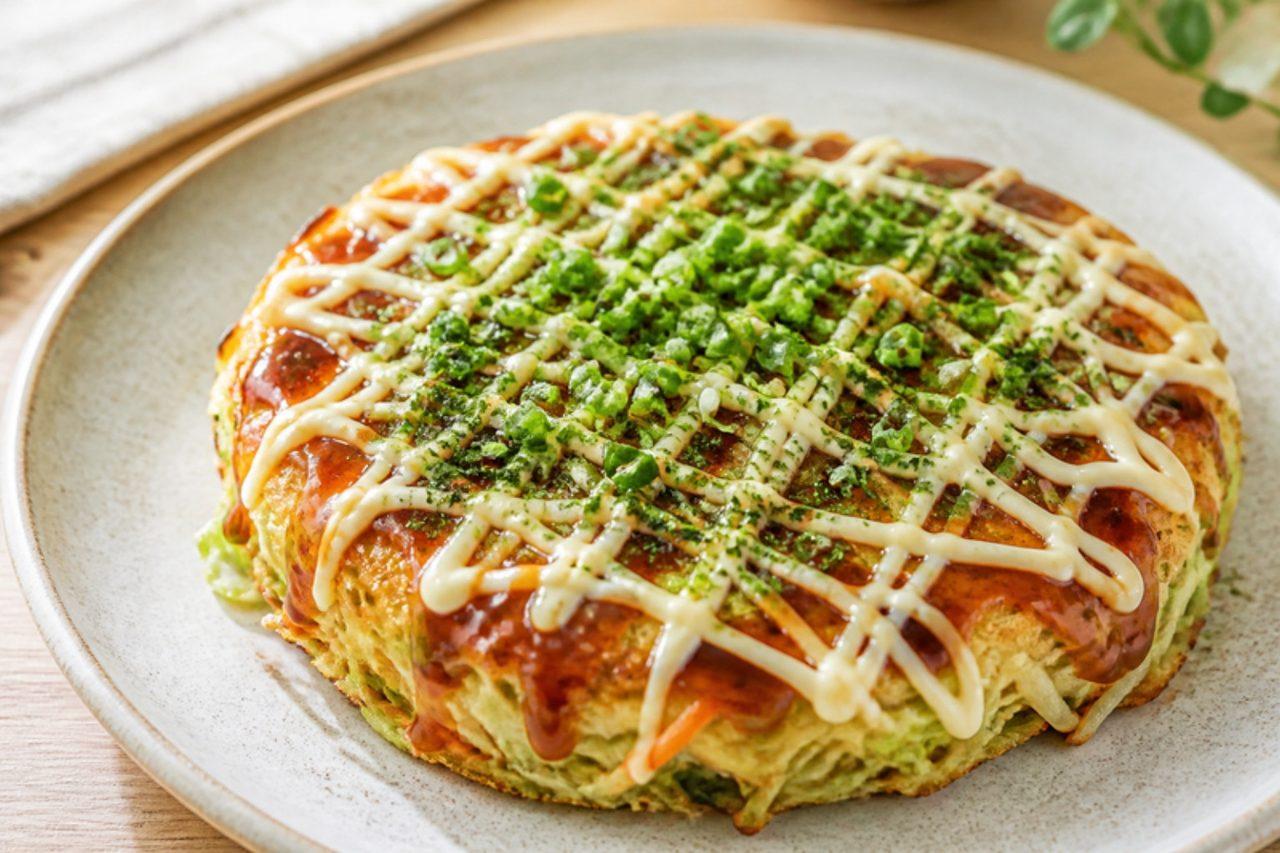
Okonomiyaki
Okonomiyaki (お好み焼き, 'grilled as you like it') is the pride of Osaka, where it's cooked on hot iron griddles in lively restaurants. Finely shredded cabbage is folded into a light batter with egg and spring onion, then fried into a thick, soft pancake with a crisp outside. It's painted with a fruity brown sauce and zigzagged with mayonnaise. Bonito flakes are usual on top; this vegetarian version uses seaweed flakes and pickled ginger instead. Chef's tip: don't press the pancake down with your spatula while it cooks. Osaka cooks leave it alone so the cabbage steams inside and stays light and fluffy; pressing squeezes out the air.
 Japanese

Masala khakhra
Khakhra are thin chapaties roasted slowly on a griddle until they turn crisp, like a cracker. This masala version adds gram flour, fresh fenugreek, turmeric and chilli to the wheat dough. They are a light Gujarati breakfast or tea-time snack, and lovely with pickle, chutney or a smear of butter. You can also make them in a roti maker.
 Indian
