
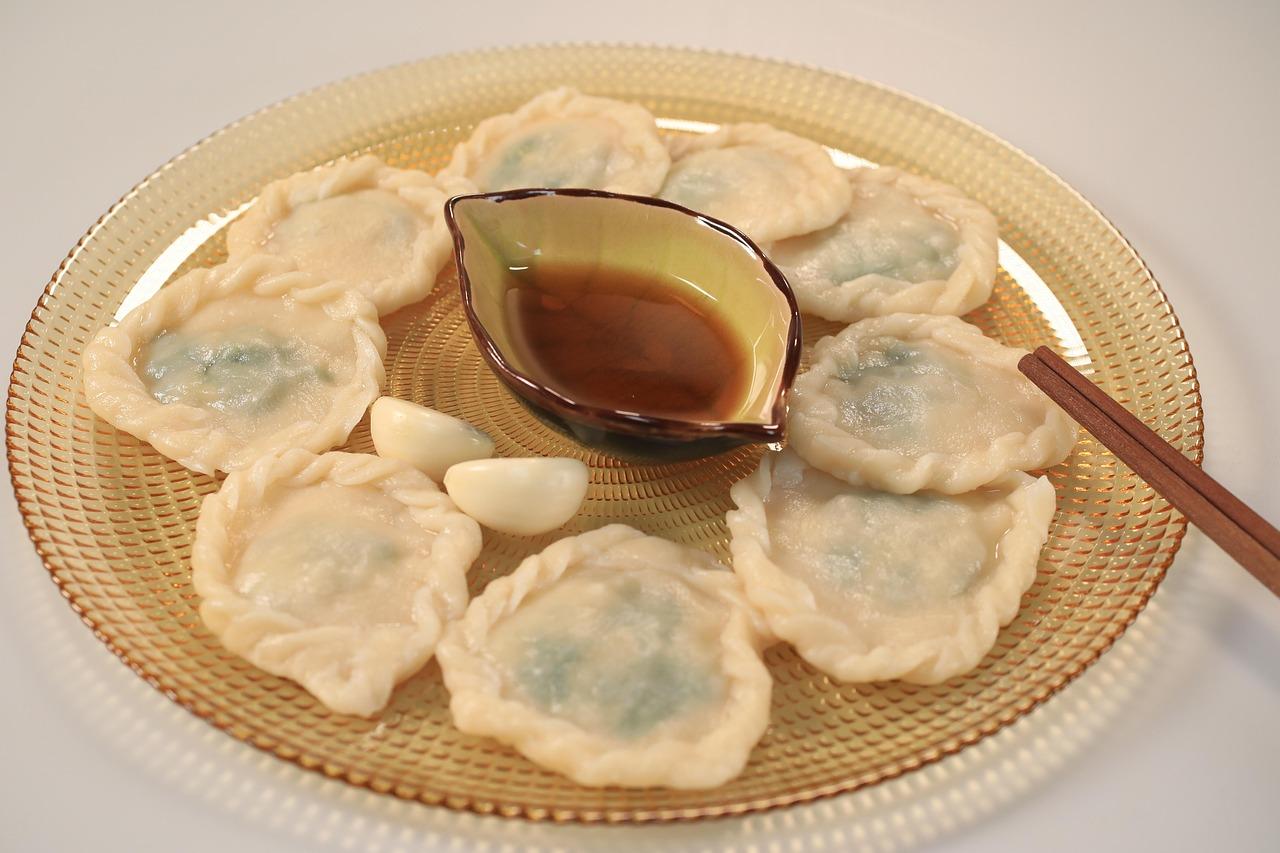
Qingdao mackerel dumplings
Bàyú jiǎozi (鲅鱼饺子) — plump boiled dumplings with a fluffy mackerel and chive filling
 Chinese
Every spring, when Spanish mackerel run off the Shandong coast, Qingdao families fill the kitchen table with flour and fish for these large boiled dumplings; restaurants by the harbour serve them by the plate all year. The filling is whipped with peppercorn-infused water until it turns light and almost mousse-like, with chives for freshness and a little fatty pork for richness. Bitten open, they are juicy, briny and sweet rather than fishy. Eat them straight from the pot with black vinegar and crushed garlic, with a pot of jasmine tea. Chef's tip: if you can't find Spanish mackerel, ordinary mackerel or a mix of mackerel and cod works well.
- Total time
- 75 min
- Difficulty
- medium
- Serves
- 4
Ingredients
For the dough
- 14 oz plain flourplus extra for dusting
- 1 cup cold water
- ½ tsp salt
For the filling
- 1 tsp Sichuan peppercorns
- ½ cup hot water
- 1 ⅛ lb Spanish mackerel or mackerel filletsskinned and every pin bone removed
- 3 ½ oz fatty minced pork
- ½ oz fresh gingergrated
- 1 ½ tsp salt
- ½ tsp ground white pepper
- 5 ½ oz Chinese or garden chivesfinely chopped
- 2 tbsp sesame oil
- 1 tbsp neutral oil
To serve
- 4 tbsp Chinese black vinegar (optional)
- 2 garlic cloves (optional)crushed
Shop this recipe on Amazon
Spices & pantry
Fresh ingredients (2)
Links open Amazon in a new tab. As an Amazon Associate, WhatToEat.Today earns from qualifying purchases.
Method
0/10 doneStep 1: Mix 14 oz plain flour and ½ tsp salt, add 1 cup cold water gradually and knead for 8 minutes into a firm, smooth dough. Cover and rest for 30 minutes while you make the filling.
10 minStep 2: Steep 1 tsp Sichuan peppercorns in ½ cup hot water for 15 minutes, then strain and let the water cool. Discard the peppercorns.
15 minStep 3: Run your fingers over the 1 ⅛ lb Spanish mackerel or mackerel fillets to catch any bones, then chop it finely with a heavy knife (or pulse briefly in a processor) until it is a coarse paste. Use a separate board from anything eaten raw.
Step 4: Put the fish in a bowl with 3 ½ oz fatty minced pork, ½ oz fresh ginger, 1 ½ tsp salt and ½ tsp ground white pepper. Stir hard in one direction with chopsticks for 2 minutes until sticky.
2 minStep 5: Add the cooled pepper water 2 tablespoons at a time, stirring in the same direction until each lot is absorbed before adding the next. The filling will turn pale and fluffy. Pouring it all in at once is a common mistake: it never absorbs and the dumplings leak.
6 minStep 6: Fold 5 ½ oz Chinese or garden chives, 2 tbsp sesame oil and 1 tbsp neutral oil into the filling just before wrapping, so the chives do not wilt and weep. Keep the filling in the fridge between batches.
Step 7: Roll the dough into a log, cut into 32 pieces, and roll each into an 8–9 cm round, thinner at the edge than in the middle.
Step 8: Put a heaped tablespoon of filling in the centre of each wrapper, fold in half and press the edges firmly together, squeezing out the air. Set on a floured tray, not touching.
25 minStep 9: Bring a large pan of water to a rolling boil. Add 12–15 dumplings, stir gently so they do not stick and boil over a high heat. When they float, cook for 3–4 minutes more, until the skins are translucent and the dumplings puff.
8 minStep 10: Cut one open to check: the filling should be firm and opaque all through, with no pink from the pork, and should reach 160°F (160 °F). Lift out with a slotted spoon and serve with black vinegar and garlic while you cook the next batch.
Nutrition per serving
- Calories
- 520 kcal
- Protein
- 33 g
- Carbs
- 64 g
- Fat
- 15 g
- Fibre
- 3 g
Nutrition values are estimates.
KrazyBadal
Good to know
- How long does qingdao mackerel dumplings take?
- About 75 minutes in total: 50 minutes to prepare and 25 minutes to cook.
- How many people does it serve?
- 4 as written. Change the servings above the ingredients and every amount scales to match.
- What can I use instead of plain flour?
- Self-raising flour, same amount (then leave out the baking powder).
- What can I use instead of fresh ginger?
- ¼ tsp ground ginger per tbsp fresh (add it with the spices).
Reviews
No reviews yet. Be the first to cook it.
Rate this recipe
Sign in to rate and review this recipe.
You might also like

SakarpadaSweet fried dough diamonds
Sakarpada (shakarpara) are little sweet diamonds of a rich dough made with ghee, milk and sugar, fried until golden and crunchy. They are a Diwali favourite with tea, and the cubes go into bhusu too. They keep for weeks in an air-tight tin.
 Indian

Yaki onigiriGrilled rice balls
Yaki onigiri (焼きおにぎり) are rice balls grilled until they form a crisp, toasty crust, then brushed with soy sauce glaze. They are eaten all over Japan, at izakaya, at barbecues and from the freezer section, as a snack or with miso soup. The inside stays soft and steamy while the outside crackles. Best eaten hot, straight from the pan. Chef's tip: let the shaped rice balls dry for 10 minutes before they go in the pan. A drier surface forms a better crust and won't stick, and the glaze goes on only at the end so it doesn't burn.
 Japanese

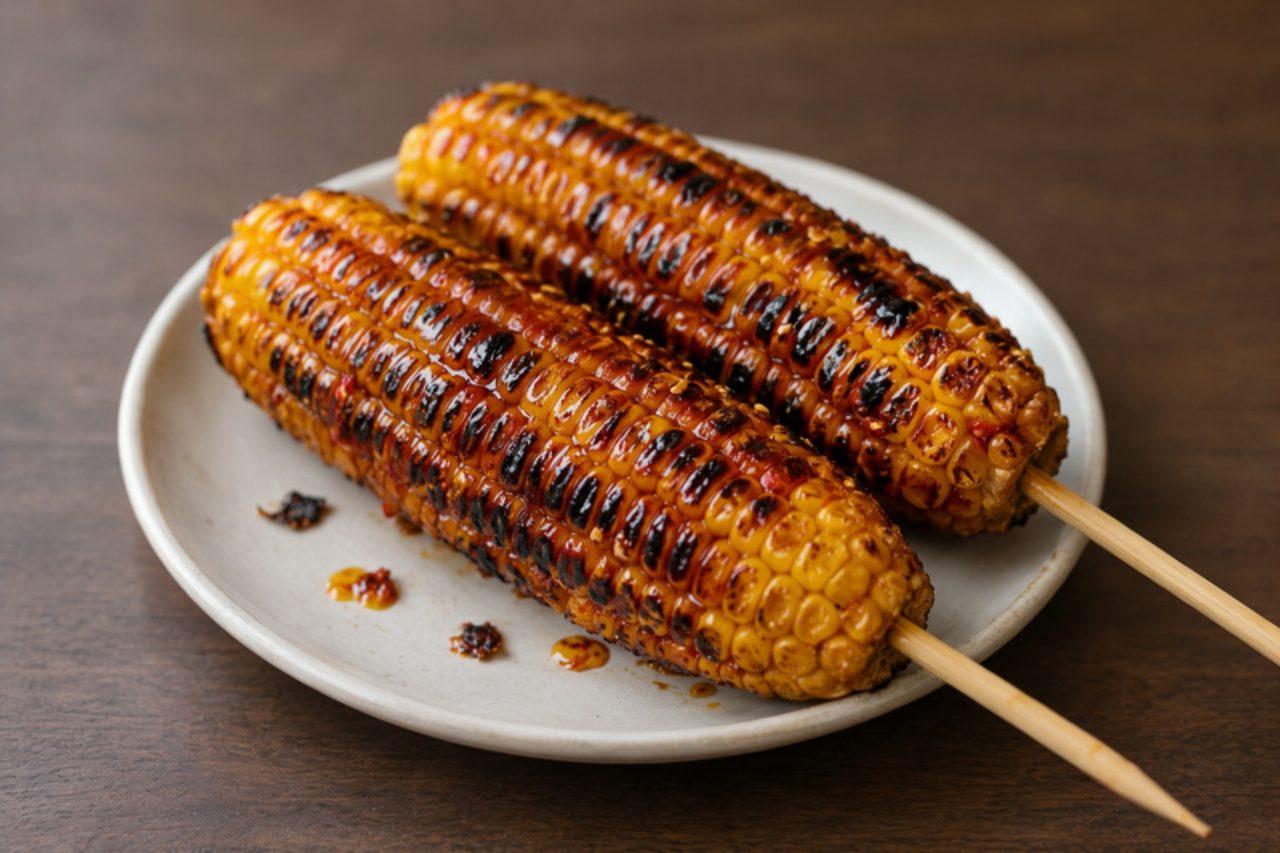
Taiwanese grilled corn
At Raohe and Shilin night markets the grilled-corn stalls are easy to find: look for the queue and the smoky, sweet smell. Cobs are par-cooked, then turned slowly over charcoal while the cook brushes them with a dark glaze of sacha sauce, thick soy paste, garlic and chilli, layer after layer, until the kernels are sticky, slightly charred and deeply savoury. It is eaten hot from a paper sleeve while walking the market. Sacha (shacha) sauce, a Taiwanese barbecue paste, usually contains dried fish and shrimp; vegetarian sacha is sold in Asian shops. Contains soy, wheat and fish. Chef's tip: brush thin coats and turn often; one thick coat burns before the corn chars.
 Taiwanese