
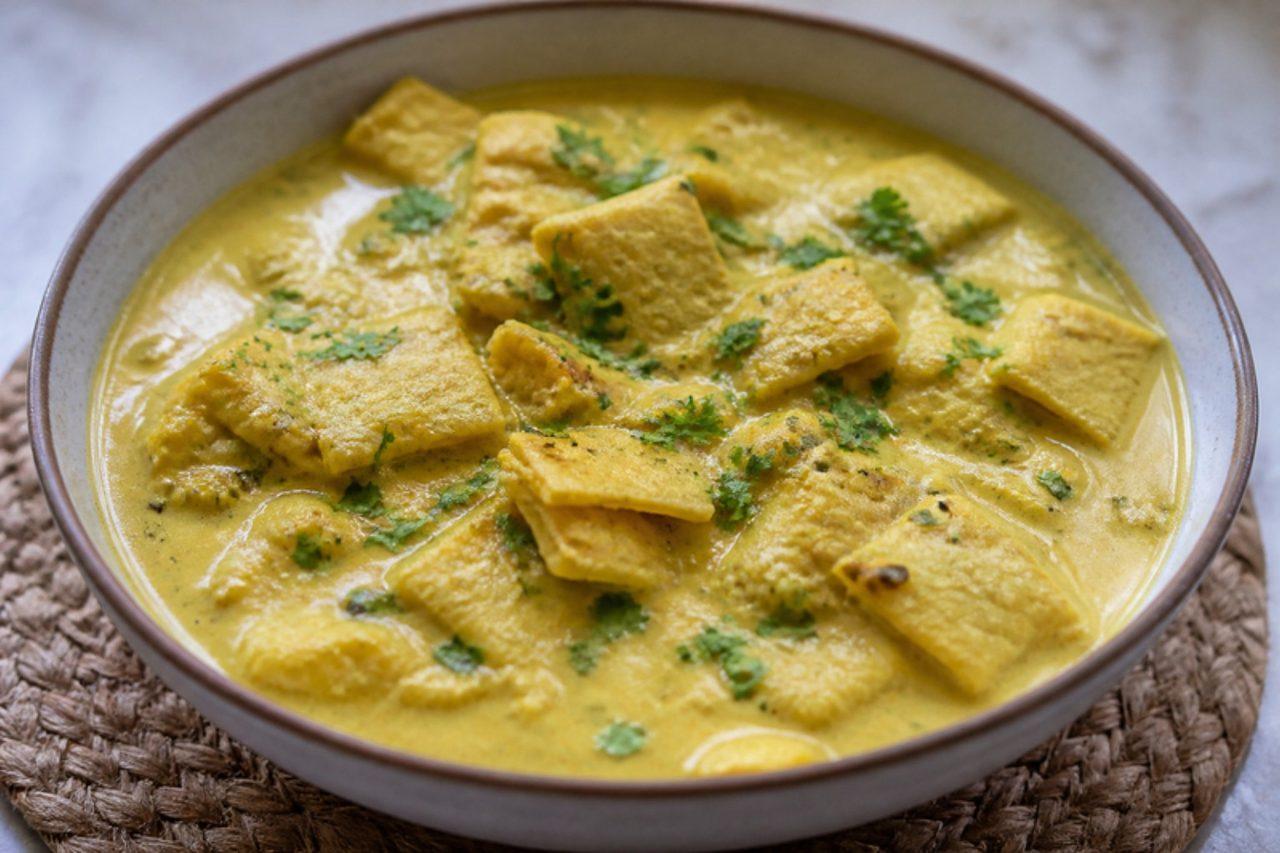
AI-generated image
Rabodi ki sabzi
Dried maize wafers in yogurt curry
राबोड़ी की सब्जी: Jain-friendly Marwari curry of sun-dried maize and buttermilk wafers in a tangy, spiced dahi gravy


In the Thar desert towns of Barmer, Jodhpur and Bikaner, green vegetables were scarce for much of the year, so women boiled maize flour with sour buttermilk in summer, spread it in thin rounds on cloth and dried it in the sun. Those rabodi keep for months and become this curry: fried until puffed, then simmered in a spiced yogurt gravy until soft and chewy. It is tangy, savoury and comforting, eaten with bajra roti or rice, and because it has no onion, garlic or fresh ginger, it suits a Jain or Marwari festive thali. A common mistake is letting the dahi gravy boil before it has been stirred to a boil with besan; it curdles. Whisk besan into the dahi and stir constantly until it comes to a boil. Chef's tip: fry the rabodi only until they puff and turn a shade darker; burnt rabodi taste bitter and stay hard in the gravy.
- Total time
- 40 min
- Difficulty
- medium
- Serves
- 4
Ingredients
For the rabodi
- 2 ⅛ oz rabodi (sun-dried maize and buttermilk wafers)broken into 4 cm pieces
- 4 tbsp groundnut oilfor frying
For the gravy
- 10 ½ oz plain dahi (yogurt)slightly sour
- 1 tbsp besan (gram flour)
- 1 ¾ cups water
- ½ tsp ground turmeric
- 1 tsp red chilli powder
- 1 ½ tsp ground coriander
- 1 tsp salt
For the tadka
- 1 tbsp ghee
- 1 tsp cumin seeds
- ¼ tsp fenugreek seeds
- 1 green chillislit
To finish
- ⅓ oz fresh corianderchopped
Shop this recipe on Amazon
What you'll need
Spices & pantry
Fresh ingredients (2)
Links open Amazon in a new tab. As an Amazon Associate, WhatToEat.Today earns from qualifying purchases.
Method
0/7 doneStep 1: Heat 4 tbsp groundnut oil in a kadai over medium heat and fry 2 ⅛ oz rabodi (sun-dried maize and buttermilk wafers) a handful at a time for 30–40 seconds, until they puff and turn a shade darker. Drain on paper.
5 minStep 2: Whisk 10 ½ oz plain dahi (yogurt) with 1 tbsp besan (gram flour) until smooth, then whisk in 1 ¾ cups water, ½ tsp ground turmeric, 1 tsp red chilli powder, 1 ½ tsp ground coriander and 1 tsp salt.
3 minStep 3: Pour off all but 1 tbsp of the frying oil. Add 1 tbsp ghee, then 1 tsp cumin seeds, ¼ tsp fenugreek seeds and 2 dried red chillies, and let them sizzle for 20 seconds.
1 minStep 4: Add ¼ tsp gluten-free asafoetida (hing), 1 green chilli and ¼ tsp dry ginger powder (sonth), then pour in the dahi mixture.
1 minStep 5: Stir constantly over medium heat for 6–8 minutes until it comes to a boil; it should look smooth, not split.
8 minStep 6: Lower the heat and simmer for 5 minutes until slightly thickened, then add the fried rabodi and simmer for 6–8 minutes more, until they are soft but still a little chewy.
14 minStep 7: Scatter with ⅓ oz fresh coriander and serve hot; the gravy thickens as it stands, so loosen with a splash of hot water if needed.
Nutrition per serving
- Calories
- 260 kcal
- Protein
- 8 g
- Carbs
- 24 g
- Fat
- 15 g
- Fibre
- 3 g
Nutrition values are estimates.
KrazyBadal
Good to know
- How long does rabodi ki sabzi take?
- About 40 minutes in total: 10 minutes to prepare and 30 minutes to cook.
- How many people does it serve?
- 4 as written. Change the servings above the ingredients and every amount scales to match.
- Is it vegetarian?
- Yes. It has no meat or fish.
- Is it gluten free?
- Yes, as written. Check the labels on stock, sauces and spice mixes, which sometimes contain gluten.
- What can I use instead of ground turmeric?
- Leave it out (it mostly adds colour).
- What can I use instead of red chilli powder?
- Cayenne, half the amount (hotter).
Reviews
No reviews yet. Be the first to cook it.
Rate this recipe
Sign in to rate and review this recipe.
You might also like

Sayur lodehVegetables in coconut milk
Sayur lodeh is everyday cooking in Central Java, made in big pots in Solo and Semarang kitchens and ladled over rice, with lontong rice cakes at Lebaran, or alongside opor and sambal goreng on festive tables. It's soupy rather than thick: a fragrant broth of coconut milk, galangal, lemongrass and lime leaf that carries chunks of aubergine, long beans, chayote and sweetcorn, plus tempeh and tofu to make it a meal. The flavour is mellow and slightly sweet, so the heat comes from sambal on the side. Chef's tip: keep the pot at a gentle simmer once the coconut milk goes in and stir now and then — a rolling boil splits the coconut milk into oily curds.
 Indonesian



SakarpadaSweet fried dough diamonds
Sakarpada (shakarpara) are little sweet diamonds of a rich dough made with ghee, milk and sugar, fried until golden and crunchy. They are a Diwali favourite with tea, and the cubes go into bhusu too. They keep for weeks in an air-tight tin.
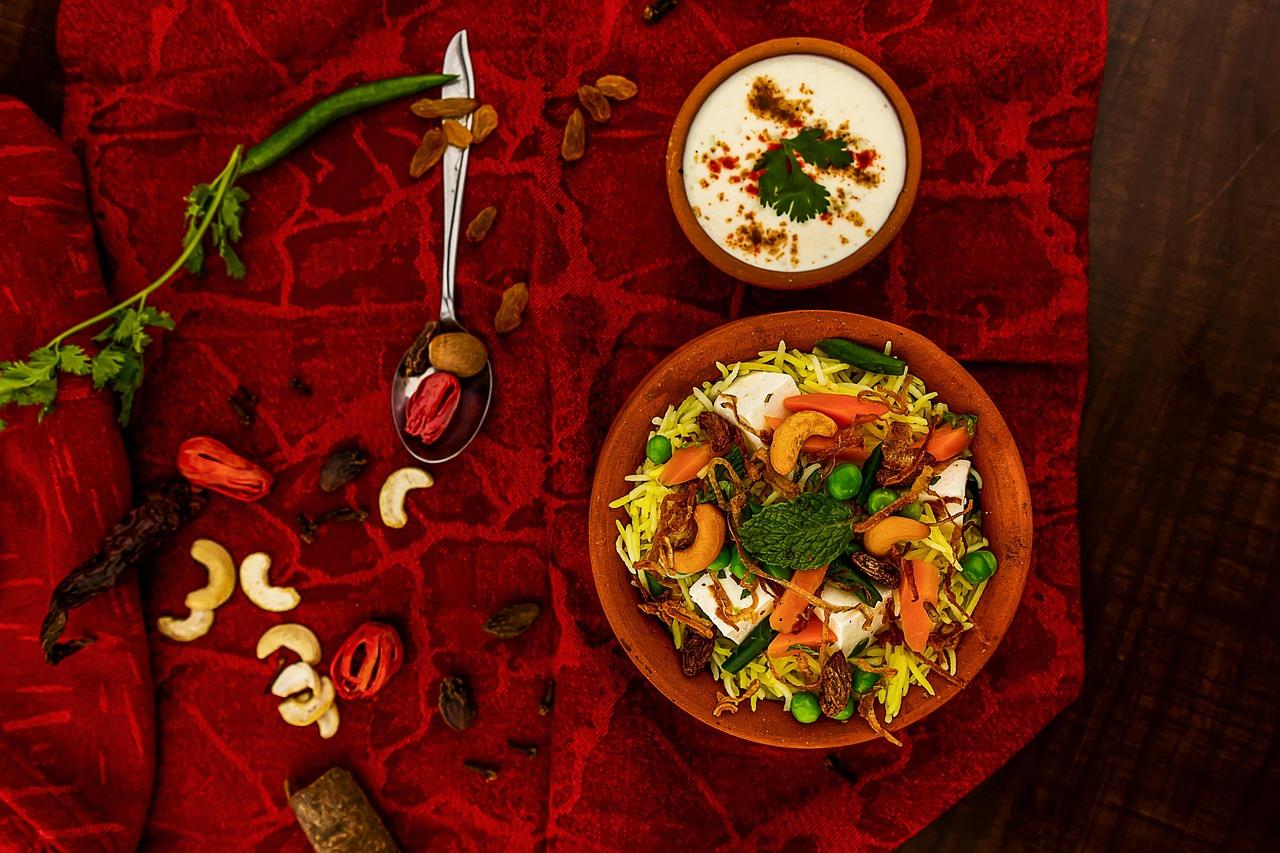
Paneer biryaniRice and moong dal in coconut milk
A mild, creamy biryani: rice and husked green gram roasted in ghee, then cooked in coconut milk with peas, carrots, potatoes, peanuts and cashews, and finished with soft fried paneer and a fresh coriander yogurt. Serve hot, garnished with more fried cashews and paneer.