
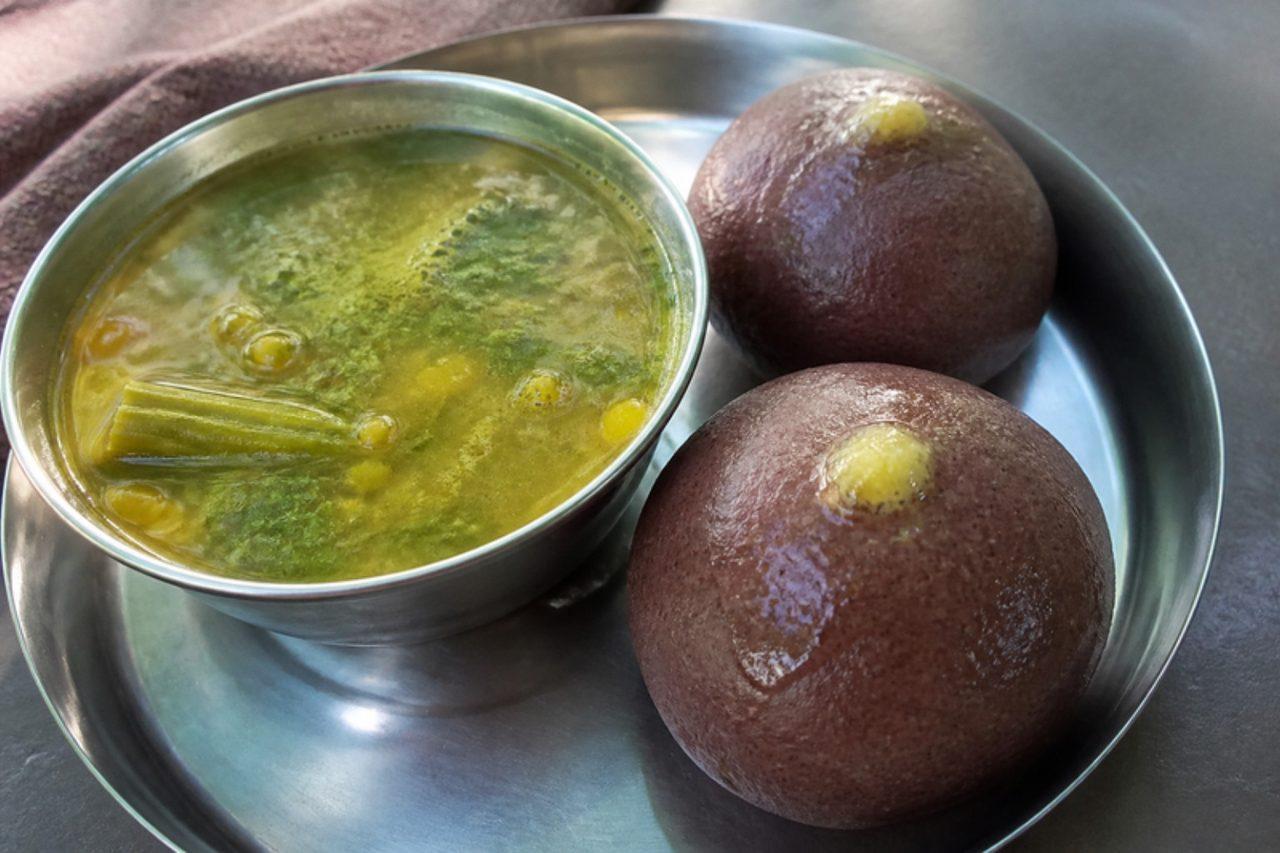
AI-generated image
Ragi mudde with bassaru
Finger millet balls with dal broth
ರಾಗಿ ಮುದ್ದೆ ಬಸ್ಸಾರು: Old Mysore's finger-millet balls with a lentil-and-greens broth



In the villages around Mandya, Mysuru and Hassan, the farmers' lunch is ragi mudde: steaming balls of finger millet cooked into a firm, smooth dough, eaten with a thin, spicy bassaru. Bassaru literally means 'drained water': greens and dal are cooked together, the liquid is poured off and spiced into a peppery broth (the saaru), and the solids become a dry palya on the side. You pinch off a piece of mudde, roll it in the saaru and swallow it without chewing. It is filling, very nourishing and naturally gluten-free. Chef's tip: the wooden stick (mudde kolu) matters; stirring with the handle of a wooden spoon pushes the flour into the water and gets rid of lumps far better than a whisk.
- Total time
- 60 min
- Difficulty
- medium
- Serves
- 4
Ingredients
For the bassaru
- 3 ½ oz toor dalrinsed
- 7 oz dill, spinach or amaranth leaveschopped
- 3 ½ oz green beanschopped
- 1 small onionchopped
- 1 tomatochopped
- ¼ tsp ground turmeric
- 3 ¾ cups water
For the bassaru paste
- 1 ⅜ oz fresh grated coconut
- 3 shallots
- 1 tbsp coriander seeds
- 1 tsp cumin seeds
- ½ tsp black peppercorns
- 1 tsp tamarind paste
- 1 ½ tsp salt
For the tempering
- 2 tbsp sunflower oil
- 1 tsp black mustard seeds
- 10 curry leaves
- ¼ tsp gluten-free asafoetida
For the ragi mudde
- 2 cups water
- ½ tsp salt
- 1 tsp ghee or coconut oil (optional)use coconut oil to keep it vegan
Shop this recipe on Amazon
What you'll need
Spices & pantry
Fresh ingredients (6)
Links open Amazon in a new tab. As an Amazon Associate, WhatToEat.Today earns from qualifying purchases.
Method
0/9 doneStep 1: Put 3 ½ oz toor dal, 7 oz dill, spinach or amaranth leaves, 3 ½ oz green beans, 1 small onion, 1 tomato and ¼ tsp ground turmeric in a pan with 3 ¾ cups water. Bring to the boil, then simmer on a low-medium heat, partly covered, for 25 minutes, until the dal is completely soft and the greens are dark and silky.
25 minStep 2: Meanwhile, toast 4 dried red chillies, 1 tbsp coriander seeds, 1 tsp cumin seeds and ½ tsp black peppercorns in a dry pan over a low heat for 2 minutes until fragrant. Grind them with 1 ⅜ oz fresh grated coconut, 4 garlic cloves, 3 shallots, 1 tsp tamarind paste and a splash of water to a smooth paste.
4 minStep 4: Return the liquid to the pan with the ground paste and the rest of 1 ¼ tsp salt. Simmer for 8–10 minutes on a medium heat, until it smells of roasted pepper and coriander and a thin layer of oil floats on top. Add a little water if it is thicker than a soup.
10 minStep 5: For the tempering, heat 2 tbsp sunflower oil in a small pan, add 1 tsp black mustard seeds and let it pop, then add 10 curry leaves and ¼ tsp gluten-free asafoetida; they crackle within seconds. Pour over the bassaru.
Step 6: For the mudde, bring 2 cups water and ½ tsp salt to a rolling boil in a heavy pan. Take out about 100 ml of the hot water and keep it in a cup.
5 minStep 7: Lower the heat to medium and tip all of 9 oz ragi (finger millet) flour into the centre of the boiling water in a mound. Common mistake: stirring straight away, which gives a lumpy mess. Leave it untouched for 2–3 minutes, so the water steams the flour from below.
3 minStep 8: Now stir hard with the handle of a wooden spoon, pressing the flour against the sides, for 3–4 minutes. Add some of the reserved water if it is too stiff to move. It is done when it turns from reddish-brown to a darker, glossy brown, smells nutty and no dry flour is left.
4 minStep 9: Wet your hands and a bowl with water (or rub with 1 tsp ghee or coconut oil). Scoop out a portion, roll it in the wet bowl into a smooth ball the size of an orange and repeat. Serve the mudde hot with bowls of bassaru and the palya on the side.
Nutrition per serving
- Calories
- 410 kcal
- Protein
- 15 g
- Carbs
- 70 g
- Fat
- 10 g
- Fibre
- 12 g
Nutrition values are estimates.
KrazyBadal
Good to know
- How long does ragi mudde with bassaru take?
- About 60 minutes in total: 20 minutes to prepare and 40 minutes to cook.
- How many people does it serve?
- 4 as written. Change the servings above the ingredients and every amount scales to match.
- Is it vegan?
- Yes. It has no meat, fish, dairy or eggs.
- Is it gluten free?
- Yes, as written. Check the labels on stock, sauces and spice mixes, which sometimes contain gluten.
- What can I use instead of toor dal?
- Red lentils (masoor dal) (cook 10 minutes less).
- What can I use instead of small onion?
- 2 shallots per onion.
Reviews
No reviews yet. Be the first to cook it.
Rate this recipe
Sign in to rate and review this recipe.
You might also like

SakarpadaSweet fried dough diamonds
Sakarpada (shakarpara) are little sweet diamonds of a rich dough made with ghee, milk and sugar, fried until golden and crunchy. They are a Diwali favourite with tea, and the cubes go into bhusu too. They keep for weeks in an air-tight tin.
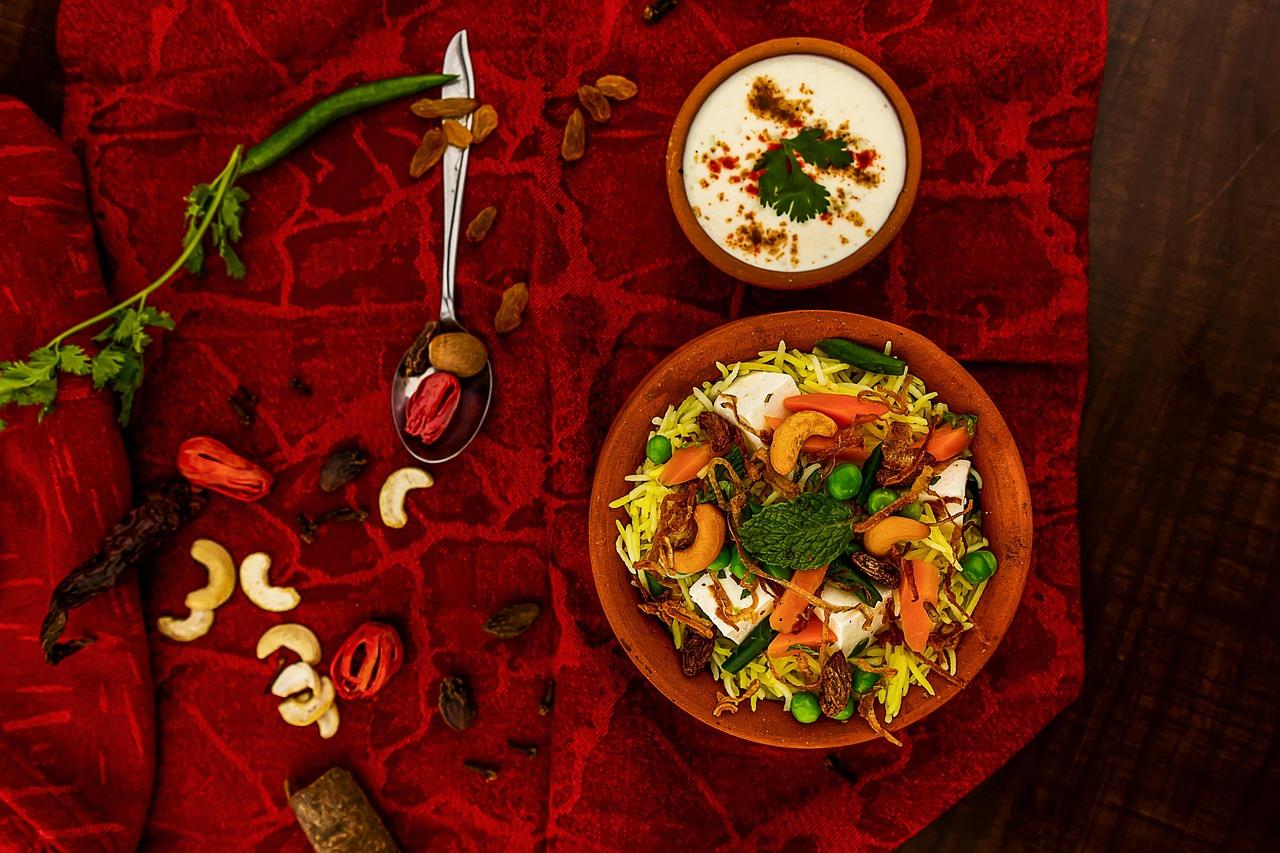
Paneer biryaniRice and moong dal in coconut milk
A mild, creamy biryani: rice and husked green gram roasted in ghee, then cooked in coconut milk with peas, carrots, potatoes, peanuts and cashews, and finished with soft fried paneer and a fresh coriander yogurt. Serve hot, garnished with more fried cashews and paneer.


Sabudana khichdiSago with peanuts and potato
Sabudana khichdi is the dish that sees Maharashtra through every vrat (fast), from Navratri to Ekadashi, but it's so good that people eat it any day of the week. Soaked sago pearls are tossed in a pan with crushed roasted peanuts, cubes of potato, cumin and green chilli until each pearl turns glassy and separate, then finished with lemon and coriander. It's soft, chewy, nutty and gently hot. Fasting rules vary from family to family, so check yours; this version uses rock salt and no asafoetida, onion or garlic. Traditionally it's cooked in ghee; use ghee instead of oil if you aren't keeping it vegan. Chef's tip: soak the sago in just enough water to cover by the height of the pearls themselves, no more; too much water is the reason khichdi turns into one sticky lump.
