
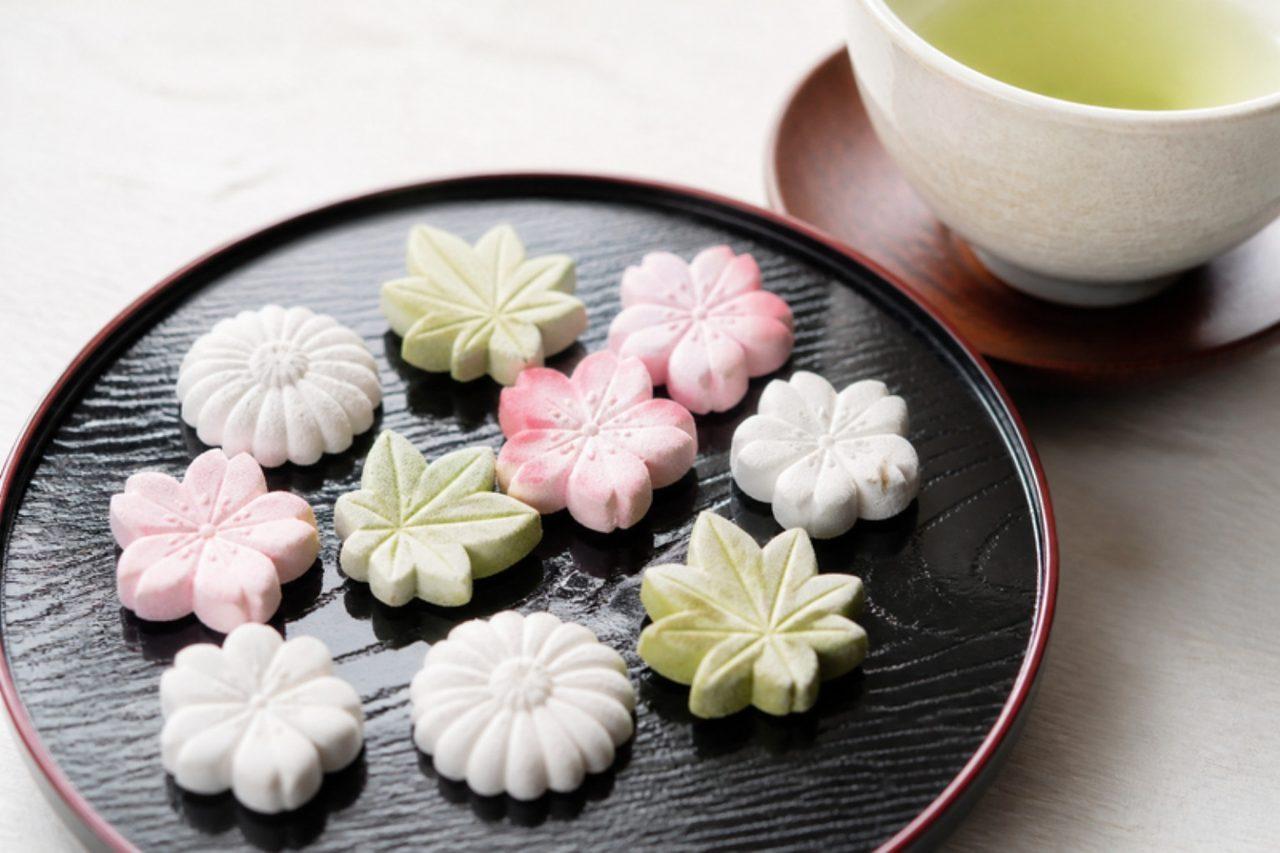
AI-generated image
Rakugan (pressed dry sweets for tea)
Melt-in-the-mouth pressed sugar and rice flour shapes



Rakugan are higashi, the dry sweets served before thin matcha at a tea ceremony, and the castle towns of Kanazawa and Matsue, both with a long tea tradition, are famous for them. Fine sugar and roasted rice flour are pressed into carved wooden moulds to make cherry blossoms in spring, maple leaves in autumn and plum flowers in winter; they also appear on Obon altars as offerings. They feel firm in the hand but dissolve on the tongue into a delicate, clean sweetness, which balances the bitterness of the tea. Serve two or three per person with matcha or sencha. They are naturally egg-free: a few drops of water make the fine sugar just damp enough to stick, the roasted rice flour holds the shape, and drying sets it hard. Chef's tip: add water a few drops at a time and stop when the sugar feels like damp sand; the common mistake is too much water, which glues the mixture into the mould.
- Total time
- 200 min
- Difficulty
- medium
- Serves
- 8
Ingredients
- 3 ½ oz wasanbon sugaror caster sugar blitzed to a fine powder
- 2 tsp water
- ¼ tsp matcha powder (optional)for green shapes
- 1 tbsp potato starchfor dusting the mould
Shop this recipe on Amazon
What you'll need
Links open Amazon in a new tab. As an Amazon Associate, WhatToEat.Today earns from qualifying purchases.
Method
0/7 doneStep 1: Sift 3 ½ oz wasanbon sugar into a bowl. Sprinkle over 2 tsp water a few drops at a time, rubbing the sugar between your palms, until it feels like damp sand and holds together when squeezed.
Step 2: Cover the bowl with a damp cloth and leave for 30 minutes so the moisture spreads evenly.
30 minStep 3: Add 1 ⅜ oz roasted glutinous rice flour (mijinko) and rub it in with your fingertips, then push everything through a fine sieve so it is light and even. Work ¼ tsp matcha powder into half if you like.
Step 4: Dust a wooden or silicone sweet mould with 1 tbsp potato starch and tap out the excess.
Step 5: Pack the mixture firmly into the mould, pressing hard with your thumb, then scrape the top level with a knife.
Step 6: Tap the mould sharply on the worktop to release each sweet onto a tray lined with paper. If a shape crumbles, the mixture is too dry; add a drop more water.
Step 7: Leave uncovered in a dry place for at least 2 hours, ideally overnight, until hard right through. Store airtight for up to a month.
120 min
Nutrition per serving
- Calories
- 68 kcal
- Protein
- 0 g
- Carbs
- 17 g
- Fat
- 0 g
- Fibre
- 0 g
Nutrition values are estimates.
KrazyBadal
Good to know
- How long does rakugan (pressed dry sweets for tea) take?
- About 200 minutes in total.
- How many people does it serve?
- 8 as written. Change the servings above the ingredients and every amount scales to match.
- Is it vegan?
- Yes. It has no meat, fish, dairy or eggs.
- Is it gluten free?
- Yes, as written. Check the labels on stock, sauces and spice mixes, which sometimes contain gluten.
- Can I make it ahead?
- Yes. It keeps well, so you can cook it earlier in the day or the day before and reheat it.
- What can I use instead of wasanbon sugar?
- Caster sugar, same amount.
Reviews
No reviews yet. Be the first to cook it.
Rate this recipe
Sign in to rate and review this recipe.
You might also like

Miso soup
Miso soup (味噌汁) is drunk every day in homes all over Japan, at breakfast as well as dinner, beside a bowl of rice. The base is dashi; this vegan version uses kombu and dried shiitake instead of bonito, which gives it a deep, rounded flavour. Silken tofu and wakame seaweed are the classic fillings. It takes ten minutes; just remember not to boil the miso. Chef's tip: add the miso at the very end and never let it boil. Boiling kills the miso's fresh, fermented aroma; Japanese cooks say the soup should only 'smile', with the surface barely trembling.


Yaki onigiriGrilled rice balls
Yaki onigiri (焼きおにぎり) are rice balls grilled until they form a crisp, toasty crust, then brushed with soy sauce glaze. They are eaten all over Japan, at izakaya, at barbecues and from the freezer section, as a snack or with miso soup. The inside stays soft and steamy while the outside crackles. Best eaten hot, straight from the pan. Chef's tip: let the shaped rice balls dry for 10 minutes before they go in the pan. A drier surface forms a better crust and won't stick, and the glaze goes on only at the end so it doesn't burn.
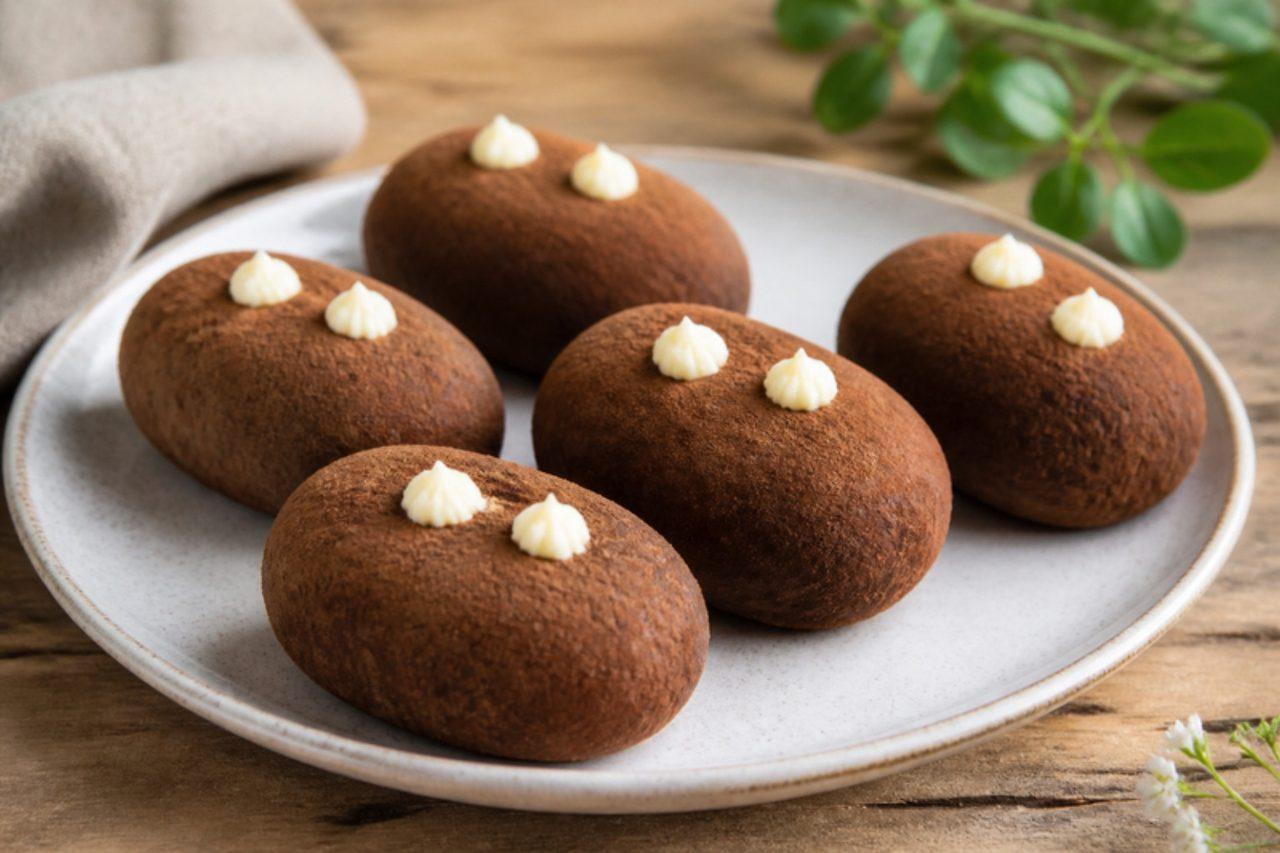
Kartoshka cakeCocoa and cake crumb truffles
Soviet cafés and school canteens sold these knobbly brown 'potatoes' for a few kopecks, and they began as a thrifty way to use up sponge and biscuit trimmings at the bakery. Crumbs are bound with butter and sweetened condensed milk, flavoured with cocoa and vanilla, shaped into little potatoes, rolled in cocoa and finished with two dabs of pale butter cream for the sprouts. They are fudgy and dense like a brownie truffle, need no oven, and children love making them. Traditional bakers added a spoonful of rum, an optional extra for adult batches only; this version is alcohol-free with vanilla. The usual slip is coarse crumbs, which make the potatoes crack, so blitz them as fine as sand. Chef's tip: chill the shaped potatoes for at least 20 minutes so they hold their shape and slice cleanly.
 Russian