
AI-generated image
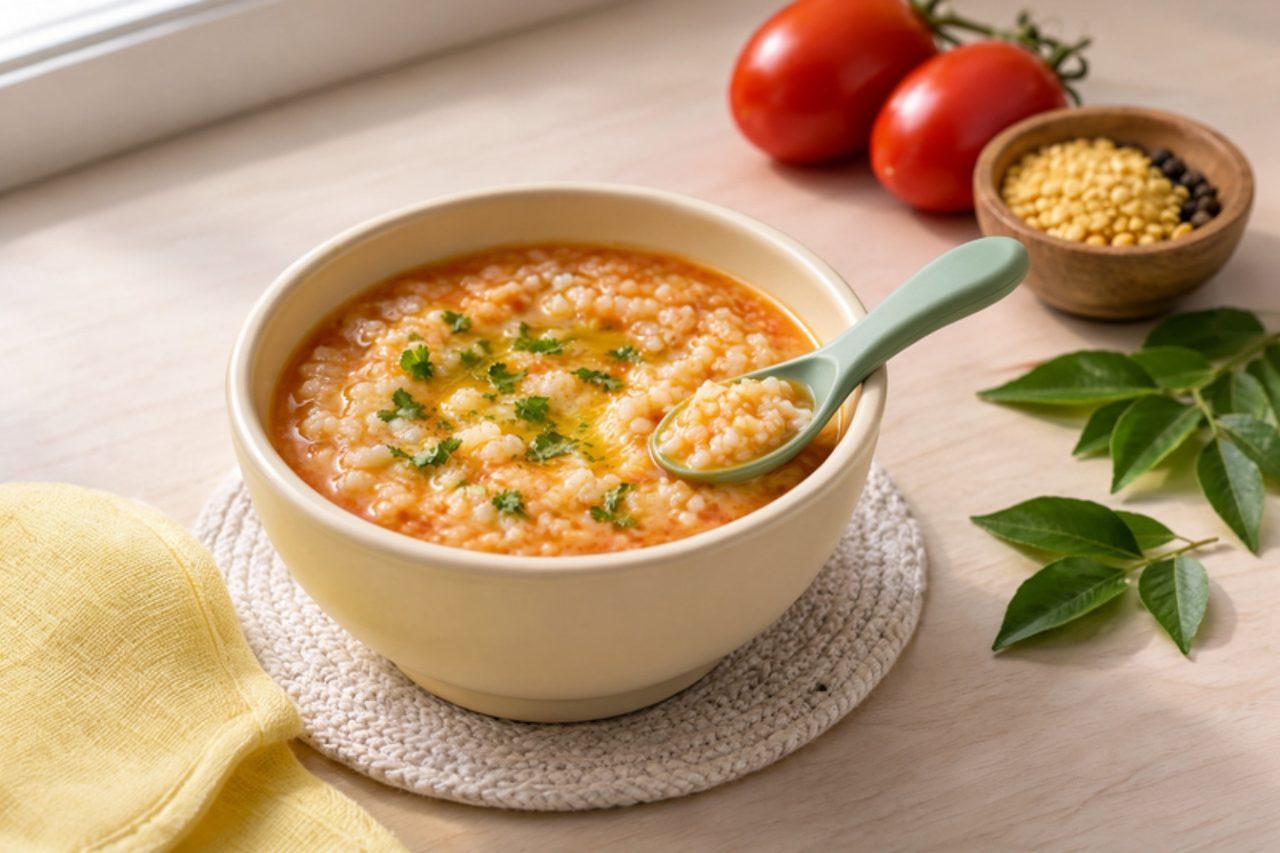
Rasam sadam for babies
9m+ · Soft rice mashed with a gentle tomato and toor dal rasam made without chilli, pepper or salt


Rasam sadam, hot rice with a thin, tangy tomato and lentil broth, is everyday lunch in Tamil homes from Chennai to Madurai. When a baby joins the meal at around nine months, many mothers ladle off a mild rasam for the little one before the pepper, chilli and salt go into the family pot. Mashed into soft rice with a spoon of ghee, it is tangy, warm and gently fragrant with cumin and coriander leaf. It contains milk (ghee). We leave out asafoetida, which is often cut with wheat flour, so it is gluten free, and it has no egg, nuts, soya or sesame. Chef's tip: use the ripest, reddest tomato you can find; its natural sweetness replaces the tamarind and jaggery of the grown-up rasam.
- Total time
- 40 min
- Difficulty
- easy
- Serves
- 3
Baby & toddler safety
- Age: from 9 months+.
- Allergens: contains milk. Offer one new allergen at a time, in the morning, so you can watch for a reaction.
- Texture and choking: purée or mash smoothly for 6–9 months, then soft, finger-sized pieces that squash between your fingers. Cut round foods such as grapes and cherry tomatoes into quarters lengthways, never give whole nuts, and always stay with your child while they eat.
- Under 1: no honey, no added salt or stock cubes, and no added sugar.
Every child is different. If you are unsure, especially about allergies, check with your health visitor or paediatrician.
Ingredients
For the dal and rice
- 1 cup waterfor the dal
- ⅛ tsp ground turmerica small pinch
- 1 ⅜ oz short-grain rice
- 1 ¼ cups waterfor the rice
For the mild rasam
- 1 tsp ghee
- ¼ tsp cumin seeds
- 1 very ripe tomatoabout 80 g, peeled and chopped
- ¾ cup water
- 1 tbsp fresh coriander leavesfinely chopped
Shop this recipe on Amazon
What you'll need
Spices & pantry
Fresh ingredients (2)
Links open Amazon in a new tab. As an Amazon Associate, WhatToEat.Today earns from qualifying purchases.
Method
0/7 doneStep 1: Rinse 1 oz toor dal (split pigeon peas) well and put it in a small pressure cooker with 1 cup water and ⅛ tsp ground turmeric. Cook for 4–5 whistles (about 15 minutes) and let the pressure drop naturally; the dal should be completely soft. In a pan, simmer covered for 40 minutes.
15 minStep 2: Meanwhile, rinse 1 ⅜ oz short-grain rice and simmer it with 1 ¼ cups water in a covered pan on the lowest heat for 25 minutes, until very soft and the water is absorbed.
25 minStep 3: For the rasam, warm 1 tsp ghee in a small pan over a low heat and add ¼ tsp cumin seeds. Let it sizzle for 20 seconds without browning.
1 minStep 4: Add 1 very ripe tomato and cook for 5 minutes, pressing with a spoon, until pulpy. Whisk the cooked dal, add half of it with ¾ cup water, and bring to a gentle simmer for 5 minutes.
10 minStep 5: Add 1 tbsp fresh coriander leaves and turn off the heat as soon as the rasam froths up at the edges. Common mistake: boiling rasam hard after the coriander goes in; it turns bitter and dull. Pour it through a sieve if you want to catch the tomato skin and seeds.
1 minStep 6: Mash the soft rice with the remaining dal and enough warm rasam to make soft, moist lumps. Cool to just warm before serving.
2 minStep 7: Cool leftovers quickly, cover and refrigerate for up to 2 days, or freeze in small portions for up to 1 month. Reheat only once, until piping hot all the way through, then cool before serving.
Nutrition per serving
- Calories
- 110 kcal
- Protein
- 4 g
- Carbs
- 18 g
- Fat
- 3 g
- Fibre
- 2 g
Nutrition values are estimates.
KrazyBadal
Good to know
- How long does rasam sadam for babies take?
- About 40 minutes in total: 10 minutes to prepare and 30 minutes to cook.
- How many people does it serve?
- 3 as written. Change the servings above the ingredients and every amount scales to match.
- Is it vegetarian?
- Yes. It has no meat or fish.
- Is it gluten free?
- Yes, as written. Check the labels on stock, sauces and spice mixes, which sometimes contain gluten.
- What can I use instead of toor dal (split pigeon peas)?
- Red lentils (masoor dal) (cook 10 minutes less).
- What can I use instead of ground turmeric?
- Leave it out (it mostly adds colour).
Reviews
No reviews yet. Be the first to cook it.
Rate this recipe
Sign in to rate and review this recipe.
You might also like

Masala khakhra
Khakhra are thin chapaties roasted slowly on a griddle until they turn crisp, like a cracker. This masala version adds gram flour, fresh fenugreek, turmeric and chilli to the wheat dough. They are a light Gujarati breakfast or tea-time snack, and lovely with pickle, chutney or a smear of butter. You can also make them in a roti maker.


Sabudana khichdi
Sabudana khichdi is the dish that sees Maharashtra through every vrat (fast), from Navratri to Ekadashi, but it's so good that people eat it any day of the week. Soaked sago pearls are tossed in a pan with crushed roasted peanuts, cubes of potato, cumin and green chilli until each pearl turns glassy and separate, then finished with lemon and coriander. It's soft, chewy, nutty and gently hot. Fasting rules vary from family to family, so check yours; this version uses rock salt and no asafoetida, onion or garlic. Traditionally it's cooked in ghee; use ghee instead of oil if you aren't keeping it vegan. Chef's tip: soak the sago in just enough water to cover by the height of the pearls themselves, no more; too much water is the reason khichdi turns into one sticky lump.


Bagara baingan
Bagara baingan is a Hyderabadi wedding dish of small aubergines cooked whole in a dark, tangy gravy of roasted peanuts, sesame, dried coconut and tamarind. Unlike a Gujarati stuffed brinjal, the aubergines here are only quartered at the base and fried until silky, then left to soak up a thin-but-rich sauce that is finished with a tempering, the 'baghar' that gives the dish its name. It's sour, nutty and gently spiced, and is served with biryani, bagara rice or plain rice. Chef's tip: choose small, glossy purple aubergines that feel heavy for their size; soft, light ones are full of seeds and turn mushy before the gravy has a chance to cling.