
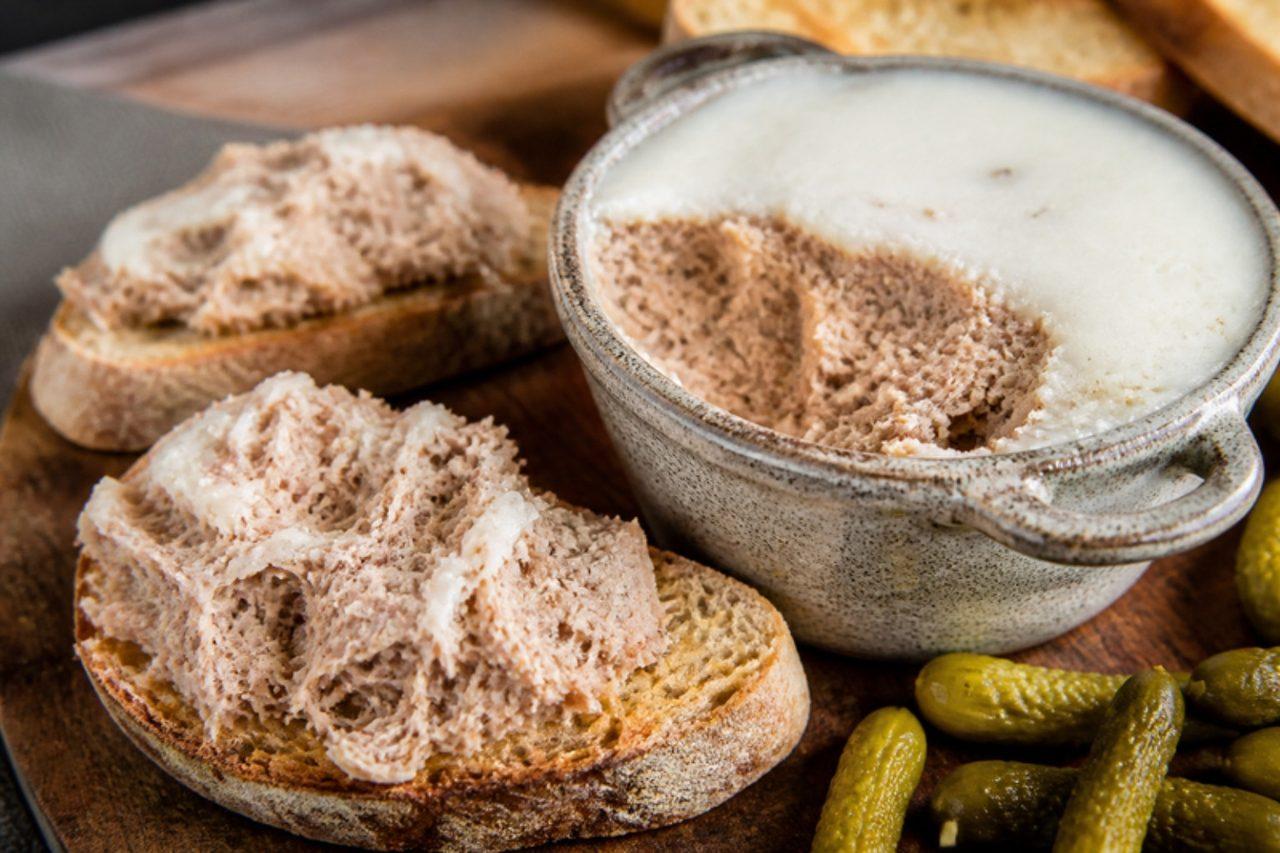
AI-generated image
Rillettes de Tours
Potted shredded pork
Slow-cooked pork pounded into Touraine's rich, rustic spread


Touraine, the stretch of the Loire Valley around Tours, has made rillettes since the Middle Ages, and every charcuterie counter in the region sells them alongside rillons, their chunky cousins. This is pork through and through: pork shoulder and belly cooked very slowly in their own fat with a little water until they collapse, then shredded with forks into a soft, rich spread that is brown at the edges and deeply savoury. Pots of it go on the table at apéritif time with crusty bread, cornichons and a glass of something cold. Kept sealed under a layer of fat, they last a week in the fridge. Chef's tip: cook it long enough that the meat colours lightly in the fat at the end; that browning is what gives Tours rillettes their deeper taste.
- Total time
- 290 min
- Difficulty
- easy
- Serves
- 10
Ingredients
- 2 ¼ lb boneless pork shouldercut into 4 cm cubes
- 1 ⅛ lb pork belly, rind removedcut into 3 cm cubes
- 5 ½ oz lard
- ¾ cup water
- 2 tsp fine salt
- 1 tsp black pepperfreshly ground
- 2 garlic clovespeeled, left whole
- ¼ tsp ground nutmeg
To serve
- 1 crusty bread or gluten-free bread (optional)loaf, sliced
- 20 cornichons (optional)
Shop this recipe on Amazon
What you'll need
Spices & pantry
Fresh ingredients (2)
Links open Amazon in a new tab. As an Amazon Associate, WhatToEat.Today earns from qualifying purchases.
Method
0/7 doneStep 1: Melt 5 ½ oz lard in a heavy casserole over a low heat. Add 1 ⅛ lb pork belly, rind removed and stir until the fat starts to run.
10 minStep 2: Add 2 ¼ lb boneless pork shoulder, ¾ cup water, 2 tsp fine salt, 3 thyme sprigs, 2 bay leaves and 2 garlic cloves. Bring to a gentle simmer, cover and cook over the lowest heat, stirring every 30 minutes.
210 minStep 3: The meat is ready when it is completely fork-tender and breaks apart when pressed against the side of the pot. Uncover, raise the heat to medium-low and cook, stirring, until the water has evaporated and the meat turns light golden in the fat.
30 minStep 4: Remove the herbs and garlic. Tip the meat into a sieve over a bowl to catch the fat, and leave both to cool a little.
15 minStep 5: Shred the warm meat with two forks, or pound it briefly with a pestle, adding back fat a spoonful at a time until soft and spreadable. Season with 1 tsp black pepper, ¼ tsp ground nutmeg and more salt to taste. Don't use a food processor: it turns rillettes into paste instead of soft threads.
Step 6: Pack into clean jars or ramekins, pressing down to get rid of air, then pour a 5 mm layer of the remaining fat on top to seal.
Step 7: Cool, cover and refrigerate for at least 12 hours before eating. Keep in the fridge for up to 7 days, and once opened eat within 3 days. Serve at room temperature with 1 crusty bread or gluten-free bread and 20 cornichons.
720 min
Nutrition per serving
- Calories
- 390 kcal
- Protein
- 22 g
- Carbs
- 0 g
- Fat
- 33 g
- Fibre
- 0 g
Nutrition values are estimates.
KrazyBadal
Good to know
- How long does rillettes de Tours take?
- About 290 minutes in total: 20 minutes to prepare and 270 minutes to cook.
- How many people does it serve?
- 10 as written. Change the servings above the ingredients and every amount scales to match.
- Is it gluten free?
- Yes, as written. Check the labels on stock, sauces and spice mixes, which sometimes contain gluten.
- Can I make it ahead?
- Yes. It keeps well, so you can cook it earlier in the day or the day before and reheat it.
- What can I use instead of bay leaves?
- Leave it out, or a pinch of dried thyme (it's a background flavour).
- What can I use instead of garlic cloves?
- ½ tsp garlic paste or ⅛ tsp garlic powder per clove.
Reviews
No reviews yet. Be the first to cook it.
Rate this recipe
Sign in to rate and review this recipe.
You might also like

Yaki onigiriGrilled rice balls
Yaki onigiri (焼きおにぎり) are rice balls grilled until they form a crisp, toasty crust, then brushed with soy sauce glaze. They are eaten all over Japan, at izakaya, at barbecues and from the freezer section, as a snack or with miso soup. The inside stays soft and steamy while the outside crackles. Best eaten hot, straight from the pan. Chef's tip: let the shaped rice balls dry for 10 minutes before they go in the pan. A drier surface forms a better crust and won't stick, and the glaze goes on only at the end so it doesn't burn.
 Japanese

Sandwich grecKebab baguette
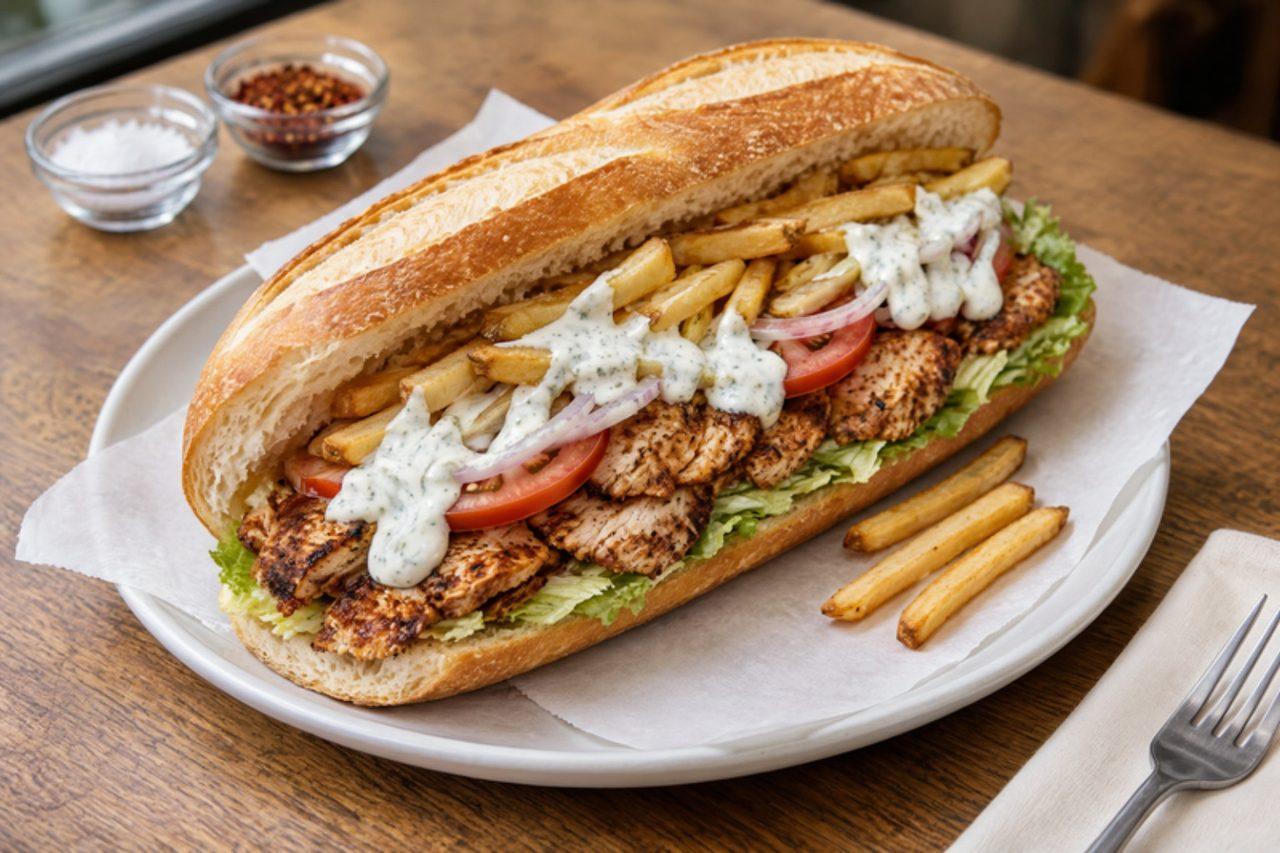
In Paris, a "grec" is the late-night kebab sandwich named after the Greek-run shops that first sold it in the Latin Quarter. On rue de la Huchette and rue Saint-André-des-Arts near Saint-Michel, students queue after a night out for crusty bread or pitta stuffed with meat shaved from a turning spit, lettuce, tomato and onion, a garlicky white sauce, and, the Paris touch, a handful of fries pushed right inside. This home version marinates chicken thighs in spiced yoghurt, sears them hard and slices them thin, with oven fries. It contains milk, egg (in the mayonnaise) and wheat. Chef's tip: slice the meat thinly across the grain after resting; thick chunks don't feel like a grec.
Taiwanese grilled corn
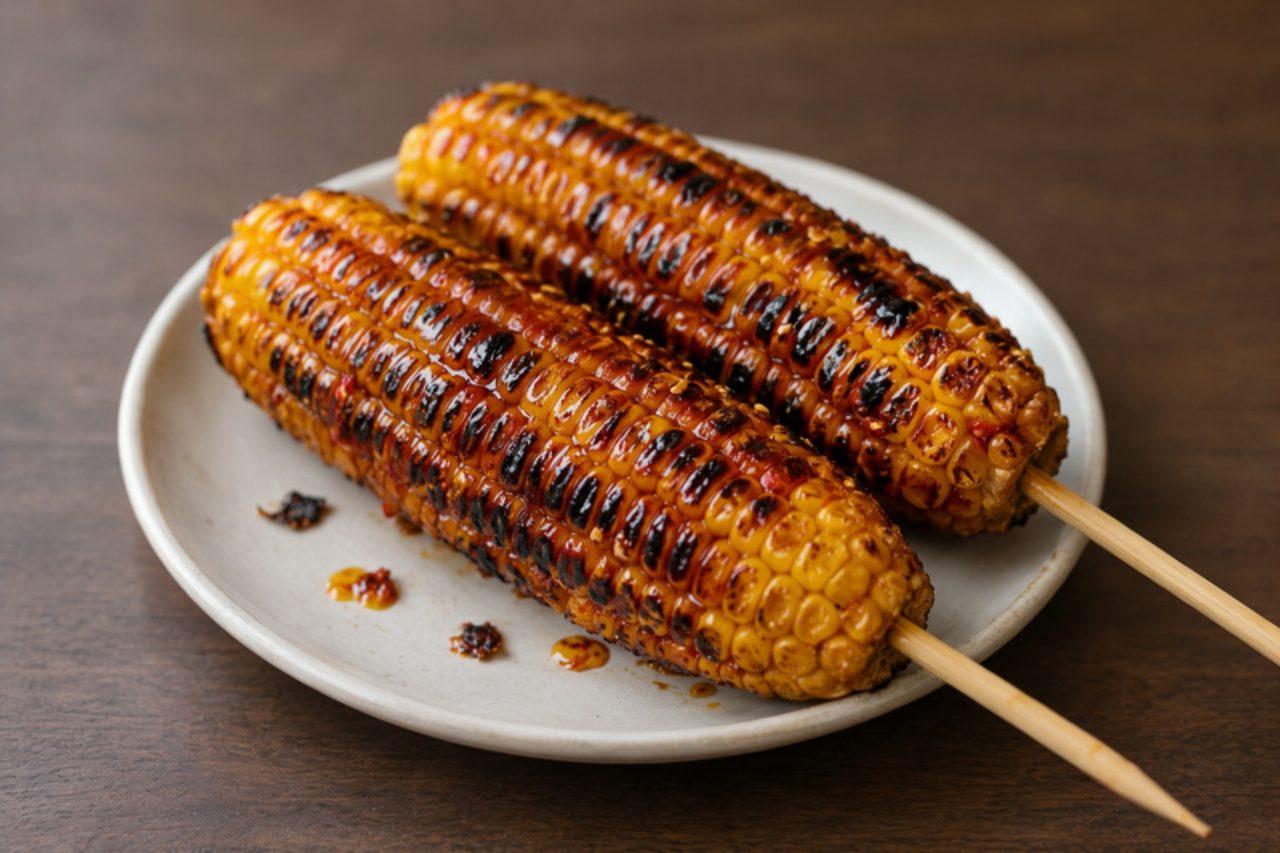
At Raohe and Shilin night markets the grilled-corn stalls are easy to find: look for the queue and the smoky, sweet smell. Cobs are par-cooked, then turned slowly over charcoal while the cook brushes them with a dark glaze of sacha sauce, thick soy paste, garlic and chilli, layer after layer, until the kernels are sticky, slightly charred and deeply savoury. It is eaten hot from a paper sleeve while walking the market. Sacha (shacha) sauce, a Taiwanese barbecue paste, usually contains dried fish and shrimp; vegetarian sacha is sold in Asian shops. Contains soy, wheat and fish. Chef's tip: brush thin coats and turn often; one thick coat burns before the corn chars.
 Taiwanese