
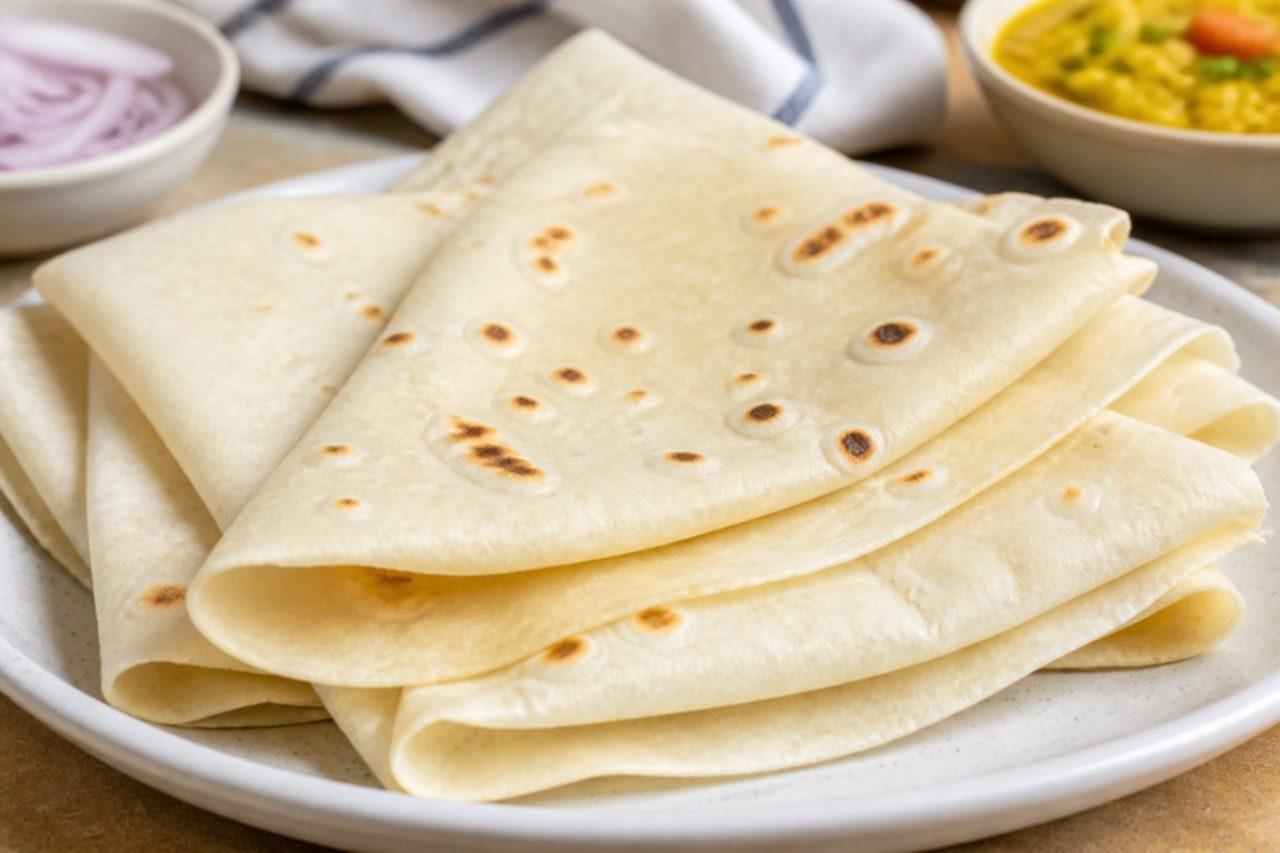
AI-generated image
Rumali roti
Handkerchief-thin flatbread
रूमाली रोटी: soft, handkerchief-thin bread stretched over the hands and flashed on an upturned kadai, folded like a napkin


Watch a rumali roti maker at a Mughlai stall in Old Delhi's Jama Masjid lanes or Lucknow's Aminabad and it looks like a magic trick: a ball of dough is flattened, tossed and stretched over the backs of the hands until it is translucent and almost a metre wide, then laid over a huge domed iron griddle for a few seconds. Rumal means handkerchief, and the finished bread is folded into quarters like one: silky, soft, slightly chewy and very thin. It is the bread for kebabs, korma, nihari and shahi paneer. At home, an upturned wok over a high flame does the job, and you can roll most of the way and stretch the last bit by hand. The dough is mainly maida with some atta, kept very soft and well rested. Common mistake: a firm or under-rested dough tears the moment you start stretching. Chef's tip: wipe the hot kadai with salted water before each roti; the hiss means it's hot enough, and the salt film stops the roti from sticking or blistering.
- Total time
- 60 min
- Difficulty
- hard
- Serves
- 4
Ingredients
For the dough
- 7 oz plain flour (maida)
- 3 ½ oz whole-wheat flour (atta)
- ½ tsp salt
- ½ tsp sugar
- 1 tbsp sunflower oil
- ¾ cup lukewarm waterabout
For rolling and cooking
- 1 ¾ oz plain flour (maida)for dusting
- 4 tbsp salted water1/2 tsp salt dissolved in 4 tbsp water
Shop this recipe on Amazon
Links open Amazon in a new tab. As an Amazon Associate, WhatToEat.Today earns from qualifying purchases.
Method
0/8 doneStep 1: Mix 7 oz plain flour (maida), 3 ½ oz whole-wheat flour (atta), ½ tsp salt and ½ tsp sugar in a bowl. Add 1 tbsp sunflower oil and most of the ¾ cup lukewarm water and mix to a very soft, sticky dough, adding the rest only if needed.
3 minStep 2: Knead for 8–10 minutes, slapping the dough on the counter now and then, until it is smooth, silky and stretches thin without tearing. It should be softer than chapati dough.
10 minStep 3: Cover with a damp cloth and rest the dough for at least 30 minutes, so the gluten relaxes and the dough stretches easily.
30 minStep 5: Dust a ball with 1 ¾ oz plain flour (maida) and roll it as thin as you can, to about 25 cm. Lift it onto the backs of your hands and gently pull your hands apart, rotating the dough, until it is about 35 cm wide and nearly see-through.
2 minStep 6: Sprinkle the hot kadai with a few drops of 4 tbsp salted water and wipe it with a folded cloth; it should hiss. Drape the roti over the dome.
1 minStep 7: Cook for 20–30 seconds, until small bubbles appear and the underside has faint pale-brown spots, then flip with your fingers and cook the other side for 15 seconds. It should stay soft and pale; if it browns or turns crisp, the kadai is too hot or it's been on too long.
1 minStep 8: Fold the roti in half and then in half again into a triangle and wrap in a clean cloth. Repeat with the rest, stacking them, and serve warm.
10 min
Nutrition per serving
- Calories
- 290 kcal
- Protein
- 8 g
- Carbs
- 55 g
- Fat
- 4 g
- Fibre
- 4 g
Nutrition values are estimates.
KrazyBadal
Good to know
- How long does rumali roti take?
- About 60 minutes in total: 45 minutes to prepare and 15 minutes to cook.
- How many people does it serve?
- 4 as written. Change the servings above the ingredients and every amount scales to match.
- Is it vegan?
- Yes. It has no meat, fish, dairy or eggs.
- What can I use instead of plain flour (maida)?
- Self-raising flour, same amount (then leave out the baking powder).
- What can I use instead of sugar?
- Caster sugar, same amount.
Reviews
No reviews yet. Be the first to cook it.
Rate this recipe
Sign in to rate and review this recipe.
You might also like

SakarpadaSweet fried dough diamonds
Sakarpada (shakarpara) are little sweet diamonds of a rich dough made with ghee, milk and sugar, fried until golden and crunchy. They are a Diwali favourite with tea, and the cubes go into bhusu too. They keep for weeks in an air-tight tin.
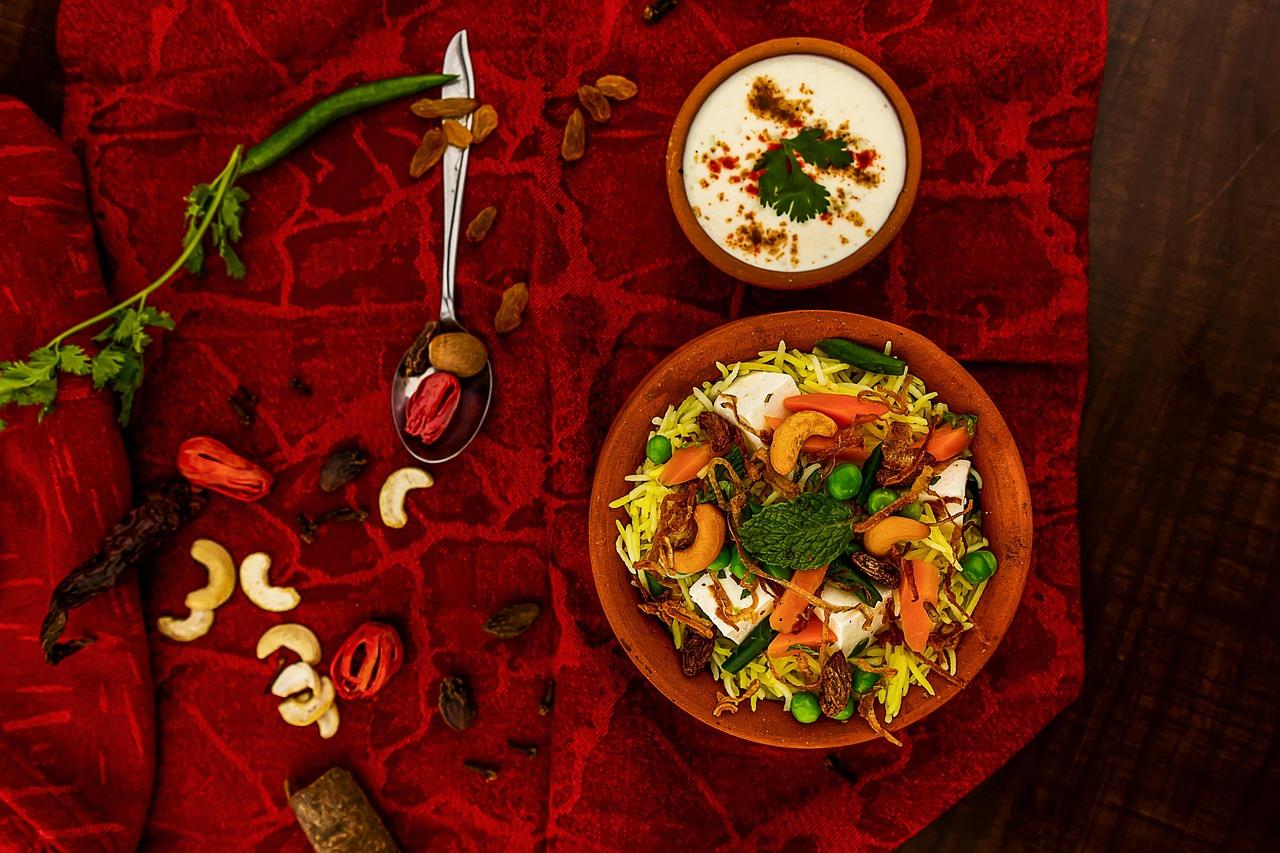
Paneer biryaniRice and moong dal in coconut milk
A mild, creamy biryani: rice and husked green gram roasted in ghee, then cooked in coconut milk with peas, carrots, potatoes, peanuts and cashews, and finished with soft fried paneer and a fresh coriander yogurt. Serve hot, garnished with more fried cashews and paneer.


Sabudana khichdiSago with peanuts and potato
Sabudana khichdi is the dish that sees Maharashtra through every vrat (fast), from Navratri to Ekadashi, but it's so good that people eat it any day of the week. Soaked sago pearls are tossed in a pan with crushed roasted peanuts, cubes of potato, cumin and green chilli until each pearl turns glassy and separate, then finished with lemon and coriander. It's soft, chewy, nutty and gently hot. Fasting rules vary from family to family, so check yours; this version uses rock salt and no asafoetida, onion or garlic. Traditionally it's cooked in ghee; use ghee instead of oil if you aren't keeping it vegan. Chef's tip: soak the sago in just enough water to cover by the height of the pearls themselves, no more; too much water is the reason khichdi turns into one sticky lump.
