
AI-generated image
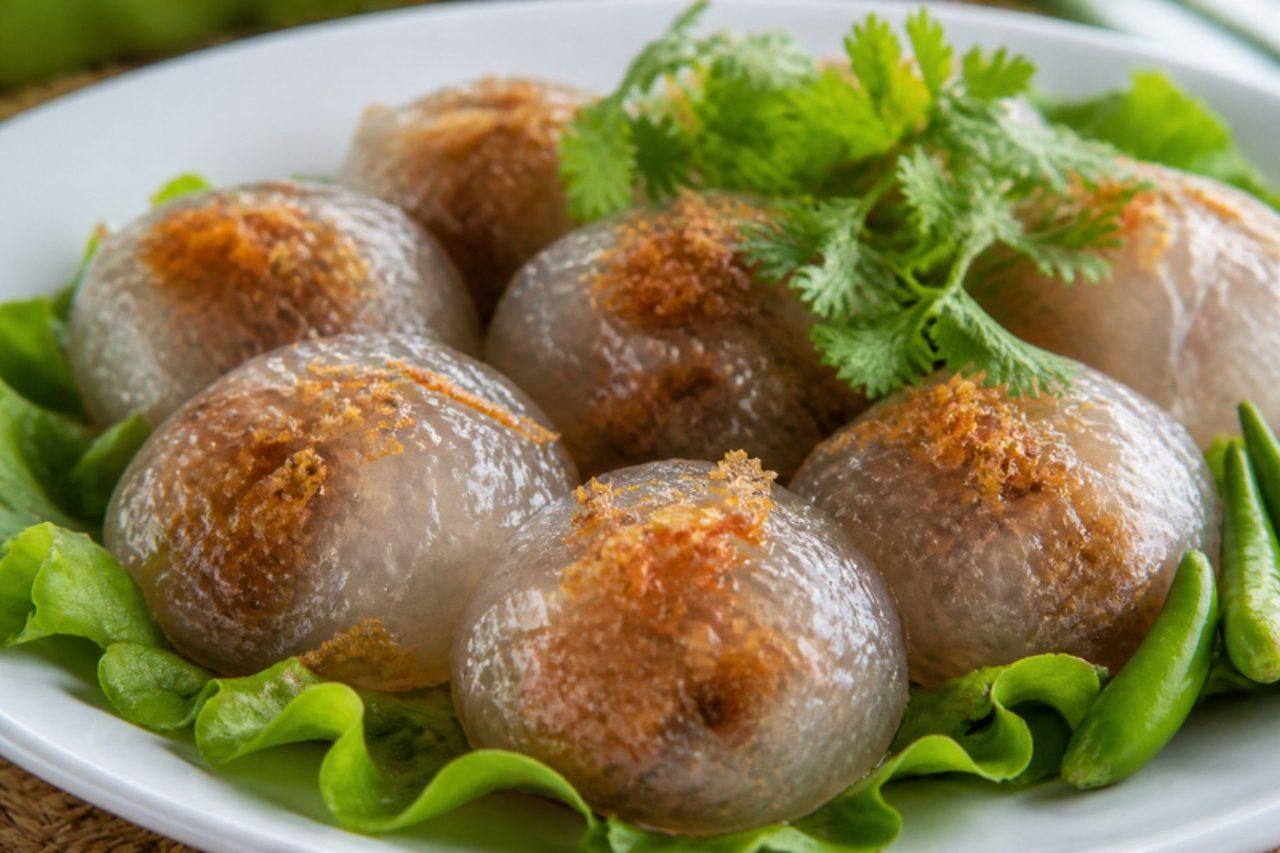
Sakoo sai moo (tapioca pork dumplings)
สาคูไส้หมู · see-through tapioca pearls around sweet pork, peanut and radish


Market dessert-and-snack sellers across central Thailand, from Bangkok's Or Tor Kor to Ratchaburi's floating market, line these glassy dumplings up on banana leaves beside khao kriap pak mo. The tapioca skin is chewy and translucent, showing a sweet-salty filling of minced pork cooked with preserved radish, peanuts and palm sugar. They are eaten warm, wrapped in a lettuce leaf with coriander and a bird's-eye chilli, and dressed with garlic oil. Chef's tip: soaking the tapioca too long is the mistake; it needs only enough water to become a damp, mouldable dough, or it turns soupy.
- Total time
- 75 min
- Difficulty
- medium
- Serves
- 6
Ingredients
For the filling
- 1 tbsp neutral oil
- 4 shallotsfinely chopped
- 3 cloves garlicpounded with the coriander roots
- 5 ½ oz minced pork
- 1 ¾ oz sweet preserved radishchai po, rinsed and finely chopped
- 2 ⅛ oz palm sugar
- 1 tbsp fish sauce
- ½ tsp ground white pepper
- 2 ⅛ oz roasted peanutscoarsely chopped
For the dough
- 7 oz small tapioca pearls
- ½ cup warm water
To serve
- 6 cloves garlicfinely chopped
- 4 tbsp neutral oil
- 1 handful coriander leaves
Shop this recipe on Amazon
What you'll need
Spices & pantry
Fresh ingredients (7)
Links open Amazon in a new tab. As an Amazon Associate, WhatToEat.Today earns from qualifying purchases.
Method
0/8 doneStep 1: Heat 1 tbsp neutral oil in a wok over a medium heat and fry 4 shallots with the pounded 3 cloves garlic and 2 coriander roots until soft and golden, about 3 minutes.
3 minStep 2: Add 5 ½ oz minced pork and stir-fry, breaking it up, until no pink remains and it reaches 160°F, about 4 minutes.
4 minStep 3: Add 1 ¾ oz sweet preserved radish, 2 ⅛ oz palm sugar, 1 tbsp fish sauce and ½ tsp ground white pepper and cook, stirring, until the mixture is dark, sticky and dry enough to hold together, about 8 minutes. Stir in 2 ⅛ oz roasted peanuts and cool completely.
8 minStep 4: Mix 7 oz small tapioca pearls with ½ cup warm water, a little at a time, until every pearl is damp and the mass holds when squeezed. Cover and rest for 15 minutes.
15 minStep 5: Roll the filling into 2 cm balls. Flatten a tablespoon of tapioca in your palm, set a ball in the middle and press the pearls around it into a smooth ball. Repeat, setting them on oiled leaves or baking paper.
20 minStep 6: Steam over boiling water on a high heat until the pearls are almost completely clear with only tiny white dots, 12–15 minutes.
15 minStep 7: Meanwhile fry 6 cloves garlic in 4 tbsp neutral oil over a low heat until pale gold, then pour into a bowl to stop it darkening.
4 minStep 8: Drizzle the dumplings with garlic oil and serve warm with 12 lettuce leaves, 1 handful coriander leaves and 4 bird's-eye chillies for wrapping.
Nutrition per serving
- Calories
- 360 kcal
- Protein
- 9 g
- Carbs
- 46 g
- Fat
- 16 g
- Fibre
- 2 g
Nutrition values are estimates.
KrazyBadal
Good to know
- How long does sakoo sai moo (tapioca pork dumplings) take?
- About 75 minutes in total: 45 minutes to prepare and 30 minutes to cook.
- How many people does it serve?
- 6 as written. Change the servings above the ingredients and every amount scales to match.
- Is it gluten free?
- Yes, as written. Check the labels on stock, sauces and spice mixes, which sometimes contain gluten.
- What can I use instead of shallots?
- Half an onion per 2 shallots.
- What can I use instead of garlic?
- ½ tsp garlic paste or ⅛ tsp garlic powder per clove.
Reviews
No reviews yet. Be the first to cook it.
Rate this recipe
Sign in to rate and review this recipe.
You might also like

SakarpadaSweet fried dough diamonds
Sakarpada (shakarpara) are little sweet diamonds of a rich dough made with ghee, milk and sugar, fried until golden and crunchy. They are a Diwali favourite with tea, and the cubes go into bhusu too. They keep for weeks in an air-tight tin.
 Indian

Yaki onigiriGrilled rice balls
Yaki onigiri (焼きおにぎり) are rice balls grilled until they form a crisp, toasty crust, then brushed with soy sauce glaze. They are eaten all over Japan, at izakaya, at barbecues and from the freezer section, as a snack or with miso soup. The inside stays soft and steamy while the outside crackles. Best eaten hot, straight from the pan. Chef's tip: let the shaped rice balls dry for 10 minutes before they go in the pan. A drier surface forms a better crust and won't stick, and the glaze goes on only at the end so it doesn't burn.
 Japanese

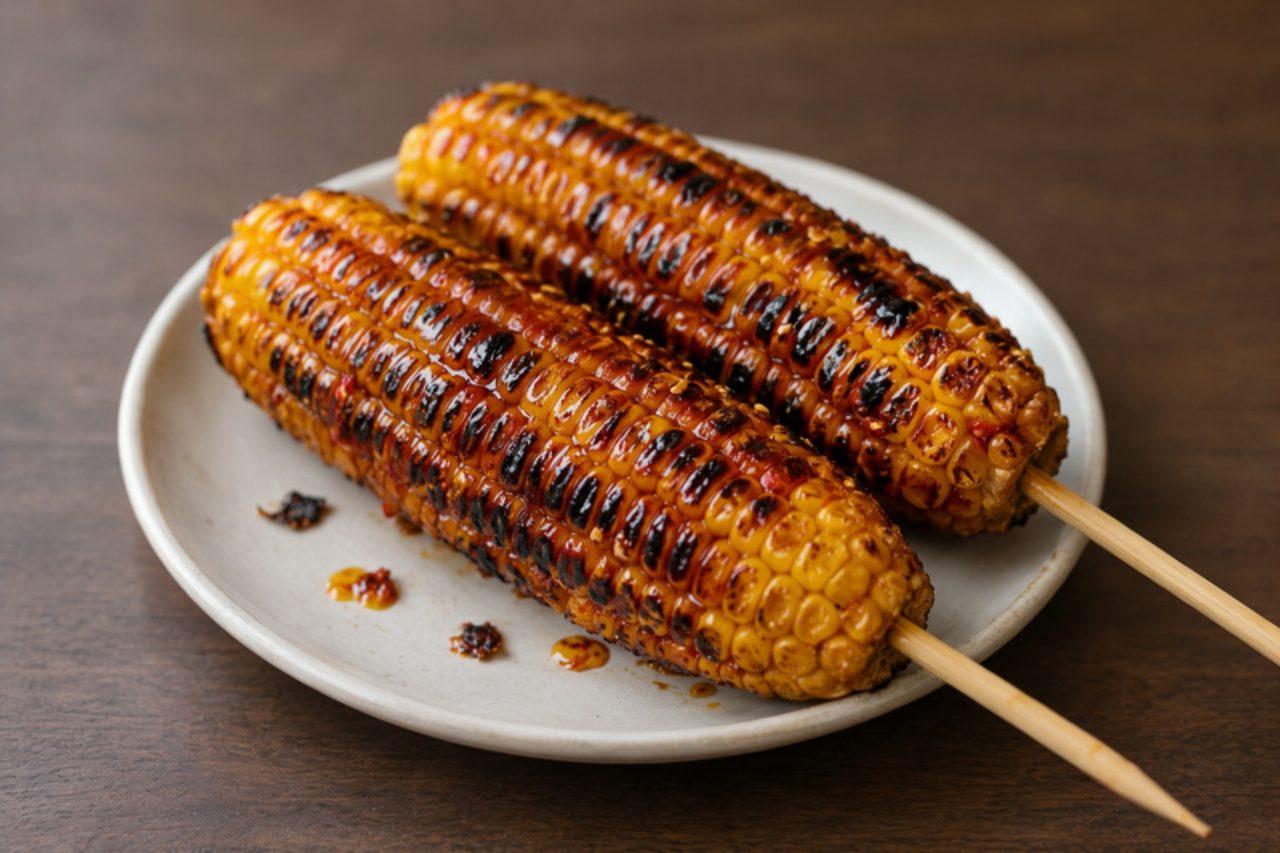
Taiwanese grilled corn
At Raohe and Shilin night markets the grilled-corn stalls are easy to find: look for the queue and the smoky, sweet smell. Cobs are par-cooked, then turned slowly over charcoal while the cook brushes them with a dark glaze of sacha sauce, thick soy paste, garlic and chilli, layer after layer, until the kernels are sticky, slightly charred and deeply savoury. It is eaten hot from a paper sleeve while walking the market. Sacha (shacha) sauce, a Taiwanese barbecue paste, usually contains dried fish and shrimp; vegetarian sacha is sold in Asian shops. Contains soy, wheat and fish. Chef's tip: brush thin coats and turn often; one thick coat burns before the corn chars.
 Taiwanese