
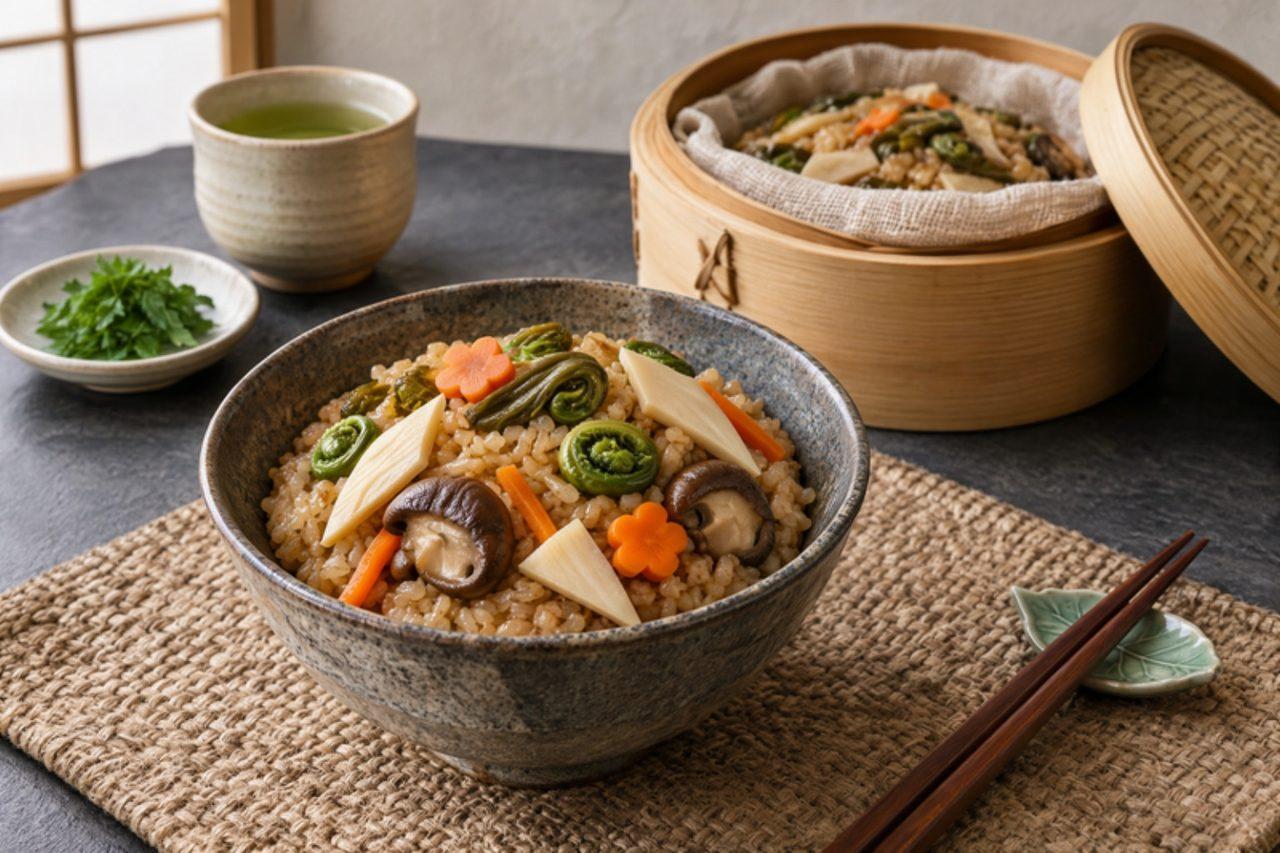
AI-generated image
Sansai okowa
Sticky rice with mountain vegetables
山菜おこわ (sansai okowa): sticky rice cooked with mountain vegetables, bamboo shoot and shiitake


In the snowy valleys of Yamagata, Niigata and Nagano, sansai okowa is what families cook in late spring when bracken, royal fern and bamboo shoots come down from the hills, and it turns up again in autumn rice-ball lunchboxes and at temple festivals. Soaked glutinous rice soaks up a soy and shiitake broth and cooks to a chewy, glossy, gently savoury pile studded with crunchy, slightly bitter greens. Eat it warm or at room temperature with miso soup and pickles, or shape it into onigiri. The usual mistake is giving sticky rice as much water as ordinary rice: it turns into paste, so use much less and let the soaking do the work. Chef's tip: buy the boiled, vacuum-packed mixed sansai sold in Japanese shops, and rinse it well, as it is often stored in brine.
- Total time
- 60 min
- Difficulty
- medium
- Serves
- 4
Ingredients
- 10 ½ oz glutinous (sticky) ricesoaked in cold water for at least 6 hours or overnight
- 4 dried shiitake mushroomssoaked in 250 ml water for 30 minutes
- 5 ½ oz boiled mixed mountain vegetables (sansai)rinsed, drained and cut into 3 cm lengths
- 3 ½ oz boiled bamboo shootthinly sliced
- ½ carrotcut into thin matchsticks
- 1 piece kombuabout 5 cm square
- 2 ½ tbsp soy sauce
- 1 tsp sugar
- ¼ tsp salt
- 1 tsp toasted sesame seeds (optional)
Shop this recipe on Amazon
What you'll need
Spices & pantry
Fresh ingredients (1)
Links open Amazon in a new tab. As an Amazon Associate, WhatToEat.Today earns from qualifying purchases.
Method
0/7 doneStep 1: Drain the soaked 10 ½ oz glutinous (sticky) rice in a sieve for 15 minutes; the grains should be chalky white all the way through and break easily between your nails.
15 minStep 2: Lift the 4 dried shiitake mushrooms from their soaking water, squeeze them, cut off the stems and slice the caps thinly. Keep the soaking liquid and strain it through a fine sieve to remove grit.
5 minStep 4: Stir in the drained rice so it lies level, then scatter the sliced shiitake, 5 ½ oz boiled mixed mountain vegetables (sansai), 3 ½ oz boiled bamboo shoot and ½ carrot on top without stirring them in. The liquid should only just reach the top of the rice.
3 minStep 5: Bring to the boil over a medium-high heat, then put the lid on, turn the heat to the lowest setting and cook for 15 minutes. Don't lift the lid.
17 minStep 6: Turn off the heat and leave the pot covered for 10 minutes to steam. The rice is done when the liquid has gone, the grains are translucent and chewy, and none taste hard in the middle. If a few are still firm, sprinkle with 2 tbsp water, cover and steam on the lowest heat for 3 minutes more.
10 minStep 7: Remove the kombu, then fold the vegetables through the rice with a damp rice paddle, cutting rather than stirring so the grains stay whole. Sprinkle with 1 tsp toasted sesame seeds and serve warm, or cool and shape into rice balls with wet hands. Rice cooker: put everything in the inner pot, set the water to the sticky-rice line and use the okowa setting.
3 min
Nutrition per serving
- Calories
- 335 kcal
- Protein
- 8 g
- Carbs
- 70 g
- Fat
- 2 g
- Fibre
- 3 g
Nutrition values are estimates.
KrazyBadal
Good to know
- How long does sansai okowa take?
- About 60 minutes in total: 20 minutes to prepare and 40 minutes to cook.
- How many people does it serve?
- 4 as written. Change the servings above the ingredients and every amount scales to match.
- Is it vegan?
- Yes. It has no meat, fish, dairy or eggs.
- What can I use instead of dried shiitake mushrooms?
- Aubergine, diced, same weight.
- What can I use instead of carrot?
- Parsnip or sweet potato, same weight.
Reviews
No reviews yet. Be the first to cook it.
Rate this recipe
Sign in to rate and review this recipe.
You might also like

Yaki onigiriGrilled rice balls
Yaki onigiri (焼きおにぎり) are rice balls grilled until they form a crisp, toasty crust, then brushed with soy sauce glaze. They are eaten all over Japan, at izakaya, at barbecues and from the freezer section, as a snack or with miso soup. The inside stays soft and steamy while the outside crackles. Best eaten hot, straight from the pan. Chef's tip: let the shaped rice balls dry for 10 minutes before they go in the pan. A drier surface forms a better crust and won't stick, and the glaze goes on only at the end so it doesn't burn.


Miso soup
Miso soup (味噌汁) is drunk every day in homes all over Japan, at breakfast as well as dinner, beside a bowl of rice. The base is dashi; this vegan version uses kombu and dried shiitake instead of bonito, which gives it a deep, rounded flavour. Silken tofu and wakame seaweed are the classic fillings. It takes ten minutes; just remember not to boil the miso. Chef's tip: add the miso at the very end and never let it boil. Boiling kills the miso's fresh, fermented aroma; Japanese cooks say the soup should only 'smile', with the surface barely trembling.
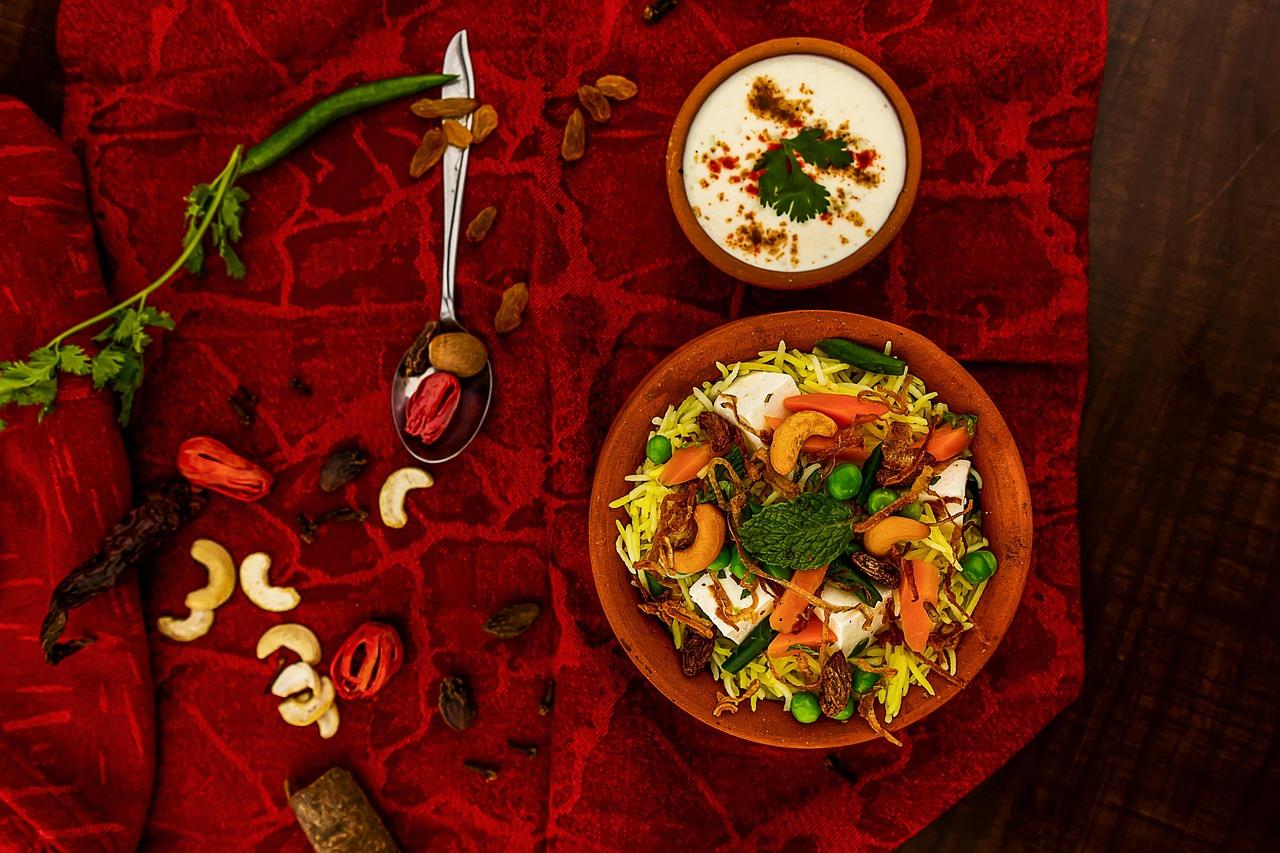
Paneer biryaniRice and moong dal in coconut milk
A mild, creamy biryani: rice and husked green gram roasted in ghee, then cooked in coconut milk with peas, carrots, potatoes, peanuts and cashews, and finished with soft fried paneer and a fresh coriander yogurt. Serve hot, garnished with more fried cashews and paneer.
 Indian
