
AI-generated image
Dakkochi
Chicken and spring onion skewers
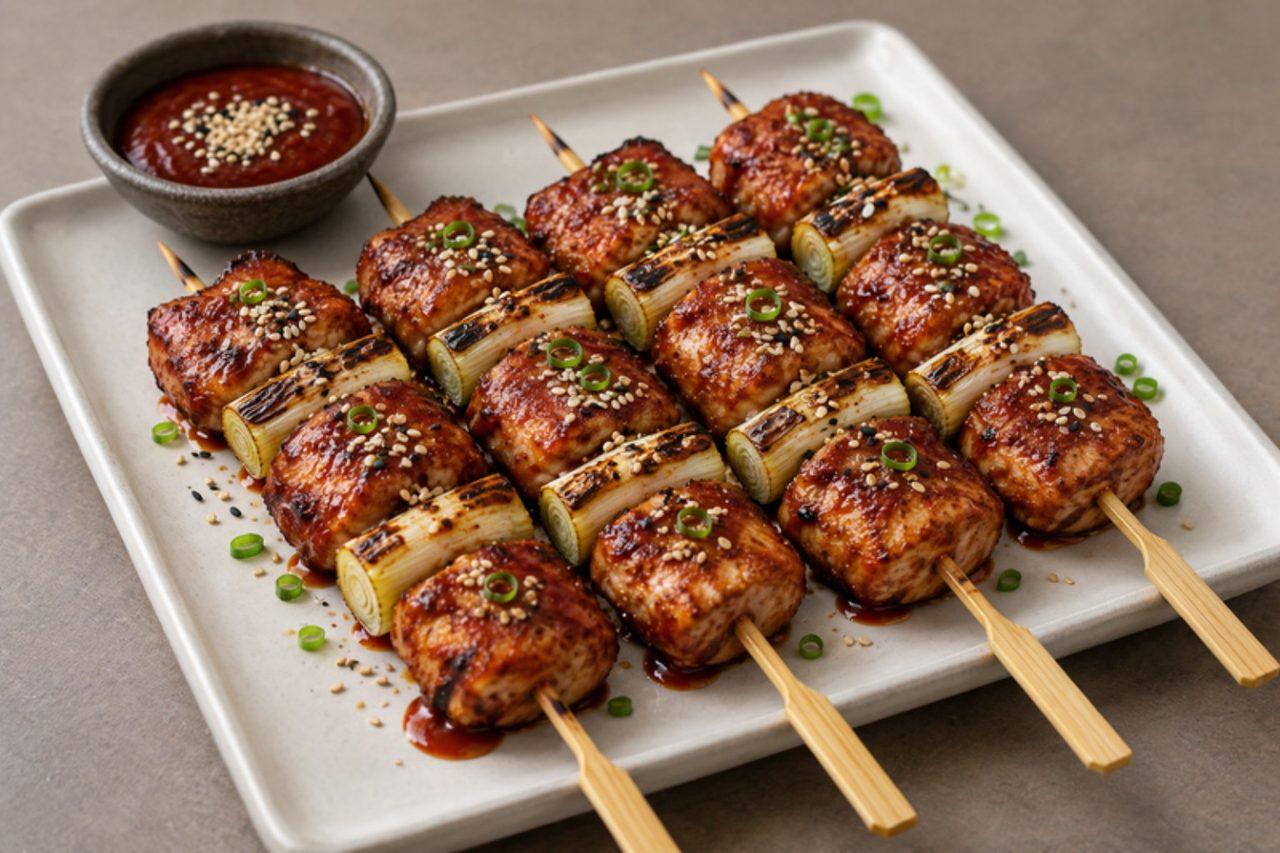
닭꼬치: chicken thigh and spring onion skewers grilled and brushed with a sweet-spicy gochujang glaze


Dakkochi carts line the evening streets of Myeong-dong and the backstreets of Jongno, where chicken skewers sizzle on flat grills under a cloud of sweet, smoky steam. Juicy pieces of thigh alternate with thick spring onion, and the vendor slaps on a sticky glaze of gochujang, chilli and rice syrup at the end, or a mild soy version for children. They are eaten standing, as a late snack. Chef's tip: brush on the glaze only in the last few minutes; it is sugary and burns long before the chicken is cooked.
- Total time
- 35 min
- Difficulty
- easy
- Serves
- 4
Ingredients
For the skewers
- 1 ⅓ lb boneless chicken thighsskinless, cut into 3 cm pieces
- 4 thick spring onions or slim leekswhite parts, cut into 3 cm lengths
- 1 tbsp soy sauce
- 2 garlic clovesgrated
- 1 tsp fresh gingergrated
- ¼ tsp black pepper
- 8 bamboo skewerssoaked in water
- 1 tbsp vegetable oil
For the glaze
- 2 tbsp gochujang
- 1 tbsp soy sauce
- 2 tbsp rice syrup or golden syrup
- 1 tbsp tomato ketchup
- 1 garlic clovegrated
- 2 tbsp water
To serve
- 1 tsp toasted sesame seeds (optional)
Shop this recipe on Amazon
What you'll need
Spices & pantry
Fresh ingredients (3)
Links open Amazon in a new tab. As an Amazon Associate, WhatToEat.Today earns from qualifying purchases.
Method
0/6 doneStep 1: Toss 1 ⅓ lb boneless chicken thighs with 1 tbsp soy sauce, 2 garlic cloves, 1 tsp fresh ginger and ¼ tsp black pepper. Cover and marinate in the fridge for 15 minutes.
15 minStep 2: Thread the chicken onto 8 bamboo skewers, alternating with 4 thick spring onions or slim leeks.
5 minStep 3: Simmer 2 tbsp gochujang, 1 tsp gochugaru (Korean chilli flakes), 1 tbsp soy sauce, 2 tbsp rice syrup or golden syrup, 1 tbsp tomato ketchup, 1 garlic clove and 2 tbsp water in a small pan for 2 minutes, until glossy.
2 minStep 4: Heat a griddle pan or barbecue to medium, brush with 1 tbsp vegetable oil and cook the skewers for 10–12 minutes, turning often, until charred in places and the thickest piece reaches 165°F, with clear juices.
12 minStep 5: Brush with the glaze and cook for 1–2 minutes more each side, until sticky. Common mistake: glazing from the start; the sugar blackens while the inside is still raw.
3 minStep 6: Sprinkle with 1 tsp toasted sesame seeds if using and serve hot.
Nutrition per serving
- Calories
- 310 kcal
- Protein
- 32 g
- Carbs
- 16 g
- Fat
- 12 g
- Fibre
- 1 g
Nutrition values are estimates.
KrazyBadal
Good to know
- How long does dakkochi take?
- About 35 minutes in total: 20 minutes to prepare and 15 minutes to cook.
- How many people does it serve?
- 4 as written. Change the servings above the ingredients and every amount scales to match.
- Is it very spicy?
- It has some heat. Use less chilli for a milder version, or more if you like it hot.
- What can I use instead of boneless chicken thighs?
- Chicken breast, same weight (cook a few minutes less so it stays juicy).
- What can I use instead of thick spring onions or slim leeks?
- 1 onion per leek.
Reviews
No reviews yet. Be the first to cook it.
Rate this recipe
Sign in to rate and review this recipe.
You might also like
Arroz con pitu de caleyaSoupy rice with chicken
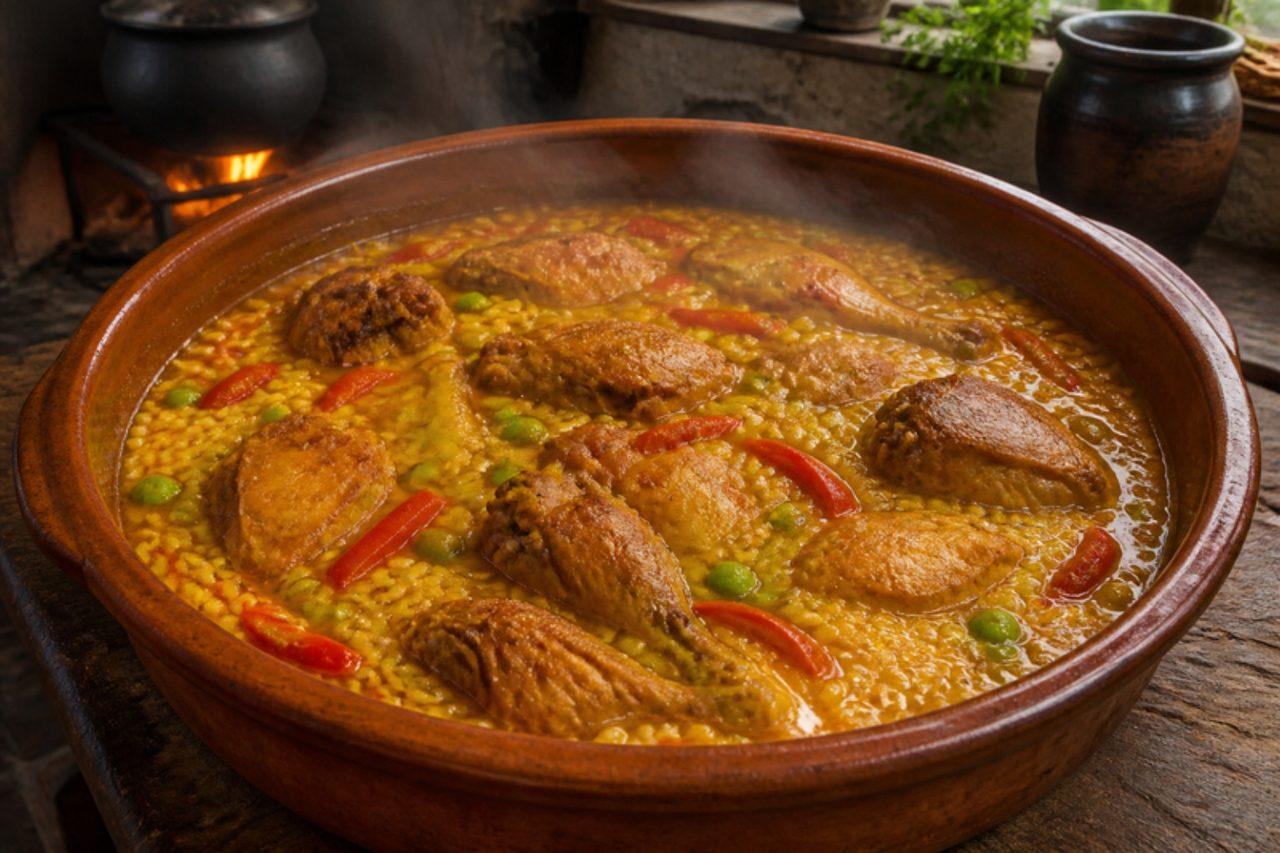
A pitu de caleya is a cockerel raised free in the lanes, or caleyas, of rural Asturias; its firm, flavourful meat needs long stewing, and families around Villaviciosa and Grado still cook it for feast days. The stew is often finished as a soupy rice, so the deep chicken juices go into every grain. Use the best free-range chicken you can find. The braise includes dry white wine; replace it with extra stock and a squeeze of lemon if you want it alcohol-free. Chef's tip: brown the chicken slowly and deeply; that colour is where the flavour of the whole pot comes from.
 Spanish
DakjukChicken and rice porridge
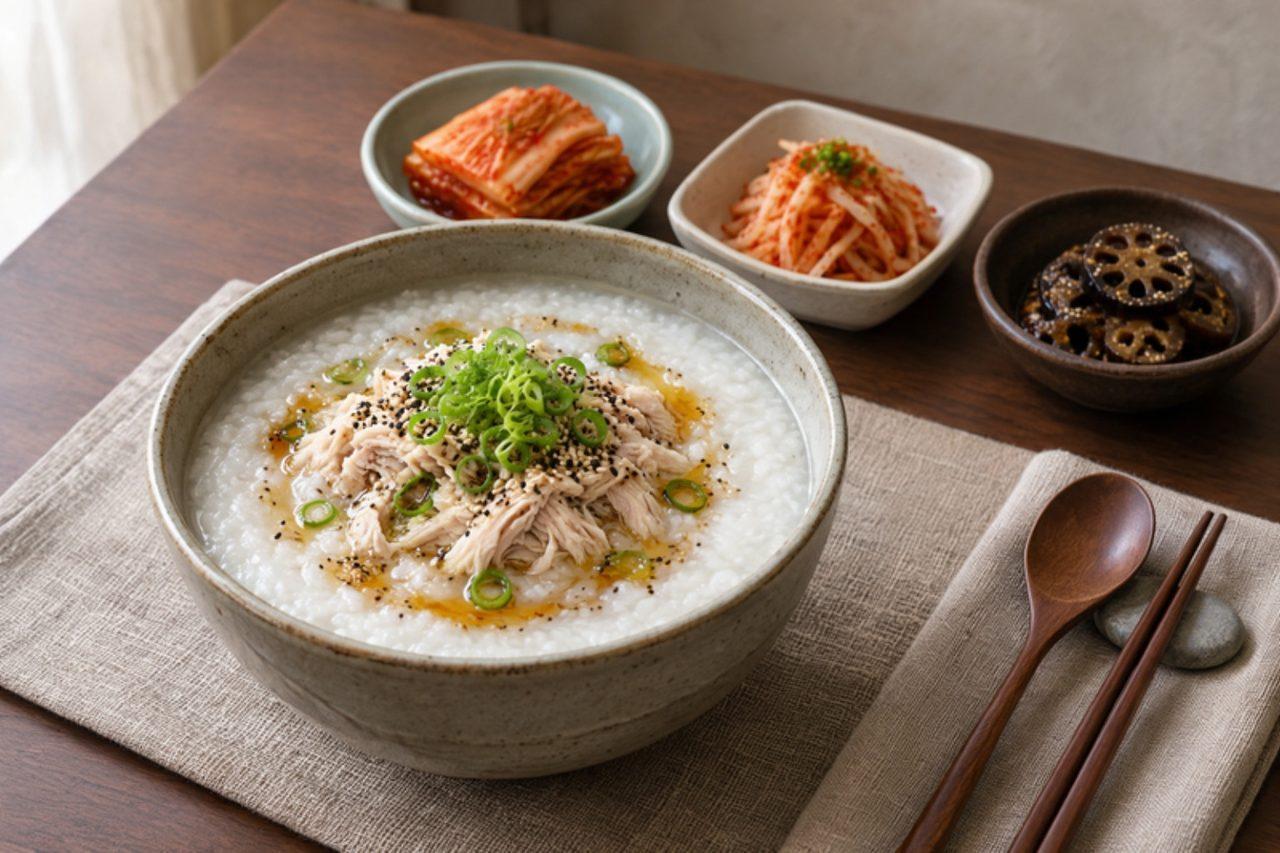
All over Korea, dakjuk is the bowl a mother makes on a cold morning or when someone is under the weather: chicken simmered with garlic and ginger, the meat pulled into shreds, and soaked rice cooked down in the broth until it turns into a soft, savoury porridge finished with sesame oil. It is eaten for breakfast or as a gentle lunch, with a little kimchi on the side. The usual mistake is boiling the chicken hard, which clouds the broth and toughens the meat; keep it at a lazy simmer. Chef's tip: fry the soaked rice in sesame oil for two minutes before the broth goes in, so the grains toast lightly and the porridge tastes nutty rather than flat.

TteokbokkiRice cakes in spicy sauce
Tteokbokki (떡볶이) is Korea's best-loved street snack: chewy cylinders of rice cake simmered in a thick, glossy, sweet and spicy red sauce. It became a classic in Seoul, where it is sold from street stalls and snack bars in every neighbourhood. Street versions use anchovy stock and fish cakes; this vegan version uses a quick kelp and shiitake stock with cabbage and spring onions, and has all the same punch. Eat it hot, while the rice cakes are soft and stretchy. Chef's tip: keep stirring and scrape the bottom; the rice cakes release starch that thickens the sauce but also catches. The sauce is right when it clings to the spoon in a glossy coat.

