
AI-generated image
Shahi tukda
Fried bread in saffron syrup
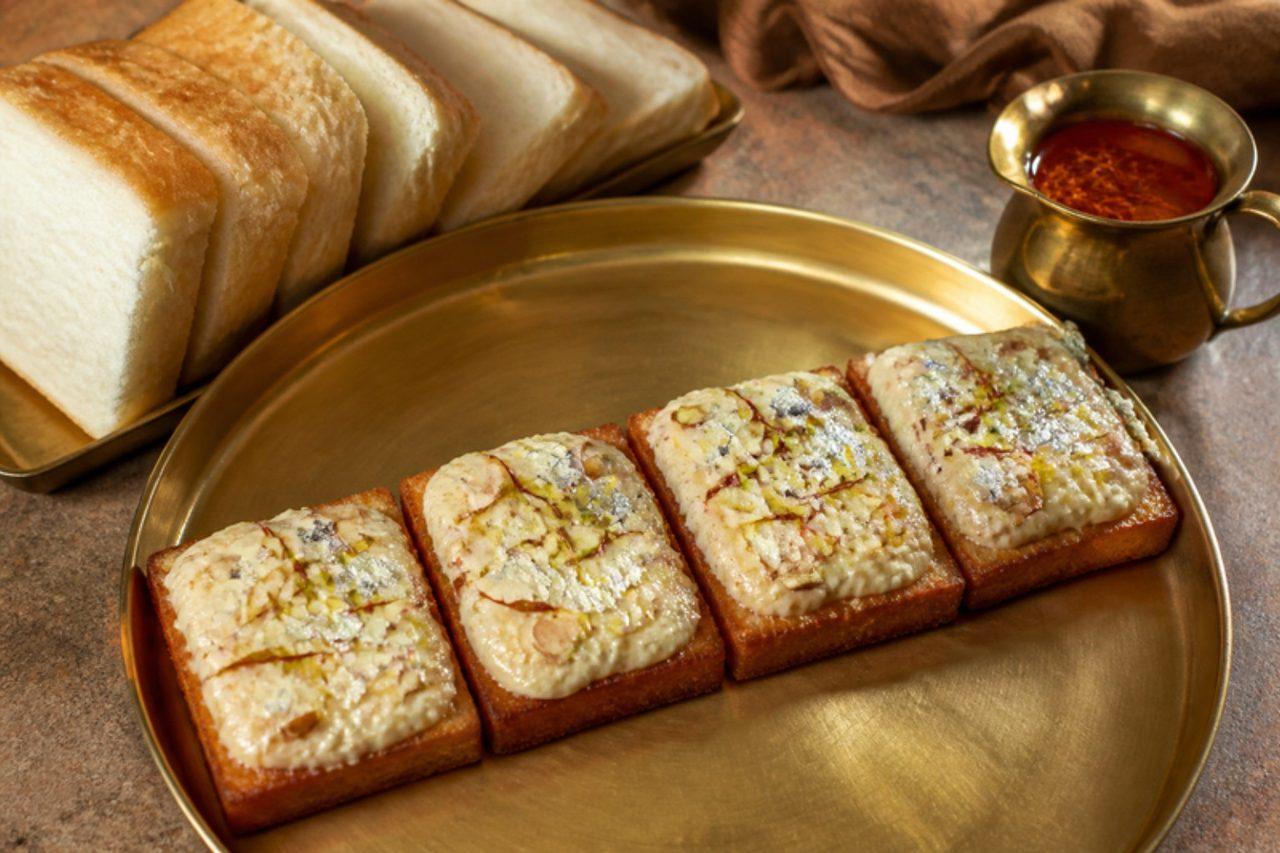
शाही टुकड़ा: Old Delhi's ghee-fried bread soaked in saffron syrup and crowned with thick rabri
 Indian
Shahi tukda, the 'royal piece', comes from the Mughal kitchens of Old Delhi, and you'll still find trays of it around Jama Masjid during Ramzan, eaten after the evening meal, and at Eid feasts. Thick slices of bread are fried in ghee until crisp and golden, dipped briefly in cardamom and saffron syrup, then covered with rabri, milk slowly reduced until thick and full of creamy flakes. The bread stays crisp at the edges and soft in the middle. It's rich, so small pieces go a long way. Chef's tip: start the rabri first and let it simmer while you fry the bread; it takes the longest and needs only an occasional stir.
- Total time
- 75 min
- Difficulty
- medium
- Serves
- 6
Ingredients
For the rabri
- 4 ¼ cups whole milk
- 1 ¾ oz sugar
- ¼ tsp ground cardamom
For the syrup
- 4 oz sugar
- ¾ cup water
- 3 green cardamom podslightly crushed
- 1 pinch saffron threads
- 1 tsp rose water
For the bread
- 6 thick-sliced white breadslices, crusts removed, halved into triangles
- 2 ⅞ oz gheefor frying
To garnish
- ½ oz pistachiosslivered
- ½ oz almondsslivered
- 2 edible silver leaf (vark) (optional)vegetarian-certified
Shop this recipe on Amazon
Spices & pantry
Fresh ingredients (1)
Links open Amazon in a new tab. As an Amazon Associate, WhatToEat.Today earns from qualifying purchases.
Method
0/6 doneStep 1: Bring 4 ¼ cups whole milk to the boil in a wide, heavy pan over a medium heat, then lower the heat so it simmers steadily. Every few minutes, push the skin that forms on top to the sides of the pan.
10 minStep 2: Simmer for 40–45 minutes, stirring the bottom now and then and scraping the creamy layers from the sides back in, until the milk has reduced to about a third and is thick and flaky. Stir in 1 ¾ oz sugar and ¼ tsp ground cardamom, cook for 2 more minutes and leave to cool.
45 minStep 3: Meanwhile, for the syrup, simmer 4 oz sugar, ¾ cup water, 3 green cardamom pods and 1 pinch saffron threads over a medium heat for 5–6 minutes until slightly sticky between finger and thumb (no thread needed). Stir in 1 tsp rose water and keep warm.
6 minStep 4: Heat 2 ⅞ oz ghee in a frying pan over a medium-low heat. Fry 6 thick-sliced white bread a few pieces at a time for 1½–2 minutes each side until evenly golden and crisp right through. Too hot and they brown before crisping inside. Drain on kitchen paper.
12 minStep 5: Dip each piece of fried bread into the warm syrup for about 10 seconds, turning once, then lift it onto a serving dish. Leaving it in longer is the common mistake: the bread turns soggy and falls apart under the rabri.
3 minStep 6: Spoon the rabri generously over the bread, scatter with ½ oz pistachios and ½ oz almonds, and lay on 2 edible silver leaf (vark) if you like. Serve at room temperature or lightly chilled.
2 min
Nutrition per serving
- Calories
- 420 kcal
- Protein
- 10 g
- Carbs
- 52 g
- Fat
- 20 g
- Fibre
- 1 g
Nutrition values are estimates.
KrazyBadal
Good to know
- How long does shahi tukda take?
- About 75 minutes in total: 15 minutes to prepare and 60 minutes to cook.
- How many people does it serve?
- 6 as written. Change the servings above the ingredients and every amount scales to match.
- Is it vegetarian?
- Yes. It has no meat or fish.
- What can I use instead of whole milk?
- Semi-skimmed milk with 1 tbsp cream per 240ml (1 cup).
- What can I use instead of sugar?
- Caster sugar, same amount.
Reviews
No reviews yet. Be the first to cook it.
Rate this recipe
Sign in to rate and review this recipe.
You might also like

Sabudana khichdiSago with peanuts and potato
Sabudana khichdi is the dish that sees Maharashtra through every vrat (fast), from Navratri to Ekadashi, but it's so good that people eat it any day of the week. Soaked sago pearls are tossed in a pan with crushed roasted peanuts, cubes of potato, cumin and green chilli until each pearl turns glassy and separate, then finished with lemon and coriander. It's soft, chewy, nutty and gently hot. Fasting rules vary from family to family, so check yours; this version uses rock salt and no asafoetida, onion or garlic. Traditionally it's cooked in ghee; use ghee instead of oil if you aren't keeping it vegan. Chef's tip: soak the sago in just enough water to cover by the height of the pearls themselves, no more; too much water is the reason khichdi turns into one sticky lump.



Bagara bainganBaby aubergines in peanut sesame sauce
Bagara baingan is a Hyderabadi wedding dish of small aubergines cooked whole in a dark, tangy gravy of roasted peanuts, sesame, dried coconut and tamarind. Unlike a Gujarati stuffed brinjal, the aubergines here are only quartered at the base and fried until silky, then left to soak up a thin-but-rich sauce that is finished with a tempering, the 'baghar' that gives the dish its name. It's sour, nutty and gently spiced, and is served with biryani, bagara rice or plain rice. Chef's tip: choose small, glossy purple aubergines that feel heavy for their size; soft, light ones are full of seeds and turn mushy before the gravy has a chance to cling.

Masala khakhraCrisp roasted wheat crackers
Khakhra are thin chapaties roasted slowly on a griddle until they turn crisp, like a cracker. This masala version adds gram flour, fresh fenugreek, turmeric and chilli to the wheat dough. They are a light Gujarati breakfast or tea-time snack, and lovely with pickle, chutney or a smear of butter. You can also make them in a roti maker.