
AI-generated image
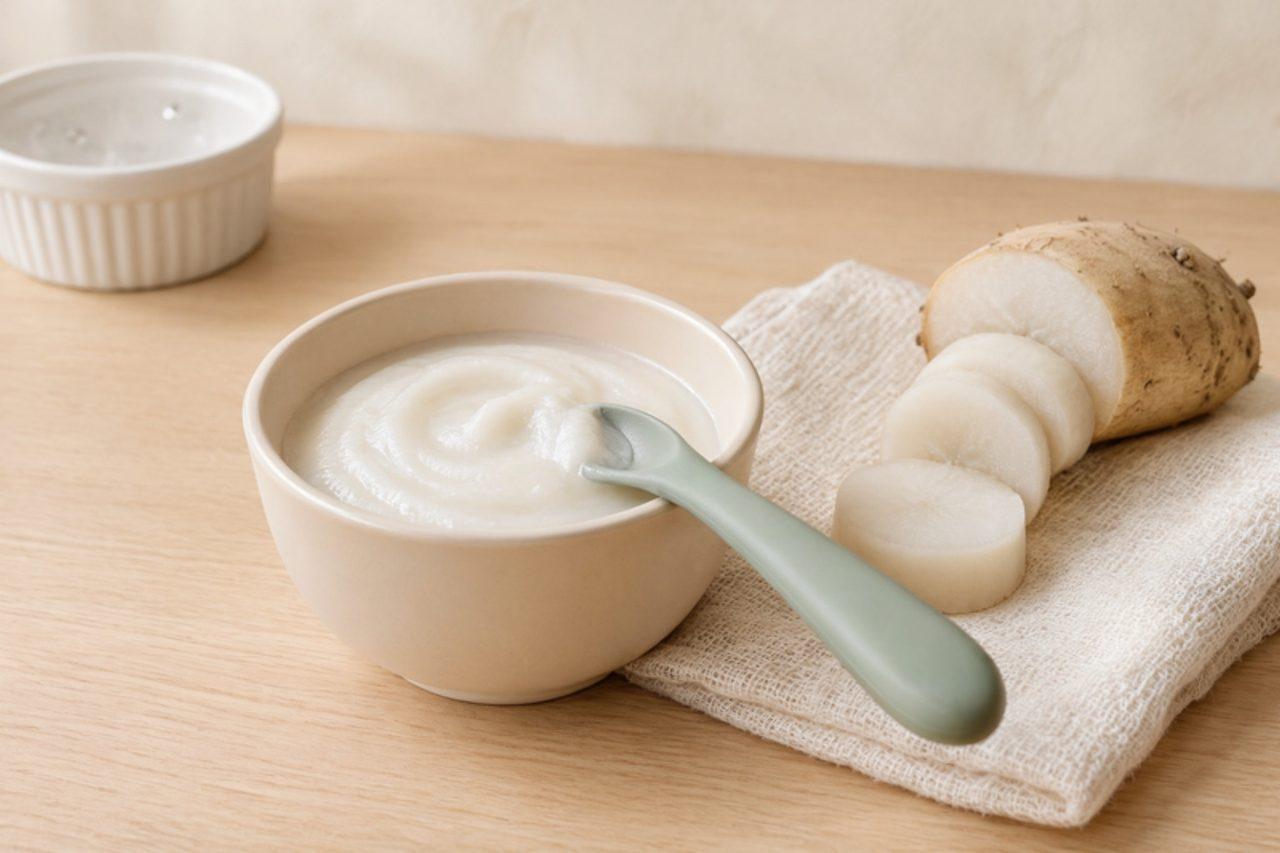
Shānyào ní (Chinese yam purée)
6m+ · Steamed Chinese yam pressed into a silky white purée, a gentle first food



Chinese yam (shānyào, the long, hairy-skinned root sold in bundles in markets from Beijing to Guangzhou) is valued in Chinese homes as easy on the tummy, and steamed shānyào ní is one of the classic first purées offered at six months. Once steamed, the crisp, slippery flesh turns floury and pale, and pressed through a sieve it gives a smooth, slightly sweet, potato-like purée. Nothing else is added: no salt, sugar or honey for babies. It is free of the major allergens. Chef's tip: wear gloves or oil your hands before peeling; the raw sap makes skin itch, but cooking destroys it completely.
- Total time
- 25 min
- Difficulty
- easy
- Serves
- 3
Baby & toddler safety
- Age: from 6 months+.
- Allergens: none of the common allergens found in the ingredients. Offer one new allergen at a time, in the morning, so you can watch for a reaction.
- Texture and choking: purée or mash smoothly for 6–9 months, then soft, finger-sized pieces that squash between your fingers. Cut round foods such as grapes and cherry tomatoes into quarters lengthways, never give whole nuts, and always stay with your child while they eat.
- Under 1: no honey, no added salt or stock cubes, and no added sugar.
Every child is different. If you are unsure, especially about allergies, check with your health visitor or paediatrician.
Ingredients
- 5 ½ oz Chinese yam (shanyao)a 15 cm piece
- 2 cups waterfor steaming, plus a little boiled water to thin
Shop this recipe on Amazon
What you'll need
Fresh ingredients (1)
Links open Amazon in a new tab. As an Amazon Associate, WhatToEat.Today earns from qualifying purchases.
Method
0/5 doneStep 1: Wearing gloves, peel 5 ½ oz Chinese yam (shanyao) with a vegetable peeler and cut into 3 cm pieces, dropping them straight onto a heatproof plate.
4 minStep 2: Bring 2 cups water to the boil in a steamer, set the plate in the basket, cover and steam over a medium heat for 15–20 minutes, until a chopstick slides through the thickest piece with no crunch.
20 minStep 3: Press the hot yam through a fine sieve with the back of a spoon, or blend with a spoonful of boiled water, until silky. Common mistake: under-steaming; half-cooked yam stays crunchy and slimy and will not purée smoothly.
2 minStep 4: Loosen with boiled water or your baby's usual milk until soft and spoonable, and cool to lukewarm.
Step 5: Cool the rest quickly, cover and keep in the fridge for up to 2 days or freeze in small portions for up to 1 month. Reheat once only, until piping hot all through, then cool before serving.
Nutrition per serving
- Calories
- 50 kcal
- Protein
- 2 g
- Carbs
- 11 g
- Fat
- 0 g
- Fibre
- 2 g
Nutrition values are estimates.
KrazyBadal
Good to know
- How long does shānyào ní (Chinese yam purée) take?
- About 25 minutes in total: 5 minutes to prepare and 20 minutes to cook.
- How many people does it serve?
- 3 as written. Change the servings above the ingredients and every amount scales to match.
- Is it vegan?
- Yes. It has no meat, fish, dairy or eggs.
- Is it gluten free?
- Yes, as written. Check the labels on stock, sauces and spice mixes, which sometimes contain gluten.
Reviews
No reviews yet. Be the first to cook it.
Rate this recipe
Sign in to rate and review this recipe.
You might also like
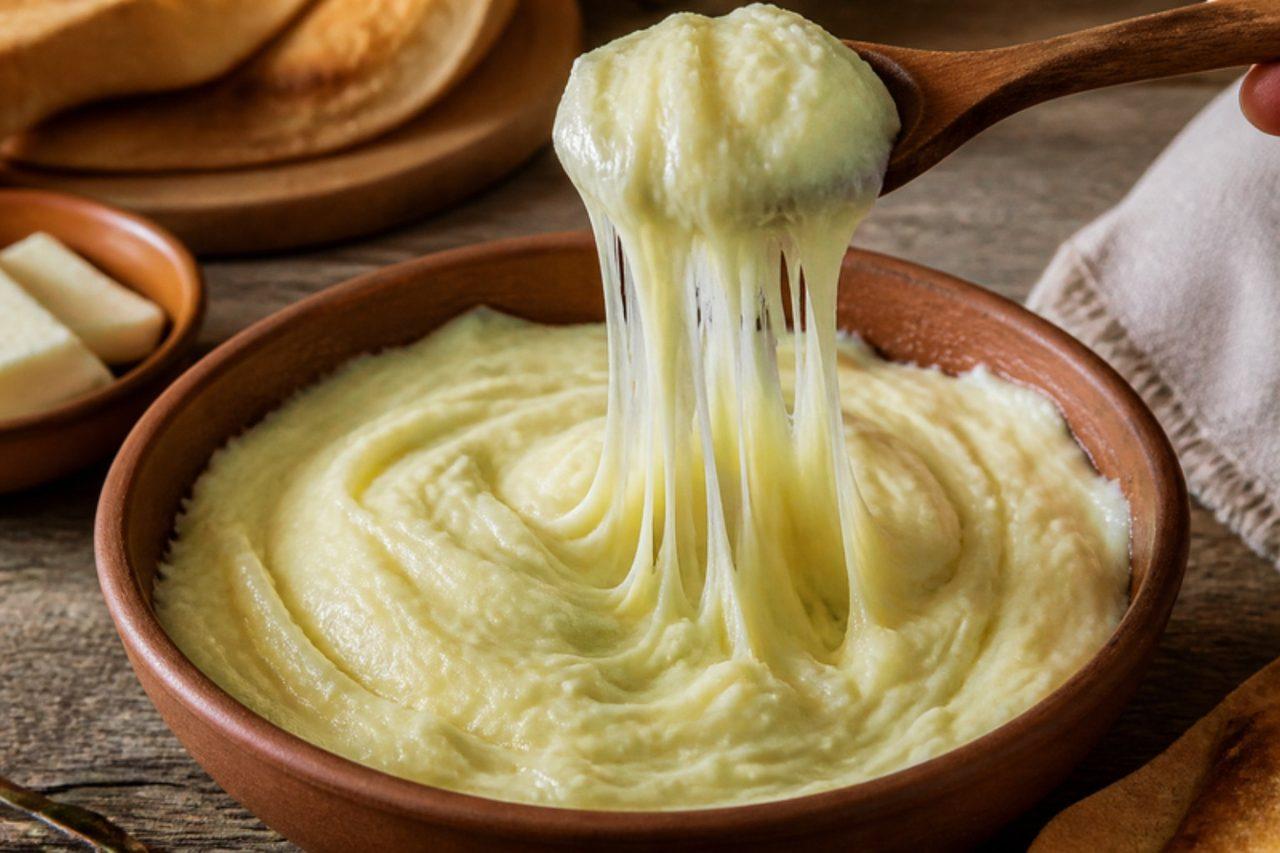
TashmijabiMashed potatoes with stretchy cheese
Potatoes grow well in the cold valleys of Svaneti, and tashmijabi is how families around Mestia turn them into a feast dish: they are mashed hot, then beaten with handfuls of young sulguni until the purée becomes glossy and stretches from the spoon in long strands. It is served with grilled meat, kubdari or simply with pickles and Svan salt. A common mistake is letting the potatoes cool before adding the cheese; they must be piping hot for the cheese to melt and stretch. Chef's tip: keep the pan on a low heat while you beat, and use a firm wooden spoon. Most sulguni uses animal rennet; choose a vegetarian one or use mozzarella.
 Georgian

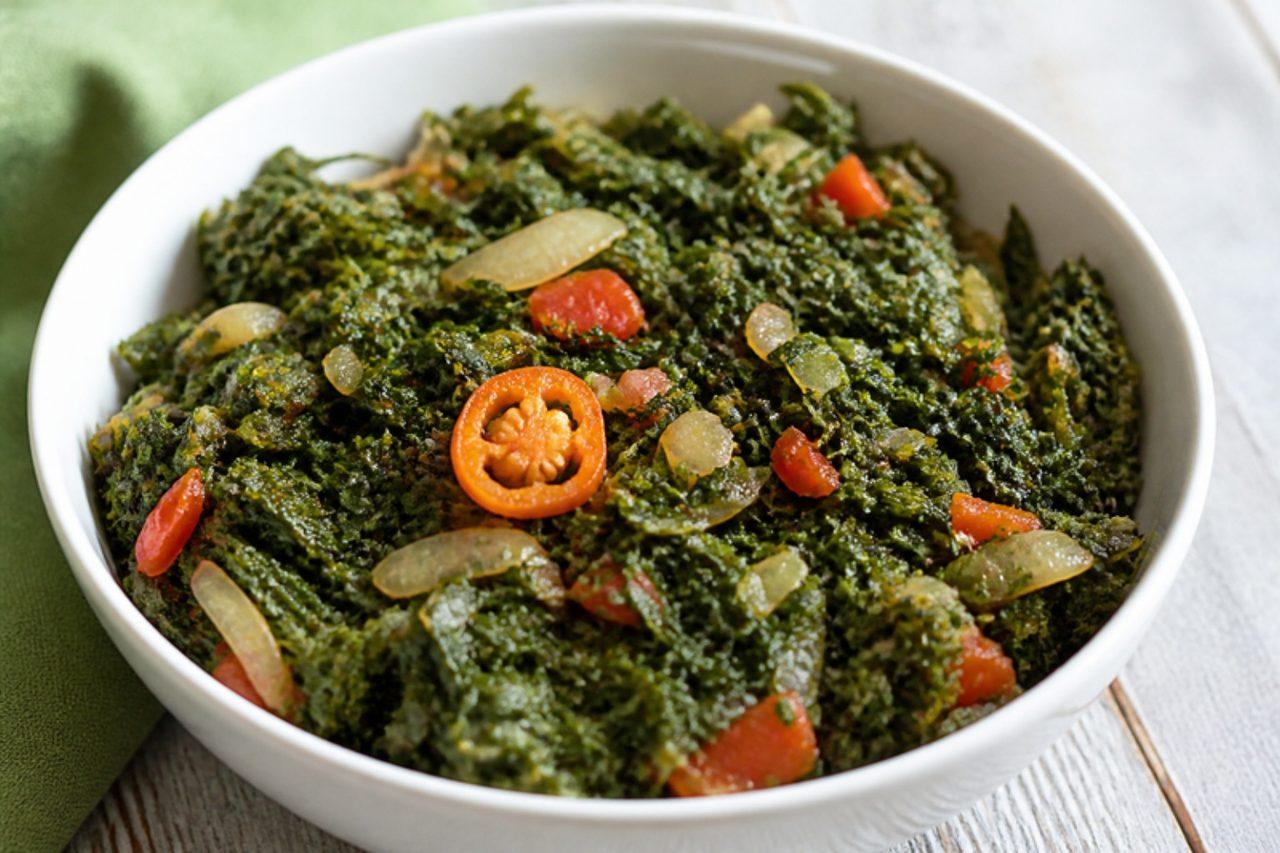
Jamaican callalooSteamed callaloo greens
In Jamaica, callaloo means the leaves and tender stems of a type of amaranth, sold in big bundles in every market from Coronation Market in Kingston to Santa Cruz in St Elizabeth. It's steamed down with onion, tomato, garlic and thyme into soft, savoury greens with a mild mineral sweetness, and eaten at breakfast with fried dumplings, boiled green bananas or hard dough bread, or as a side at dinner. Spinach or Swiss chard can stand in if you can't find callaloo. Chef's tip: peel the fibrous skin from the thicker stems with a small knife and slice the stems and leaves finely across, about 1 cm wide. That's how Jamaican cooks get callaloo that's tender all the way through rather than stringy.
 Jamaican

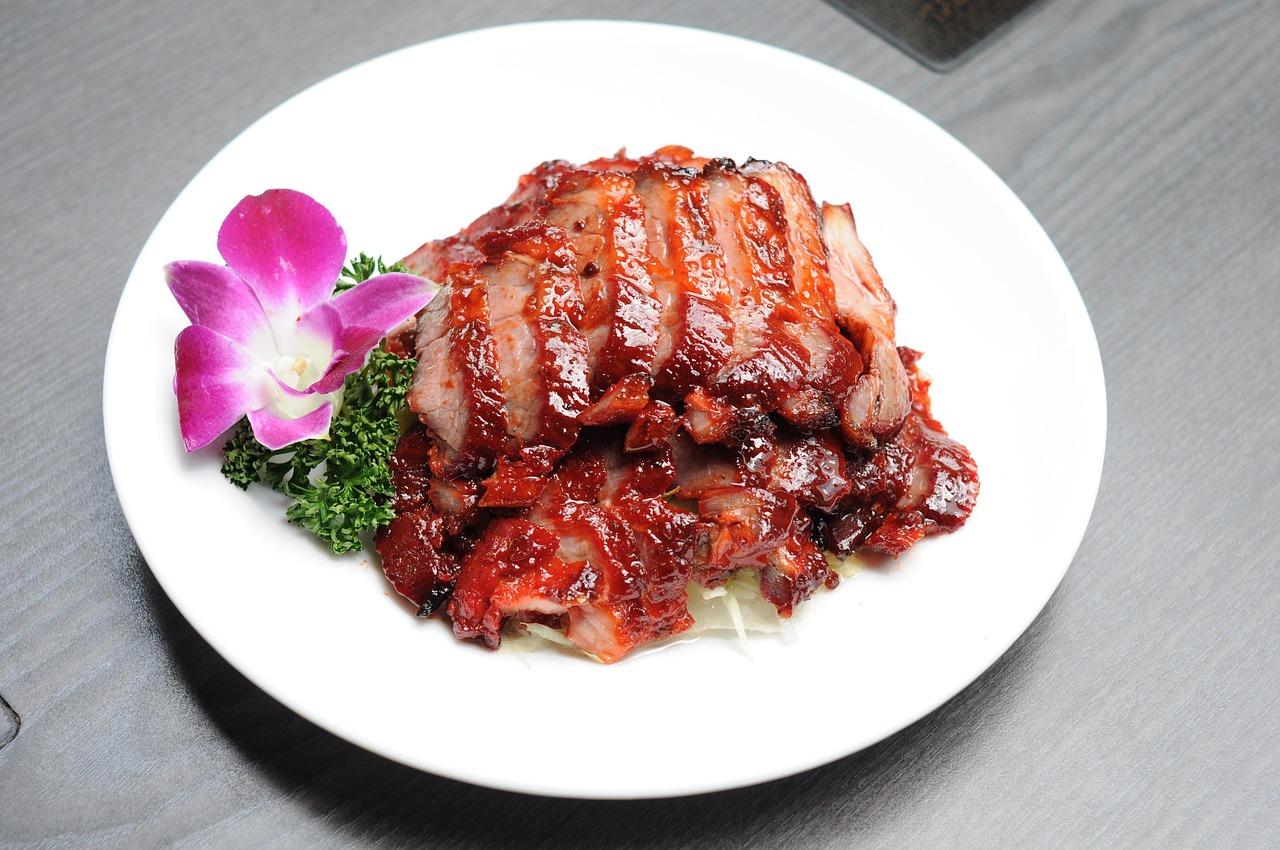
Char siuHoney roast pork
Hanging in long glossy strips in the windows of Guangzhou's siu mei shops, char siu is the roast pork Cantonese families pick up on the way home to put on rice, noodles or into steamed buns. The outside is lacquered, sweet and a little charred at the edges; the inside stays juicy, savoury and faintly scented with five-spice. Shoulder (pork butt) is the cut to use, because its marbling keeps the strips moist through a hot oven. Marinate it overnight in the fridge, roast it the next day and eat it warm with steamed rice and blanched greens, or cold in fried rice and noodle soups. Chef's tip: save the honey for the last ten minutes; brushed on at the start it burns black long before the pork is cooked.