
AI-generated image
Shengjian bao
Pan-fried pork buns
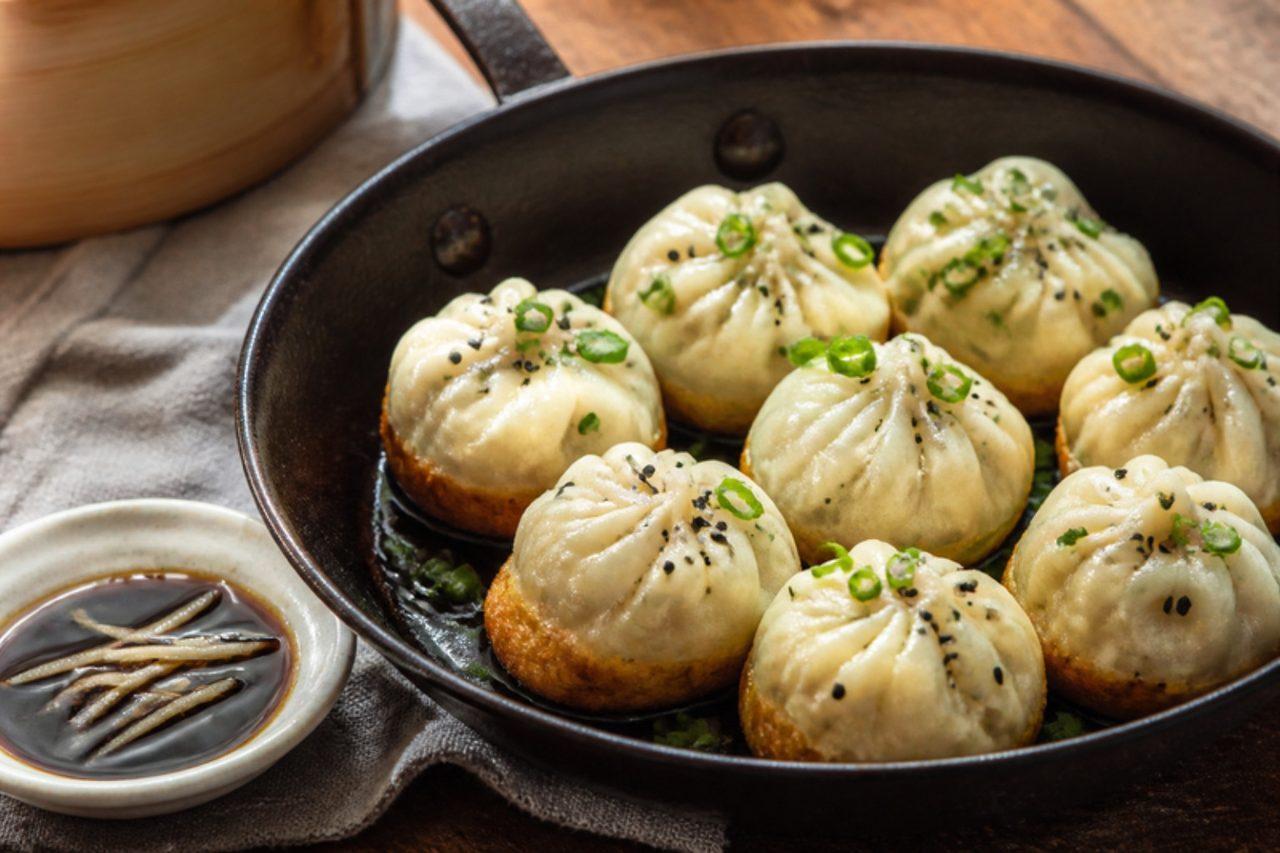
生煎包 shēngjiān bāo — Shanghai pan-fried pork buns with crisp golden bottoms
 Chinese
Shanghai wakes up to the sound of shengjian bao sizzling in huge flat pans, the cooks spinning the pans over the flame and splashing in water so the buns fry and steam at the same time. What you get is a soft, slightly fluffy top scattered with sesame and spring onion, a crackling brown base and a juicy pork filling that squirts if you bite too fast. They are breakfast food, bought by the four and eaten from paper trays with black vinegar. A heavy non-stick or cast-iron frying pan with a tight lid works perfectly at home. Chef's tip: let the shaped buns rise for 15 minutes before frying, no longer; over-risen dough flattens and loses its neat shape in the pan.
- Total time
- 120 min
- Difficulty
- hard
- Serves
- 4
Ingredients
For the dough
- 10 ½ oz plain flour
- ⅛ oz instant dried yeast
- 1 tsp sugar
- ¾ cup lukewarm water
- 1 tsp neutral oil
For the filling
- 12 ½ oz pork minceabout 20% fat
- 1 ½ tbsp light soy sauce
- 1 tbsp Shaoxing wineor the same amount of chicken stock with 1 tsp rice vinegar (alcohol-free)
- 2 tsp sugar
- 1 tbsp fresh gingerfinely grated
- ¼ tsp ground white pepper
- ½ tsp salt
- 1 tsp toasted sesame oil
- ¼ cup chicken stock or watercold
To cook
- 3 tbsp neutral oil
- ½ cup water
- 1 tbsp white sesame seeds
- 2 spring onionsgreen parts finely sliced
To serve
- 4 tbsp Chinese black vinegar (optional)
Shop this recipe on Amazon
Spices & pantry
Fresh ingredients (3)
Links open Amazon in a new tab. As an Amazon Associate, WhatToEat.Today earns from qualifying purchases.
Method
0/8 doneStep 1: Mix 10 ½ oz plain flour, ⅛ oz instant dried yeast and 1 tsp sugar in a bowl. Add ¾ cup lukewarm water and 1 tsp neutral oil and knead for 8 minutes into a soft, smooth dough. Cover and leave somewhere warm for 45 minutes, until about one and a half times its size.
8 minStep 2: Meanwhile, put 12 ½ oz pork mince, 1 ½ tbsp light soy sauce, 1 tbsp Shaoxing wine, 2 tsp sugar, 1 tbsp fresh ginger, ¼ tsp ground white pepper, ½ tsp salt and 1 tsp toasted sesame oil in a bowl. Stir firmly in one direction, adding ¼ cup chicken stock or water a little at a time, until it is all absorbed and the mince is sticky. Chill until needed.
5 minStep 3: Knock back the dough, roll it into a rope and cut into 16 pieces. Roll each into a 9 cm round, thicker in the middle than at the edge.
Step 4: Put a heaped tablespoon of filling in the centre, pleat the edge up and over and pinch tightly closed. Set pleat side up on a floured tray, cover and rest for 15 minutes.
15 minStep 5: Heat 3 tbsp neutral oil in a large heavy frying pan with a lid over a medium heat. Arrange the buns 1 cm apart, pleat side up, and fry for 2–3 minutes, until the bases are pale gold.
3 minStep 6: Pour ½ cup water around (not over) the buns; it will hiss. Cover at once, turn the heat to medium-low and cook for 8 minutes. Don't lift the lid early: the steam is what cooks the filling and the tops.
8 minStep 7: Uncover and cook for 3–4 more minutes, until the water has gone and you can hear the bases frying again. They should be deep golden and crisp. Check one: the filling must be cooked through, 160°F (160 °F).
4 minStep 8: Scatter over 1 tbsp white sesame seeds and 2 spring onions, cover again for 30 seconds, then slide the buns out bottom side up so they stay crisp. Serve hot with 4 tbsp Chinese black vinegar, and warn everyone that the filling is full of hot juice.
Nutrition per serving
- Calories
- 520 kcal
- Protein
- 24 g
- Carbs
- 60 g
- Fat
- 20 g
- Fibre
- 3 g
Nutrition values are estimates.
KrazyBadal
Good to know
- How long does shengjian bao take?
- About 120 minutes in total: 90 minutes to prepare and 30 minutes to cook.
- How many people does it serve?
- 4 as written. Change the servings above the ingredients and every amount scales to match.
- What can I use instead of plain flour?
- Self-raising flour, same amount (then leave out the baking powder).
- What can I use instead of sugar?
- Caster sugar, same amount.
Reviews
No reviews yet. Be the first to cook it.
Rate this recipe
Sign in to rate and review this recipe.
You might also like
SakarpadaSweet fried dough diamonds
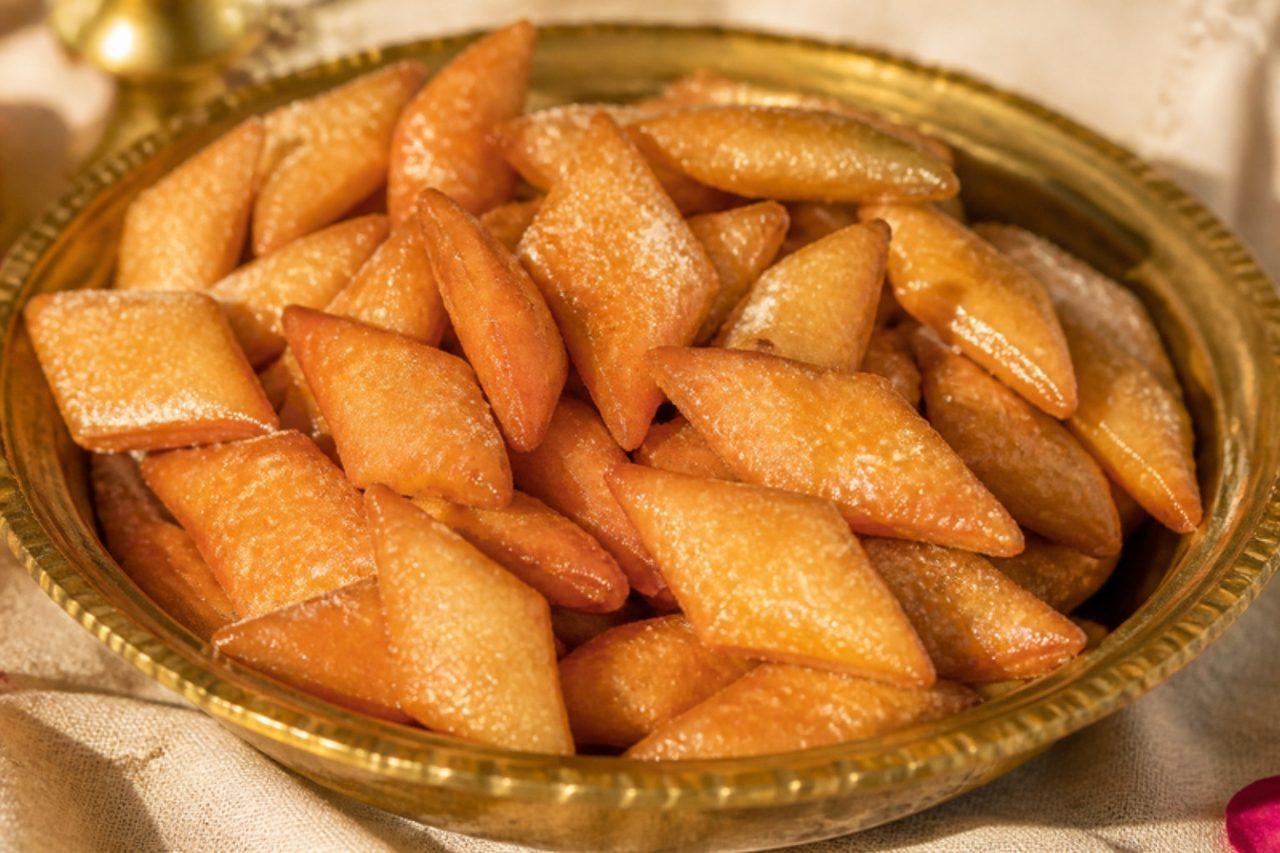
Sakarpada (shakarpara) are little sweet diamonds of a rich dough made with ghee, milk and sugar, fried until golden and crunchy. They are a Diwali favourite with tea, and the cubes go into bhusu too. They keep for weeks in an air-tight tin.
 Indian

Yaki onigiriGrilled rice balls
Yaki onigiri (焼きおにぎり) are rice balls grilled until they form a crisp, toasty crust, then brushed with soy sauce glaze. They are eaten all over Japan, at izakaya, at barbecues and from the freezer section, as a snack or with miso soup. The inside stays soft and steamy while the outside crackles. Best eaten hot, straight from the pan. Chef's tip: let the shaped rice balls dry for 10 minutes before they go in the pan. A drier surface forms a better crust and won't stick, and the glaze goes on only at the end so it doesn't burn.
 Japanese

Taiwanese grilled corn
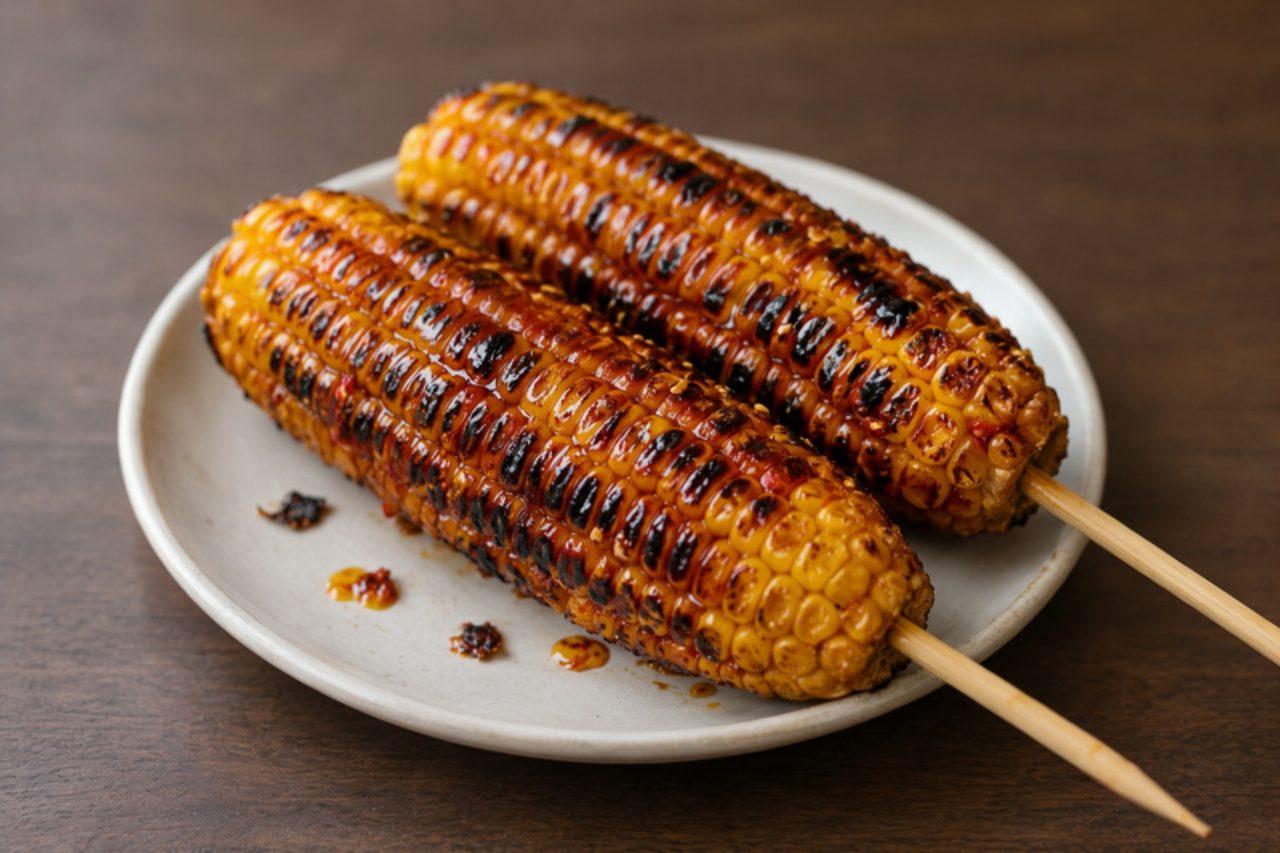
At Raohe and Shilin night markets the grilled-corn stalls are easy to find: look for the queue and the smoky, sweet smell. Cobs are par-cooked, then turned slowly over charcoal while the cook brushes them with a dark glaze of sacha sauce, thick soy paste, garlic and chilli, layer after layer, until the kernels are sticky, slightly charred and deeply savoury. It is eaten hot from a paper sleeve while walking the market. Sacha (shacha) sauce, a Taiwanese barbecue paste, usually contains dried fish and shrimp; vegetarian sacha is sold in Asian shops. Contains soy, wheat and fish. Chef's tip: brush thin coats and turn often; one thick coat burns before the corn chars.
 Taiwanese