
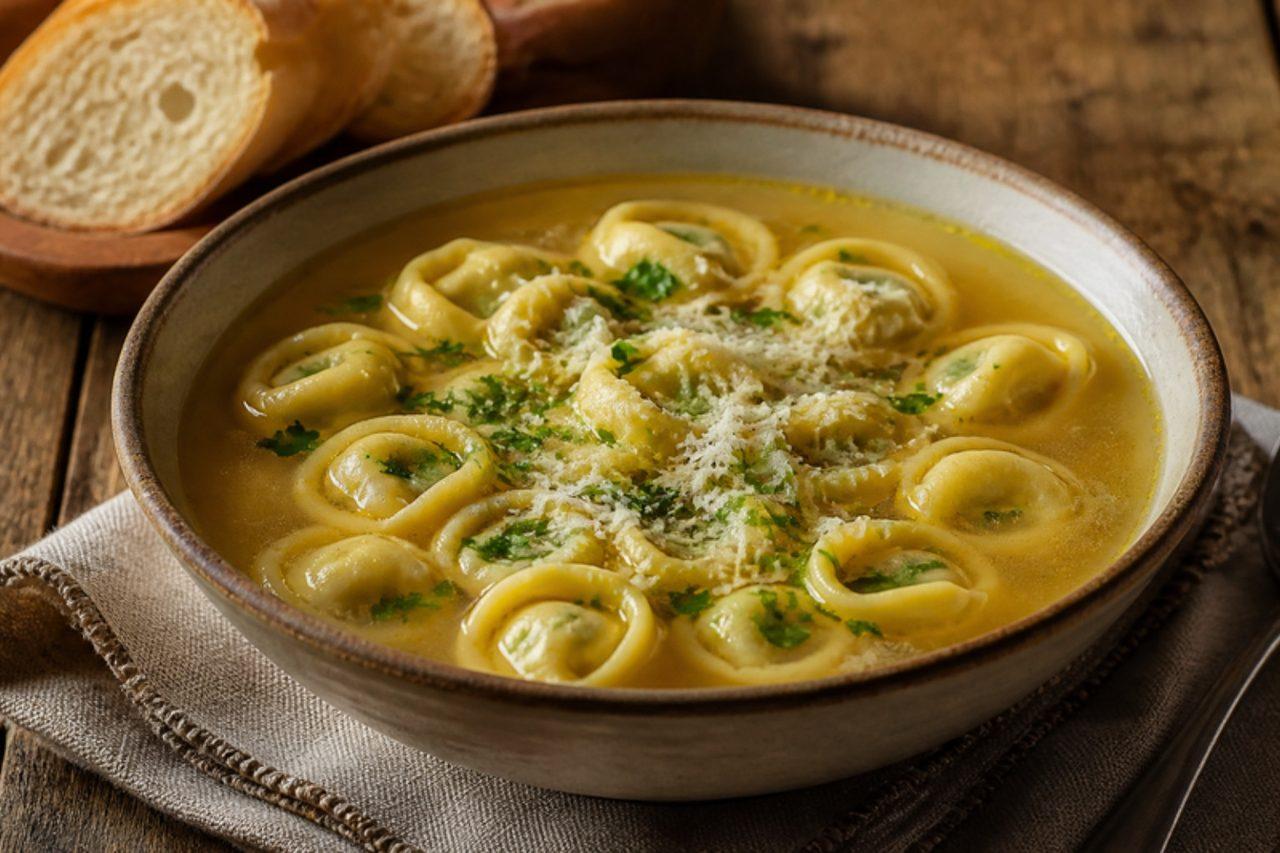
AI-generated image
Sopa de capeletti
Meat pasta in chicken broth
Sopa de capeletti: little meat-filled pasta hats in strong chicken broth, from the Serra Gaúcha

Winter nights in Bento Gonçalves, Caxias do Sul and the wine valleys of the Serra Gaúcha call for sopa de capeletti, the Italian immigrants' soup that is still served at the start of every big Sunday lunch at galeterias and family tables. Small hats of fresh egg pasta, filled with chicken, Parmesan and nutmeg, are cooked in a clear, golden, deeply savoury chicken broth and finished with more grated cheese. It is light but nourishing, and the broth should taste concentrated enough to stand on its own. The trap people fall into is boiling the broth hard, which turns it cloudy and greasy; keep it at a lazy simmer. You can freeze the shaped capeletti on a floured tray and cook them from frozen. Chef's tip: roll the dough until you can just see the shadow of your hand through it; thick capeletti turn stodgy in the soup.
- Total time
- 160 min
- Difficulty
- medium
- Serves
- 6
Ingredients
For the broth
- 1 ⅛ lb chicken wings or backs
- 1 onionhalved
- 2 carrotsin chunks
- 2 sticks celery
- 3.5 litres cold water
- 2 tsp salt
For the pasta
- 10 ½ oz '00' or plain flourplus extra for dusting
- 3 eggs
For the filling
- 2 ⅛ oz Parmesanfinely grated
- 1 egg yolk
- ¼ tsp ground nutmeg
- 2 tbsp fresh parsleyfinely chopped
To serve
- 1 ⅜ oz Parmesan (optional)grated
Shop this recipe on Amazon
Spices & pantry
Fresh ingredients (8)
Links open Amazon in a new tab. As an Amazon Associate, WhatToEat.Today earns from qualifying purchases.
Method
0/10 doneStep 1: Put 2 ⅝ lb chicken thighs and drumsticks, bone in, 1 ⅛ lb chicken wings or backs, 1 onion, 2 carrots, 2 sticks celery, 2 bay leaves and 3.5 litres cold water in a large pot. Bring slowly to the boil, skimming off the foam.
15 minStep 2: Simmer on a low heat, partly covered, for 1 hour 30 minutes, barely bubbling, until the broth is golden and full-flavoured and the meat is falling from the bones.
90 minStep 3: Meanwhile, make the dough: mound 10 ½ oz '00' or plain flour, crack 3 eggs into a well in the middle and mix with a fork, then knead for 8–10 minutes until smooth and elastic. Wrap and rest for 30 minutes.
10 minStep 4: After 40 minutes of simmering, lift out 2 of the thighs, which will be cooked through (165°F). Cool, strip the meat and chop it very finely.
Step 5: Mix 200 g of the chopped chicken with 2 ⅛ oz Parmesan, 1 egg yolk, ¼ tsp ground nutmeg and 2 tbsp fresh parsley into a firm, sticky filling.
Step 6: Roll the dough very thinly, in batches, and cut into 5 cm squares. Put half a teaspoon of filling in the centre of each.
20 minStep 7: Fold each square into a triangle, press the edges to seal, then wrap the two side corners round your fingertip and pinch them together to make a little hat.
25 minStep 8: Strain the broth into a clean pot, skim off most of the fat and season with 2 tsp salt. Bring to a gentle boil.
5 minStep 9: Add the capeletti and simmer for 5–6 minutes until they float and the folded edges are tender.
6 minStep 10: Ladle into bowls and serve with 1 ⅜ oz Parmesan.
Nutrition per serving
- Calories
- 380 kcal
- Protein
- 30 g
- Carbs
- 40 g
- Fat
- 11 g
- Fibre
- 2 g
Nutrition values are estimates.
KrazyBadal
Good to know
- How long does sopa de capeletti take?
- About 160 minutes in total: 60 minutes to prepare and 100 minutes to cook.
- How many people does it serve?
- 6 as written. Change the servings above the ingredients and every amount scales to match.
- What can I use instead of onion?
- 2 shallots per onion.
- What can I use instead of carrots?
- Parsnip or sweet potato, same weight.
Reviews
No reviews yet. Be the first to cook it.
Rate this recipe
Sign in to rate and review this recipe.
You might also like
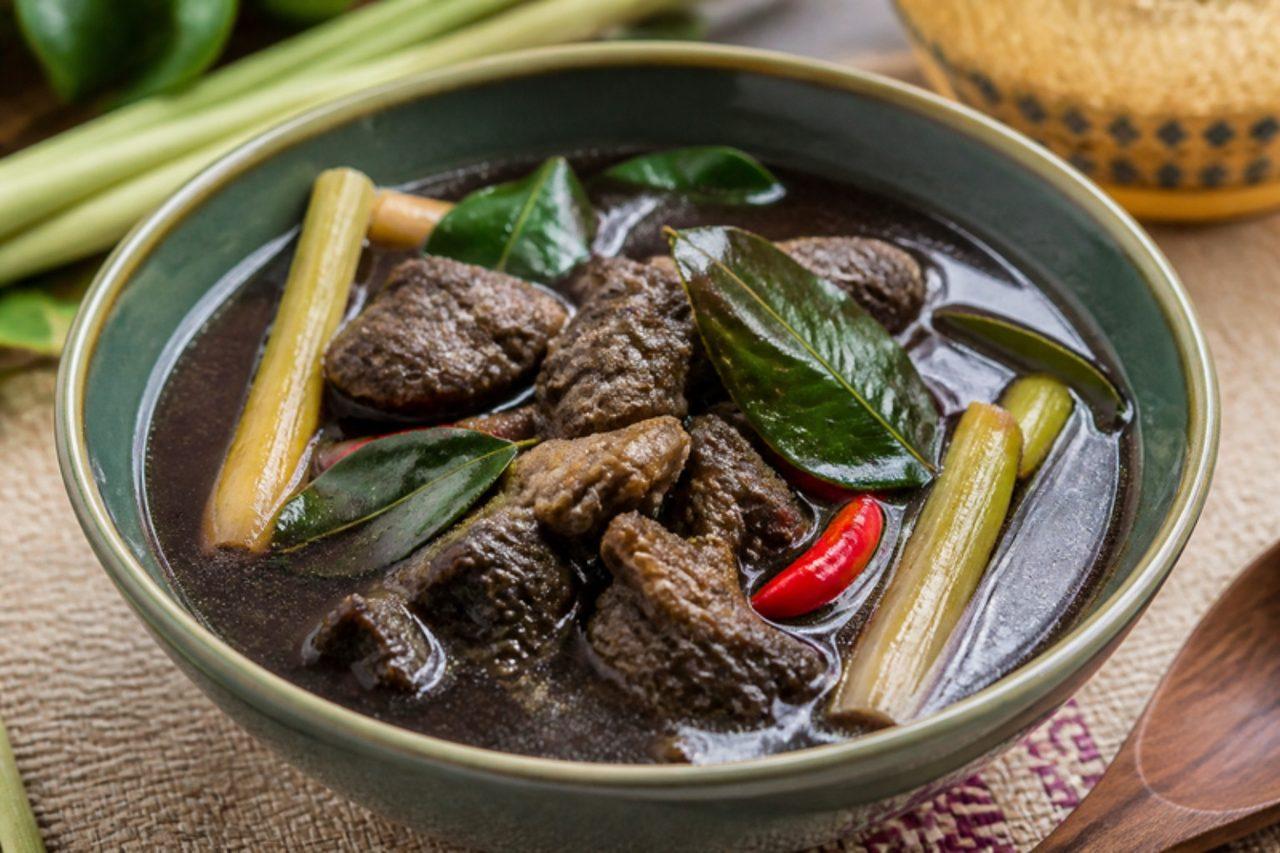
Tiyula itumBlack beef soup
Tiyula itum, 'black soup', is the pride of the Tausug people of Sulu in the far south of the Philippines, cooked for weddings, Eid celebrations and when guests come home. Beef (it is a halal, pork-free dish) is simmered with ginger, lemongrass and turmeric, then darkened with pamapa itum, a paste of grated coconut toasted until almost black and pounded with spices. The broth looks dramatic but tastes smoky, earthy and gently peppery, with heat from chillies. Serve it with plain rice. Chef's tip: toast the coconut slowly, stirring all the time, until it is very dark brown but not ashy; burnt-to-ash coconut tastes bitter and ruins the soup.
 Filipino

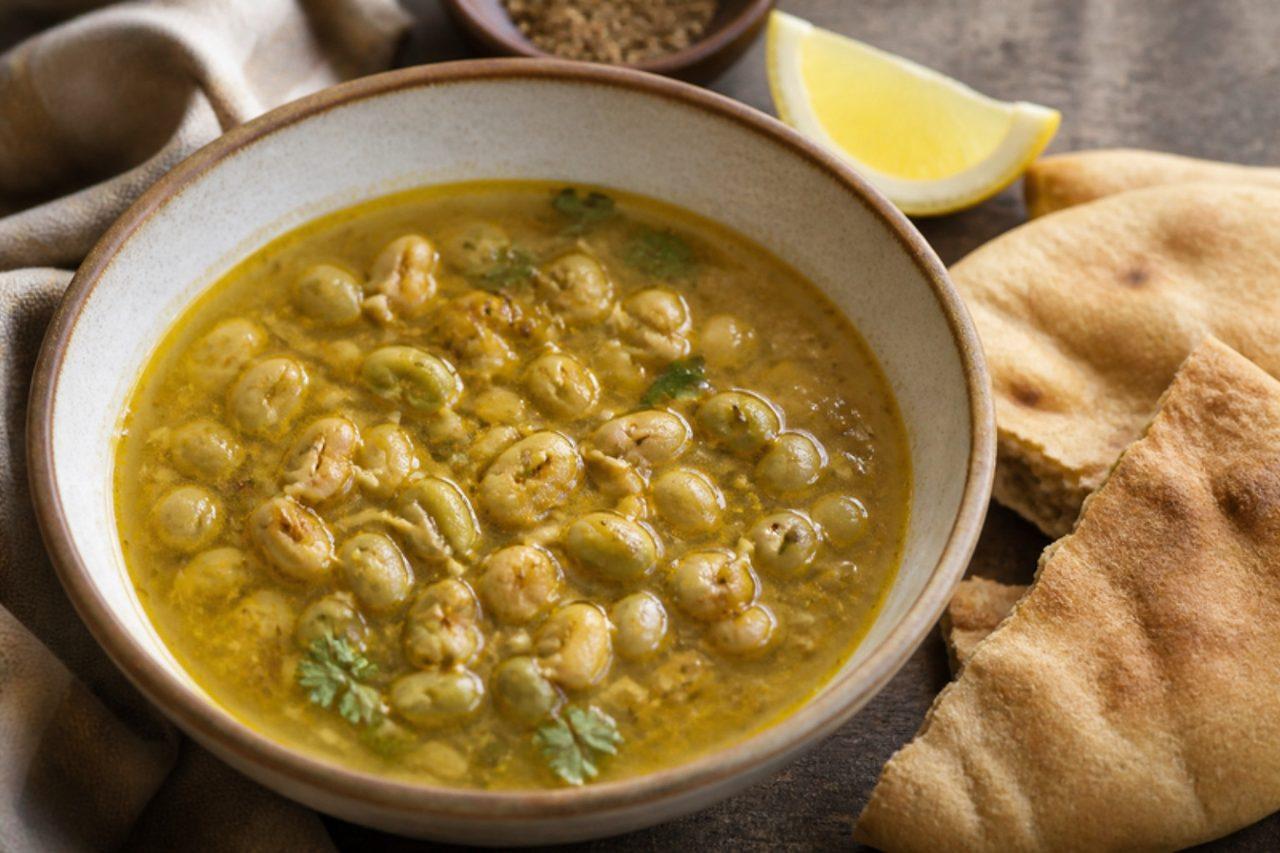
Ful nabitSprouted fava bean soup
Sprouted beans are ladled out with their cooking liquor in Cairo homes when the weather turns cold or someone is feeling run down, and Egyptians swear by the broth as a pick-me-up. The beans are soaked and left to sprout for a few days, then simmered with onion, garlic and cumin into a light, earthy soup that is sharpened at the table with plenty of lemon. You can eat the beans with a spoon or pop them from their skins. Allow 3 to 4 days for sprouting, although the hands-on work is only about 20 minutes. People with G6PD deficiency (favism) must not eat fava beans. Chef's tip: stop the sprouting when the shoots are about 1 cm long; longer sprouts taste grassy and bitter.
 Egyptian


Miso soup
Miso soup (味噌汁) is drunk every day in homes all over Japan, at breakfast as well as dinner, beside a bowl of rice. The base is dashi; this vegan version uses kombu and dried shiitake instead of bonito, which gives it a deep, rounded flavour. Silken tofu and wakame seaweed are the classic fillings. It takes ten minutes; just remember not to boil the miso. Chef's tip: add the miso at the very end and never let it boil. Boiling kills the miso's fresh, fermented aroma; Japanese cooks say the soup should only 'smile', with the surface barely trembling.
 Japanese