
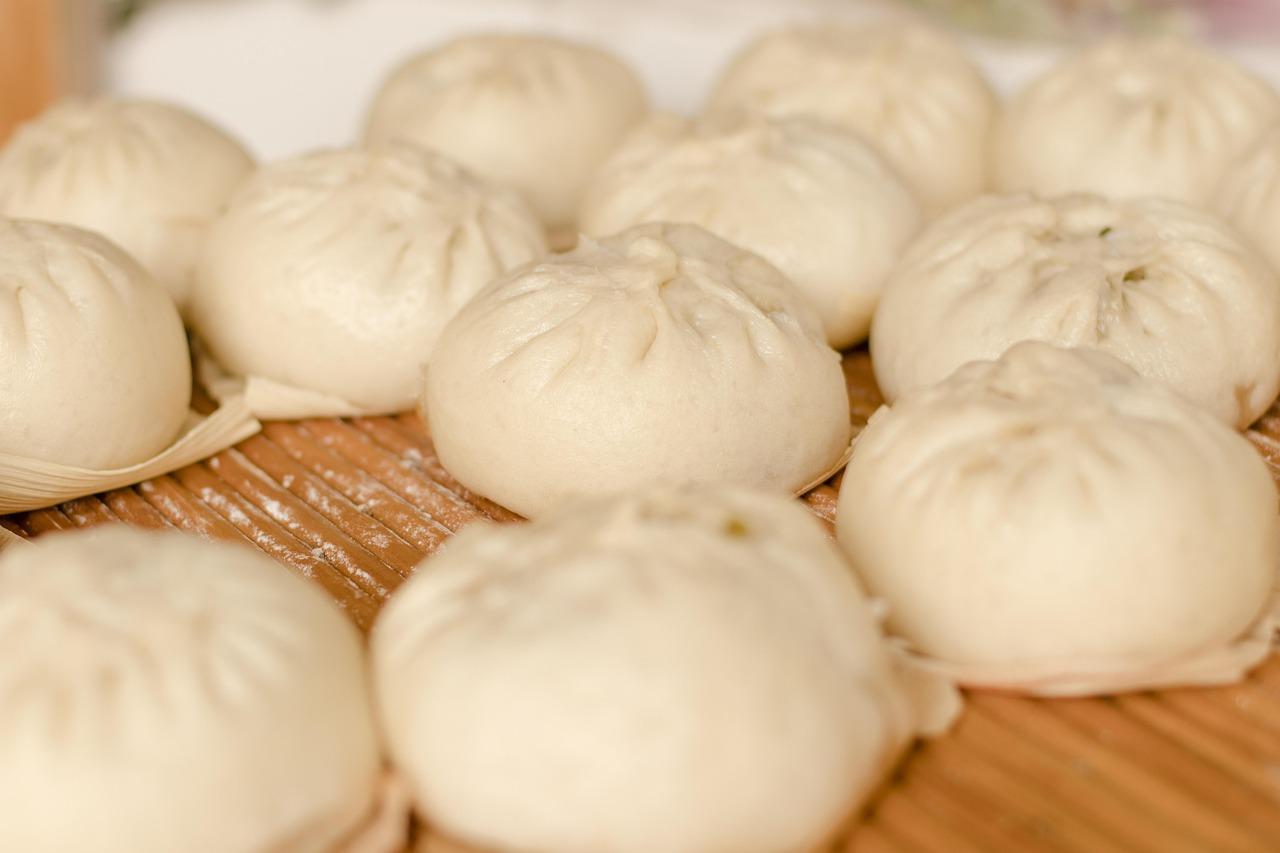
Vegetable steamed bao buns (baozi)
Fluffy steamed buns filled with cabbage, shiitake, glass noodles and tofu


Baozi are breakfast across China: commuters in Shanghai, Beijing and small towns alike queue at steaming stalls for a couple of buns and a cup of soya milk. Vegetable baozi (su cai bao) are a standard on every counter, usually filled with greens, mushroom, tofu and glass noodles. Making them is a weekend job, but they freeze beautifully and reheat in 10 minutes. Chef's tip: let the shaped buns rise until they look puffy and feel light before steaming; under-proved buns come out dense and wrinkled.
- Total time
- 120 min
- Difficulty
- medium
- Serves
- 12
Ingredients
For the dough
- 1 ⅛ lb plain flour
- 1 oz sugar
- 1 tsp baking powder
- 1 cup lukewarm water
- 1 tbsp vegetable oil
For the filling
- 1 ⅜ oz mung bean glass noodlessoaked 10 minutes, drained and chopped
- 14 oz Chinese leaf (napa cabbage)finely chopped
- 1 tsp salt
- 6 dried shiitake mushroomssoaked, squeezed and finely chopped
- 5 ½ oz smoked or five-spice firm tofufinely diced
- 1 carrotfinely grated
- 1 tbsp fresh gingergrated
- 1 ½ tbsp light soy sauce
- 1 tbsp toasted sesame oil
- 1 tbsp vegetable oil
Shop this recipe on Amazon
What you'll need
Spices & pantry
Links open Amazon in a new tab. As an Amazon Associate, WhatToEat.Today earns from qualifying purchases.
Method
0/8 doneStep 1: Mix 1 ⅛ lb plain flour, ¼ oz fast-action dried yeast, 1 oz sugar and 1 tsp baking powder. Add 1 cup lukewarm water and 1 tbsp vegetable oil and knead for 8–10 minutes until smooth and slightly tacky. Cover and leave in a warm place for 1 hour, until doubled.
Step 2: While it rises, toss 14 oz Chinese leaf (napa cabbage) with 1 tsp salt, leave 10 minutes and squeeze hard in a cloth. Common mistake: skipping this; wet cabbage soaks the dough and the buns tear.
10 minStep 3: Heat 1 tbsp vegetable oil in a wok and stir-fry 6 dried shiitake mushrooms, 5 ½ oz smoked or five-spice firm tofu and 1 carrot over a medium-high heat for 3 minutes. Cool, then mix with the cabbage, 1 ⅜ oz mung bean glass noodles, 1 tbsp fresh ginger, 1 ½ tbsp light soy sauce, 1 tbsp vegetarian oyster sauce (mushroom-based) and 1 tbsp toasted sesame oil.
3 minStep 4: Knock back the dough, roll into a log and cut into 12 pieces. Roll each into a 10 cm circle, thinner at the edge than the middle.
Step 5: Put a heaped spoonful of filling in the centre. Pleat the edge around it, turning the bun as you go, and twist the top closed. Set each on a square of baking paper.
25 minStep 6: Cover the buns and leave for 20–30 minutes, until puffy and light when lifted.
25 minStep 7: Steam over boiling water, with space between them, for 12 minutes. Turn off the heat and leave the lid on for 3 minutes before opening, so cold air doesn't make the tops wrinkle.
15 minStep 8: Eat warm. Freeze cooled buns in bags; steam from frozen for 10–12 minutes.
Nutrition per serving
- Calories
- 230 kcal
- Protein
- 7 g
- Carbs
- 42 g
- Fat
- 4 g
- Fibre
- 3 g
Nutrition values are estimates.
KrazyBadal
Good to know
- How long does vegetable steamed bao buns (baozi) take?
- About 120 minutes in total: 80 minutes to prepare and 40 minutes to cook.
- How many people does it serve?
- 12 as written. Change the servings above the ingredients and every amount scales to match.
- Is it vegan?
- Yes. It has no meat, fish, dairy or eggs.
- Can I make it ahead?
- Yes. It keeps well, so you can cook it earlier in the day or the day before and reheat it.
- What can I use instead of plain flour?
- Self-raising flour, same amount (then leave out the baking powder).
- What can I use instead of fast-action dried yeast?
- Fresh yeast, three times the weight.
Reviews
No reviews yet. Be the first to cook it.
Rate this recipe
Sign in to rate and review this recipe.
You might also like
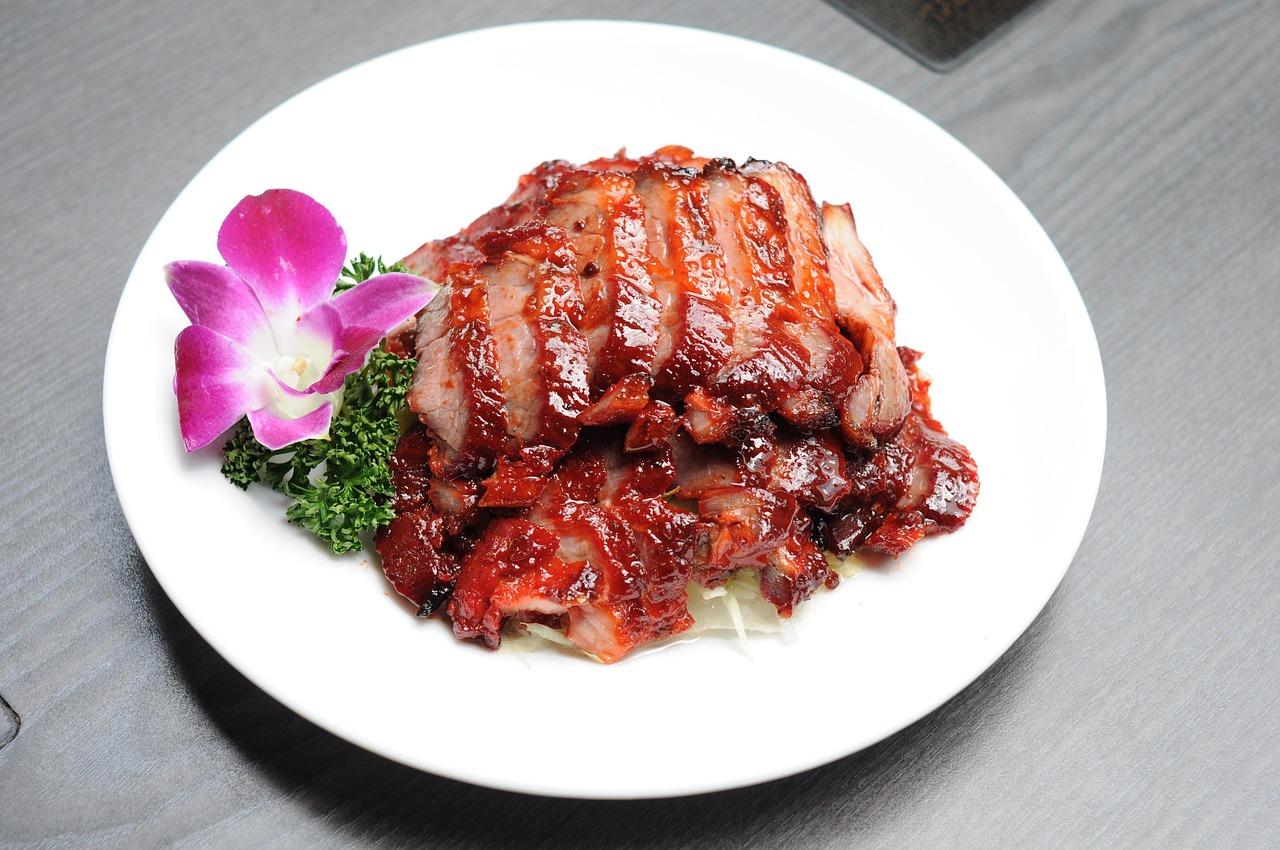
Char siuHoney roast pork
Hanging in long glossy strips in the windows of Guangzhou's siu mei shops, char siu is the roast pork Cantonese families pick up on the way home to put on rice, noodles or into steamed buns. The outside is lacquered, sweet and a little charred at the edges; the inside stays juicy, savoury and faintly scented with five-spice. Shoulder (pork butt) is the cut to use, because its marbling keeps the strips moist through a hot oven. Marinate it overnight in the fridge, roast it the next day and eat it warm with steamed rice and blanched greens, or cold in fried rice and noodle soups. Chef's tip: save the honey for the last ten minutes; brushed on at the start it burns black long before the pork is cooked.
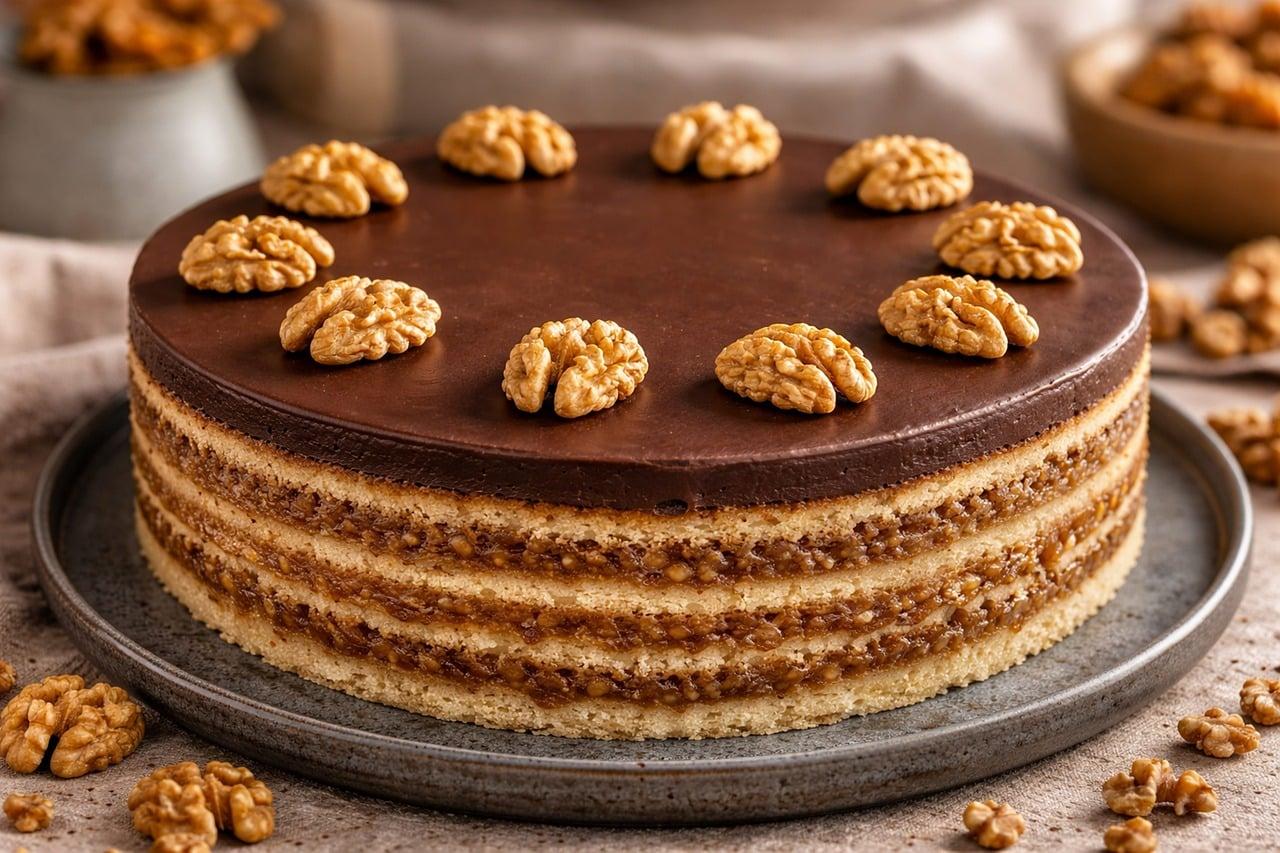
Reform tortaWalnut meringue chocolate cake
Belgrade pastry shops have sold reform torta since the early twentieth century, and it is still the cake Serbian families bring out for birthdays, weddings and the slava. Three thin layers of walnut meringue, crisp at the edge and chewy inside, are stacked with a dense chocolate butter cream made with egg yolks cooked over steam until thick. It is very rich, so cut thin slices and serve with strong coffee. The usual slip is beating the butter into a chocolate mixture that is still warm, which melts it and splits the cream; let it cool to room temperature first. Chef's tip: assemble the cake the day before; overnight in the fridge the meringue softens a little and the cake slices cleanly with a hot knife.

MounaOrange-flower brioche
Oran's mouna came over with Spanish settlers as the Easter mona, and it is still baked for spring outings, recalling the Easter Monday picnics once held at the Santa Cruz chapel above the city. It is a tall, light, golden brioche with a crackly sugar crust, softly flavoured with orange-flower water and lemon zest rather than butter-heavy, and it tears into long, feathery strands. Eat it with coffee or hot chocolate, plain or with jam. The dough is slow and sticky, so give it time. Chef's tip: let the dough rise slowly overnight in the fridge after the first knead; it becomes easier to shape and the flavour deepens.
 Algerian