
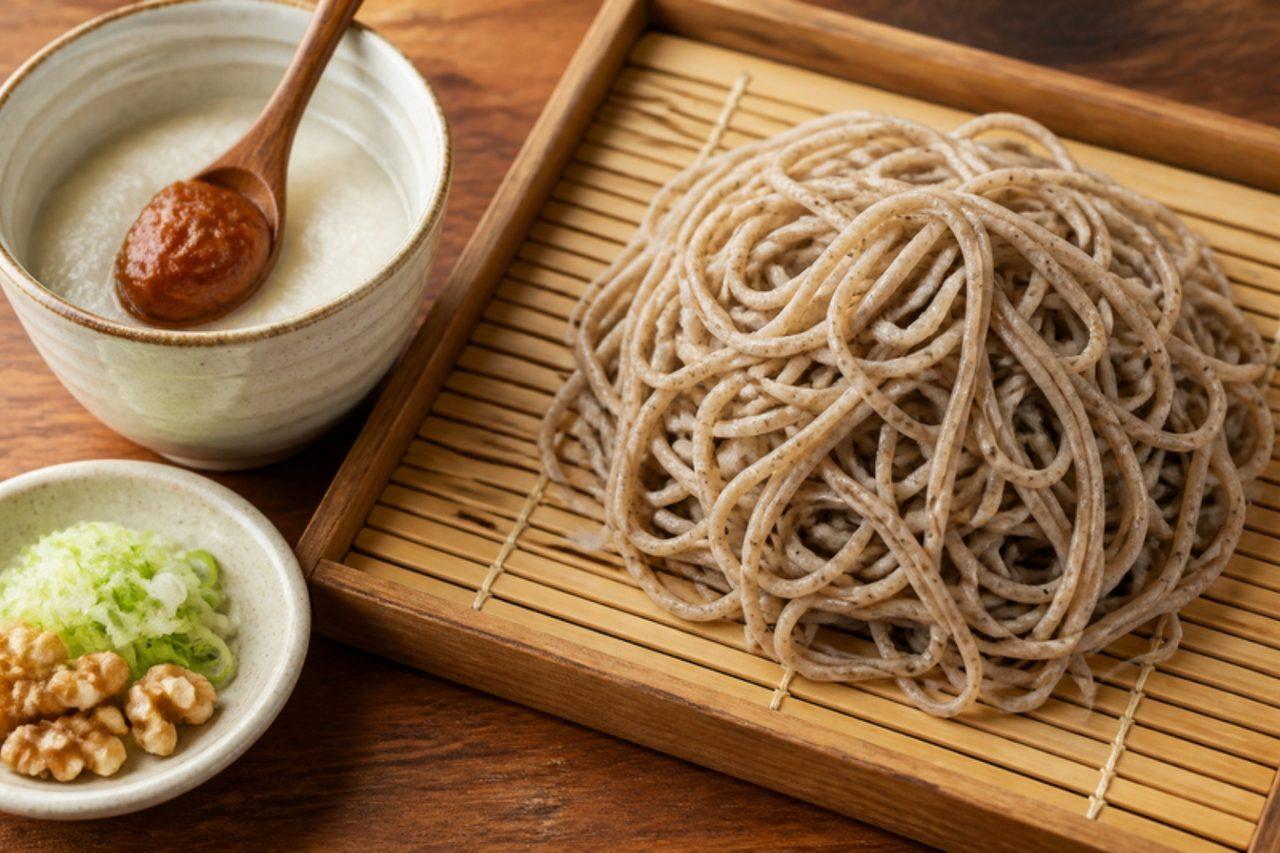
AI-generated image
Shinshu soba with spicy daikon dip
信州そば・高遠そば (Shinshu soba, Takato style): chilled buckwheat noodles dipped in fiery daikon juice and toasted miso


Nagano, the old province of Shinshu, grows buckwheat on cool mountain plateaux, and its soba is famous across Japan. In the castle town of Takato, and in the Aizu villages that took the custom with them, the noodles are not dipped in sweet soy sauce at all. Instead each diner gets a cup of juice squeezed from grated, eye-wateringly hot daikon, stirred with toasted miso. The result is sharp, clean and peppery, and it wakes up the earthy buckwheat. It's a summer lunch, eaten cold with a sprinkle of spring onion. Chef's tip: grate the daikon only just before serving. Its heat fades within 20 minutes, and the dish depends on that fresh bite.
- Total time
- 25 min
- Difficulty
- easy
- Serves
- 2
Ingredients
For the dip
- 10 ½ oz daikon radishthe thin root end is hottest
- 2 tbsp medium or red miso
- 1 tsp mirinor a pinch of sugar
- ½ tsp Japanese mustard (karashi) (optional)if your daikon is mild
For the noodles
- 7 oz dried soba noodlesthe darker the better
- 2 spring onionsthinly sliced
- ⅔ oz walnuts (optional)toasted and finely chopped
Shop this recipe on Amazon
Fresh ingredients (2)
Links open Amazon in a new tab. As an Amazon Associate, WhatToEat.Today earns from qualifying purchases.
Method
0/6 doneStep 1: Spread 2 tbsp medium or red miso thinly on a small piece of foil and toast it under a hot grill or in a dry frying pan over medium heat for 2–3 minutes, until it smells nutty and the edges brown. Scrape into a bowl and stir in 1 tsp mirin.
3 minStep 2: Bring a large pan of water to the boil. Add 7 oz dried soba noodles, stir once, and cook for the time on the packet, usually 4–5 minutes, keeping it at a rolling boil but not boiling over.
5 minStep 3: Drain into a colander and rinse under cold running water, rubbing the noodles between your hands to wash off the starch, until they feel smooth and cool. Drain well and divide onto plates or bamboo trays.
Step 4: Common mistake: skipping the rinse. Unwashed soba is sticky and dull, and it clumps on the plate.
Step 5: Now grate 10 ½ oz daikon radish finely, squeeze the pulp hard over a bowl and collect the juice. Taste: it should be peppery. If it is mild, stir in ½ tsp Japanese mustard (karashi).
Step 6: Pour the juice into small cups, add a spoonful of the toasted miso to each and stir. Top the noodles with 2 spring onions and ⅔ oz walnuts. Dip a few strands at a time, adding more miso to the cup as you go.
Nutrition per serving
- Calories
- 380 kcal
- Protein
- 15 g
- Carbs
- 76 g
- Fat
- 4 g
- Fibre
- 6 g
Nutrition values are estimates.
KrazyBadal
Good to know
- How long does shinshu soba with spicy daikon dip take?
- About 25 minutes in total: 15 minutes to prepare and 10 minutes to cook.
- How many people does it serve?
- 2 as written. Change the servings above the ingredients and every amount scales to match.
- Is it vegan?
- Yes. It has no meat, fish, dairy or eggs.
- What can I use instead of mirin?
- Rice vinegar with ½ tsp sugar per tbsp.
- What can I use instead of spring onions?
- Chives, or a little finely sliced onion.
Reviews
No reviews yet. Be the first to cook it.
Rate this recipe
Sign in to rate and review this recipe.
You might also like

Boiled pasta
The basic method for any dried pasta, from penne to spaghetti. A large pan of salted boiling water keeps the pasta from sticking, and you cook it only until just done, with a little bite left. Use it in salads, bakes or with any sauce.
 Italian

Mint pistachio pesto
A fresh, fragrant pesto made with mint leaves and toasted pistachios. It is lovely tossed through hot pasta or spooned over roasted vegetables, and a spoonful lifts a plain vegetable soup.


Yaki onigiriGrilled rice balls
Yaki onigiri (焼きおにぎり) are rice balls grilled until they form a crisp, toasty crust, then brushed with soy sauce glaze. They are eaten all over Japan, at izakaya, at barbecues and from the freezer section, as a snack or with miso soup. The inside stays soft and steamy while the outside crackles. Best eaten hot, straight from the pan. Chef's tip: let the shaped rice balls dry for 10 minutes before they go in the pan. A drier surface forms a better crust and won't stick, and the glaze goes on only at the end so it doesn't burn.