
 Peruvian
 Gluten free
Tamales peruanos
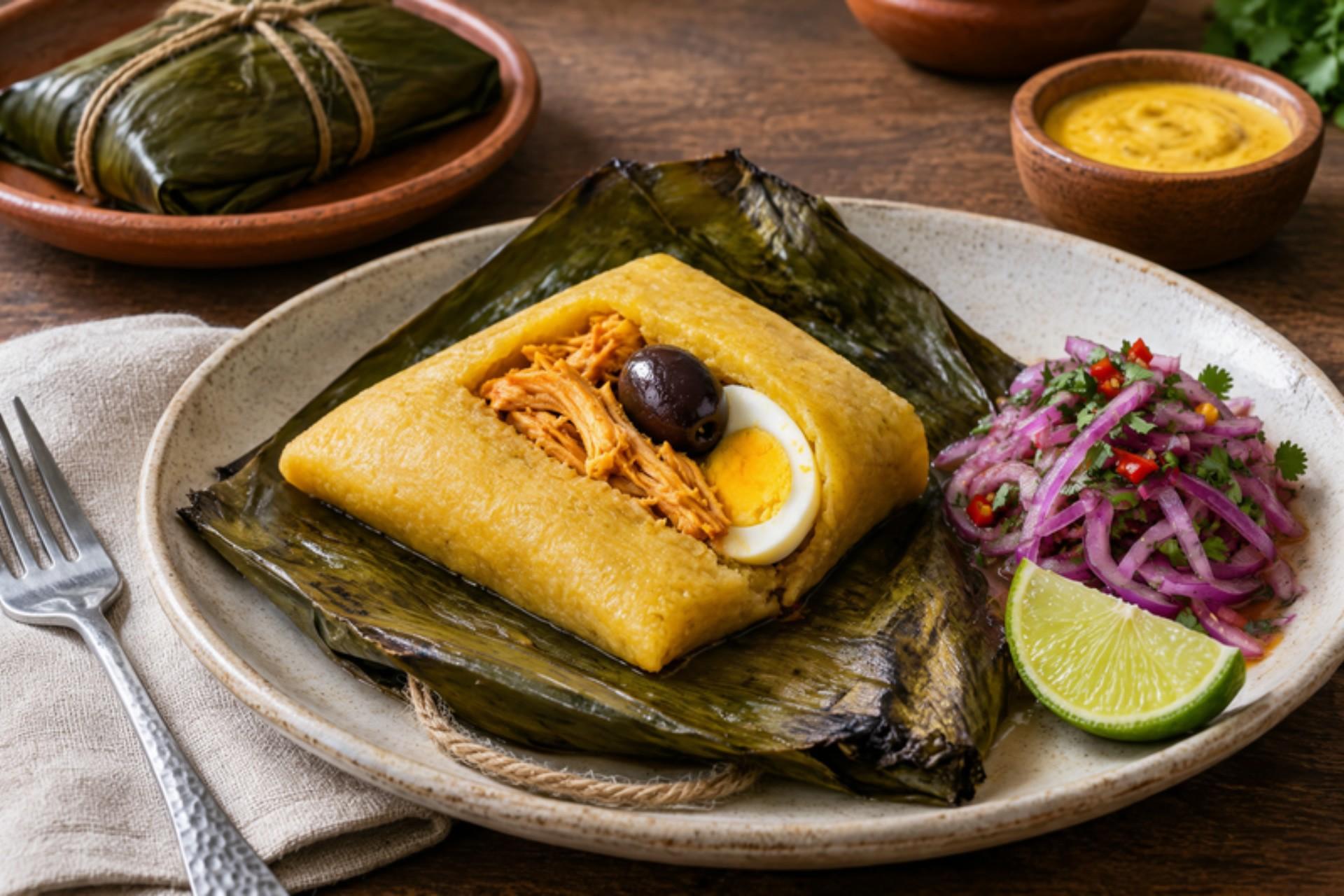
Chicken corn tamales in banana leaf
Tamales criollos: Lima's Sunday-breakfast corn tamales with chicken, olive and egg, wrapped in banana leaf
In Lima, tamales are a Sunday breakfast, bought warm from street vendors calling 'tamaleeeeros' or made at home for Christmas, and eaten with crusty bread and a pile of salsa criolla. Peruvian tamales are larger and softer than Mexican ones, made from corn dough coloured with ají and wrapped in banana leaves, hiding chicken, a black olive, a slice of egg and a peanut. Peanuts are an allergen, so leave them out if needed. The usual mistake is a dry dough: the tamales turn crumbly. Beat in enough warm stock to make a soft paste that just holds its shape. The chicken must reach 74 °C before it goes in. Chef's tip: fat makes the dough tender; beat the oil and dough for a full 5 minutes until light, as Lima cooks do with pork lard.
- Prep
- 60 min
- Cook
- 90 min
- Difficulty
- Hard
- Serves
- 8
- Per serving
- 480 kcal
Ingredients
For the filling
- 1 ⅛ lb boneless chicken thighs
- 4 ¼ cups water
- 2 tsp salt
- 2 eggshard-boiled, each cut into 4
- 8 roasted peanuts (optional)
For the dough
- ¾ cup vegetable oil
- 1 red onionvery finely chopped
- 4 garliccloves, crushed
- 2 tbsp ají amarillo paste
- 1 tbsp ají panca paste
- 1 tsp ground cumin
For wrapping
- 8 banana leavesabout 30 × 30 cm each, wiped clean
- 1 kitchen stringlength
Shop this recipe on Amazon
Search Amazon for the rest
Fresh ingredients (6)
Links open Amazon in a new tab. As an Amazon Associate we earn from qualifying purchases.
Method
0/8 doneStep 1: Put 1 ⅛ lb boneless chicken thighs in a pan with 4 ¼ cups water and 1 tsp salt. Simmer for 20 minutes until cooked through to 165°F. Lift out, cut into 8 pieces and keep the stock.
20 minStep 2: Heat ¾ cup vegetable oil in a frying pan over a medium heat. Fry 1 red onion and 4 garlic for 6 minutes until soft, then stir in 2 tbsp ají amarillo paste, 1 tbsp ají panca paste and 1 tsp ground cumin and fry for 2 minutes. Let it cool a little.
8 minStep 3: Put 1 ⅛ lb white corn masa harina (or Peruvian maíz mote flour) and the remaining 1 tsp salt in a large bowl. Add the onion and oil mixture and about 700 ml of the warm chicken stock, a little at a time, beating hard with a wooden spoon for 5 minutes. It should be a soft, smooth paste like thick mashed potato.
5 minStep 4: Soften 8 banana leaves by passing them briefly over a flame or dipping in hot water so they bend without cracking.
Step 5: Spread about 1/8 of the dough in the centre of each leaf into a 12 cm square. Put a piece of chicken, a piece of egg, an olive and a peanut (2 eggs, 8 black olives, 8 roasted peanuts) in the middle, then cover with a little more dough.
Step 6: Fold the leaf over into a neat parcel and tie with 1 kitchen string like a gift.
Step 7: Stand the tamales on a rack in a large pan with 5 cm of boiling water, cover tightly and steam for 1½ hours, topping up with boiling water. They are done when the dough pulls away cleanly from the leaf and feels firm.
90 minStep 8: Rest for 10 minutes before opening. They keep for 3 days in the fridge; resteam for 20 minutes until piping hot.
Nutrition per serving
- Calories
- 480 kcal
- Protein
- 20 g
- Carbs
- 48 g
- Fat
- 24 g
- Fibre
- 5 g
Nutrition values are estimates.
KrazyBadal
Good to know
- How long does tamales peruanos take?
- About 150 minutes in total: 60 minutes to prepare and 90 minutes to cook.
- How many people does it serve?
- 8 as written. Change the servings above the ingredients and every amount scales to match.
- Is it gluten free?
- Yes, as written. Check the labels on stock, sauces and spice mixes, which sometimes contain gluten.
- Can I make it ahead?
- Yes. It keeps well, so you can cook it earlier in the day or the day before and reheat it.
- What can I use instead of boneless chicken thighs?
- Chicken breast, same weight (cook a few minutes less so it stays juicy).
- What can I use instead of eggs?
- 1 tbsp ground flaxseed + 3 tbsp water per egg, left for 5 minutes (baking only; vegan).
Reviews
No reviews yet. Be the first to cook it.
Rate this recipe
Sign in to rate and review this recipe.
You might also like

TacachoMashed roasted green plantain balls
Tacacho is the breakfast of the Peruvian Amazon, from Tarapoto to Iquitos: green plantains roasted over coals, mashed with fat and salt and shaped into balls. There it comes with cecina (smoked pork) and is mashed with lard and crackling; this vegan tacacho uses good oil and a pinch of smoked paprika for the same savoury, smoky depth. The balls are dense, chewy and starchy, crisp at the edges where the plantain charred, and they are eaten hot with a fiery chilli sauce or alongside stews. Use plantains that are fully green and firm. Chef's tip: mash the plantains while they are still very hot; as green plantain cools its starch sets and it won't bind into a smooth ball.

Arroz con pitu de caleyaSoupy rice with chicken
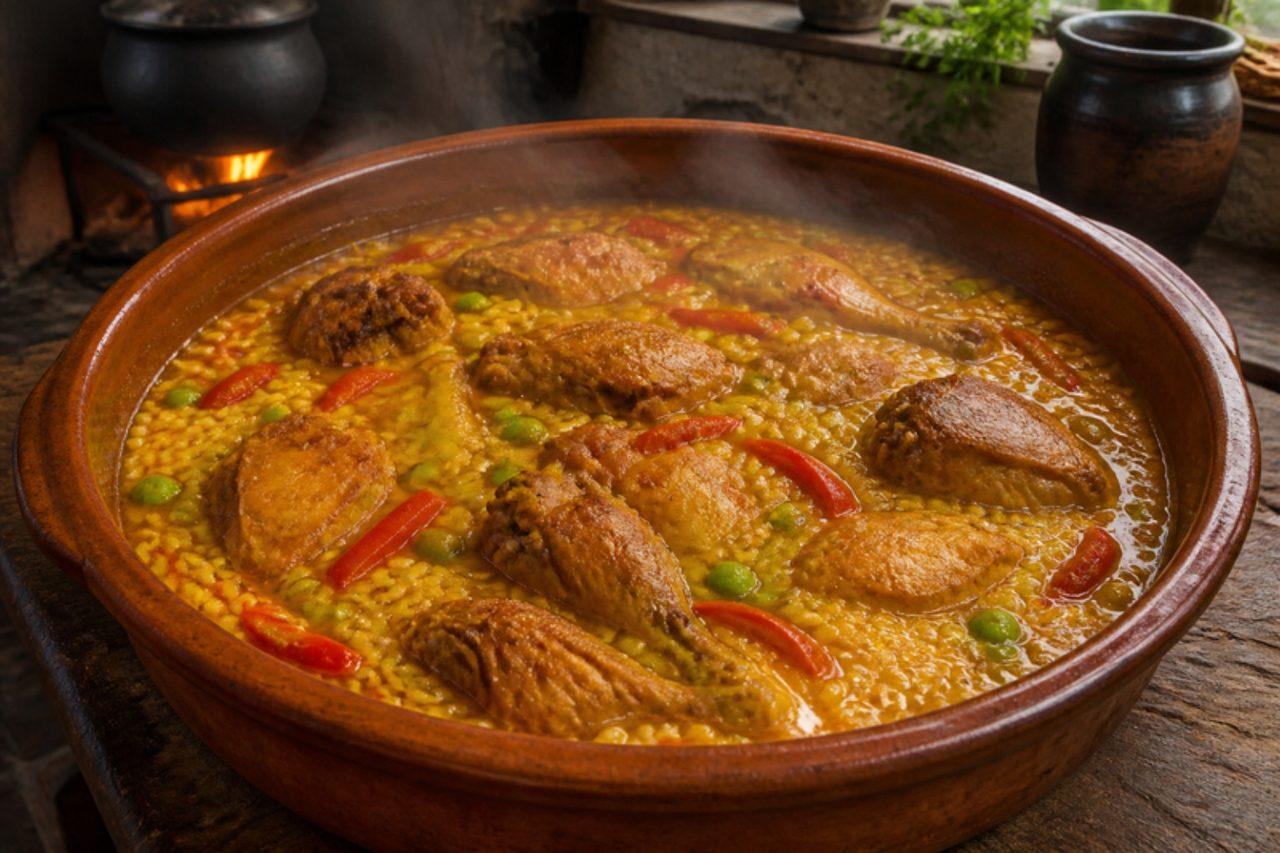
A pitu de caleya is a cockerel raised free in the lanes, or caleyas, of rural Asturias; its firm, flavourful meat needs long stewing, and families around Villaviciosa and Grado still cook it for feast days. The stew is often finished as a soupy rice, so the deep chicken juices go into every grain. Use the best free-range chicken you can find. The braise includes dry white wine; replace it with extra stock and a squeeze of lemon if you want it alcohol-free. Chef's tip: brown the chicken slowly and deeply; that colour is where the flavour of the whole pot comes from.
 Spanish
Kokoras krasatosChicken in red wine with pasta
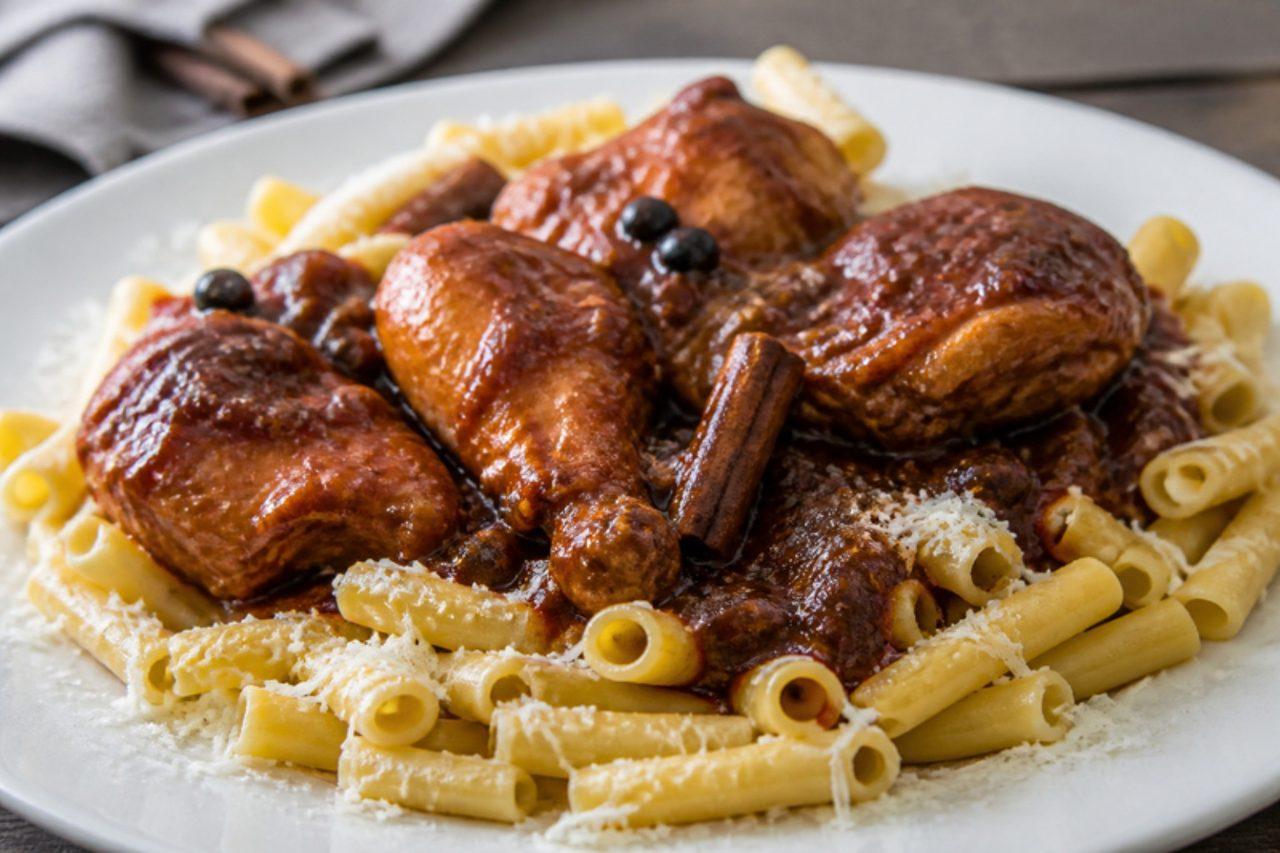
Sunday in a Peloponnese village often meant a rooster from the yard, braised for hours in the local Nemea red with tomato, cinnamon, cloves and allspice until the sauce turned deep, glossy and fragrant. It goes over thick spaghetti or hilopites with plenty of grated cheese. This dish contains red wine; for an alcohol-free version use the same amount of red grape juice with 2 tablespoons of red wine vinegar. A supermarket chicken works well, cooked for less time. Common mistake: skipping the browning — the dark crust on the skin flavours the whole sauce. Chef's tip: let the wine bubble hard for 2 minutes before the tomato goes in, so its raw edge cooks off.
 Greek