
 Japanese
 Vegan
 Gluten free
Ten-fold rice porridge (jūbai-gayu)
6m+ · Japan's first spoonful: rice simmered in ten times its water and mashed silky smooth
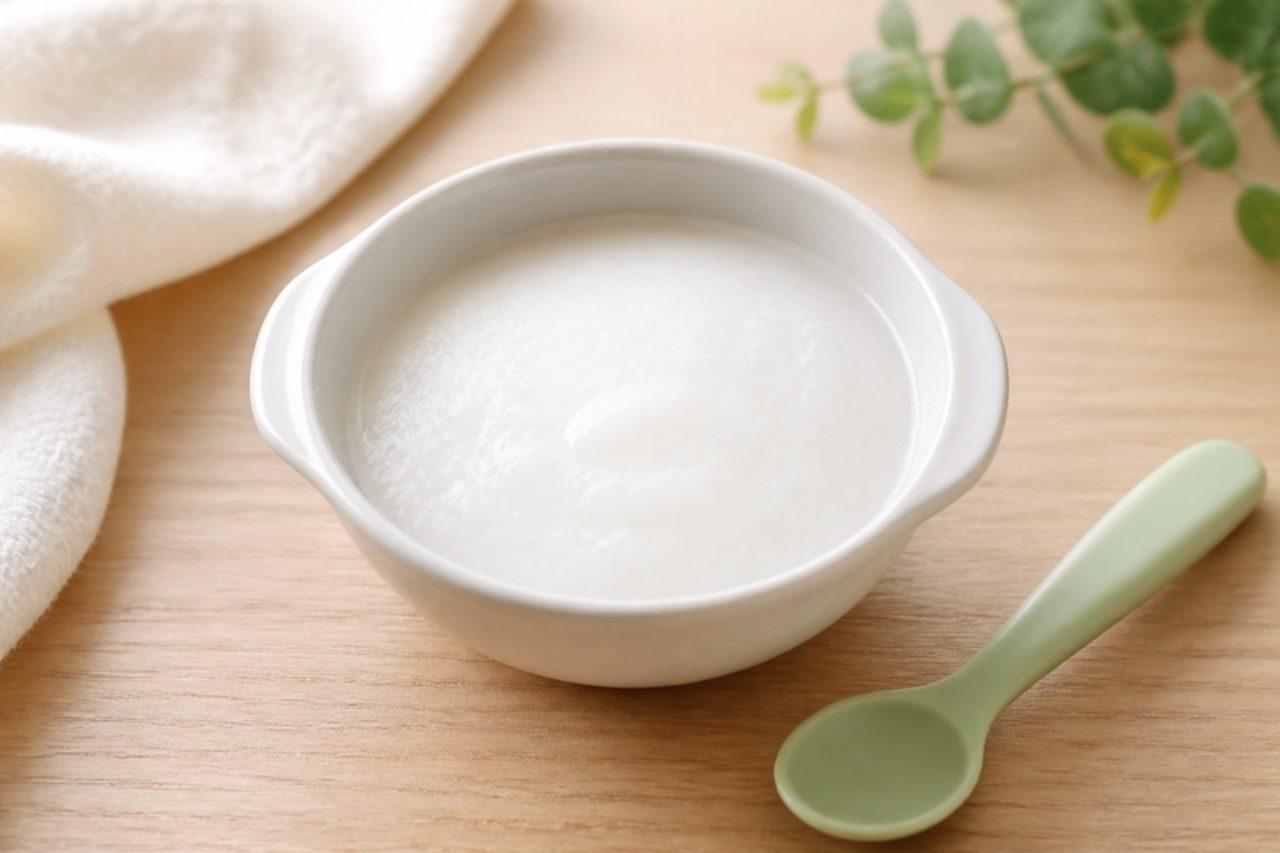
Across Japan, a baby's first solid food at about five or six months is jūbai-gayu: rice cooked gently in ten times its volume of water until it collapses into a soft, pale porridge, then pressed or blended smooth. It tastes mild and slightly sweet, and parents start with a single spoonful a day before adding mashed vegetables such as pumpkin or carrot. None of the common allergens (milk, egg, gluten, peanut, tree nuts, soya, sesame, fish) are in it, so it is an easy base to build on. Chef's tip: make a full pot and freeze it in ice-cube trays, so one cube can be warmed for each meal.
- Prep
- 35 min
- Cook
- 50 min
- Difficulty
- Easy
- Serves
- 8
- Per serving
- 22 kcal
Baby & toddler safety
- Age: from 6 months+.
- Allergens: none of the common allergens found in the ingredients. Offer one new allergen at a time, in the morning, so you can watch for a reaction.
- Texture and choking: purée or mash smoothly for 6–9 months, then soft, finger-sized pieces that squash between your fingers. Cut round foods such as grapes and cherry tomatoes into quarters lengthways, never give whole nuts, and always stay with your child while they eat.
- Under 1: no honey, no added salt or stock cubes, and no added sugar.
Every child is different. If you are unsure, especially about allergies, check with your health visitor or paediatrician.
Ingredients
- 1 ¾ oz Japanese short-grain riceabout 1/4 cup
- 2 cups water
Shop this recipe on Amazon
What you'll need
Spices & pantry
Links open Amazon in a new tab. As an Amazon Associate we earn from qualifying purchases.
Method
0/7 doneStep 1: Rinse 1 ¾ oz Japanese short-grain rice in a sieve under cold running water, rubbing it gently, until the water runs almost clear. Put it in a small heavy pan with 2 cups water and leave it to soak for 30 minutes so the grains soften evenly.
30 minStep 2: Bring the pan to the boil over a medium heat, stir once to loosen any grains on the bottom, then turn the heat down as low as it goes. Cover with the lid slightly ajar so it doesn't boil over.
5 minStep 3: Simmer very gently for 45–50 minutes without stirring. It is ready when the grains have burst and swollen into a thick, creamy porridge with no hard centres when you press one against the side of the pan.
45 minStep 4: Turn off the heat, cover fully and let it rest for 10 minutes to thicken a little more.
10 minStep 5: For a first food, press the porridge through a fine sieve with the back of a spoon, or blend it, until completely smooth with no whole grains. The most common mistake is leaving it lumpy: at six months it should drop off the spoon like thick yoghurt. Loosen with a little boiled water, or with your baby's usual milk, if it is too stiff.
Step 6: Cool a portion until just warm, testing a little on the inside of your wrist, and offer one or two teaspoons.
Step 7: Cool the rest quickly, ideally within an hour, then keep it covered in the fridge for up to 2 days or freeze it in ice-cube trays for up to a month. Reheat only once, until piping hot all the way through, stir well, then let it cool before serving.
Nutrition per serving
- Calories
- 22 kcal
- Protein
- 0 g
- Carbs
- 5 g
- Fat
- 0 g
- Fibre
- 0 g
Nutrition values are estimates.
KrazyBadal
Good to know
- How long does ten-fold rice porridge (jūbai-gayu) take?
- About 85 minutes in total: 35 minutes to prepare and 50 minutes to cook.
- How many people does it serve?
- 8 as written. Change the servings above the ingredients and every amount scales to match.
- Is it vegan?
- Yes. It has no meat, fish, dairy or eggs.
- Is it gluten free?
- Yes, as written. Check the labels on stock, sauces and spice mixes, which sometimes contain gluten.
- Can I make it ahead?
- Yes. It keeps well, so you can cook it earlier in the day or the day before and reheat it.
- What can I use instead of japanese short-grain rice?
- Any long-grain rice, same amount.
Reviews
No reviews yet. Be the first to cook it.
Rate this recipe
Sign in to rate and review this recipe.
You might also like

Yaki onigiriGrilled rice balls
Yaki onigiri (焼きおにぎり) are rice balls grilled until they form a crisp, toasty crust, then brushed with soy sauce glaze. They are eaten all over Japan, at izakaya, at barbecues and from the freezer section, as a snack or with miso soup. The inside stays soft and steamy while the outside crackles. Best eaten hot, straight from the pan. Chef's tip: let the shaped rice balls dry for 10 minutes before they go in the pan. A drier surface forms a better crust and won't stick, and the glaze goes on only at the end so it doesn't burn.
Mixed sprout pullao
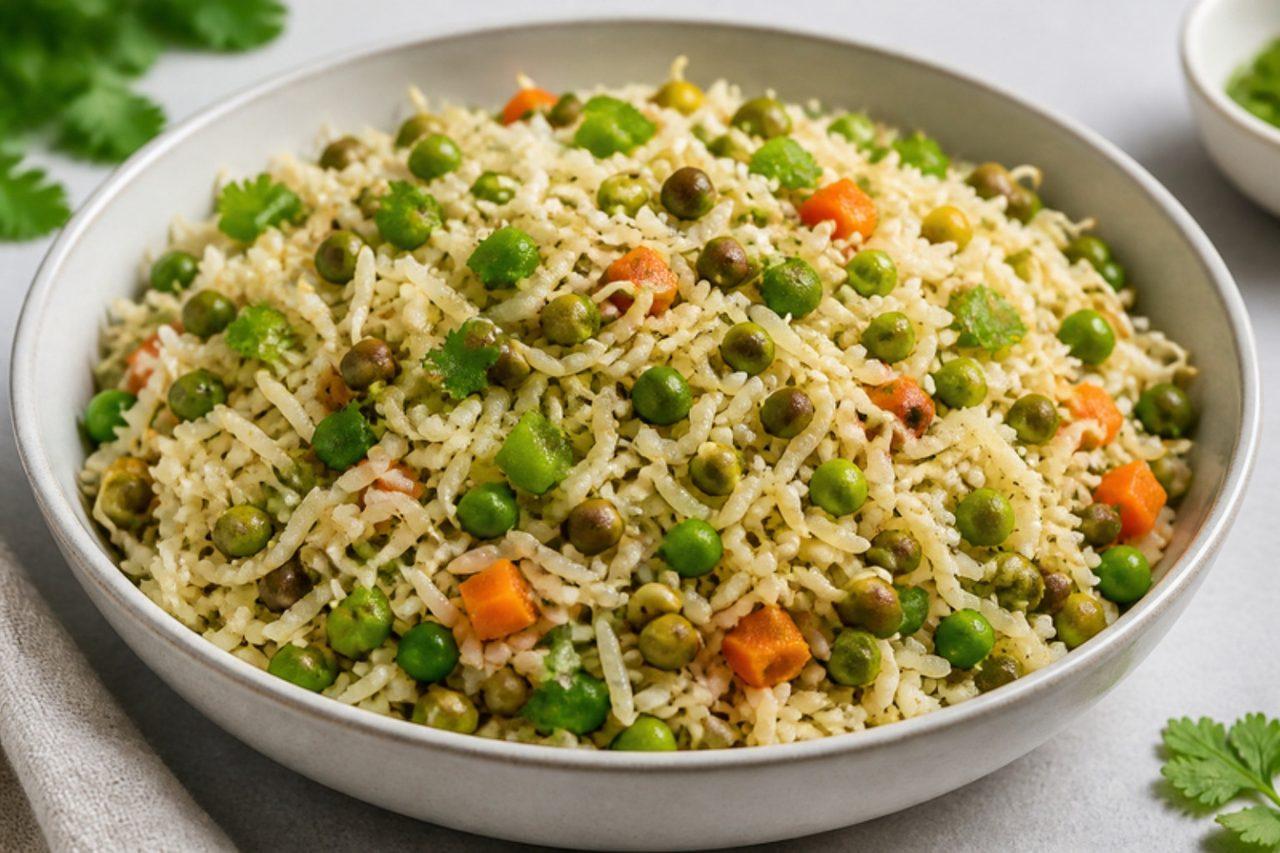
A quick, low-calorie way to use leftover rice: sprouted moth beans and green grams are cooked with garlic, ginger, green chilli, capsicum, spring onions and a few spices over a cumin and asafoetida tempering, then tossed with cooked rice. Served hot with fresh tomato and coriander.
 Indian

Miso soup
Miso soup (味噌汁) is drunk every day in homes all over Japan, at breakfast as well as dinner, beside a bowl of rice. The base is dashi; this vegan version uses kombu and dried shiitake instead of bonito, which gives it a deep, rounded flavour. Silken tofu and wakame seaweed are the classic fillings. It takes ten minutes; just remember not to boil the miso. Chef's tip: add the miso at the very end and never let it boil. Boiling kills the miso's fresh, fermented aroma; Japanese cooks say the soup should only 'smile', with the surface barely trembling.