
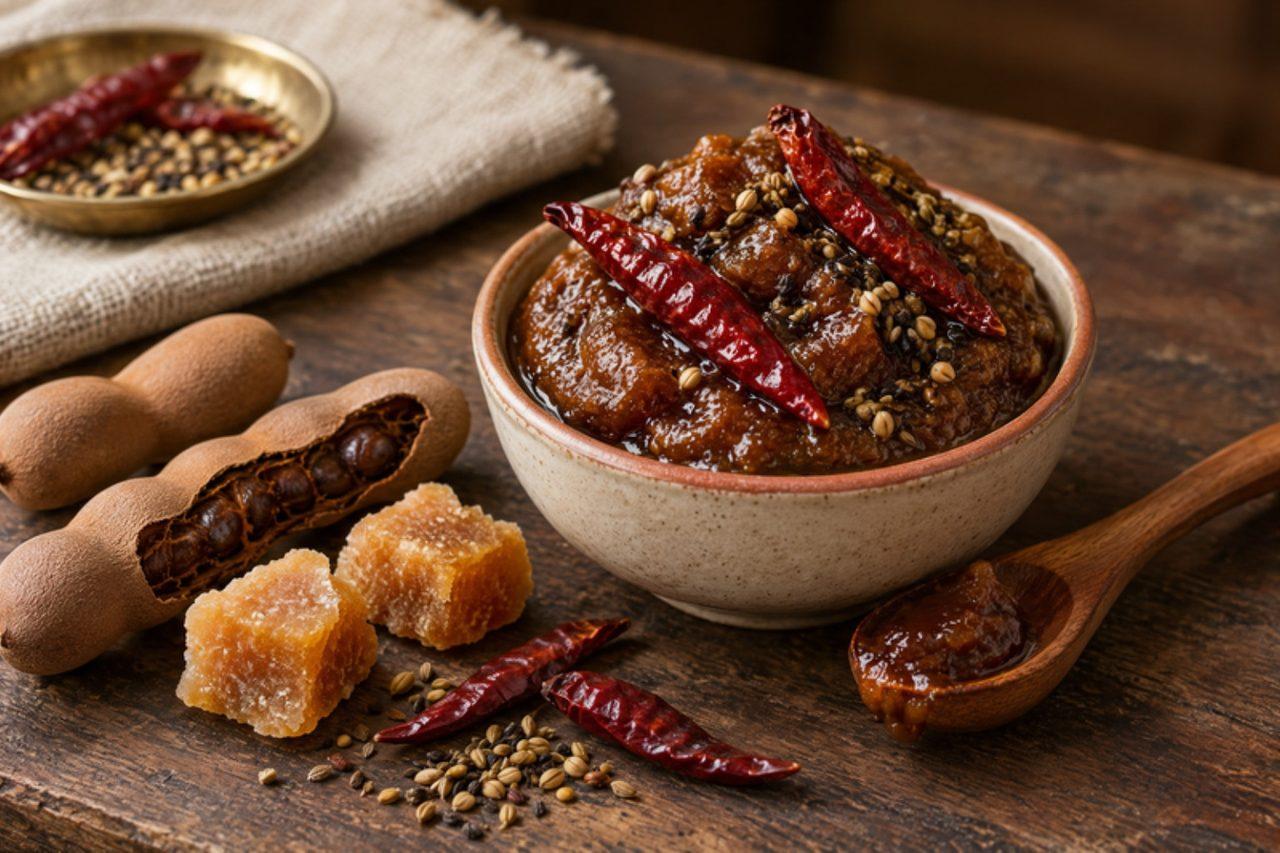
AI-generated image
Tetul achar
Tamarind pickle
তেঁতুলের আচার: tamarind and jaggery cooked with panch phoron and dried chilli into a sticky, sweet-sour Bengali pickle



Ask anyone who grew up in Kolkata or a Bengal village about tetul achar and they will remember winter afternoons on the roof, sneaking spoonfuls from jars drying in the sun. Tamarind pulp is cooked down with jaggery, salt and a mustard-oil tempering of panch phoron and dried chilli until it turns sticky, dark and glossy. It tastes sweet and sour in one bite, with a little heat and the bittersweet crackle of fenugreek and nigella from the five-spice. Eat it as a teatime treat, with khichuri, or as the sweet-sour note at the end of a Bengali lunch. The common mistake is cooking it too hard: like toffee, tamarind and jaggery go from glossy to burnt quickly, so keep the heat low near the end and stir. It is ready when it falls from the spoon in a thick ribbon and leaves a trail across the pan; it firms up a lot as it cools. Being very sweet and acidic, it keeps 2 months in a dry jar in a cool cupboard and longer in the fridge. Chef's tip: in winter use khejur gur (date palm jaggery) for a smoky, caramel depth.
- Total time
- 45 min
- Difficulty
- easy
- Serves
- 20
Ingredients
For the tamarind
- 7 oz seedless tamarind
- 1 ¾ cups hot water
- 9 oz jaggerygrated; khejur gur (date palm jaggery) if you can find it
- 1 tsp salt
- 1 tsp red chilli powder
For the tempering
- 2 tbsp mustard oil
- 1 tsp panch phoronBengali five-spice: fenugreek, nigella, cumin, black mustard and fennel seeds
For the bhaja masala
- 1 tsp cumin seeds
- ¼ tsp black salt (optional)
Shop this recipe on Amazon
What you'll need
Spices & pantry
Links open Amazon in a new tab. As an Amazon Associate, WhatToEat.Today earns from qualifying purchases.
Method
0/8 doneStep 1: Prepare the jar: wash jar and lid in hot soapy water, rinse well, then stand the jar upside down in a 250°F oven for 10 minutes (or boil jar and lid for 10 minutes and let them dry upside down). Let it cool completely; jar, lid, bowls and spoons must be bone dry, because a single drop of water is the usual reason a pickle goes mouldy.
Step 2: Soak 7 oz seedless tamarind in 1 ¾ cups hot water for 20 minutes, then squeeze and mash it with your hand and push through a sieve to get a thick pulp. Discard the fibres.
10 minStep 3: For the bhaja masala, dry-roast 1 tsp cumin seeds and 1 dried red chilli in a small pan over a medium heat until the cumin turns dark brown and smoky, about 2 minutes. Cool and grind to a powder with ¼ tsp black salt if using.
3 minStep 4: Heat 2 tbsp mustard oil in a heavy pan over a medium-high heat until it just smokes, then lower to medium. Add 1 tsp panch phoron and 3 dried red chillies and stir until the seeds crackle and the chillies darken, about 30 seconds.
2 minStep 5: Pour in the tamarind pulp carefully (it spits) and add 1 tsp salt and 1 tsp red chilli powder. Simmer on a medium heat for 5 minutes, stirring.
5 minStep 6: Add 9 oz jaggery and stir until melted. Cook on a medium-low heat, stirring often, for 15–20 minutes, until thick, dark and glossy and it falls from the spoon in a heavy ribbon. Near the end, stir constantly so it does not catch.
20 minStep 7: Stir in 2 tsp of the bhaja masala and take off the heat. It will set much thicker as it cools.
Step 8: Cool completely, then spoon into the dry jar. Keep in a cool cupboard for up to 2 months or in the fridge for 4 months, always with a dry spoon. Throw it away if you see mould, it fizzes or it smells boozy.
Nutrition per serving
- Calories
- 80 kcal
- Protein
- 0 g
- Carbs
- 20 g
- Fat
- 1 g
- Fibre
- 1 g
Nutrition values are estimates.
KrazyBadal
Good to know
- How long does tetul achar take?
- About 45 minutes in total: 15 minutes to prepare and 30 minutes to cook.
- How many people does it serve?
- 20 as written. Change the servings above the ingredients and every amount scales to match.
- Is it vegan?
- Yes. It has no meat, fish, dairy or eggs.
- Is it gluten free?
- Yes, as written. Check the labels on stock, sauces and spice mixes, which sometimes contain gluten.
- Can I make it ahead?
- Yes. It keeps well, so you can cook it earlier in the day or the day before and reheat it.
- What can I use instead of jaggery?
- Dark brown or muscovado sugar, same amount.
- What can I use instead of red chilli powder?
- Cayenne, half the amount (hotter).
Reviews
No reviews yet. Be the first to cook it.
Rate this recipe
Sign in to rate and review this recipe.
You might also like

SakarpadaSweet fried dough diamonds
Sakarpada (shakarpara) are little sweet diamonds of a rich dough made with ghee, milk and sugar, fried until golden and crunchy. They are a Diwali favourite with tea, and the cubes go into bhusu too. They keep for weeks in an air-tight tin.
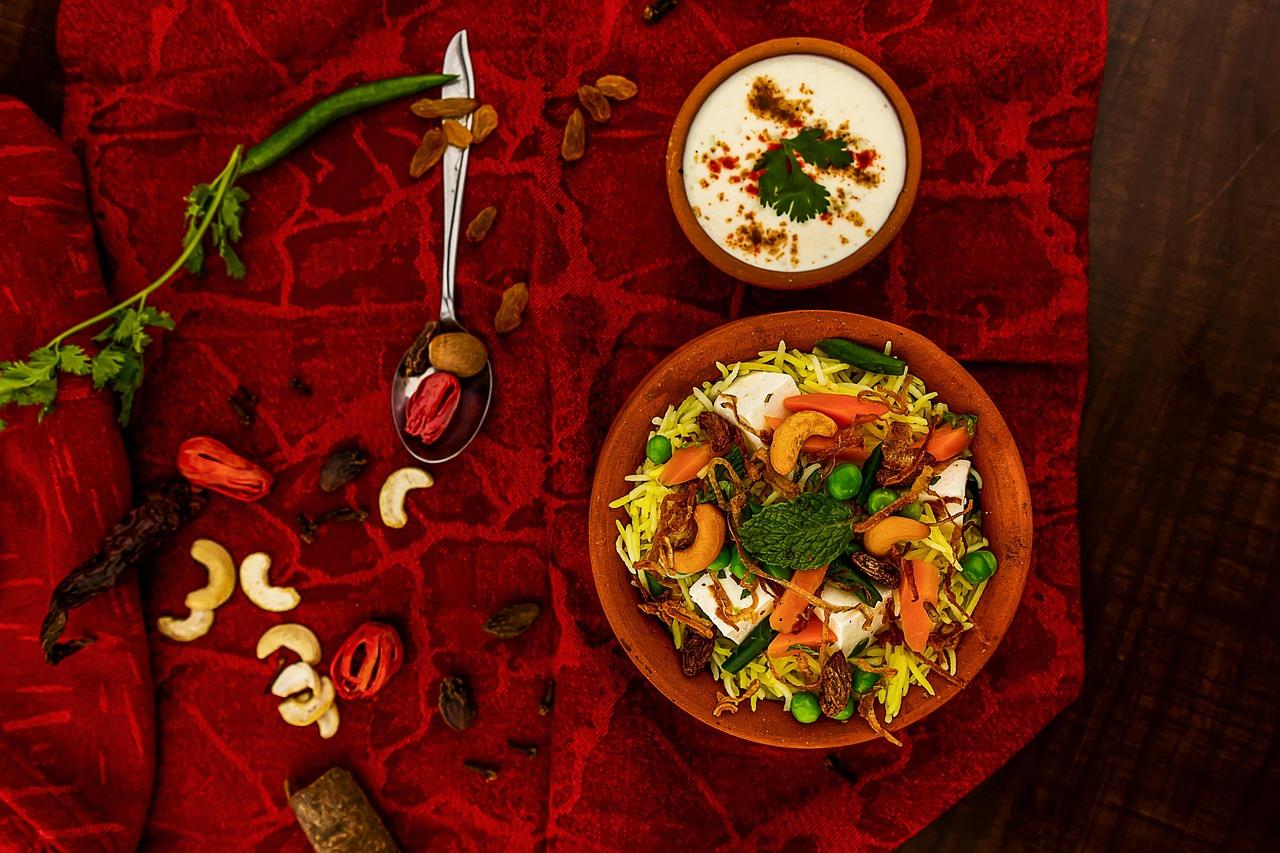
Paneer biryaniRice and moong dal in coconut milk
A mild, creamy biryani: rice and husked green gram roasted in ghee, then cooked in coconut milk with peas, carrots, potatoes, peanuts and cashews, and finished with soft fried paneer and a fresh coriander yogurt. Serve hot, garnished with more fried cashews and paneer.


Sabudana khichdiSago with peanuts and potato
Sabudana khichdi is the dish that sees Maharashtra through every vrat (fast), from Navratri to Ekadashi, but it's so good that people eat it any day of the week. Soaked sago pearls are tossed in a pan with crushed roasted peanuts, cubes of potato, cumin and green chilli until each pearl turns glassy and separate, then finished with lemon and coriander. It's soft, chewy, nutty and gently hot. Fasting rules vary from family to family, so check yours; this version uses rock salt and no asafoetida, onion or garlic. Traditionally it's cooked in ghee; use ghee instead of oil if you aren't keeping it vegan. Chef's tip: soak the sago in just enough water to cover by the height of the pearls themselves, no more; too much water is the reason khichdi turns into one sticky lump.
