
AI-generated image
Tindora nu athanu
Ivy gourd pickle
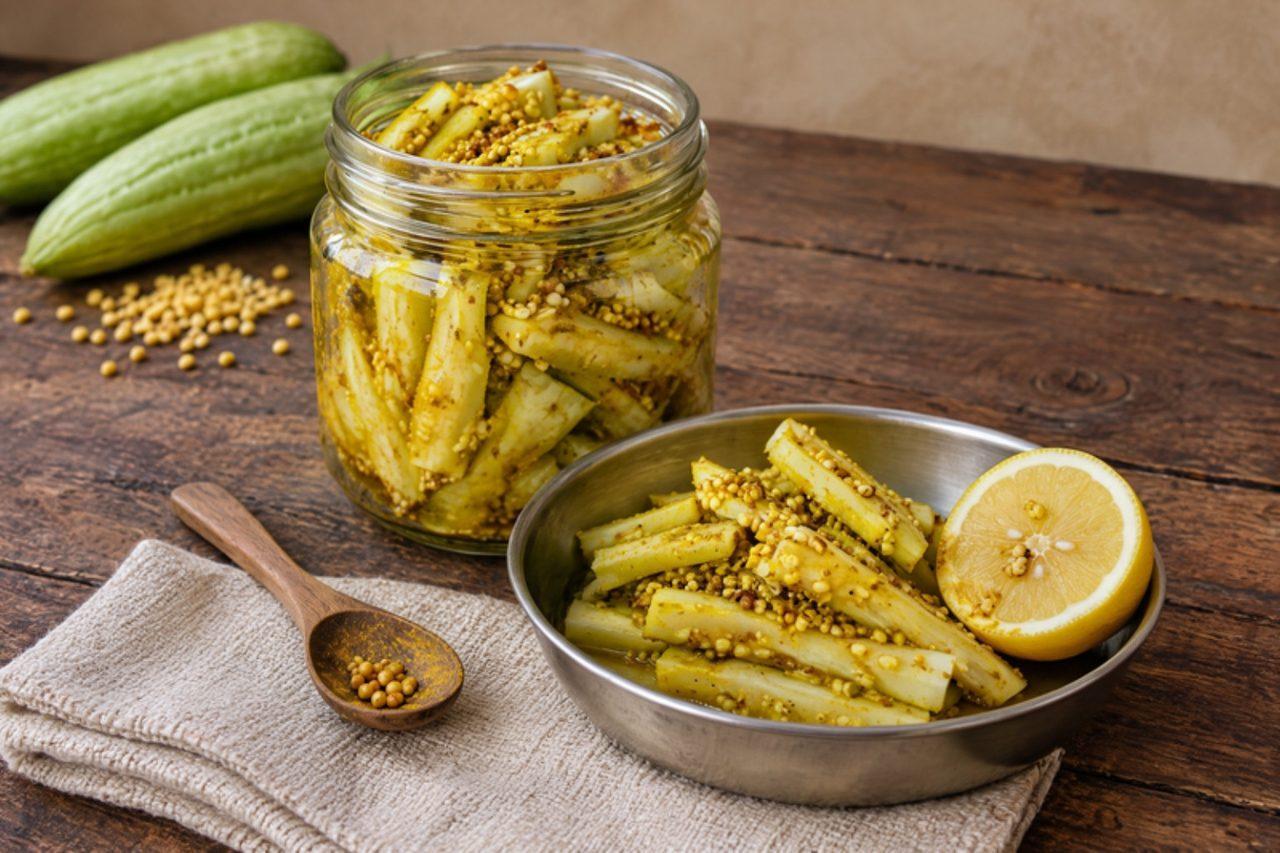
ટીંડોળાનું અથાણું: crisp ivy gourd sticks in split mustard, turmeric and lemon, ready by the next meal



In Gujarati homes from Surat to Rajkot, tindora nu athanu is the pickle you make on a Tuesday for the rest of the week, not the big summer jar. Thin sticks of tindora (ivy gourd) are tossed with rai na kuria (split mustard seed), salt, turmeric, a pinch of hing and lemon juice, then dressed with warm oil. By the next lunch the mustard has bloomed into a nose-tingling heat, the lemon has softened the raw edge and the sticks are still crunchy, a sharp counterpoint to dal-bhaat, khichdi or a plate of thepla. Choose firm, bright green tindora; once they turn red inside they go soft and seedy. Common mistake: pouring smoking-hot oil straight onto the kuria, which scorches it bitter; let the oil cool until just warm. It is ready when the sticks look slightly glossy and darker and a few drops of juice gather in the jar. Because it is fresh vegetable with little salt, it lives in the fridge and is best eaten within 7 days; throw it out if it smells rotten, turns slimy or grows any mould. Chef's tip: no kuria? Pound yellow mustard seeds coarsely in a mortar; you want cracked halves, not powder.
- Total time
- 25 min
- Difficulty
- easy
- Serves
- 10
Ingredients
For the athanu
- 9 oz tindora (ivy gourd)firm and green inside; substitute thin gherkin-sized cucumbers cut the same way
- 1 ½ tsp salt
- ½ tsp ground turmeric
- 1 tsp Kashmiri chilli powder
- ¼ tsp gluten-free asafoetida
- 2 tbsp lemon juiceabout 1 lemon
- 3 tbsp groundnut oil
- 2 green chillies (optional)slit lengthways
Shop this recipe on Amazon
Spices & pantry
Fresh ingredients (2)
Links open Amazon in a new tab. As an Amazon Associate, WhatToEat.Today earns from qualifying purchases.
Method
0/7 doneStep 1: Wash the 9 oz tindora (ivy gourd) and dry them completely on a cloth; any water left on them shortens the pickle's life. Top and tail, then cut each into 4–6 thin lengthways sticks.
10 minStep 2: Wash a 500 ml jar in hot soapy water, rinse and dry it in a 250°F oven for 10 minutes, then cool. Use only dry spoons and bowls from here on.
10 minStep 3: In a dry bowl toss the sticks with 1 ½ tsp salt and ½ tsp ground turmeric and leave for 5 minutes, until they look faintly wet.
5 minStep 4: Heat 3 tbsp groundnut oil in a small pan over a medium heat for about 2 minutes, until it shimmers and a mustard seed dropped in sizzles at once. Turn off the heat and let it cool for 3–4 minutes, until warm but no longer smoking.
2 minStep 5: Put 3 tbsp split yellow mustard seeds (rai na kuria), 1 tsp Kashmiri chilli powder and ¼ tsp gluten-free asafoetida in a heap in the middle of the tindora, pour the warm oil over the heap so it froths gently, then toss everything together.
2 minStep 6: Stir in 2 tbsp lemon juice and the 2 green chillies if using, until every stick is coated yellow and glossy.
Step 7: Pack into the jar, close, and leave in the fridge overnight, shaking once. It is ready when the sticks have darkened, smell sharply of mustard and are still crunchy. Keep in the fridge for up to 7 days, always using a dry spoon; discard if you see mould, it turns slimy or smells off.
Nutrition per serving
- Calories
- 35 kcal
- Protein
- 1 g
- Carbs
- 2 g
- Fat
- 3 g
- Fibre
- 1 g
Nutrition values are estimates.
KrazyBadal
Good to know
- How long does tindora nu athanu take?
- About 25 minutes in total: 20 minutes to prepare and 5 minutes to cook.
- How many people does it serve?
- 10 as written. Change the servings above the ingredients and every amount scales to match.
- Is it vegan?
- Yes. It has no meat, fish, dairy or eggs.
- Is it gluten free?
- Yes, as written. Check the labels on stock, sauces and spice mixes, which sometimes contain gluten.
- What can I use instead of ground turmeric?
- Leave it out (it mostly adds colour).
- What can I use instead of split yellow mustard seeds (rai na kuria)?
- Cumin seeds, same amount (different flavour, same crackle).
Reviews
No reviews yet. Be the first to cook it.
Rate this recipe
Sign in to rate and review this recipe.
You might also like

SakarpadaSweet fried dough diamonds
Sakarpada (shakarpara) are little sweet diamonds of a rich dough made with ghee, milk and sugar, fried until golden and crunchy. They are a Diwali favourite with tea, and the cubes go into bhusu too. They keep for weeks in an air-tight tin.
Paneer biryaniRice and moong dal in coconut milk
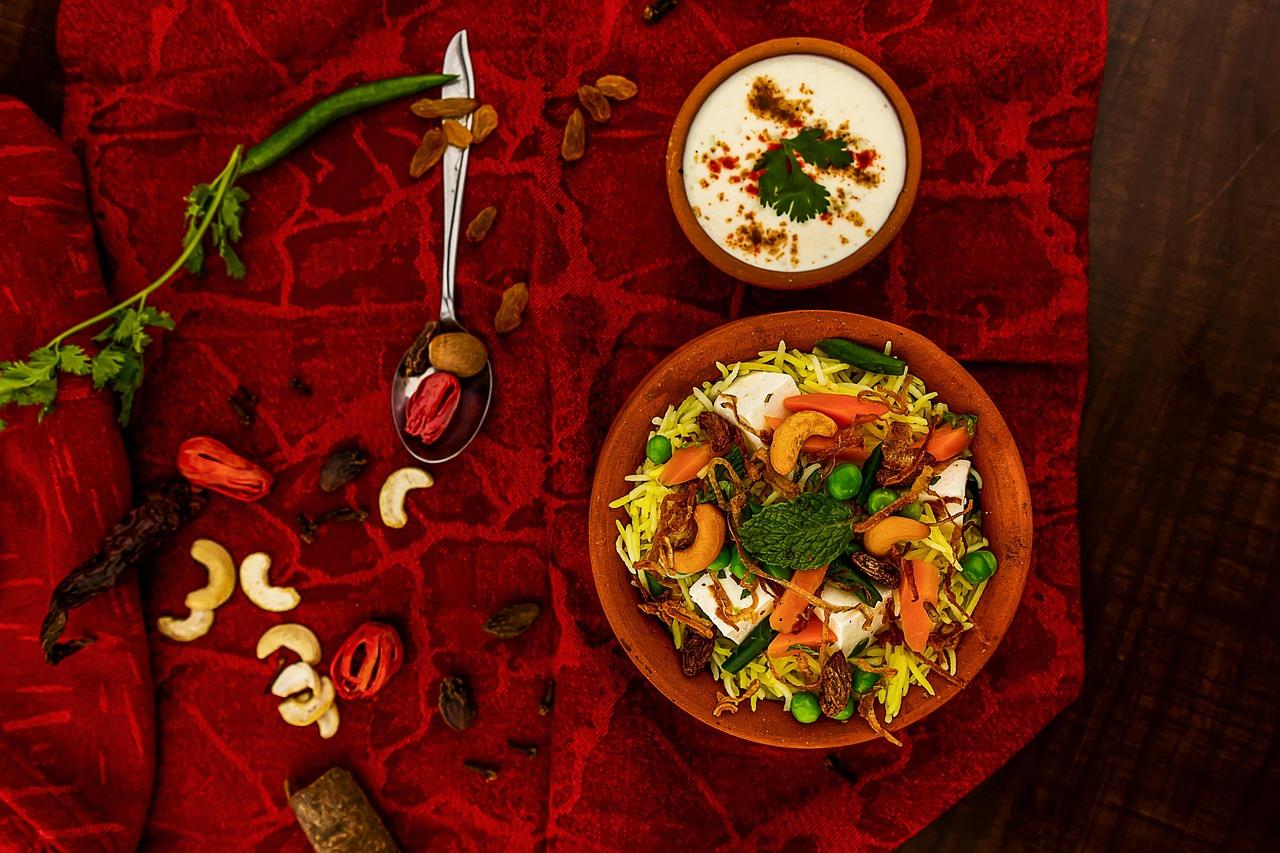
A mild, creamy biryani: rice and husked green gram roasted in ghee, then cooked in coconut milk with peas, carrots, potatoes, peanuts and cashews, and finished with soft fried paneer and a fresh coriander yogurt. Serve hot, garnished with more fried cashews and paneer.


Sabudana khichdiSago with peanuts and potato
Sabudana khichdi is the dish that sees Maharashtra through every vrat (fast), from Navratri to Ekadashi, but it's so good that people eat it any day of the week. Soaked sago pearls are tossed in a pan with crushed roasted peanuts, cubes of potato, cumin and green chilli until each pearl turns glassy and separate, then finished with lemon and coriander. It's soft, chewy, nutty and gently hot. Fasting rules vary from family to family, so check yours; this version uses rock salt and no asafoetida, onion or garlic. Traditionally it's cooked in ghee; use ghee instead of oil if you aren't keeping it vegan. Chef's tip: soak the sago in just enough water to cover by the height of the pearls themselves, no more; too much water is the reason khichdi turns into one sticky lump.
