
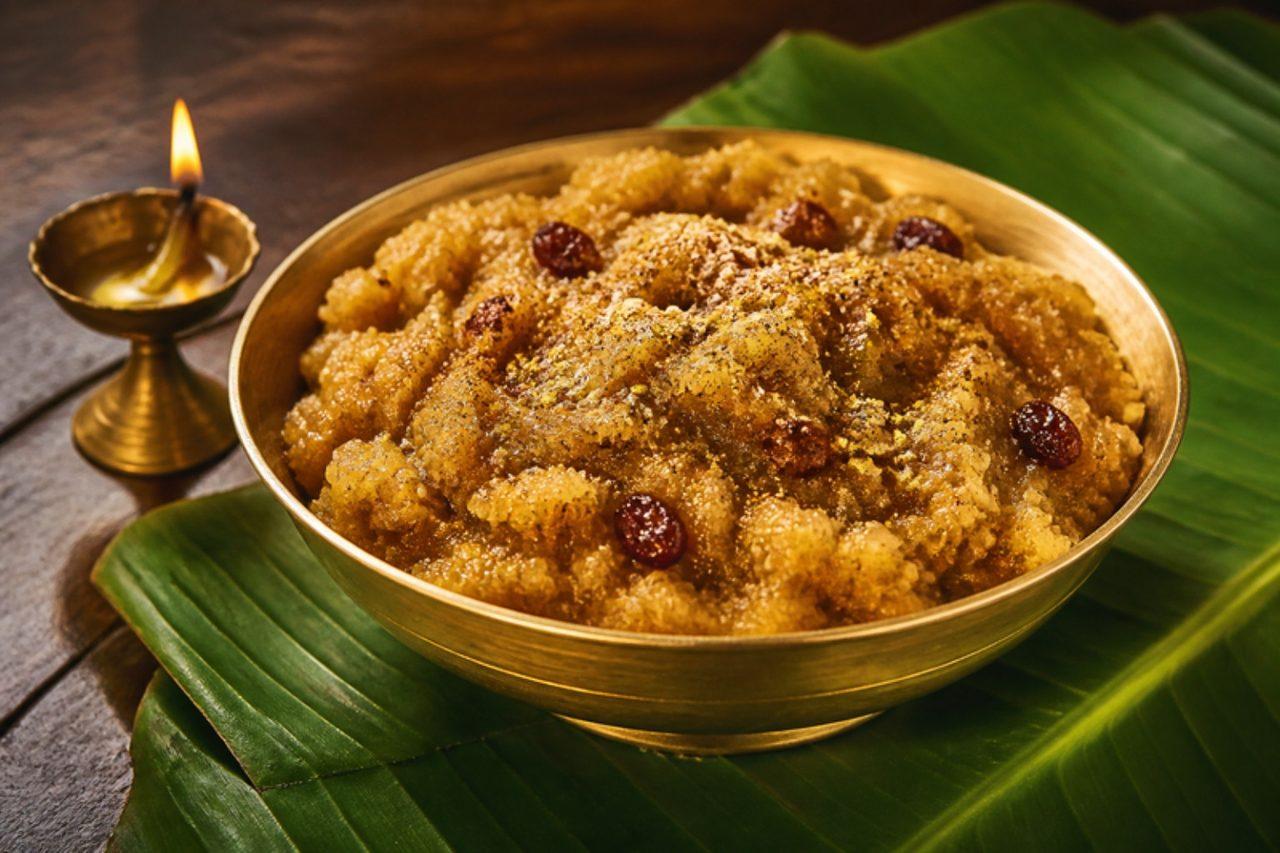
AI-generated image
Trini parsad
Ghee-roasted flour pudding
Parsad (mohan bhog): ghee-roasted flour pudding for pujas and Divali
 Trinidadian
At Hindu pujas across Trinidad, and on Divali night in Felicity and Debe, parsad is the sweet offering that is shared with everyone afterwards, handed out warm on a piece of leaf. Flour is roasted slowly in ghee until it smells nutty and turns sandy brown, then cooked with milk, sugar, raisins and spice into a soft, glossy pudding. The common mistake is rushing the roasting on high heat: the flour burns outside and tastes raw within. Add the milk carefully, as it spits. Chef's tip: warm the milk and sugar together first; adding hot liquid to the roasted flour keeps the parsad smooth and lump-free.
- Total time
- 30 min
- Difficulty
- easy
- Serves
- 8
Ingredients
- 3 ½ oz ghee
- 5 ½ oz plain flour
- 2 cups milk
- 4 oz sugar
- 1 ⅜ oz raisins
- ½ tsp ground cardamom
- ¼ tsp ground cinnamon
- ¼ tsp ground nutmeg
Shop this recipe on Amazon
Fresh ingredients (1)
Links open Amazon in a new tab. As an Amazon Associate, WhatToEat.Today earns from qualifying purchases.
Method
0/5 doneStep 2: Melt 3 ½ oz ghee in a heavy pan over a medium-low heat. Add 5 ½ oz plain flour and stir constantly for 12–15 minutes, until it turns sandy light brown and smells like toasted biscuits.
15 minStep 3: Take the pan off the heat and pour in the hot milk a little at a time, stirring fast; it will bubble and spit, so stand back.
Step 4: Return to a low heat and stir for 3–4 minutes until the mixture thickens and pulls away from the pan in a glossy mass.
4 minStep 5: Stir in 1 ⅜ oz raisins, ½ tsp ground cardamom, ¼ tsp ground cinnamon and ¼ tsp ground nutmeg and serve warm.
Nutrition per serving
- Calories
- 320 kcal
- Protein
- 5 g
- Carbs
- 40 g
- Fat
- 15 g
- Fibre
- 1 g
Nutrition values are estimates.
KrazyBadal
Good to know
- How long does trini parsad take?
- About 30 minutes in total: 5 minutes to prepare and 25 minutes to cook.
- How many people does it serve?
- 8 as written. Change the servings above the ingredients and every amount scales to match.
- Is it vegetarian?
- Yes. It has no meat or fish.
- What can I use instead of ghee?
- Butter, same amount (keep the heat a little lower, butter burns sooner).
- What can I use instead of plain flour?
- Self-raising flour, same amount (then leave out the baking powder).
Reviews
No reviews yet. Be the first to cook it.
Rate this recipe
Sign in to rate and review this recipe.
You might also like
KhurmiWheat and jaggery biscuits
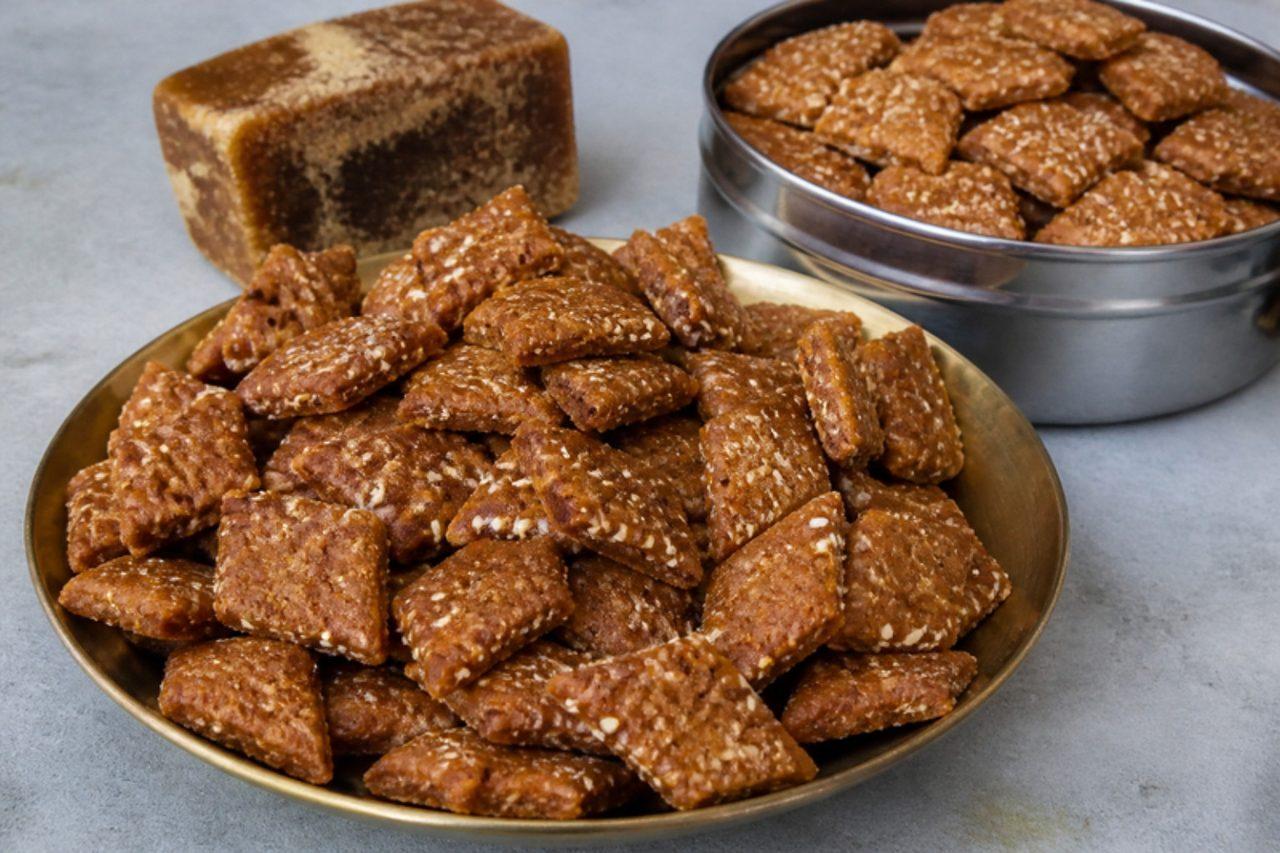
Khurmi are the sweet half of Chhattisgarh's Teeja-Pola festival snacks, made in big batches alongside the salty thethri. The dough is wheat flour and a little semolina bound with melted jaggery, studded with sesame and coconut, then cut into diamonds or pressed into small patterned shapes and fried until dark gold. They have a hard, crunchy bite and a deep caramel flavour, and they last for weeks in a steel dabba, ready for visitors and children back from school. Chef's tip: cool the jaggery water to lukewarm before kneading; hot jaggery makes a slack dough that spreads and soaks up oil.
 Indian

SaheenaDasheen leaf fritters
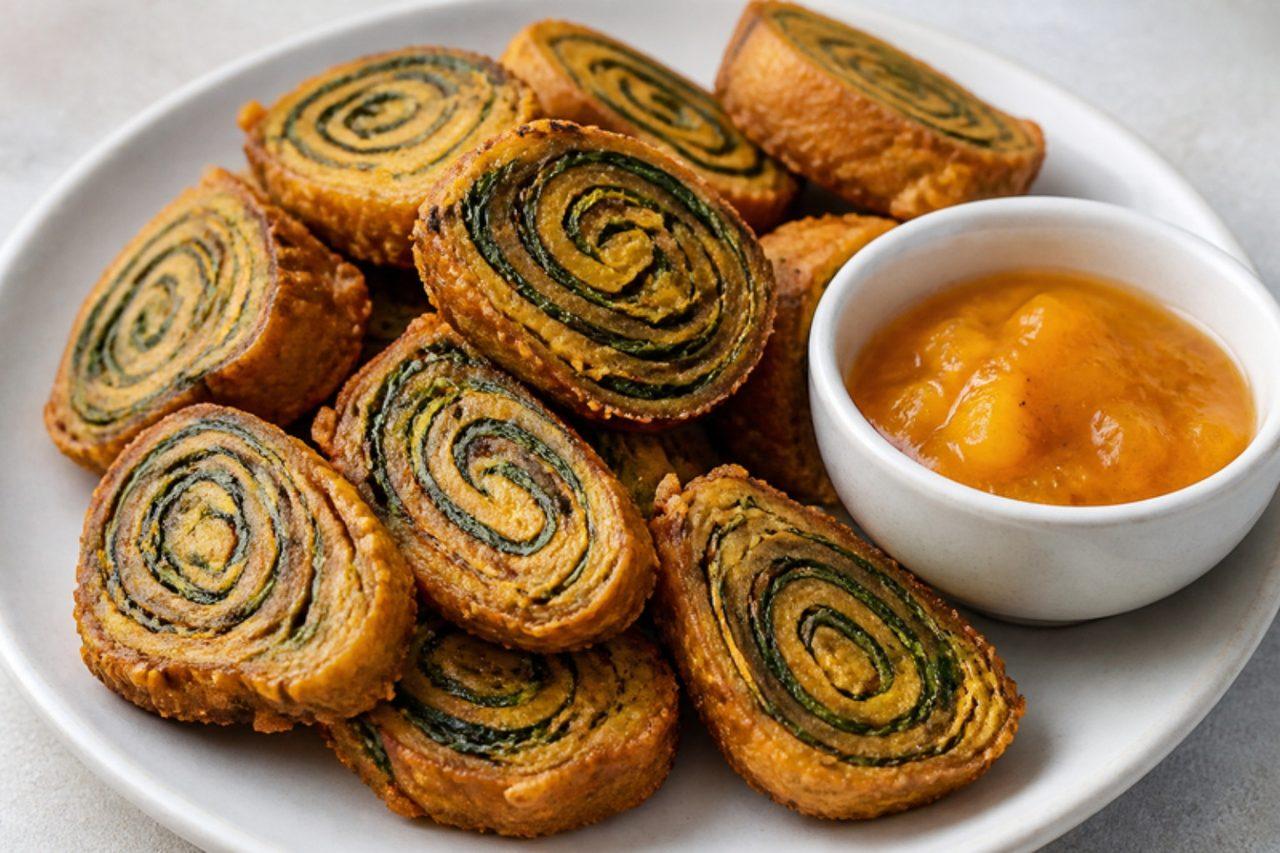
Saheena is an old Indo-Trinidadian snack sold by street vendors and doubles men, especially in Central and South Trinidad. Young dasheen (taro) leaves are spread with a spiced batter of ground split peas, garlic, turmeric and pepper, rolled up like a Swiss roll, steamed, then sliced into rounds and fried until crisp. Each slice shows green spirals of leaf and gold batter, and tastes earthy, savoury and garlicky. Serve with tamarind sauce or mango chutney. If you can't get dasheen leaves, large spinach or Swiss chard leaves work. Chef's tip: always cook dasheen leaves thoroughly. They contain crystals that make your throat itch if undercooked, which is why the rolls are steamed right through before frying.
MuscatSemolina milk sweet
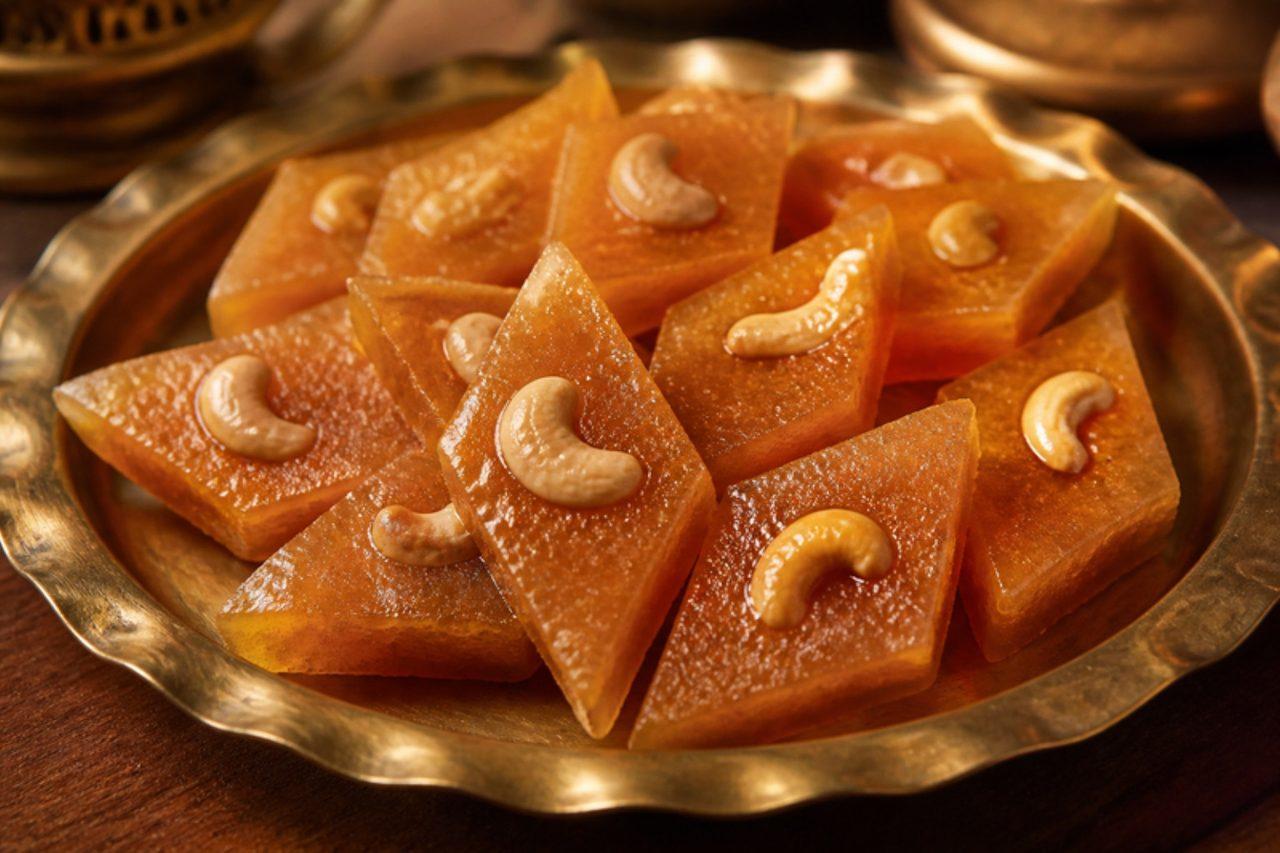
Walk past the Muslim sweet shops of Pettah in Colombo or the old trading streets of Beruwala before Eid and you will see trays of muscat, dense, jewel-like diamonds that are glossy with ghee and studded with cashews. The texture is the whole appeal: firm and chewy, almost like a soft Turkish delight, with a sweet, buttery, cardamom-scented flavour, and it is shared with neighbours at Eid, weddings and the Avurudu table. Traditional cooks extract the starch from wheat flour; this home version soaks and blends semolina, then strains it, which gives the same clear, bouncy set. Most failures come from adding the ghee too quickly, so it pools on top instead of being absorbed; pour it in a spoonful at a time and keep stirring. Chef's tip: the muscat is done when it rolls into a single glossy mass that leaves the pan clean and the ghee starts to seep back out at the edges.
 Sri Lankan