
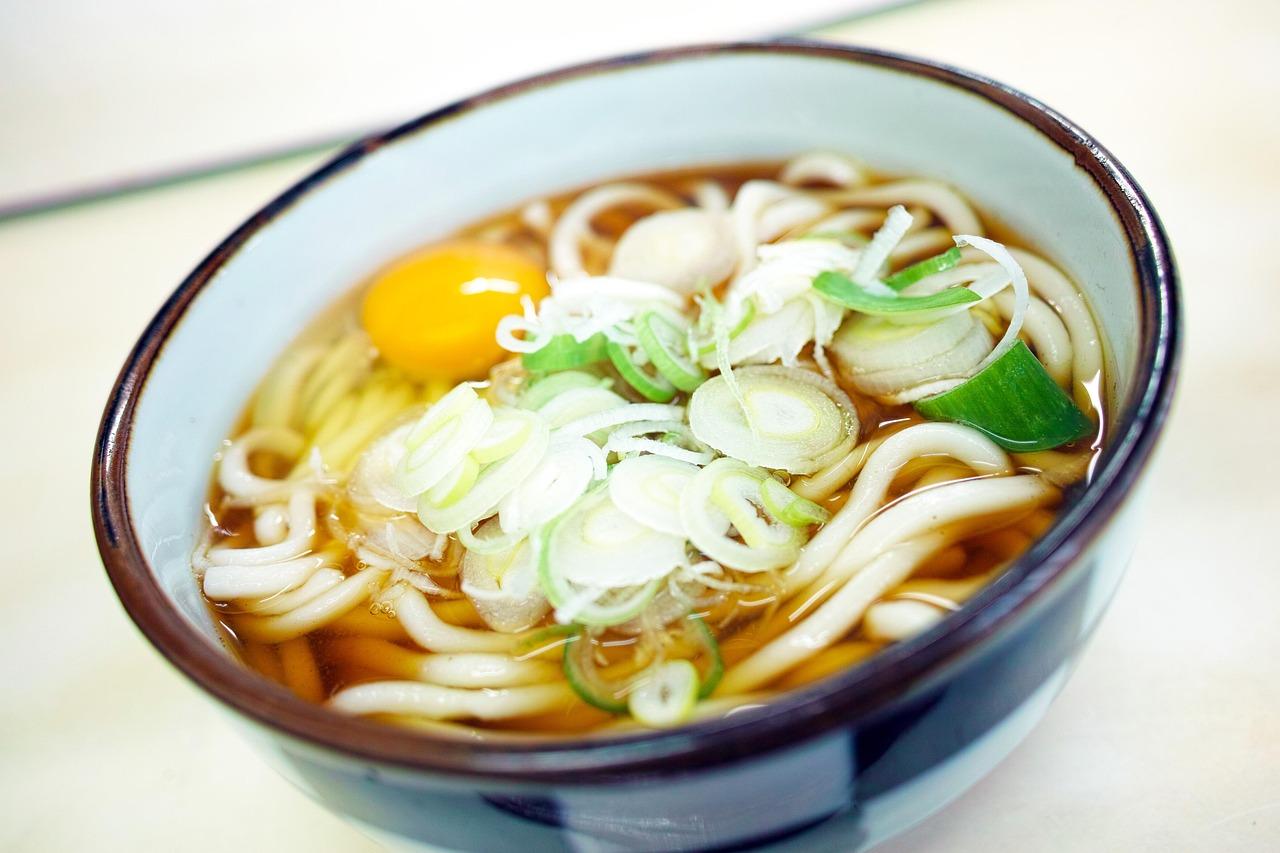
Tsukimi udon (moon-viewing udon)
Thick udon in kombu and shiitake broth, with an egg yolk floating like the moon

Tsukimi means moon-viewing, and in noodle shops all over Japan the name is given to any bowl topped with an egg: the yolk is the full harvest moon, the white the clouds drifting round it, and it is a favourite around the September moon festival. Here the broth is a vegetarian kombu and shiitake dashi seasoned with soy, sweetened with a little sugar instead of mirin so it has no alcohol, giving a clean, savoury base for silky thick noodles and a rich yolk you break into the soup. Add spring onions and a pinch of shichimi, and eat at once. Egg safety: use pasteurised eggs or British Lion eggs if the yolk will stay runny, and for pregnant women, young children or anyone with a weakened immune system, poach the egg in the broth until it is firm. Chef's tip: heat the kombu slowly and lift it out before the water boils, which keeps the broth sweet and clear.
- Total time
- 25 min
- Difficulty
- easy
- Serves
- 4
Ingredients
For the kombu-shiitake dashi
For the bowls
- 4 frozen udon noodlesportions of about 200 g each
- 4 eggspasteurised or British Lion, very fresh
- 2 spring onionsthinly sliced
- 1 nori (optional)sheet, cut into strips
- 1 pinch shichimi togarashi (optional)
Shop this recipe on Amazon
Spices & pantry
Fresh ingredients (2)
Links open Amazon in a new tab. As an Amazon Associate, WhatToEat.Today earns from qualifying purchases.
Method
0/7 doneStep 1: Put 5 cups cold water, 3.9 in kombu and 4 dried shiitake mushrooms in a pan and leave to soak for 5 minutes while you slice the onions.
5 minStep 2: Heat over a medium-low heat for about 10 minutes, until small bubbles cling to the kombu, then lift the kombu out just before the water boils. Common mistake: boiling the kombu. It turns the broth slimy and bitter.
10 minStep 4: Cook 4 frozen udon noodles in a separate pan of boiling water as the packet says, usually 1–2 minutes, until the noodles separate and are hot through, then drain well.
3 minStep 5: Divide the noodles between warmed deep bowls and ladle the very hot broth and shiitake over them.
2 minStep 6: Make a hollow in the noodles in each bowl and slip in an egg from 4 eggs, either the whole egg or just the yolk, so it floats like a moon. For a firm egg, poach it in the simmering broth for 4–5 minutes, until the white and yolk are set, before putting it on the noodles.
2 minStep 7: Scatter with 2 spring onions, add 1 nori and 1 pinch shichimi togarashi and serve straight away. Classic variation (not vegetarian): add 15 g bonito flakes to the broth after removing the kombu, steep for 2 minutes off the heat and strain.
1 min
Nutrition per serving
- Calories
- 390 kcal
- Protein
- 16 g
- Carbs
- 62 g
- Fat
- 6 g
- Fibre
- 3 g
Nutrition values are estimates.
KrazyBadal
Good to know
- How long does tsukimi udon (moon-viewing udon) take?
- About 25 minutes in total: 5 minutes to prepare and 20 minutes to cook.
- How many people does it serve?
- 4 as written. Change the servings above the ingredients and every amount scales to match.
- Is it vegetarian?
- Yes. It has no meat or fish.
- What can I use instead of dried shiitake mushrooms?
- Aubergine, diced, same weight.
- What can I use instead of soy sauce?
- Tamari, same amount (gluten free).
Reviews
No reviews yet. Be the first to cook it.
Rate this recipe
Sign in to rate and review this recipe.
You might also like

Boiled pasta
The basic method for any dried pasta, from penne to spaghetti. A large pan of salted boiling water keeps the pasta from sticking, and you cook it only until just done, with a little bite left. Use it in salads, bakes or with any sauce.
 Italian


Miso soup
Miso soup (味噌汁) is drunk every day in homes all over Japan, at breakfast as well as dinner, beside a bowl of rice. The base is dashi; this vegan version uses kombu and dried shiitake instead of bonito, which gives it a deep, rounded flavour. Silken tofu and wakame seaweed are the classic fillings. It takes ten minutes; just remember not to boil the miso. Chef's tip: add the miso at the very end and never let it boil. Boiling kills the miso's fresh, fermented aroma; Japanese cooks say the soup should only 'smile', with the surface barely trembling.

Yaki onigiriGrilled rice balls
Yaki onigiri (焼きおにぎり) are rice balls grilled until they form a crisp, toasty crust, then brushed with soy sauce glaze. They are eaten all over Japan, at izakaya, at barbecues and from the freezer section, as a snack or with miso soup. The inside stays soft and steamy while the outside crackles. Best eaten hot, straight from the pan. Chef's tip: let the shaped rice balls dry for 10 minutes before they go in the pan. A drier surface forms a better crust and won't stick, and the glaze goes on only at the end so it doesn't burn.