
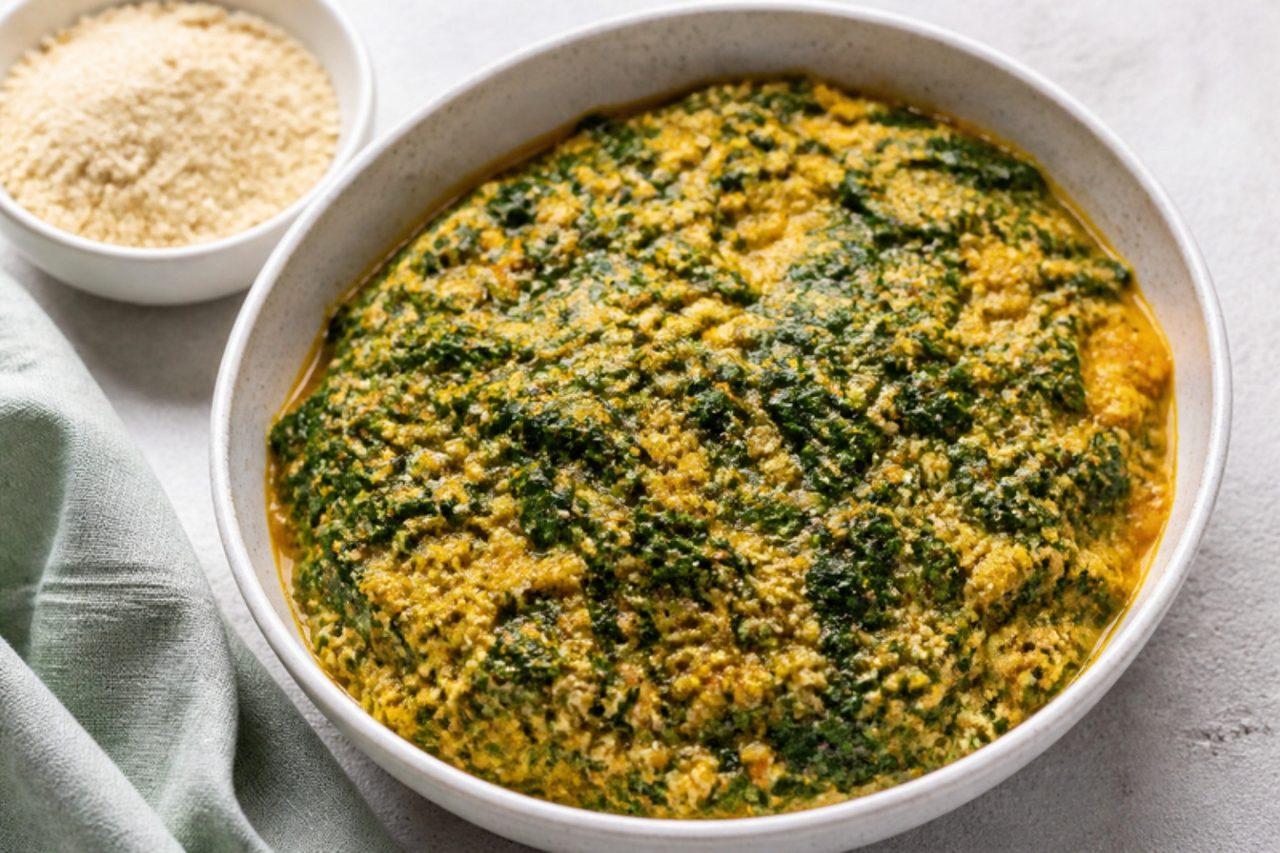
AI-generated image
Vegetable egusi soup
Melon seed soup
Ground melon-seed soup cooked into soft curds with palm oil, peppers and bitter leaf or spinach



Egusi soup is cooked right across Nigeria, from Igbo kitchens in Enugu to Yoruba homes in Abeokuta, and it is the soup most people mean when they say 'swallow and soup'. Ground egusi (the protein-rich seeds of a wild melon) is fried and simmered in a pepper and palm-oil base until it forms soft, savoury curds, then finished with greens. It is eaten by hand with pounded yam, eba or fufu. The usual meats, stockfish and crayfish are left out here; mushrooms, iru and vegetable stock do the work. Chef's tip: let the egusi paste sit in the hot sauce without stirring for 5 minutes so it sets into fluffy curds before you break it up.
- Total time
- 60 min
- Difficulty
- medium
- Serves
- 4
Ingredients
- 1 onionhalf blended into the egusi, half finely chopped
- 1 red bell pepperdeseeded
- 1 scotch bonnet chillistalk removed
- ¼ cup red palm oil
- 1 tbsp iru (fermented locust beans) (optional)rinsed
- 7 oz mushroomssliced
- 2 ½ cups vegetable stock
- 7 oz washed bitter leaf, ugu leaves or spinachchopped
- 1 tsp saltor to taste
Shop this recipe on Amazon
What you'll need
Spices & pantry
Links open Amazon in a new tab. As an Amazon Associate, WhatToEat.Today earns from qualifying purchases.
Method
0/8 doneStep 1: Mix 7 oz ground egusi (melon seeds) with half of ½ onion (grated or blended) and 6–8 tbsp water to a thick, spreadable paste.
Step 2: Blend 1 red bell pepper and 1 scotch bonnet chilli to a coarse purée.
Step 3: Heat ¼ cup red palm oil in a pot over a medium heat until it thins. Fry the chopped remaining ½ onion with 1 tbsp iru (fermented locust beans) if using until soft.
3 minStep 4: Add the pepper purée and fry, stirring, until it darkens and the oil floats.
8 minStep 5: Drop the egusi paste into the pot in tablespoon lumps. Leave it alone over a medium-low heat until the lumps turn pale and set, then turn them gently.
6 minStep 6: Add 7 oz mushrooms and 2 ½ cups vegetable stock. Cover and simmer over a low heat, stirring now and then, until the egusi has broken into soft curds and the oil rises again to the top. A common mistake is cooking it too briefly: undercooked egusi tastes raw and grainy.
20 minStep 7: Stir in 7 oz washed bitter leaf, ugu leaves or spinach and 1 tsp salt and simmer until the leaves have wilted but are still green. The soup should be thick enough to coat a spoon.
5 minStep 8: Serve hot with pounded yam, eba or fufu.
Nutrition per serving
- Calories
- 430 kcal
- Protein
- 17 g
- Carbs
- 11 g
- Fat
- 37 g
- Fibre
- 4 g
Nutrition values are estimates.
KrazyBadal
Good to know
- How long does vegetable egusi soup take?
- About 60 minutes in total: 15 minutes to prepare and 45 minutes to cook.
- How many people does it serve?
- 4 as written. Change the servings above the ingredients and every amount scales to match.
- Is it vegan?
- Yes. It has no meat, fish, dairy or eggs.
- Is it gluten free?
- Yes, as written. Check the labels on stock, sauces and spice mixes, which sometimes contain gluten.
- What can I use instead of onion?
- 2 shallots per onion.
- What can I use instead of mushrooms?
- Aubergine, diced, same weight.
Reviews
No reviews yet. Be the first to cook it.
Rate this recipe
Sign in to rate and review this recipe.
You might also like

Miso soup
Miso soup (味噌汁) is drunk every day in homes all over Japan, at breakfast as well as dinner, beside a bowl of rice. The base is dashi; this vegan version uses kombu and dried shiitake instead of bonito, which gives it a deep, rounded flavour. Silken tofu and wakame seaweed are the classic fillings. It takes ten minutes; just remember not to boil the miso. Chef's tip: add the miso at the very end and never let it boil. Boiling kills the miso's fresh, fermented aroma; Japanese cooks say the soup should only 'smile', with the surface barely trembling.
 Japanese

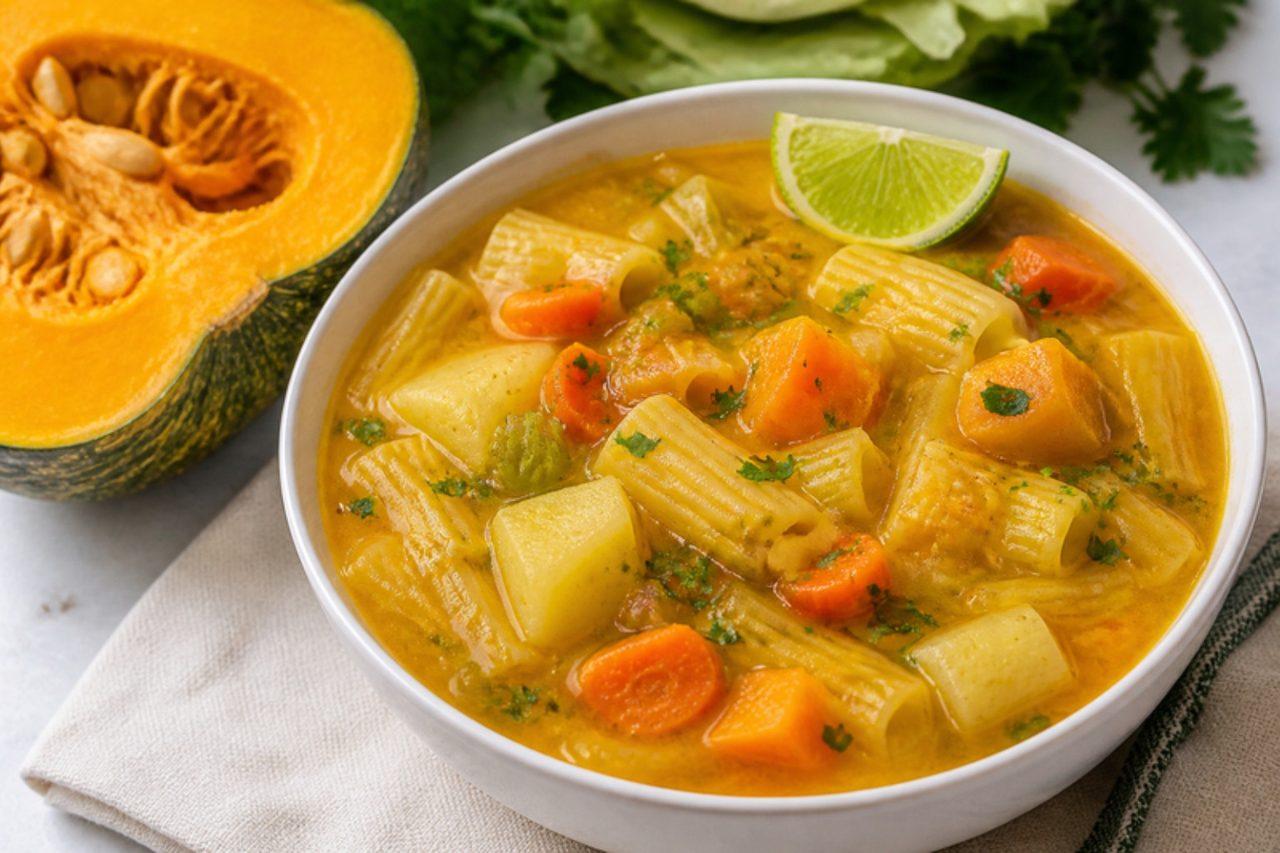
Soup joumouPumpkin soup
Every 1 January, Haitian families from Port-au-Prince to Brooklyn wake up to soup joumou. It marks independence from France on 1 January 1804: under French rule, enslaved Haitians cooked this pumpkin soup but were forbidden to eat it, so the free people of the new nation made it their own as a dish of freedom. In 2021 it was added to UNESCO's list of the intangible cultural heritage of humanity. The base is a velvety purée of joumou (Caribbean pumpkin) with epis, and in it simmer chunks of carrot, potato, cabbage, celery and turnip, with pasta and a squeeze of lime. It's usually made with beef; this vegetable version is full and golden, rich enough for the day. Chef's tip: roast half the pumpkin before puréeing it; the caramelised edges give the soup the depth that slow-cooked meat usually provides.
 Haitian

Puff puffFried dough balls
Puff puff is the snack of Nigerian parties, school gates and roadside stalls: a sweet yeast batter scooped by hand into hot oil, where it swells into soft, chewy, golden balls. Across the border in Ghana the same treat is called bofrot (or 'boflot'), often a little larger and spiced with more nutmeg, and sold in clear bags on Accra's streets; we treat them as one dish here. Eat them warm on their own, or with a dusting of sugar. Chef's tip: the batter is ready only when it has doubled and is full of bubbles; under-proved batter gives heavy, greasy balls.