
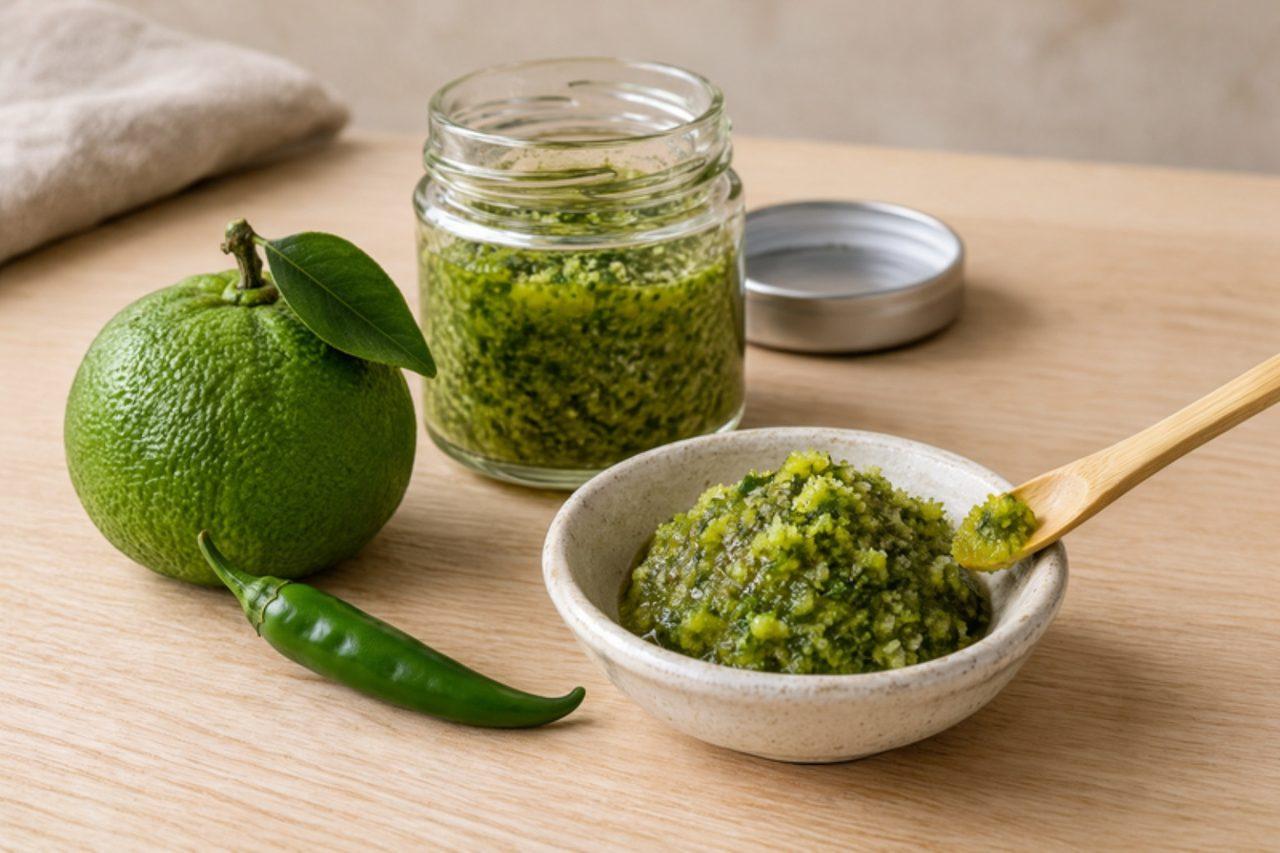
AI-generated image
Yuzu kosho
Yuzu and chilli paste
柚子胡椒: Kyushu's fiery-fragrant paste of green yuzu zest, green chilli and salt, ground and left to mellow



In the mountain villages of Kyushu, especially Oita and Fukuoka, families make yuzu kosho in late summer, when yuzu are still green and the chillies are at their hottest (in Kyushu dialect 'kosho' means chilli, not pepper). Zest and chillies are ground with salt in a suribachi until they turn into a bright, coarse paste, then left to mature for a week or more. A tiny dab lifts hot-pot, grilled chicken or fish, sashimi, miso soup and even a bowl of udon; it is intensely citrusy, salty and hot all at once. It is a fresh chilli paste, so it lives in the fridge or the freezer, never on the shelf, and the salt (about 15% of the paste) is what keeps it. The common mistake is grating into the white pith, which makes it bitter; take only the thin green layer. It is ready when the paste is fine, moist and evenly coloured and the raw chilli edge has softened into a rounded heat, after about a week. No yuzu? Use the zest of green limes with a little lemon, or sudachi or kabosu. Wear gloves when you handle the chillies. Chef's tip: ripe yellow yuzu with red chillies makes the orange version for winter; same method.
- Total time
- 30 min
- Difficulty
- easy
- Serves
- 24
Ingredients
- 8 green yuzufor about 30 g zest; or 4 green limes and 1 lemon
- 2 ⅛ oz green chilliesThai or bird's eye for heat, or half milder green chillies
- ½ oz fine sea saltabout 15% of the zest and chilli weight
- 1 tsp yuzu juice (optional)squeezed from the zested fruit
Shop this recipe on Amazon
What you'll need
Spices & pantry
Fresh ingredients (1)
Links open Amazon in a new tab. As an Amazon Associate, WhatToEat.Today earns from qualifying purchases.
Method
0/7 doneStep 1: Clean the jar or container and lid: wash in hot soapy water, rinse, then dry in a 250°F oven for 10 minutes (or pour boiling water over and in it and air-dry upside down). Let it cool; it must be completely dry. Use a small jar, about 150 ml.
Step 2: Wash and dry the 8 green yuzu. Grate only the thin green layer of zest with a fine grater, stopping before the white pith. You need about 30 g.
15 minStep 3: Wearing gloves, stem the 2 ⅛ oz green chillies, cut lengthways and scrape out some or all of the seeds (more seeds, more heat). Chop very finely.
10 minStep 4: Grind the chillies with the ½ oz fine sea salt in a suribachi or mortar for 3–4 minutes, until they break down into a wet paste.
4 minStep 5: Add the zest and grind for another 2–3 minutes, until fine and evenly green. For a looser paste, work in the 1 tsp yuzu juice if using.
3 minStep 6: Pack into the clean jar, press flat with a clean spoon, lay cling film on the surface and close. Refrigerate for 1 week to mature, until the colour has deepened slightly and the heat is rounded.
Step 7: Keeps 3–6 months in the fridge, or freeze it in small portions for a year. Always use a clean, dry spoon. Throw it away if you see mould, it fizzes, smells off or turns slimy.
Nutrition per serving
- Calories
- 3 kcal
- Protein
- 0 g
- Carbs
- 1 g
- Fat
- 0 g
- Fibre
- 0 g
Nutrition values are estimates.
KrazyBadal
Good to know
- How long does yuzu kosho take?
- About 30 minutes in total.
- How many people does it serve?
- 24 as written. Change the servings above the ingredients and every amount scales to match.
- Is it vegan?
- Yes. It has no meat, fish, dairy or eggs.
- Is it gluten free?
- Yes, as written. Check the labels on stock, sauces and spice mixes, which sometimes contain gluten.
- Is it very spicy?
- It has some heat. Use less chilli for a milder version, or more if you like it hot.
- Can I make it ahead?
- Yes. It keeps well, so you can cook it earlier in the day or the day before and reheat it.
Reviews
No reviews yet. Be the first to cook it.
Rate this recipe
Sign in to rate and review this recipe.
You might also like

Yaki onigiriGrilled rice balls
Yaki onigiri (焼きおにぎり) are rice balls grilled until they form a crisp, toasty crust, then brushed with soy sauce glaze. They are eaten all over Japan, at izakaya, at barbecues and from the freezer section, as a snack or with miso soup. The inside stays soft and steamy while the outside crackles. Best eaten hot, straight from the pan. Chef's tip: let the shaped rice balls dry for 10 minutes before they go in the pan. A drier surface forms a better crust and won't stick, and the glaze goes on only at the end so it doesn't burn.


Miso soup
Miso soup (味噌汁) is drunk every day in homes all over Japan, at breakfast as well as dinner, beside a bowl of rice. The base is dashi; this vegan version uses kombu and dried shiitake instead of bonito, which gives it a deep, rounded flavour. Silken tofu and wakame seaweed are the classic fillings. It takes ten minutes; just remember not to boil the miso. Chef's tip: add the miso at the very end and never let it boil. Boiling kills the miso's fresh, fermented aroma; Japanese cooks say the soup should only 'smile', with the surface barely trembling.
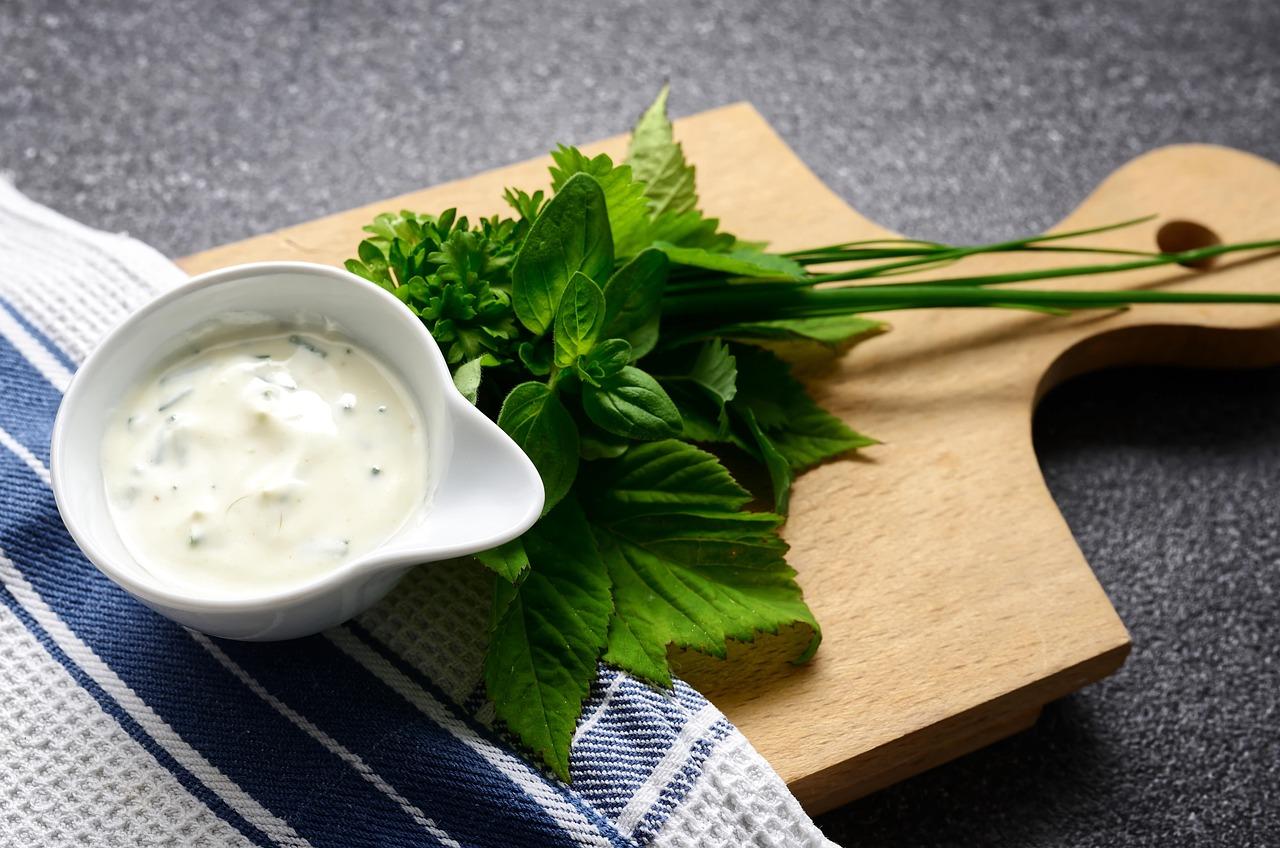
Sour cream dip
A simple, tangy dip made with thick home-made cottage cheese (hung yogurt) or ready-made sour cream, seasoned with garlic, chilli, black pepper and vinegar. Serve it cold with crisps, nachos and jacket potatoes. The book's other dips use this as their 'sour cream'.
