
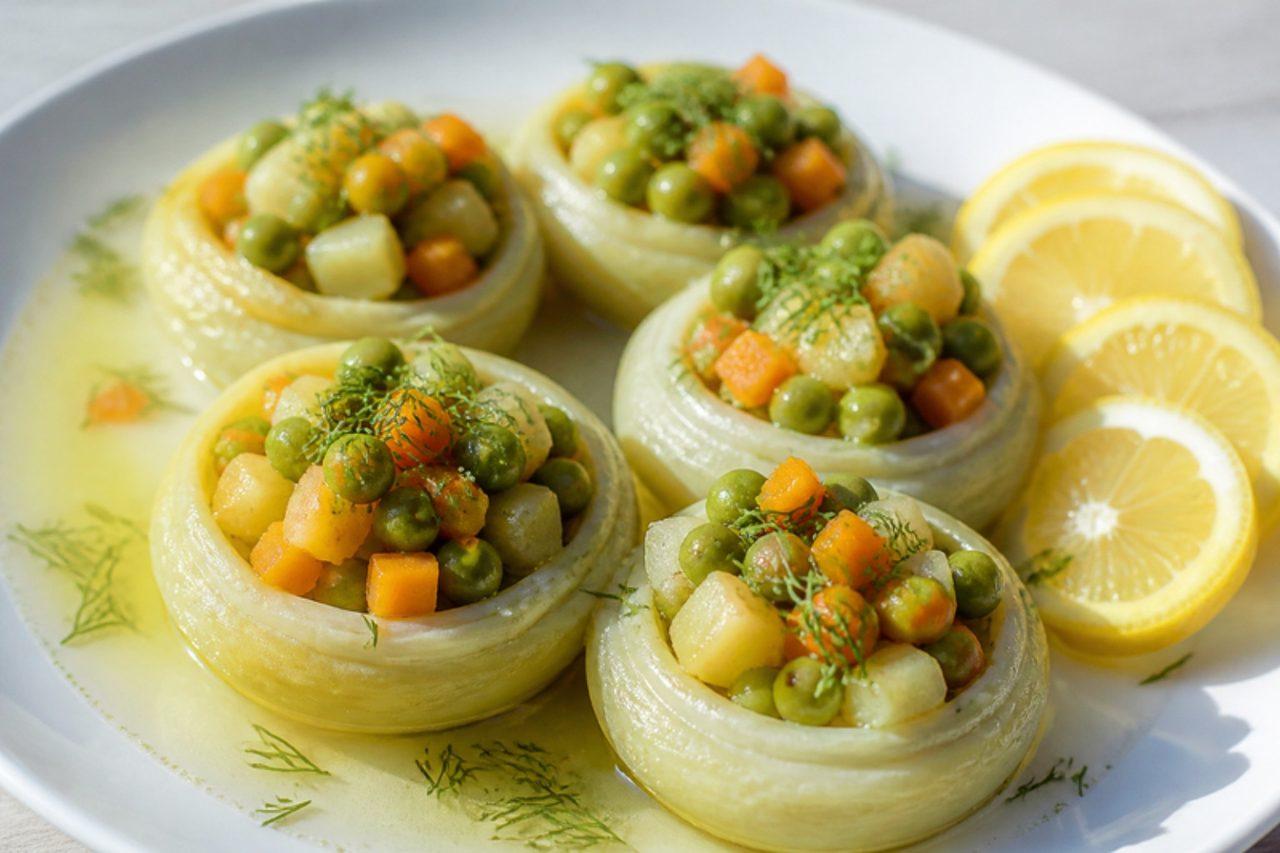
AI-generated image
Zeytinyağlı enginar
Artichokes braised with peas
Aegean artichoke hearts braised with peas, carrot and dill in olive oil



In spring, when globe artichokes pile up on stalls in İzmir and Urla, market sellers trim them on the spot into pale hearts kept in lemon water, and families take them home to make zeytinyağlı enginar. The hearts are braised cup-side up with small onions, carrots, potato and peas in olive oil and lemon, then served cold with a shower of dill, often as the first course of a spring dinner. The classic mistake is leaving trimmed artichokes in the air: they turn grey within minutes. Chef's tip: rub every cut surface with lemon as you go and drop the hearts straight into water with lemon juice and a spoonful of flour, which keeps them pale and cream-coloured.
- Total time
- 50 min
- Difficulty
- medium
- Serves
- 4
Ingredients
For the artichokes
- 4 globe artichokeslarge; or 4 frozen artichoke hearts
- 2 lemons1 for rubbing, 1 juiced
- 1 tbsp rice flourfor the soaking water
For the braise
- ¼ cup extra virgin olive oil
- 8 small onions or shallotspeeled, left whole
- 1 carrotdiced
- 1 potatosmall, diced
- 3 ½ oz peasfresh or frozen
- 1 tsp sugar
- 1 tsp salt
- 1 ¼ cups hot water
- ⅔ oz fresh dillchopped
Shop this recipe on Amazon
Spices & pantry
Links open Amazon in a new tab. As an Amazon Associate, WhatToEat.Today earns from qualifying purchases.
Method
0/6 doneStep 1: Fill a bowl with cold water, squeeze in half of 1 lemons and whisk in 1 tbsp rice flour. Keep it next to the board.
Step 2: Snap the dark outer leaves off each of 4 globe artichokes until you reach pale yellow ones. Cut off the top two-thirds, trim the stalk and pare the dark green skin from the base. Scoop out the hairy choke with a teaspoon, rub with the other half lemon and drop into the lemon water at once. If you skip this the hearts go grey.
20 minStep 3: Heat ¼ cup extra virgin olive oil in a wide pan over a medium-low heat. Add 8 small onions or shallots, 1 carrot and 1 potato and cook gently for 5 minutes, until the onions are shiny and just softening.
5 minStep 5: Lay a circle of baking paper on top, cover and simmer over a low heat for 20–25 minutes, until a knife slides easily into the base of a heart and the carrots are tender.
25 minStep 6: Leave to cool in the pan. Arrange on a plate, spoon the juices over and finish with ⅔ oz fresh dill. Serve at room temperature or chilled.
Nutrition per serving
- Calories
- 210 kcal
- Protein
- 5 g
- Carbs
- 20 g
- Fat
- 13 g
- Fibre
- 9 g
Nutrition values are estimates.
KrazyBadal
Good to know
- How long does zeytinyağlı enginar take?
- About 50 minutes in total: 25 minutes to prepare and 25 minutes to cook.
- How many people does it serve?
- 4 as written. Change the servings above the ingredients and every amount scales to match.
- Is it vegan?
- Yes. It has no meat, fish, dairy or eggs.
- Is it gluten free?
- Yes, as written. Check the labels on stock, sauces and spice mixes, which sometimes contain gluten.
- What can I use instead of lemons?
- Lime, or 2 tbsp bottled lemon juice per lemon (no zest from bottled juice).
- What can I use instead of small onions or shallots?
- Half an onion per 2 shallots.
Reviews
No reviews yet. Be the first to cook it.
Rate this recipe
Sign in to rate and review this recipe.
You might also like
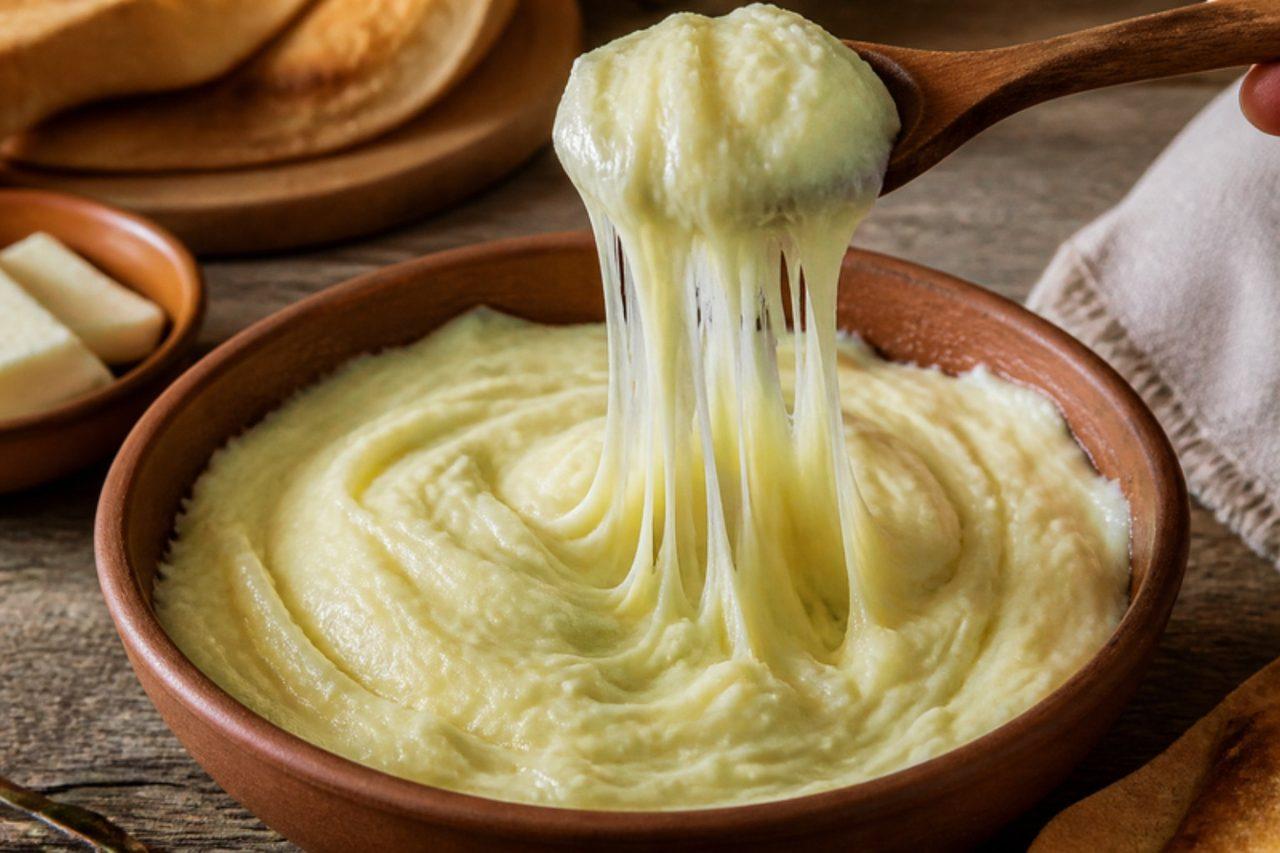
TashmijabiMashed potatoes with stretchy cheese
Potatoes grow well in the cold valleys of Svaneti, and tashmijabi is how families around Mestia turn them into a feast dish: they are mashed hot, then beaten with handfuls of young sulguni until the purée becomes glossy and stretches from the spoon in long strands. It is served with grilled meat, kubdari or simply with pickles and Svan salt. A common mistake is letting the potatoes cool before adding the cheese; they must be piping hot for the cheese to melt and stretch. Chef's tip: keep the pan on a low heat while you beat, and use a firm wooden spoon. Most sulguni uses animal rennet; choose a vegetarian one or use mozzarella.
 Georgian

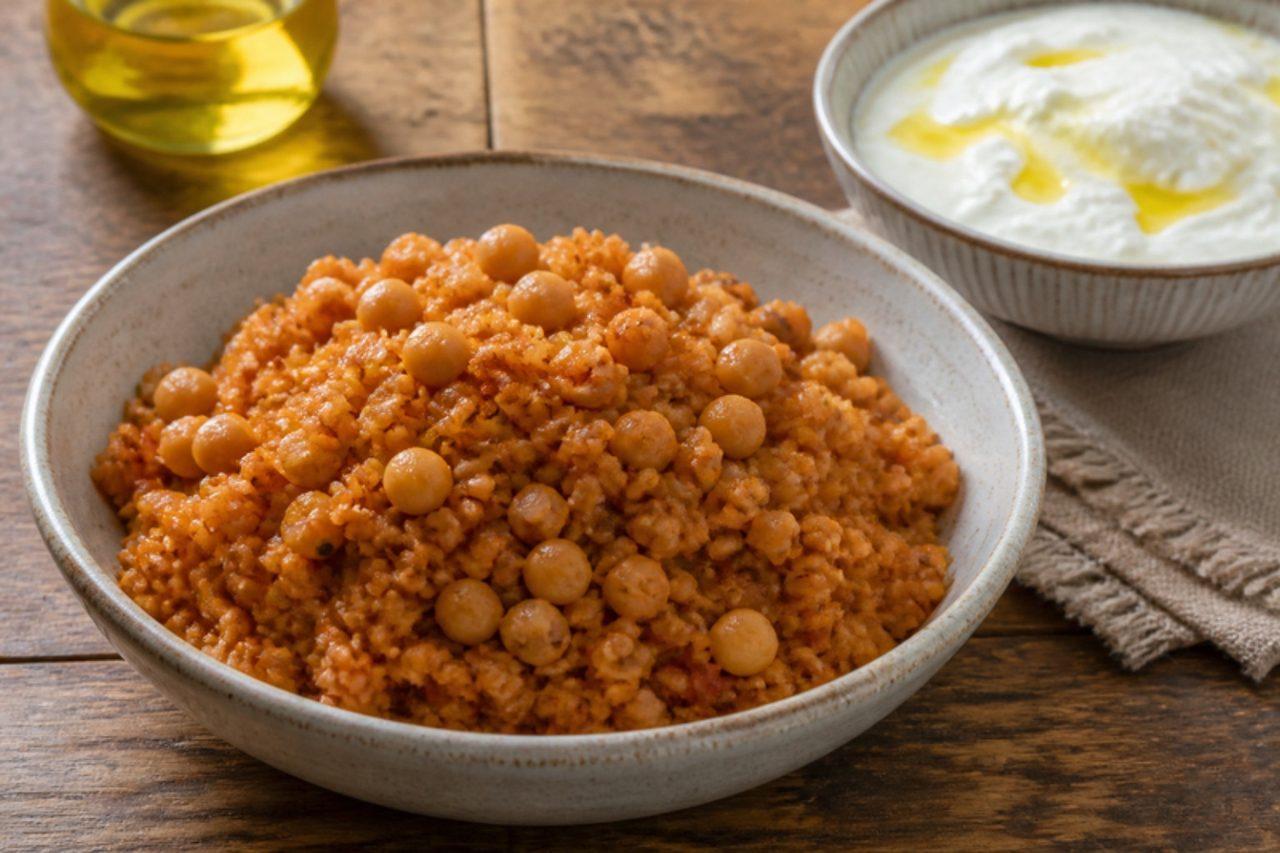
Firik pilavıSmoky green wheat pilaf
Each June farmers around Gaziantep cut wheat while it is still green and burn off the husks in the field, which gives firik its gentle campfire smell. Cooked as a pilaf with onion, pepper paste and a handful of chickpeas, it has a chewy, nutty bite that sits well beside grilled kebabs or simply a bowl of ayran and a tomato salad. It is the everyday grain of the region's home kitchens, cheaper than rice and more filling. Rinse the grains well: grit and bits of chaff are common in firik. Chef's tip: let it rest under a tea towel for ten minutes after cooking; the steam finishes the grains and they separate beautifully.

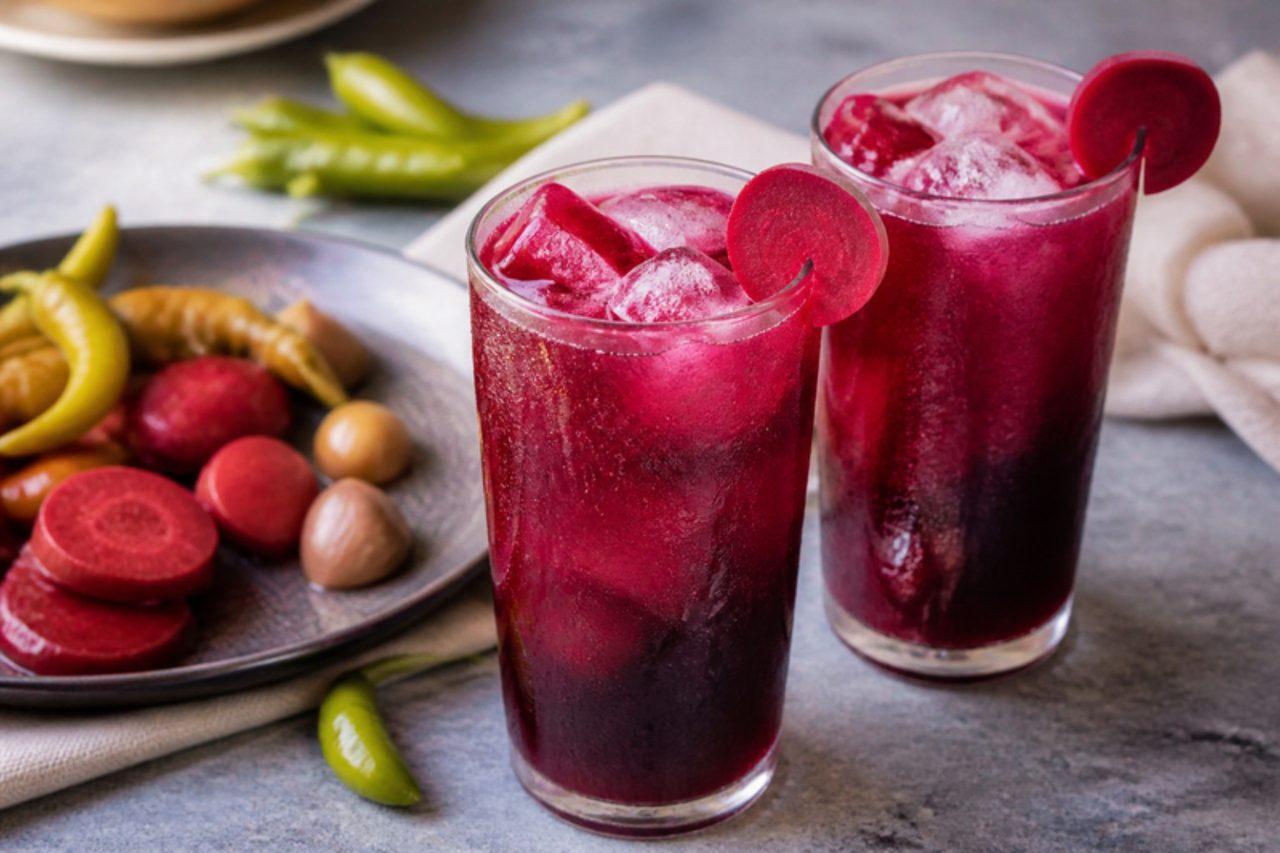
ŞalgamFermented purple carrot drink
Order an Adana kebab in its home city and a tall glass of şalgam arrives with it, deep purple, salty, sour and often fiery. It is made by fermenting black carrots with a little bulgur and salt for a week or more, and the sharpness clears the palate between bites of lamb and grilled onion. Street carts in Adana sell it by the glass in summer. This home version skips the separate bulgur-sour-dough stage the big producers use. Use non-iodised salt: iodised salt can stall the ferment. Chef's tip: taste from day 5; when it is sour enough to make you blink, strain and chill it, because it keeps fermenting at room temperature.