
AI-generated image
Zeytinyağlı pırasa
Leeks braised in olive oil
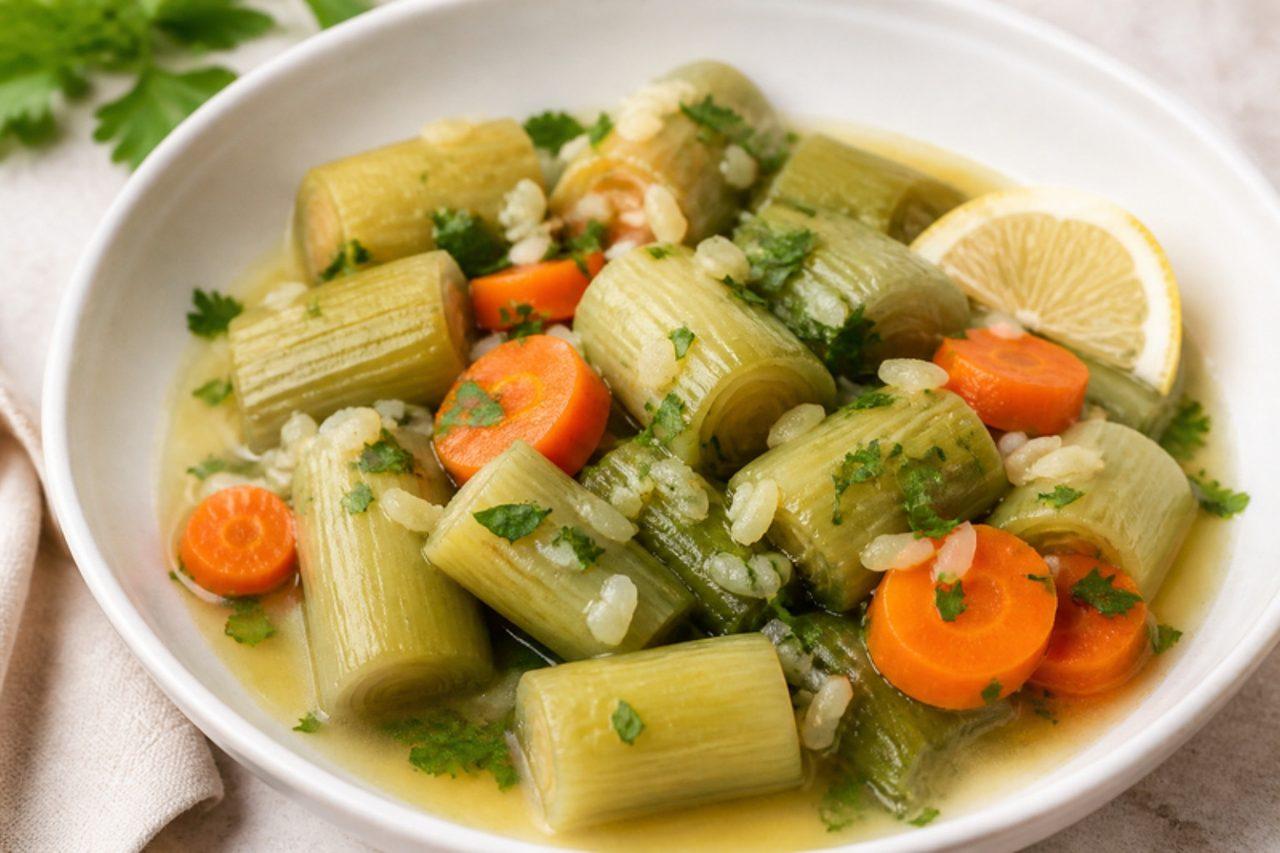
Istanbul-style leeks braised with carrot and rice in olive oil and lemon



Winter in Istanbul brings fat leeks to every neighbourhood market, and zeytinyağlı pırasa is how many households use them: chunks of leek and carrot stewed gently in olive oil with a handful of rice to thicken the juices, finished with lemon. It is served at room temperature on the side of a winter table, or as a light lunch with bread and white cheese, and grandmothers often say it is better the second day. The usual mistake is skipping a proper wash: grit hides between the layers and ruins the whole pot. Chef's tip: cut the leeks on a slant into thick pieces and keep them whole rather than separating the rings, so they hold their shape through the slow braise.
- Total time
- 40 min
- Difficulty
- easy
- Serves
- 4
Ingredients
- 3 leeksabout 700 g, trimmed, cut on a slant into 3 cm pieces
- 1 carrotlarge, sliced into rounds
- 1 onionsmall, chopped
- ¼ cup extra virgin olive oil
- 2 tbsp short-grain ricerinsed
- 1 tsp sugar
- 1 tsp salt
- 1 cup hot water
- 2 tbsp lemon juice
- 1 tbsp flat-leaf parsley (optional)chopped
Shop this recipe on Amazon
Spices & pantry
Fresh ingredients (5)
Links open Amazon in a new tab. As an Amazon Associate, WhatToEat.Today earns from qualifying purchases.
Method
0/5 doneStep 1: Soak the cut 3 leeks in a big bowl of cold water for 5 minutes, swishing them about, then lift them out so the grit stays at the bottom. Repeat if the water looks sandy.
5 minStep 2: Warm ¼ cup extra virgin olive oil in a wide pan over a medium-low heat. Add 1 onion and 1 carrot and cook gently for 5 minutes, until the onion softens and the oil turns faintly orange from the carrot.
5 minStep 3: Add the leeks and turn them in the oil for 3–4 minutes over a medium heat, until they look glossy and start to soften at the edges.
4 minStep 4: Scatter over 2 tbsp short-grain rice, 1 tsp sugar and 1 tsp salt, then pour in 1 cup hot water. Bring to a simmer, cover and cook over a low heat for 20 minutes, until the leeks are soft enough to cut with a spoon and the rice is tender and has thickened the juices.
20 minStep 5: Take off the heat, stir in 2 tbsp lemon juice gently and leave to cool, covered. Serve warm or at room temperature, sprinkled with 1 tbsp flat-leaf parsley.
Nutrition per serving
- Calories
- 180 kcal
- Protein
- 3 g
- Carbs
- 20 g
- Fat
- 10 g
- Fibre
- 4 g
Nutrition values are estimates.
KrazyBadal
Good to know
- How long does zeytinyağlı pırasa take?
- About 40 minutes in total: 10 minutes to prepare and 30 minutes to cook.
- How many people does it serve?
- 4 as written. Change the servings above the ingredients and every amount scales to match.
- Is it vegan?
- Yes. It has no meat, fish, dairy or eggs.
- Is it gluten free?
- Yes, as written. Check the labels on stock, sauces and spice mixes, which sometimes contain gluten.
- What can I use instead of leeks?
- 1 onion per leek.
- What can I use instead of carrot?
- Parsnip or sweet potato, same weight.
Reviews
No reviews yet. Be the first to cook it.
Rate this recipe
Sign in to rate and review this recipe.
You might also like
TashmijabiMashed potatoes with stretchy cheese
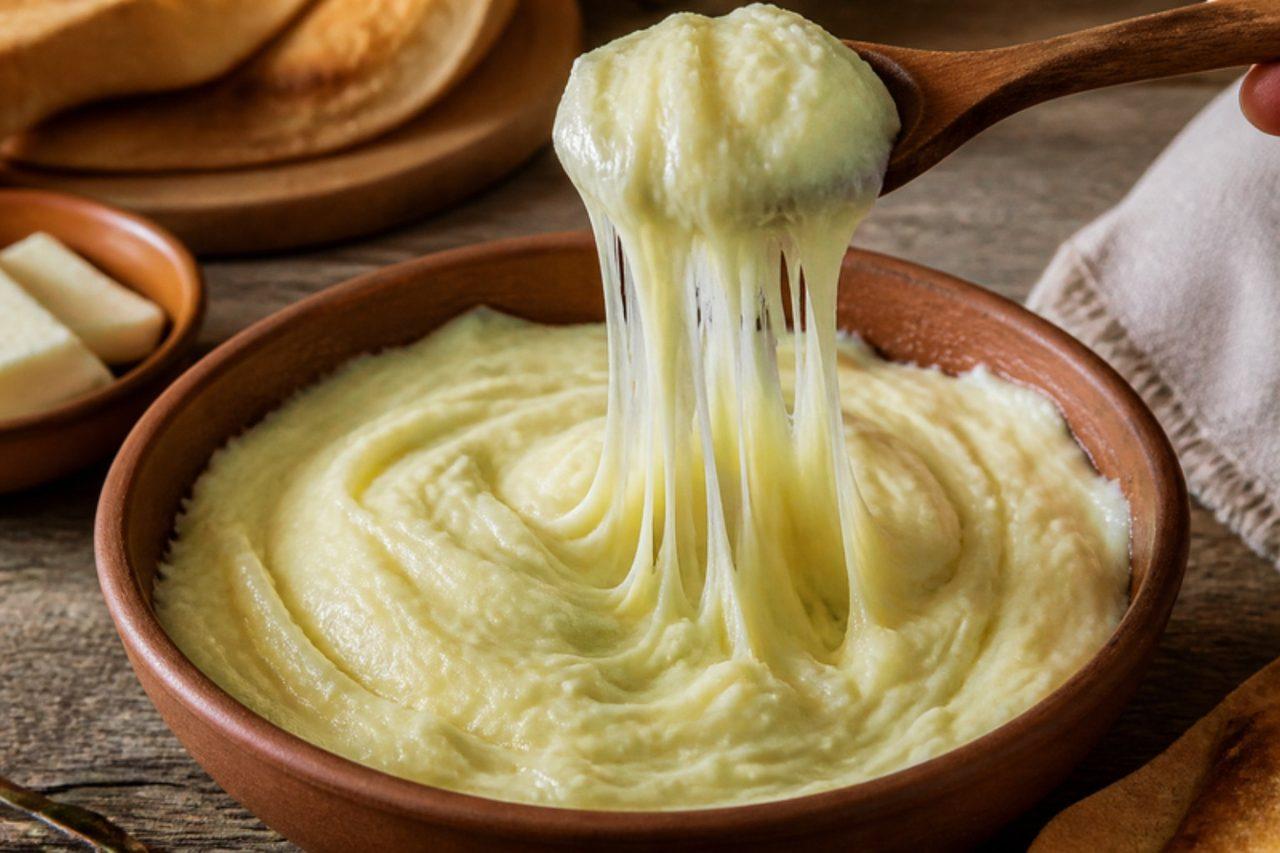
Potatoes grow well in the cold valleys of Svaneti, and tashmijabi is how families around Mestia turn them into a feast dish: they are mashed hot, then beaten with handfuls of young sulguni until the purée becomes glossy and stretches from the spoon in long strands. It is served with grilled meat, kubdari or simply with pickles and Svan salt. A common mistake is letting the potatoes cool before adding the cheese; they must be piping hot for the cheese to melt and stretch. Chef's tip: keep the pan on a low heat while you beat, and use a firm wooden spoon. Most sulguni uses animal rennet; choose a vegetarian one or use mozzarella.
 Georgian

Firik pilavıSmoky green wheat pilaf
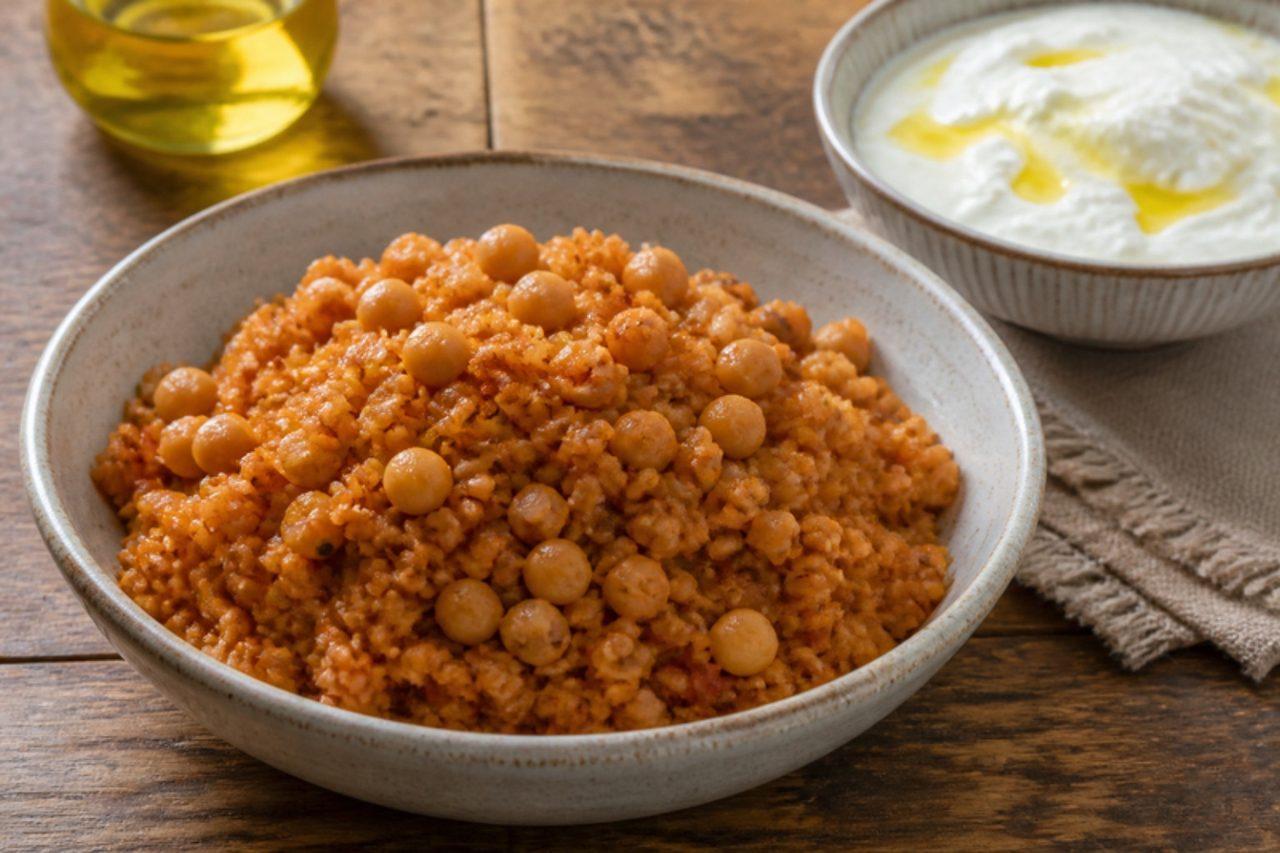
Each June farmers around Gaziantep cut wheat while it is still green and burn off the husks in the field, which gives firik its gentle campfire smell. Cooked as a pilaf with onion, pepper paste and a handful of chickpeas, it has a chewy, nutty bite that sits well beside grilled kebabs or simply a bowl of ayran and a tomato salad. It is the everyday grain of the region's home kitchens, cheaper than rice and more filling. Rinse the grains well: grit and bits of chaff are common in firik. Chef's tip: let it rest under a tea towel for ten minutes after cooking; the steam finishes the grains and they separate beautifully.

ŞalgamFermented purple carrot drink
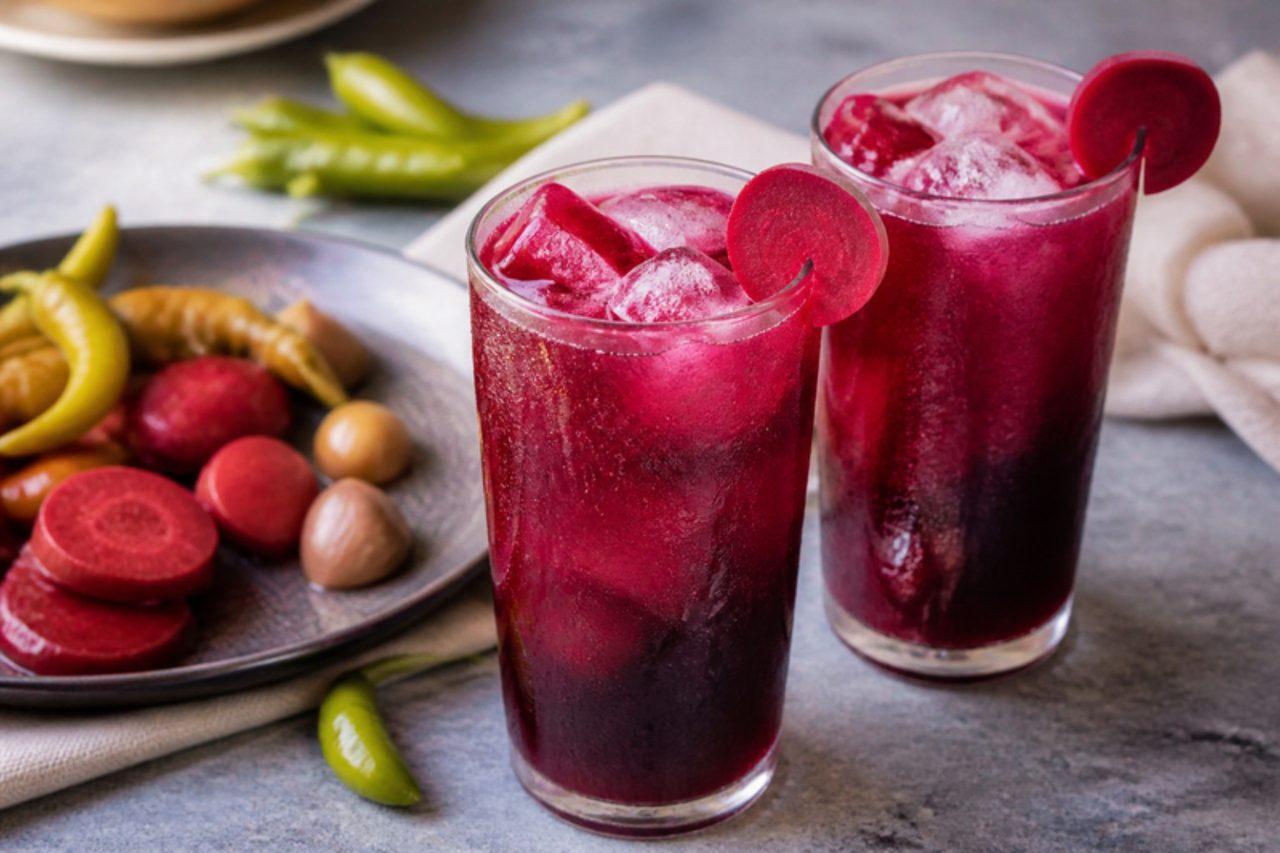
Order an Adana kebab in its home city and a tall glass of şalgam arrives with it, deep purple, salty, sour and often fiery. It is made by fermenting black carrots with a little bulgur and salt for a week or more, and the sharpness clears the palate between bites of lamb and grilled onion. Street carts in Adana sell it by the glass in summer. This home version skips the separate bulgur-sour-dough stage the big producers use. Use non-iodised salt: iodised salt can stall the ferment. Chef's tip: taste from day 5; when it is sour enough to make you blink, strain and chill it, because it keeps fermenting at room temperature.