Skip to content

Recipes with calamansi

16 recipes that use calamansi, with photos, step-by-step instructions and cook times. The quickest, Dabu-dabu, takes 10 minutes. It is most often cooked with garlic, egg and onion.

Got a few things in the fridge? Search by everything you have

Pastillas de leche (Bulacan milk candy)

San Miguel in Bulacan, north of Manila, has made pastillas de leche from the rich milk of carabao, the water buffalo, for generations, and the town celebrates it every May with a festival. The candies are slow-cooked from little more than milk and sugar, rolled into fingers, coated in sugar and wrapped in coloured paper, often with fringed, cut-paper wrappers for fiestas and Christmas. They taste like a soft, milky fudge that melts on the tongue. Hand them round with coffee or tuck them into gift boxes. Carabao milk is hard to find, so this version uses whole cow's milk boosted with a little milk powder for the same richness. It is naturally egg-free: the milk solids, reduced with sugar, set into a firm paste on their own. Chef's tip: keep the heat at medium-low and scrape the base often. The common mistake is turning the heat up to save time, which scorches the milk and makes the paste grainy.

by KrazyBadal 0 views

Pancit MalabonThick noodles with seafood

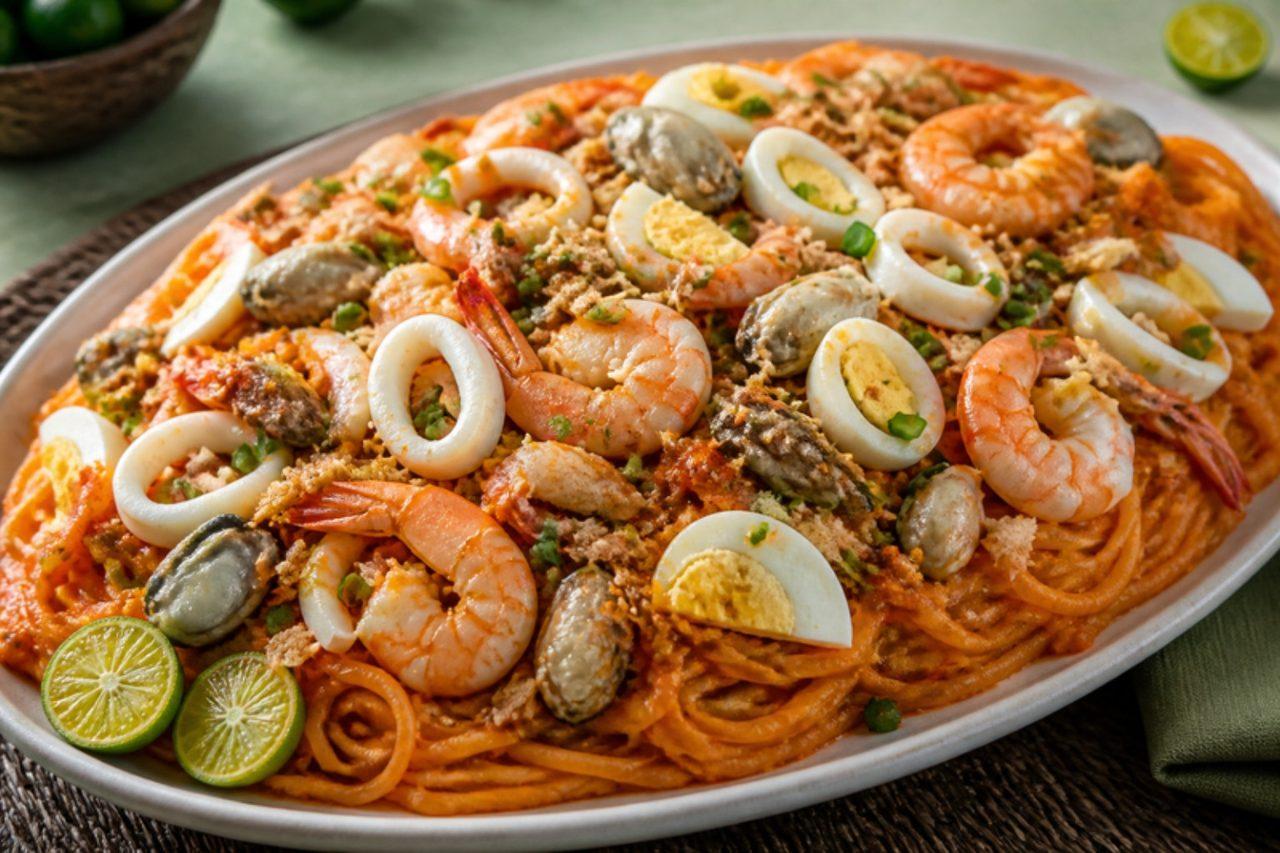
Pancit Malabon comes from Malabon, an old fishing town in Metro Manila, and at its fiestas and birthdays the long noodles carry the usual wish for a long life. It is not the same as pancit palabok: Malabon uses thick, chewy rice noodles that are tossed right through a thinner, prawn-rich annatto sauce, and the topping is a generous pile of seafood from the town's fish port, squid, oysters, prawns and smoked fish flakes, plus egg and crushed pork crackling. The result is savoury, briny and bright orange, with every strand coated. Squeeze calamansi over and eat it with puto or a simple soup. Chef's tip: make the prawn stock from the heads and shells; that is where the deep sea flavour of the sauce comes from.

by KrazyBadal 0 views

Arroz caldoChicken rice porridge

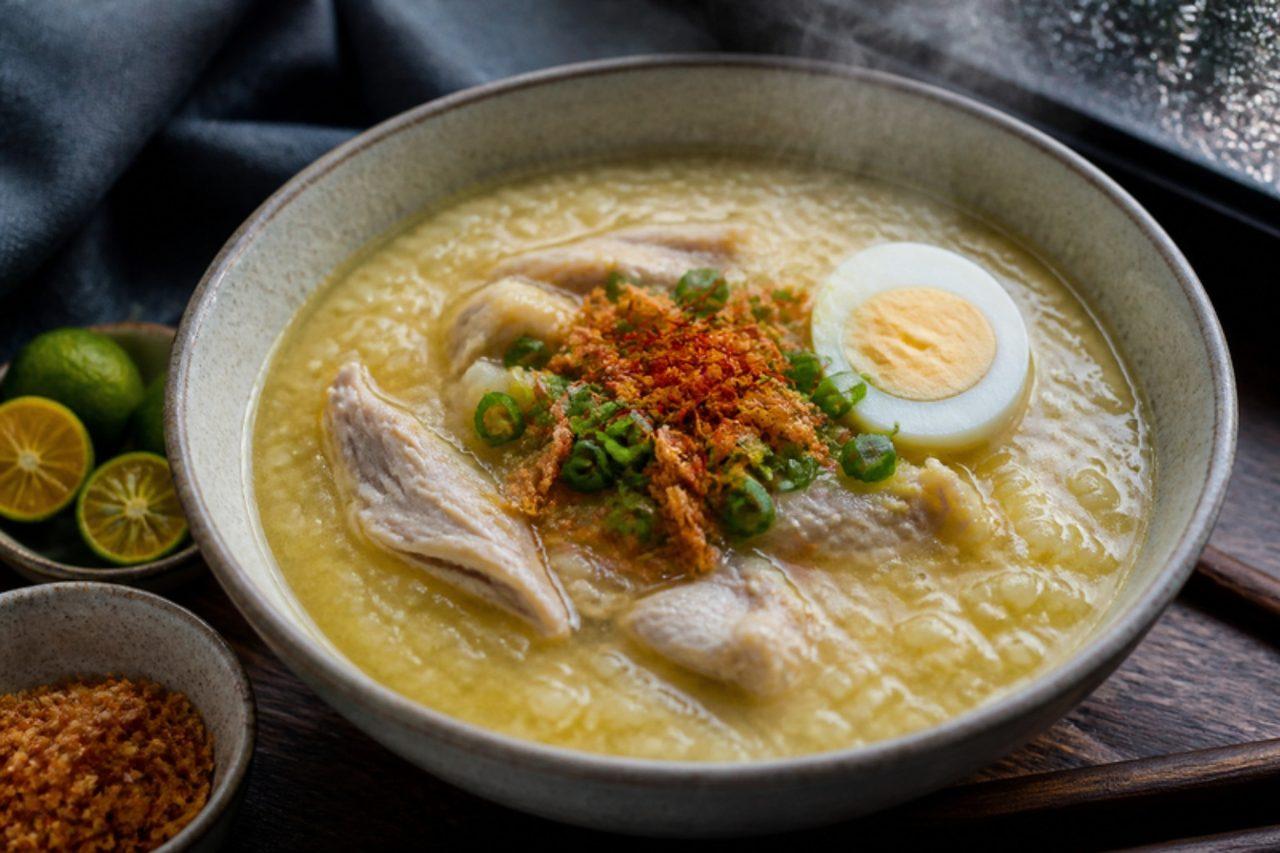
Rainy-season mornings, sick days and late nights after a party all end with a bowl of arroz caldo somewhere in the Philippines. Sticky rice simmers with chicken and a fistful of ginger until it breaks into a thick, savoury porridge, tinted gold with safflower, then each bowl gets crunchy fried garlic, spring onion, a halved boiled egg and a squeeze of calamansi. It is the Filipino cousin of congee, with a sharper ginger bite. Chef's tip: stir often in the last half hour; glutinous rice settles and scorches on the base, and one burnt patch flavours the whole pot.

by KrazyBadal 0 views

Pancit palabokRice noodles with shrimp sauce

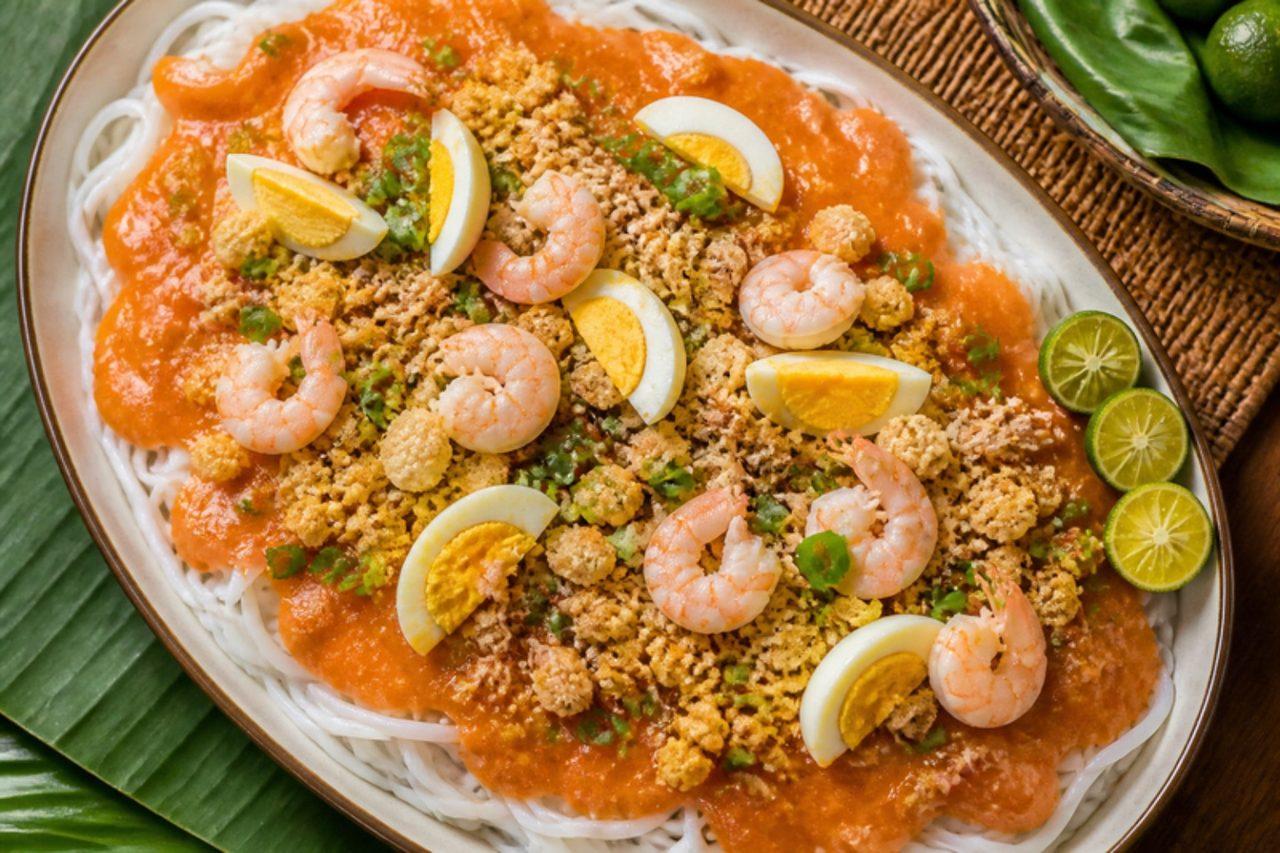
No Manila birthday party or office merienda is complete without a tray of palabok. Soft rice noodles are smothered in a thick, bright orange sauce made from shrimp stock, minced pork and annatto, then scattered with crushed pork crackling (chicharrón), flaked smoked fish, sliced egg, shrimp and spring onion, with calamansi squeezed over at the table. It is rich, savoury and a little smoky. The pork in this recipe is minced pork shoulder, cooked through in the sauce. Chef's tip: simmer the shrimp heads and shells for the stock; sauce made from water and stock cubes tastes flat and dull.

by KrazyBadal 0 views

BulaloBeef shank and marrow soup

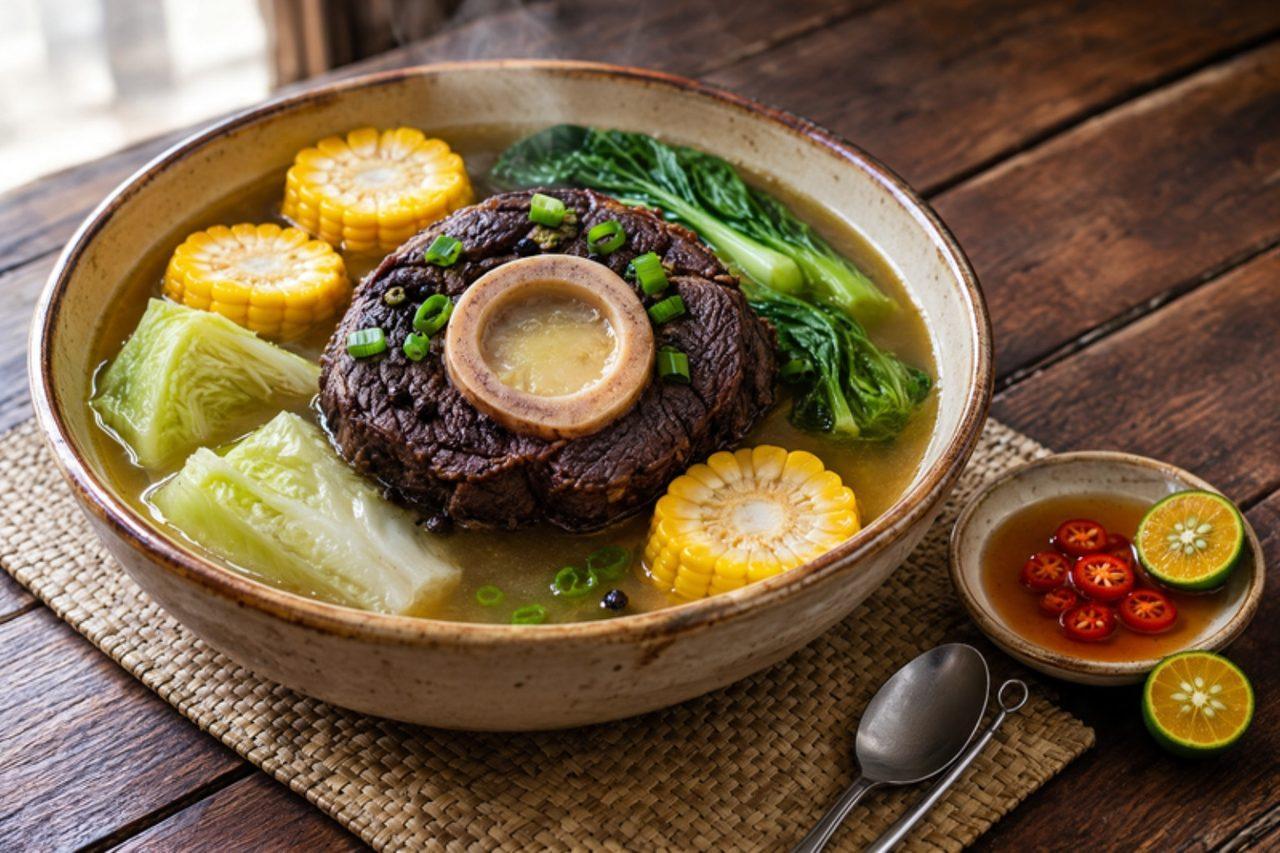
Bulalo is the pride of Batangas, south of Manila, served at roadside eateries on the way to Tagaytay where the cool upland air makes a steaming bowl the thing to order. Beef shank on the bone simmers for hours until the meat falls away and the marrow turns soft and wobbly, giving a clear, beefy broth seasoned just with fish sauce, onion and peppercorns. Corn on the cob, cabbage and pechay go in at the end. Spoon the marrow onto rice and dip the meat in fish sauce with calamansi and chilli. The usual mistake is skipping the first blanch: the broth turns grey and murky. Slow-cooker: after blanching, cook on low for 10 hours, adding the vegetables for the last 30 minutes on high. Chef's tip: keep the pot at a lazy simmer, never a boil, for the clearest broth.

by KrazyBadal 0 views

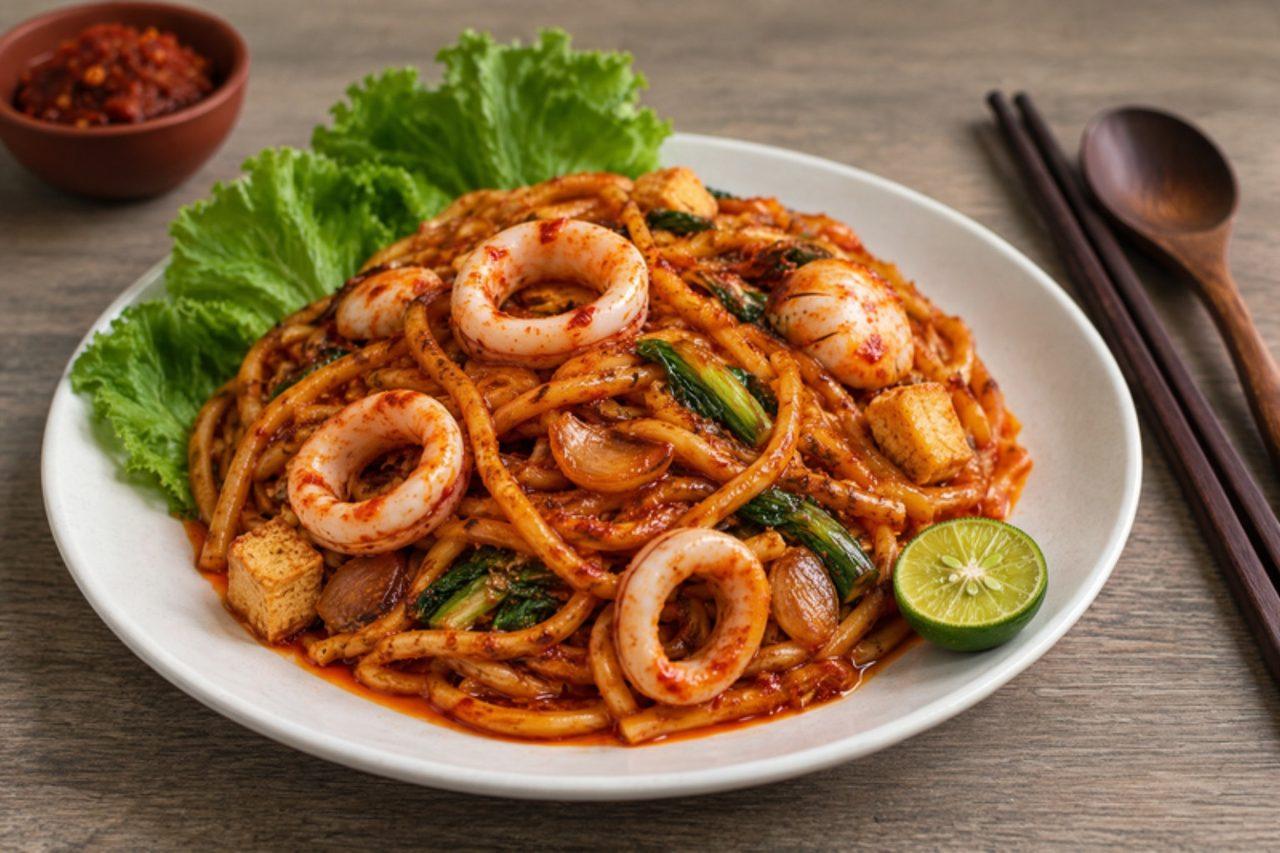
Mee sotongFried noodles with squid

Mee sotong is the dish people queue for at the Esplanade hawker stalls by Padang Kota in George Town, eaten in the evening breeze off the sea. Thick yellow noodles are fried in a deep red paste of dried chillies, shallots and garlic cooked down with tomato ketchup, sugar and tamarind until sweet, smoky and spicy, then tossed with tender squid in its own red sauce and a few bean sprouts. Chef's tip: fry the chilli paste patiently until the oil separates and it darkens; raw paste tastes harsh and flat.

by KrazyBadal 0 views

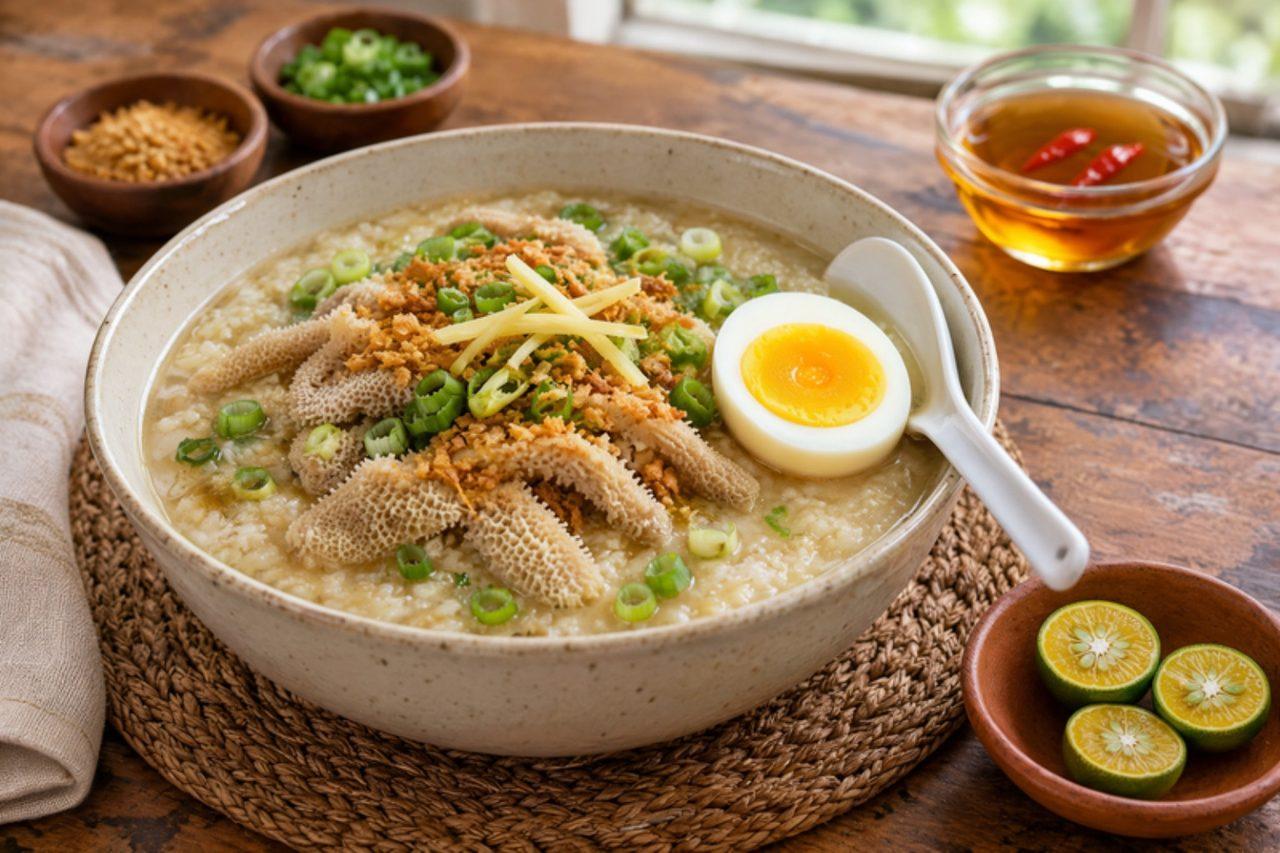
GotoGinger rice porridge with tripe

Goto is the tripe-rich cousin of arroz caldo, sold at dawn and late at night from gotohan stalls across Luzon, especially in Manila and Batangas. Glutinous rice is cooked in a ginger broth with long-simmered beef tripe until thick, then topped with toasted garlic, spring onion, a boiled egg and a squeeze of calamansi. The common mistake is skipping the pre-boil of the tripe, which leaves a strong farmyard smell. Chef's tip: buy cleaned honeycomb tripe and simmer it until a knife slides in easily before it meets the rice; it will not soften further once the porridge thickens.

by KrazyBadal 0 views

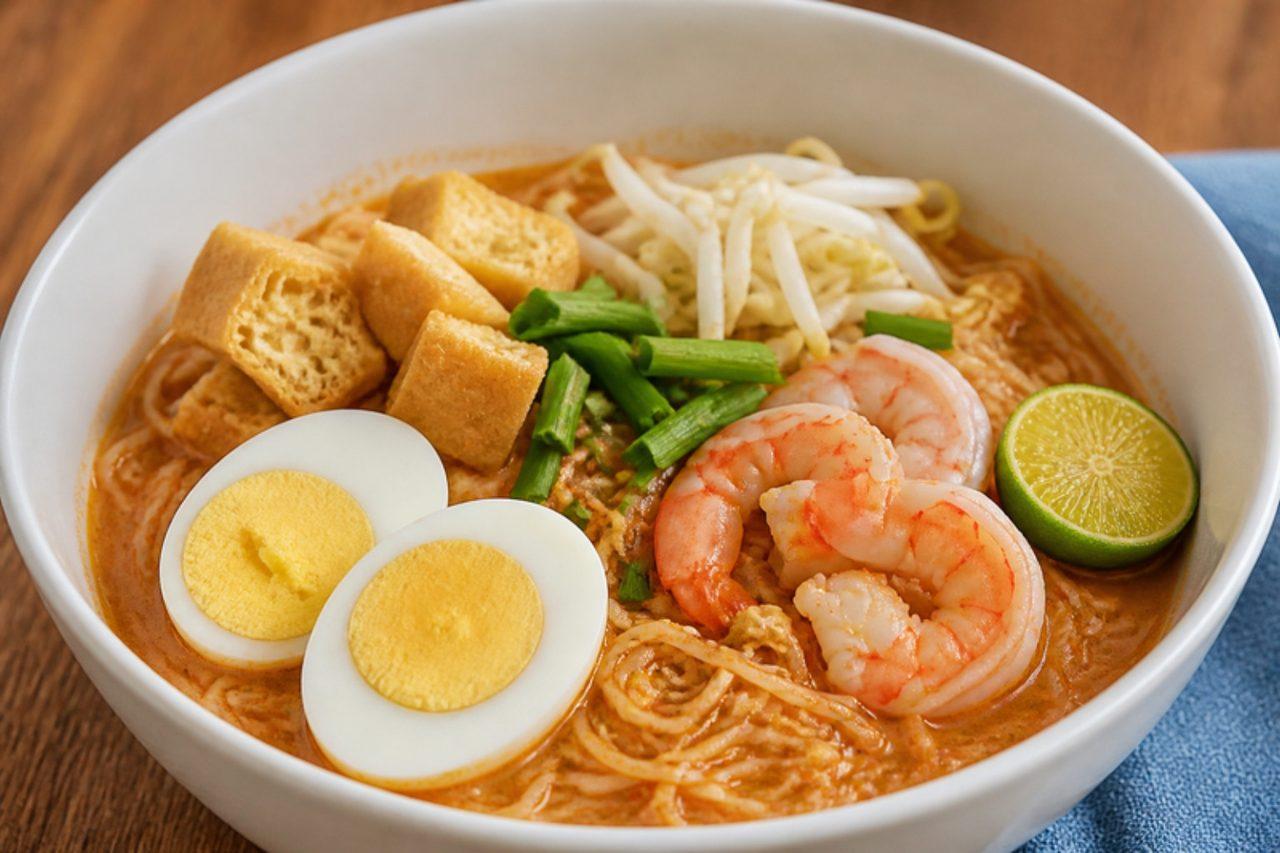
Mee siamTamarind rice vermicelli

Malay breakfast stalls and nasi padang counters across Singapore sell mee siam from early morning, often packed in brown paper for the journey to work, and Peranakan homes make it for birthdays and Hari Raya open houses. Thin rice vermicelli is fried with a chilli and dried shrimp rempah until pink, then drowned in a sweet-sour tamarind gravy flavoured with fermented soybean paste, and topped with halved boiled eggs, fried tofu puffs, garlic chives and a squeeze of calamansi. It is light, tangy and moreish rather than rich. Note this version contains dried shrimp and shrimp paste, so it is not vegetarian. The mistake to avoid is oversoaking the vermicelli, which then breaks into mush in the wok; soak it only until pliable. Chef's tip: make the gravy the day before; the tamarind and soybean flavours settle overnight and it tastes rounder.

by KrazyBadal 0 views

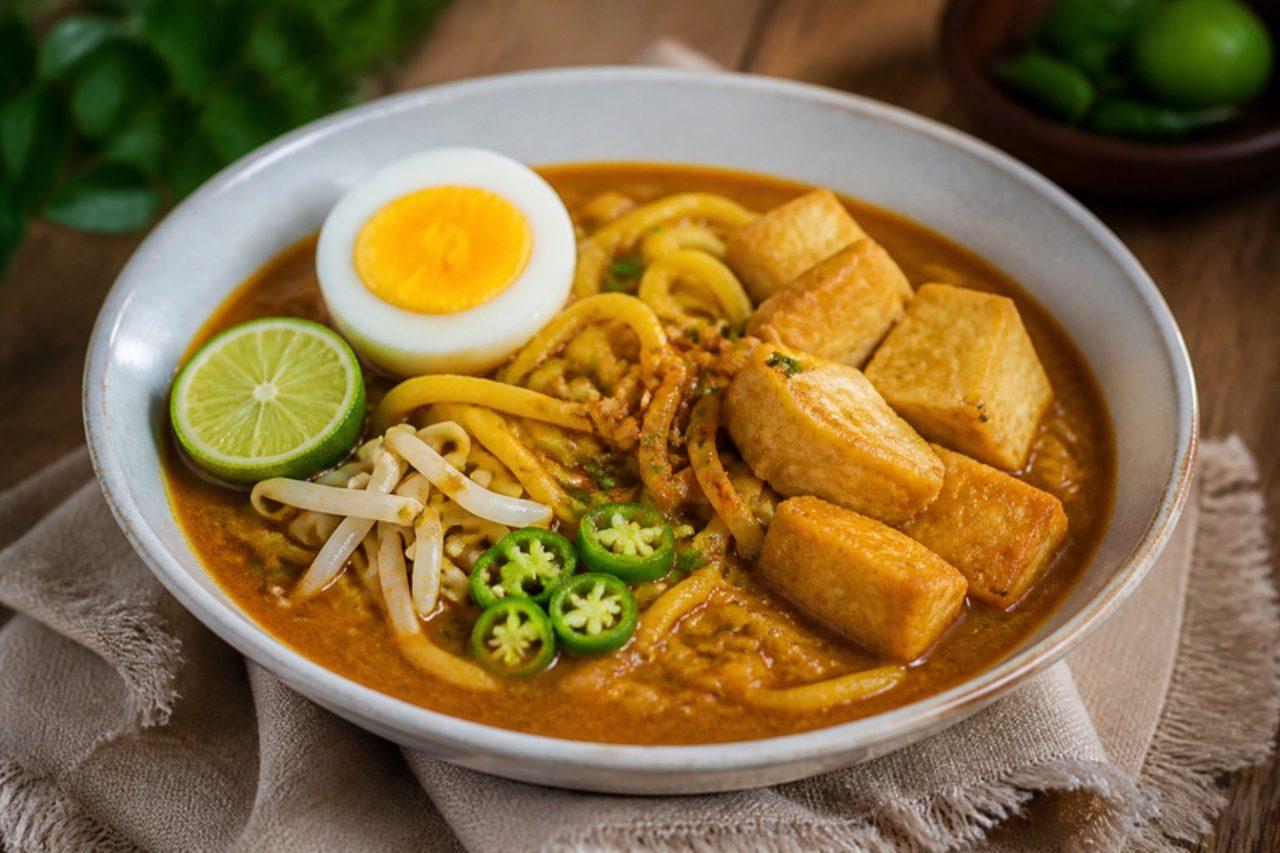
Vegetarian mee rebus

Malay hawker stalls at Geylang Serai and the old Adam Road food centre ladle mee rebus from a vat of thick, reddish-brown gravy that is sweet, gently spiced and earthy, poured over springy yellow noodles and heaped with halved boiled egg, fried tau kwa, bean sprouts, green chilli and a squeeze of calamansi. It is eaten any time, but especially on Hari Raya mornings and as a filling lunch. Many stalls build the gravy on dried shrimp and beef stock; this vegetarian version gets its body from mashed sweet potato, its savoury depth from fermented soybean paste (taucheo) and a well-fried spice paste, and uses vegetable stock. The usual mistake is under-frying the rempah, which leaves the gravy tasting raw and sharp; cook it until the oil separates and turns red. Chef's tip: the gravy thickens as it stands, so keep a kettle of hot stock nearby and loosen it to a pourable, velvety consistency just before serving.

by KrazyBadal 0 views

Sambal stingray

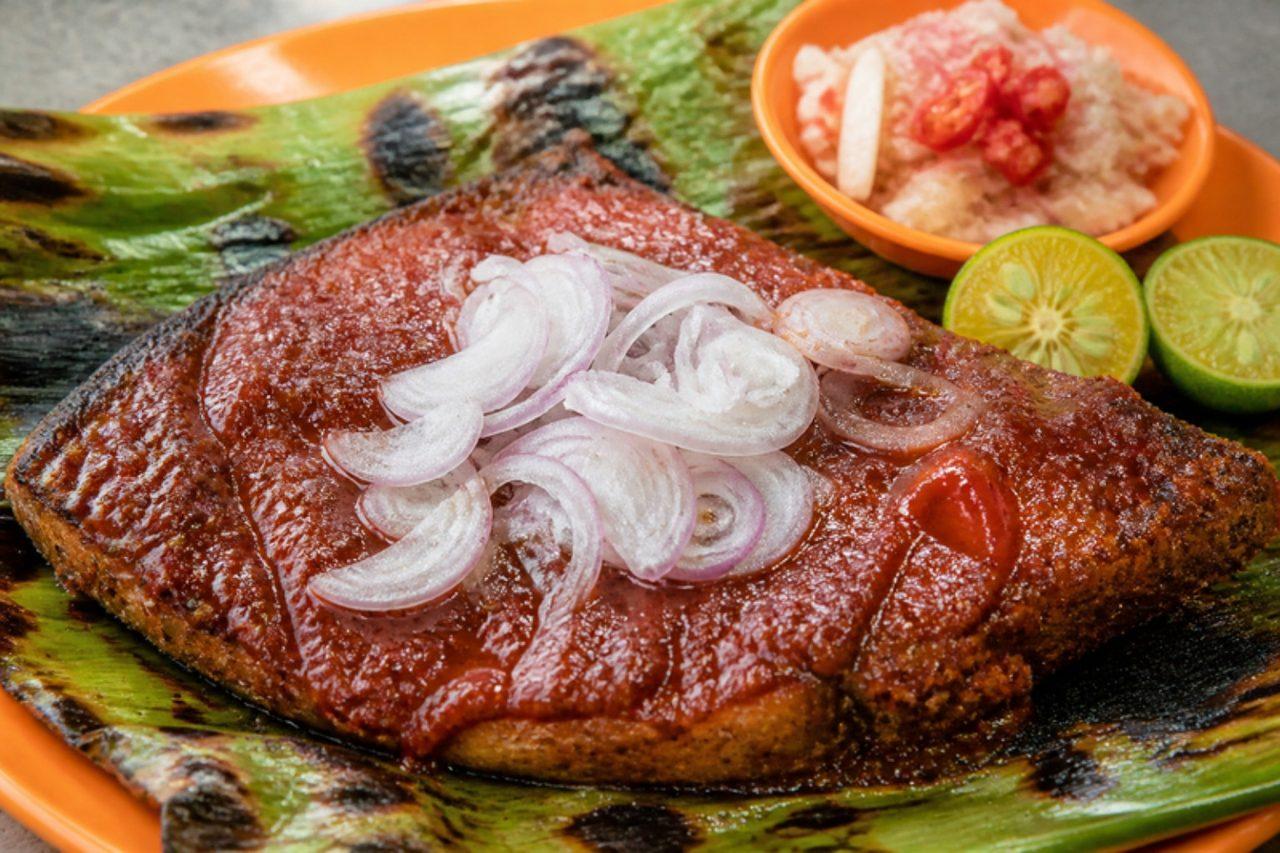
Weekend evenings at the seafood stalls of Newton, Chomp Chomp and East Coast Lagoon smell of charring banana leaf, and the dish sending up that smoke is usually sambal stingray. A fan-shaped stingray wing is spread thickly with a dark red, slow-fried sambal of chillies, shallots, candlenuts and toasted shrimp paste, laid on banana leaf and cooked over high heat until the sweet, delicate flesh pulls cleanly off the soft cartilage in strands. It comes with calamansi or lime, raw sliced shallots and a little dish of sour chinchalok, and a plate of steamed rice. Underfrying the sambal is the classic error: until the oil splits away and turns red, the paste tastes raw and harsh. If you can't find stingray, skate wing is the best substitute and cooks the same way. Chef's tip: score the thick end of the wing and push sambal into the cuts, so the flavour gets right into the flesh.

by KrazyBadal 0 views

Vegetable pancit bihonRice noodles with vegetables

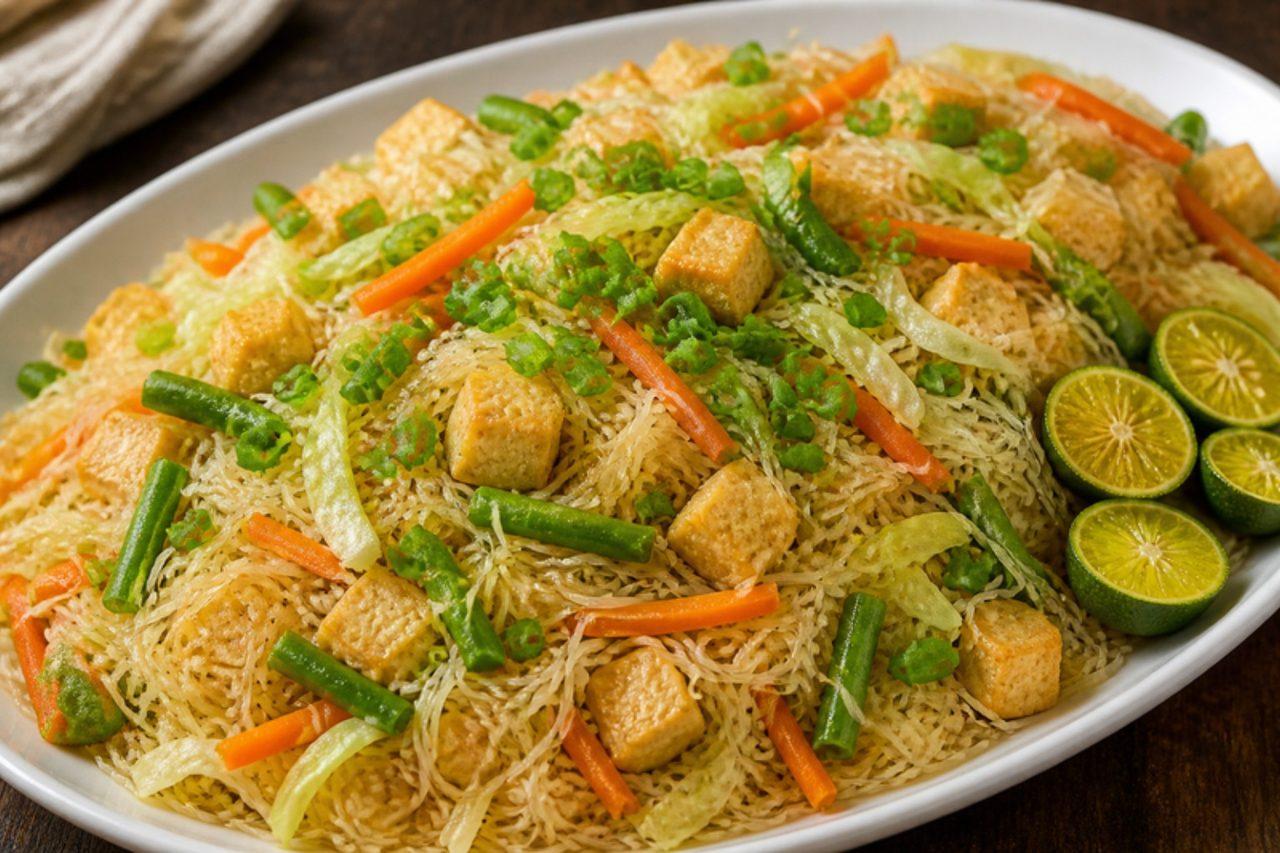
No Filipino birthday is complete without a big tray of pancit, because long noodles stand for a long life; aunts arrive at the party carrying it in foil trays, and it sits on the table next to the cake. Pancit bihon uses thin rice vermicelli tossed with sautéed vegetables and a soy-seasoned stock until the noodles drink up every drop and turn light brown and glossy. This version is vegetarian, with fried tofu standing in for the usual chicken, shrimp and sausage, and vegetable stock in the pan. Squeeze calamansi (or lime) over each plate; the sharp citrus is what lifts it. Chef's tip: never cut the noodles before serving, for luck, and cook them in the stock rather than boiling them first.

by KrazyBadal 0 views

Singapore Hokkien prawn mee

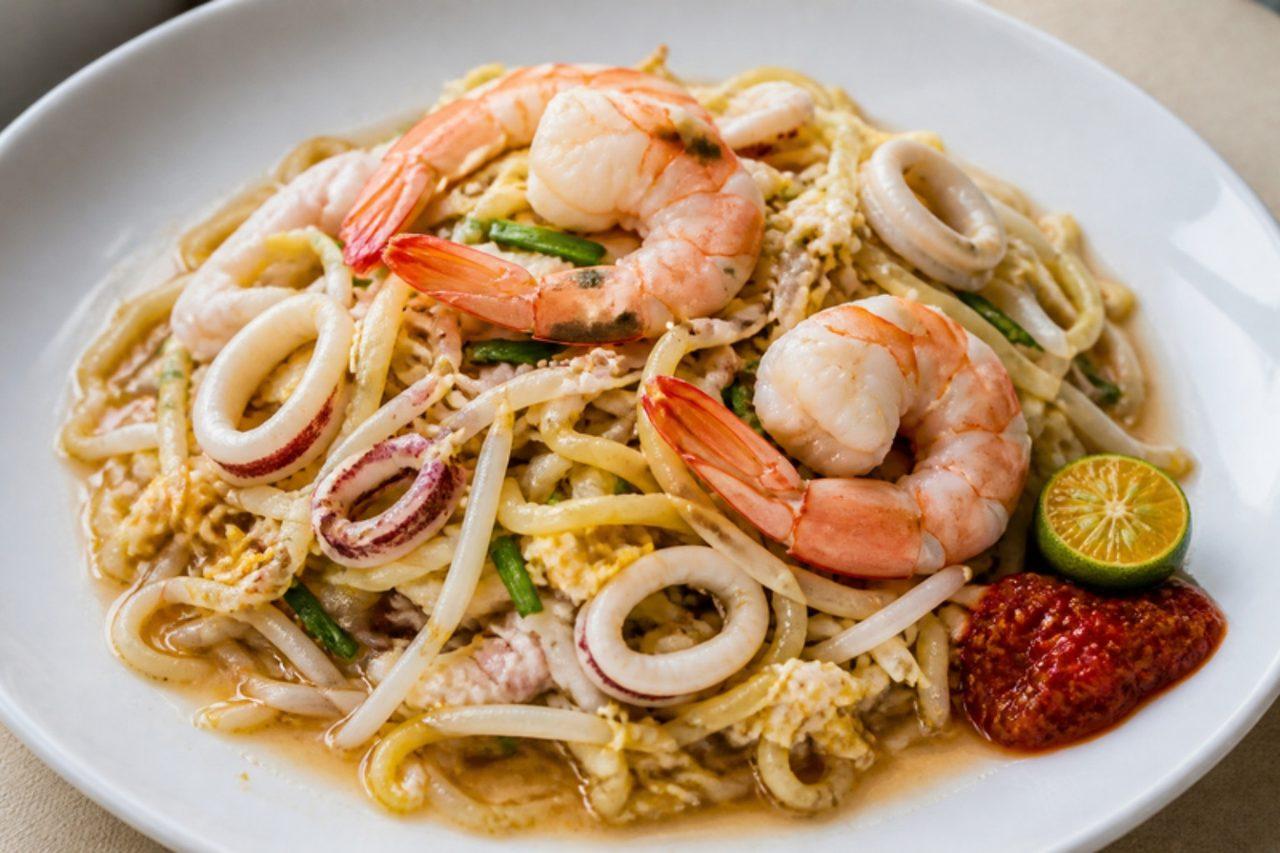
Singapore's Hokkien mee is nothing like the dark, soy-coated noodles of Kuala Lumpur: here yellow egg noodles and thick rice vermicelli are fried with egg, then braised in a cloudy, intensely savoury stock made from prawn heads and shells until the noodles soak it up and stay just wet. Hawkers at Old Airport Road and Geylang serve it with lime and fiery sambal belacan on a square of paper or opeh leaf. It is a late-lunch or supper dish, eaten hot from the wok. Traditional versions use pork belly and pork lard; this one uses prawns and squid only, with vegetable oil. The common mistake is adding all the stock at once, which makes it soupy; add it in two goes and let the noodles drink it. Chef's tip: fry the prawn heads hard until they turn deep orange before adding water; the stock is the whole dish.

by KrazyBadal 0 views

Pork sisigSizzling chopped pork

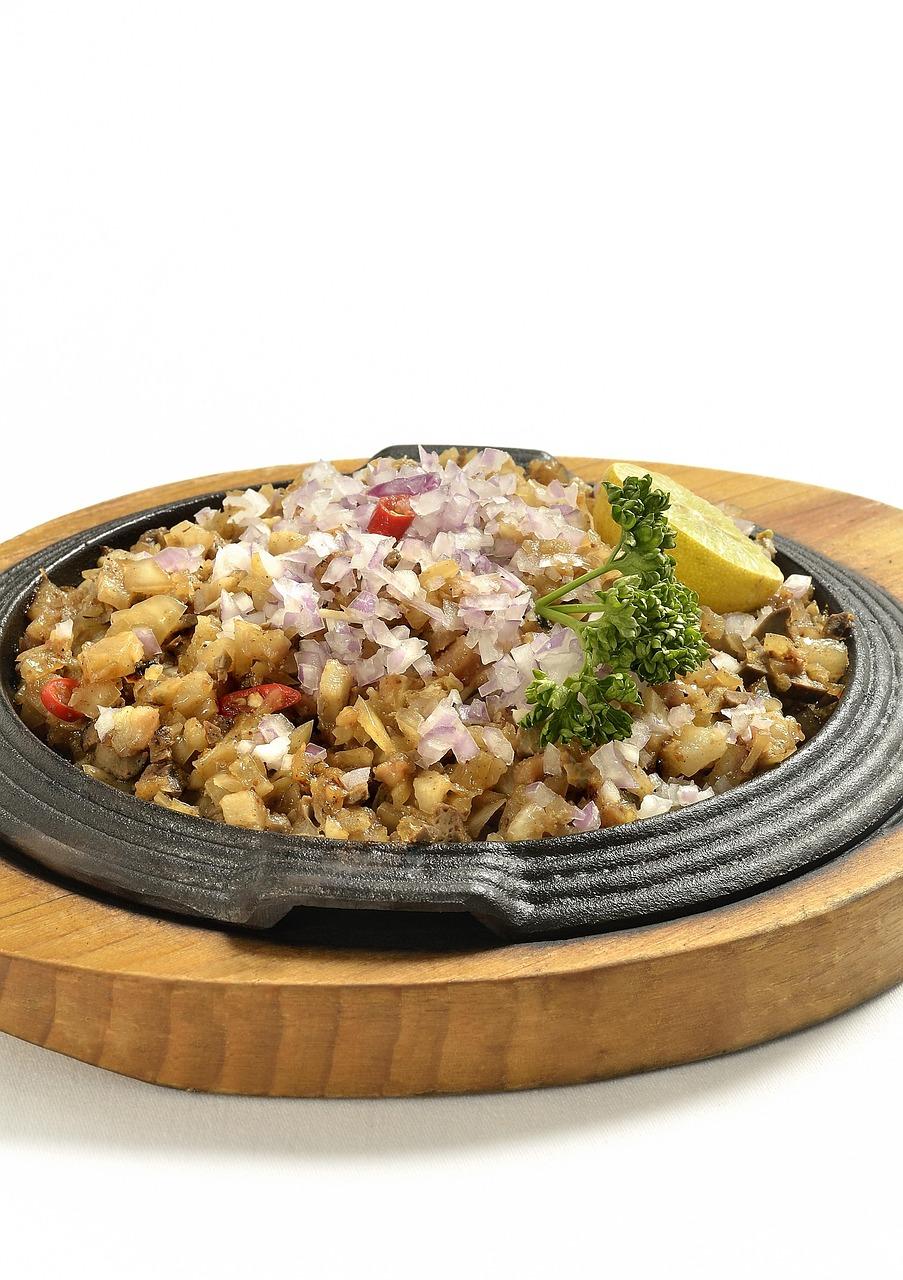
Sisig comes from Angeles City in Pampanga, where cooks turned pig's head and ears into a sizzling, sour, peppery bar snack that is now on almost every Filipino menu. This home version is pork, using pork belly (and pig's ears if your butcher has them) that is boiled, grilled until charred, then chopped finely and fried with onion, chilli and calamansi juice. It arrives at the table crackling on a hot cast-iron plate, often with a raw egg stirred in. Eat it with rice, or as pulutan with drinks; a cold calamansi juice works as well. Chef's tip: chop the pork small but not to mince; you want little crisp edges and chewy bits in every spoonful.

110 minFilipinoMeatSpicy
by KrazyBadal 0 views

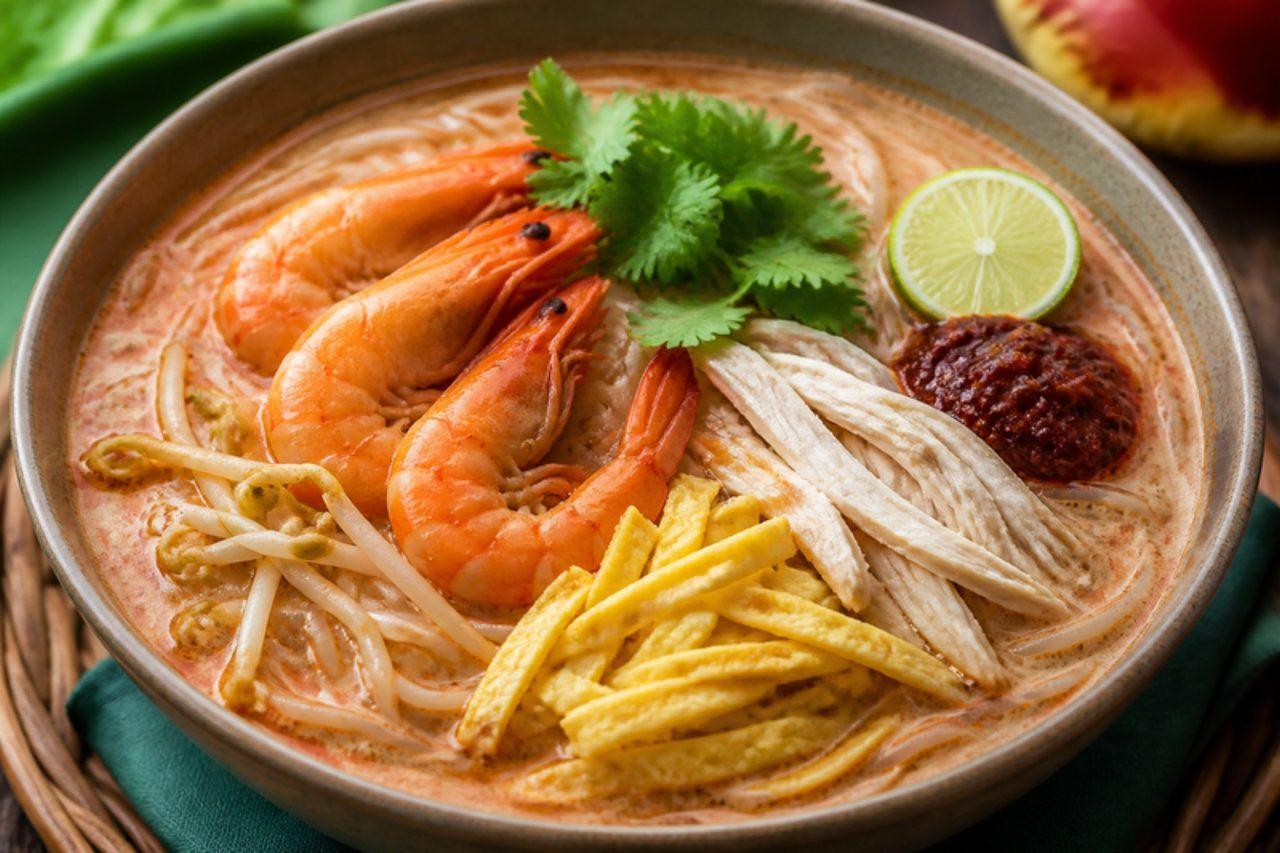
Sarawak laksaSpicy coconut noodle soup

Kuching wakes up to laksa Sarawak, ordered at coffee shops before work and reaching its peak on a lazy Sunday morning. It looks nothing like curry laksa: the broth is a russet, gently creamy soup built on a complex paste of chillies, shallots, galangal, toasted sesame, peanuts and warm whole spices, cooked into a chicken and prawn-shell stock with tamarind and a little coconut milk. Thin rice vermicelli is topped with shredded chicken, whole prawns, ribbons of omelette and bean sprouts, and every bowl comes with lime and a dab of sambal belacan. The work is in the paste, which keeps well and makes several batches. Chef's tip: toast the spices, sesame seeds and peanuts separately in a dry pan before grinding; it gives the broth its deep, roasted aroma.

by KrazyBadal 0 views

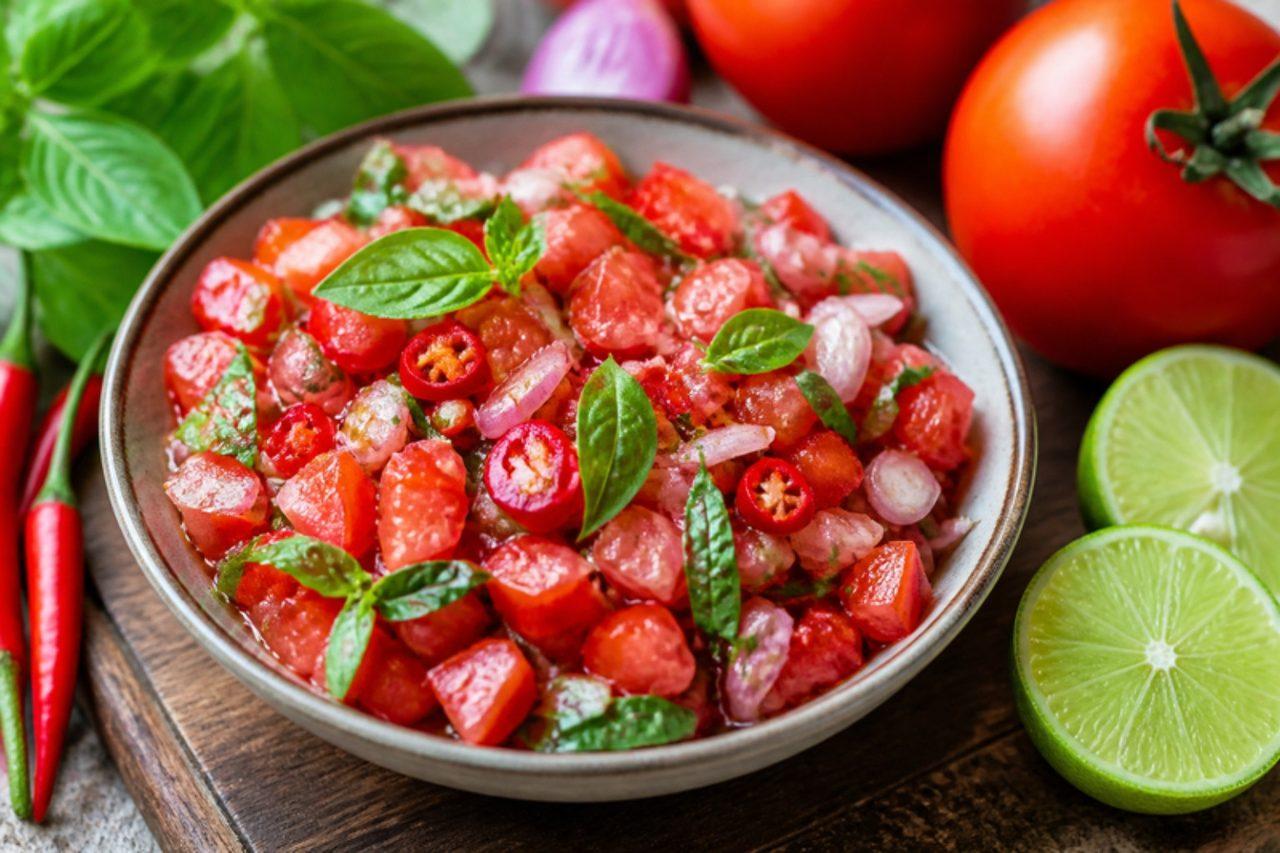
Dabu-dabuFresh tomato and chilli salsa

Every table in Manado, North Sulawesi, has a bowl of dabu-dabu: diced tomato, shallot and red chilli with calamansi juice and lemon basil, sometimes dressed with hot oil. It is spooned over grilled food, fried tofu and the pumpkin porridge tinutuan, and its cool juiciness makes very hot chilli easier to take. Unlike Bali's sambal matah, it is built on tomato and stays chunky and wet. Chef's tip: salt the tomatoes and leave them 5 minutes before mixing, so they release juice that becomes the dressing.

by KrazyBadal 0 views

Leche flanCaramel custard

Leche flan is on the table for every Filipino Noche Buena on Christmas Eve, at fiestas and at birthdays, steamed in the oval aluminium tins called llaneras and turned out shining under a dark caramel. Unlike Spanish flan or the Brazilian pudim, it is made with egg yolks only, condensed milk and evaporated milk, so it is much denser and smoother, almost like a firm custard fudge, and a little goes a long way. A grating of calamansi or lime zest cuts the richness, and many cooks steam rather than bake it. The leftover whites go into meringue biscuits. Chef's tip: strain the custard twice and stir, don't whisk; air bubbles become holes in the finished flan.

by KrazyBadal 0 views

Goes well with calamansi