Skip to content

Recipes with kelp stock

3 recipes that use kelp stock, with photos, step-by-step instructions and cook times. The quickest, Pa kimchi, takes 35 minutes. It is most often cooked with coarse sea salt, garlic and ginger.

Got a few things in the fridge? Search by everything you have

Chonggak kimchiPonytail radish kimchi

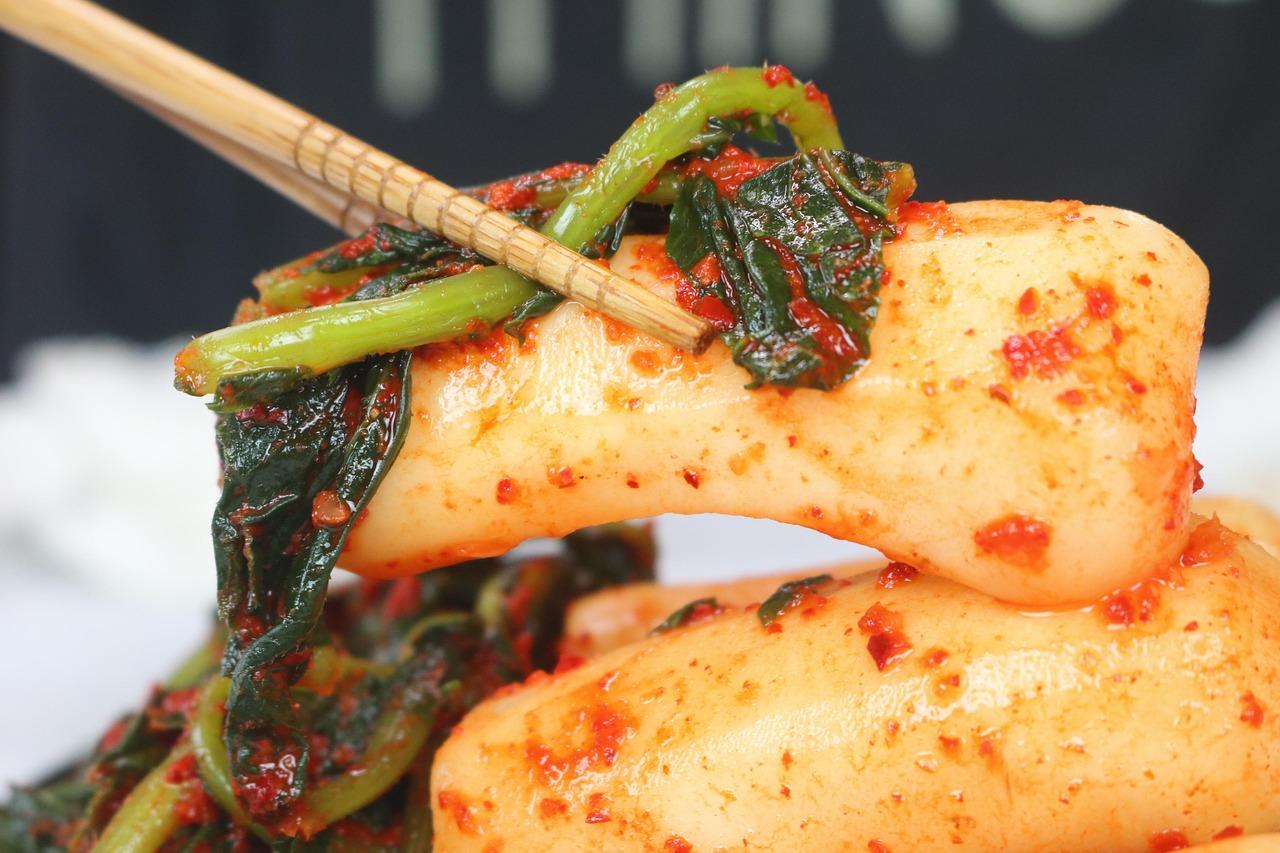
In late autumn, Korean markets fill with bundles of little ponytail radishes, the size of a thumb to a small fist, with long leafy tops, and households make chonggak kimchi alongside their winter cabbage kimchi. The whole radish is fermented with its greens in a thick red paste, so you get a crunchy, juicy bite with a slight bitterness from the leaves. It is the classic partner for a bowl of hot ramyeon or soft tofu stew. This version is vegan, using kelp stock and salt instead of fish sauce and salted shrimp. Use a clean glass or ceramic jar or kimchi box scalded with boiling water, and keep the vegetables pressed below the brine; anything sticking out can grow mould. The common mistake is over-salting: the radish should bend slightly but still snap, so check it often. Chef's tip: cut the bigger radishes in half lengthways so they ferment at the same pace as the small ones.

by KrazyBadal 0 views

Oi sobagiStuffed cucumber kimchi

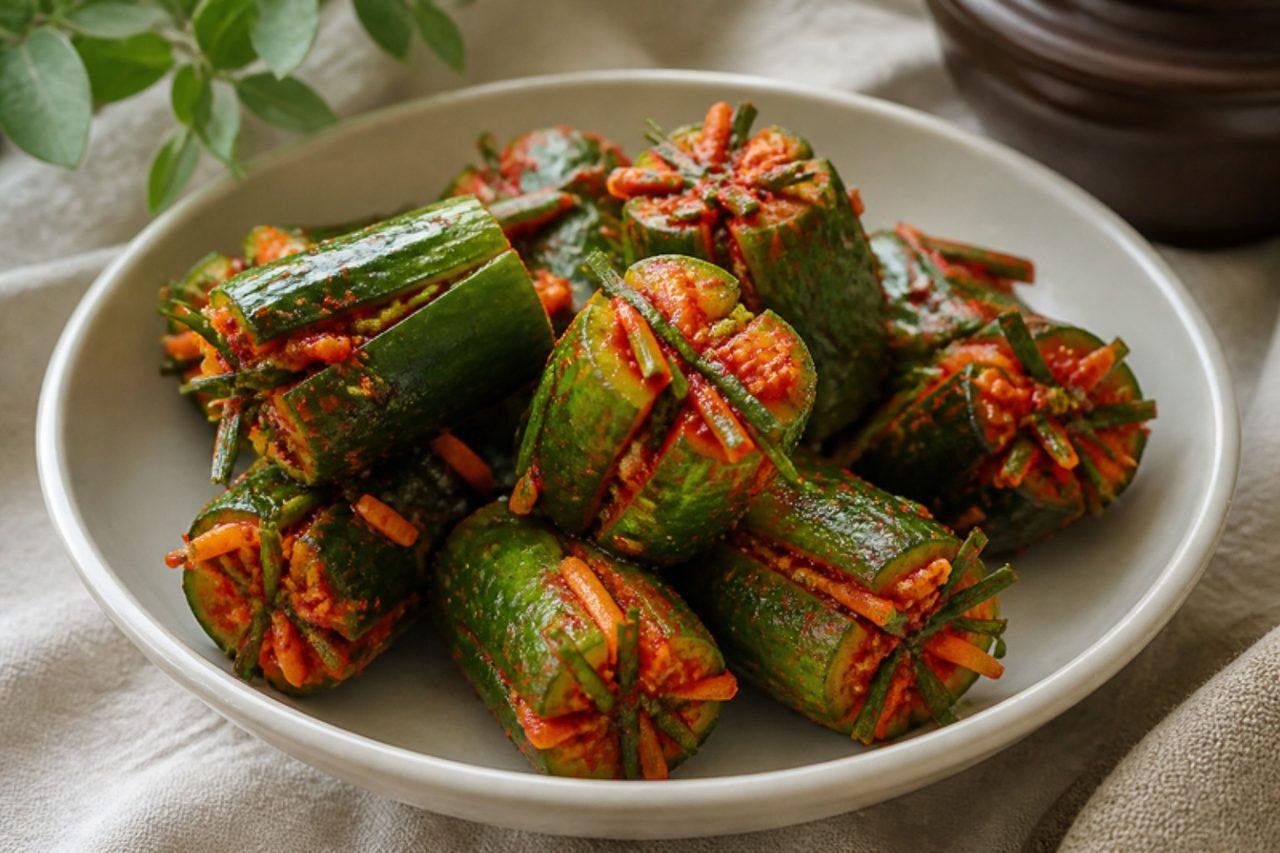
Oi sobagi is the kimchi of early summer, when Korean cucumbers are cheap and sweet and nobody wants to wait weeks for a ferment. Each cucumber is split in a cross, salted until bendy, and stuffed with a bright, garlicky filling of chives, carrot and chilli. It is ready in two days, crunchy and refreshing, perfect with barbecue or cold noodles. This vegan version uses salt and a splash of kelp stock in place of fish sauce. Use a clean glass or ceramic jar or kimchi box scalded with boiling water, and keep the vegetables pressed below the brine; anything sticking out can grow mould. The common mistake is cutting all the way through the ends, which makes the cucumber fall apart; leave 1 cm whole at each end. Chef's tip: salt the cucumbers in hot brine; it keeps them crunchier than dry salt.

by KrazyBadal 0 views

Pa kimchiSpring onion kimchi

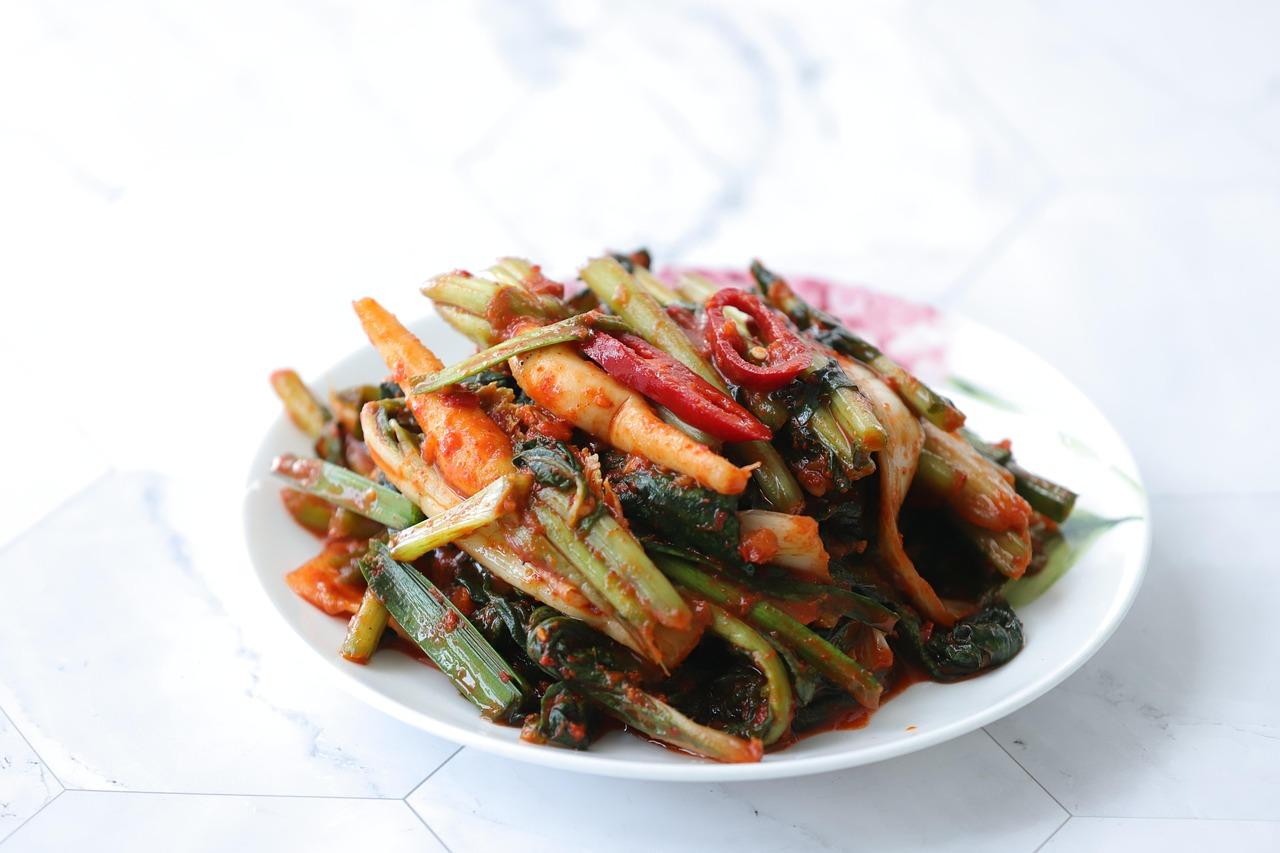
Pa kimchi is a Jeolla province favourite, made with jjokpa, slender spring onions, coated in a thick, glossy chilli paste and left to soften until the onions turn sweet and slippery. In Gwangju and Mokpo it sits next to every bowl of ramyeon and every plate of pork belly. Traditional versions lean on anchovy sauce; this vegan one gets its depth from kelp stock and a little extra salt. The common mistake is salting the whole onion: only the white bulbs need salt, or the green tops go slimy. Use a clean glass or ceramic jar or kimchi box scalded with boiling water, and keep the vegetables pressed below the brine; anything sticking out can grow mould. Chef's tip: lay the onions in the jar in neat bundles, folded in half and wrapped round themselves; they are much easier to lift out and serve.

by KrazyBadal 0 views

Goes well with kelp stock