Skip to content
WhatToEat.Today

All recipes

381

Vegetarian, or something you can't eat? Set your diet once and we'll hide recipes that don't fit.

PaapeTwice-baked tea rusks

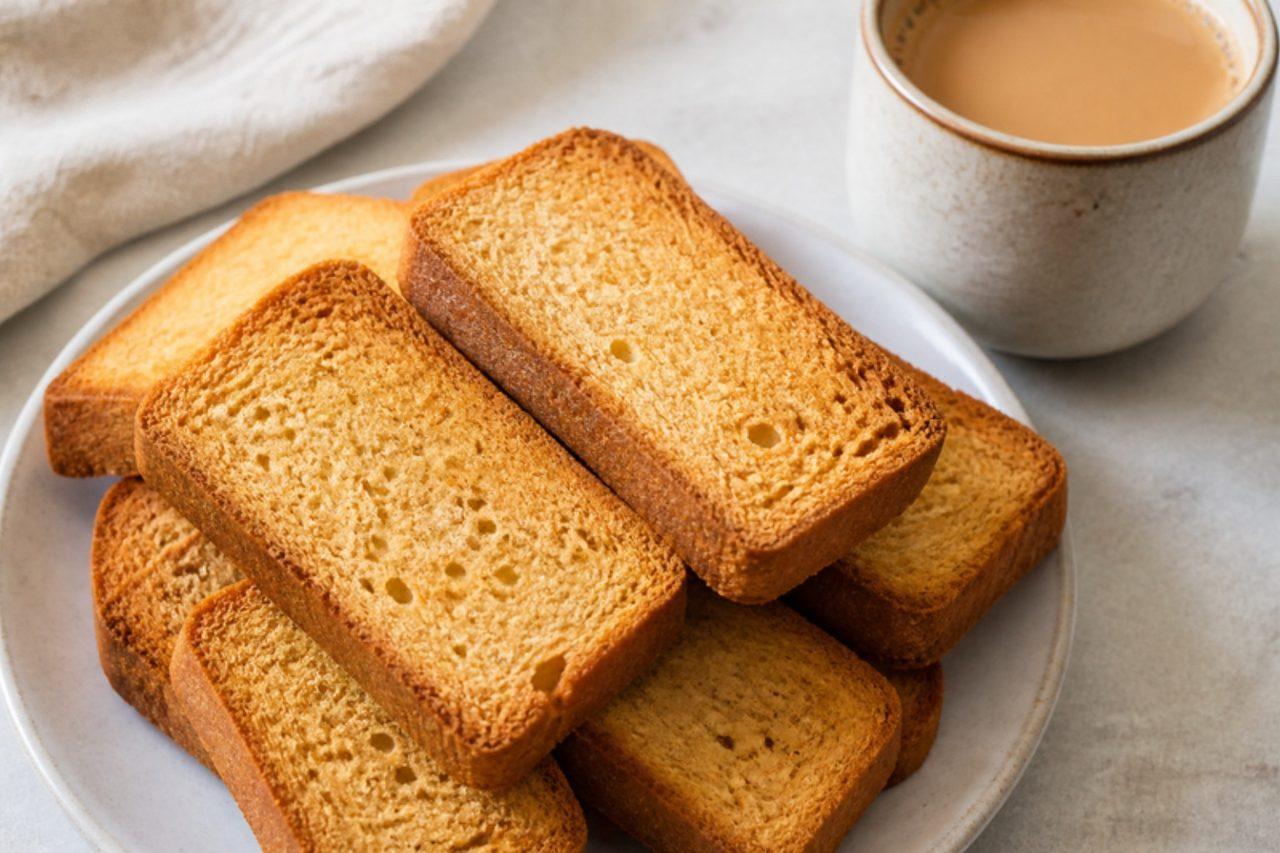
No Punjabi kitchen is without a tin of paape. They are dunked in the first cup of tea at dawn and again at four o'clock, carried to the fields, and offered to every guest who drops in. Bakeries across Punjab bake a sweet, light loaf, slice it and dry it slowly until it snaps, and this home version does exactly the same. The common mistake is slicing the loaf while it is still warm: it squashes, and the rusks dry out dense and gummy. Let it cool completely, ideally overnight. Chef's tip: dry the slices at a low temperature until the centre snaps cleanly; any softness in the middle and they go stale within days.

by KrazyBadal 0 views
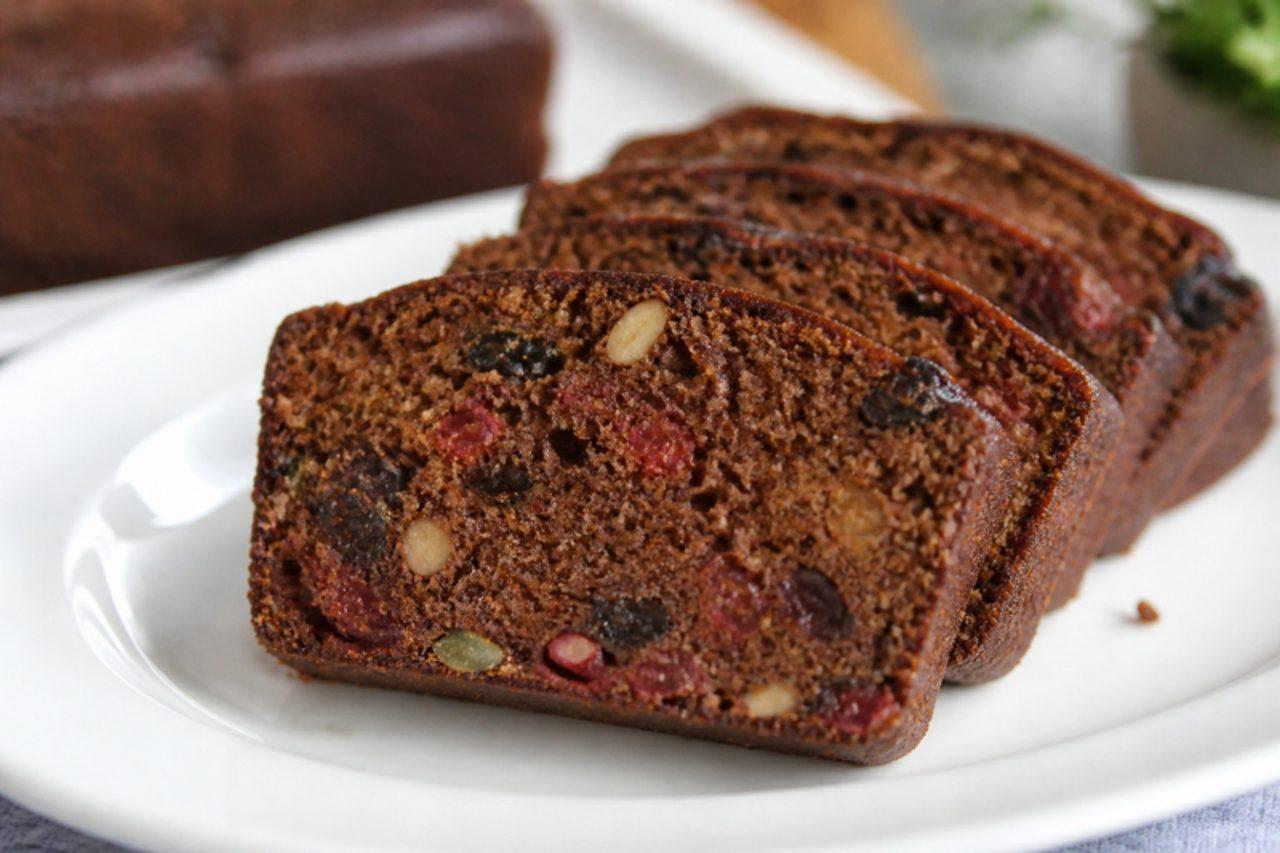
Kerala plum cake

Come December every bakery in Kerala, from Thalassery, where the first one was baked, to Kochi, stacks its shelves with plum cake, and families give slices to neighbours over Christmas and New Year. Its deep brown colour and slightly bitter-sweet edge come from caramelised sugar syrup, and it is packed with dried fruit and warm spices. This alcohol-free version soaks the fruit in grape or orange juice. The common mistake is burning the caramel: once it goes past dark amber it turns acrid and the whole cake tastes bitter. Pull it off the heat the moment it is the colour of strong tea. Chef's tip: bake low and slow at 150°C with a tray of water on the shelf below; the cake rises evenly without a cracked, dry top.

135 minIndianBaking
by KrazyBadal 0 views
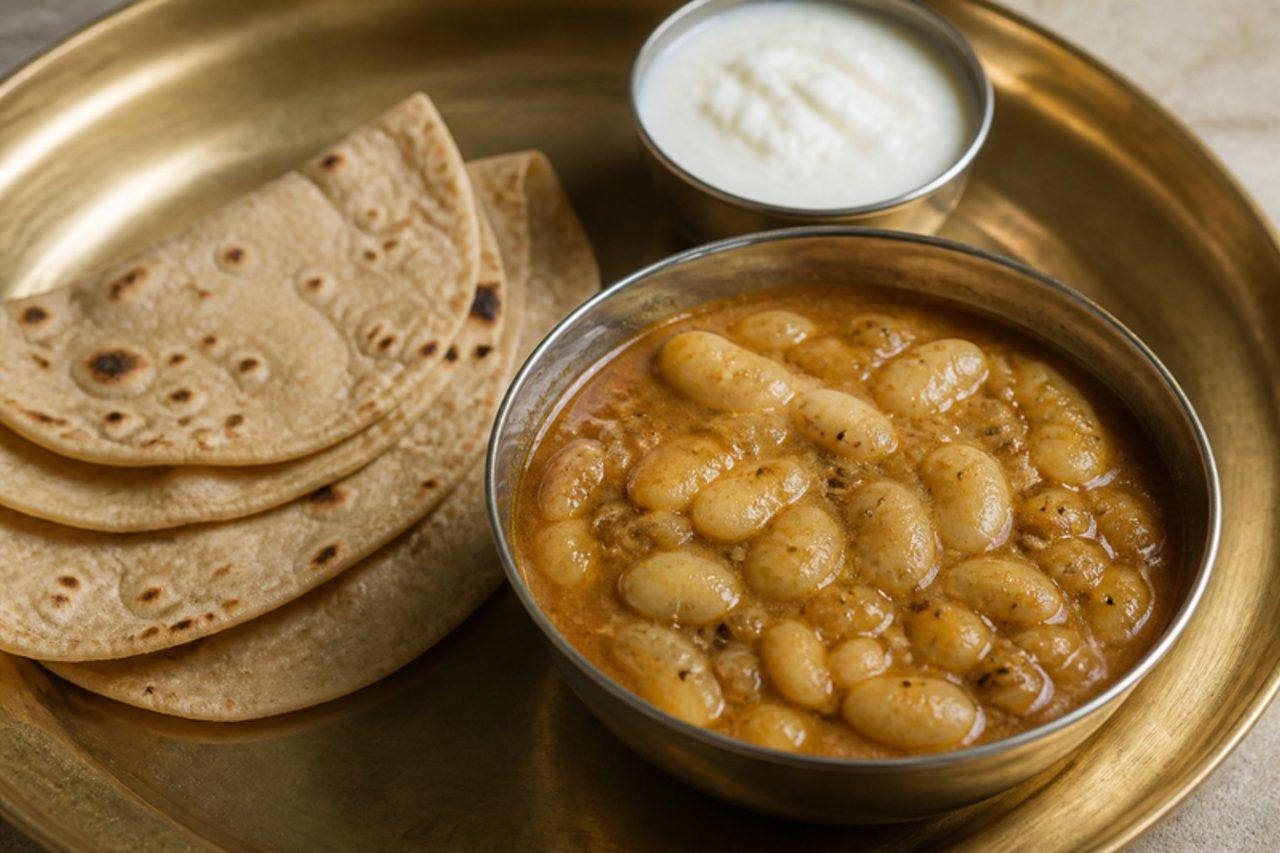
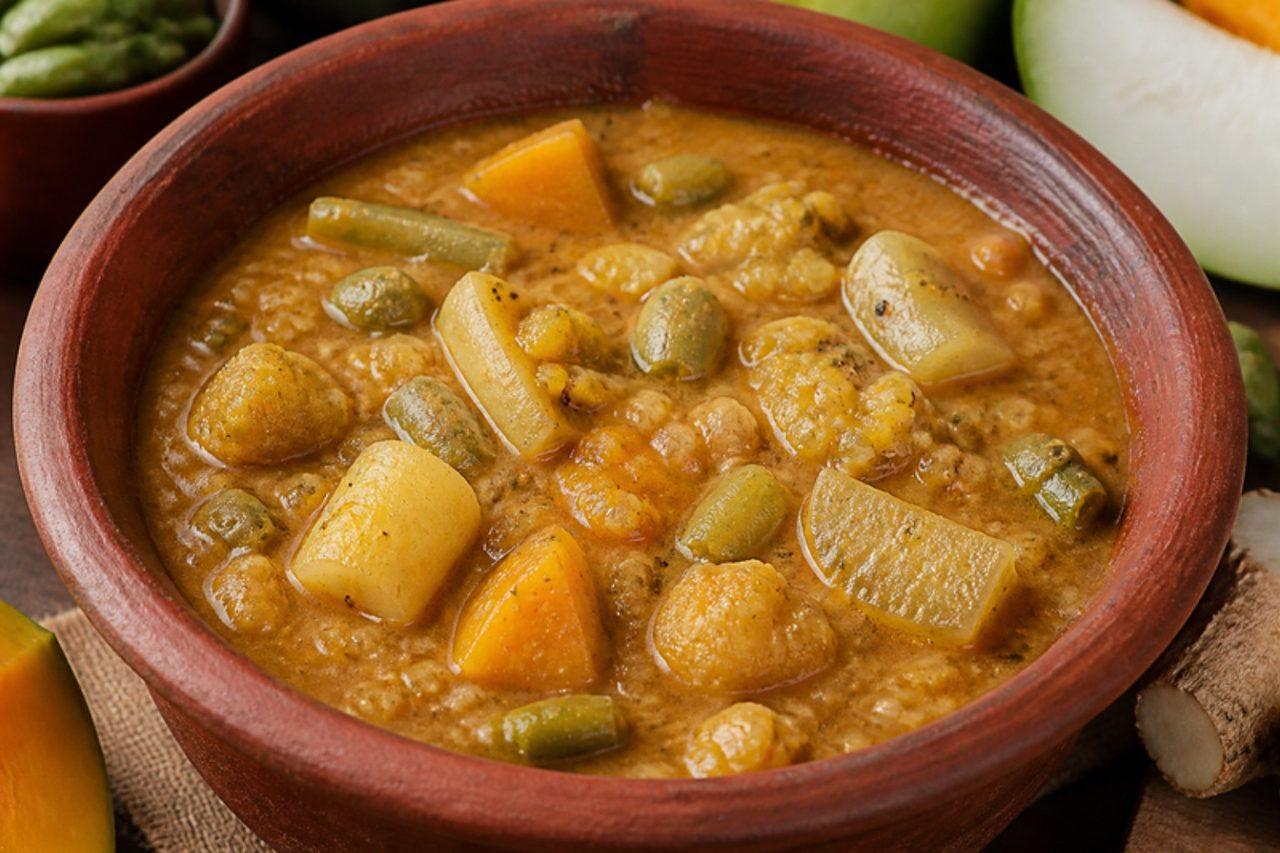
Ezhu kari kootuSeven vegetable and dal curry

The partner to kali on Arudra Darshan morning is a kootu of seven (ezhu) vegetables, an old Tamil Brahmin custom that uses whatever native winter produce is at the market: pumpkin, ash gourd, raw plantain, sweet potato, broad beans, colocasia and chow-chow are a typical set, and no onion, garlic, tomato or 'English' vegetables go in. They simmer in tamarind water with soft toor dal and a paste of roasted coriander, chana dal, red chillies and coconut, giving a thick, tangy, gently hot stew that cuts the sweetness of the kali. Common mistake: adding tamarind before the vegetables are cooked, which keeps them hard; cook them first in plain water until a knife goes in easily, then add the tamarind and boil until its raw smell has gone. Chef's tip: roast the paste spices until the chana dal turns golden-red, which gives the kootu its depth.

by KrazyBadal 0 views
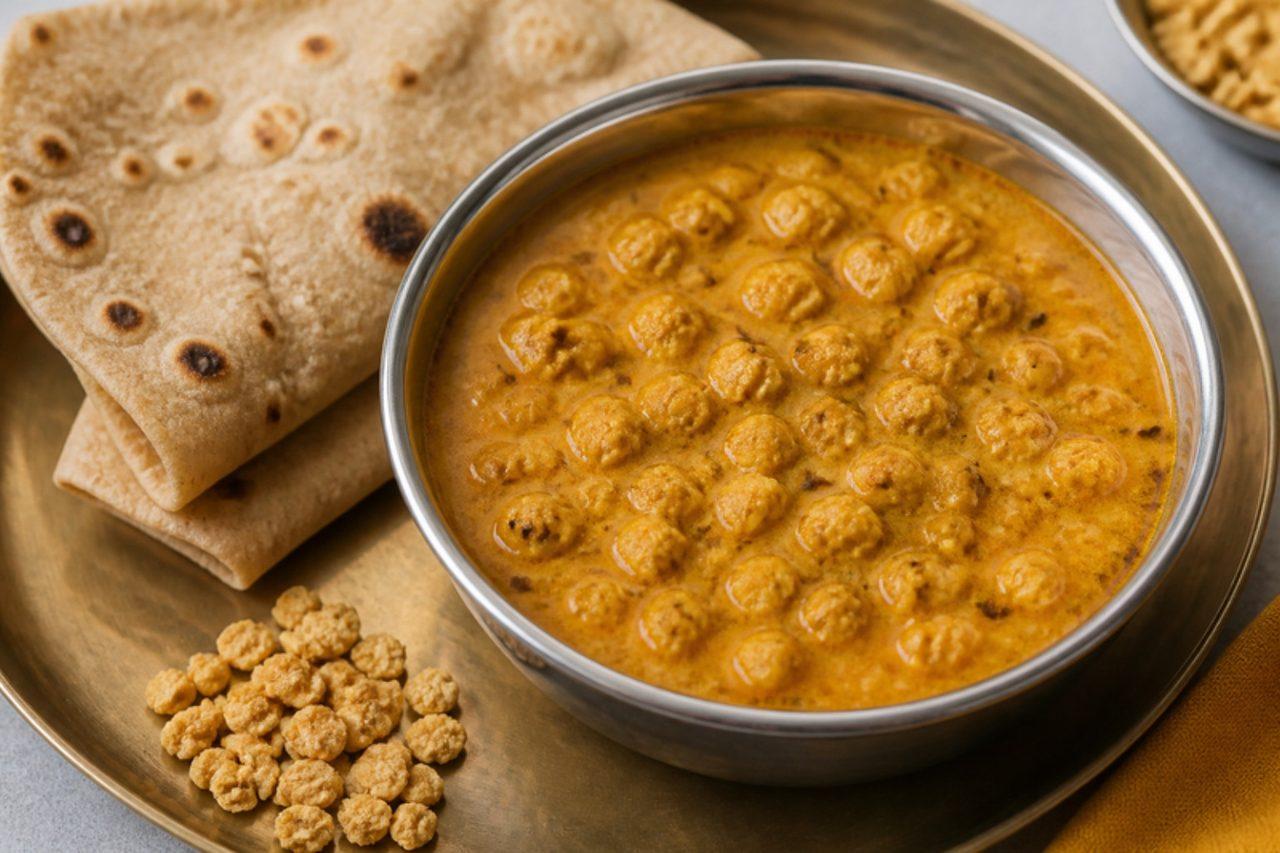
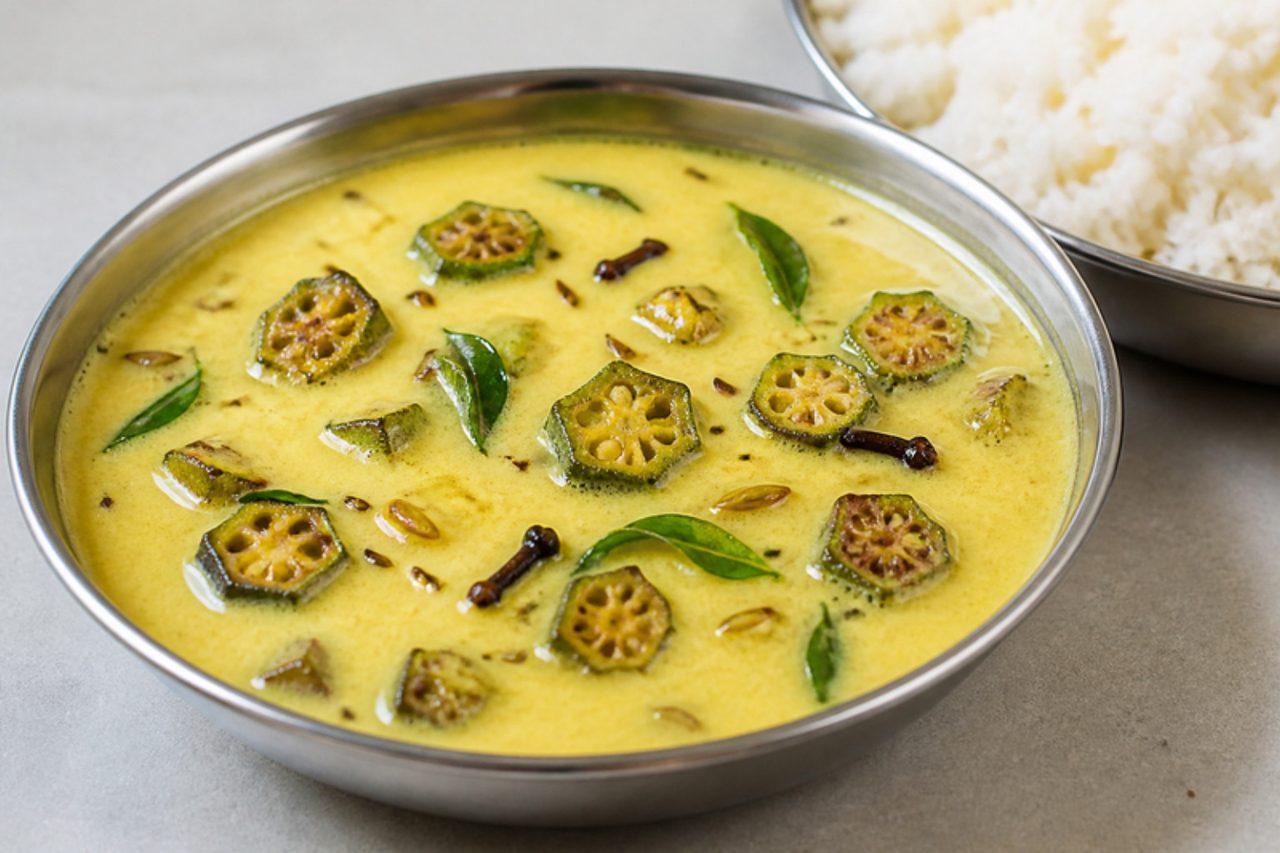
Bhinda ni kadhiYogurt kadhi with fried okra

Bhinda ni kadhi is a summer and monsoon favourite in Gujarati homes from Ahmedabad to Surat, when okra is cheap: the familiar sweet, tangy yogurt kadhi gets a handful of okra rounds fried until crisp at the edges, which soak up the sauce and add body. It is poured over steamed rice or khichdi for a light lunch. Frying the okra first keeps it from going slimy. The common mistake is boiling the kadhi fast before it has thickened, which curdles the yogurt; keep stirring and keep the heat low until it reaches a simmer. Chef's tip: add the okra only in the last few minutes so the rounds stay whole and a little crisp.

by KrazyBadal 0 views
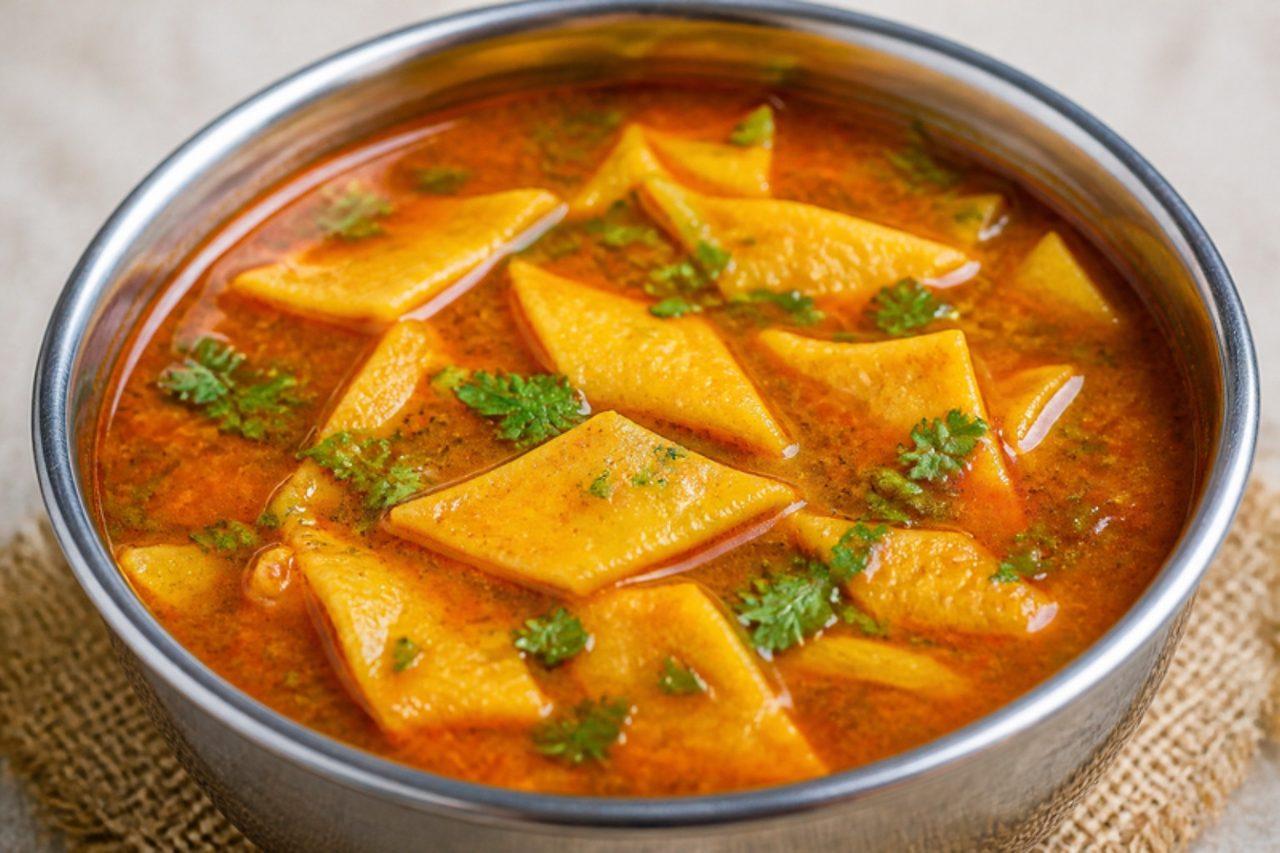
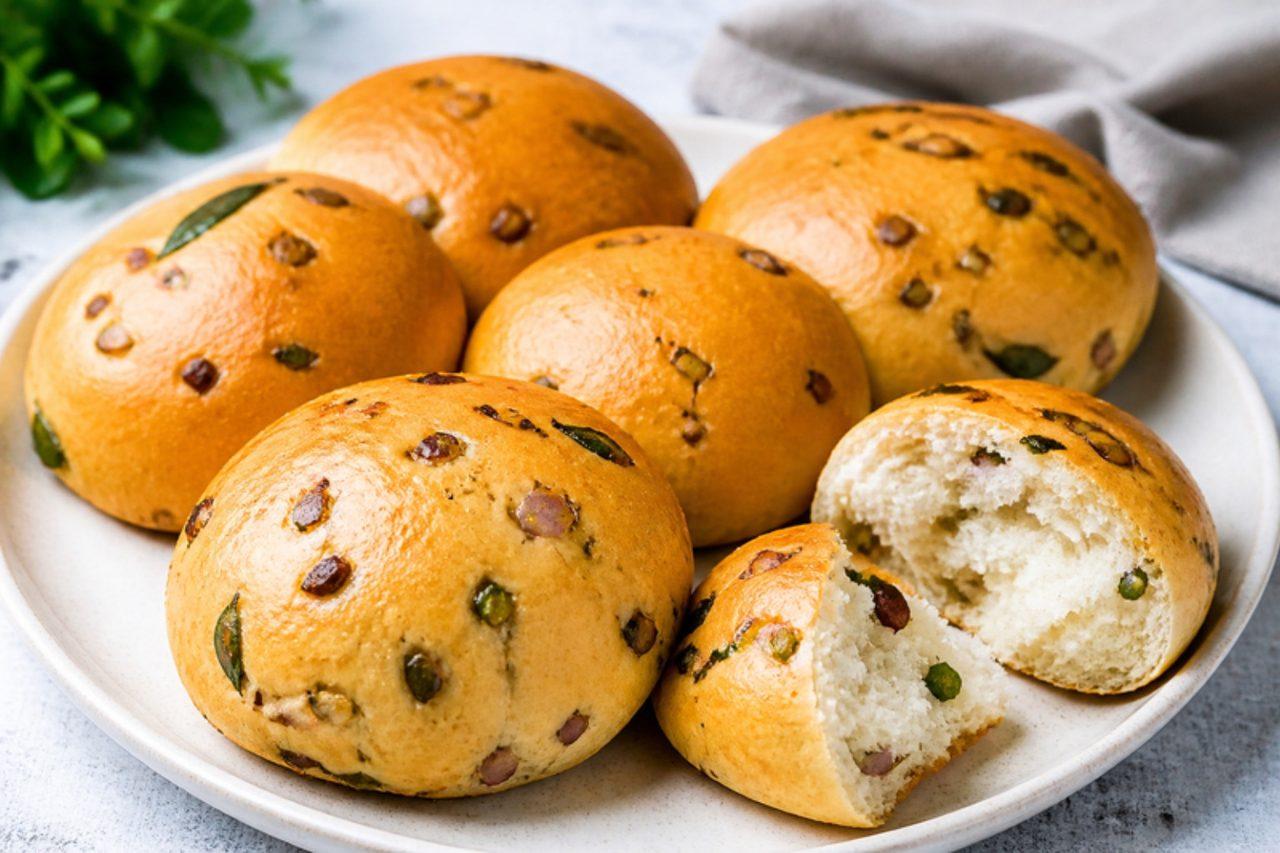
Khara bunOnion and chilli bakery buns

Every Iyengar bakery in Bengaluru has a tray of khara buns by the counter, the savoury cousin of the sweet bun, eaten warm with strong filter coffee or packed for an evening snack. The soft, milky dough is speckled with raw onion, green chilli, ginger, coriander and curry leaves, which steam inside the bun and give it a gentle heat and a lovely smell. The common mistake is adding the chopped onion at the start of kneading: its juice slackens the dough and it turns sticky. Knead the dough smooth first, then work in the vegetables at the end. Chef's tip: brush the buns with butter the moment they come out of the oven and cover them with a cloth for 10 minutes; the steam keeps the crust soft like the bakery ones.

by KrazyBadal 0 views
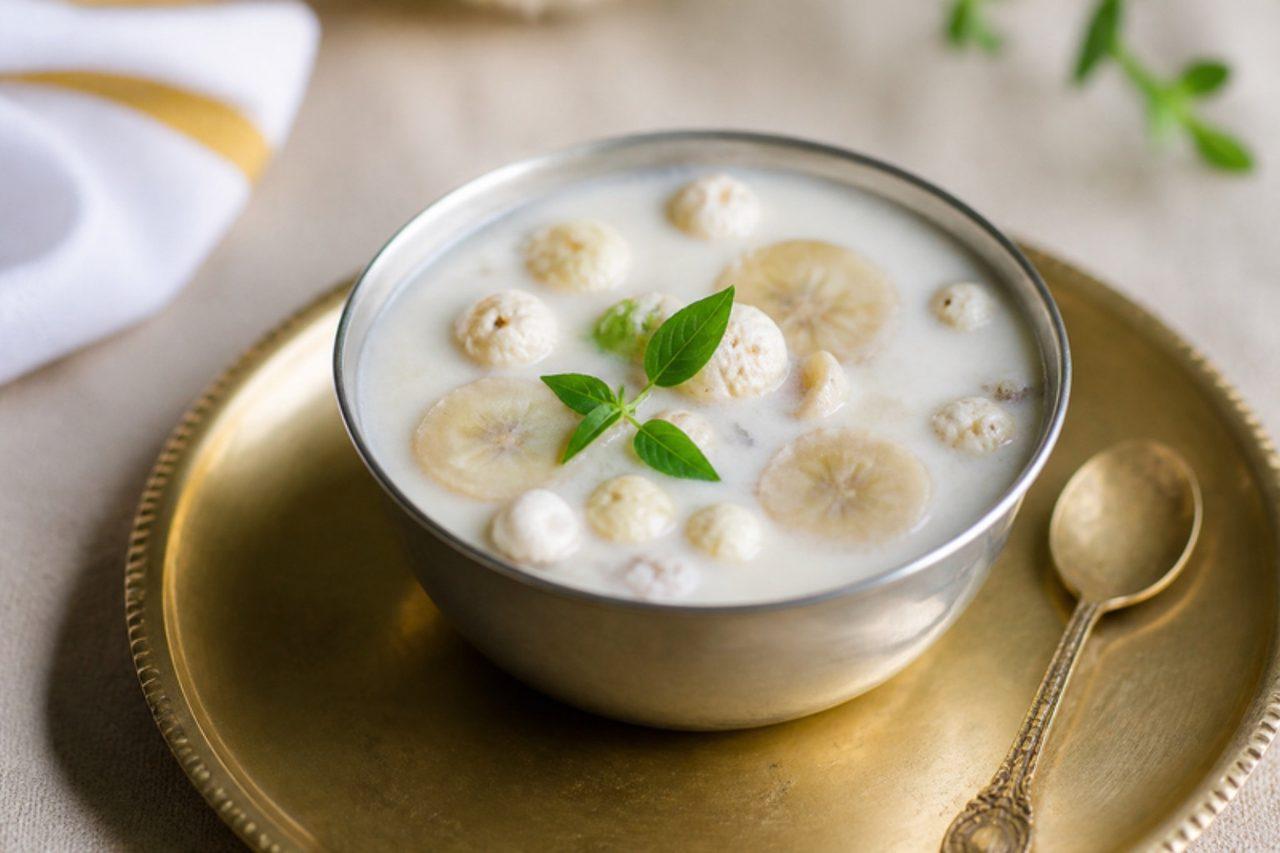
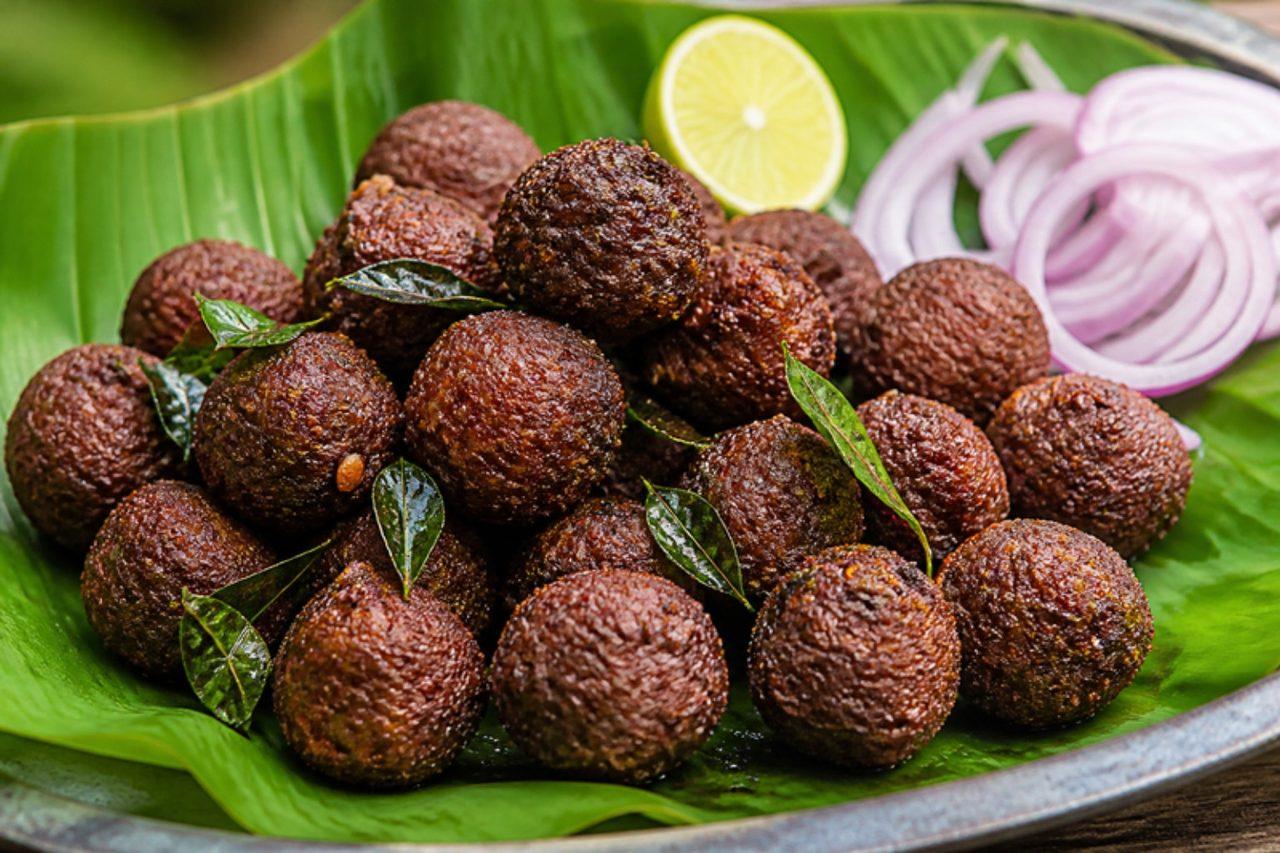
Kola urundaiFried minced mutton balls

Kola urundai is the meat ball of Chettinad, served at Sunday lunch and at weddings in Karaikudi beside the mutton kuzhambu and rice. Lean mutton mince is cooked dry with fennel, then ground very fine with roasted gram, coconut, shallots and whole spices, rolled into small balls and fried until dark and crusty outside and tender within. They are eaten hot as a starter or with rasam rice. A common mistake is leaving the mixture too wet, so the balls crack and fall apart in the oil; the roasted gram is there to bind it, so add a little more if needed. Chef's tip: grind the cooked mince in short pulses until it becomes a smooth, sticky paste; coarse mince never holds a neat ball.

70 minIndianMeatGluten freeSpicy
by KrazyBadal 0 views
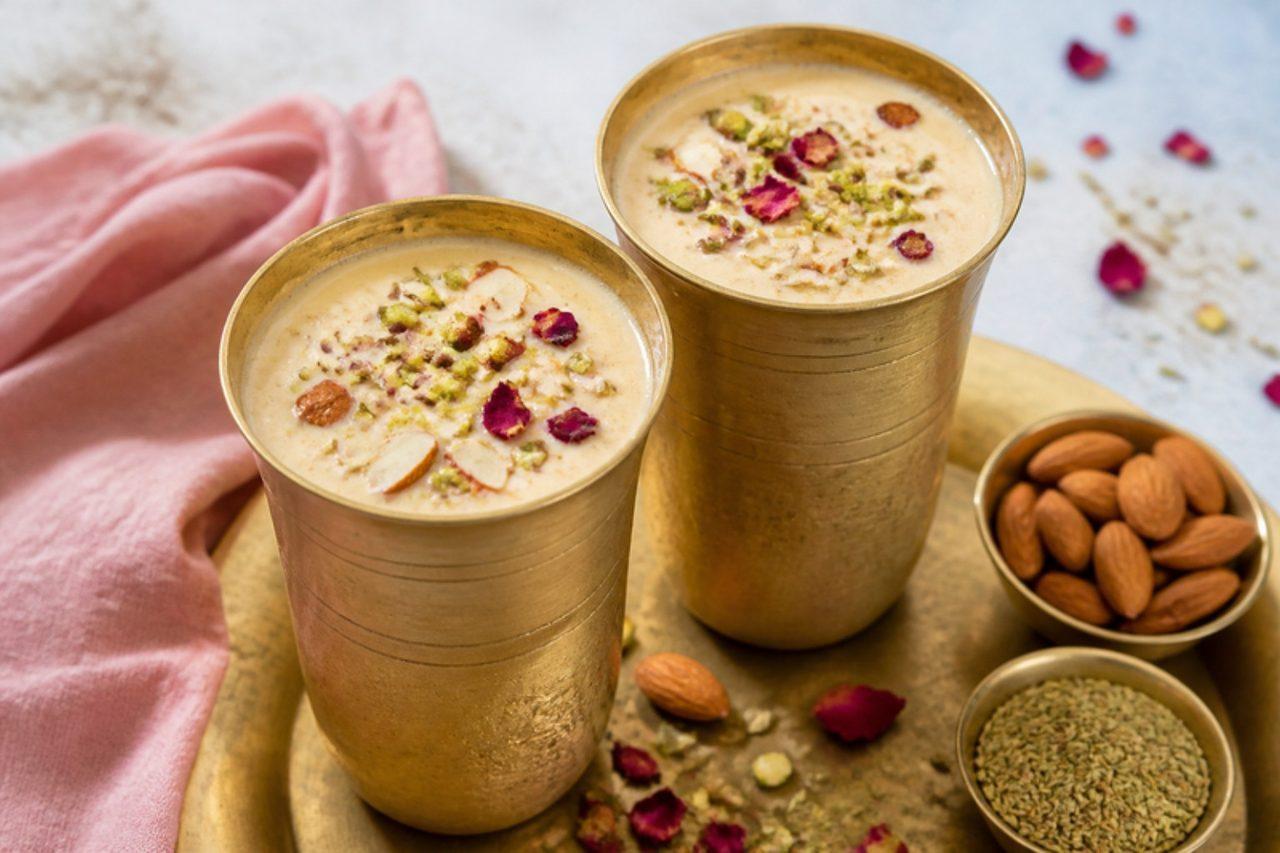
ThandaiAlmond, fennel and rose milk

On Mahashivratri the ghats and temples of Varanasi fill with brass pots of thandai, a cooling milk ground with almonds, melon seeds, fennel, poppy seeds, black pepper and rose, poured as an offering to Shiva and then shared with everyone queuing for darshan. In the city's lanes it is sometimes made with bhang (cannabis); this version is made entirely without it and contains no alcohol, so the whole family can drink it. It tastes nutty, floral and gently peppery, and is thick enough to coat the glass. Most people who keep the Shivratri fast take it, since it holds only milk, nuts, seeds and spices, but check your own family's rules: some leave out poppy seeds, and poppy seeds are restricted in a few countries, so skip them if you need to. Common mistake: grinding the soaked nuts and seeds with too little water, which leaves a gritty paste; keep blending until it feels smooth between your fingertips, then strain. Chef's tip: make the paste the night before and keep it in the fridge; the flavour deepens and you only need to whisk it into cold milk on the day.

by KrazyBadal 0 views
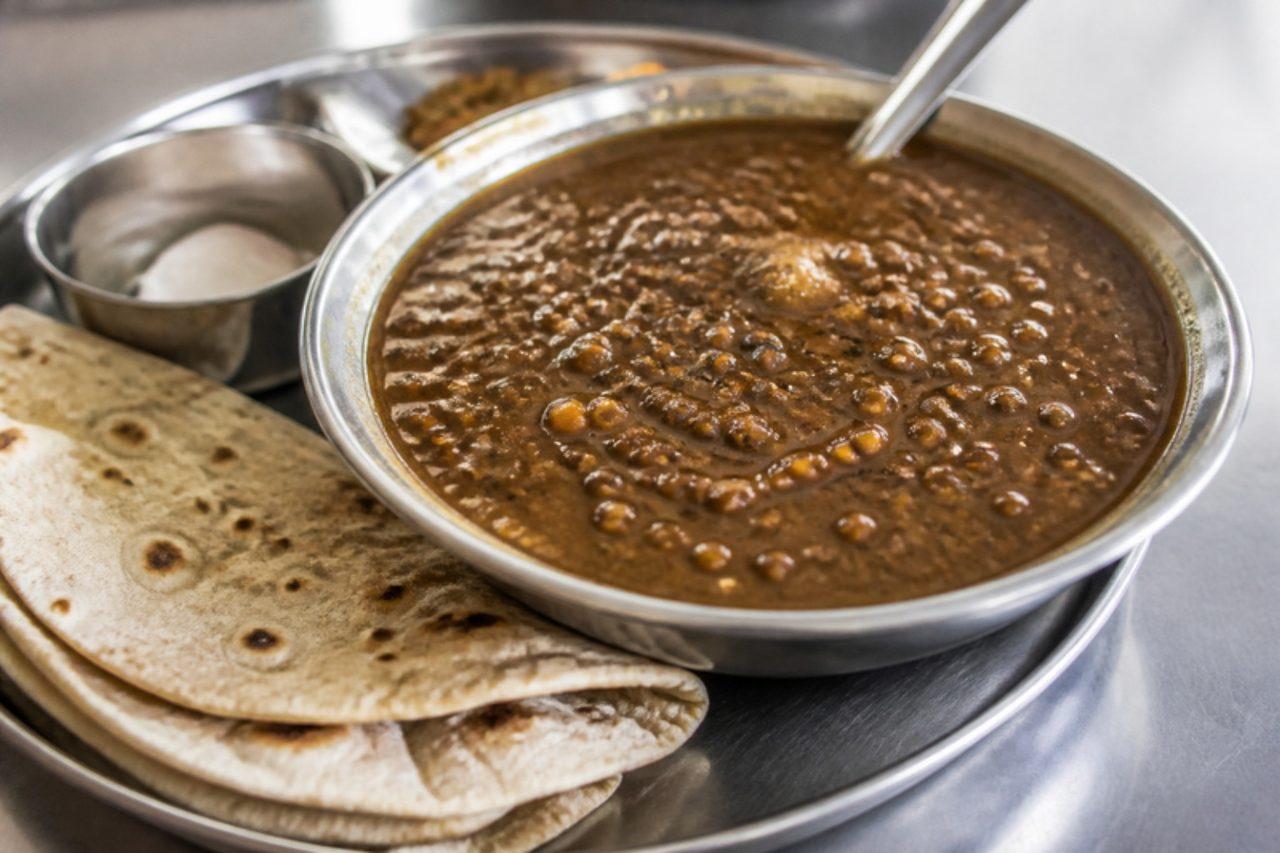
Langar wali dalBlack gram and chana dal

On Gurpurab, the birthdays of the Sikh Gurus, gurdwara kitchens run day and night, and volunteers stir vast pots of maa chholeyan di dal, whole black urad with split chana dal, for everyone who sits in pangat on the floor to eat, whatever their faith. It is plain and honest cooking: the dal simmers for hours with ginger and a little salt and is finished with a simple tadka of ghee, onion, tomato and green chilli, with no cream and no butter swirls. The result is earthy, creamy from slow cooking alone, and very comforting with fresh rotis. Common mistake: rushing it; the urad must be cooked until the skins split and the grains break down when pressed, otherwise the dal stays thin and separate. Chef's tip: mash a ladleful of dal against the side of the pot near the end; this thickens it the way long hours over the langar fire do.

by KrazyBadal 0 views
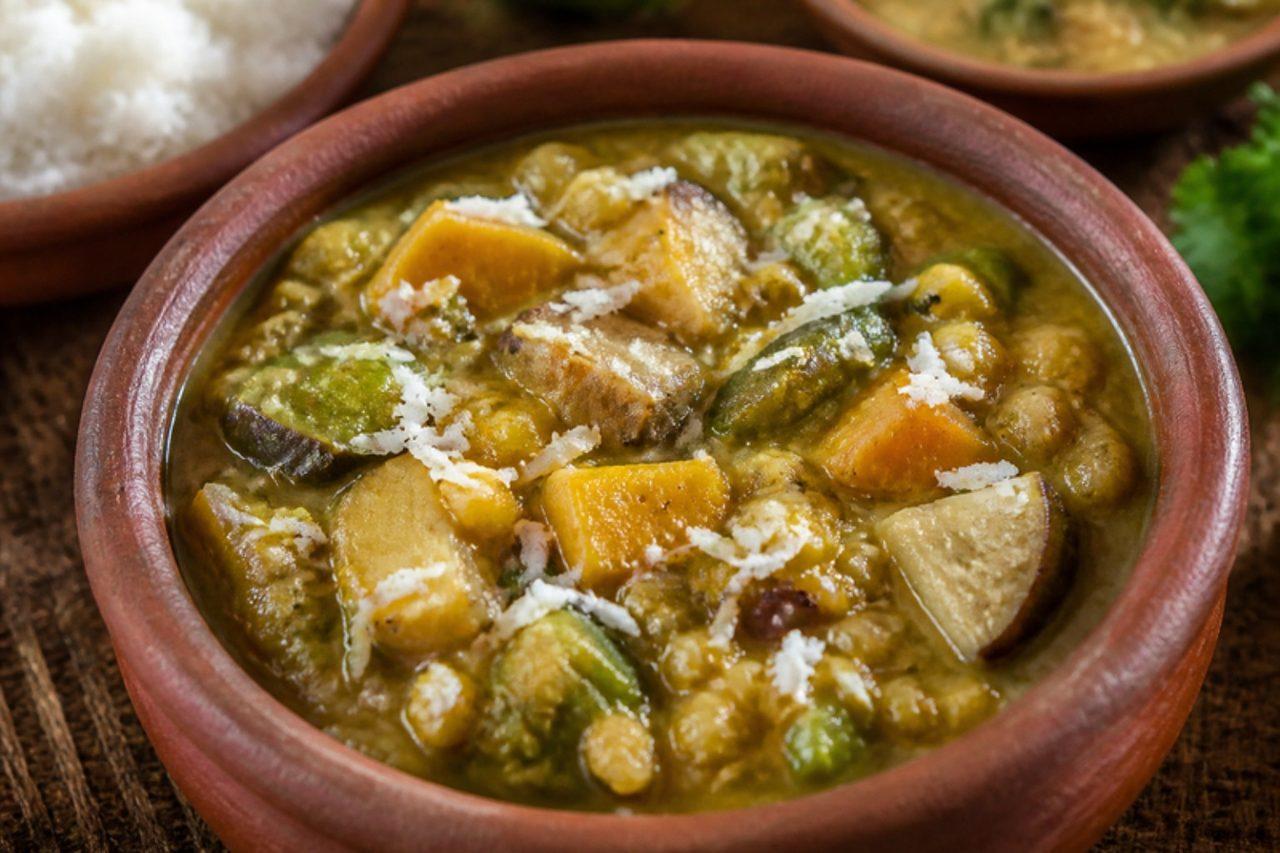
MahuraMixed vegetables with dal

Mahura is the vegetable curry of the Jagannath temple tradition in Odisha and a fixture on Rath Yatra lunches at home: pumpkin, raw banana, yam, aubergine and sweet potato cooked soft with a little dal and a paste of roasted cumin, ginger, coconut and a touch of jaggery. Like all temple food it uses no onion, garlic, tomato, chilli powder or New World vegetables, so it tastes gentle, earthy and faintly sweet. It is thicker and more vegetable-heavy than dalma, with the dal only binding the vegetables. Common mistake: stirring too much once the pumpkin softens, which melts it into the gravy; the mahura is done when the yam is tender, the vegetables hold their shape and the gravy coats them. Serve with kanika or plain rice. Chef's tip: finish with a pinch of roasted cumin and dry red chilli powder ground together (bhaja masala), which Odia cooks add right at the end.

by KrazyBadal 0 views
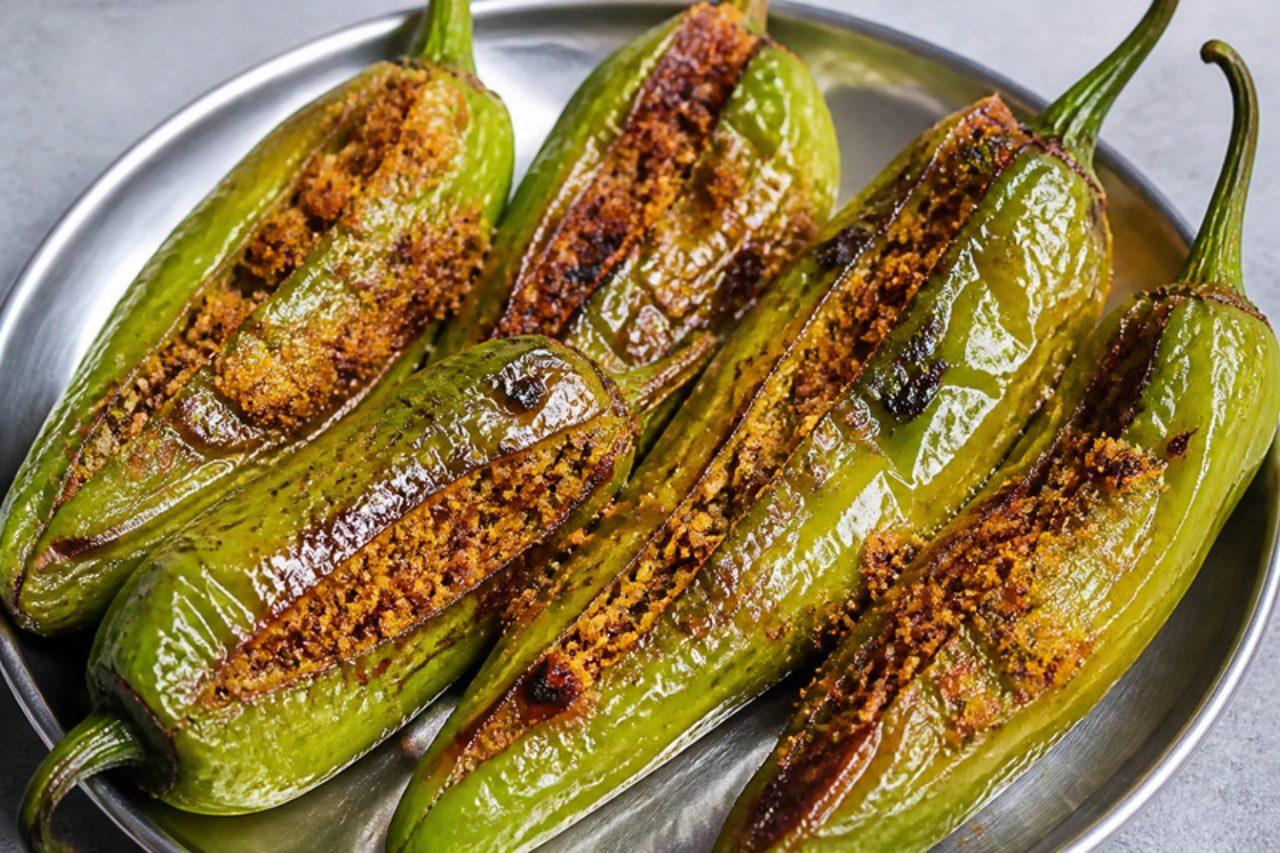
Bharela marchaStuffed green chillies

In Kathiawad, bharela marcha are made with the long, fat and fairly mild bhavnagri chillies that come in every winter, and they sit beside a thali of rotla, kadhi and khichdi as a sweet-sour-hot side. The filling is besan roasted in oil until nutty, mixed with sugar, lemon, turmeric and dhana-jiru, and the chillies are cooked covered on low heat until soft and blistered in patches. A common mistake is using small, very hot chillies; choose large mild ones, or the dish is too fierce to eat. Chef's tip: slit the chillies only on one side and scrape out the seeds and ribs; the heat drops right down and the filling stays inside.

by KrazyBadal 0 views

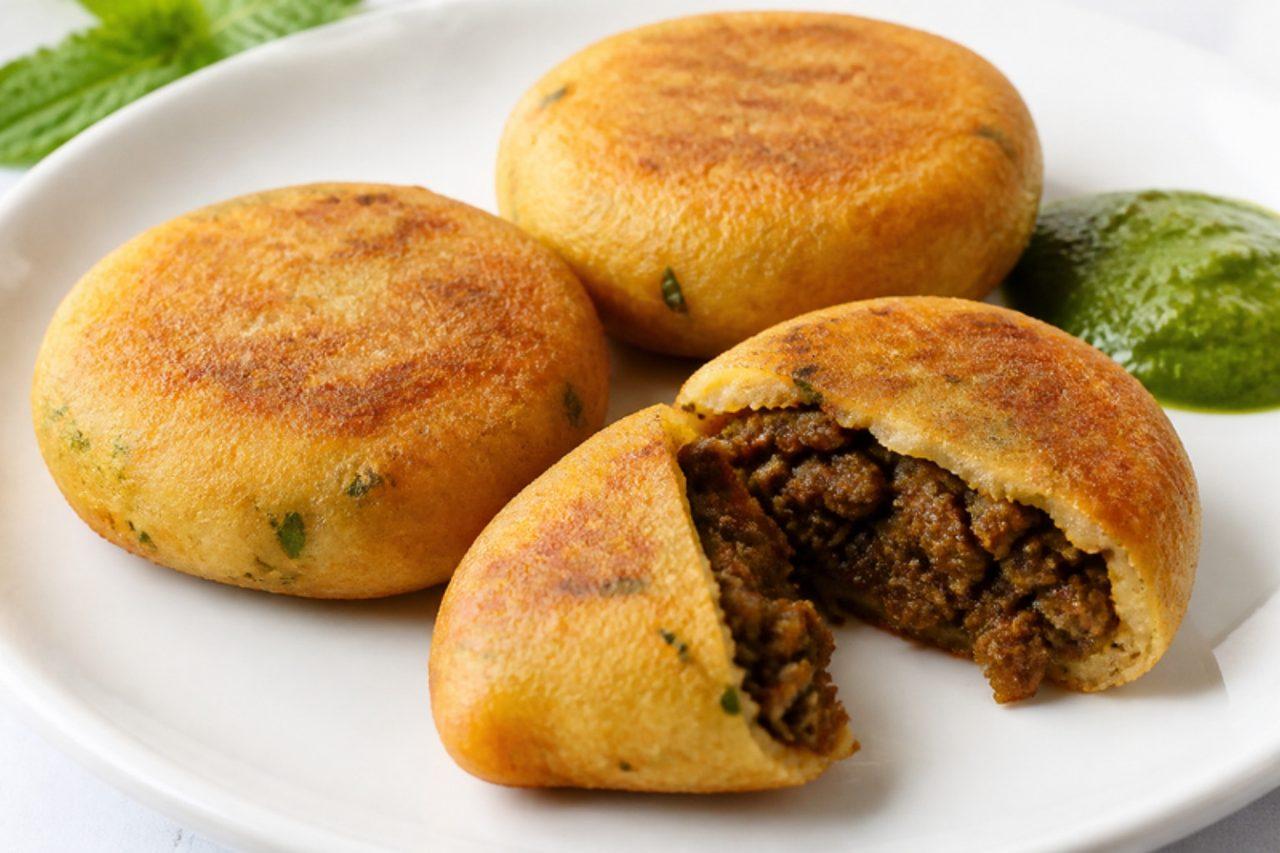
Parsi kheema patticeMutton-stuffed potato patties

Kheema pattice are a fixture of Parsi tea tables in Surat, Navsari and Mumbai, and turn up again at wedding receptions and Navjote parties. A shell of seasoned mashed potato is wrapped around dry, gingery mutton mince with mint and coriander, then dipped in beaten egg and shallow fried so the outside is crisp and golden and the inside soft. They are eaten warm with tomato ketchup or a sweet-sour chutney. The common mistake is a wet filling: if the kheema still has liquid in the pan it seeps through the potato and the pattice split in the oil. Chef's tip: chill the shaped pattice for 20 minutes before frying; they hold their shape much better.

75 minIndianMeat
by KrazyBadal 0 views

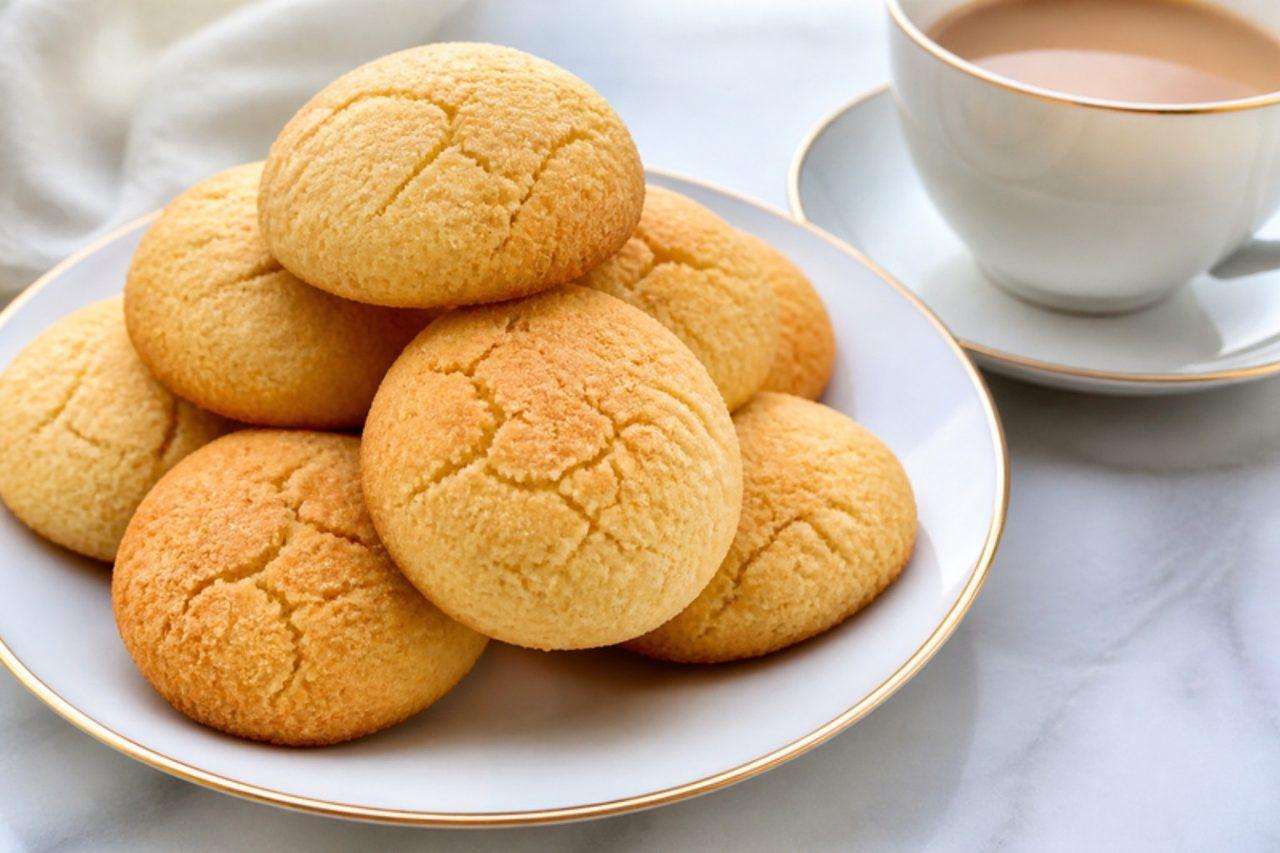
Parsi batasaSalted butter tea biscuits

Batasa come from the wood-fired Parsi bakeries of Navsari, Udvada and Surat, where they are baked low and slow until dry and pale gold, then sold by the tin for morning chai. They are domed, flaky-crumbly and buttery, with just a whisper of salt and sugar, and they are made to be dunked. Bakeries traditionally raise the dough with toddy; this home version uses yogurt and a little baking powder for the same light, short crumb. The usual mistake is baking them hot and fast, which browns the outside while the inside stays soft; batasa need a long, gentle bake to dry right through. Chef's tip: switch the oven off at the end and leave the biscuits inside with the door ajar for 20 minutes so they crisp completely.

100 minIndianBaking
by KrazyBadal 0 views

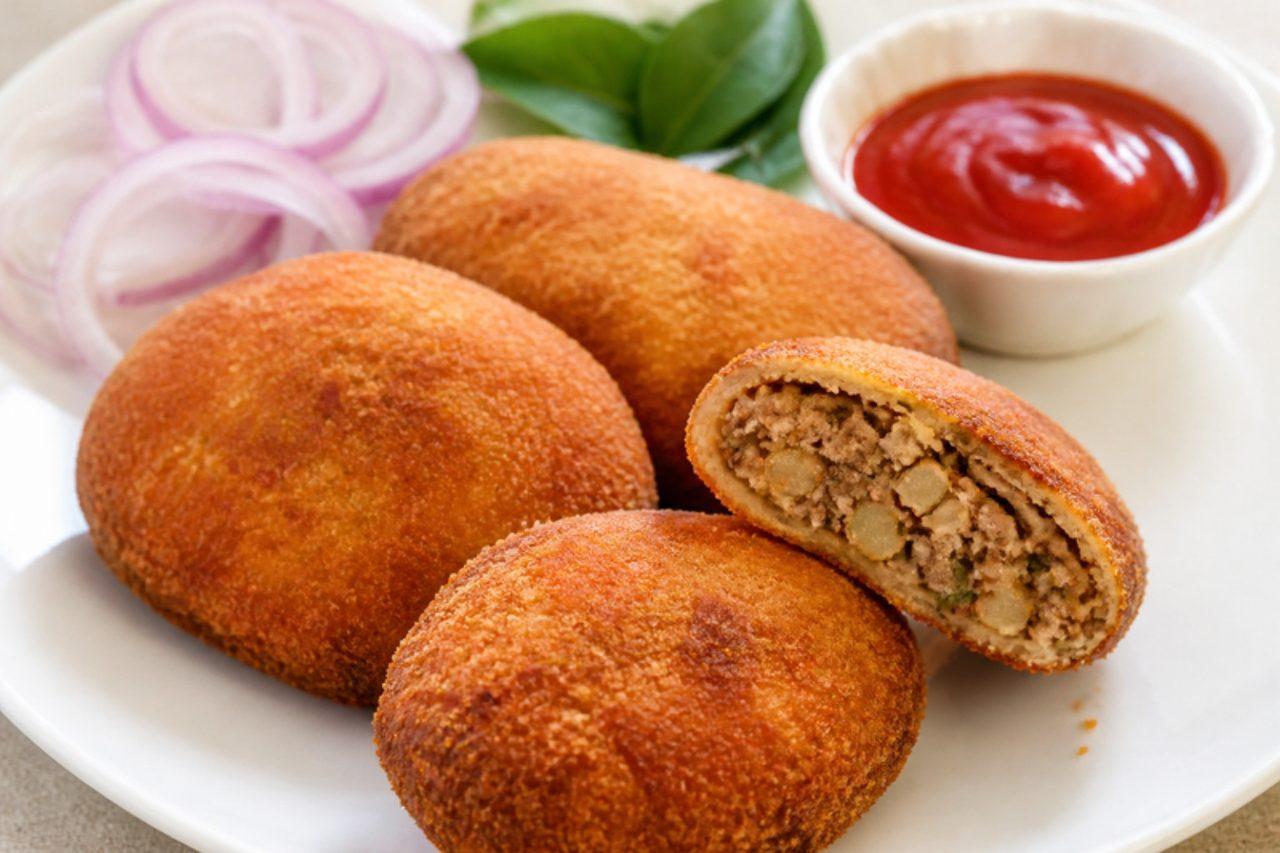
Kerala beef cutlet

Beef cutlets are a fixture of Kerala bakery counters and of Syrian Christian Christmas and wedding tables, where they are served with sliced onion salad and tomato sauce. The beef is cooked dry with ginger, garlic, green chilli and lots of black pepper, mashed with potato, shaped into ovals and fried in a crunchy breadcrumb coat. They are peppery, savoury and crisp, good hot or at room temperature. The mistake is a wet filling: if the mince still has juice in the pan, the cutlets split and soak up oil. Cook the meat until completely dry. Chef's tip: shape the cutlets a day ahead and chill or freeze them on a tray; cold cutlets hold their shape perfectly in the oil.

75 minIndianMeat
by KrazyBadal 0 views

Gathiya nu shaakGathiya in yogurt tomato gravy

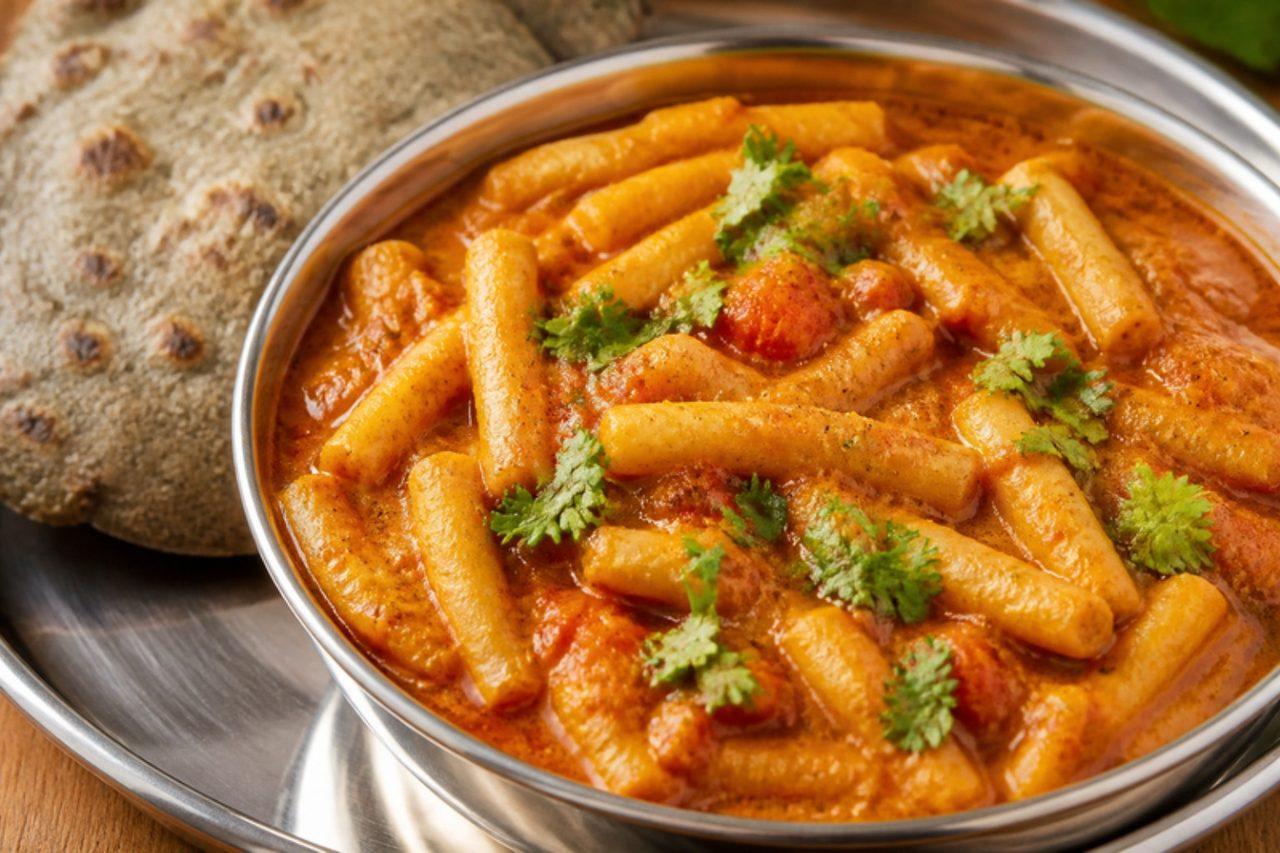
Gathiya nu shaak is a Kathiawadi dhaba standby along the Rajkot and Bhavnagar highways, cooked in ten minutes and eaten with hot bajra rotla, raw onion and buttermilk. A spicy gravy of onion, tomato, garlic and whisked yogurt is brought to a simmer and thick bhavnagari gathiya go in right at the end, so they soften on the outside but keep a little bite at the centre. It is rich, fiery and comforting. The common mistake is adding the gathiya too early or letting them sit in the gravy; they swell and turn to mush. Chef's tip: have everyone at the table before the gathiya go into the pan, and serve within two minutes.

by KrazyBadal 0 views

Kolkata biryaniMutton, potato and egg biryani

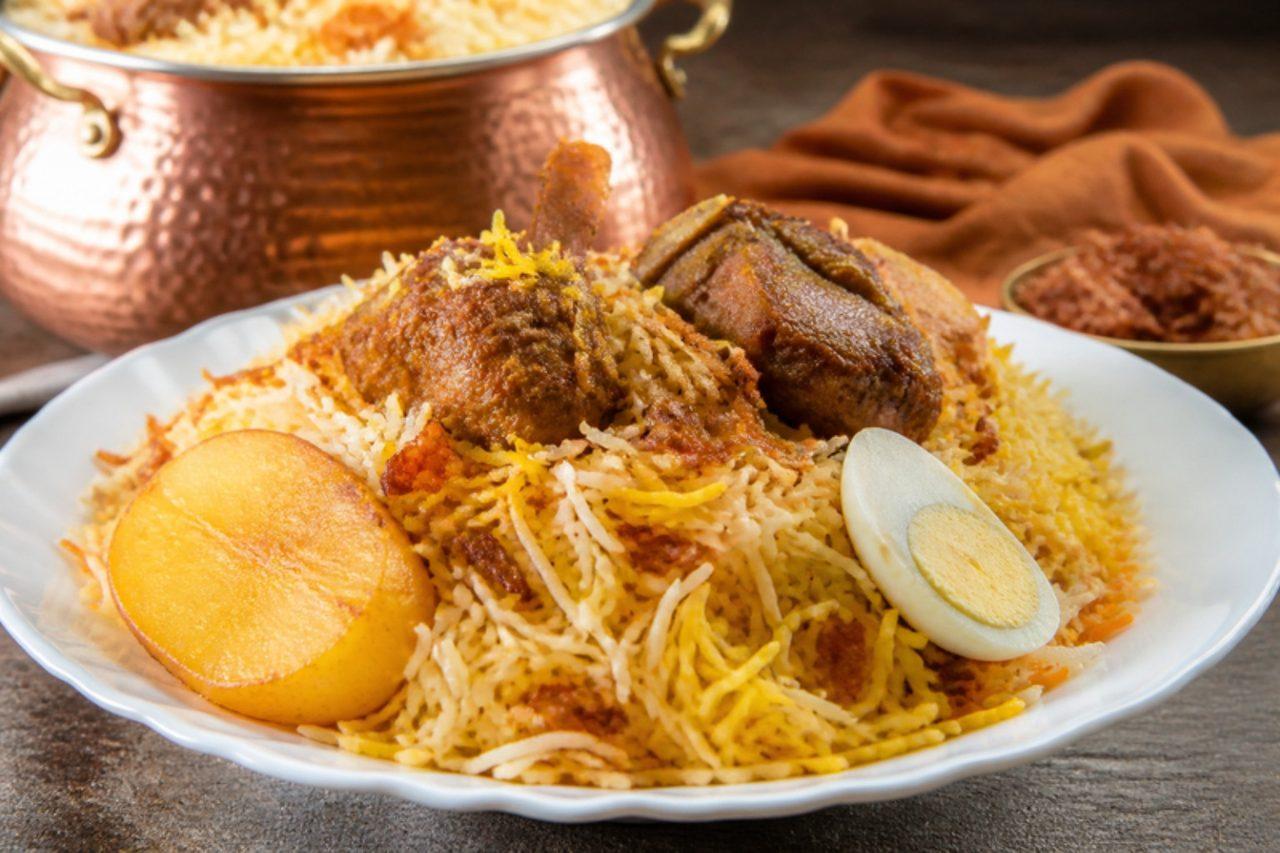
Kolkata biryani came with the exiled Nawab of Awadh to Metiabruz in the 19th century and grew its own character: light on chilli, perfumed with kewra, rose water and saffron, and famous for its golden potato. During Durga Puja the city's biryani shops have queues round the block, and many families make a big handi at home for Navami. Mutton (goat) is marinated in yoghurt, cooked tender, then layered with part-cooked long-grain rice, fried potatoes and boiled eggs and sealed for dum. Common mistake: boiling the rice fully before layering; drain it at about 70 per cent cooked (it should still break with a small hard core) or it turns mushy on dum. The mutton must reach 71 °C and be tender before it goes under the rice. Chef's tip: fry the potatoes in the marinade's spices first; they soak up the meat juices on dum and many people think they are the best part.

150 minIndianMeatGluten free
by KrazyBadal 0 views

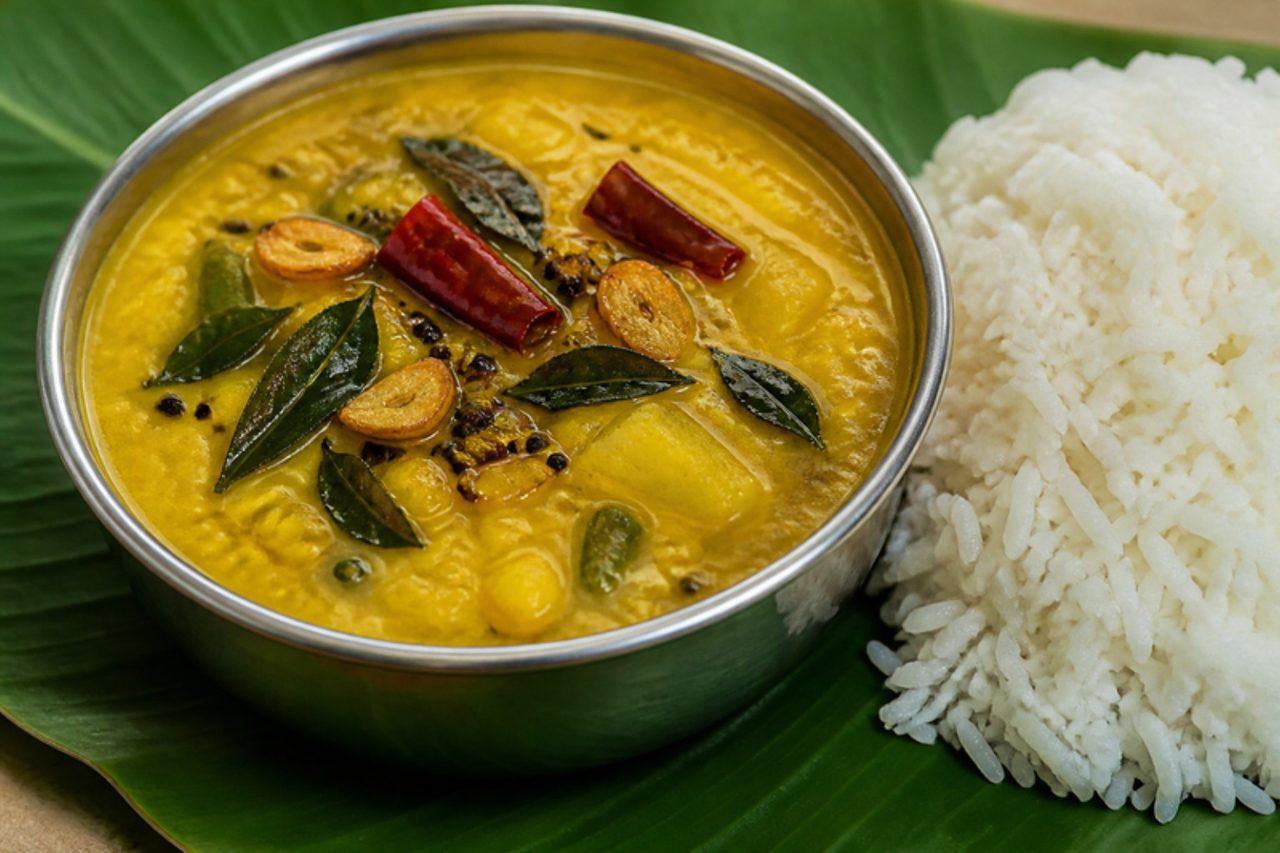
Kaddu bhaatBottle gourd dal with rice

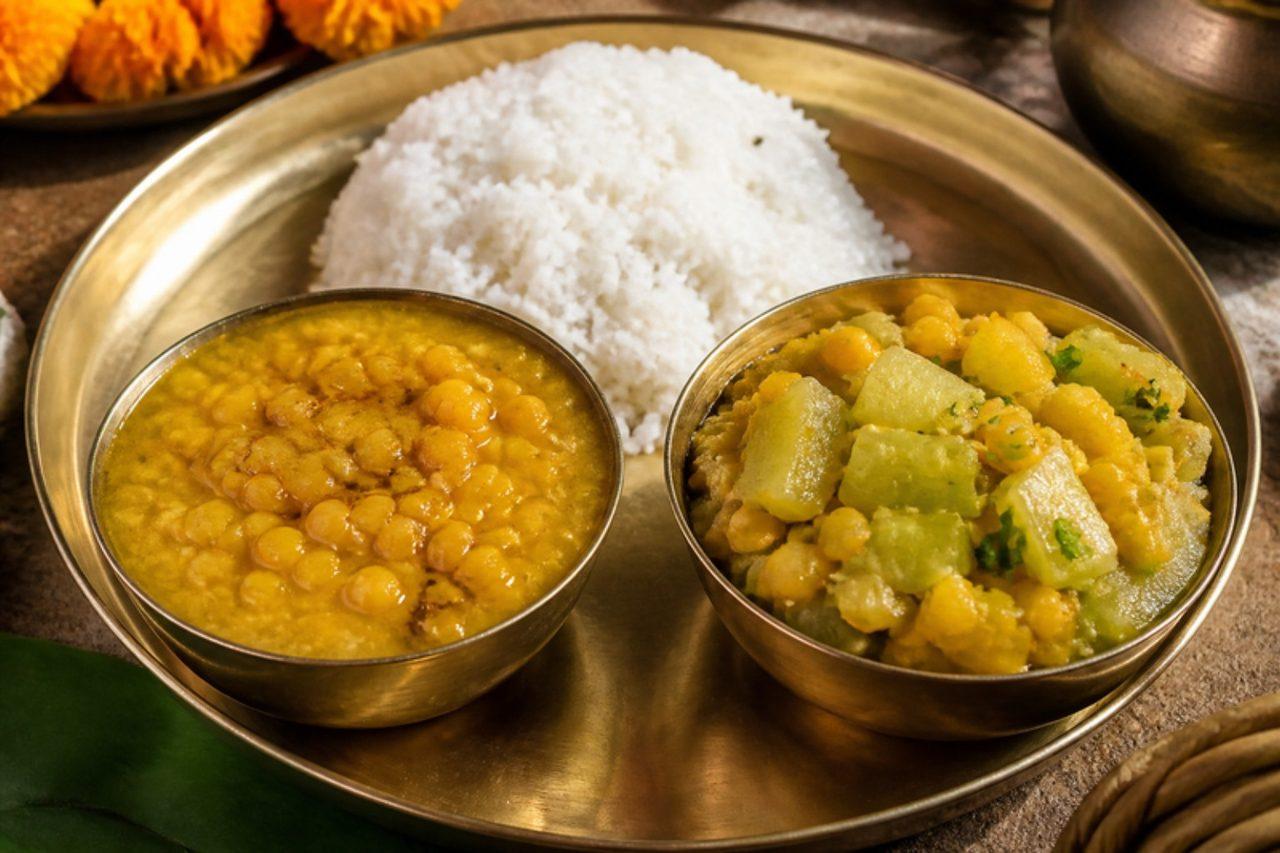
Chhath begins with Nahay-khay: after a holy bath in the Ganga or a pond, the women and men keeping the fast in Bihar and Jharkhand eat one pure, simple meal, and it is always kaddu (bottle gourd) cooked with chana dal, plain rice and a ghee-fried sabzi, seasoned only with sendha namak (rock salt) and no onion or garlic. The dal is mild, soft and sweet from the gourd, with cumin, ginger and green chilli. Common mistake: adding the gourd at the start, so it collapses to mush; cook the chana dal soft first, then simmer the gourd until just translucent. Chef's tip: grate a spoon of fresh ginger into the ghee tadka at the end; it is the main flavour since there is no garlic.

by KrazyBadal 0 views

Vaal nu shaakDried field beans with ajwain

During the eight days of Paryushan many Gujarati Jain families stop eating green, leafy and fresh vegetables, so the kitchen turns to dried pulses, and vaal (dried field beans) cooked soft with ajwain and hing is a regular on the thali. This recipe is fully Jain: no onion, no garlic, no fresh ginger and no root vegetables, with dry ginger powder for warmth and amchur instead of tomato for sourness. The beans are creamy and a little bitter-sweet, balanced by jaggery, and are eaten with rotli, rice and kadhi, finished before sunset in strict homes. Common mistake: using beans that have not soaked long enough; they stay hard and split unevenly. Cook them until one squashes easily between your thumb and finger, but not so long that they burst. Chef's tip: ajwain and hing make vaal much easier to digest, so do not skip the tempering; for a gluten-free dish use a gluten-free hing.

by KrazyBadal 0 views

Mangodi ki sabziMoong dal nuggets in yogurt gravy

Mangodi are little sun-dried nuggets of ground moong dal that Rajasthani women make in summer and store for months; during Paryushan, when Marwari Jain homes give up green vegetables, they become the sabzi itself. Here they are fried golden, then simmered in a spiced yoghurt gravy with no onion, garlic, fresh ginger or tomato, so the dish is fully Jain. The nuggets soak up the tangy gravy and turn soft but still a little chewy; serve with phulka or bajra roti. Use freshly set curd, as many Jains avoid curd kept overnight. Common mistake: pouring yoghurt straight into a hot pan, which makes it split into grainy curds; whisk it with gram flour first and keep stirring until it comes to the boil. Chef's tip: fry the mangodi until deep golden; pale ones stay hard in the middle however long they simmer.

by KrazyBadal 0 views

Rasiya dhokliWheat diamonds in tomato buttermilk

Rasiya dhokli is what Kathiawadi cooks in Rajkot and Gondal make on an evening when there are no vegetables in the basket: a quick dough of wheat and gram flour with chilli and ajwain is rolled, cut into diamonds and simmered in a thin, tangy rasa of tomatoes, sour buttermilk and plenty of garlic and red chilli. The dhokli soak up the sauce and turn soft and silky, and the whole thing is eaten from a bowl like a spicy, soupy one-pot supper. The common mistake is adding the buttermilk to a boiling pot, which splits it; temper it with some of the hot rasa first and keep the heat low. Chef's tip: let the finished dish rest for 5 minutes off the heat; the dhokli thicken the rasa to just the right consistency.

by KrazyBadal 0 views

PanchamritMilk, curd, ghee and honey offering

Panchamrit, the 'five nectars', is poured over the image of baby Krishna at the midnight abhishek on Janmashtami and then given out to everyone in the room in a spoonful cupped in the palm. It is made across India for pujas, from Gujarat to Bengal, with five fixed parts: milk, curd, ghee, honey and sugar, plus tulsi leaves and sometimes a few makhana or chopped banana in the north. It tastes sweet, creamy and a little tangy. Common mistake: using hot milk or sour curd, which makes it split and thin; everything should be cool and the curd fresh, and it is ready when it is smooth and pourable like thin custard. Many families treat it as fasting food for the day, but traditions differ on honey and cooked milk, so follow your own household. Chef's tip: stir the honey into a little of the milk first so it loosens before it goes into the cold curd, otherwise it sets in sticky lumps.

by KrazyBadal 0 views

Mamidikaya pappuToor dal with raw mango

Ugadi falls just as the first green mangoes reach Andhra markets, so the festive lunch nearly always has a pot of mamidikaya pappu beside the pulihora and pachadi. Toor dal is cooked soft, then sharpened with chunks of sour raw mango and slit green chillies, and finished with a sizzling tempering of garlic, dried red chilli and curry leaves. Mixed into hot rice with a spoon of ghee, it is tangy, mellow and comforting. The common mistake is cooking the mango with raw dal: its acid stops the lentils from softening, so always cook the dal to a smooth mush first. The mango is ready when a piece crushes easily but still holds its shape. Chef's tip: mangoes vary hugely in sourness, so add half, taste after five minutes and add the rest only if the dal needs more bite.

by KrazyBadal 0 views

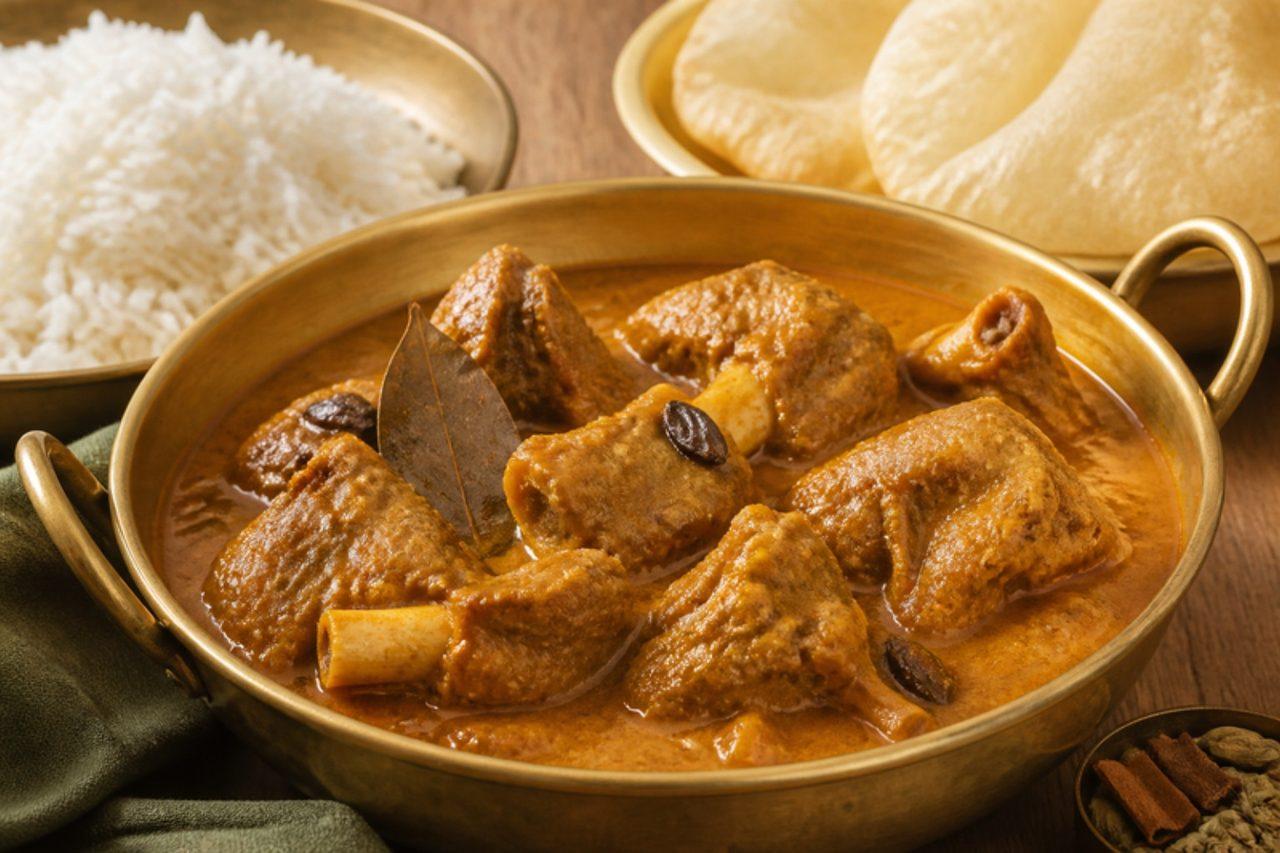
Niramish mangshoGoat curry without onion or garlic

Niramish mangsho is a Bengali paradox: 'vegetarian meat'. It is goat curry made without onion or garlic, the way it has long been cooked as an offering in some Bengali households on Kali Puja and on Durga Navami, when the meat is treated as bhog. Here the mutton (goat) is bought ready-cut from the butcher and marinated in yoghurt and ginger, then slow-cooked with whole spices, cumin and a little sugar into a dark, aromatic, surprisingly clean-tasting curry. Serve it with luchi or plain rice. Common mistake: rushing the bhuna (slow frying); keep cooking the marinated meat until the yoghurt disappears and the oil separates and turns red, or the curry tastes sour and raw. The meat is done when it pulls easily from the bone and reaches 71 °C in the thickest part. Chef's tip: a spoon of ghee and a pinch of the hand-ground Bengali garam masala at the very end gives the curry its festive perfume.

110 minIndianMeatGluten free
by KrazyBadal 0 views

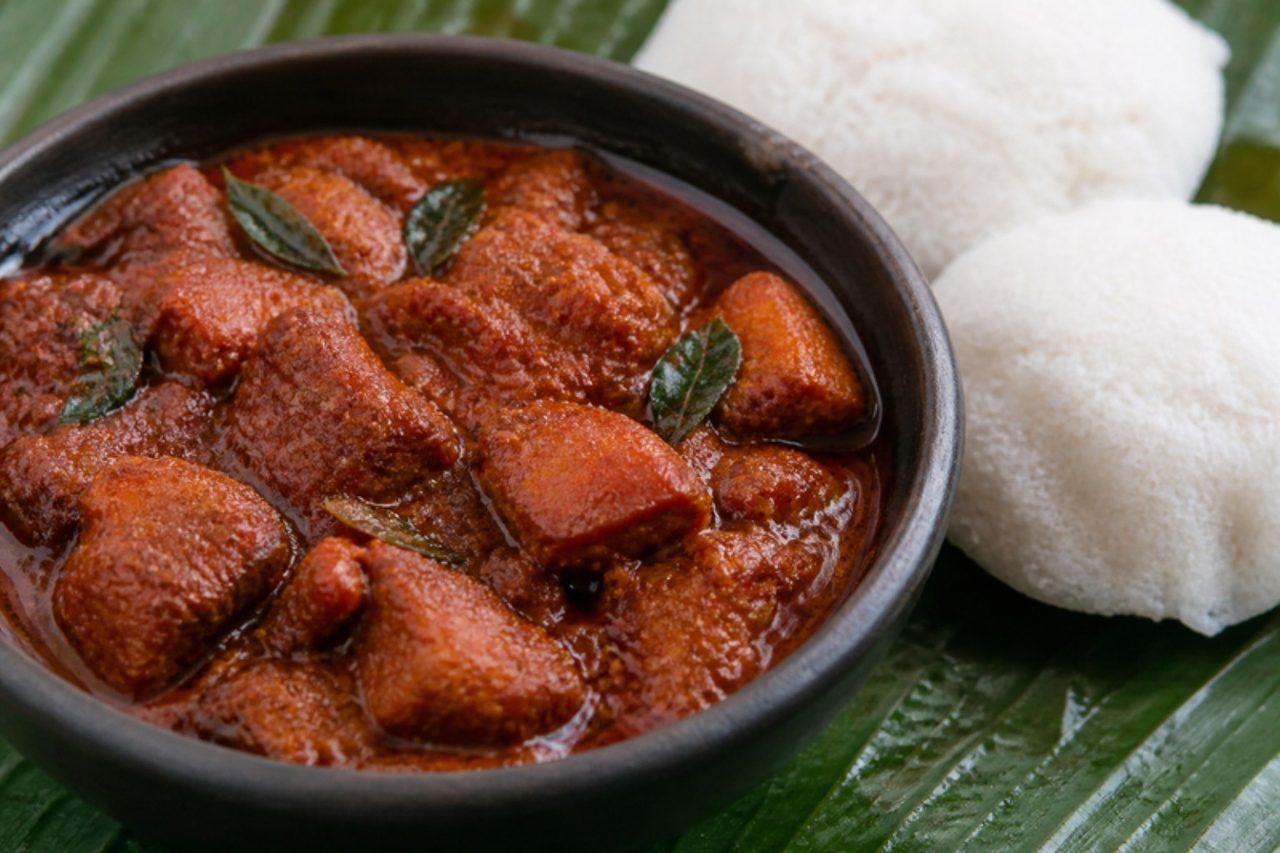
Pork bafatPork curry with roasted spice powder

Pork bafat is the curry Mangalorean Catholic families cook for Christmas, weddings and every big feast. Fatty pork pieces are simmered with onion, ginger, garlic and bafat powder, a deep red-brown blend of roasted chillies, coriander, cumin, pepper, turmeric and cinnamon, then soured with vinegar and a little tamarind. It is fiery and tangy and is eaten with sannas, the soft, steamed rice cakes. Bafat powder keeps for months, so make a jar. Chef's tip: let the curry rest overnight, as the vinegar and spices mellow into each other and it tastes far better the next day.

by KrazyBadal 0 views

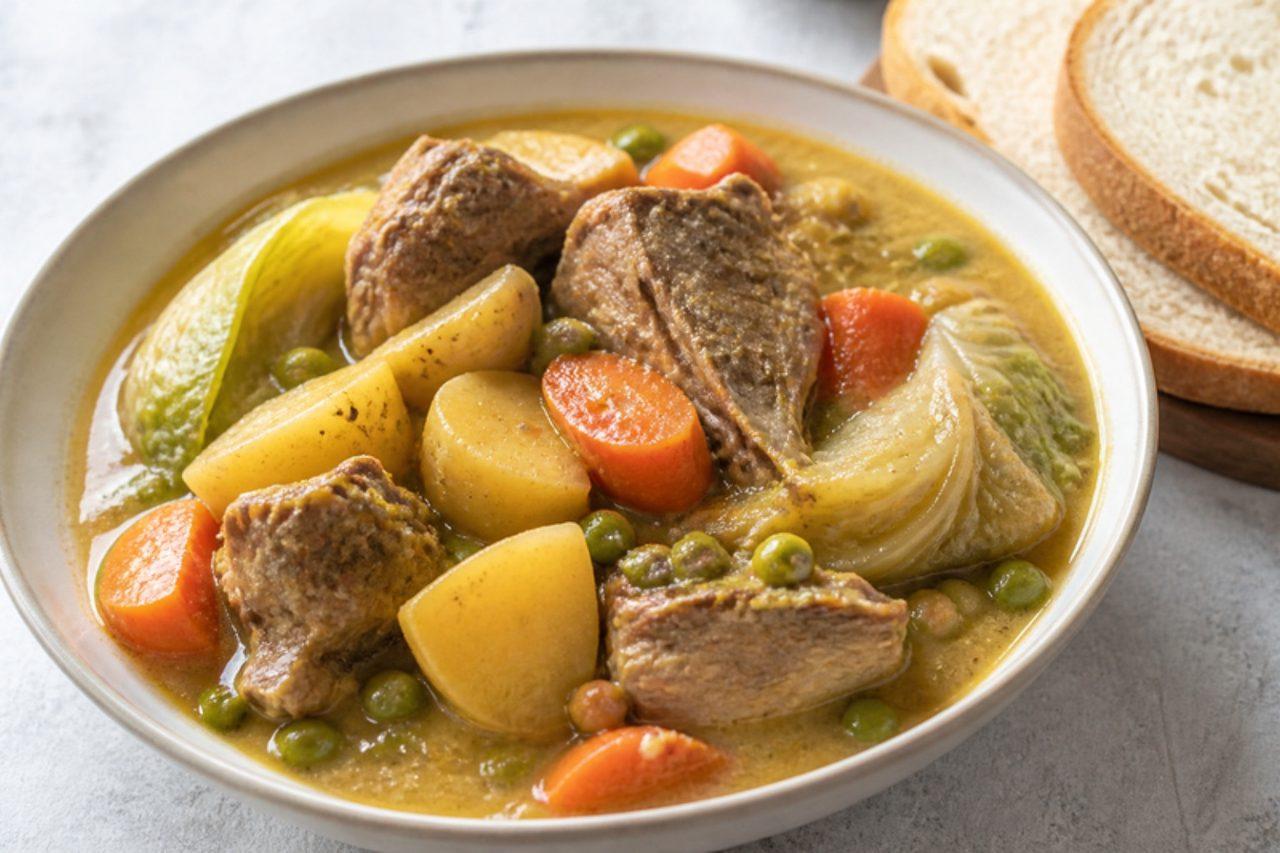
Duck buffadDuck with vegetables in ginger gravy

Buffad (sometimes spelled 'bufat') is the Christmas Day dish of Anglo-Indian families in Kolkata, Chennai and Bangalore, eaten after midnight Mass with bread, rice or coconut-milk pulao. Duck is simmered with potatoes, carrots, cabbage and peas in a light gravy of ginger, green chilli, mild spices and vinegar, a gentler, more British-influenced curry than its neighbours. It reheats beautifully. Chef's tip: brown the duck pieces first and pour off most of the fat, so the gravy is rich but not greasy.

by KrazyBadal 0 views

Showing 24 of 381 recipes

Show more recipes

Page 1 of 16