Skip to content
WhatToEat.Today

All recipes

93

Vegetarian, or something you can't eat? Set your diet once and we'll hide recipes that don't fit.

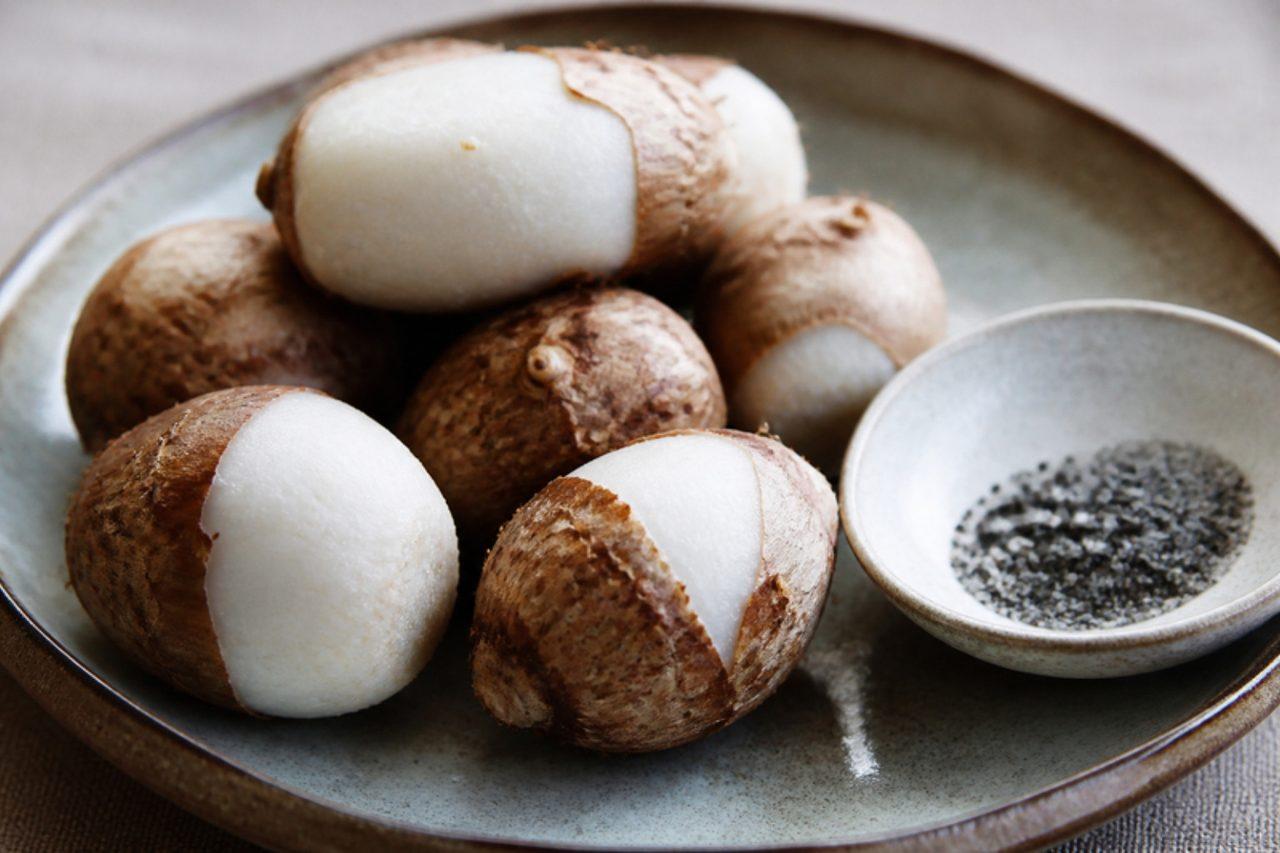
Kinukatsugi (steamed baby taro)

In Kyoto and the Kansai region the harvest moon is also called imo meigetsu, the "potato moon", and steamed baby taro are set out beside the moon-viewing dumplings as thanks for the new crop. The name kinukatsugi recalls the silk veils that court ladies once wore over their heads, because the brown skin is peeled halfway so the white taro peeps out beneath it. Squeeze the base and the soft, slippery, nutty flesh pops out, ready to dip in sesame salt. Serve as a snack with green tea or as a side to grilled fish. Taro must always be cooked through, and its raw skin can make hands itch, so wear gloves while you trim it. Chef's tip: cut a shallow ring round the middle of each taro before steaming, so the top half of the skin lifts off neatly.

by KrazyBadal 0 views
Yawata-maki (beef-wrapped burdock)

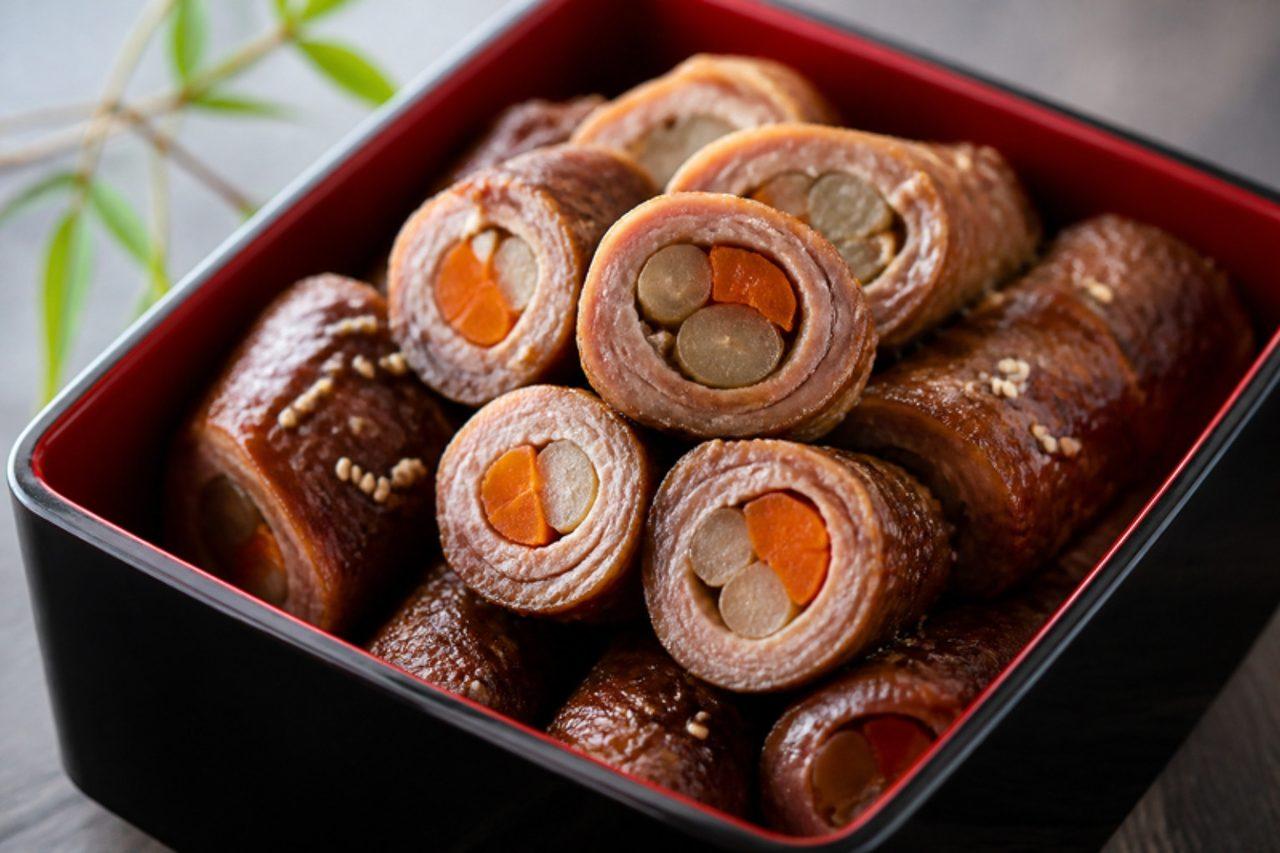
Yawata-maki is named after Yawata, south of Kyoto, once famous for its burdock, and it graces the Shōgatsu osechi box because burdock roots grow long and deep: a wish for a family rooted firmly and prosperous for many years. Pre-simmered burdock stays earthy and tender with a little bite, wrapped in thin slices of beef that brown and then glisten under a sweet soy glaze; cut, each piece shows a neat spiral. The glaze uses sake and mirin, both rice wines; for no alcohol, use water instead of the sake and 2 tbsp water plus 2 tsp sugar instead of the mirin. Serve at room temperature in the osechi box, or warm with rice and pickles. Chef's tip: roll the beef tightly and start cooking seam-side down; the seam seals and the rolls hold without string.

by KrazyBadal 0 views
Sakurayu (salted cherry blossom tea)

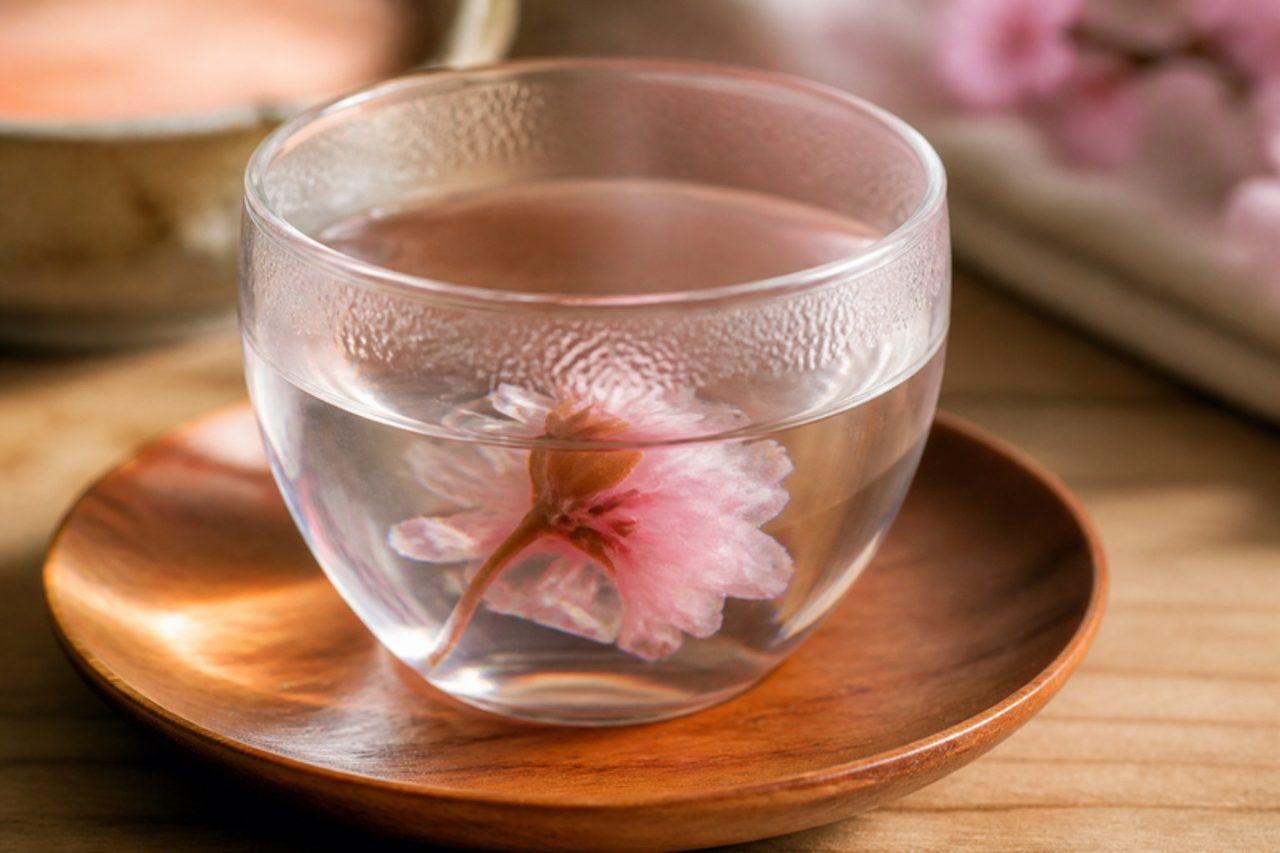
Sakurayu is not really tea at all but salt-pickled cherry blossoms steeped in hot water, and it is served all over Japan at engagements, weddings and other happy occasions, as well as in the hanami season. Green tea is avoided at such moments because "muddying the tea" is a phrase for being evasive, while a blossom opening in a clear cup is a picture of a bright beginning. The drink is pale pink, gently salty and faintly scented of cherry and almond. The blossoms are bought ready-salted (sakura no shiozuke) from Japanese grocers. Serve it with small sweets such as sakura mochi or hanami dango. Chef's tip: use water just off the boil and pour it slowly down the side of the cup, so the petals open without tearing.

by KrazyBadal 0 views
Kubu irichi (Okinawan kombu stir-fry)

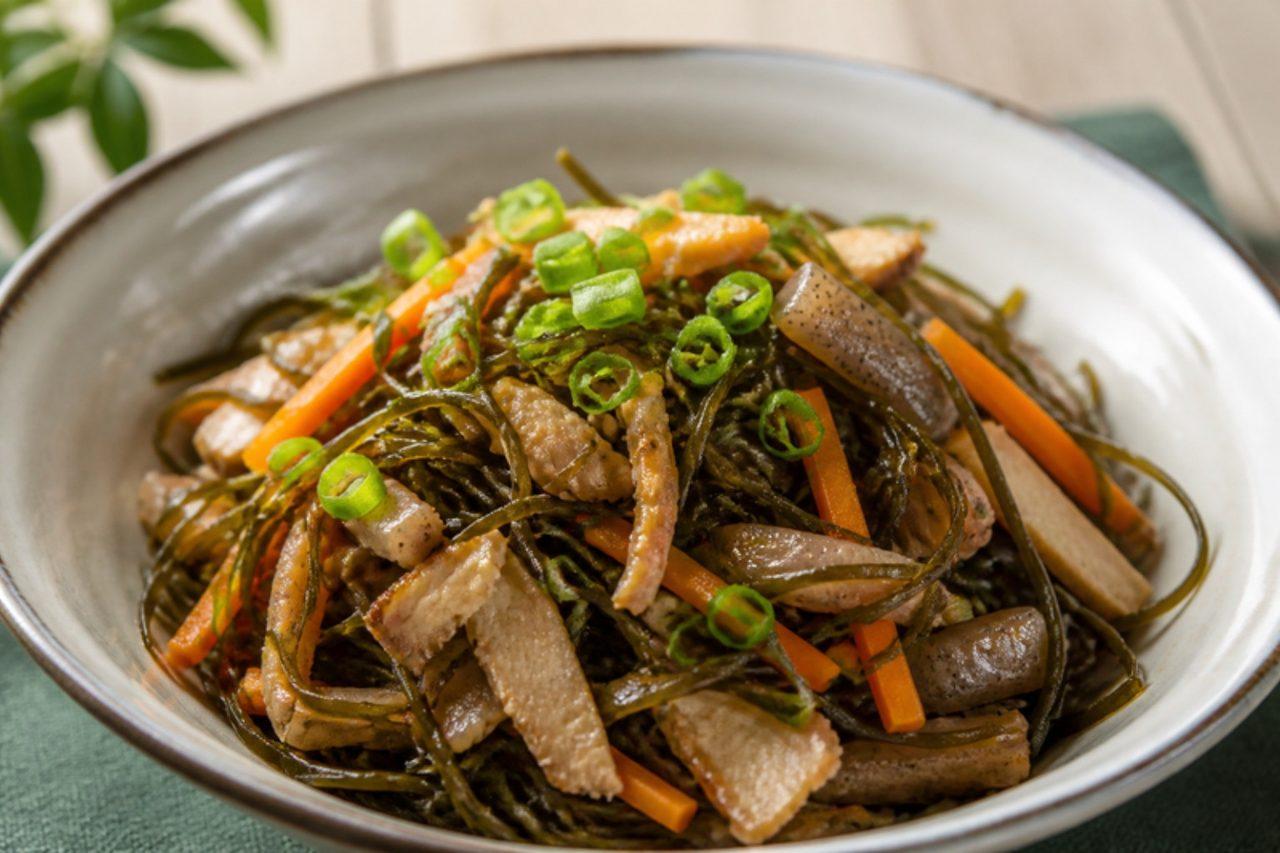
In Okinawa, kubu irichi is cooked for Obon (here called Shōmō or Ukui), when families welcome the spirits of their ancestors home with offerings, and it reappears at every big family gathering. Kombu, 'kubu' in the island dialect, sounds like 'yorokobu', to rejoice, and Okinawa has loved it for centuries thanks to the old kelp trade from Hokkaido. Strips of pork belly are stir-fried until their fat runs, then the kelp, konnyaku and carrot simmer in pork-scented stock until the liquid is absorbed, giving a soft, savoury, gently sweet tangle full of the sea. Serve with rice, as part of an Obon spread or a bentō. Chef's tip: keep some of the kombu soaking water; it is the stock that gives the dish its depth.

by KrazyBadal 0 views
Amazake (sweet koji rice drink)

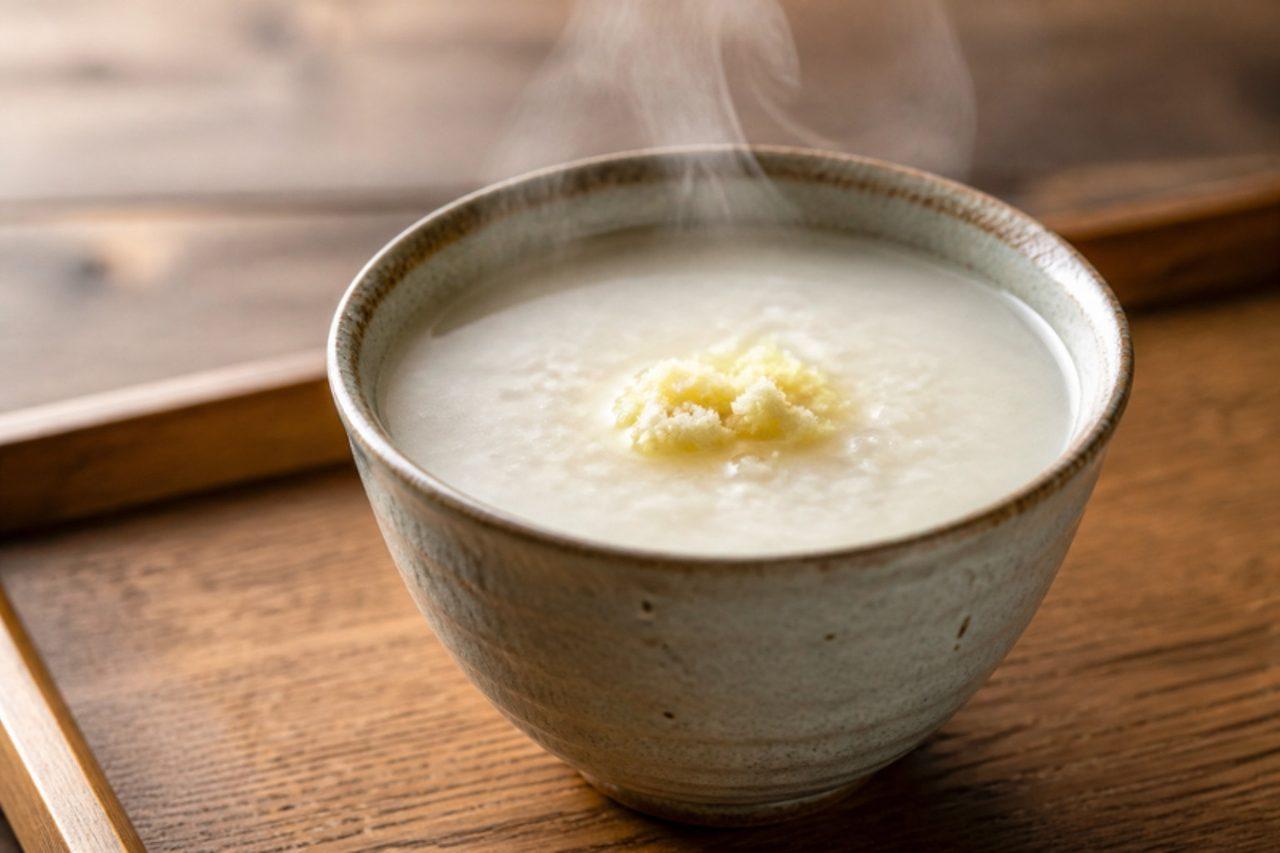
On New Year's Day, crowds queuing for hatsumōde, the first shrine visit of the year, warm their hands on cups of amazake, and shrines all over Japan ladle it out as a welcome. This is the koji kind: cooked rice is held warm with rice koji, whose enzymes turn the starch into sugar, so the drink is sweet with no added sugar and contains no alcohol (unlike the other amazake made from sake lees). It is thick, creamy and gently fragrant, a little like rice pudding you can drink. Serve it hot with a pinch of grated ginger, or chilled in summer. Chef's tip: a cheap probe thermometer is the whole secret; keep the mixture at 55–60 °C and it will turn sweet every time.

by KrazyBadal 0 views

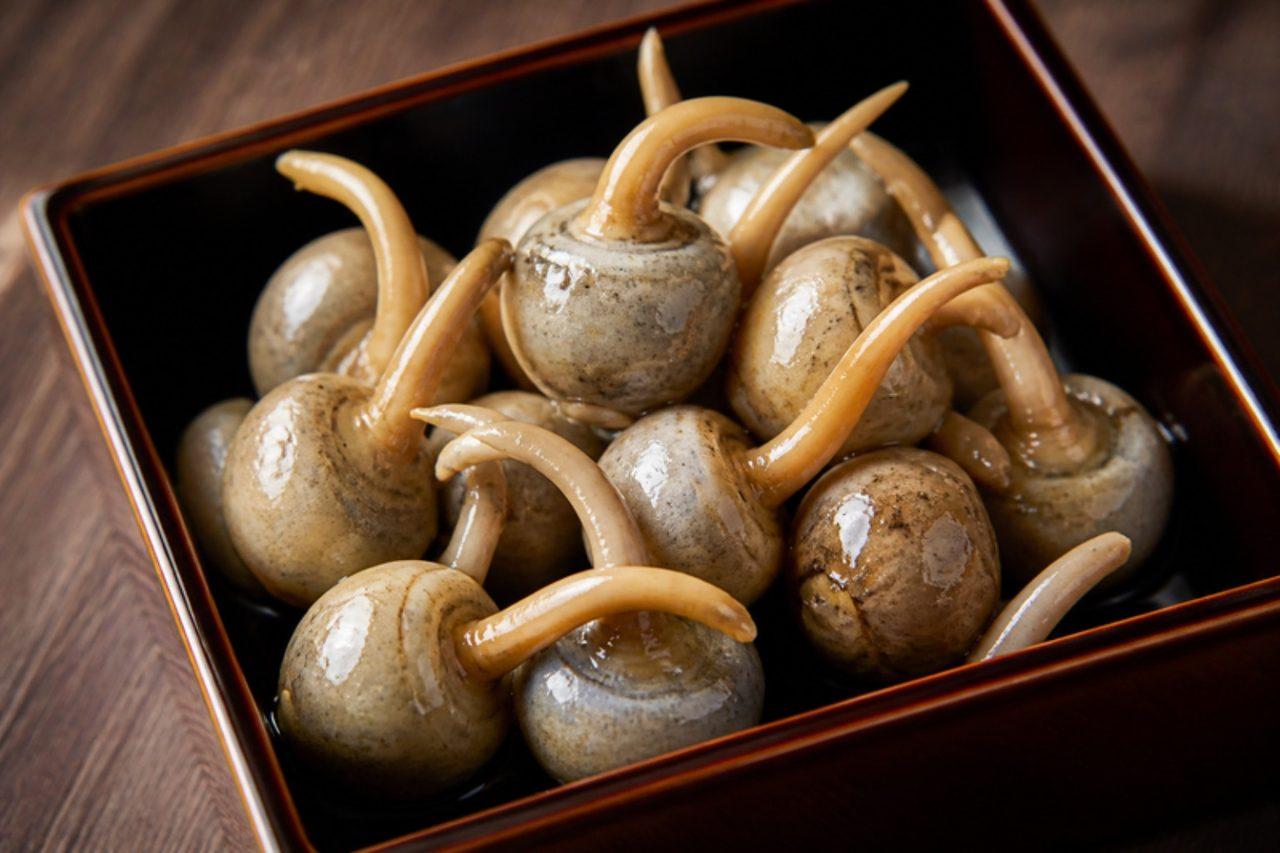
Kuwai no nimono (simmered arrowhead)

Kuwai, the arrowhead tuber with its proud little sprout, appears in osechi boxes in Kansai and across Japan because it says 'me ga deru': a bud comes out, a wish for success and for children to grow and thrive. It tastes like a cross between chestnut and potato, with a faint pleasant bitterness, and simmering it slowly in sweet dashi gives it a smooth, dense texture. This version is vegan, using kombu dashi, and the seasoning includes mirin, a sweet rice wine (for no alcohol, swap the mirin for 2 tbsp water plus 2 tsp sugar). Serve it at room temperature among the other osechi dishes, or with grilled fish and rice. Chef's tip: leave the tubers to cool completely in their liquid; that is when they soak up the flavour.

by KrazyBadal 0 views
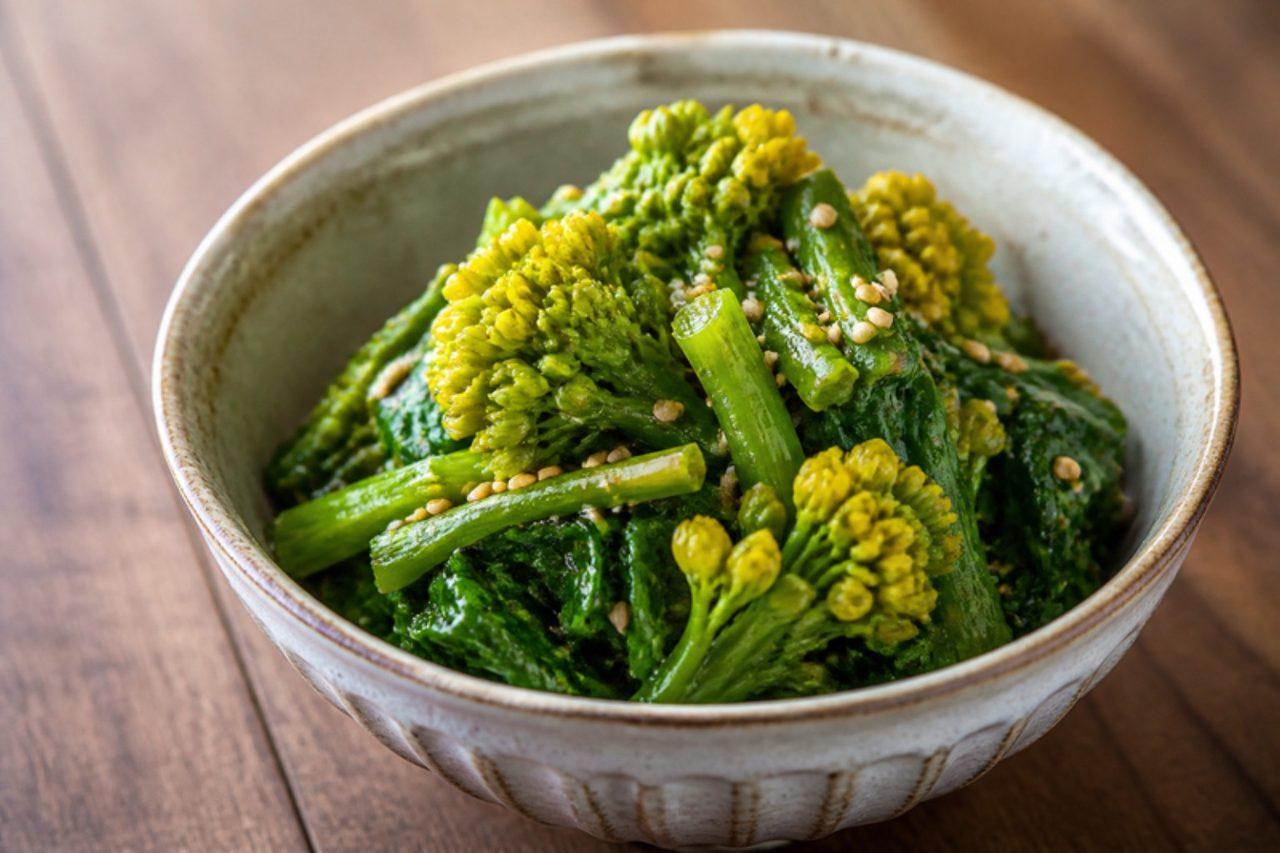
Nanohana karashi-ae (rapeseed blossoms with mustard)

Nanohana, the budding shoots of the rapeseed plant, arrive in Japanese shops at the end of winter, and their little yellow-green flower heads are a sign that spring has come. That makes them a natural side dish for Hinamatsuri on 3 March, next to chirashizushi and clam soup. The greens are blanched just until tender, then dressed with Japanese karashi mustard loosened with soy sauce and kombu dashi: pleasantly bitter, nose-tinglingly hot and very fresh. Outside Japan, tenderstem broccoli or cime di rapa works almost as well. Chef's tip: dress the greens at the last minute, because the soy starts to dull the green colour within half an hour.

by KrazyBadal 0 views
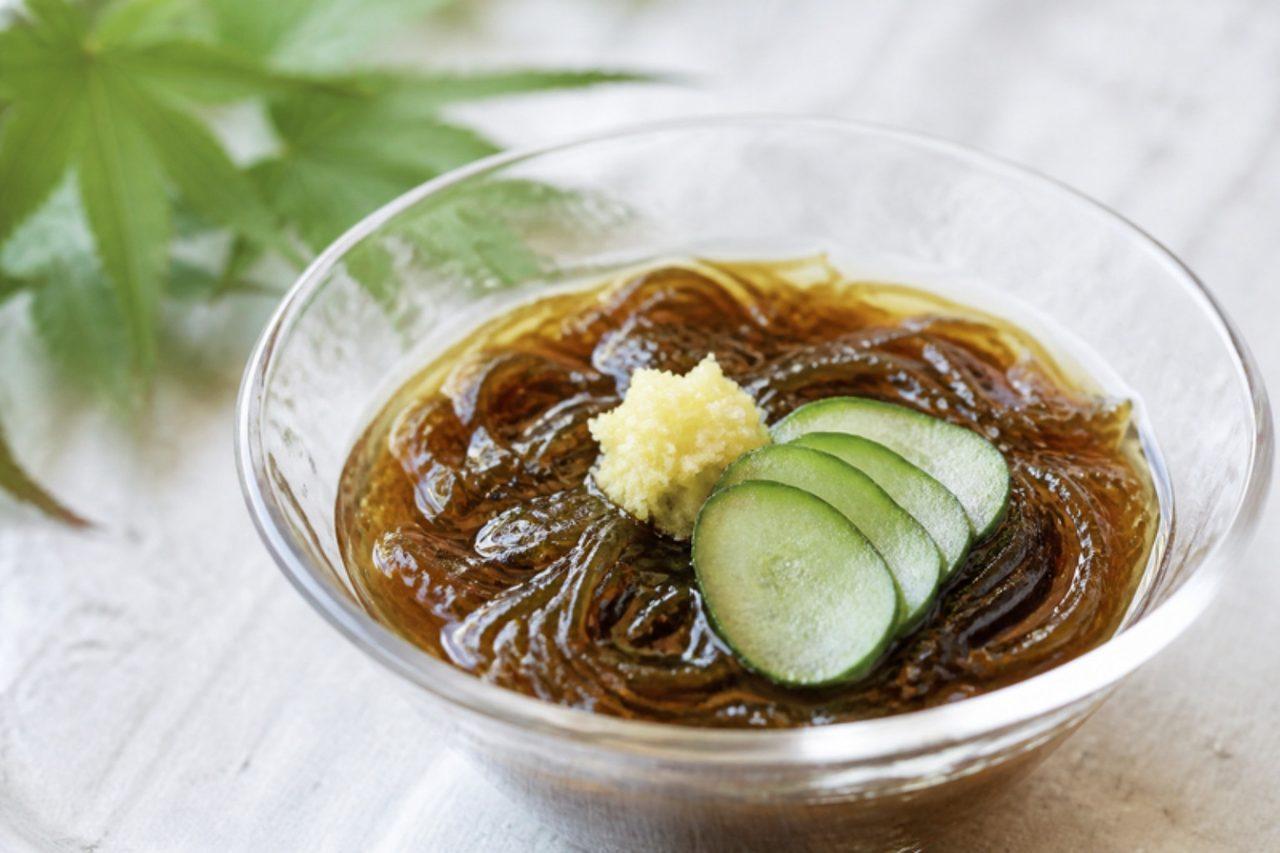
Mozuku-zuSeaweed in sweet vinegar

In Okinawa, where most of Japan's mozuku is farmed, a small bowl of mozuku-zu starts many a home supper and izakaya meal, especially in the hot months. The fine, slippery strands of seaweed are rinsed of their salt and served cold in a gentle dressing of rice vinegar, a little sugar and soy, topped with grated ginger, so it tastes clean, sour and of the sea. Shop versions often use bonito dashi; this one uses kombu dashi, so it is vegan. It is very light, with less than 1 g of protein a portion, so it belongs alongside a tofu dish and rice rather than as a main. The most common mistake is not rinsing salted mozuku enough: it needs two or three changes of water or the dish turns harsh. Chef's tip: chill the dressing and the bowls well; mozuku-zu should be served icy cold.

by KrazyBadal 0 views
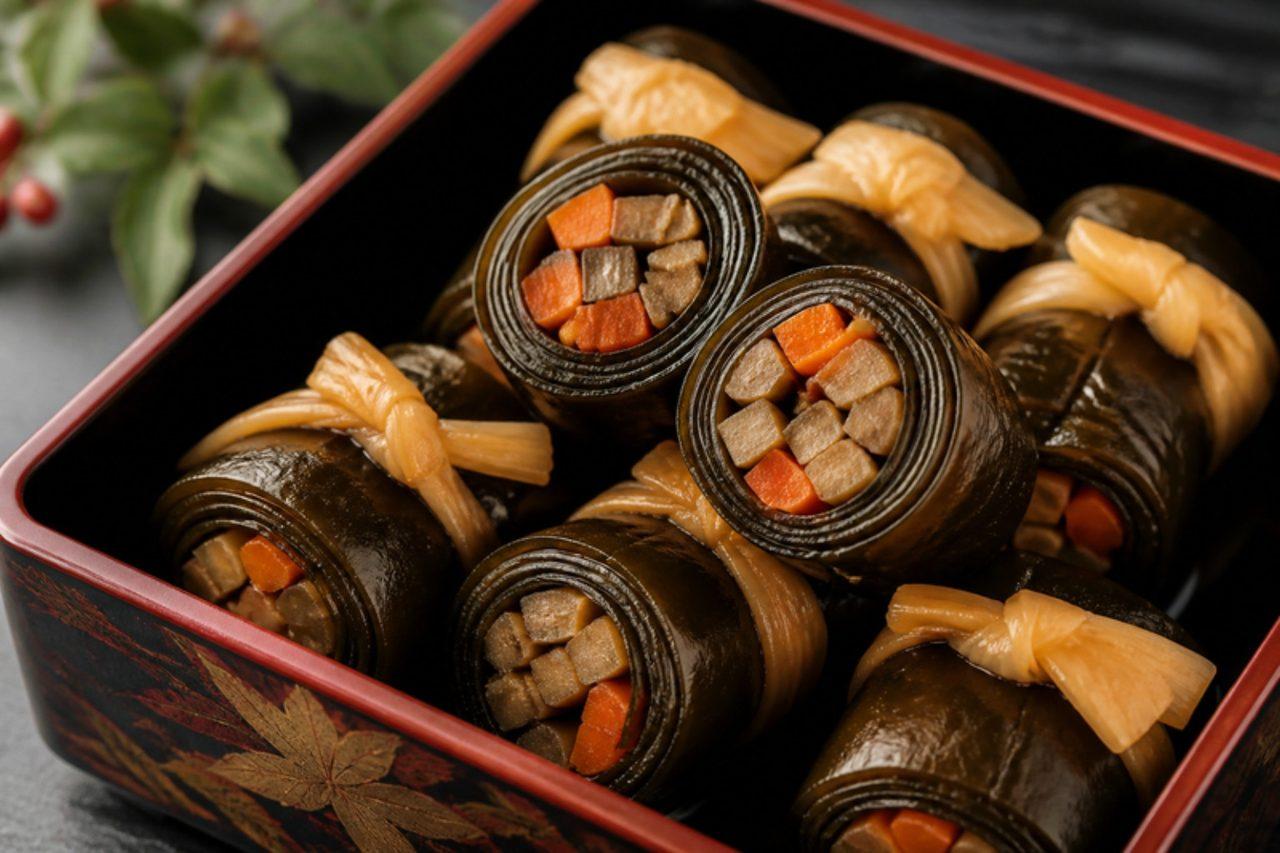
Kombu maki with burdock and carrotKelp rolls with burdock and carrot

Kombu maki is one of the dishes packed into the lacquered boxes of osechi for New Year's Day all over Japan, where the word kombu is a pun on yorokobu, 'to rejoice'. Soft kelp is rolled around a filling, tied with ribbons of dried gourd and simmered slowly until it can be cut with chopsticks. Families often roll it around herring or salmon; here it is filled with burdock and carrot, cooked in kombu broth and sweetened with sugar instead of mirin, so it is vegan and alcohol-free. Each portion of three rolls has about 3 g of protein, so it is a side, not a main. It keeps for 4 days in the fridge and is eaten cold. The common mistake is rushing the simmer: the kelp needs a full hour or it stays chewy. Chef's tip: keep a drop-lid or a circle of baking paper on the surface the whole time, so the rolls cook evenly without being turned.

by KrazyBadal 0 views
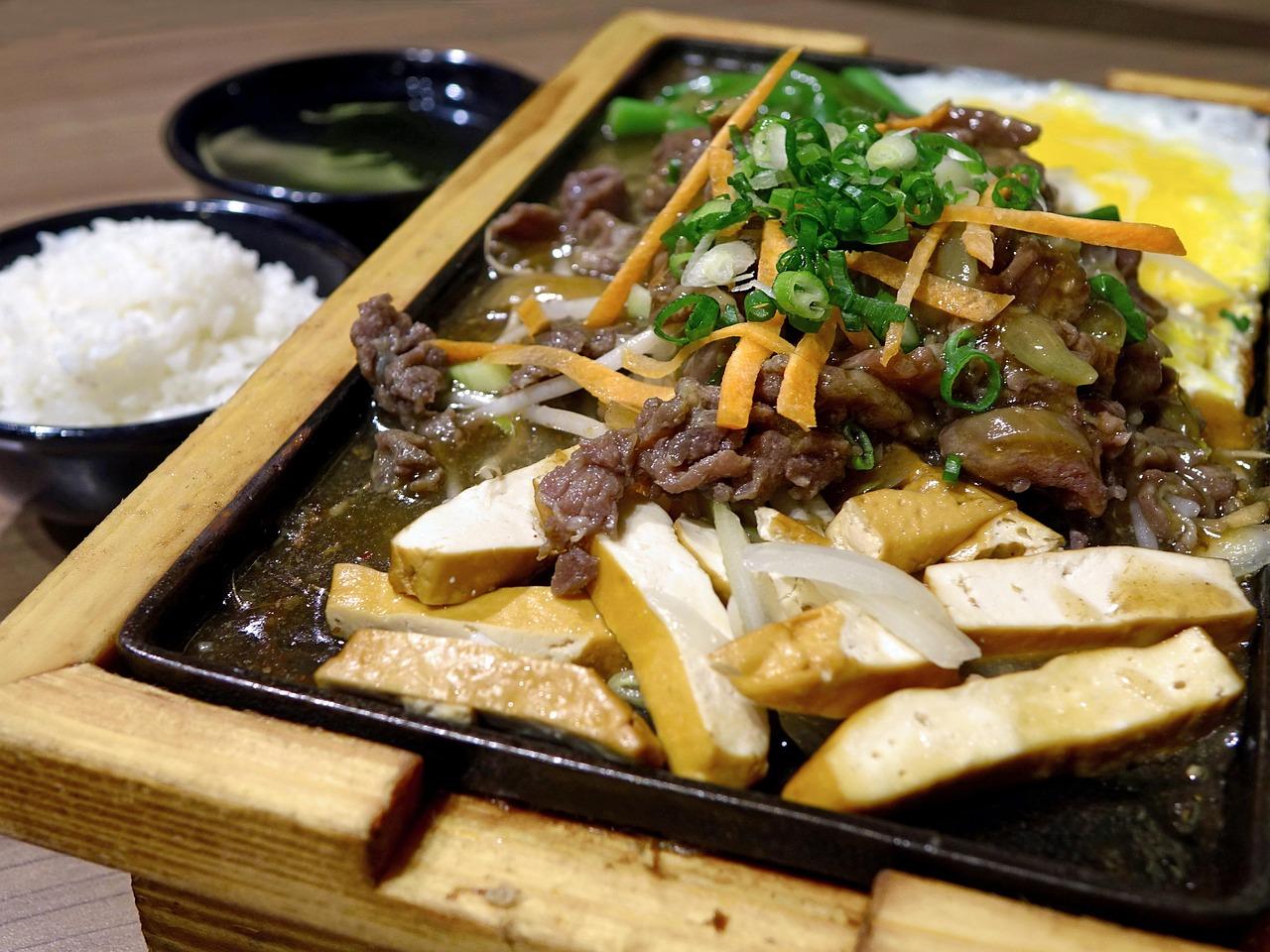
Niku-dofuBeef and tofu simmer

Niku-dofu is a home and izakaya favourite across Japan, especially in winter, when a pot of it comes to the table with rice and miso soup on a weeknight. Thin slices of beef and big blocks of firm tofu simmer with onion and spring onion in a sweet soy and dashi broth until the tofu is stained amber and full of flavour. This is a beef dish; a portion has about 26 g of protein from the beef and tofu. Traditional recipes use sake and mirin; this version leaves them out and uses a little more sugar, so it is alcohol-free. The common mistake is boiling the beef for the whole time, which makes it tough: add it near the end. Chef's tip: press the tofu for 15 minutes first so it soaks up the broth instead of watering it down.

by KrazyBadal 0 views

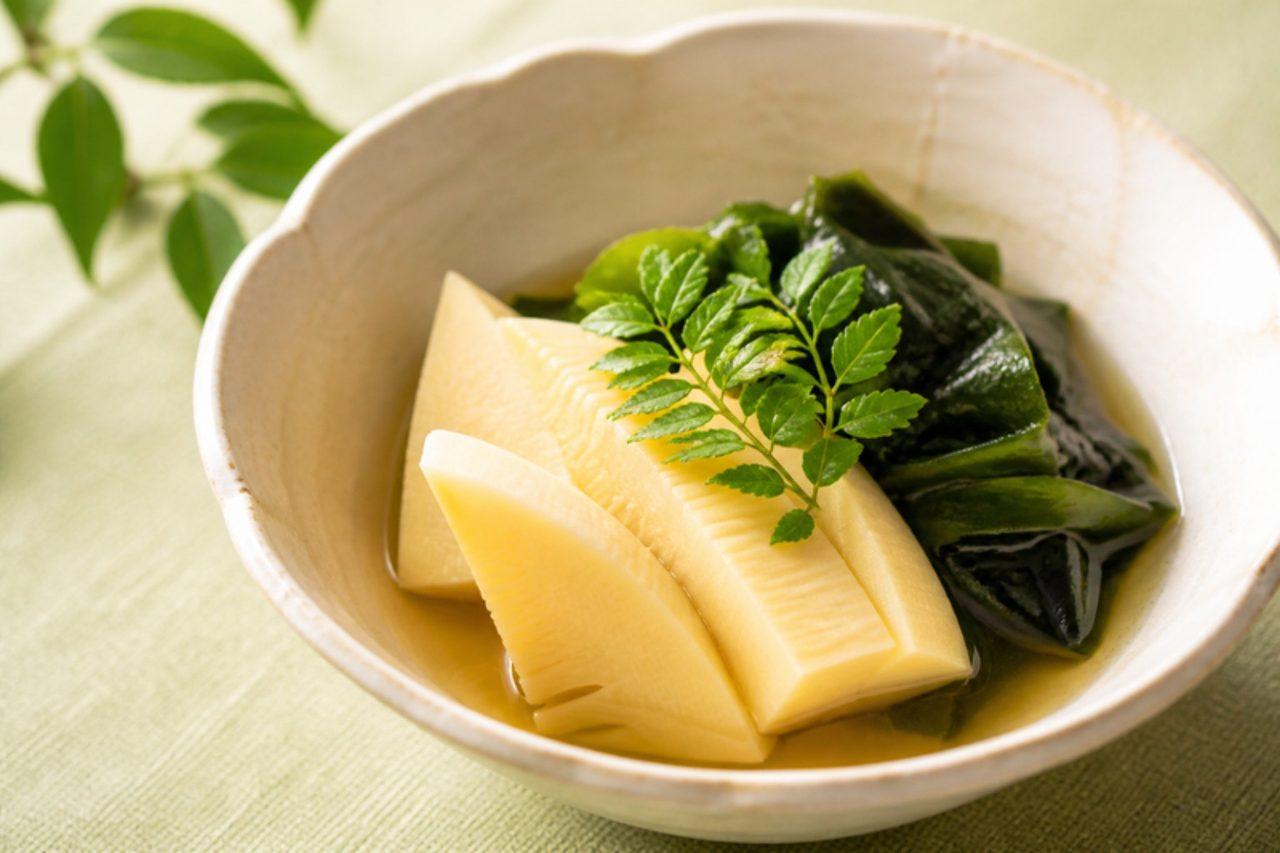
Wakatake-niBamboo shoot and wakame simmer

Wakatake-ni means 'young bamboo simmer', and in Kyoto it marks the few weeks of April when fresh shoots arrive from the hills around Rakusai; it is served in small bowls at home and in kaiseki menus as a quiet taste of spring. Tender bamboo shoot is simmered in a pale, lightly seasoned broth, and soft wakame goes in at the very end, so the bowl is all clean, sweet and sea flavours. Classic recipes use bonito dashi; this one uses kombu and dried shiitake, and sugar instead of mirin, so it is vegan and alcohol-free. It is a light side dish of about 4 g of protein per portion. The common mistake is boiling the wakame with the bamboo: it turns slimy and drab, so it needs only a minute. Chef's tip: cool the bamboo in the broth for 10 minutes before reheating; it drinks up the seasoning far better than it does while boiling.

by KrazyBadal 0 views

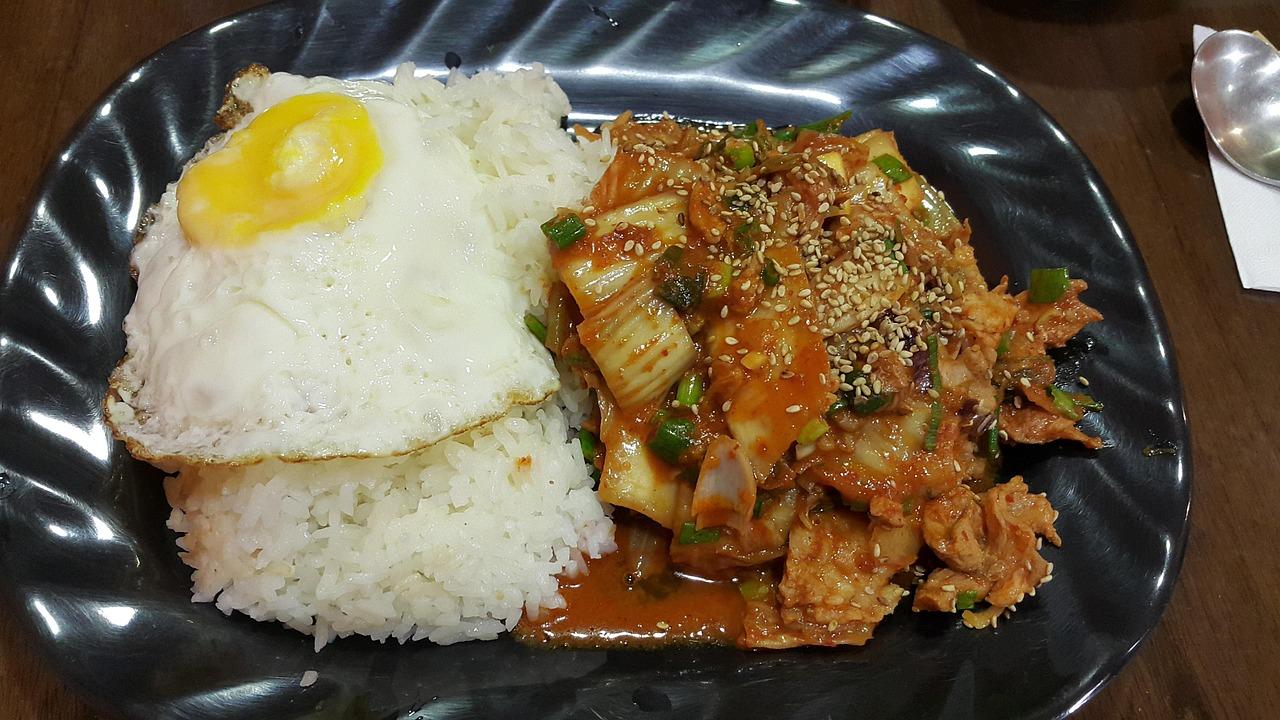
Buta kimchi (pork and kimchi stir-fry)

Buta kimchi is a Japanese izakaya and home favourite, cooked in Tokyo flats in the time it takes the rice to finish: thin slices of pork belly or shoulder fried until the fat crisps, then tossed with sour, spicy kimchi and onion. This is a pork dish. The common mistake is using fresh, young kimchi; well-fermented, sour kimchi gives the deep flavour, and fresh kimchi just tastes of raw cabbage. Chef's tip: add a splash of the kimchi juice at the very end for an instant sauce.

by KrazyBadal 0 views

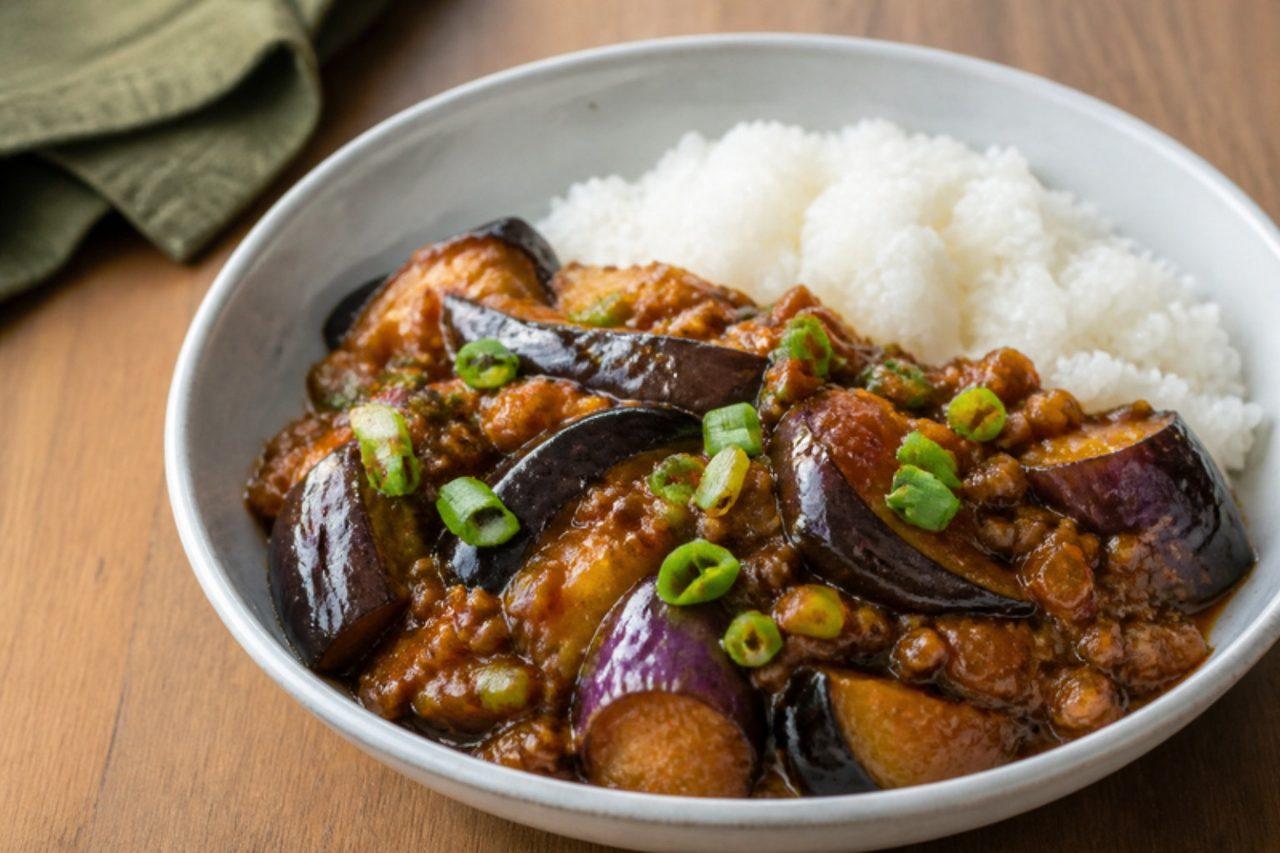
Mabo nasu (Japanese mapo aubergine)

Mabo nasu is the Japanese home take on a Sichuan dish, cooked across Japan on weeknights when aubergines are cheap in summer: soft aubergine and minced pork in a glossy, mild sauce of doubanjiang, miso and soy, eaten over white rice. This is a pork dish. The usual mistake is under-cooking the aubergine, which stays spongy and drinks the sauce; fry it until it is collapsing and shiny first. Chef's tip: stir the cornflour slurry in off the heat, then bring it back to a bubble, so it thickens smoothly without lumps.

by KrazyBadal 0 views

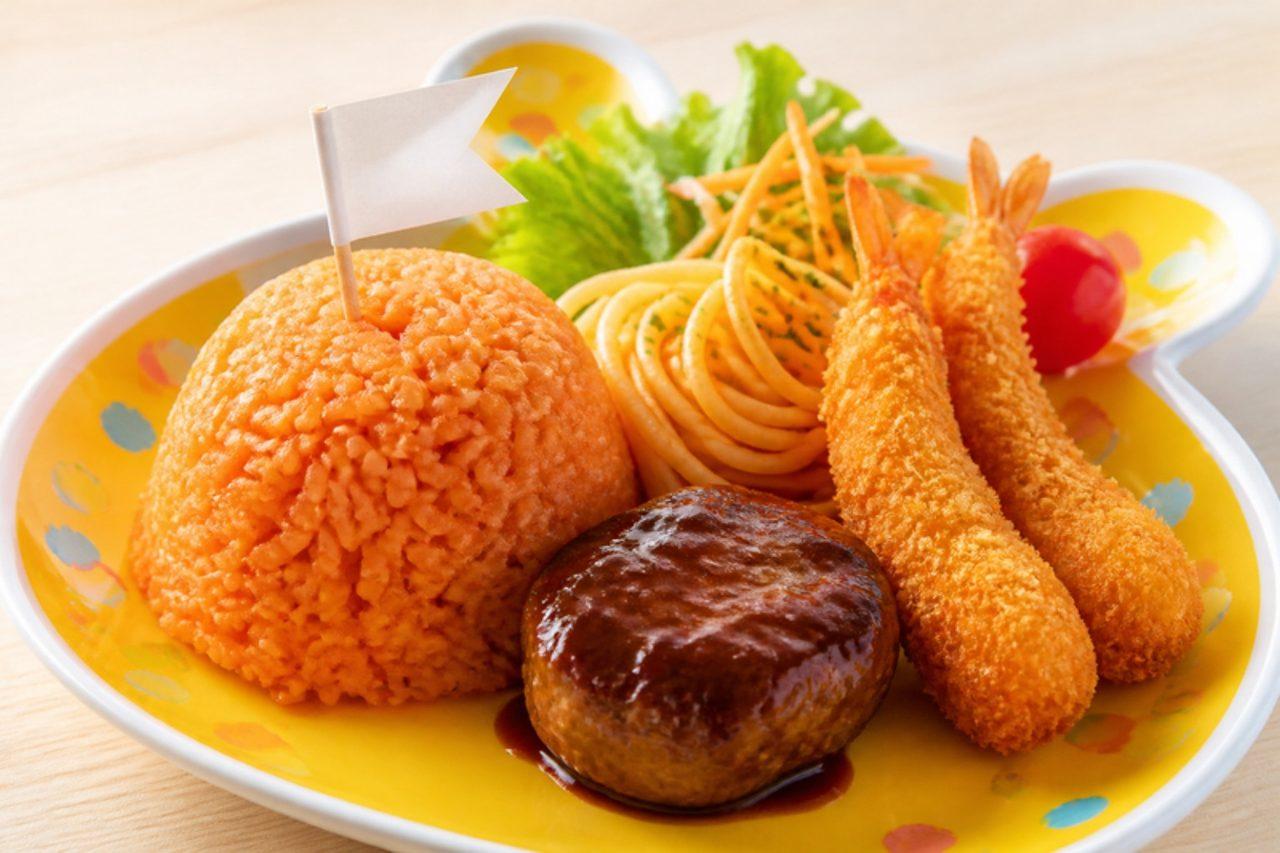
Okosama lunchKetchup rice and mini hamburger plate

Okosama ranchi, the 'little guest's lunch', has been on Japanese family-restaurant menus since the 1930s, and parents recreate it at home for birthdays: a dome of chicken ketchup rice with a paper flag, a small hamburg patty, a couple of breaded prawns and a twist of buttered spaghetti, all on one plate. It is meant to look like a treat, so presentation is half the fun; add a few cherry tomatoes (quartered for small children) and broccoli for colour. This recipe makes four plates and is timed so everything finishes together. It contains egg, milk, gluten and shellfish. Chef's tip: press the rice into a small wet bowl and turn it out for a perfect dome.

by KrazyBadal 0 views

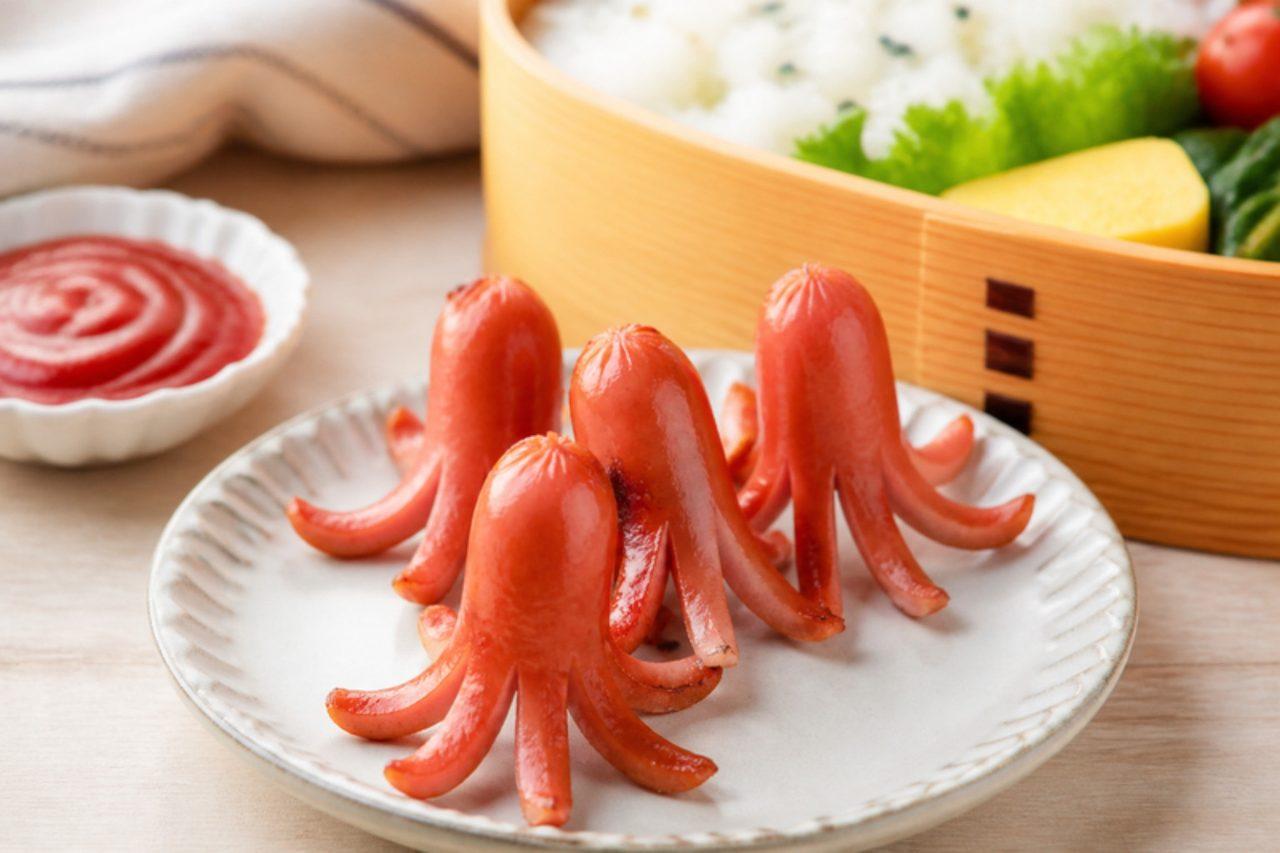
Octopus sausages (tako-san wiener)

Open a Japanese child's bento almost anywhere in the country and there is a good chance of finding tako-san wiener: small frankfurters with the bottom half cut into legs, which curl out like an octopus when they hit a hot pan. They go in on school-trip days and sports days, often with a tiny sesame-seed face. They contain whatever your sausages contain; check the label for wheat, milk and soya. For children under 5, cut the finished sausages in half lengthwise to avoid a choking risk. Chef's tip: cut the legs only halfway up the sausage, or the head splits off.

by KrazyBadal 0 views

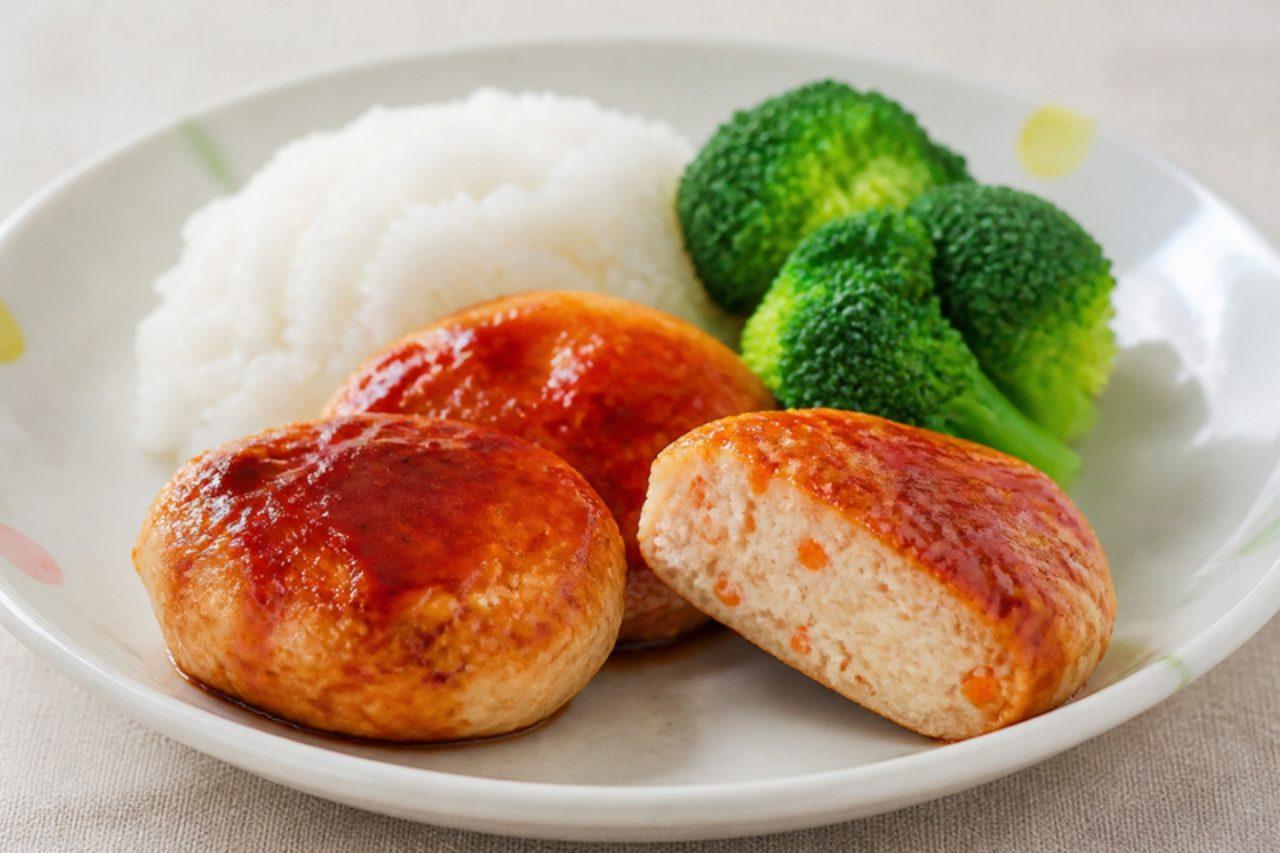
Tofu and chicken hamburg patties for toddlers

Tofu hambāgu is the lighter, softer cousin of the Japanese hamburg steak, and mixed with minced chicken and grated carrot it is one of the most popular toddler dinners in Japan, from a year old. The patties are tender and juicy, almost like a soft meatball, glazed with a mild tomato sauce made mostly of passata with just a spoon of ketchup. It contains soya (tofu), egg and gluten (breadcrumbs). Chef's tip: wrap the tofu in kitchen paper and press it for 15 minutes; wet tofu makes patties that fall apart in the pan.

by KrazyBadal 0 views

Kuri manjuChestnut buns

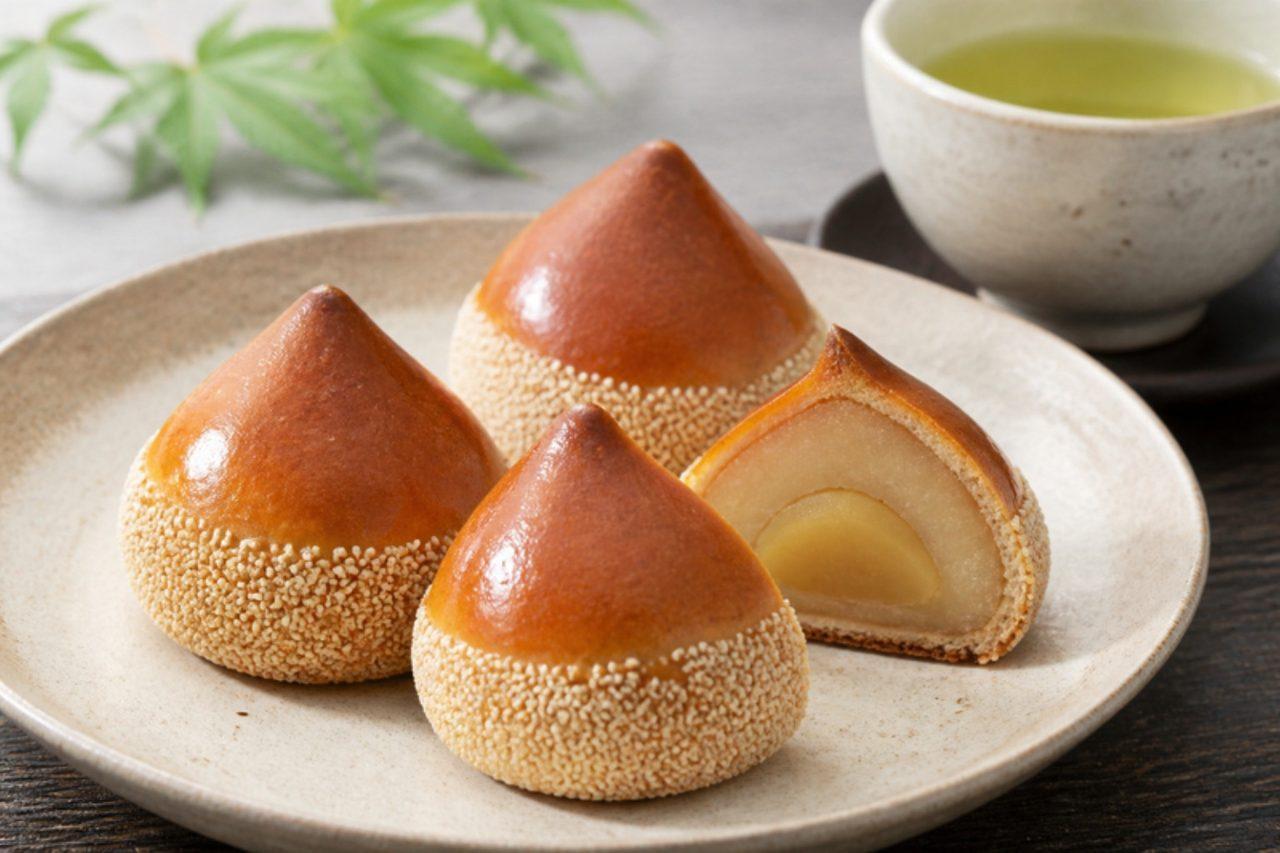
Made to look like a chestnut, kuri manju (栗まんじゅう) is one of Japan's favourite baked wagashi, a little teardrop of tender, cake-like dough wrapped around sweet white bean paste studded with candied chestnut. The top is glazed twice with egg yolk until it bakes a glossy chestnut brown, and the flat base is dipped in poppy seeds to mimic the pale bottom of a real chestnut. Japanese confectioners sell them all year, but they are most popular in autumn, given as gifts and eaten with green tea. Freshly baked, the dough is slightly firm; after a day in a tin the moisture from the filling softens it, so they are even better the next day. Glazing only once is an easy mistake: the first coat soaks in and looks patchy, so brush, bake briefly and brush again. Chef's tip: dust your hands well with flour as you wrap; this dough is soft and sticky, and handling it with floured fingers is the only way to keep the shell thin and even.

by KrazyBadal 0 views

Ninjin shirishiri (Okinawan carrot and egg)

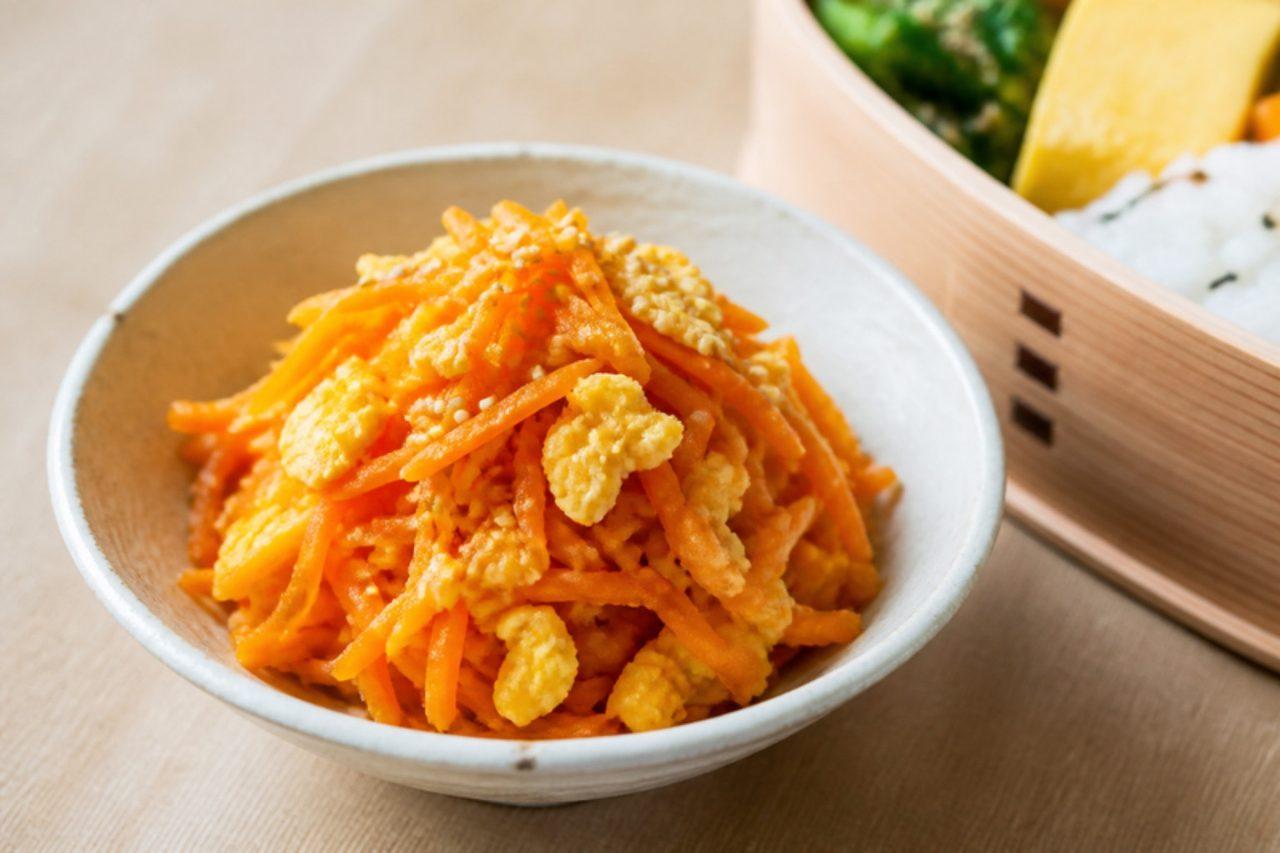
In Okinawa, at the southern tip of Japan, ninjin shirishiri is what home cooks make when there is a bag of carrots and a lunchbox to fill. The carrots are grated into fine ribbons on a shirishiri grater, softened in sesame oil and bound with a scrambled egg and a splash of kombu dashi, so they taste sweet and mild enough for small children. It is served warm at dinner and cold in the next day's bento. It contains egg, soya and wheat (soy sauce) and sesame. Chef's tip: cook the carrot until it turns limp and glossy before the egg goes in; that is where its sweetness comes from.

by KrazyBadal 0 views

Sweet potato simmered with lemon (satsumaimo no lemon-ni)

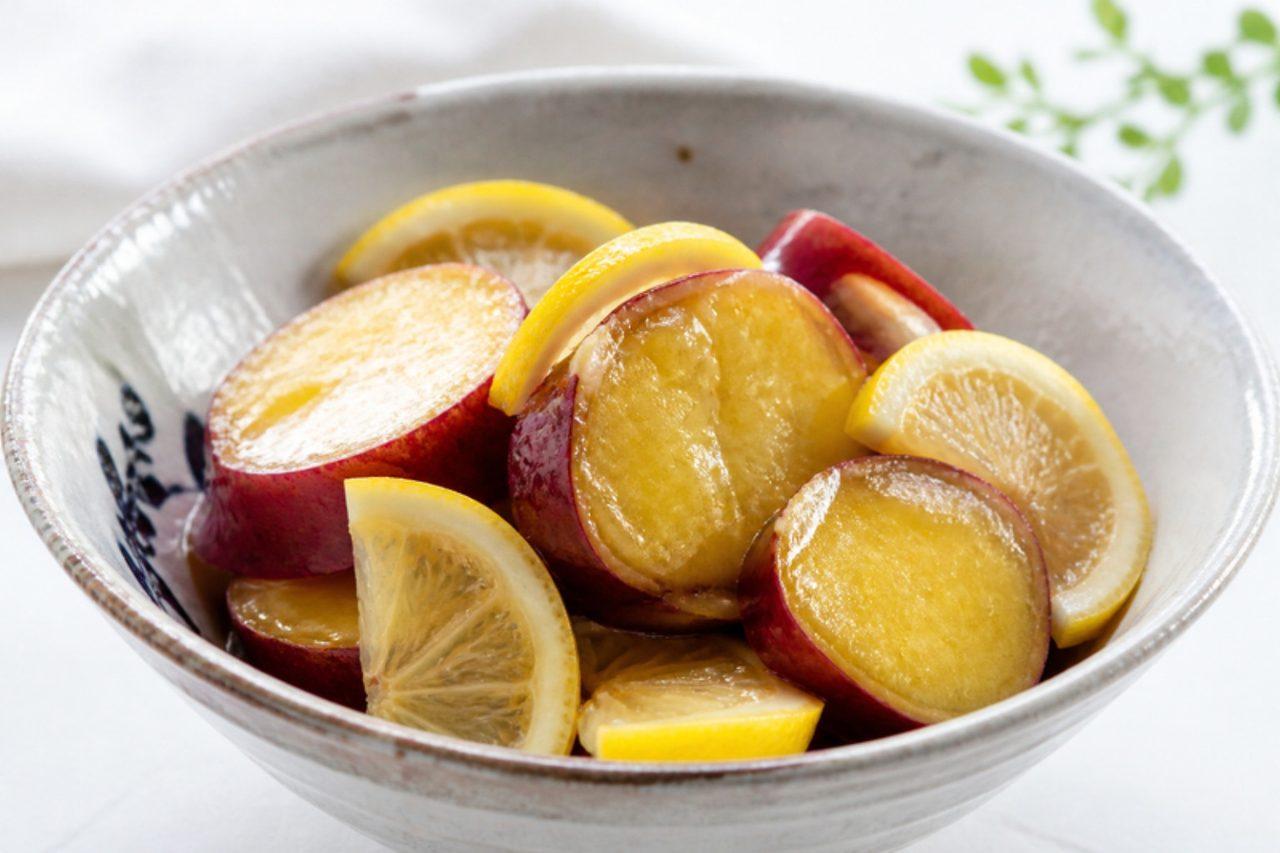
Satsumaimo no lemon-ni is an autumn favourite in Japanese homes, when sweet potatoes are at their best and bento boxes need a splash of colour. Rounds of purple-skinned sweet potato are gently poached with lemon slices and just a spoonful of sugar until tender and glossy, tasting of honeyed potato with a fresh citrus edge. It is eaten cold, so it is a natural make-ahead for packed lunches, and it contains none of the common allergens. Chef's tip: keep the skins on; the purple ring against the yellow flesh is what makes it look so pretty in a box.

by KrazyBadal 0 views

Japanese strawberry shortcake

In Japan, the 'shortcake' on every birthday table and every Christmas Eve is nothing like the American scone version: it is a tall, cloud-soft sponge filled and covered with lightly sweetened cream and crowned with a ring of strawberries. Children choose it at the cake shop for their birthday, and it is just as good made at home. It contains egg, milk and gluten. Chef's tip: brush each sponge layer with a little plain sugar syrup; it keeps the cake moist without any alcohol.

by KrazyBadal 0 views

Hayashi rice for toddlersBeef and onion sauce on rice

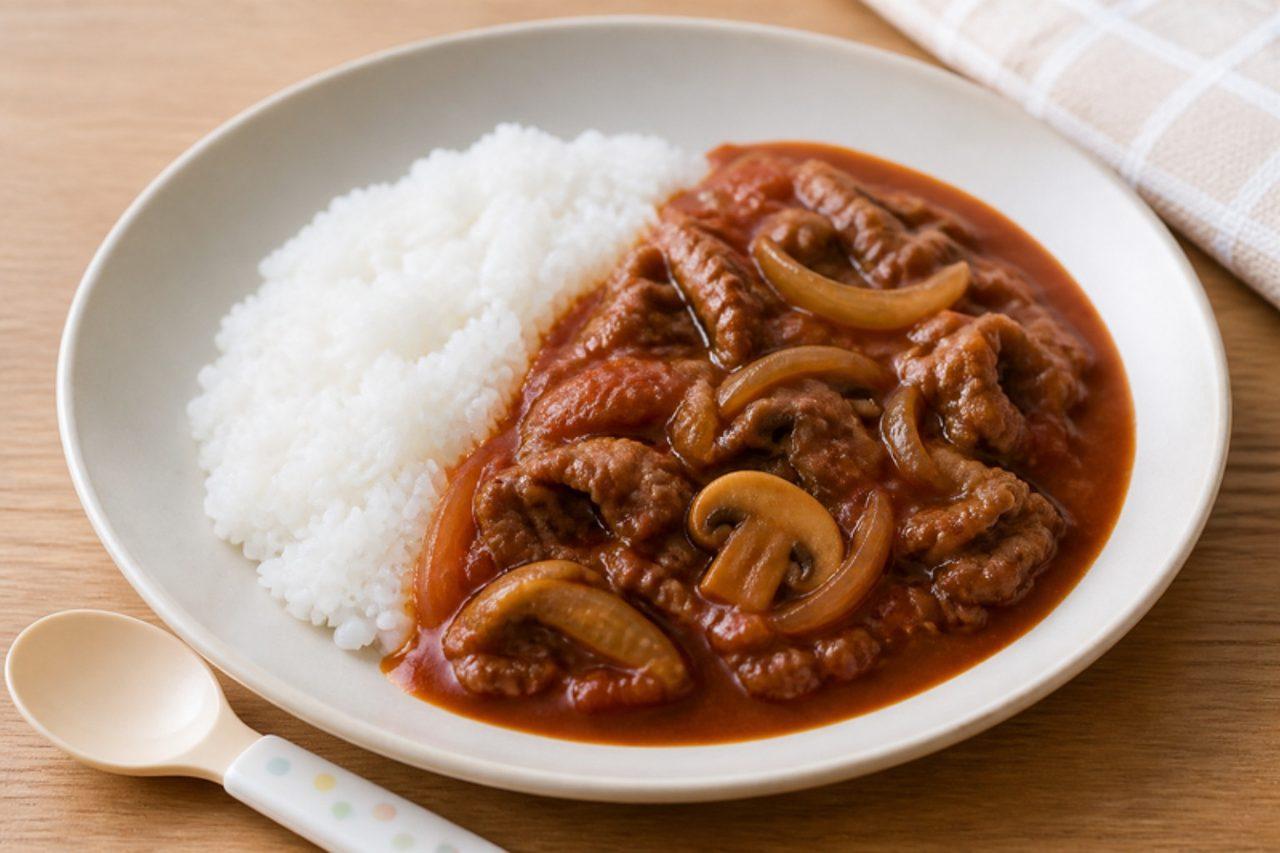
Hayashi rice, thin slices of beef and sweet onion in a glossy tomato and brown-roux sauce over rice, is a Japanese home and school-lunch favourite that children often love even more than curry. Shop roux blocks are salty, so this version builds the sauce from scratch with butter, flour, tomato and no-salt stock, mild enough for toddlers from a year old, with no wine. It contains milk (butter) and gluten (wheat flour). Chef's tip: cook the onions slowly until deep golden; their sweetness replaces the sugar and salt of a packet roux.

by KrazyBadal 0 views

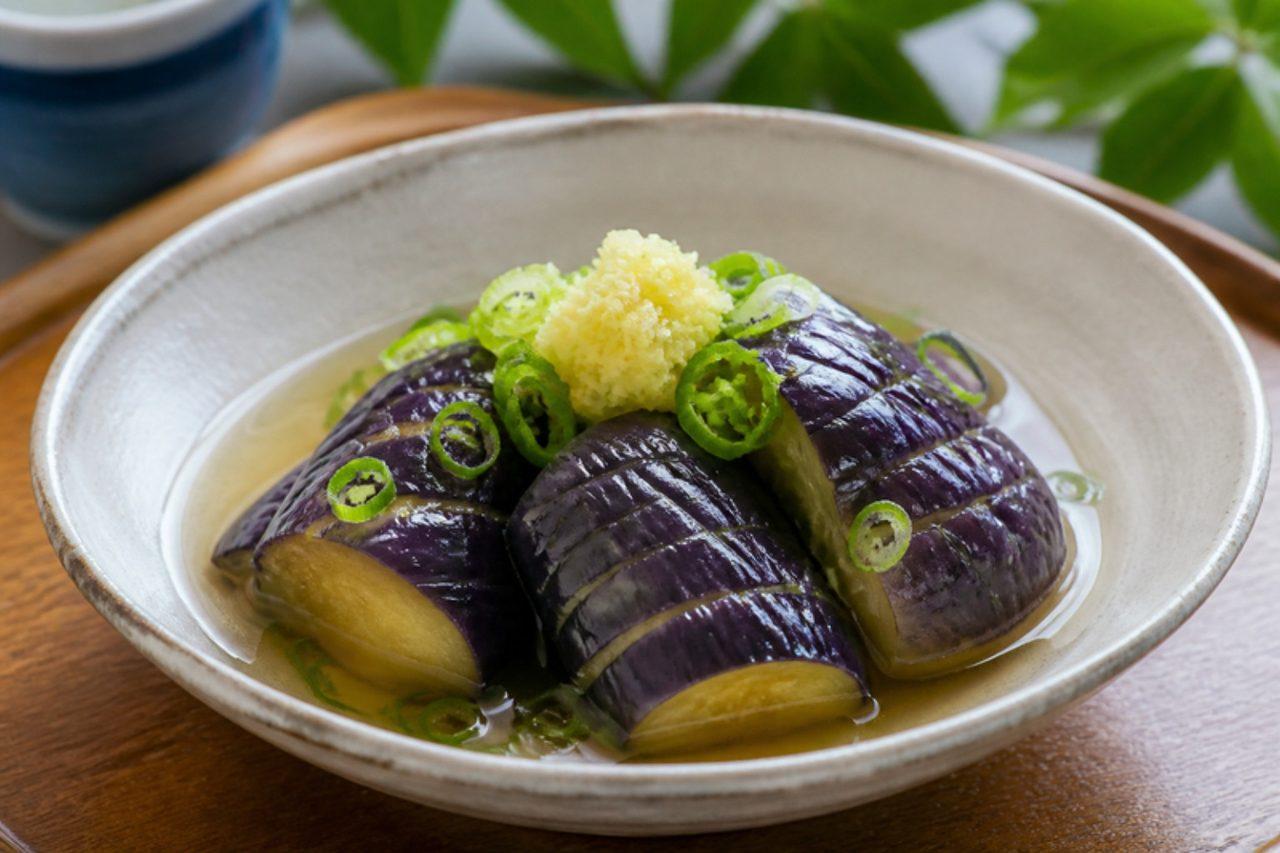
Nasu no nibitashiAubergine in cold dashi

On a sticky summer evening in Osaka or Tokyo, a chilled dish of nibitashi is one of the nicest things to find in the fridge: Japanese eggplant cut into pieces, cooked in a little oil until silky, then left to soak in cold, lightly sweet soy dashi with grated ginger. It is served cool beside rice and grilled fish or tofu. This version uses vegetarian kombu-shiitake dashi. A portion is about 80 kcal. The most common mistake is frying the eggplant in lots of oil; it drinks it all up and turns heavy. Brush it lightly and cook it covered so it steams soft. Chef's tip: score the skin in fine diagonal lines before cooking; the broth soaks in faster and the purple skin stays bright.

by KrazyBadal 0 views

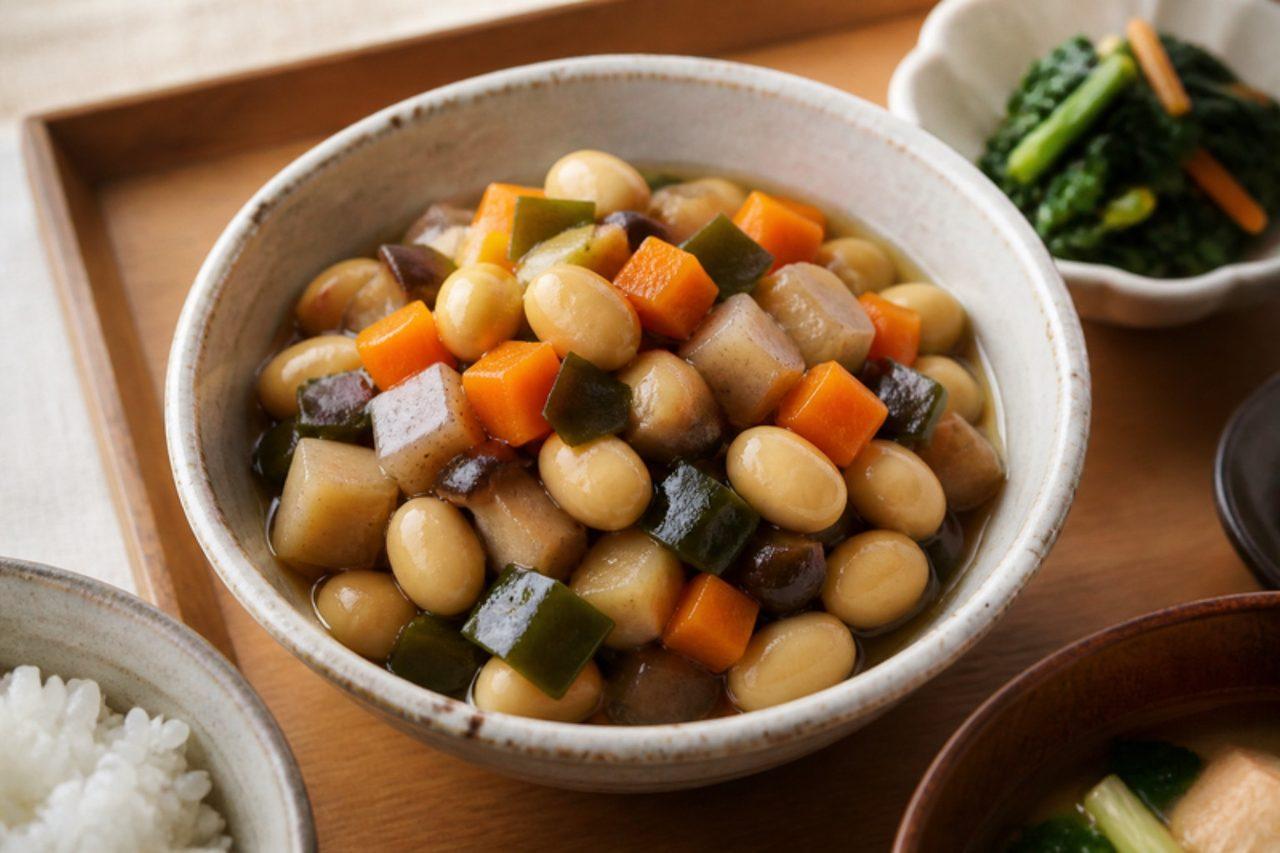
Gomoku mameSimmered mixed beans

Gomoku mame, "five-ingredient beans", is a pot of soybeans simmered with kombu, carrot, burdock, konnyaku and shiitake that grandmothers across Japan make on a Sunday and keep in the fridge for a week of small side dishes and bento, and it is often part of the New Year spread too. Every piece is cut to the size of a bean, so each spoonful has a little of everything, sweet, savoury and full of protein. This is vegetarian, with no bonito. A portion is about 150 kcal. Using cooked soybeans makes it a 45-minute dish; from dried, soak 150 g overnight and boil for 1 hour first. The usual mistake is cutting the vegetables in large chunks; they should be the size of the beans. Chef's tip: let it cool in its broth; the beans soak up the flavour as the temperature drops.

by KrazyBadal 0 views

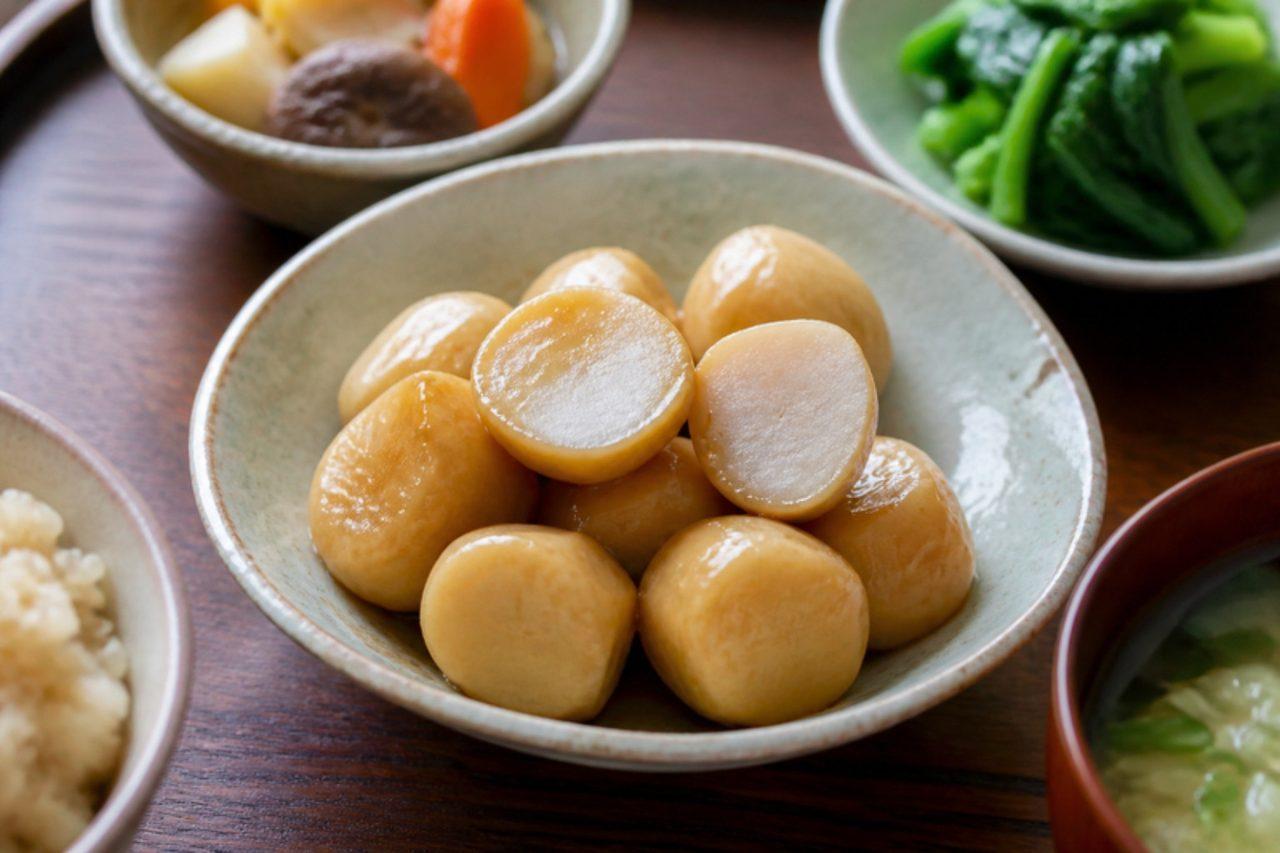
Satoimo no nikkorogashiGlazed simmered taro

Satoimo, small hairy taro, are dug in autumn across the farmland of Chiba and Saitama, and nikkorogashi, "simmered and rolled", is the most homely way to eat them: the peeled taro are simmered in a little dashi, sugar and soy, then rolled around the pan as the liquid boils down until each one is coated in a sticky, glossy glaze. The inside stays creamy and slightly slippery. This version uses vegetarian kombu-shiitake dashi. A portion is about 130 kcal. The common mistake is not rinsing off the sliminess after peeling, which makes the sauce gloopy; rub them with salt and rinse well. Chef's tip: peel taro with dry hands, or wear gloves; the raw sap can make skin itch.

by KrazyBadal 0 views

Showing 24 of 93 recipes

Show more recipes

Page 1 of 4