Skip to content
Recipes

All recipes

Vegetarian, or something you can't eat? Set your diet once and we'll hide recipes that don't fit.

Passata di pomodoroBottled tomato purée

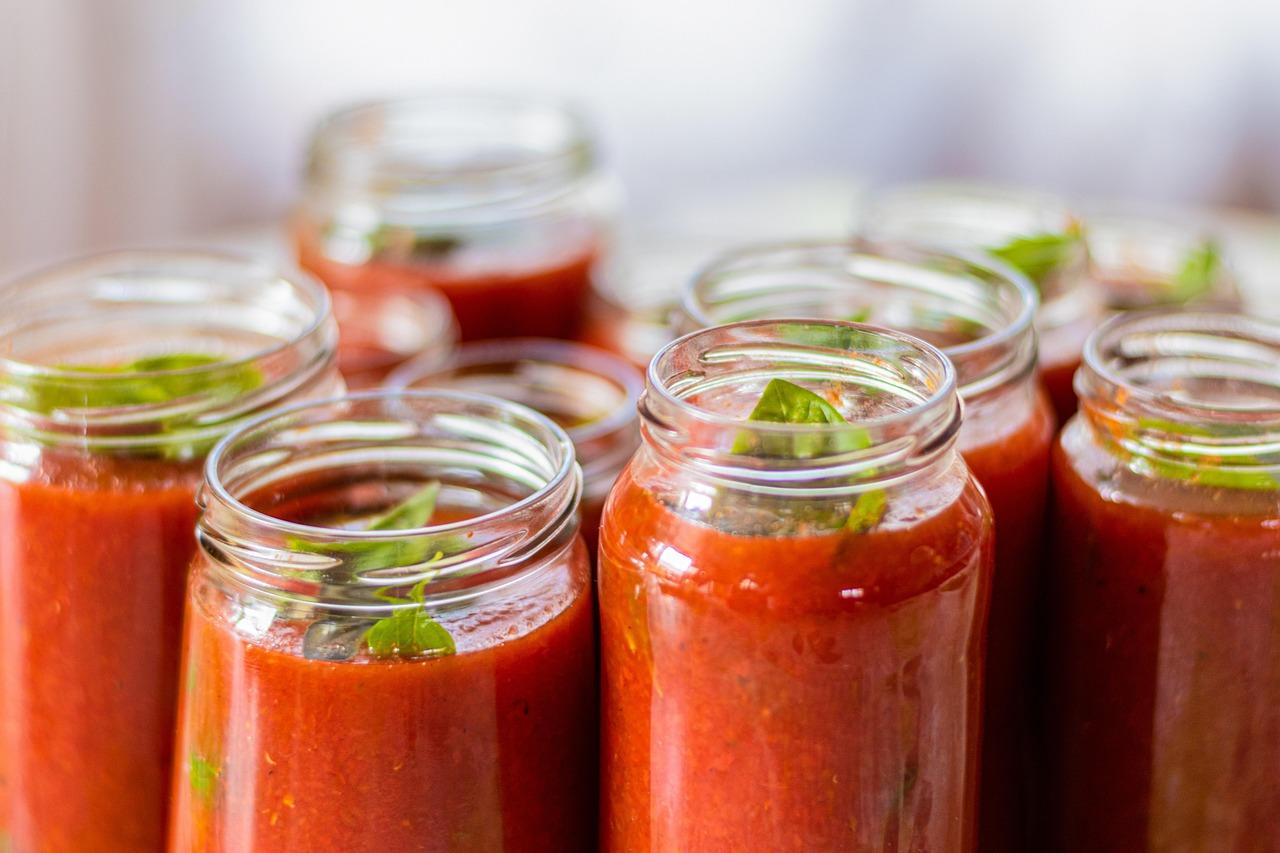
At the end of August, all over southern and central Italy, families gather for the "giornata della salsa", the day of the sauce: crates of ripe plum tomatoes are washed, cooked, passed through a hand-cranked mill and bottled in hundreds, with a basil leaf in each bottle. The passata lasts until the next summer and is used for every ragù and pizza. For home bottling, add lemon juice to each jar and process in a water bath, as tomatoes alone are not acidic enough to be safe at room temperature. Chef's tip: use only fully ripe, deep red plum tomatoes; underripe tomatoes give a pale, sour passata.

by KrazyBadal 0 views

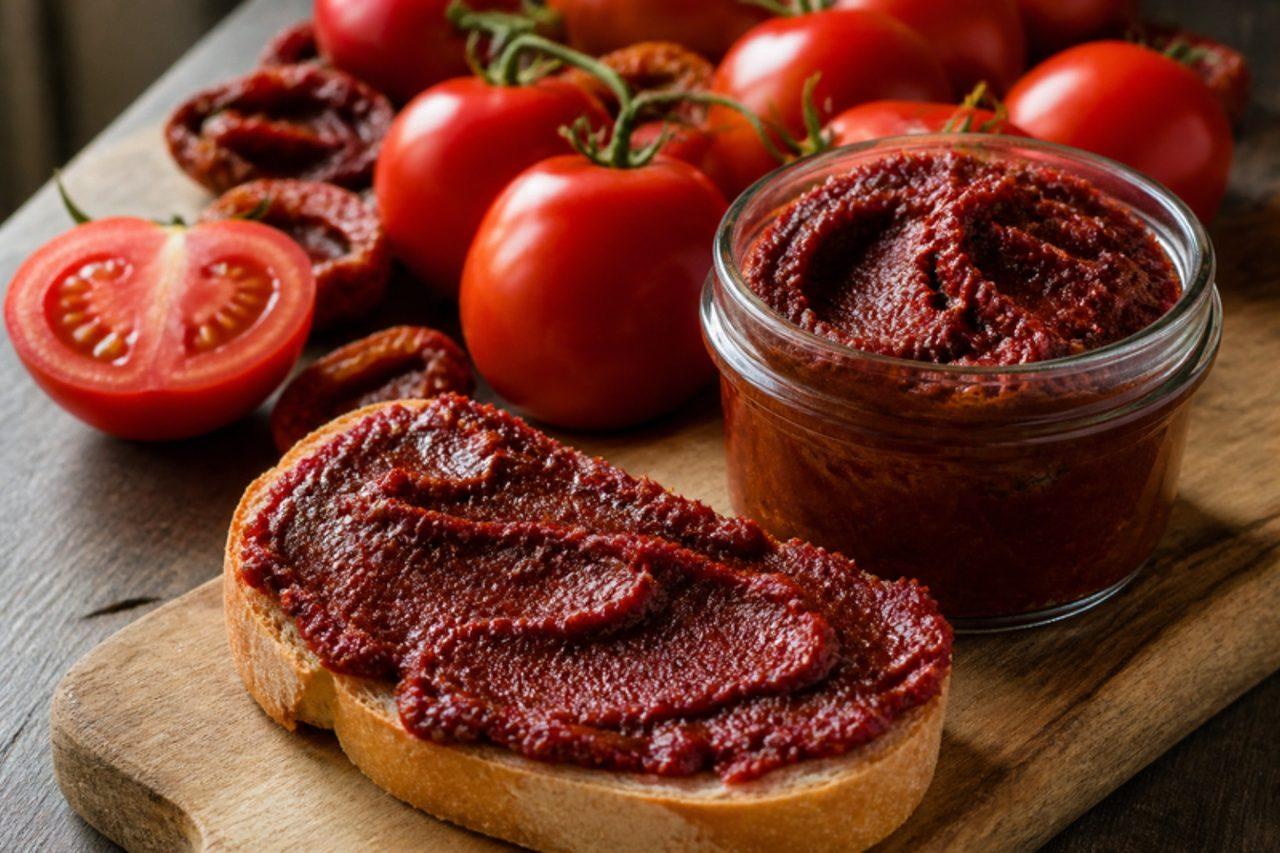
StrattuSun-dried tomato paste

In late August in western Sicily, around Trapani and Palermo, tomato purée is spread on large wooden boards and left in the hot sun for several days, stirred by hand until it turns into a thick, dark-red paste that smells of sun and sweet tomatoes. Strattu, short for "estratto", is used a spoonful at a time to give depth to sauces and stews. This home version dries the passata slowly in a low oven over a day. Chef's tip: spread the purée thin, no more than 1 cm, and stir it every hour; thick layers dry on top and stay wet underneath.

by KrazyBadal 0 views

GaraetteokLong cylinder rice cakes

Garaetteok are the long white rice-cake logs that Korean mills churn out before Seollal, when families queue with their own rice to have them pressed and then slice them into ovals for tteokguk, the New Year soup. The length is meant to wish for a long life. Freshly made, they are soft and chewy and eaten warm, dipped in honey or toasted over a grill; once they firm up they are sliced for soup or cut into sticks for tteokbokki. Making them at home is simple, though the logs come out a little less glossy than machine-pressed ones. The usual mistake is rolling the dough when it has cooled: it must be hot to stay smooth. Rice cakes are chewy and sticky, a known choking risk: cut them into small pieces for young children and older people and eat them sitting down. Chef's tip: leave the logs to firm overnight before slicing on the diagonal; they cut cleanly instead of squashing.

by KrazyBadal 0 views

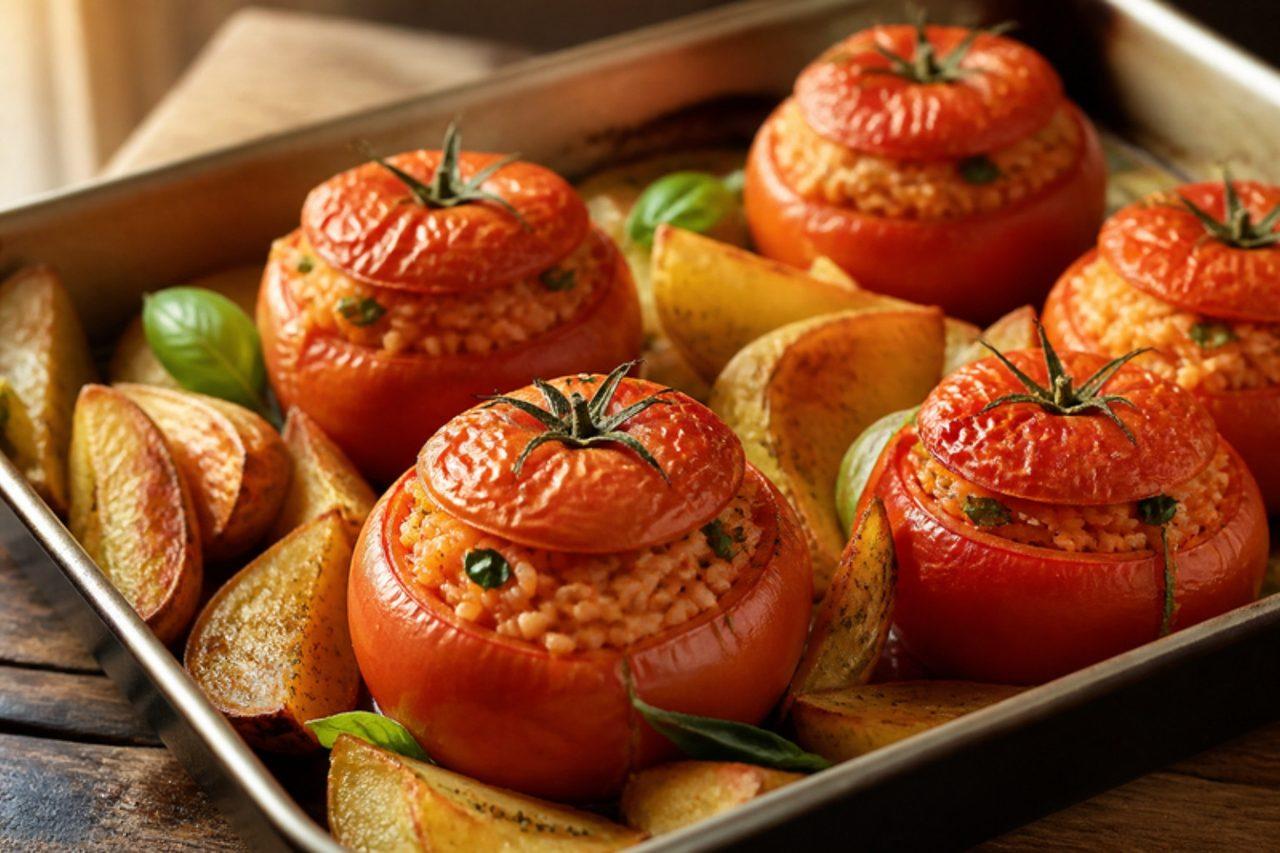
Pomodori col risoRice-stuffed tomatoes

Every Roman bakery and rosticceria has a tray of pomodori col riso in summer: big round tomatoes, hollowed out and filled with raw rice soaked in their own pulp with garlic, basil and olive oil, then baked with wedges of potato that soak up the juices. Romans eat them warm or at room temperature for lunch on hot days, often on Ferragosto (15 August). Chef's tip: let the rice soak in the tomato pulp for at least an hour before filling; it softens and then cooks evenly inside the tomatoes.

by KrazyBadal 0 views

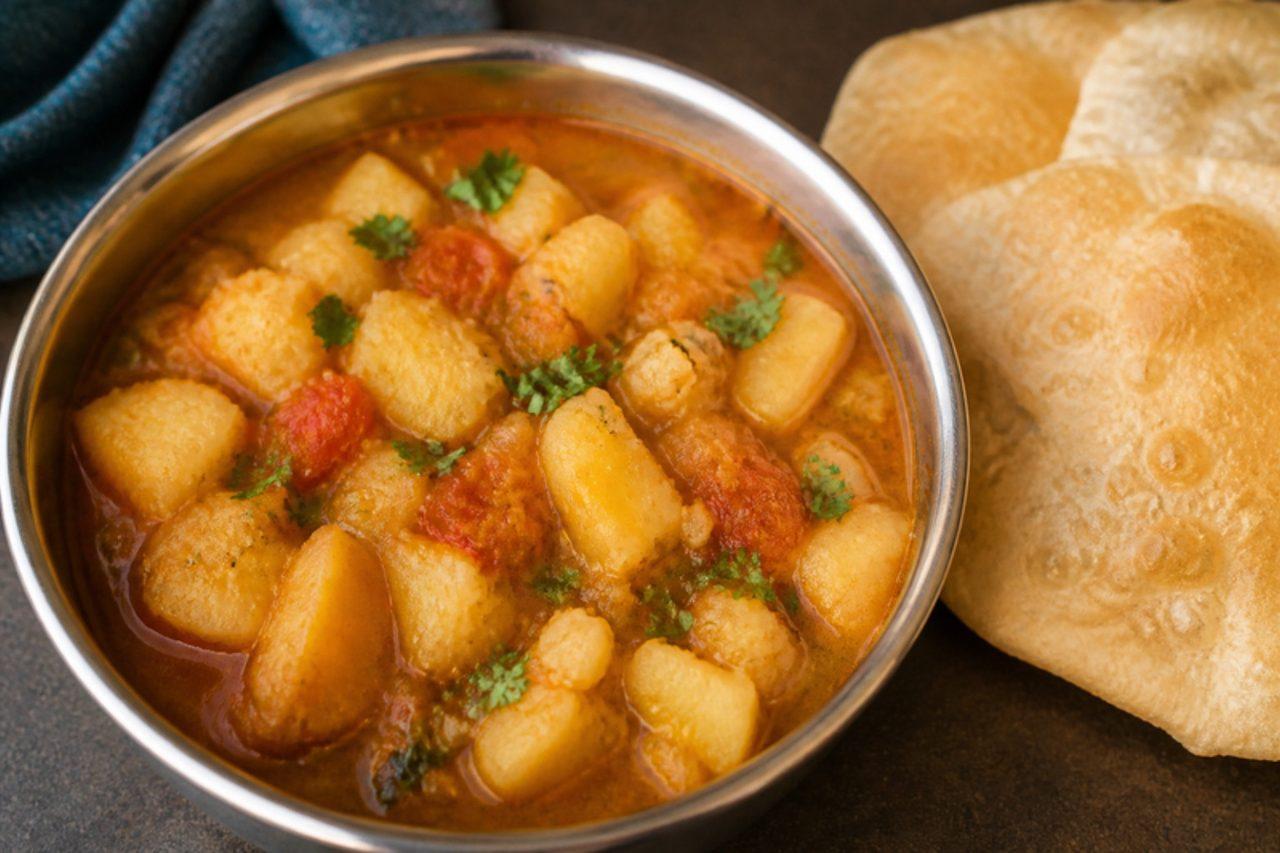
Vrat ke alooFasting potato curry

On Navratri mornings in Delhi, Lucknow and Punjabi homes everywhere, this is what fills the kadhai next to the kuttu puri. Boiled potatoes are broken by hand, not cut, so their rough edges melt into a loose, brothy gravy of tomato, cumin, fresh ginger and green chilli, seasoned only with sendha namak and a little pepper. It is soupy enough to dunk puri into, tangy from the tomato and gently hot, and comforting after a morning of fasting. Very strict homes skip red chilli powder and coriander as well as turmeric and asafoetida; this recipe uses neither turmeric nor hing. Ghee is traditional; oil keeps it vegan. Chef's tip: mash two or three pieces of potato into the gravy as it simmers; the starch thickens it naturally, since no flour or onion is allowed.

by KrazyBadal 0 views

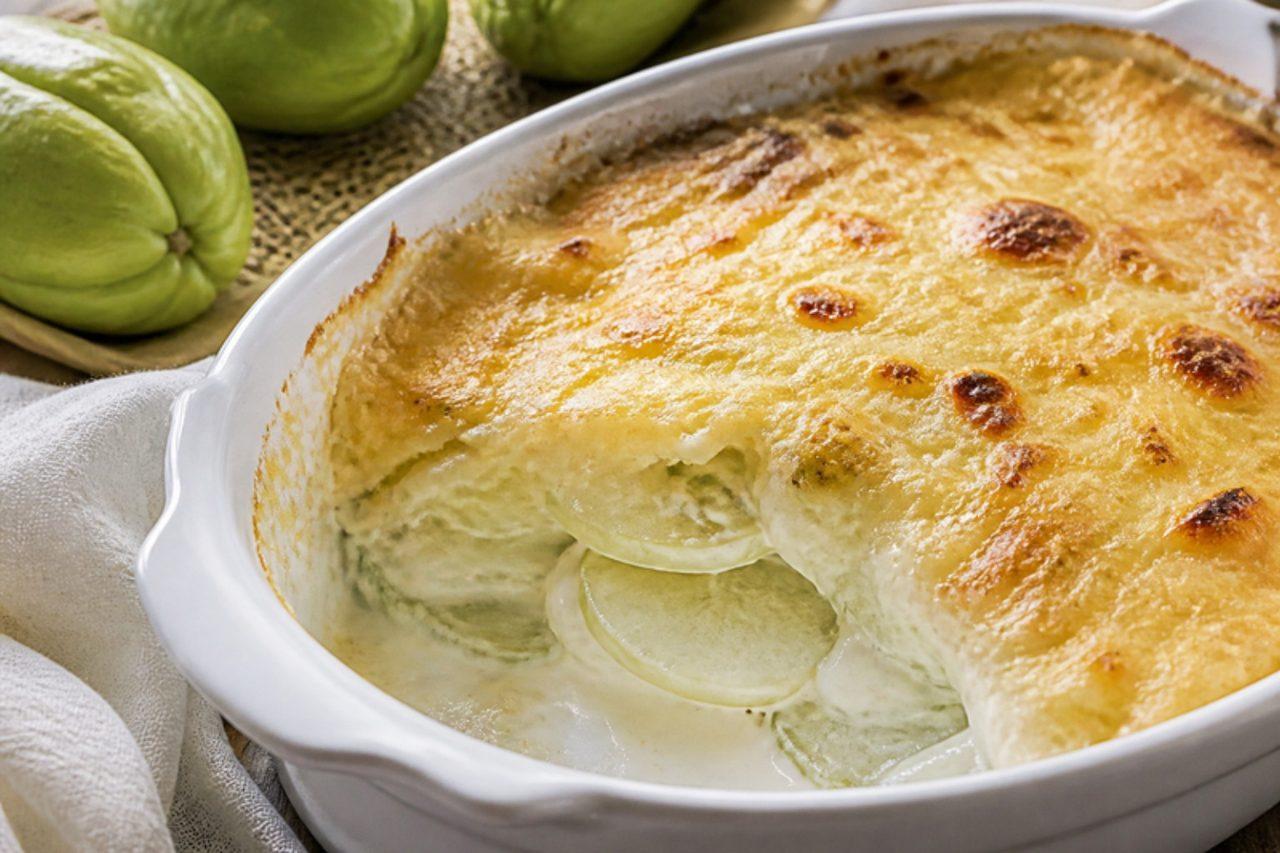
Gratin chouchouChayote cheese gratin

Chouchou vines scramble over fences all over Réunion's highlands, especially around Salazie, so the island has plenty of ways with the pale green squash, and the gratin is the one that comes out for Sunday lunch beside a cari or a roast. Cooked chayote is soft and mild, a bit like courgette crossed with pear, and under a nutmeg béchamel and a browned cheese top it becomes rich and comforting. The great danger is a watery gratin, because chayote gives off a lot of liquid; boil it first and leave it to drain properly before it meets the sauce. The cheese is traditionally an Emmental-style one, often made with animal rennet, so choose a vegetarian hard cheese if that matters to you. Chef's tip: make the béchamel a little thicker than you think, as the chayote will still loosen it slightly in the oven.

by KrazyBadal 0 views

AnnakutWinter vegetable shaak

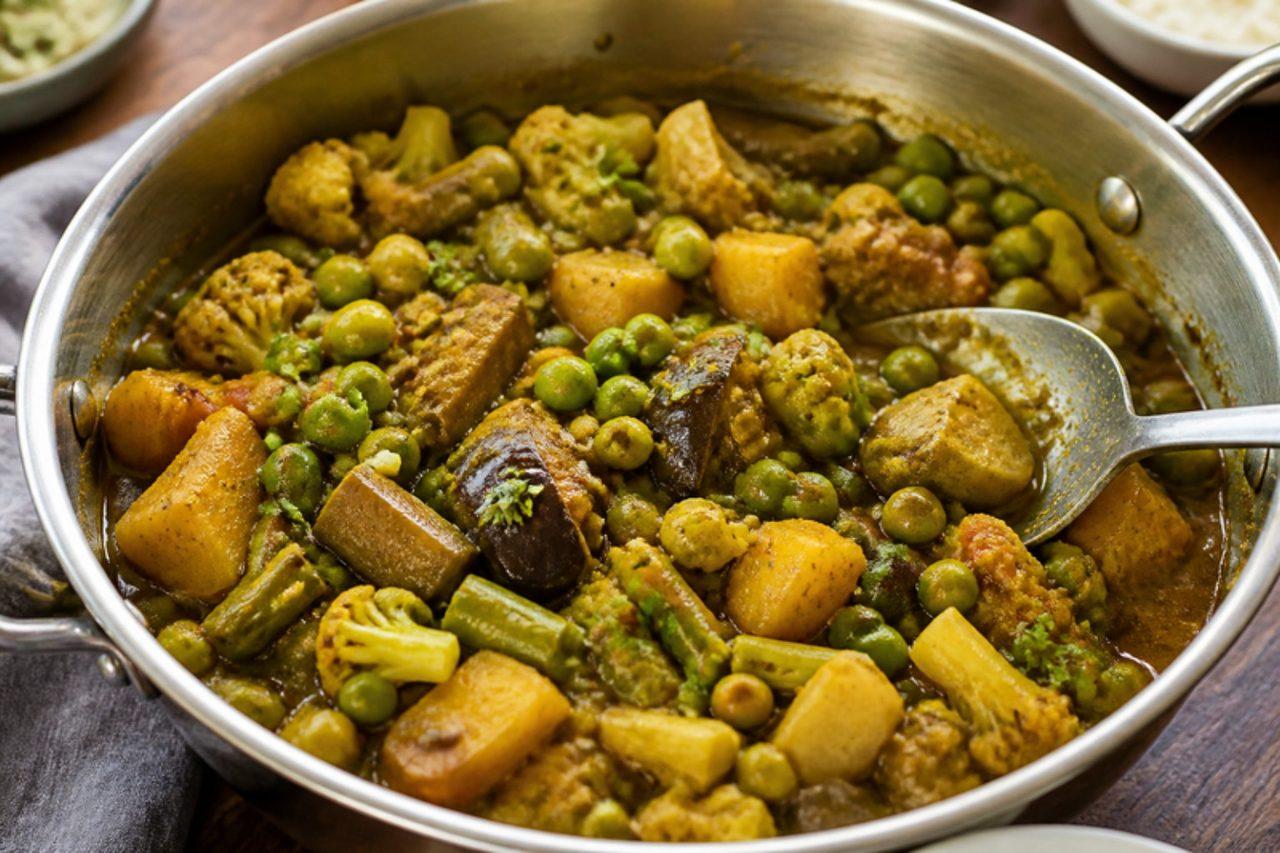
The day after Diwali, Pushtimarg havelis from Nathdwara to Ahmedabad build the annakut, literally a mountain of food, piled before Shrinathji to remember Krishna lifting Govardhan hill. Among dozens of sweets and farsan, there is always a shaak cooked from every vegetable of the new season, and many Gujarati and Rajasthani homes make their own version for the New Year meal. In the haveli tradition there is no onion or garlic, and many families leave out tomato too; the flavour comes from ajwain, ginger, green chilli, a little jaggery and lemon. It is lightly spiced, sweet-sour and full of different textures, from creamy raw banana to crunchy beans. Serve with puri, kadhi and rice. This version uses groundnut oil, so it is vegan; havelis cook it in ghee. Chef's tip: cut every vegetable to roughly the same size and add them in order of how long they take, so the shaak ends up tender, not mushy.

by KrazyBadal 0 views

Bengali boriSun-dried lentil dumplings

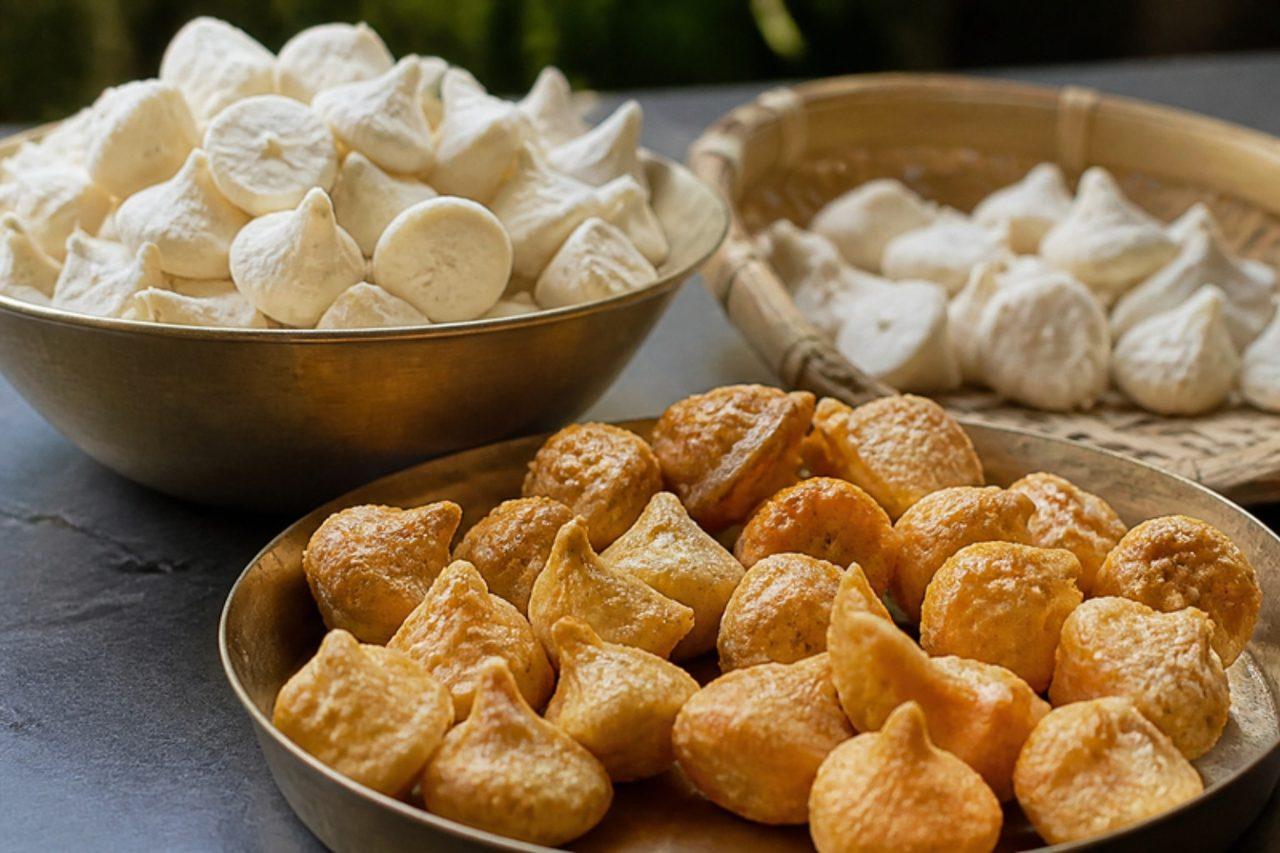
Winter mornings in rural Bengal used to mean bori-making: the household gathered on the roof with a big bowl of freshly ground, hand-whipped urad dal and dropped little peaked dollops onto cloth in neat rows. In Medinipur the women even pipe them into lace-like gohona bori, a folk art of its own. The everyday kind is simpler, a cone the size of a marble, sun-dried until rock hard. Fried in mustard oil, a bori turns crisp and golden outside and slightly spongy inside, and it soaks up gravy beautifully. A handful goes into shukto, into a maacher jhol with potatoes, into lau ghonto (bottle gourd) or into a simple vegetable chorchori. Common mistake: grinding the dal with too much water; the paste then spreads flat on the cloth instead of holding a peak. Chef's tip: check the whipped paste by dropping a little into a bowl of water. If it floats, it has enough air and the bori will be light; if it sinks, keep beating.

by KrazyBadal 0 views

Khatta meetha kadduSweet-sour pumpkin

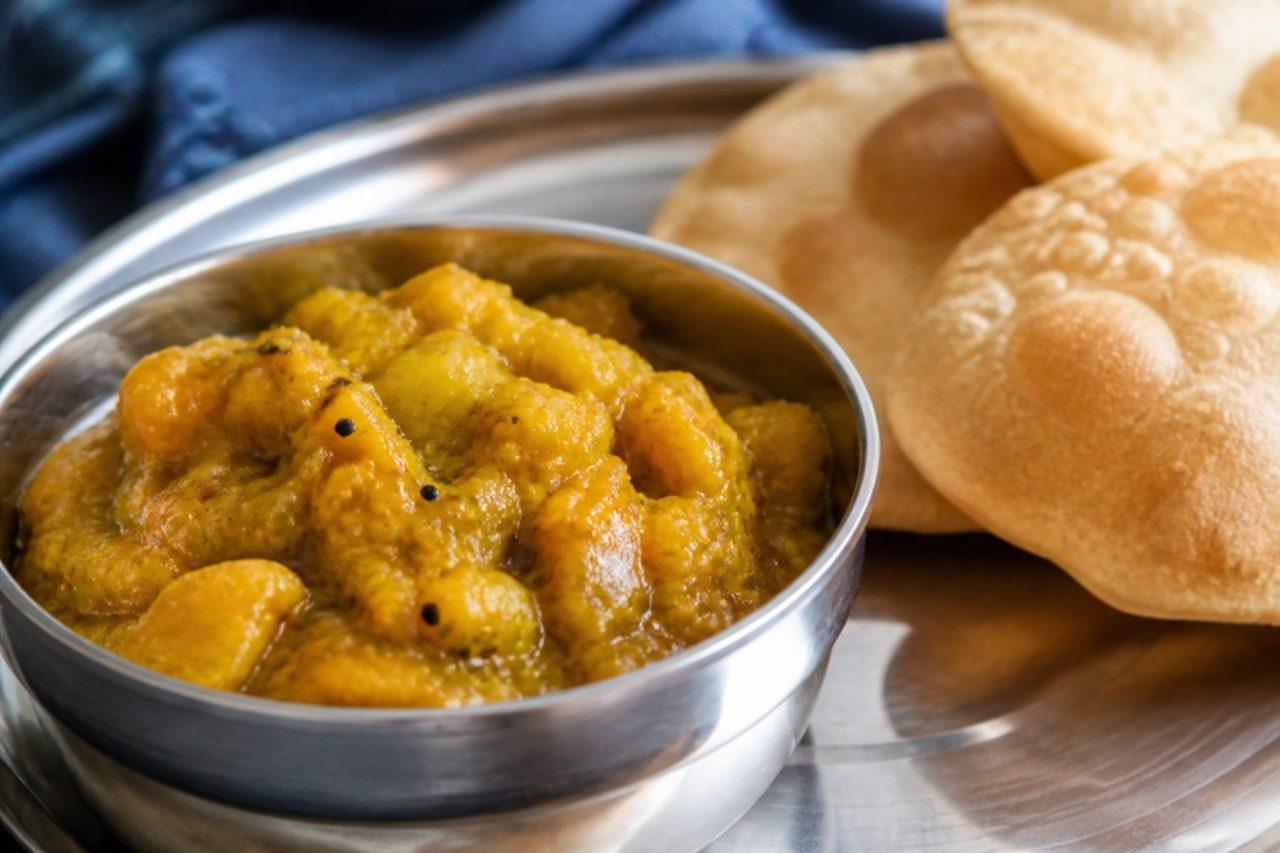
Kaddu ki sabzi with puri is the meal served at countless bhandaras, the free community feasts outside temples in Uttar Pradesh and Punjab, and at home it is a fasting favourite for Navratri. Chunks of yellow pumpkin are cooked until soft with sizzling fenugreek seeds and cumin, then half-mashed and finished with jaggery and dry mango powder, so the dish swings between sweet and sour with gentle heat from ginger and chilli. The fenugreek gives it a faintly bitter, maple-like depth. This fasting version uses rock salt and leaves out the turmeric, asafoetida and fennel that bhandara cooks add. Serve with kuttu puri or regular puri, and a bowl of raita. Chef's tip: keep the skin on part of the pumpkin; it holds the pieces together while the peeled pieces melt into the sauce, giving a better texture.

by KrazyBadal 0 views

Bhogichi bhajiWinter vegetable and peanut stew

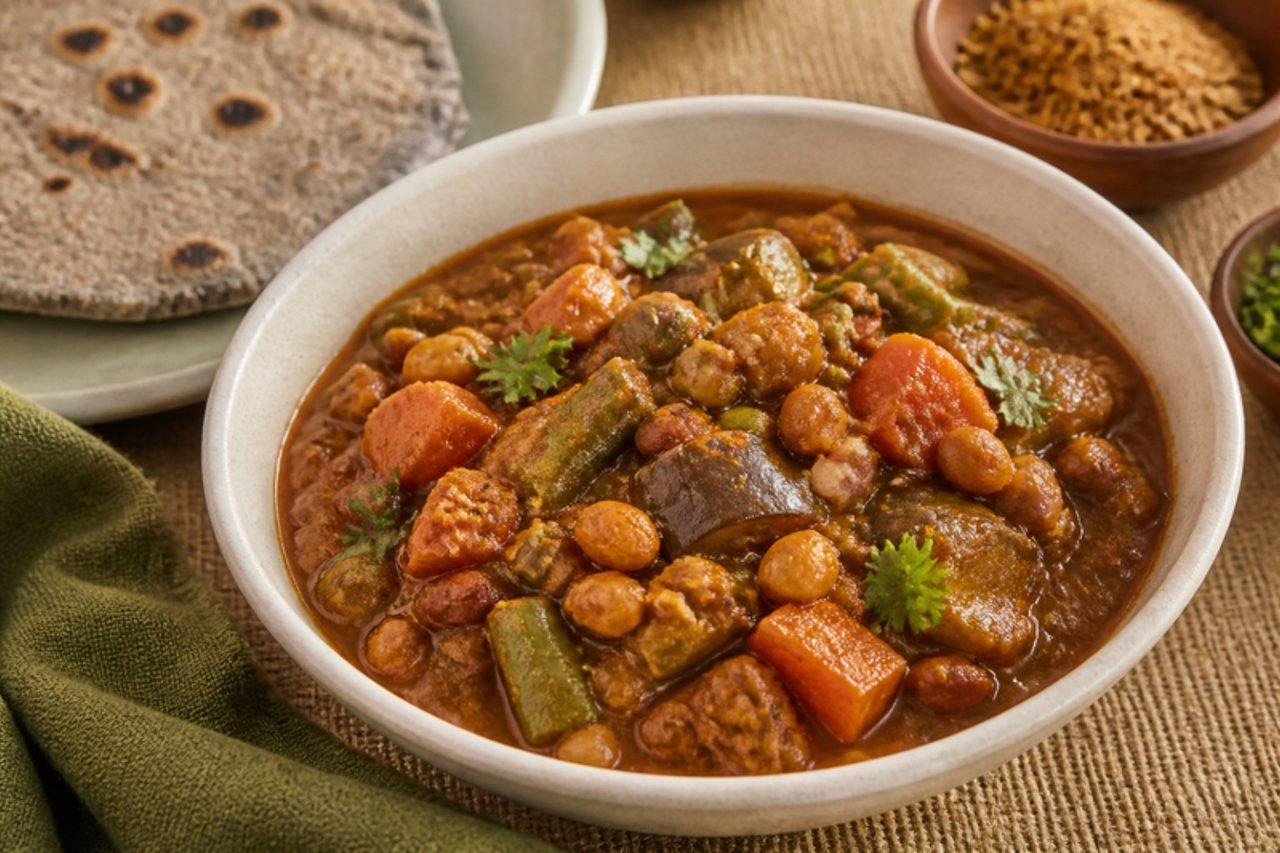
Bhogi, the day before Makar Sankranti, is a day of plenty in Maharashtra, and the lunch to match is this thick mixed bhaji made from everything the winter market offers: green chickpeas (harbhara), fresh field beans (pavta and ghevda), carrots, small brinjals, green peas, ber and sugarcane pieces in some homes. Peanuts and sesame are crushed into it for richness, and the spice is goda masala, the sweet-smoky Maharashtrian blend. It is served with bajra bhakri spread with white butter or sesame, a lump of jaggery and a piece of radish. The taste is earthy, slightly sweet and warming. The mistake is using too much water: it should be a thick, almost dry curry that coats the vegetables. Gluten-free if your goda masala has no wheat-cut asafoetida in it; check the label. Chef's tip: add a spoon of jaggery and a little tamarind at the end; that sweet-sour finish is what makes it taste like Bhogi.

by KrazyBadal 0 views

Rishi panchami bhajiPumpkin, taro and corn stew

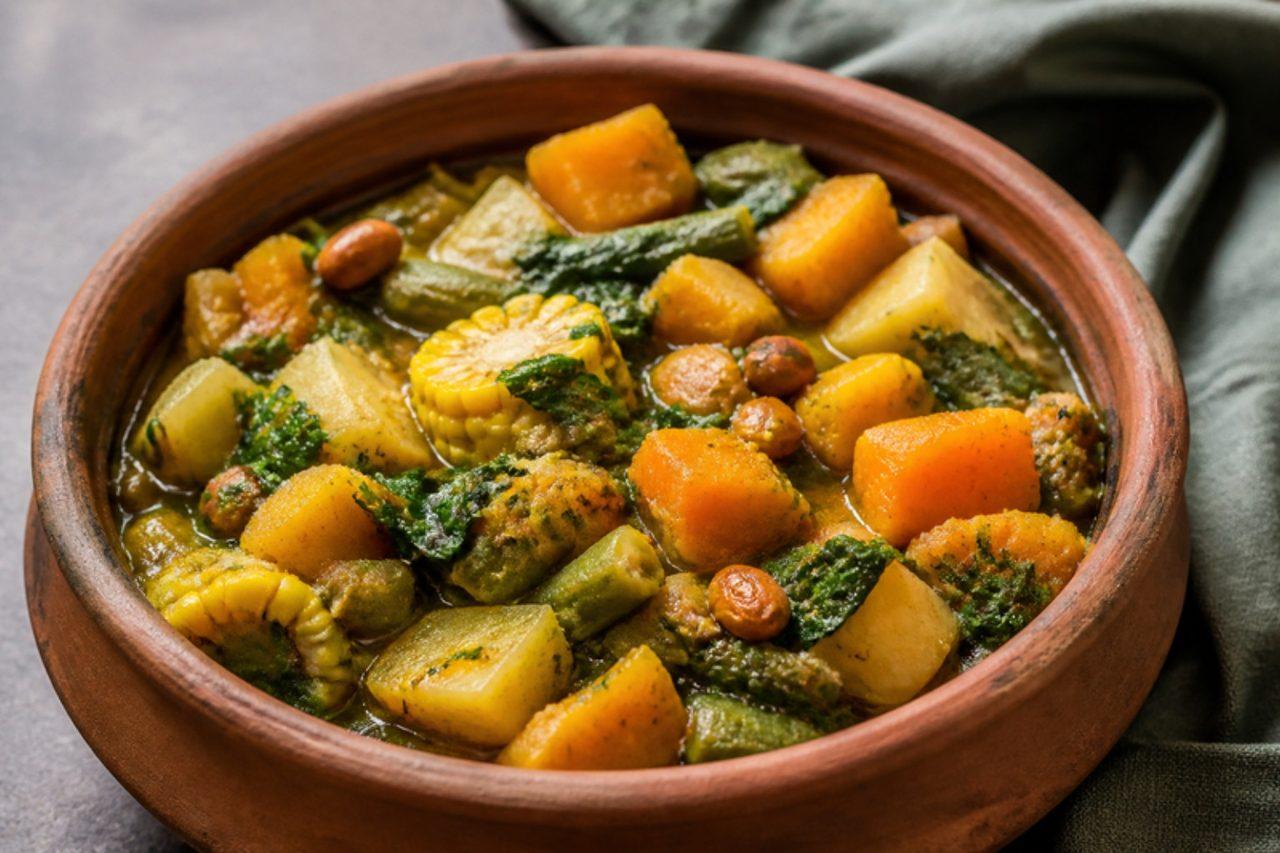
The day after Ganesh Chaturthi, many Maharashtrian women fast for Rishi Panchami and eat only what has grown without the labour of a bullock. That rule turns into one of the most unusual dishes of the year: a stew of whatever the backyard and the monsoon give, such as red pumpkin, colocasia (alu) leaves and roots, sweet corn, ridge gourd, snake gourd, lal math (red amaranth), okra and raw banana, simmered with crushed peanuts, coconut and green chilli. It is thick, mildly sweet and fresh-tasting, with no onion, garlic or tomato. Some families also skip the tadka entirely; others use a little ghee or oil with cumin. Eat it hot on its own as the main meal of the day, with nothing else alongside. A common mistake is putting colocasia in without enough sourness, which can leave the throat itchy: always add the tamarind with the colocasia. Chef's tip: add the vegetables in order of how long they need, roots first and leaves last, so nothing turns to mush.

by KrazyBadal 0 views

Paneer pasandaStuffed paneer in cashew gravy

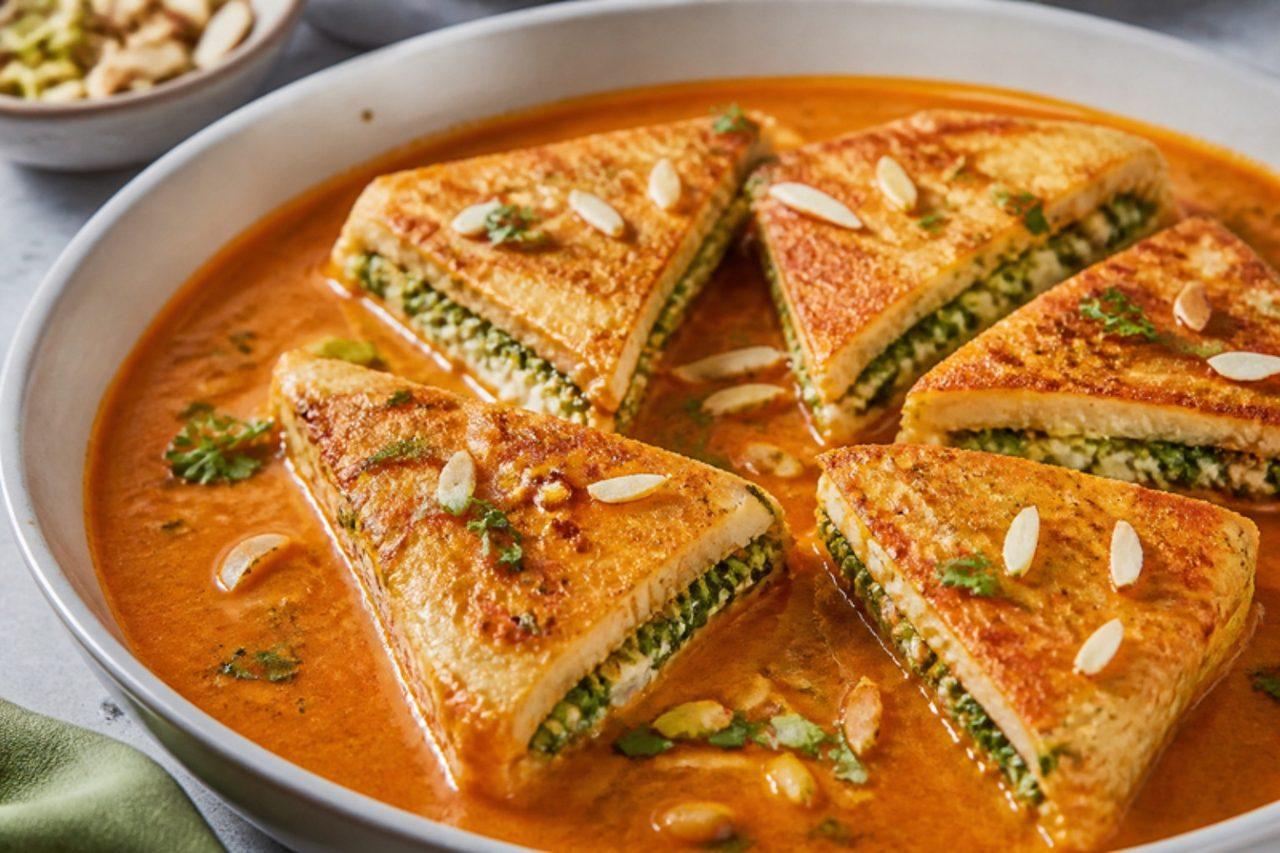
Pasanda once meant flattened slices of the best meat, cooked for the Mughal court; the vegetarian version swaps the meat for paneer, cut into thin squares and sandwiched with a filling of grated paneer, cashews, pistachios, raisins and coriander. The sandwiches are dipped in a light batter and shallow-fried until crisp, then served on a smooth, gently spiced tomato and cashew gravy that is orange-red from Kashmiri chilli rather than hot. Across Delhi, Punjab and Uttar Pradesh it is a wedding and anniversary dish, the one that makes a vegetarian menu look special, and it goes best with butter naan, kulcha or saffron pulao. The paneer is made with lemon or vinegar, so it is fine for vegetarians. Common mistake: simmering the stuffed paneer in the gravy; the batter turns soggy and the sandwiches open up. Pour the gravy onto the plate and set the pasanda on top just before serving. Chef's tip: chill the block of paneer for an hour before cutting, so the thin slices do not crack.

by KrazyBadal 0 views

AmchurDry mango powder

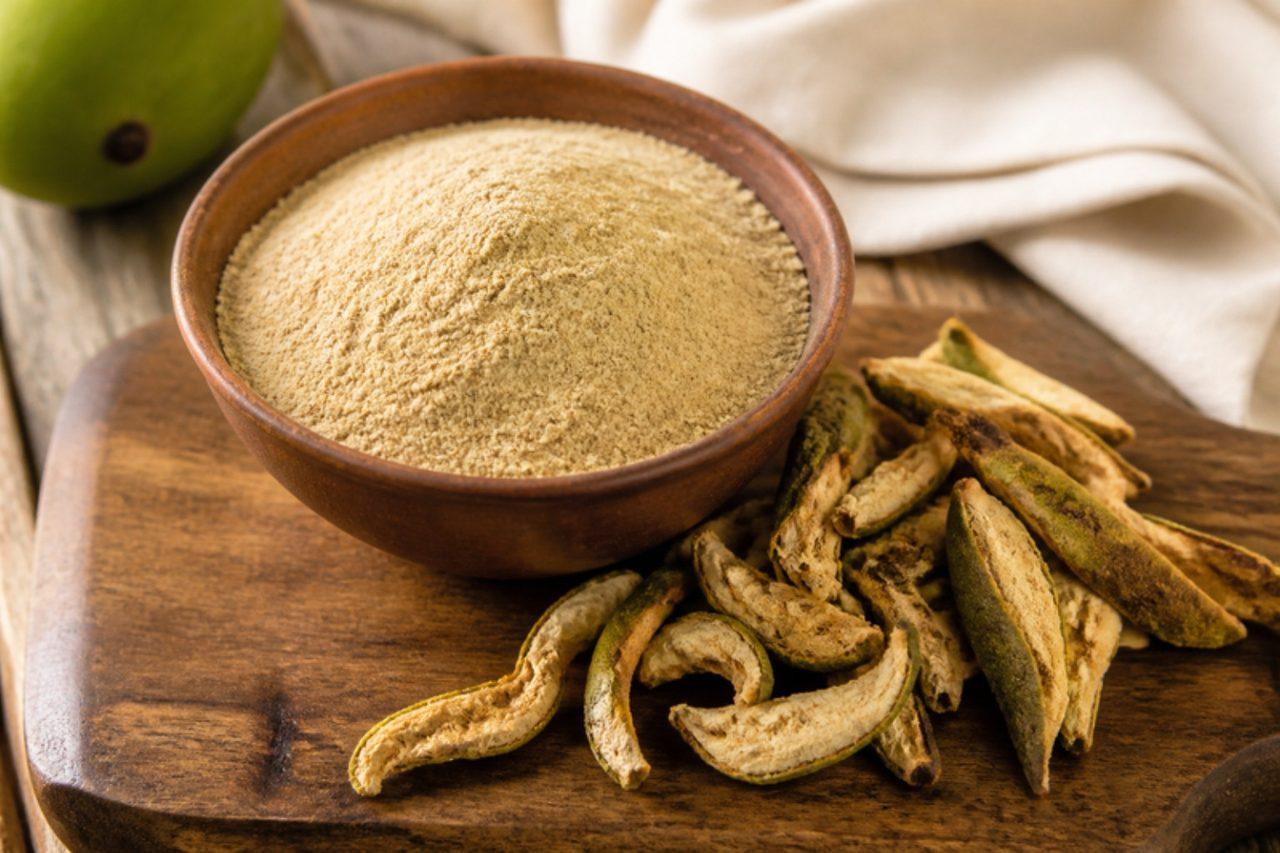
Every Punjabi and UP kitchen keeps a jar of amchur next to the jeera and haldi, and the homemade version smells far fresher and sourer than most shop powder. In villages around Saharanpur and Malihabad, the raw mangoes that fall in early-summer storms are peeled, sliced and spread out to dry, and the brittle slices (amchur khatai) are either stored whole or ground. Amchur gives a fruity, mouth-puckering sourness without any liquid, which is why it goes into dry dishes where tomato or tamarind would make things soggy: bhindi masala, stuffed karela, samosa and kachori fillings, chole, chaat masala and pav bhaji masala. A kilo of mangoes gives roughly 100 g of powder. Common mistake: grinding slices that still bend; even slight moisture makes the powder clump into hard lumps in the jar. Chef's tip: choose small, rock-hard, very sour green mangoes with white flesh, not ones starting to turn yellow; riper fruit dries into a brown, sweetish powder.

by KrazyBadal 0 views

Kerau ko tarkariGreen pea and potato curry

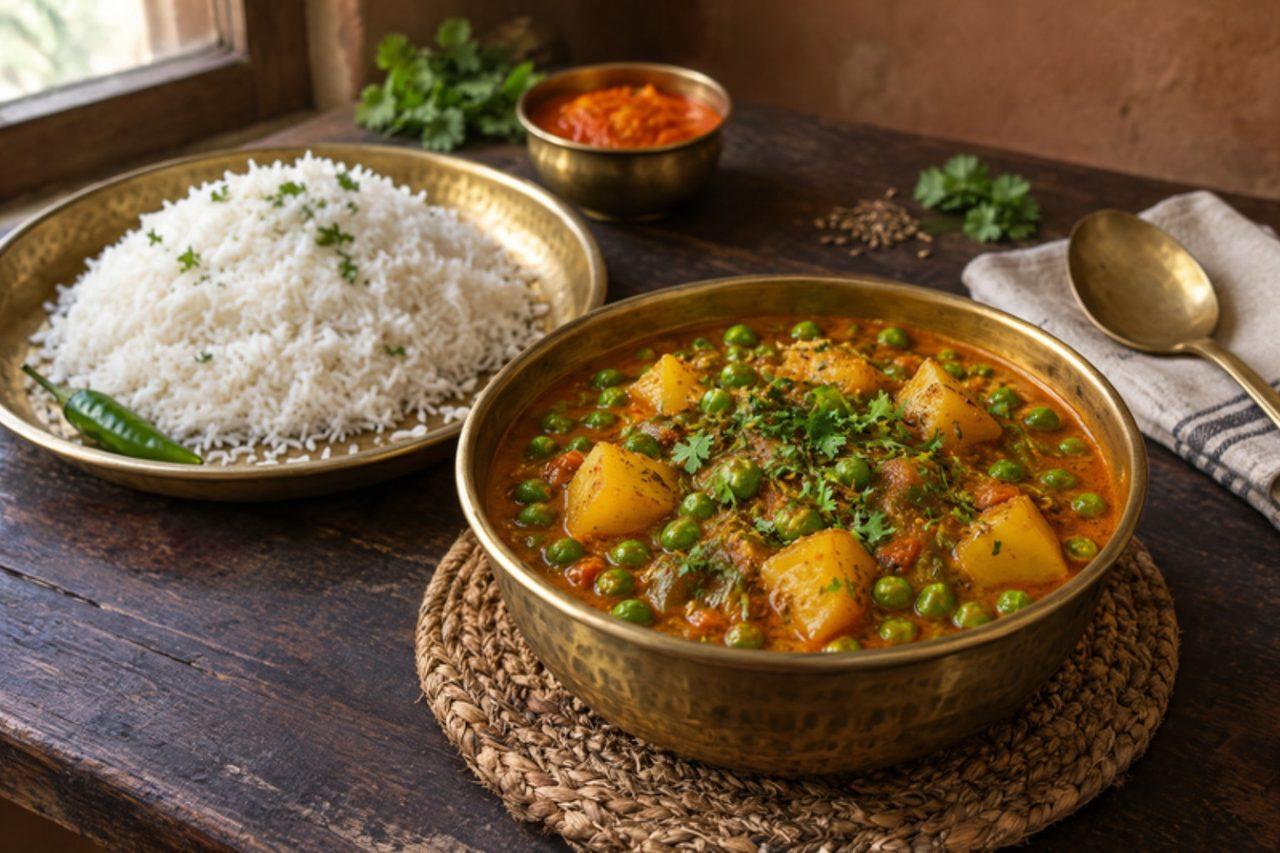
Kerau ko tarkari turns up on Nepali tables in winter, when fresh peas are cheap in Kathmandu's Asan market, and it is a favourite in children's tiffin boxes with beaten rice or roti. Potatoes and peas are simmered with cumin, tomato and a little timur pepper until the potatoes start to break and thicken a soft, golden gravy. It is mild enough for children and goes with rice, roti or sel roti. The usual mistake is adding the peas with the potatoes: fresh peas go grey and mushy, so add them once the potatoes are half cooked. Chef's tip: crush a few potato pieces with the back of the spoon at the end; it gives the gravy body without cream.

by KrazyBadal 0 views

Su shi jin (mixed vegetable stir-fry)

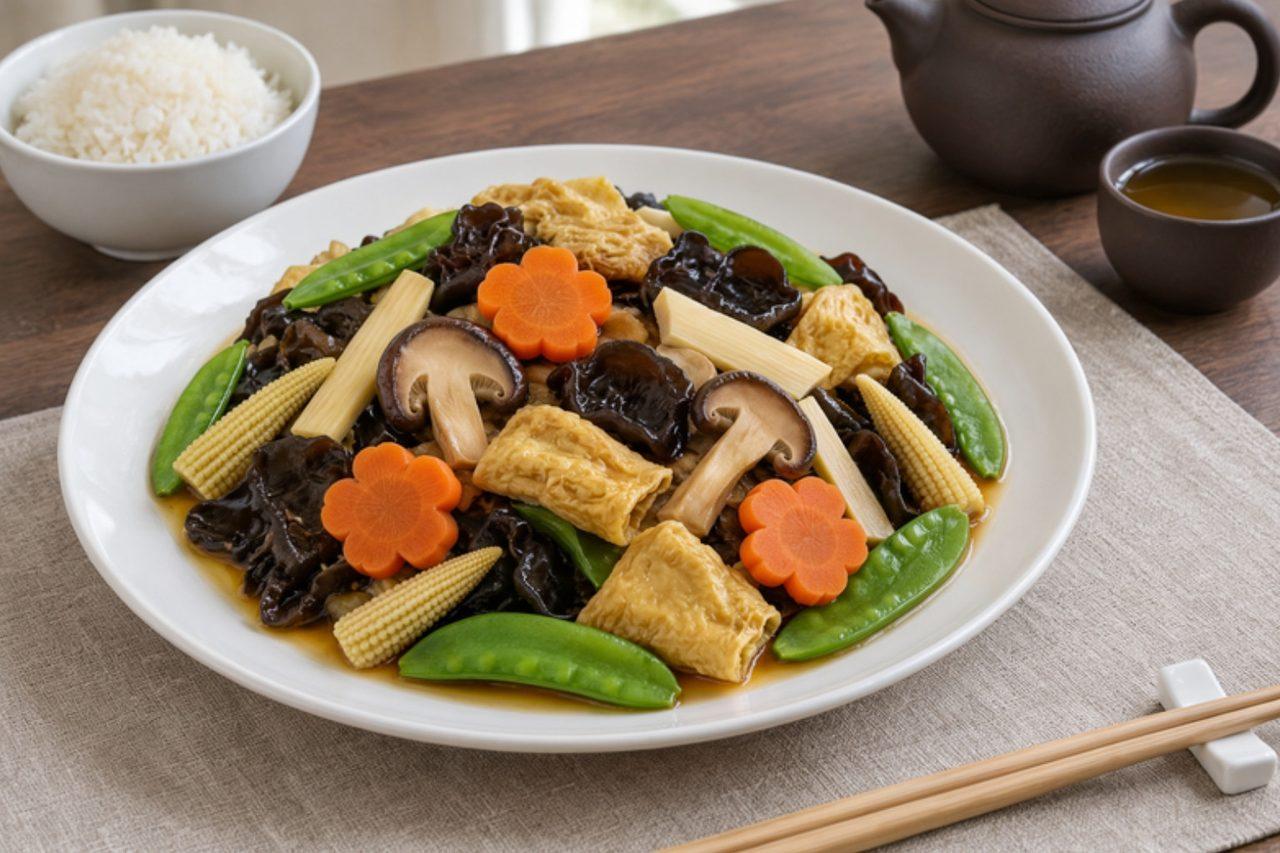
Su shi jin means "vegetarian assortment", and it comes from the Buddhist kitchens of eastern China; today it is a staple of office lunchbox shops in Shanghai and Hangzhou. Crunchy wood ear mushrooms, strips of tofu skin, chewy wheat gluten (kao fu or mian jin), carrot, snow peas and bamboo shoot are stir-fried quickly and glossed with a light soy and ginger sauce. The mistake is adding everything at once, so the firm vegetables are raw and the snow peas overcooked; cook in order of hardness. Chef's tip: soak dried wood ear in cold water rather than hot; it plumps up crunchier.

by KrazyBadal 0 views

ThechwaniCrushed radish curry

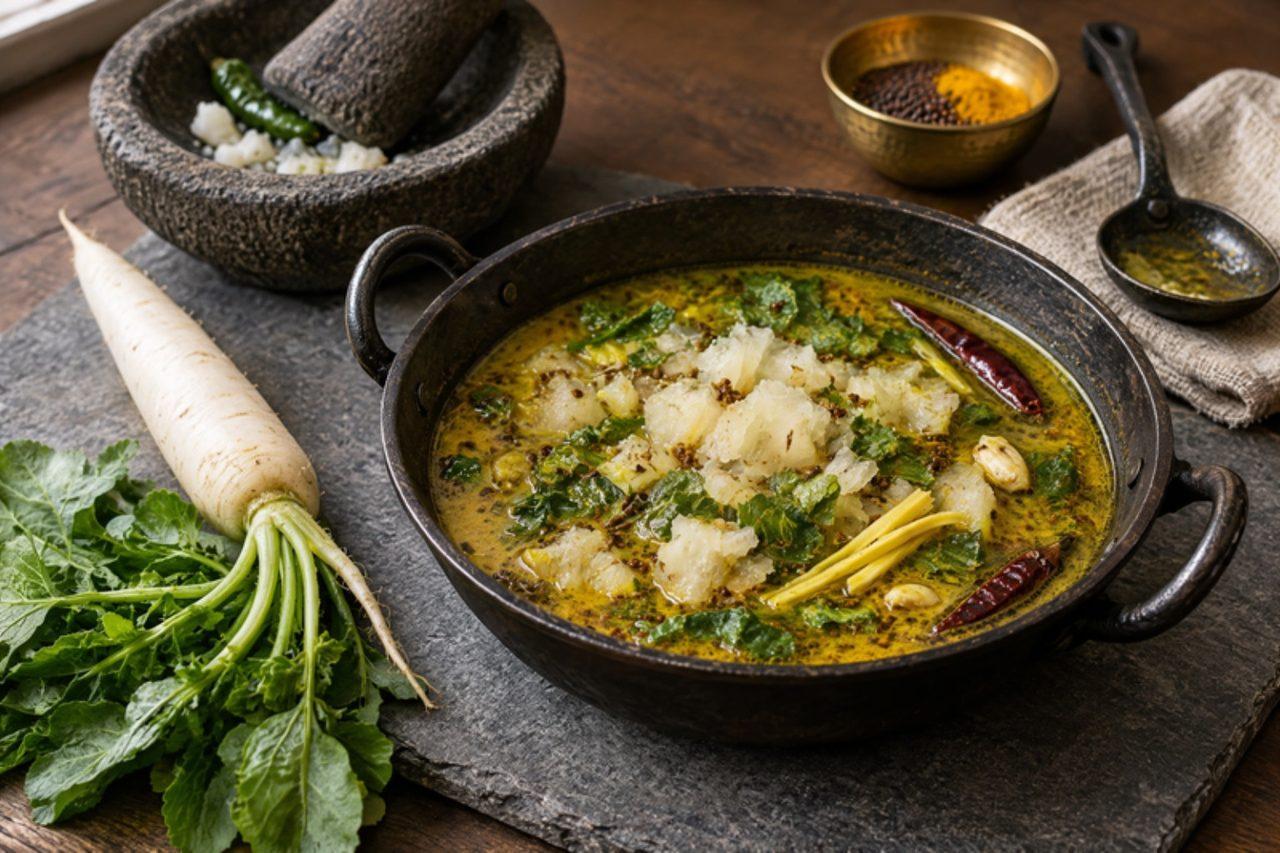
Thechwani is a winter dish from the hill villages of Garhwal, Uttarakhand, cooked when the radishes are fat and sweet. Instead of chopping, the radish (or potato) is bashed with a stone or pestle so it cracks into rough pieces with lots of surface, then simmered in an iron kadhai with mustard oil, jakhya seeds and a little tomato. The broken pieces soak up the spices, and the iron pot darkens the gravy. It is eaten with rice or mandua (finger-millet) roti. Jakhya, a crunchy wild seed, is sold in hill stores; cumin is the swap. The usual mistake is slicing the radish neatly with a knife, which keeps the spices on the outside. Chef's tip: add the radish greens, finely chopped, in the last 5 minutes for colour and a peppery bite.

by KrazyBadal 0 views

Mâncare de dovleceiStewed courgettes

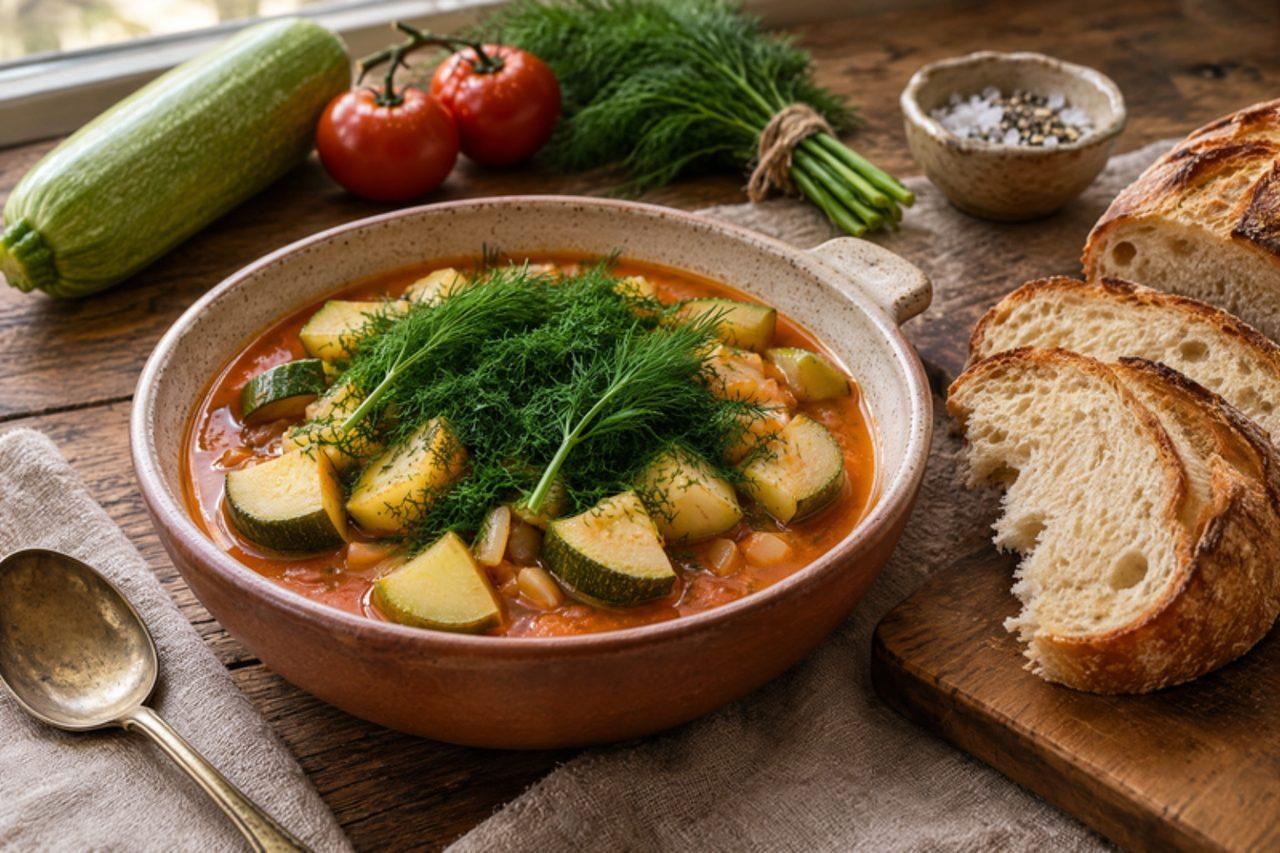
In Romanian homes, from Moldova to Oltenia, mâncare de dovlecei is the summer stew made when the garden is full of courgettes, and it fills a pot on fasting days when Orthodox families eat no animal products. Courgettes are cooked down slowly with onion, peppers and tomato until soft and sweet, then finished with a fistful of dill and garlic. Eat it warm or at room temperature with bread or a slice of mămăligă. The usual mistake is adding too much liquid: courgettes release their own water, and a watery pot loses its flavour. Chef's tip: let the onion and pepper soften properly before the courgettes go in; that sweetness is what seasons the whole stew.

by KrazyBadal 0 views

Ají de arvejasPeas and potatoes in chilli sauce

Ají de arvejas is a homely Bolivian stew from La Paz and Cochabamba, cooked for weekday lunch or on Fridays and in Lent, when many families eat no meat. Green peas and potatoes simmer in a golden sauce of onion, tomato and ají amarillo (yellow chilli), and cubes of fresh white cheese are stirred in at the end so they soften without melting away. It is served with plain white rice and sometimes a boiled egg. Bolivian queso fresco is often made with animal rennet; for vegetarians, use a paneer or a fresh cheese labelled vegetarian. The usual mistake is boiling the cheese, which turns it rubbery. Chef's tip: cook the ají paste with the onion until it darkens slightly, which takes the raw edge off the chilli.

by KrazyBadal 0 views

Batata nu rasawalu shaakPotato curry in thin gravy

Batata nu rasawalu shaak is the potato curry that arrives with hot puris at Gujarati wedding breakfasts, Sunday brunches and festival thalis, and it is one of the first curries children in Gujarat love. Soft potato chunks float in a thin, red, sweet-and-sour gravy with mustard seed, curry leaves and hing, lightly spicy and very comforting. Serve with puri, rotli or plain rice. The usual mistake is cutting the potatoes in uneven pieces, so some fall apart while others stay hard; cut them all the same size. Chef's tip: once the potatoes are cooked, mash a few against the side of the pan; the starch gives the rasa (gravy) body without any flour.

by KrazyBadal 0 views

Aloo potoler dalnaPotato and pointed gourd curry

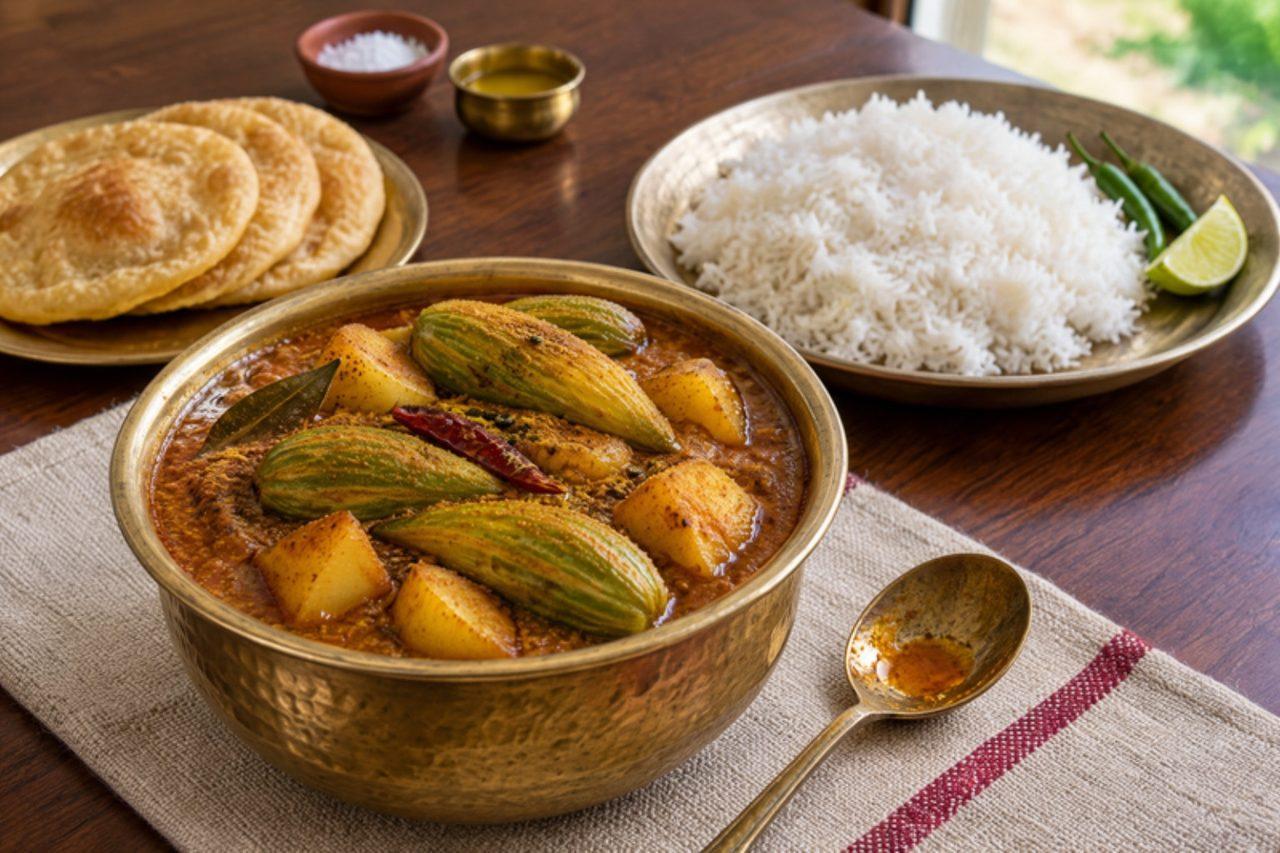
Pointed gourd (potol) floods the markets of Kolkata in summer, and aloo potoler dalna is how most Bengali homes cook it for a weekday lunch or a light Sunday meal. Half-peeled gourds and halved potatoes are fried until golden, then simmered in a loose gravy of ginger, cumin and tomato and finished with ghee and garam masala, so it tastes warm and gently sweet rather than hot. Serve it with rice or luchi. The usual mistake is peeling the gourds completely, which makes them fall apart; scrape off only the waxy skin in stripes. Chef's tip: prick each gourd once with a fork before frying so the gravy can soak into the seeds.

by KrazyBadal 0 views

Mula ko tarkariRadish curry

In the hills around Kathmandu and Pokhara, long white winter radishes are pulled with their leaves still on, and both go into this simple tarkari served beside dal-bhat. The radish is cut into thin batons and cooked down in mustard oil with a sizzle of fenugreek seed, turmeric and tingly timur pepper until it turns sweet and translucent, while the greens wilt in at the end. The usual mistake is adding too much water: radish releases plenty of its own juice, and extra water turns it into a bland soup. Chef's tip: let the fenugreek seeds turn dark brown, almost black, before the radish goes in; that toasty bitterness is what makes Nepali radish taste right.

by KrazyBadal 0 views

Adobong talong (aubergine adobo)

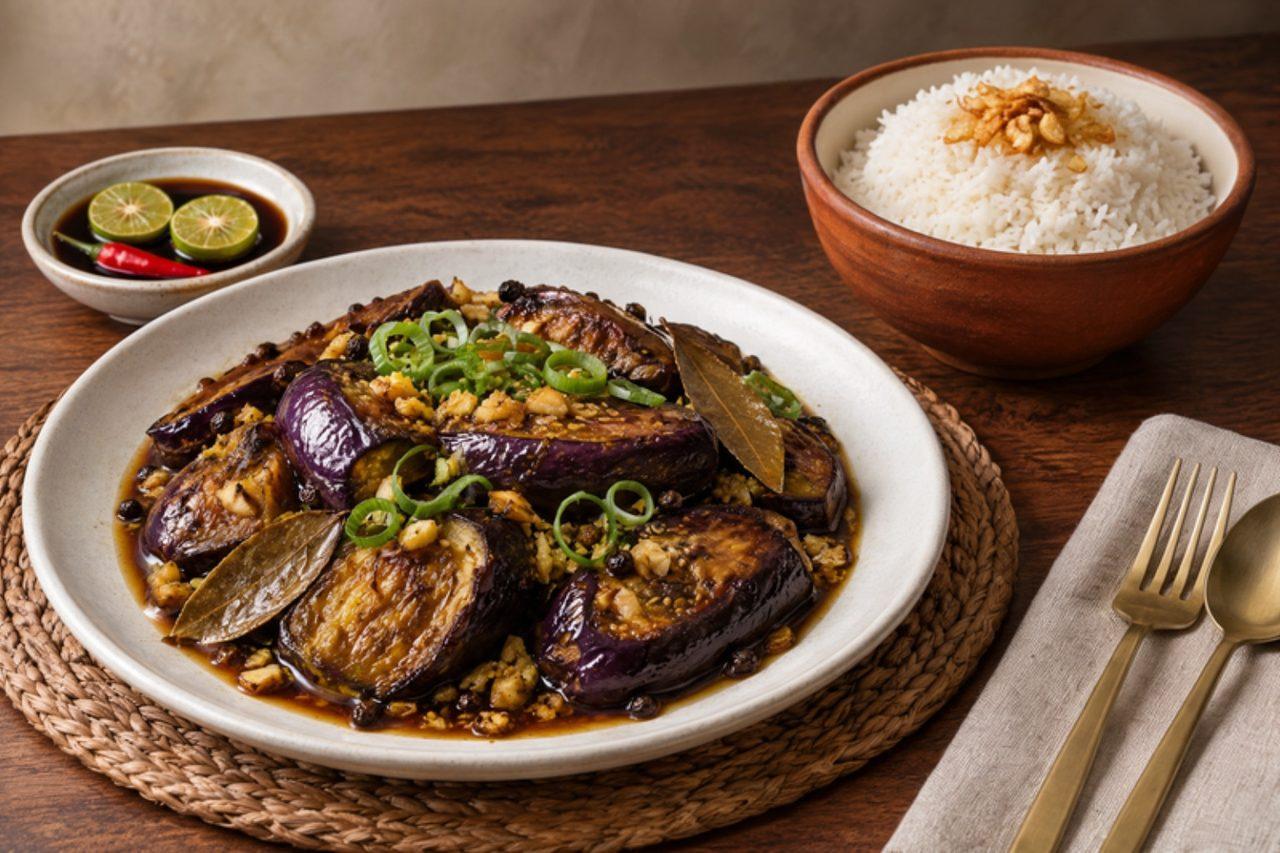
Adobo is a method in the Philippines, not a single dish, and when meat is short or it's Lent, Filipino families make it with long eggplant: fried until soft and browned, then simmered briefly in vinegar, soy sauce, garlic, bay and peppercorns. Like any adobo it tastes better the next day, which makes it a favourite for baon with rice. The common mistake is stirring as soon as the vinegar goes in; let it boil untouched for a minute first, or the sauce keeps a raw, sharp edge. Chef's tip: crush the garlic and fry half of it until golden to scatter on top at the end, for crunch.

by KrazyBadal 0 views

Dubu gangjeongSticky fried tofu cubes

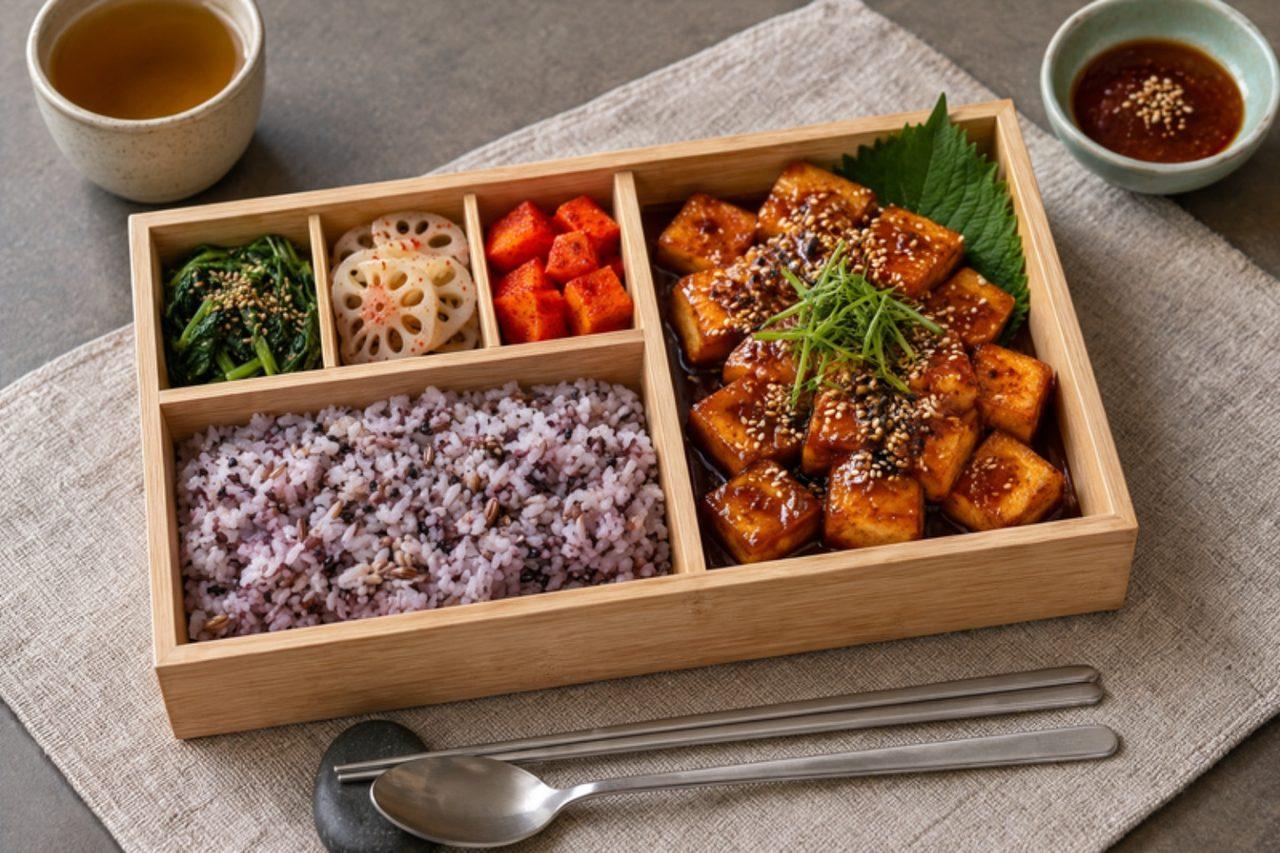
Gangjeong usually means sticky glazed fried chicken, but Korean mothers make this tofu version for the dosirak because the starch coating stays crisp even after a morning in the lunchbox. The glaze is mild, sweet and garlicky, so children love it; add gochujang for the grown-ups. The common mistake is skipping the pressing, which leaves wet tofu that spits in the oil and goes soggy under the sauce. Chef's tip: let the fried cubes cool for two minutes before glazing, and boil the sauce to large, slow bubbles first, so it clings instead of soaking in.

by KrazyBadal 0 views

Lajiao chao jidan (green chilli and egg)

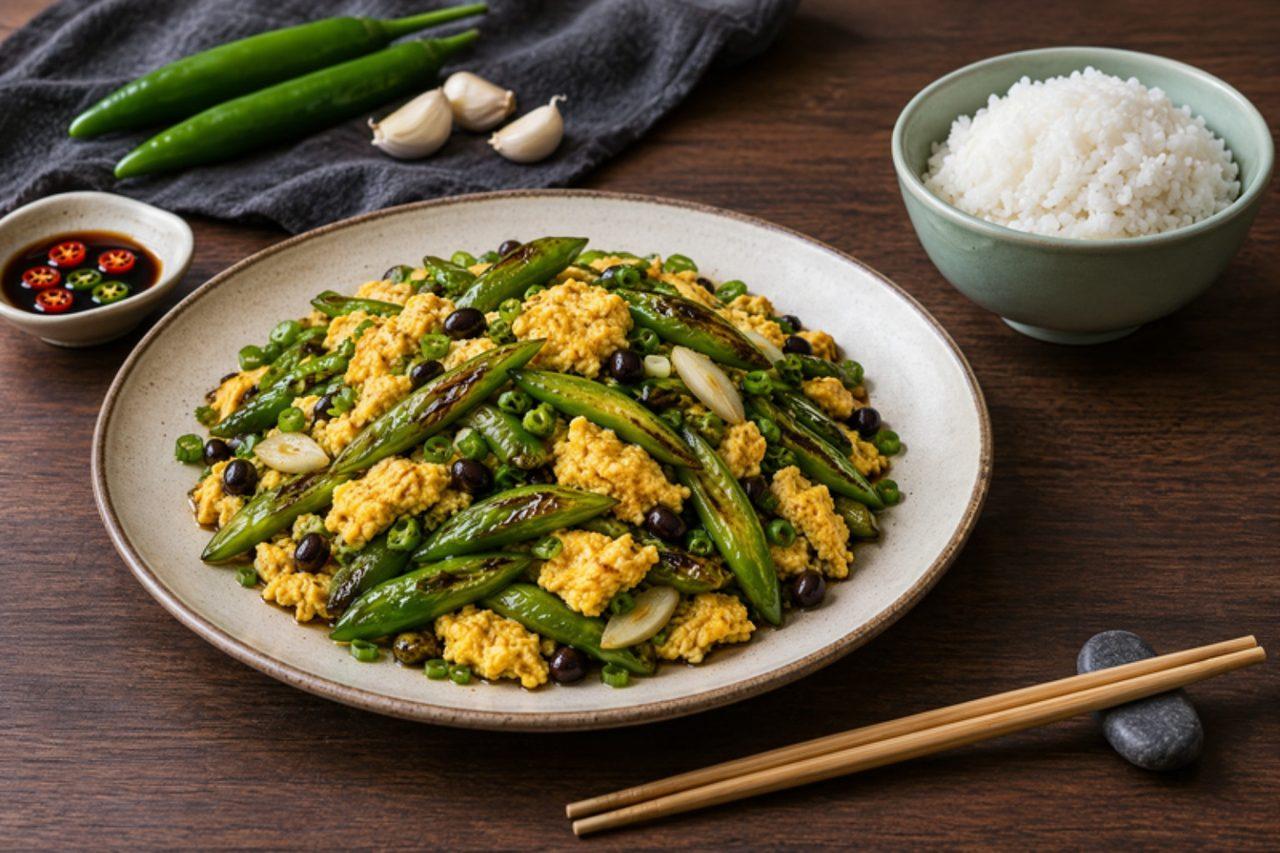
Hunan home cooks in Changsha make this in ten minutes when there is nothing but eggs and long green chillies in the kitchen, and it is a standard dish at lunchbox shops: the chillies are dry-fried until blistered and smoky, then tossed with big soft curds of egg and a splash of soy. It is hot, so choose mild long chillies or green peppers if you prefer. The mistake is cooking the eggs with the chillies from the start, which makes them tough and grey; scramble them separately and combine at the end. Chef's tip: press the chillies against the hot dry wok with a spatula until they wrinkle and char in spots before any oil goes in. Contains egg and soya.

by KrazyBadal 0 views

Showing 24 of 529 recipes

Show more recipes

Page 1 of 23