Skip to content
WhatToEat.Today

All recipes

669

Vegetarian, or something you can't eat? Set your diet once and we'll hide recipes that don't fit.

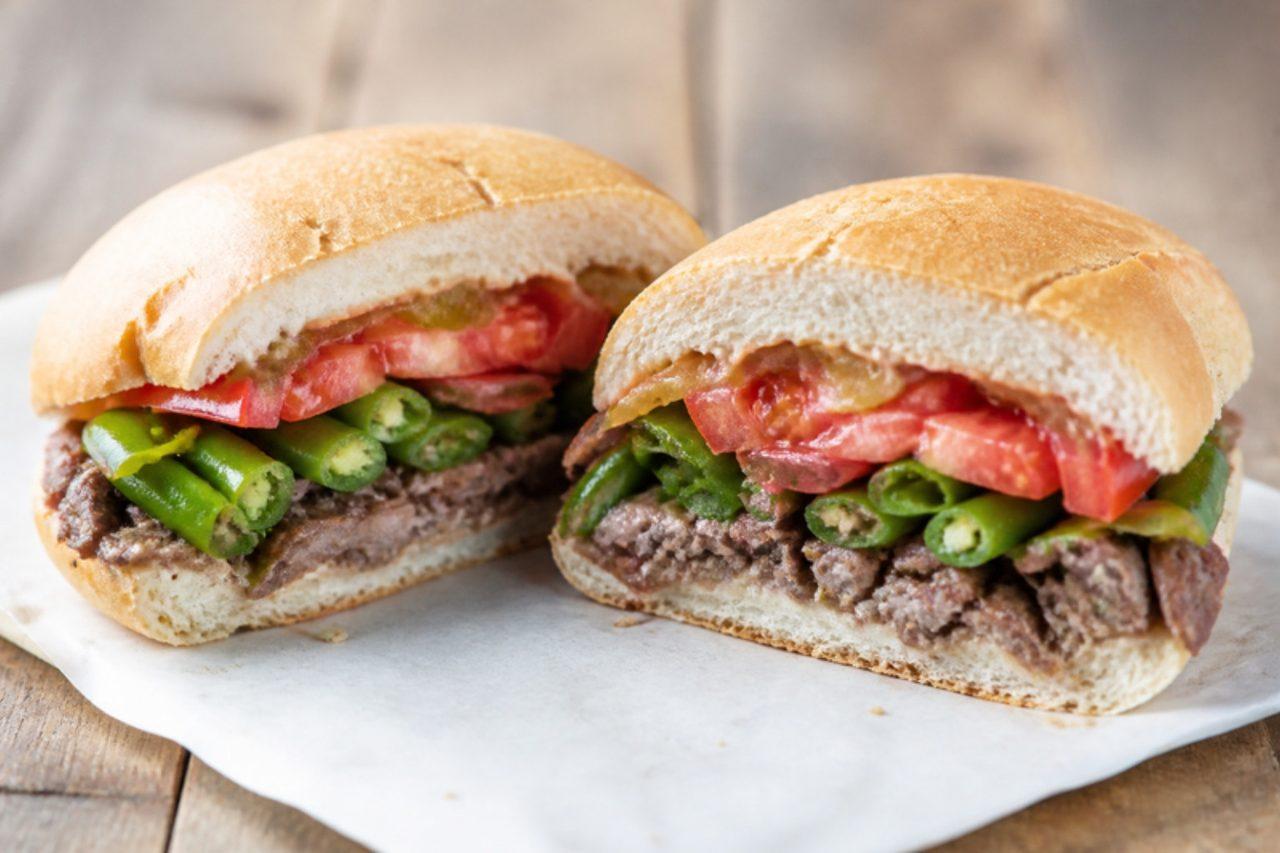
ChacareroSteak sandwich with green beans

The chacarero is a Santiago fuente de soda classic, ordered after work or for a fast Sunday dinner: thin seared beef in a soft round bun with sliced tomato, tender green beans, a little green chilli and a smear of mayonnaise. The beans are what make it Chilean. The common mistake is boiling the green beans until grey and soft; they should still have a little snap. Chef's tip: cut the beans on a long diagonal before boiling, so they cook in three minutes and sit flat in the bun.

by KrazyBadal 0 views

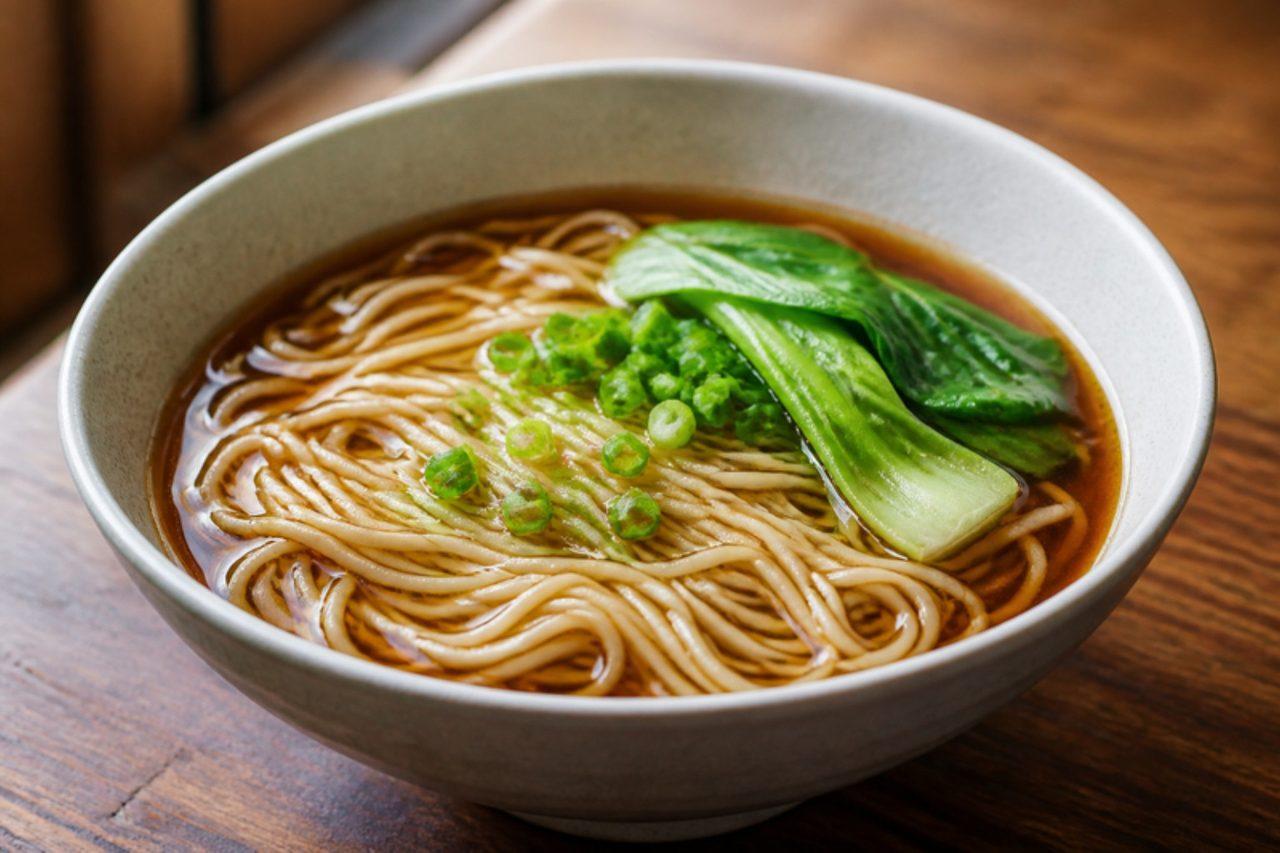
Yangchun mianNoodles with spring onion oil

Yangchun mian is the bare-bones noodle bowl of Shanghai and the towns of Jiangsu, slurped late at night or as a cheap supper when nothing else is in the house: thin wheat noodles in a clear, soy-seasoned broth, glossed with spring onion oil and a few greens. Street stalls traditionally melt a spoon of lard into the bowl; this version uses a quickly made spring onion oil and vegetable stock so it stays vegetarian. The common mistake is cooking the noodles in the broth itself, which turns it cloudy and starchy; boil them separately in plenty of water. Chef's tip: put the soy and oil in the empty bowl first and pour the boiling stock onto them, so the soy blooms and the bowl smells like a Shanghai noodle shop.

by KrazyBadal 0 views

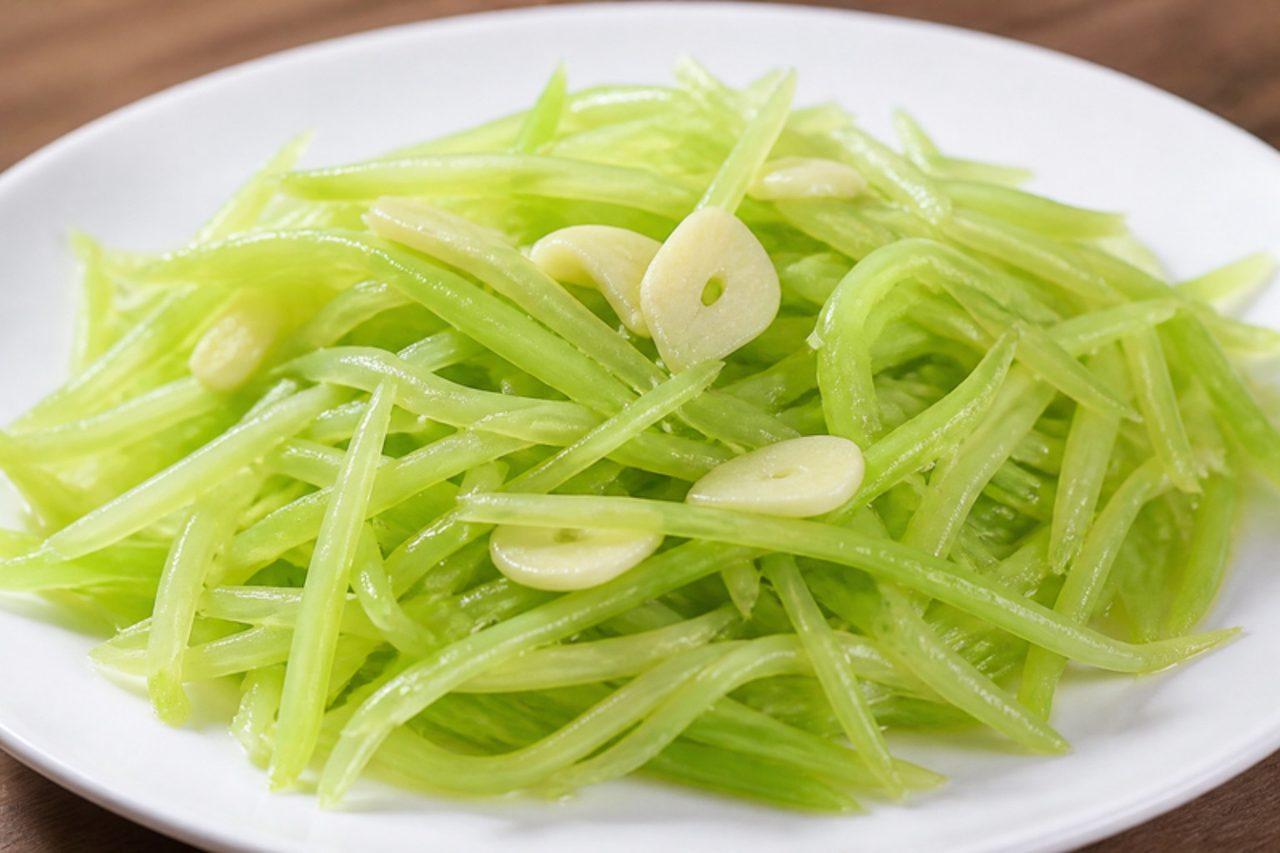
Qing chao wosunStir-fried celtuce

Wosun, celtuce or stem lettuce, is a fat, pale-green stalk loved across Sichuan and Chongqing, where it is slivered and flash-fried for weeknight dinners and spring banquets alike. It tastes somewhere between cucumber, courgette and mild celery, with a satisfying crunch that survives the wok. Look for it in Chinese groceries in spring; the leaves can be cooked like lettuce. The common mistake is peeling too thinly: the outer layer is fibrous, so peel until you reach the translucent jade-green core. Chef's tip: salt the slivers for five minutes and squeeze them lightly before cooking, so they stay snappy and season right through.

by KrazyBadal 0 views

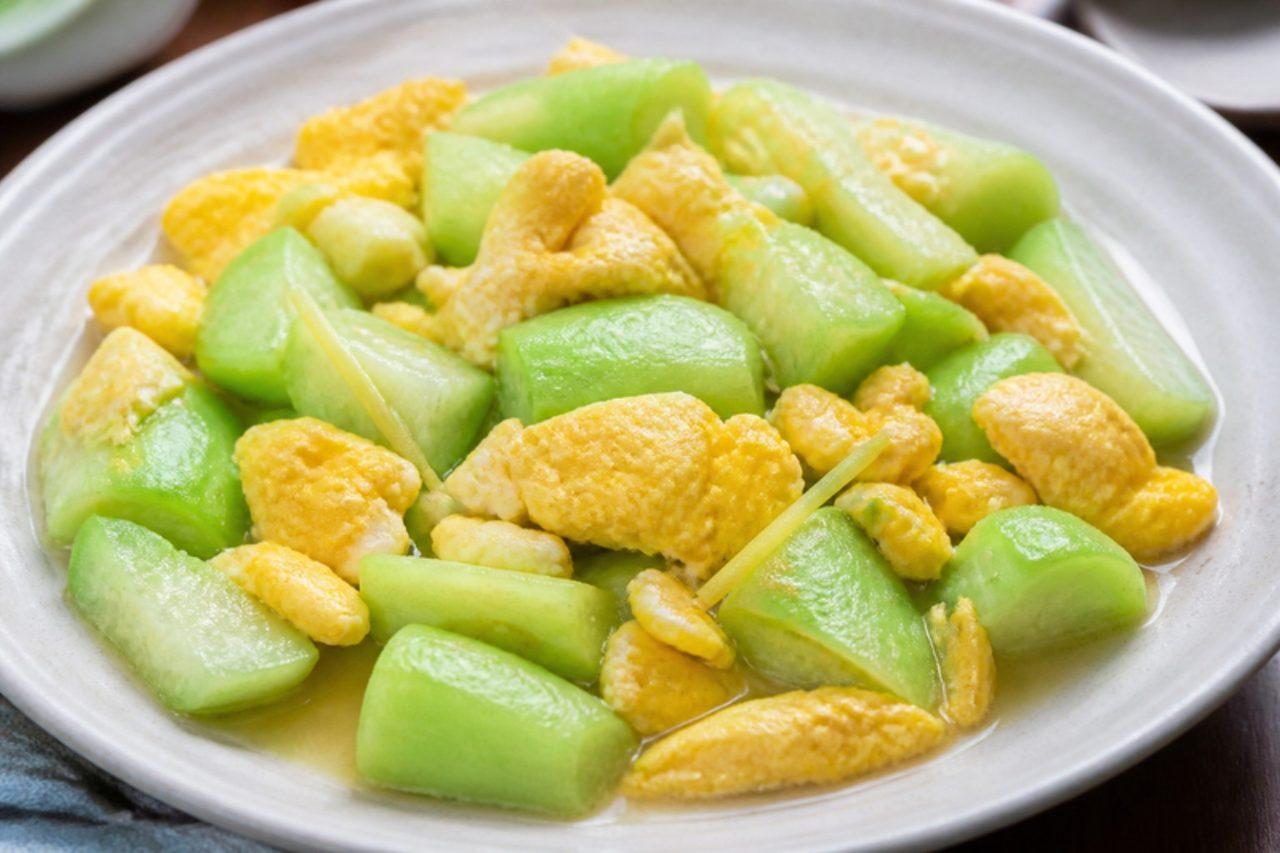
Si gua chao danLuffa and egg stir-fry

Si gua chao dan is a southern Chinese summer staple, cooked in Guangdong, Fujian and Guangxi homes on hot evenings when something light is wanted with rice. Angled luffa softens into silky, faintly sweet pieces and releases its own juice, which the scrambled egg soaks up. The common mistake is leaving the ridges on: peel the hard ridges of angled luffa (or all the skin of smooth luffa), or they stay tough and bitter. Chef's tip: scramble the egg first and lift it out while still a little soft, then return it at the end so it stays fluffy instead of rubbery.

by KrazyBadal 0 views

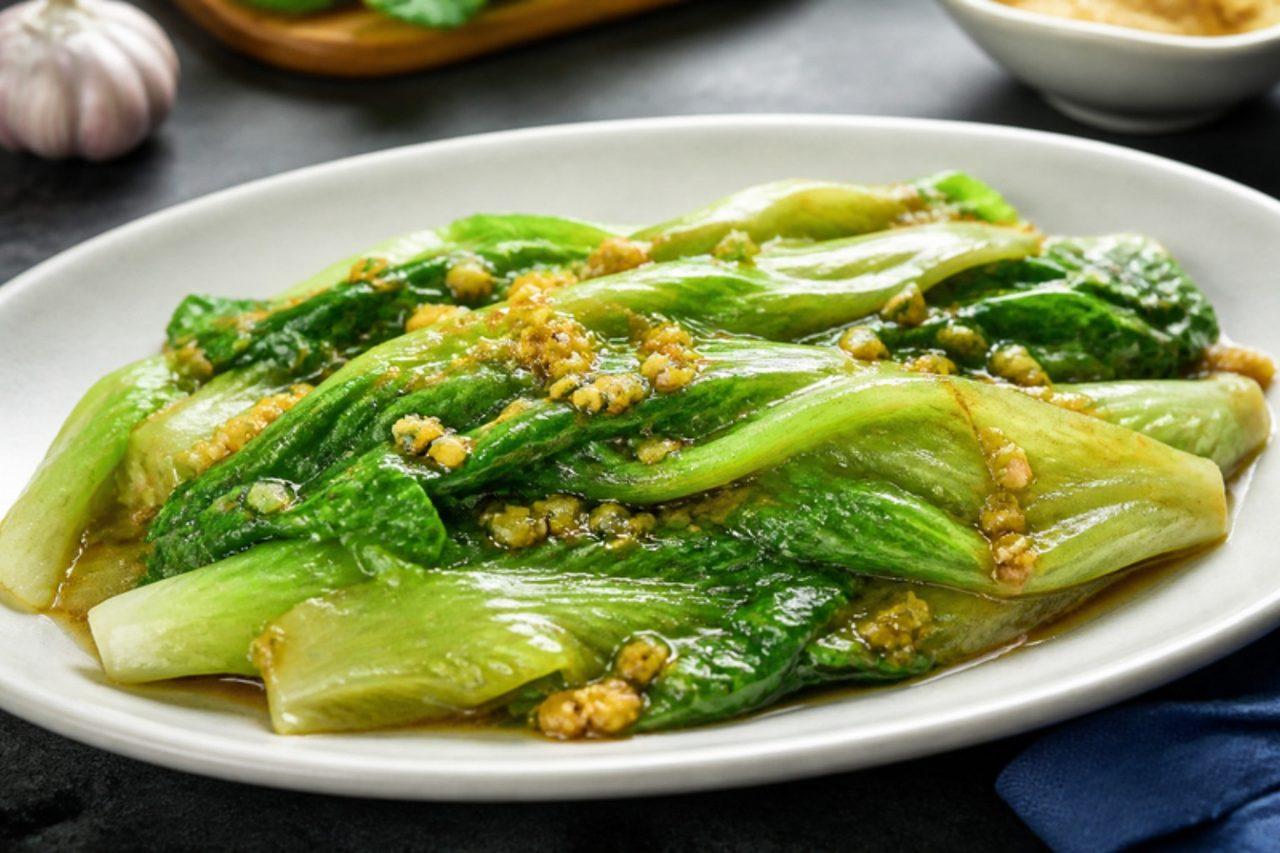
Suan rong sheng caiGarlic stir-fried lettuce

In Guangdong, lettuce is a cooking green, not just a salad leaf: suan rong sheng cai is iceberg or romaine flash-fried with heaps of garlic and a splash of soy, and it appears beside rice at family dinners and in every Hong Kong-style café. The leaves wilt at the edges while the ribs stay juicy and crunchy. Cantonese cooks often add oyster sauce; light soy and a pinch of sugar keep this one vegan. The mistake to avoid is wet leaves: water left on the lettuce spits in the oil and stews the dish, so spin them very dry. Chef's tip: cook it in two batches if your wok is small, because a crowded pan turns lettuce limp and grey in seconds.

by KrazyBadal 0 views

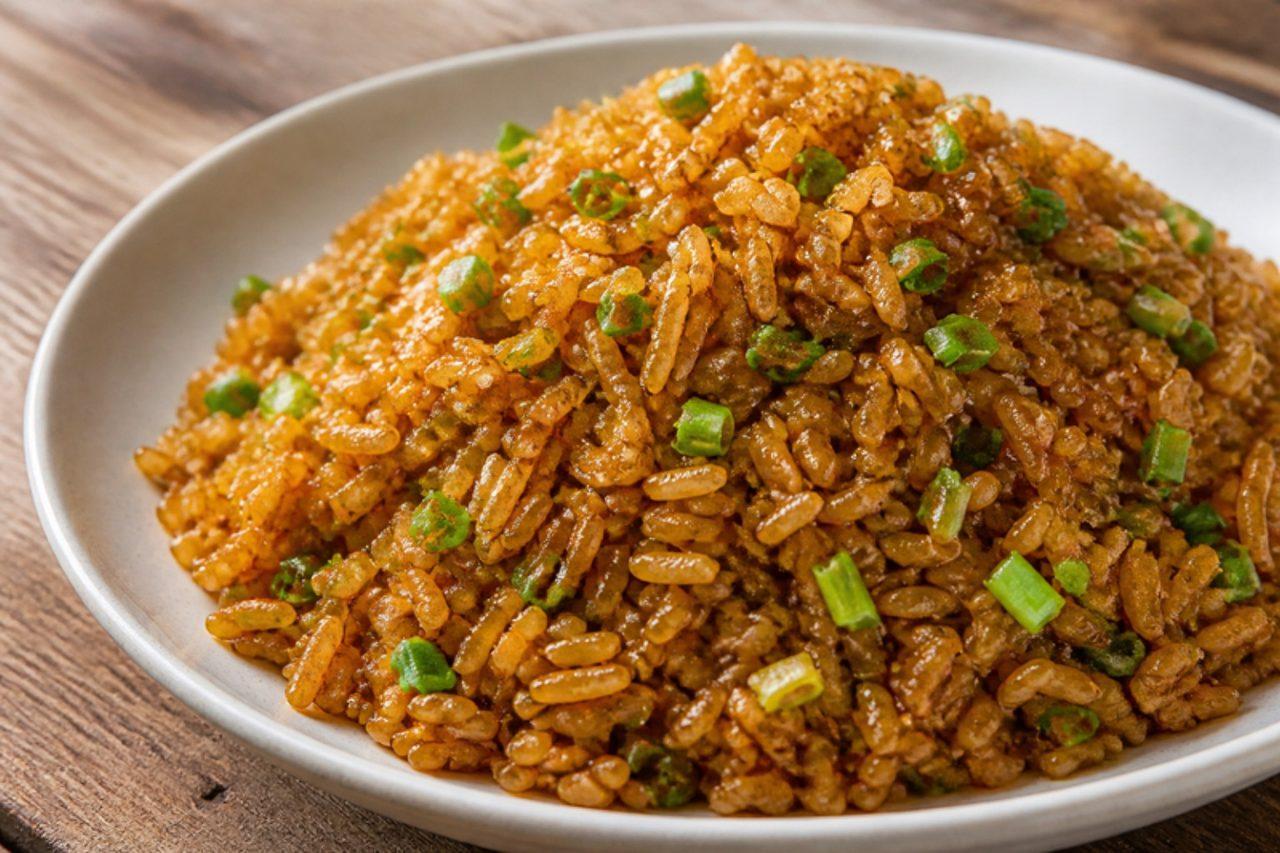
Jiangyou chaofanSoy sauce fried rice

Jiangyou chaofan, soy sauce fried rice, is what Shanghai home cooks do with yesterday's rice on a busy weeknight: rice tossed in a hot wok with light and dark soy and a fistful of spring onion until every grain is evenly bronze and slightly smoky. Many families stir in a beaten egg; this vegan version leaves it out, but you can add one before the rice if you eat eggs. The common mistake is pouring soy straight onto the rice in the middle of the wok, which leaves dark patches and pale grains; drizzle it round the hot edge instead. Chef's tip: break up cold rice with damp hands before it goes in, so it fries grain by grain instead of steaming in clumps.

by KrazyBadal 0 views

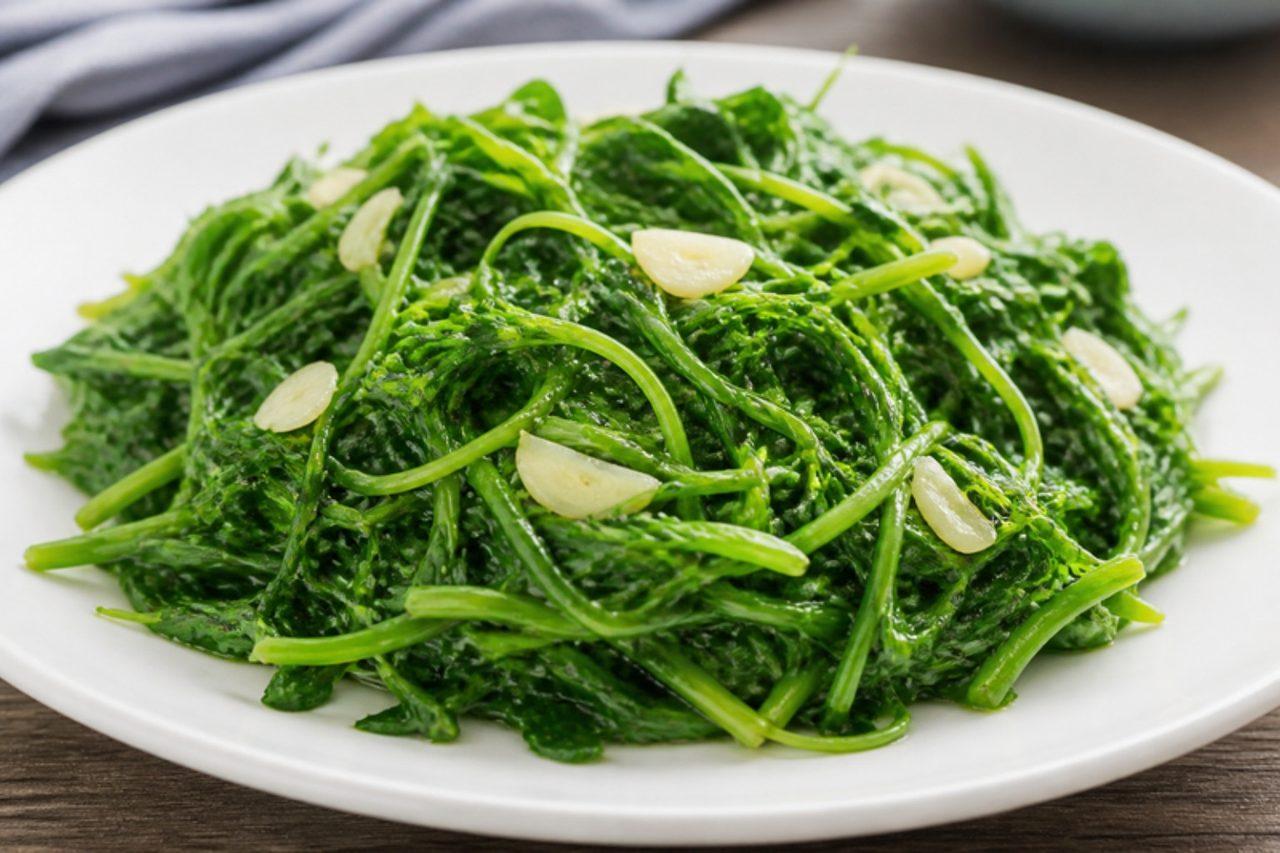
Qing chao dou miaoGarlic pea shoots

Dou miao, the tender tips of the pea plant, are a prized spring and winter green in Sichuan restaurants and Cantonese homes alike, and qing chao, plain stir-frying, is the way they are most often cooked for a quick dinner beside rice. The shoots collapse in under a minute and taste sweet, like fresh peas. Buy the larger cooking pea shoots from Chinese grocers, not the tiny salad cress. The common mistake is overcooking: once they turn dark and stringy they lose all their sweetness, so pull them off the heat while a few leaves still look raw. Chef's tip: add a splash of water with the salt; the steam finishes the stems evenly without the leaves frying dry.

by KrazyBadal 0 views

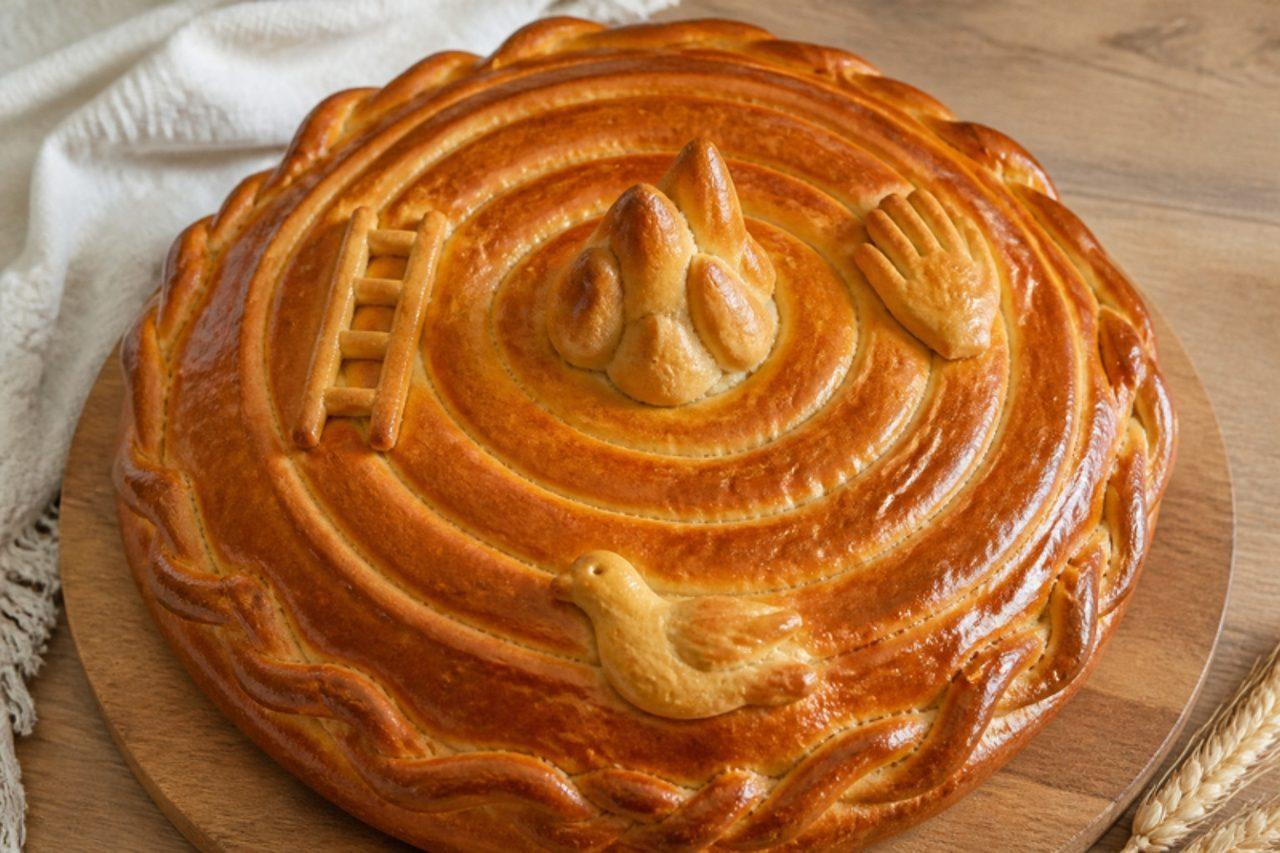
Siete cielos (seven heavens bread)

Pan de siete cielos, 'seven heavens bread', is a Sephardic Shavuot tradition from Thessaloniki and Turkey, kept alive by Ladino-speaking families in Israel. A large round loaf of soft, slightly sweet bread is topped with a spiral and small dough shapes, often a ladder, tablets, birds and a hand, each a symbol from the festival story, then glazed and baked. It is the centrepiece of the dairy holiday meal and is broken and shared at the table. The common mistake is attaching the shapes with no water, so they lift off in the oven; brush underneath each one. Chef's tip: keep a fifth of the dough back for the decorations and keep it covered so it doesn't dry out while you shape.

by KrazyBadal 0 views

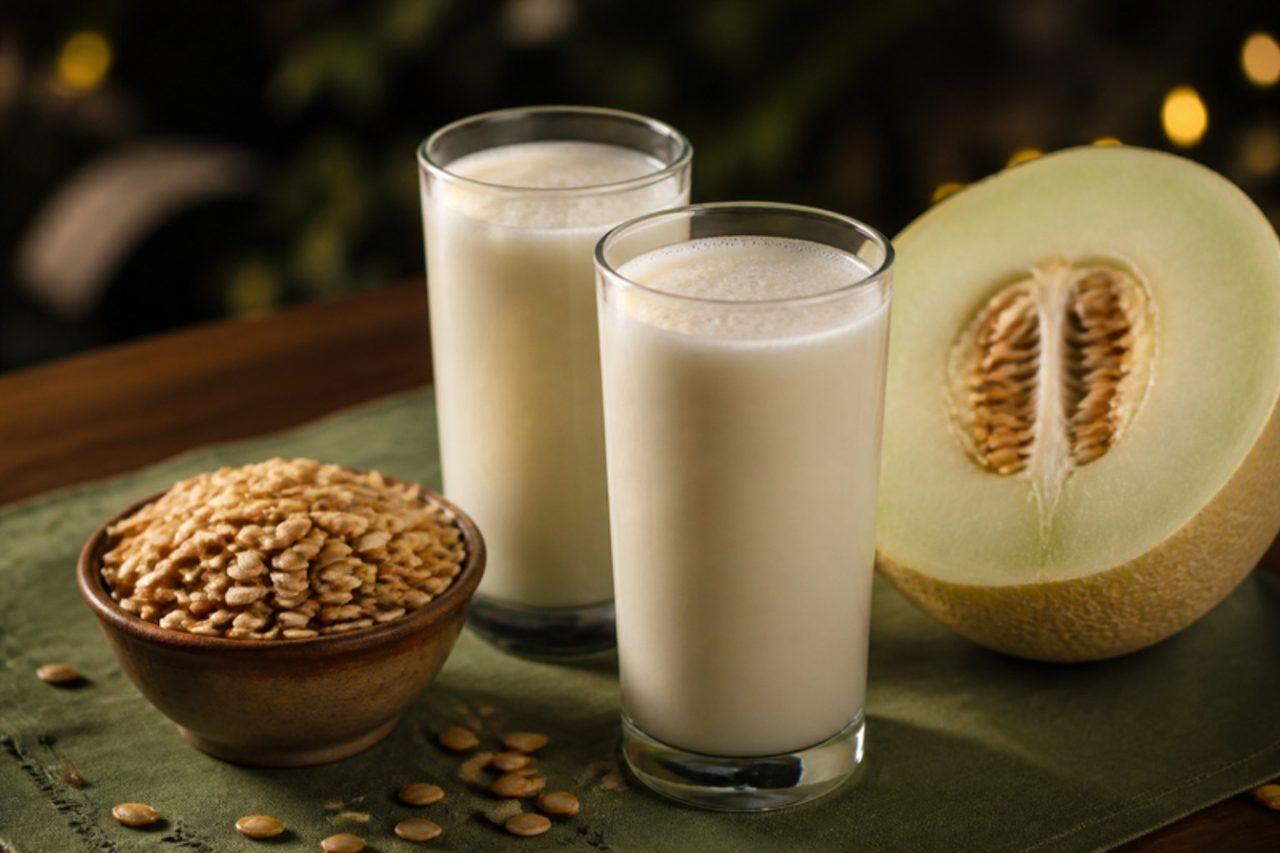
PepitadaToasted melon seed milk

Greek and Turkish Jews end the Yom Kippur fast with a glass of pepitada, a pale, gentle 'milk' made from melon seeds that were saved, washed and dried through the summer. The seeds are toasted, ground, soaked overnight in water wrapped in muslin, then squeezed to give a mild, nutty drink sweetened with a little sugar and scented with rose or orange-blossom water. It is soothing on an empty stomach after a day without food or water. The common mistake is toasting the seeds too dark, which makes the drink bitter. Chef's tip: start the night before; the long soak is what draws out the creamy flavour.

by KrazyBadal 0 views

Dowina (Kurdish yogurt soup)

Dowina, called ash-e doogh in Persian, is warming spring food in Kurdish homes around Newroz, when yogurt is plentiful and the first herbs are cut from the garden. Rice and chickpeas simmer in a tangy, lightly thickened yogurt broth, finished with fresh dill, coriander and a sizzle of dried mint in oil. It is eaten warm, never boiling hot, with flatbread. The common mistake is to heat the yogurt too fast without stirring, which makes it split into grainy curds. Chef's tip: whisk an egg yolk and a spoonful of rice flour into the yogurt before it goes on the heat; it holds the soup smooth all the way to the simmer.

by KrazyBadal 0 views

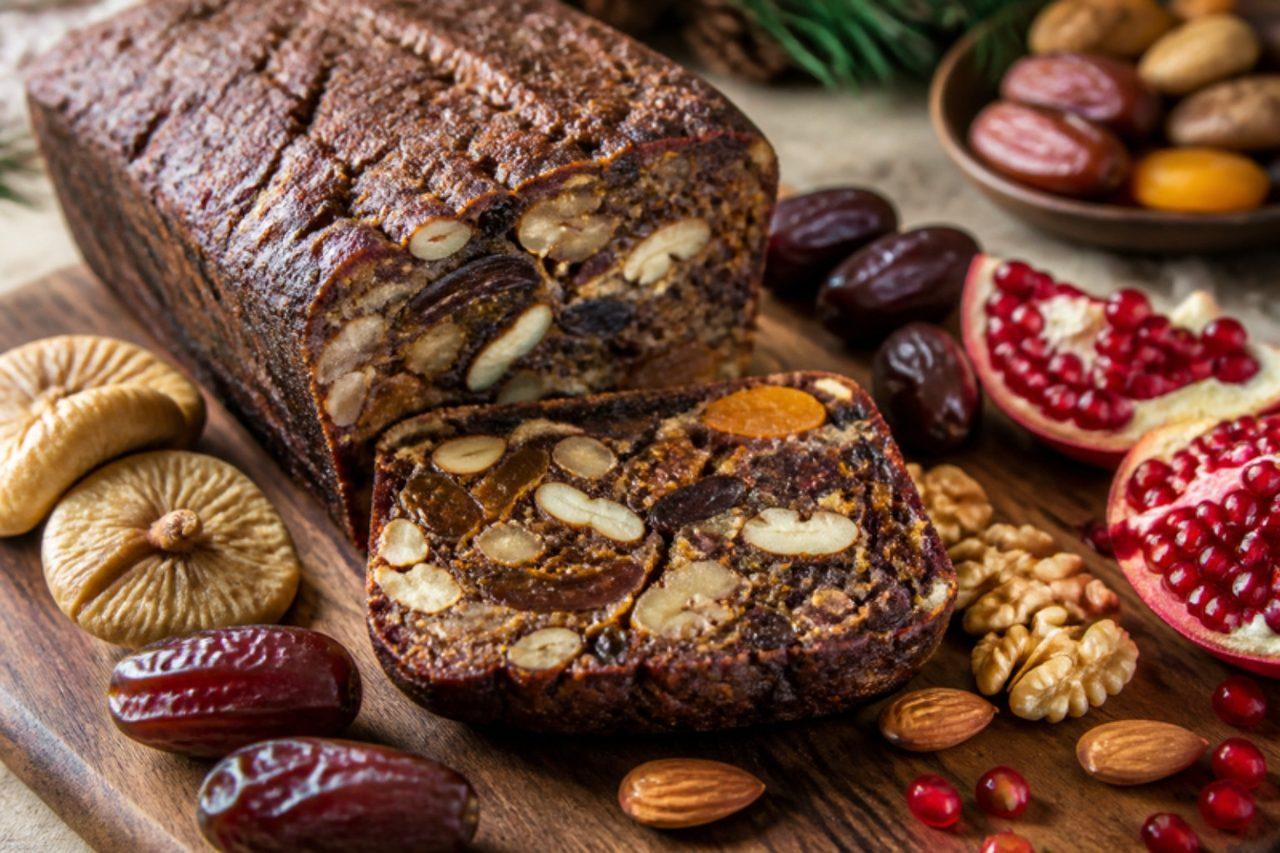
Tu BiShvat dried fruit and nut cake

Tu BiShvat, the New Year of the Trees, falls in late winter, and in Israel it is celebrated with plates of dried fruit and nuts, the fruits of the land, and with cakes made from them. This loaf is almost all fruit: chopped dates, figs, apricots and raisins with walnuts, held together by just enough egg and flour, so every slice shows a mosaic of colour. Serve it thinly sliced with tea. The common mistake is cutting it hot, when it crumbles; it slices neatly once completely cold. Chef's tip: toss the chopped fruit in the flour first, which keeps it from sinking and clumping.

by KrazyBadal 0 views

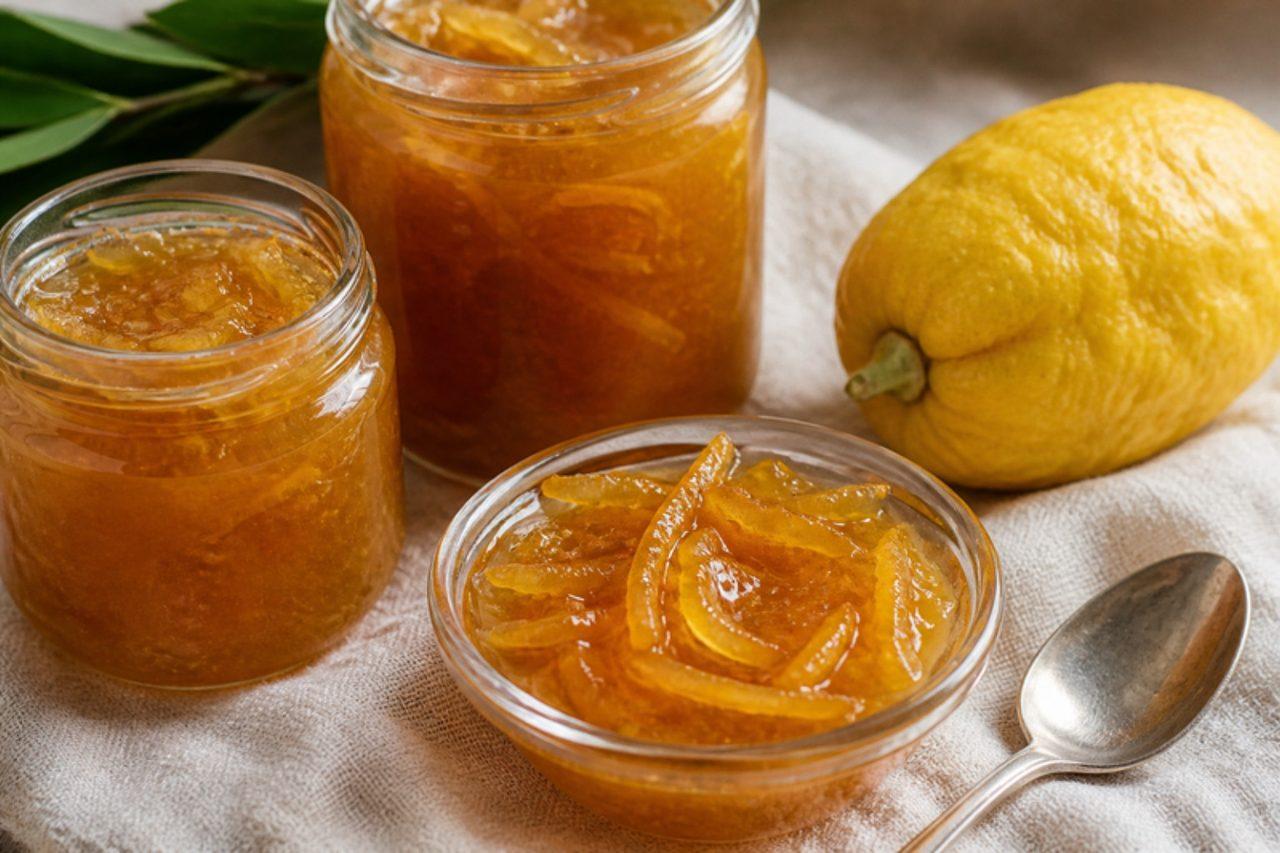
Etrog marmaladeCitron preserve

After Sukkot ends, many Israeli families keep the fragrant etrog (citron) used during the festival and turn it into marmalade, so its scent lasts into the winter. The thick pith is bitter, so the sliced fruit is soaked overnight and blanched in fresh water before it is simmered with sugar into a golden, bitter-sweet preserve, lovely on challah or with soft cheese. If your etrog was treated with sprays because it was grown only for ritual use, buy an unwaxed one sold for eating. The common mistake is skipping the soaking and changes of water, which leaves the marmalade harsh. Chef's tip: add a lemon for pectin and brightness, since etrogs are dry and set softly on their own.

by KrazyBadal 0 views

Chipa so'oCheese bread with spiced beef

In Paraguay, families bake chipa in the clay tatakua ovens on Holy Wednesday so there is food for Thursday and Good Friday, when cooking stops. Chipa so'o ('chipa with meat') is a cassava-starch and cheese bread wrapped around a little filling of minced beef cooked with onion and egg, then baked until crisp outside and chewy within. It is naturally gluten free. Chef's tip: knead the dough until it no longer cracks at the edges when pressed; dry dough splits around the filling.

by KrazyBadal 0 views

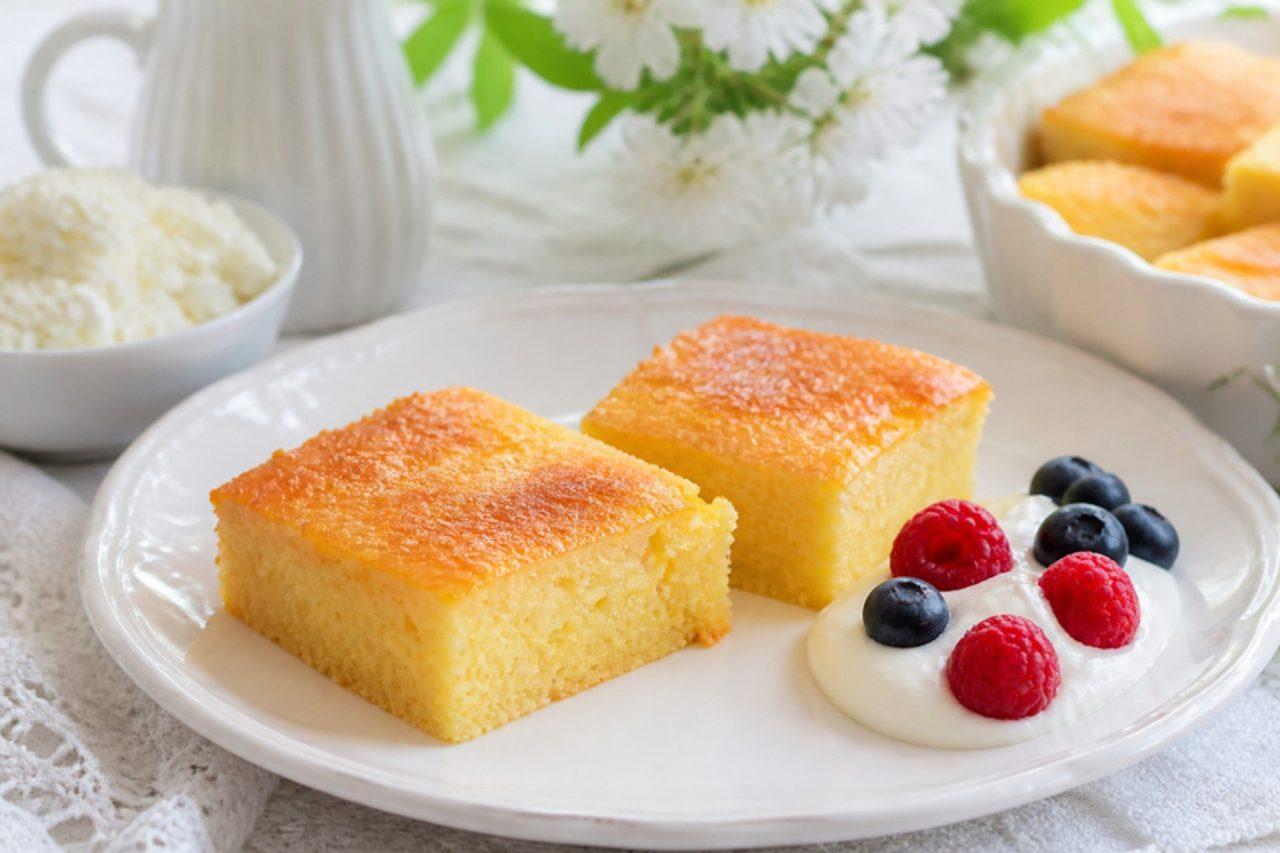
Malai (Romanian-Jewish cornmeal cake)

Romanian Jews brought malai to Israel, and it is a much-loved bake for Shavuot, the early-summer festival when dairy foods fill the table. Coarse cornmeal is mixed with sour cream, soft cheese, eggs and a little sugar, then baked into a golden cake that is moist and slightly crumbly, somewhere between cornbread and cheesecake. Eat it warm with a spoonful of sour cream or jam. Traditional soft white cheeses are sometimes set with animal rennet; choose a cheese labelled vegetarian if that matters to you. The common mistake is using fine polenta that hasn't soaked, which leaves the cake gritty. Chef's tip: let the batter stand for 15 minutes before baking so the cornmeal softens.

by KrazyBadal 0 views

KaguyjyWhite corn pudding

On the night of 23–24 June, Paraguayans celebrate San Juan with bonfires, games like walking over hot coals and the 'paso de fuego', and a table of traditional foods, and kaguyjy (also mazamorra) is one of them. It is a soft, creamy pudding of cracked white corn (locro) simmered slowly in water and then milk with sugar or honey, sometimes with orange peel. It is eaten warm or cold. It is gluten free. Chef's tip: soak the corn overnight and cook it until each kernel is tender before adding the milk, or it never turns creamy.

by KrazyBadal 0 views

KalanehWild leek stuffed flatbread

In Kurdistan and Kermanshah, Newroz arrives with the first spring greens on the hillsides, and families gather wild leeks to fold into kalaneh, thin griddle breads cooked over a fire or a hot pan and soaked in melted butter. The dough is plain and soft, rolled very thin around a pile of chopped leek or chives with a little salt and pepper, so the greens steam inside as the bread blisters. Eat it hot, torn into strips, with yogurt and tea at a Newroz picnic. The common mistake is wet greens, which turn the dough soggy and make it tear; dry them well after washing. Chef's tip: brush the butter on the moment the bread leaves the pan so it soaks right in.

by KrazyBadal 0 views

Pajagua mascadaBeef and cassava patties

Pajagua mascada is a Paraguayan street-food classic that appears on every table for the San Juan festival on 24 June, when bonfires burn and the night is full of games and traditional food. Minced beef is mixed with mashed cassava, onion, garlic and a little egg and flour, shaped into flat patties and fried until crisp. The name comes from Guaraní and refers to the 'chewing' of old Paraguayan cooks, who made it from leftover meat. Chef's tip: dry the boiled cassava well and remove its woody core, which keeps the patties light and crunchy.

by KrazyBadal 0 views

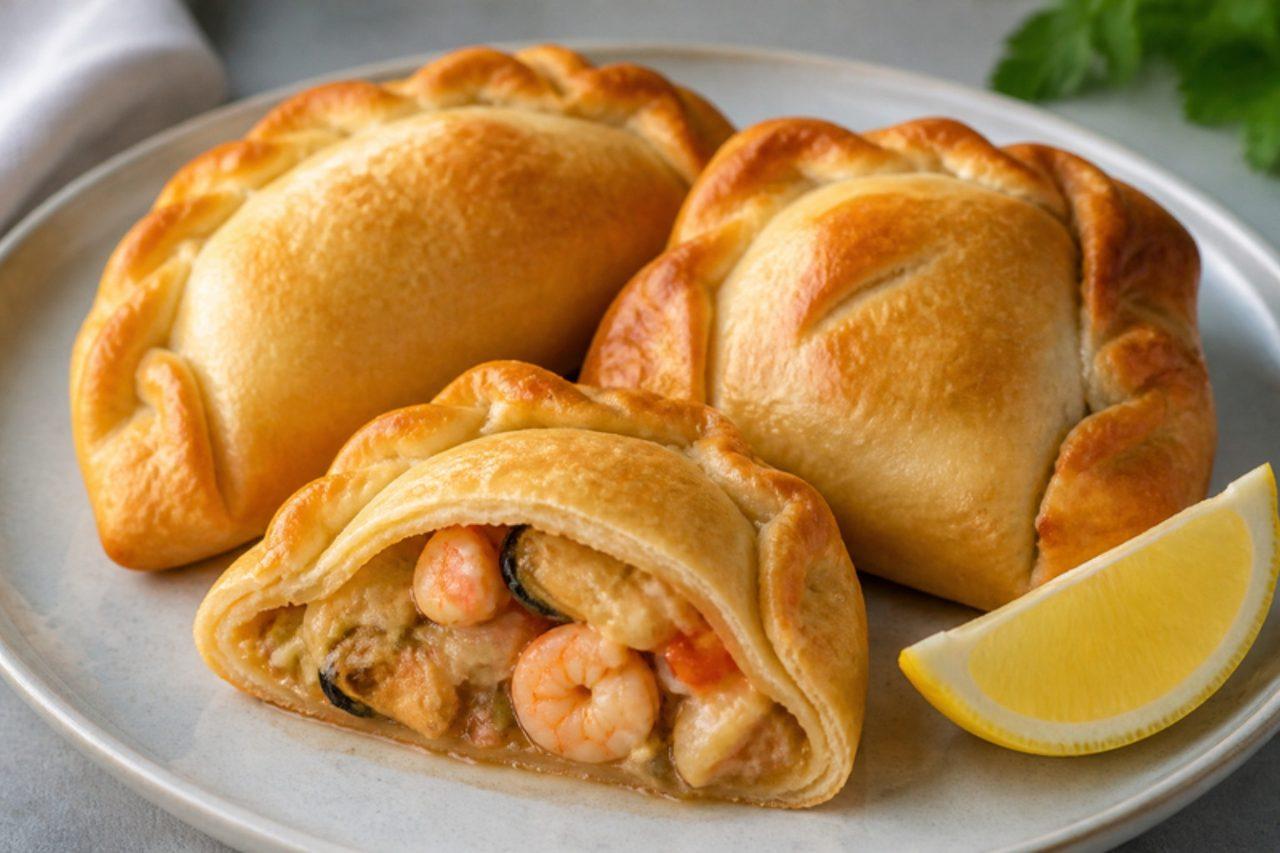
Empanadas de mariscosShellfish empanadas

On Good Friday along the Chilean coast, from La Serena to Chiloé, meat is off the table and empanadas de mariscos take the place of the usual beef pino. The filling is a mix of shellfish, such as mussels, clams, prawns and crab, cooked with onion, garlic, a little chilli and paprika, bound with a spoon of cream and cheese, and baked or fried in a crisp pastry. Use cooked or frozen seafood mix if you like. Chef's tip: drain the cooked shellfish well and reduce its juices separately, as excess liquid makes the pastry soggy.

by KrazyBadal 0 views

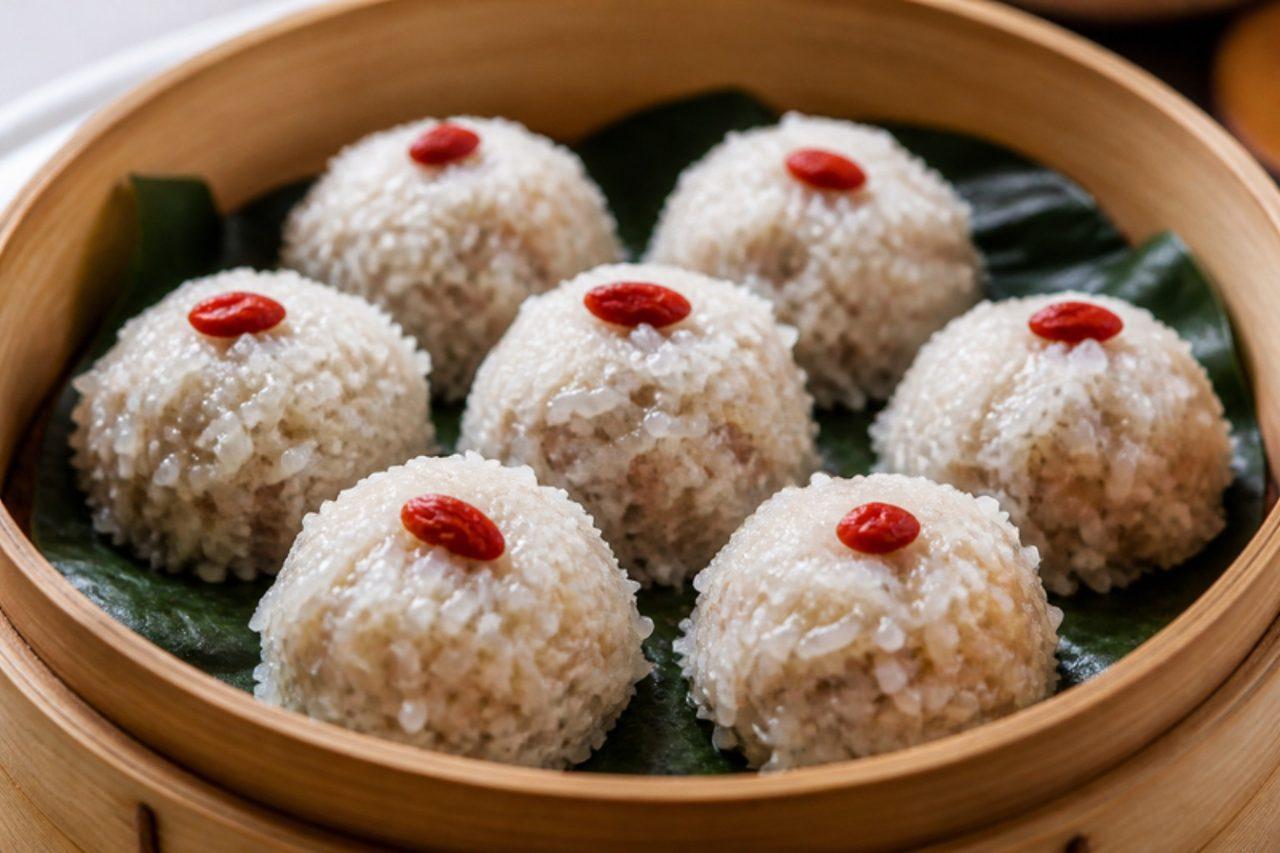
Zhenzhu wanzi (pearl meatballs)

Pearl meatballs come from Mianyang in Hubei, where they are a fixture of the Spring Festival banquet: round shapes stand for a family gathered whole, and the gleaming grains of rice for pearls and wealth. Steaming turns the glutinous rice coating translucent and slightly chewy, while the pork inside stays tender and juicy, with crunch from water chestnuts. They are mild and soft, so children love them, and they look beautiful on a steamer of mixed dim sum or as one of the many dishes at the reunion dinner. Tamari keeps them gluten free; ordinary light soy sauce works if that does not matter to you. Chef's tip: beat the pork in one direction until sticky before shaping; it keeps the meatballs bouncy and stops the rice from falling off.

by KrazyBadal 0 views

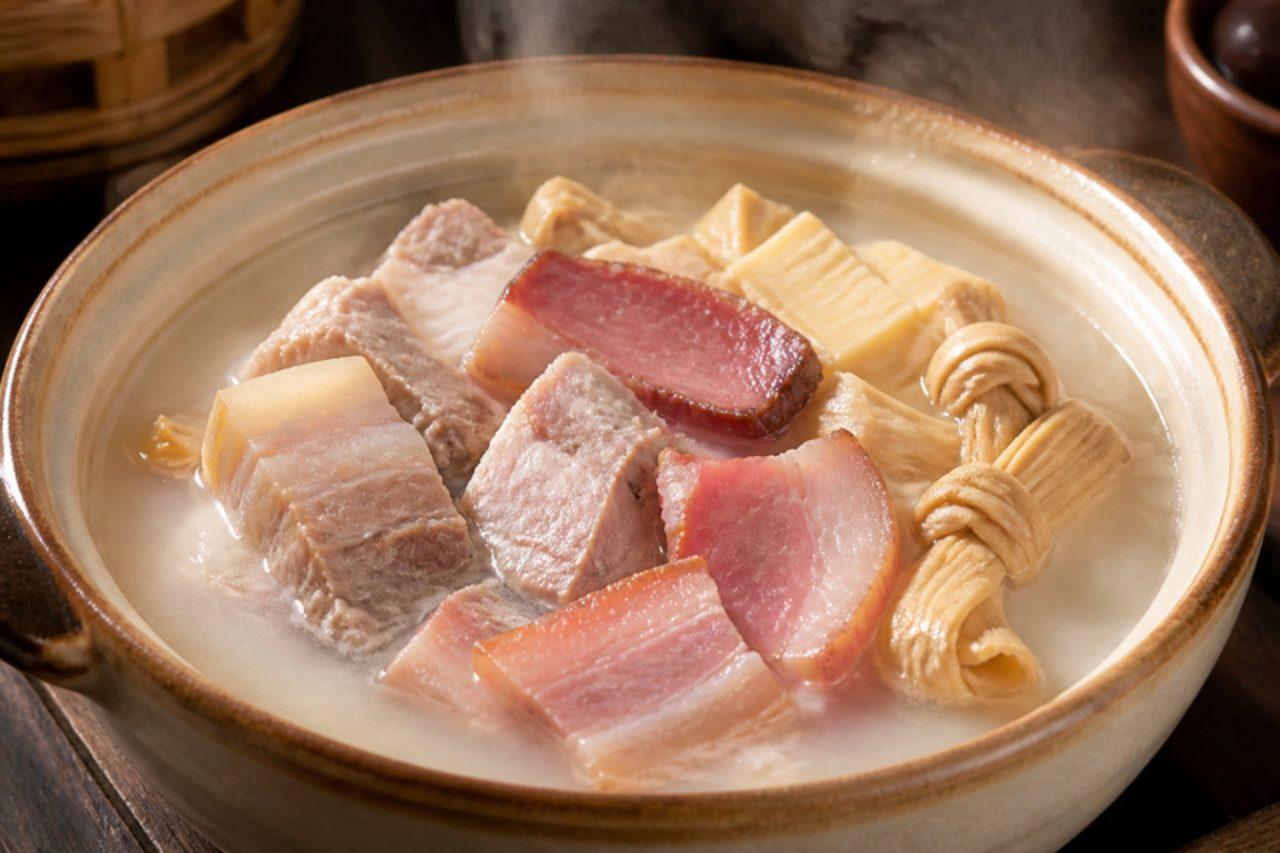
Yan du xian (Shanghai fresh and cured pork soup)

Yan du xian is the soup that tells Shanghai and the Jiangnan region that the Spring Festival has arrived: 'yan' for salted pork, 'du' for the gentle bubbling of a pot left to simmer, and 'xian' for fresh pork and new bamboo shoots. The cured and fresh meat together stand for a year that keeps the good things of the past and welcomes the new. Long, slow cooking turns the broth milky, deeply porky and savoury, with sweet, crunchy bamboo and soft tofu knots that soak up the flavour. Set it in the middle of the reunion table and eat it between the richer dishes with plain rice. Chef's tip: keep the pot at a lazy simmer, never a rolling boil, or the salted pork turns hard and stringy.

125 minChineseSoups
by KrazyBadal 0 views

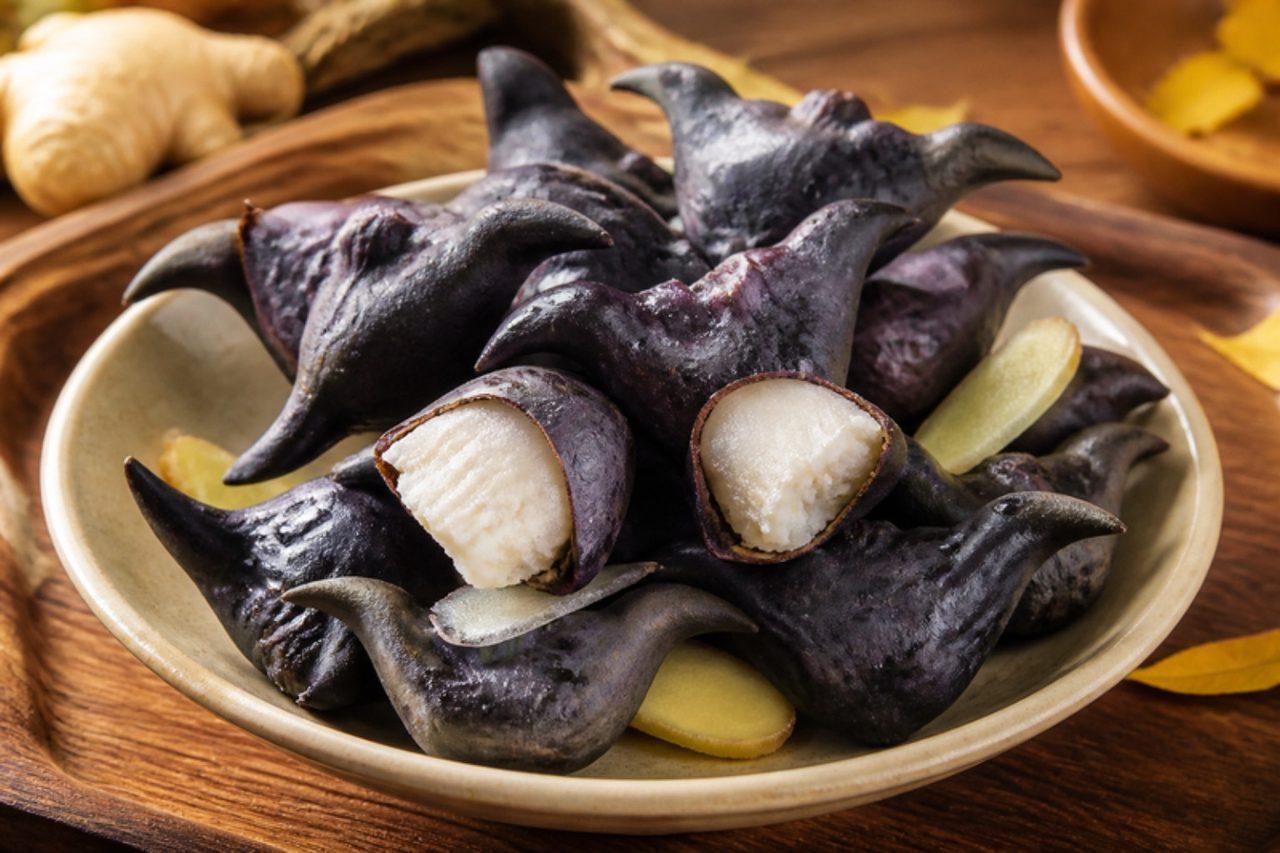
Boiled water caltrops (zhu lingjiao)Boiled water chestnuts in shell

Boiled water caltrops are a Mid-Autumn snack in Jiangnan and Guangdong, piled on the table beside mooncakes and pomelo while the family waits for the moon. The dark, two-horned nuts are harvested in autumn, and their name, ling, sounds like the word for clever, so children are told to eat them to grow bright; some families also say the shape looks like a bat, a symbol of good fortune. Inside the shell the white flesh is floury and sweet, much like a chestnut. Serve them warm in a big bowl with tea and the rest of the moon-watching snacks. Chef's tip: buy them fresh in autumn from Chinese grocers and always cook them through; never eat water caltrops raw, as they grow in ponds and can carry parasites.

by KrazyBadal 0 views

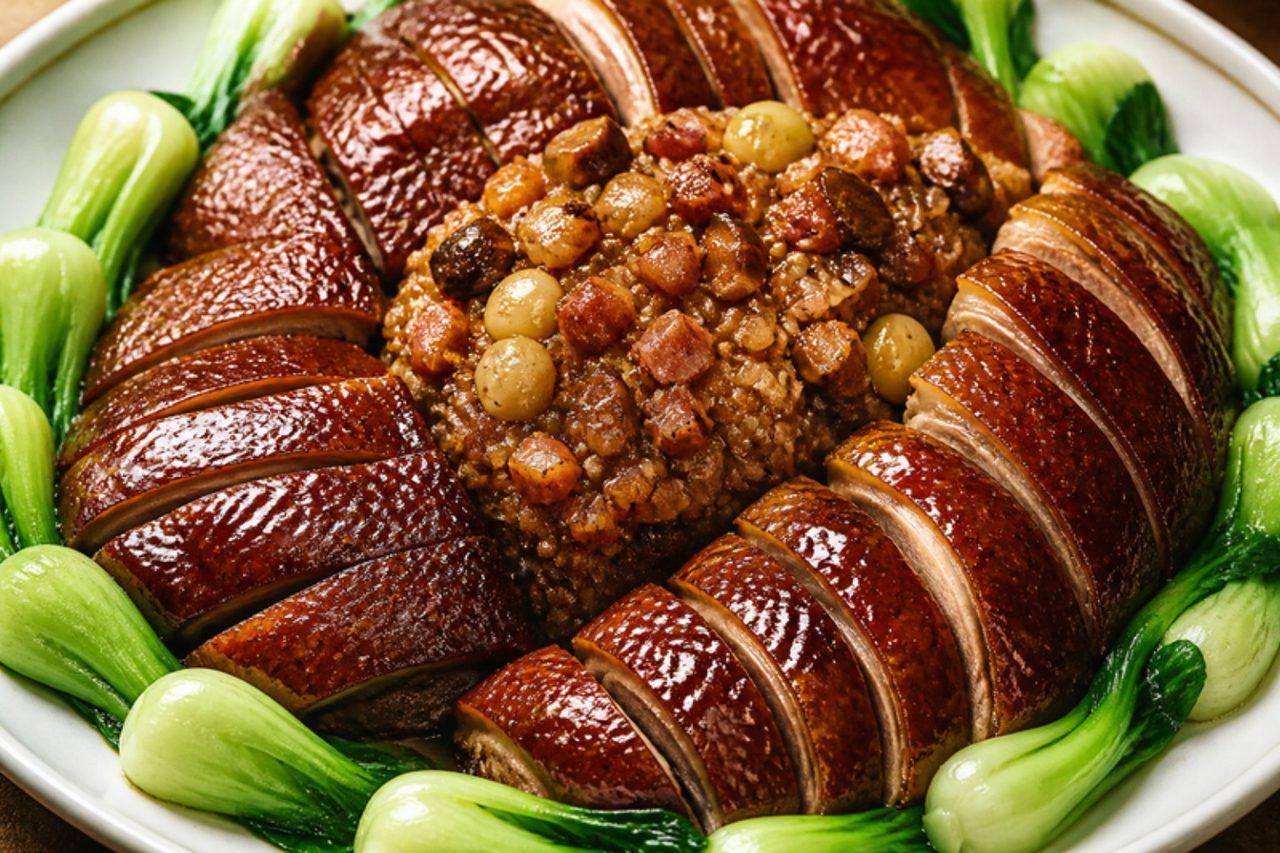
Ba bao ya (eight-treasure duck)

Ba bao ya, eight-treasure duck, is the grand centrepiece of a Shanghai or Suzhou Spring Festival dinner: eight being the luckiest number, the duck is filled with eight good things for eight kinds of fortune. A whole duck is boned so the skin stays in one piece, then packed with glutinous rice, dry-cured ham, chestnuts, shiitake, lotus seeds, bamboo shoots and dried shrimp, and braised in soy and rock sugar until deep mahogany. Cut into thick slices, it shows a mosaic of stuffing held by tender, sticky-glazed meat. The stuffing uses Chinese dry-cured ham and the braise uses Shaoxing wine; for an alcohol-free version use unsalted stock with a few drops of rice vinegar. Serve carved at the table with steamed greens. Chef's tip: ask your butcher to bone the duck and remove the head, leaving the skin intact; it saves an hour and any tears.

240 minChineseMeat
by KrazyBadal 0 views

Shanzha gao (hawthorn fruit cake)

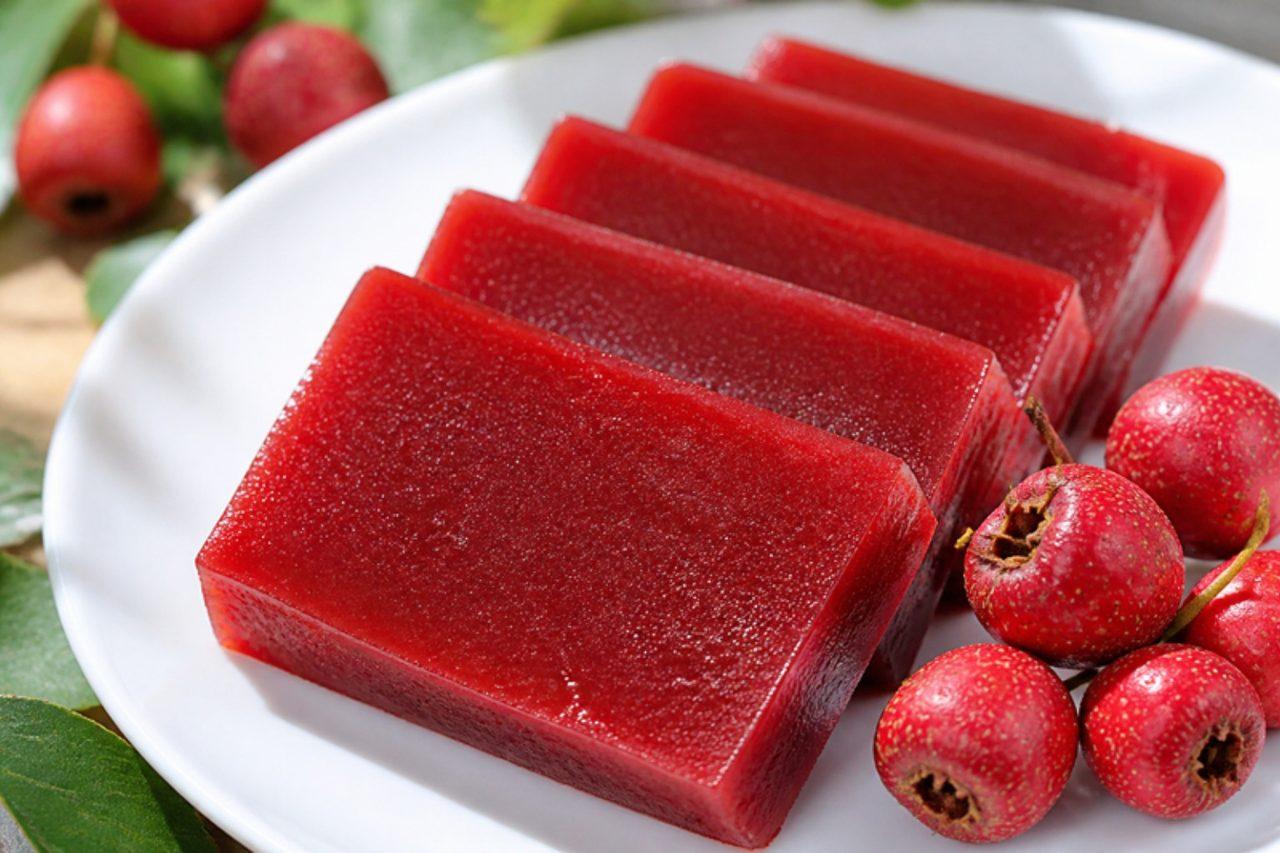
When the hawthorn trees of Hebei and Shandong drop their red berries in late autumn, cooks across northern China, and especially in Beijing, boil them down into shanzha gao, a firm fruit cake cut into ruby slices. It is a winter sweet, eaten after rich meals because people say it helps digestion, and it sits beside candied hawthorn skewers at the New Year fairs. The texture is like a firm fruit jelly that cuts cleanly, and the flavour is bright and sour-sweet, like a cross between crab apple and cranberry. Serve thin slices with jasmine tea, or cubes on a fruit plate. It is naturally egg-free and needs no setting agent at all: hawthorn is so rich in pectin that the cooked purée sets firm as it cools. Chef's tip: the common mistake is stopping too soon, so keep stirring until a spoon drawn across the pan leaves a clear trail that does not close up.

by KrazyBadal 0 views

Sanzi (fried dough threads)

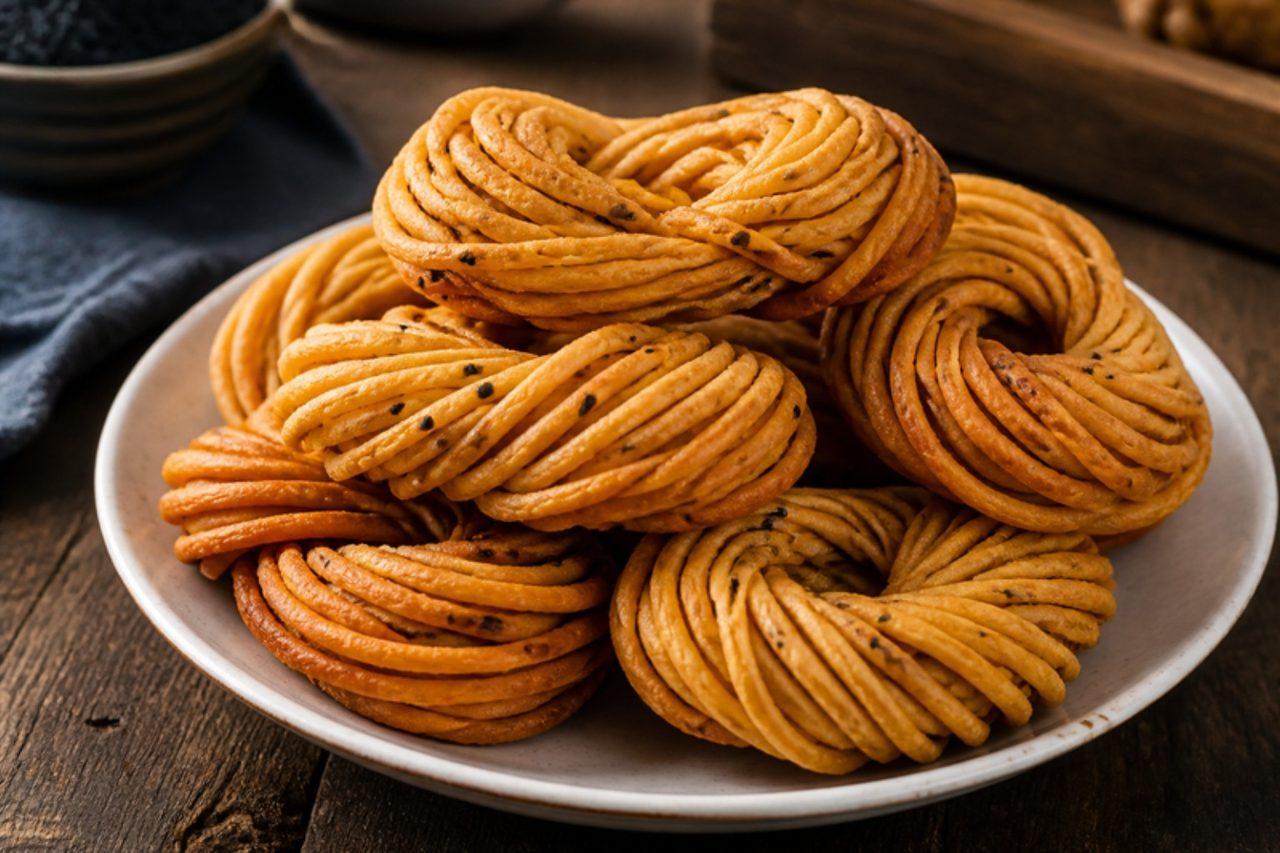
Sanzi are lacy coils of fried dough threads, made across Jiangsu and Shandong and by Hui and Uyghur cooks in Xinjiang. They belong to Hanshi, Cold Food Day, just before Qingming, when old custom forbade lighting the stove, so families fried them in advance to eat cold; the shatteringly crisp coils keep well for days and stand for the care taken to prepare for the remembrance. The dough is lightly salted and the strands snap like thin crackers, with a nutty note from sesame. Break them over congee or soy milk, or eat them on their own with tea. Chef's tip: rest the oiled ropes properly; relaxed dough stretches to thread-thin without snapping.

by KrazyBadal 0 views

Showing 24 of 669 recipes

Show more recipes

Page 1 of 28