Skip to content
Recipes

All recipes

Vegetarian, or something you can't eat? Set your diet once and we'll hide recipes that don't fit.

Quinotos en almíbar (Argentine kumquats in syrup)

In Buenos Aires and the river provinces of the Litoral, kumquat trees ripen in the middle of winter, between June and August, and the fruit goes straight into jars of syrup. Grandmothers' pantries held quinotos for the whole year, brought out for birthdays and long Sunday lunches. Each little fruit turns glossy orange and translucent, with a soft, bittersweet skin and a sharp, juicy centre. Spoon them over vanilla ice cream, serve them with a slice of fresh cheese in the style of postre vigilante, or eat them straight from the jar. Many bar menus offer them steeped in spirits; this version keeps only the syrup. Naturally egg-free, the quinotos rely on sugar syrup to preserve them, while pectin from the peel gives the syrup a light, jammy body. Chef's tip: blanch the fruit three times from cold water; the common mistake is skipping this, which leaves the skins tough and bitter.

by KrazyBadal 0 views

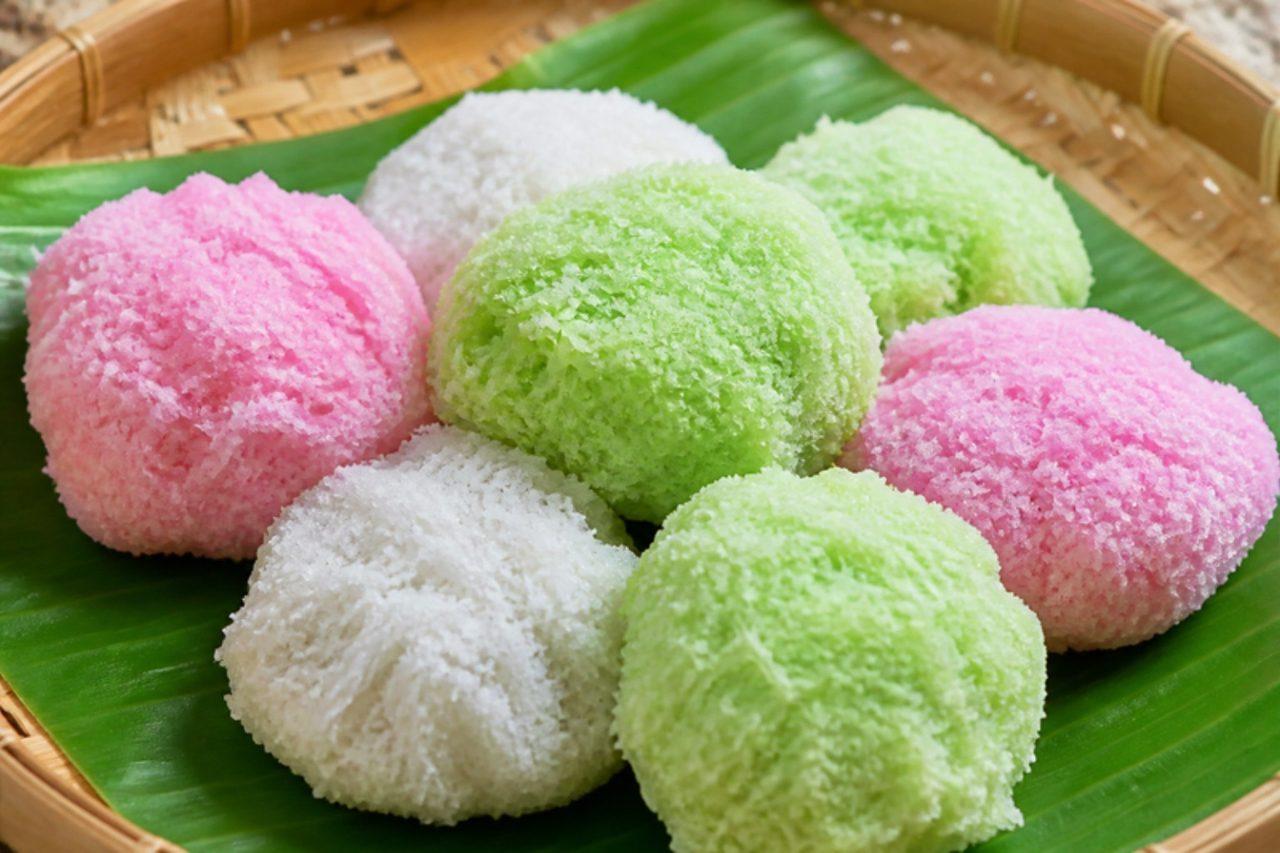
Geplak (Bantul coconut sugar candy)

Drive south from Yogyakarta to Bantul and you pass shop after shop selling geplak, the brightly coloured coconut candy that Javanese travellers buy by the basket as oleh-oleh, a gift for the people back home. Freshly grated coconut is cooked in sugar syrup until it dries and begins to crystallise, then a spoonful of toasted rice flour pulls it together into a firm, sandy-textured sweet. It is very sweet and coconutty with a gentle pandan scent, and it crumbles softly when you bite it. Serve small pieces with strong Javanese coffee or tea. Geplak is naturally egg-free: the recrystallising sugar and the toasted rice flour are what bind the coconut and let it hold its shape. Chef's tip: cook over a medium heat rather than high; the common mistake is rushing, which browns the coconut and dulls those pastel colours.

by KrazyBadal 0 views

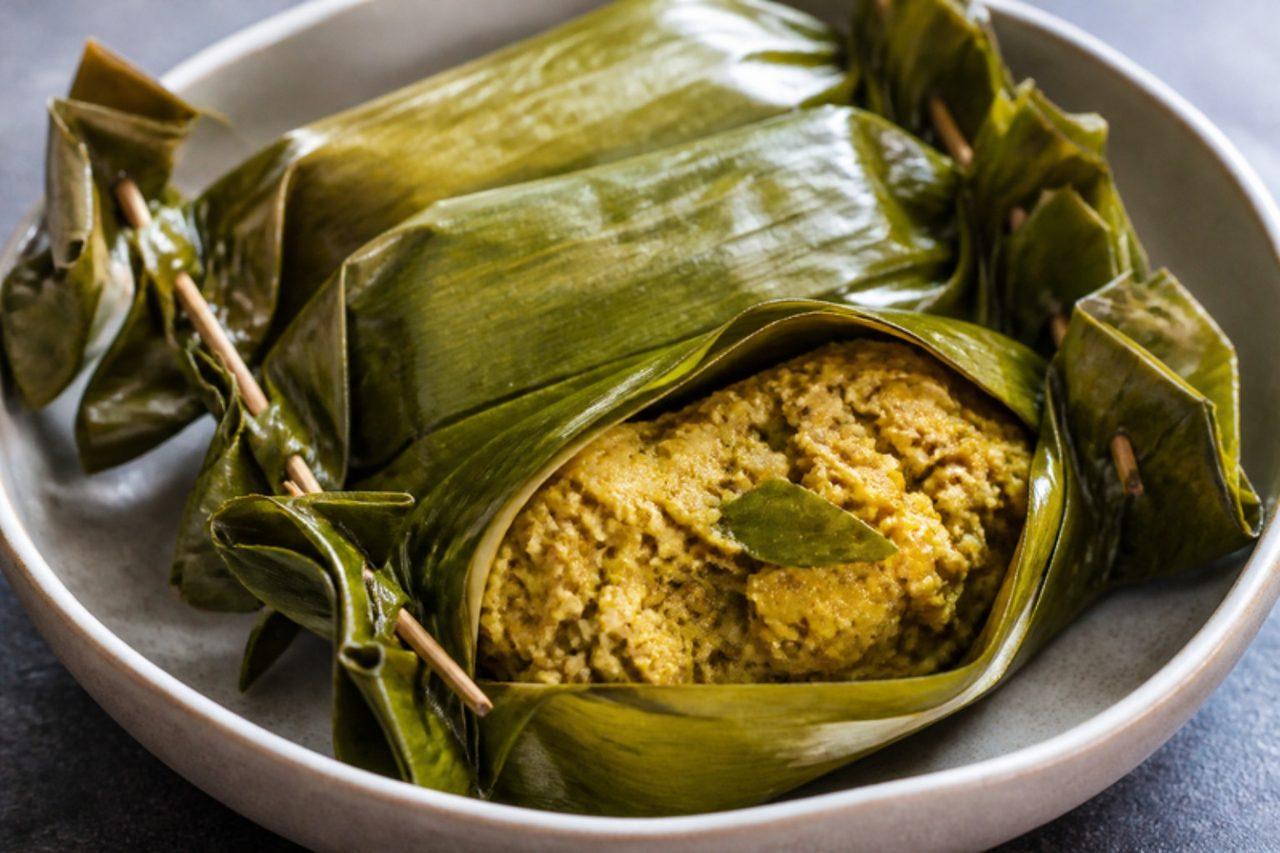
Tum ayam (Balinese steamed spiced chicken parcels)

Tum ayam are small banana-leaf parcels made in Bali for Galungan and family ceremonies, when they appear on festive plates and in offerings alongside lawar and satay; wrapping the food in leaf is part of how Balinese cooking shows care for what is offered. Minced chicken is mixed with cooked base genep, a spoonful of coconut cream and shredded lime leaf, then folded into leaves and steamed until firm and juicy. The banana leaf gives a gentle, tea-like aroma, and the filling is spicy, fragrant and moist, like a soft spiced pâté. Serve the parcels with rice and a vegetable dish, letting everyone unwrap their own. Chef's tip: cool the fried paste completely before it meets the raw chicken, so the mixture stays cold and safe and the parcels hold their shape.

by KrazyBadal 0 views

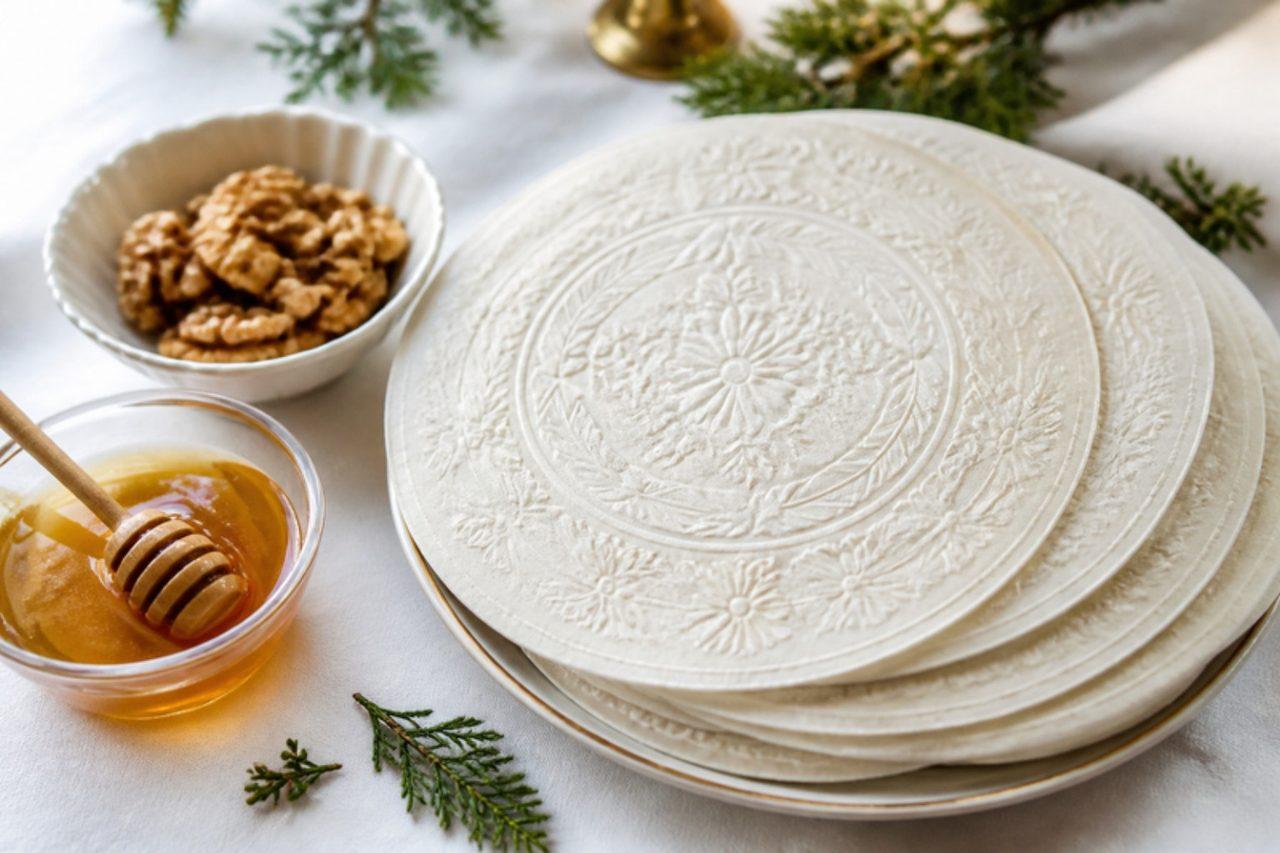
OblátkyChristmas wafers with honey

In Slovakia the Christmas Eve supper (Štedrá večera) opens with oblátky: large, paper-thin wafers stamped with a nativity pattern. The head of the household marks each person's forehead with a cross of honey, and everyone eats a wafer spread with honey, often with a sliver of garlic for health, before the cabbage soup. Families buy them from the church or bake them on a patterned wafer iron; this recipe also gives a pan method for thin, crisp wafers. Chef's tip: the batter must be thin like single cream, as a thicker batter gives a soft pancake instead of a wafer.

by KrazyBadal 0 views

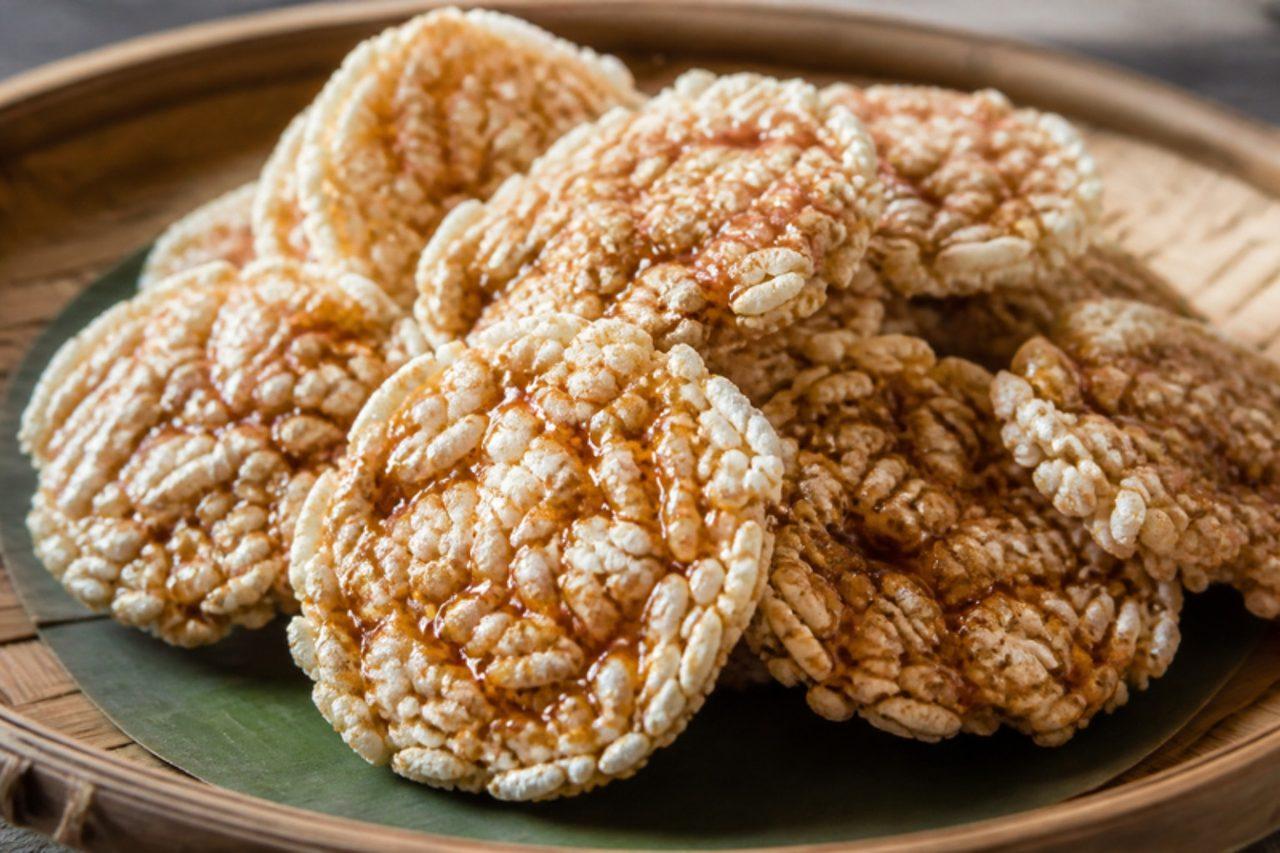
Jaja begina (Balinese sun-dried rice crackers)

Jaja begina are the round rice crackers that fill Balinese offering towers for Galungan; once the prayers are said, the crackers come home as a crunchy snack for everyone. Steamed glutinous rice is pressed into thin discs and dried in the sun for days until rock hard, and then a quick fry makes them puff up, turn pale gold and become light and crisp. A thread of warm palm sugar syrup over the top makes them sweet and sticky. Without strong sun, a low oven does the drying in an afternoon. Chef's tip: make a big batch of the dried discs; stored airtight they keep for months, and you can fry a few whenever you like.

by KrazyBadal 0 views

Tmar mehchi (Moroccan almond-stuffed dates)

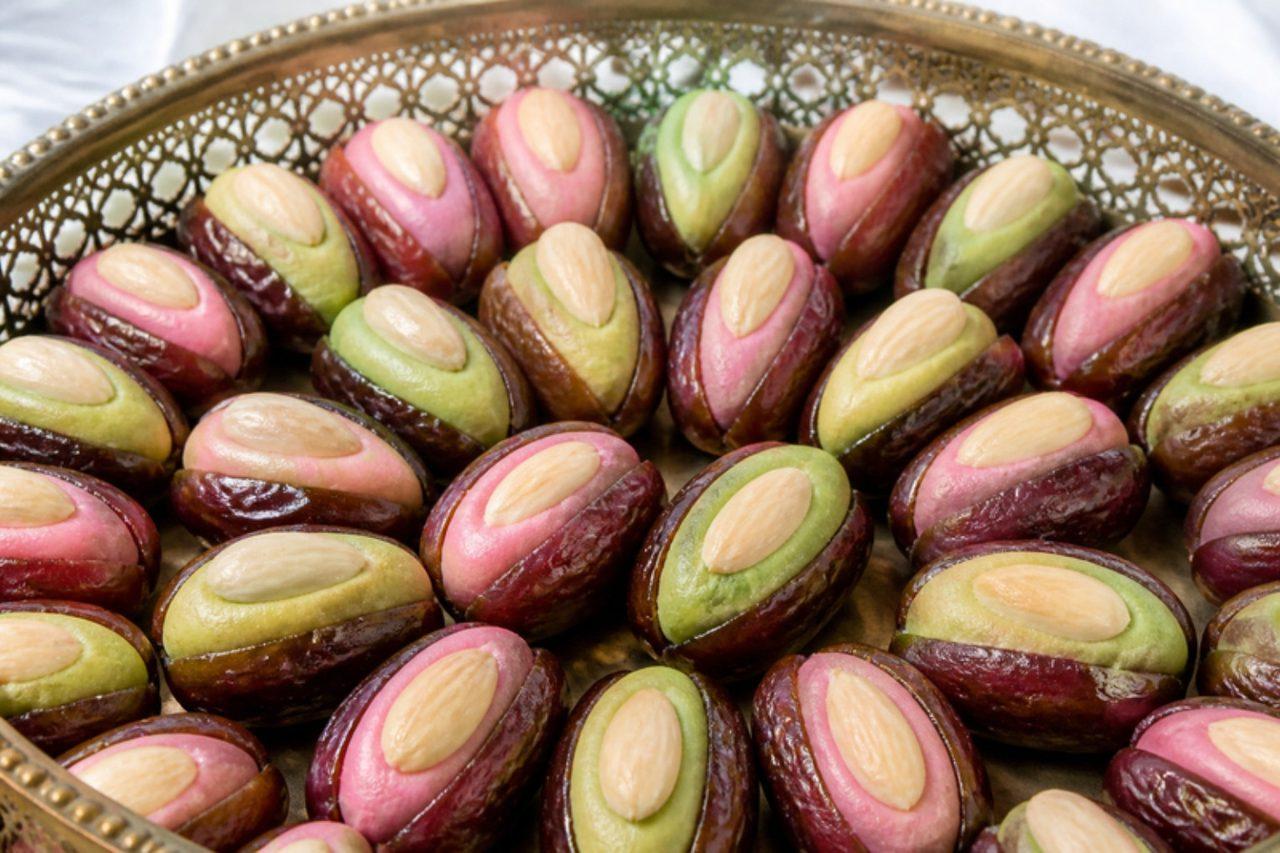
Tmar mehchi is the stuffed date of Fez and Marrakech, piled high on silver trays at weddings, engagements and Eid, and offered to guests with mint tea. Soft dates are filled with a homemade almond paste perfumed with orange-blossom water, often tinted pale green or pink to match the celebration, then scored with a knife so the filling shows. They are soft, rich and caramel-sweet, with a floral, nutty middle. The paste here is mixed from ground almonds and icing sugar, so there is no shop marzipan, which can contain egg white. It is naturally egg-free: the dates' sticky flesh and a few spoonfuls of orange-blossom water bind the almond filling. Chef's tip: add the orange-blossom water a little at a time and stop when the paste is firm like play dough. The common mistake is a wet paste, which oozes out and makes the dates slippery.

by KrazyBadal 0 views

Lontong Cap Go MehRice cakes with chicken curries

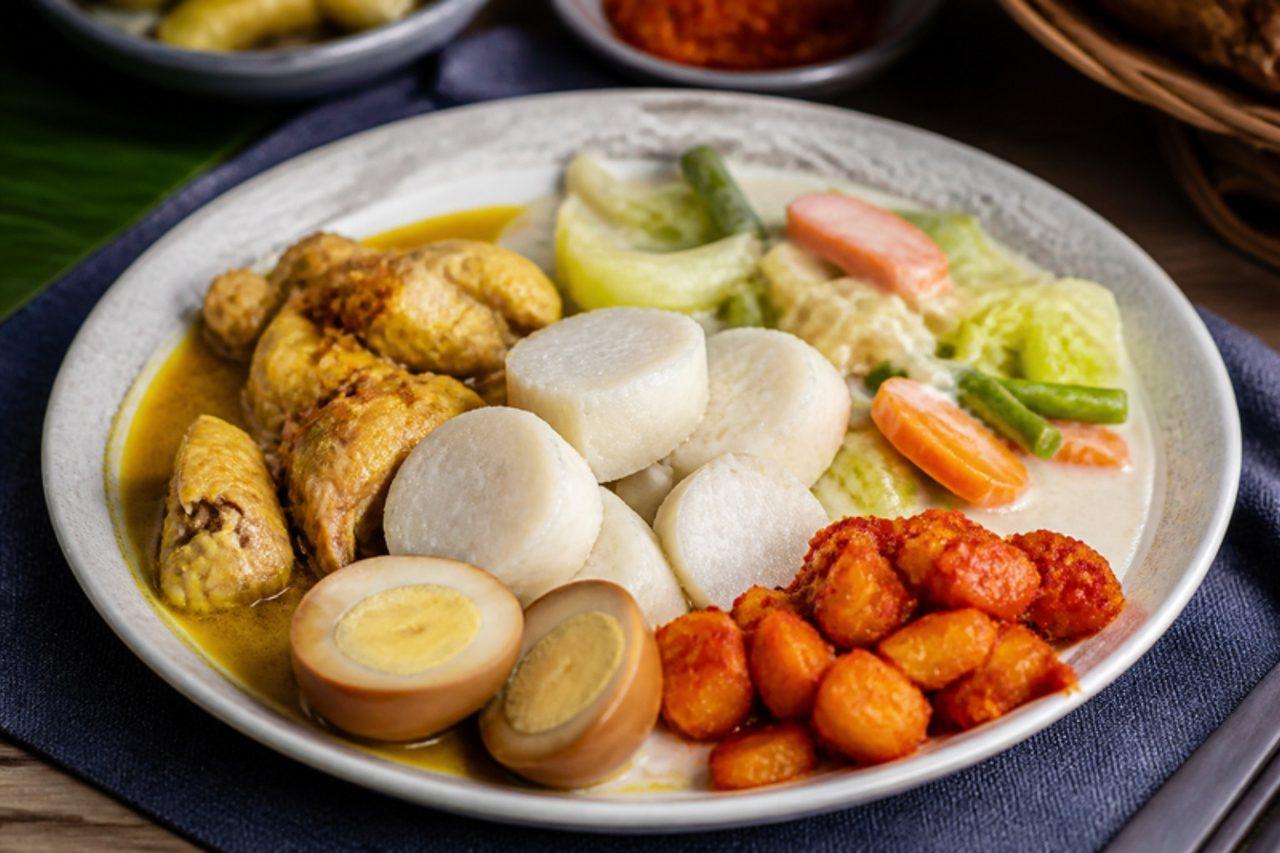
Lontong Cap Go Meh is the Peranakan Chinese feast for Cap Go Meh, the fifteenth and last night of Imlek (Chinese New Year) in Java, where Chinese and Javanese traditions meet on one plate. It is not the everyday lontong sayur, which is simply rice cakes in a vegetable curry: this is the full festive spread, with rice cakes, yellow opor chicken in coconut milk, sayur lodeh vegetables, eggs simmered in the opor, and spicy sambal goreng potatoes, all ladled into one bowl. The long rice cakes are said to stand for long life, the golden opor for prosperity and the round eggs for luck. Rich, creamy, sweet and spicy all at once, it needs nothing more than krupuk and fried shallots. Chef's tip: cook the lontong a day ahead and chill it overnight, so it slices cleanly and the feast day is calmer.

by KrazyBadal 0 views

Jukut ares (Balinese banana stem soup with chicken)

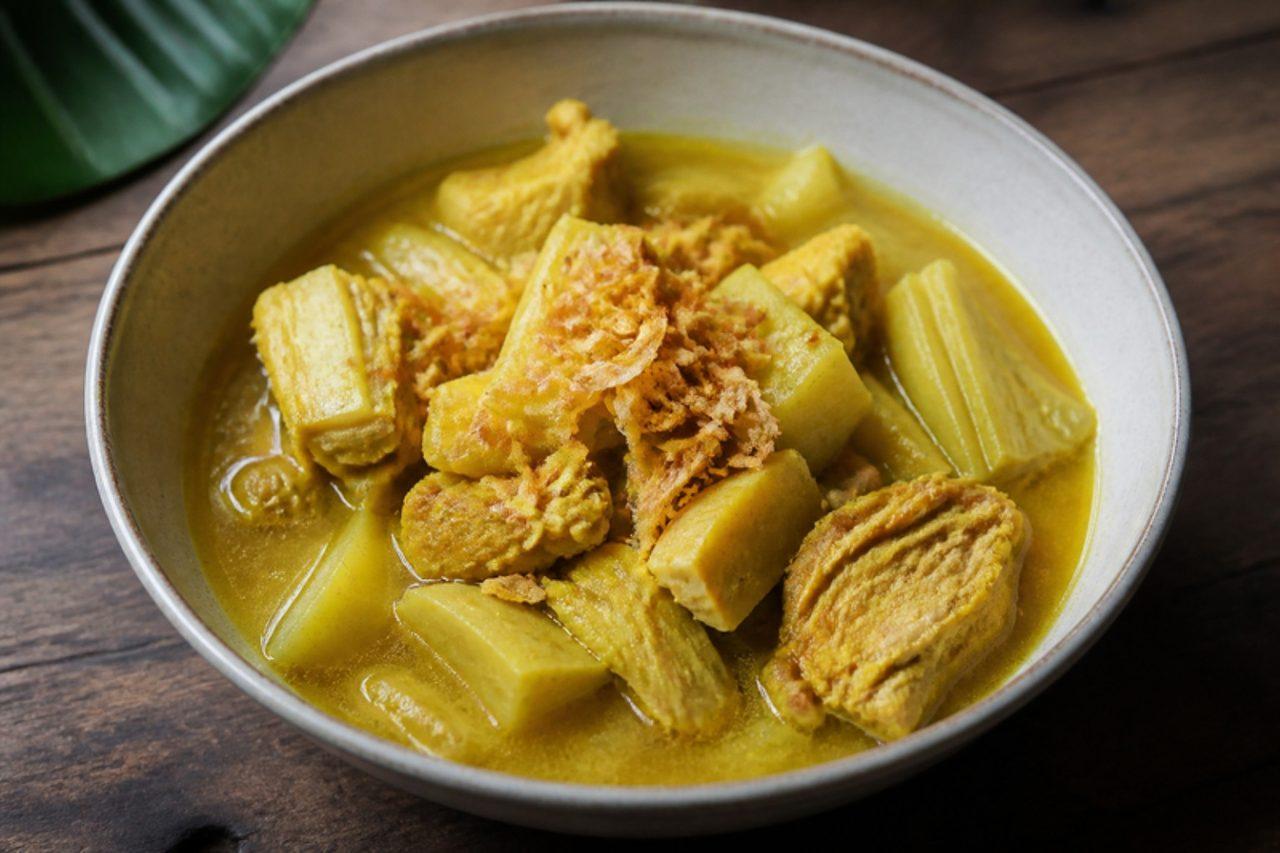
Jukut ares is cooked in Bali for Galungan and the ceremonies around it, when families gather at home and the kitchen turns out dishes for days; the humble banana tree, which gives fruit, leaves and stem, stands for the generosity of the land. The soft white core of the trunk is sliced thin and simmered in a broth built on base genep, the island's master spice paste, until it is tender and slightly silky, like a cross between bamboo shoot and leek. Villages often use pork bones; this version uses chicken thighs, which make a lighter, golden, peppery broth. Serve it in bowls with steamed rice and sambal. Chef's tip: soak the sliced stem in salted water and pull off the stringy fibres as you go, or the soup turns grey and stringy.

by KrazyBadal 0 views

Urutan (Balinese spiced pork sausage)

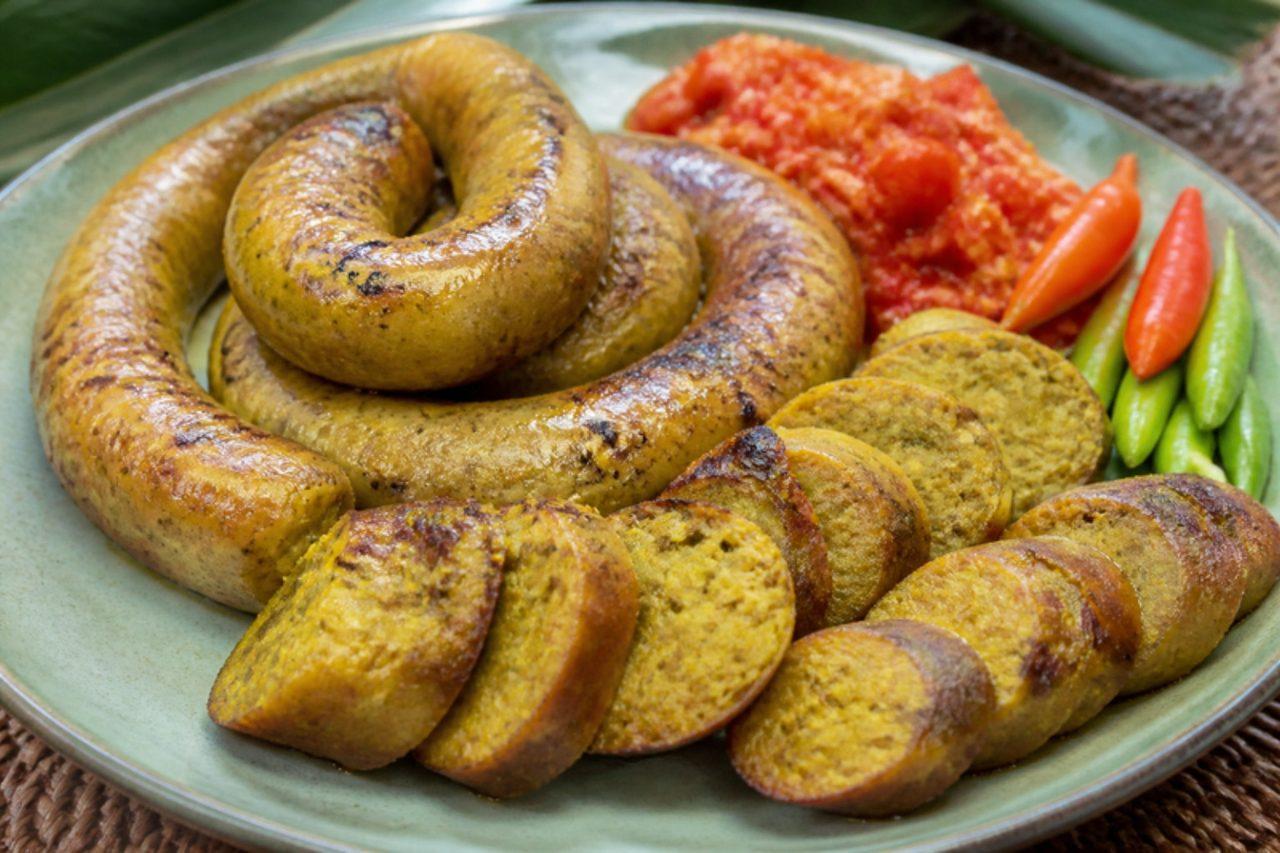
Urutan is the Balinese pork sausage made for Galungan: pork and pork fat are chopped with a turmeric-rich base genep, stuffed into casings and hung to dry in the breeze, so that the festival meat lasts for days after the feast. The finished sausage is golden yellow inside, garlicky, peppery and gently sour from drying, and it is always fried or grilled before eating. At home, make it either as a fresh sausage kept in the fridge, or air-dry it in the fridge with curing salt for the firmer, tangy traditional style. Serve slices with rice, sambal matah and a fried egg, or with drinks as a snack. Chef's tip: keep the meat, fat and equipment ice-cold throughout; warm fat smears and the sausage turns crumbly and greasy.

by KrazyBadal 0 views

Včelí úlkyNo-bake beehive biscuits

Včelí úlky ('little beehives') are a classic of the Czech Christmas cookie plate (cukroví), which families build up through Advent with a dozen or more kinds. They need no oven: crushed biscuits, ground walnuts, cocoa and butter are pressed into beehive moulds, filled with a smooth egg-yolk cream and sealed with a disc of biscuit. Traditionally a little rum is added to the dough; this version uses milk, and adults may add 1 tbsp rum. The cream is cooked to 71 °C so the yolks are safe, though anyone pregnant or vulnerable may prefer pasteurised yolks. Chef's tip: chill the filled hives before unmoulding, or they collapse.

by KrazyBadal 0 views

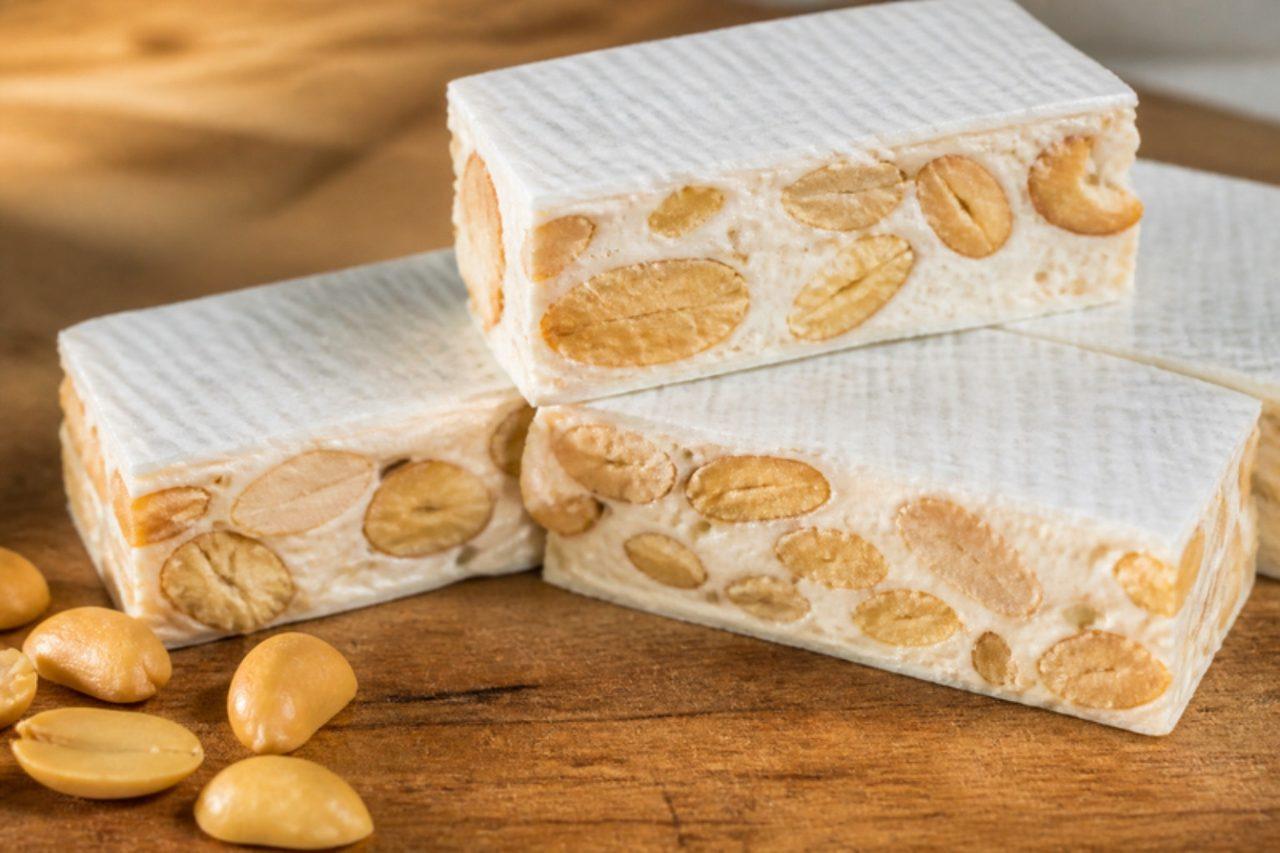
Turrón de maníPeanut nougat

On an Argentine Christmas Eve, after midnight toasts, the 'mesa dulce' appears with pan dulce, garrapiñadas and turrón de maní: a chewy white nougat of honey, sugar, whipped egg white and roasted peanuts, often set between two sheets of rice paper. Families make it in the days before Nochebuena. The egg white is cooked by the hot syrup. It is gluten free if you use gluten-free wafer paper or none. Chef's tip: work fast once the syrup is in, as the nougat stiffens as it cools and gets hard to spread.

by KrazyBadal 0 views

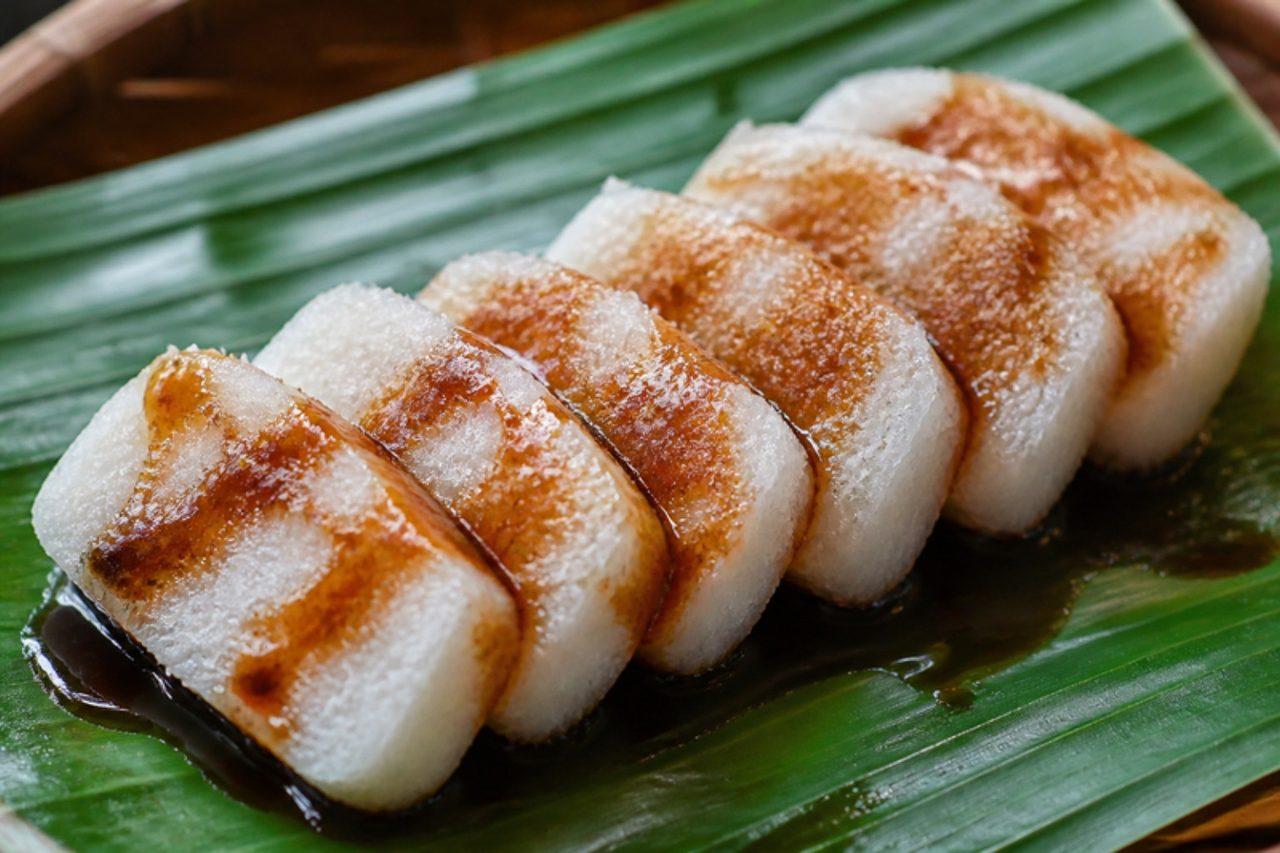
Jaja uli (Balinese pounded sticky rice cake)

Jaja uli is one of the rice cakes that Balinese families make in the days before Galungan, when the island celebrates the victory of dharma over adharma and the ancestors come home; it is stacked into the towering banten offerings and then shared and eaten. Glutinous rice is steamed, soaked in hot salted coconut milk, steamed again and then pounded until the grains break down into a dense, smooth, chewy block with a gentle coconut flavour. Slice it thickly and pour over warm palm sugar syrup, or toast the slices in a dry pan until crisp at the edges. A tall cup of tea or coffee is the perfect partner. Chef's tip: pound while the rice is still hot; once it cools, the grains won't knit together.

by KrazyBadal 0 views

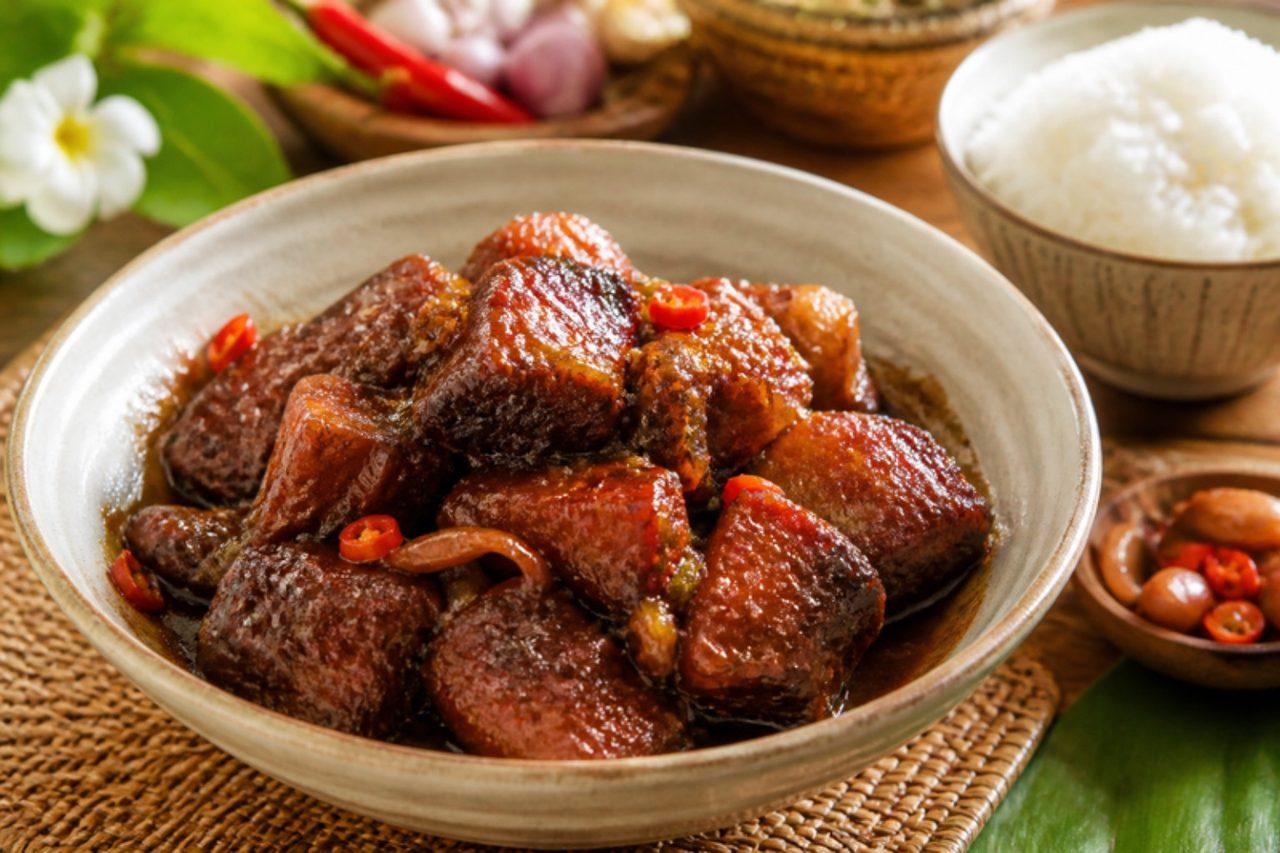
Be celeng base manis (Balinese sweet soy pork)

Be celeng base manis means "pork in sweet spices" in Balinese, and it is cooked in Hindu households around Galungan, when pork is prepared on Penampahan, the day before the festival, and shared with family and the temple. Chunks of pork shoulder are braised slowly with plenty of shallots, garlic, ginger and galangal in kecap manis, the thick Indonesian sweet soy sauce, until the meat is soft and the sauce has turned dark, sticky and glossy. It is sweet, savoury and only gently warm, so it suits everyone at the table. Serve it with steamed rice, a crisp vegetable such as long beans and some sambal for those who want heat. Chef's tip: let the sauce reduce only in the last 15 minutes, uncovered, so it coats the pork without burning.

by KrazyBadal 0 views

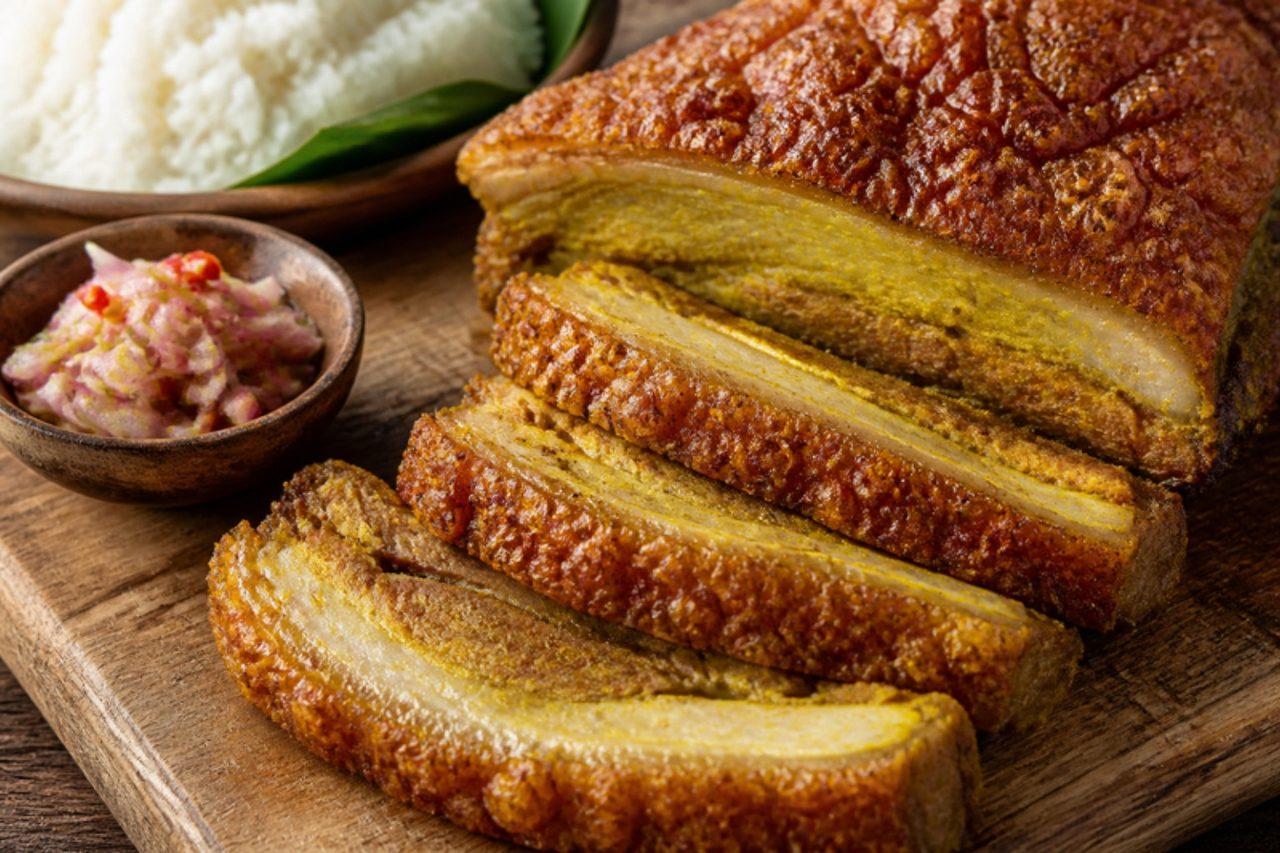
Balinese spiced roast pork belly (babi guling style)

Babi guling is the great feast dish of Bali for Galungan and temple ceremonies: at the festival, a whole pig is stuffed with spice paste and turned on a spit over a wood fire for hours. This home version uses a slab of skin-on pork belly instead, with the same base genep stuffing rubbed into the meat and the same goal: tender, spice-soaked pork under crisp, golden crackling. Turmeric, galangal, lemongrass and chilli give it heat and a bright yellow colour, and the pork fat keeps every slice juicy. Serve it sliced with steamed rice, a little of the cooked spice from the tin, long beans and a sharp, fresh sambal matah. Chef's tip: leave the skin uncovered in the fridge overnight; a really dry skin is the secret of crackling that shatters.

by KrazyBadal 0 views

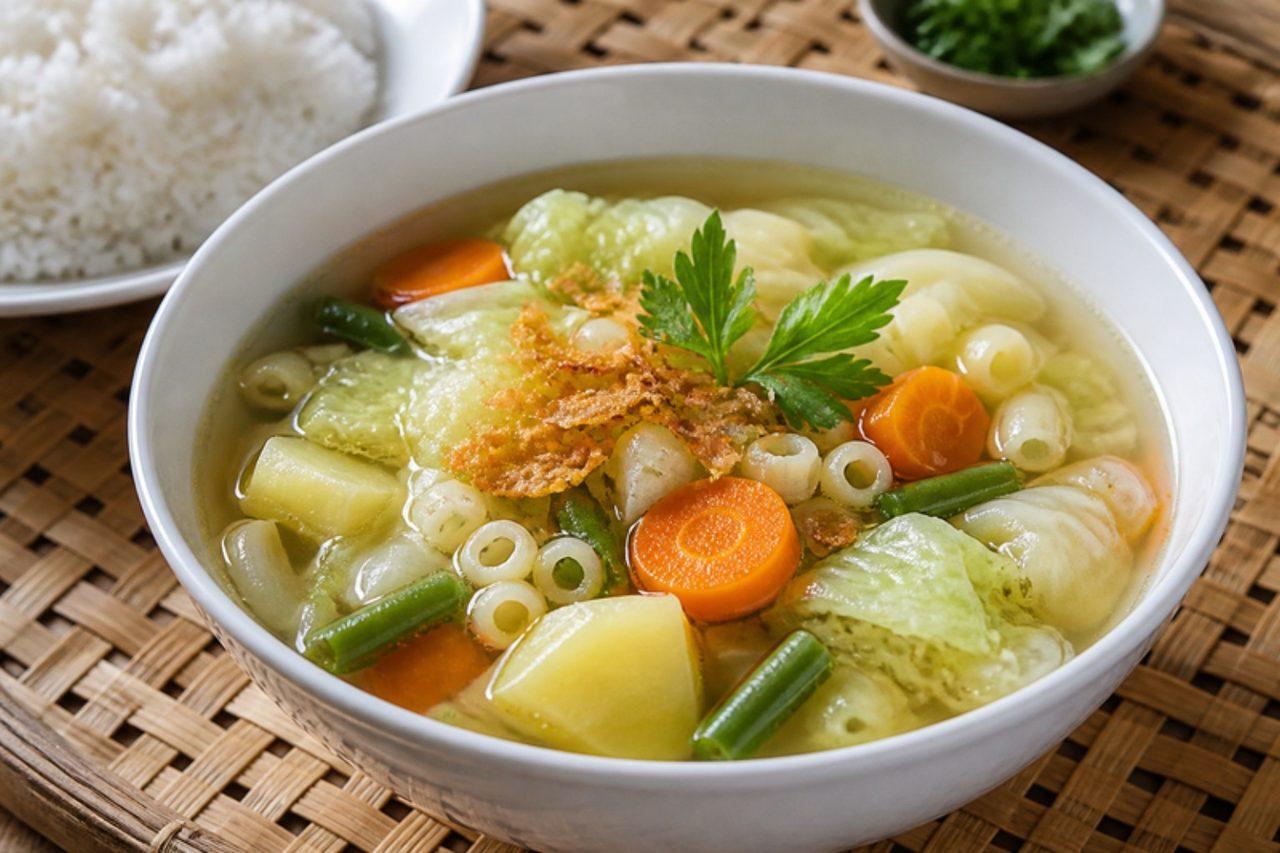
Sayur sopClear vegetable soup

Sayur sop is the clear vegetable soup cooked in homes all over Indonesia, from Medan to Surabaya, on any ordinary weeknight and whenever a child is poorly; it is spooned over rice beside fried tofu or tempeh. Most families make it with chicken stock, so this is the vegetarian version, built on vegetable stock with fried shallots and celery leaf for depth. It is gentle, savoury and fragrant with nutmeg and white pepper, and children love it. It has about 4 g of protein per portion, from the vegetables and macaroni; add cubes of firm tofu for more. The common mistake is boiling it hard, which clouds the broth and breaks the potato; keep it at a lazy simmer. Chef's tip: fry the garlic and shallot in a little oil before they go in, rather than adding them raw, for a broth that tastes much richer than it is.

by KrazyBadal 0 views

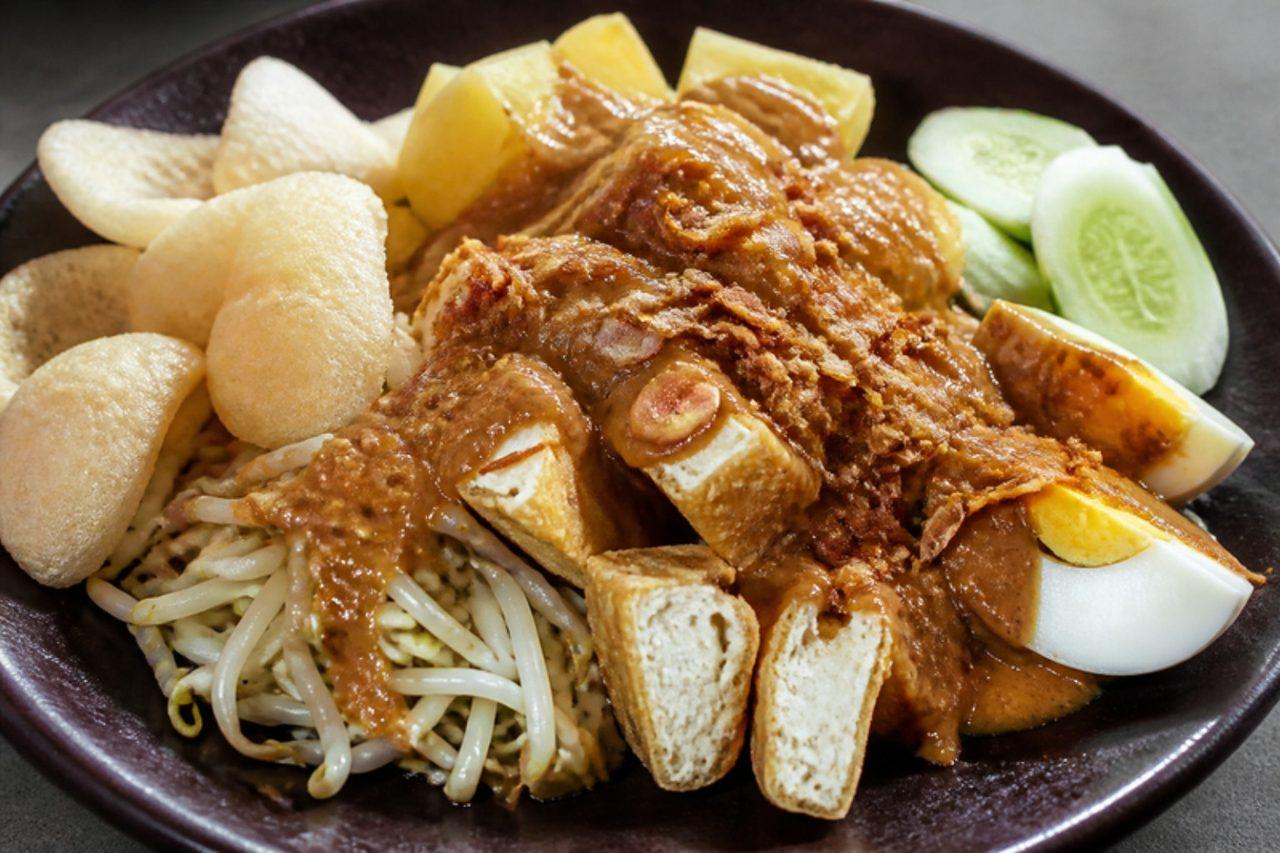
Tahu tekFried tofu with peanut sauce

After dark in Surabaya, the tahu tek seller's cart is easy to find: listen for the tek-tek-tek of scissors snipping fried tofu, potato and egg into bite-sized pieces straight onto the plate, before it all disappears under bean sprouts, cucumber and a thick peanut sauce. It is a supper dish, filling and saucy. The street version stirs petis, a black shrimp paste, into the sauce; this vegetarian version leaves it out and gets its depth from sweet soy, tamarind and fried garlic instead. A portion gives about 32 g of protein, from the tofu, egg and peanuts. The common mistake is making the sauce too thin; it should be thick enough to sit on top of the tofu. Chef's tip: grind the peanuts with the garlic and chilli while the fried peanuts are still warm, so the oil releases and the sauce turns creamy.

by KrazyBadal 0 views

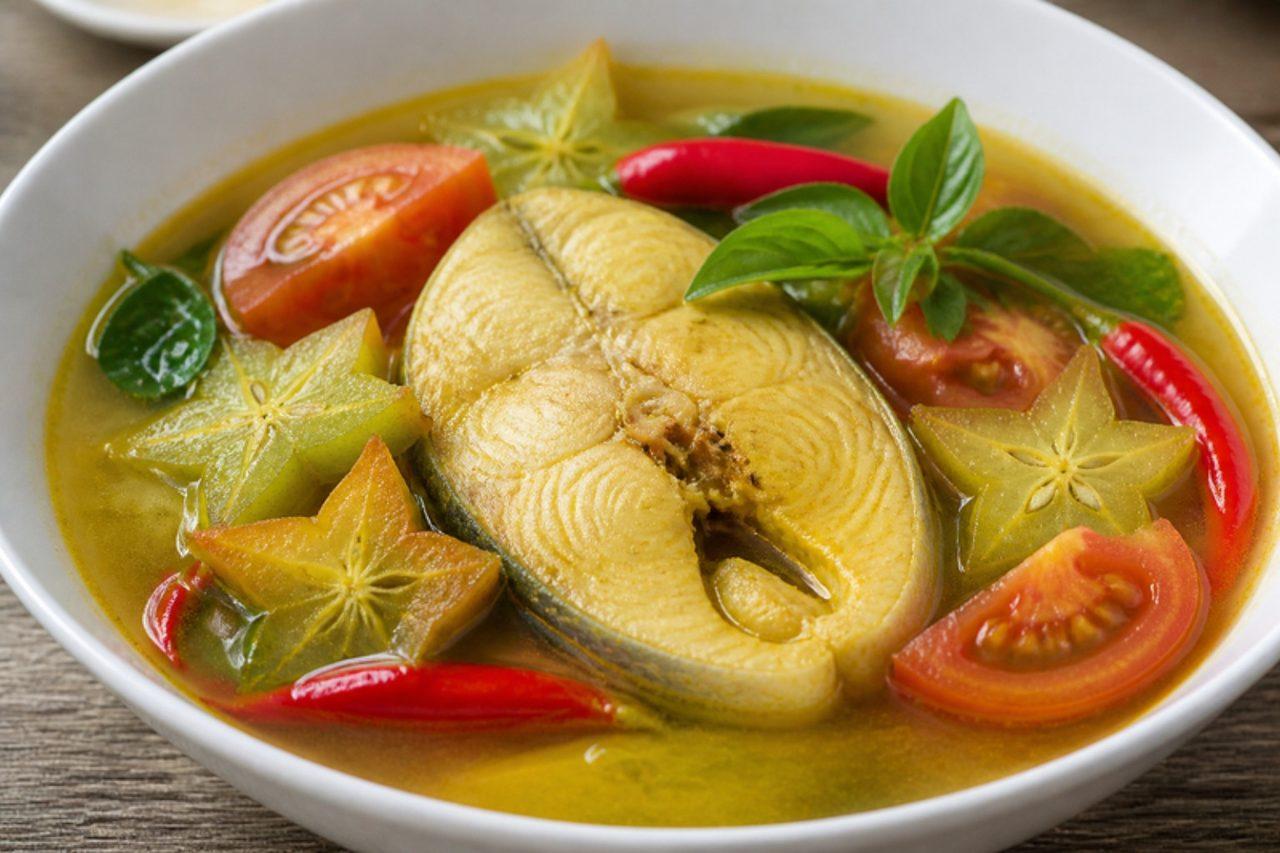
Pindang seraniFish in sour turmeric broth

Pindang serani belongs to Jepara and the fishing towns of the north coast of Central Java, where it is cooked at home for lunch and served at seaside warungs. Traditionally it is made with milkfish (bandeng) or grouper simmered in a pale yellow broth of turmeric, galangal and lemongrass, soured with sour starfruit and sharpened with chilli and basil. It is light and restoring, with about 28 g of protein a portion from the fish. Milkfish is very bony, so sea bass or grouper steaks are easier at home. The common mistake is boiling the soup hard once the fish is in, which clouds it and breaks the flesh. Chef's tip: bruise the turmeric, galangal and ginger rather than grinding them, so the broth stays clear.

by KrazyBadal 0 views

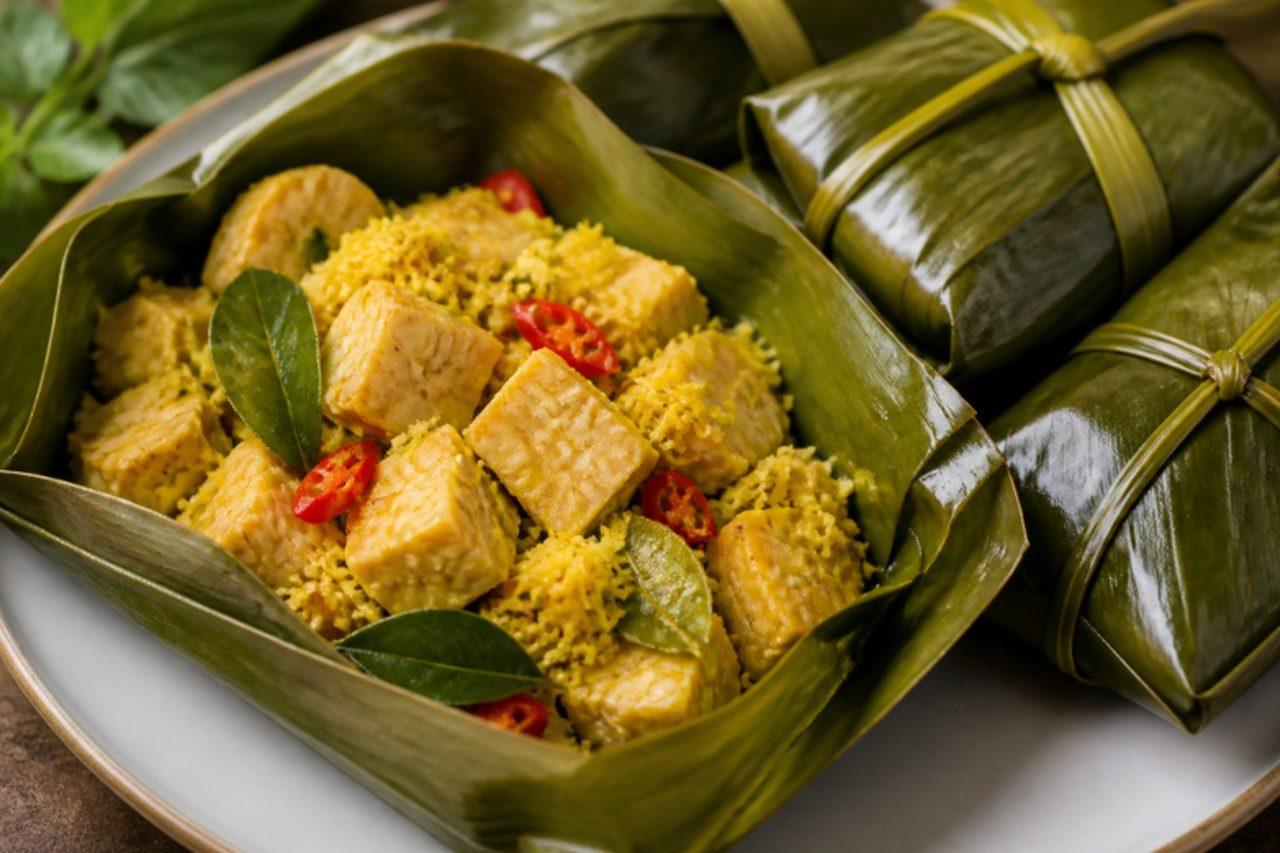
Botok tempeTempeh and coconut in banana leaf

In village kitchens of Central and East Java, from Klaten to Kediri, botok is a weekday parcel dish: crumbled tempeh mixed with freshly grated coconut, chilli, galangal and a little palm sugar, wrapped in banana leaf with a bay leaf and steamed until set. It comes to the table at lunch, unwrapped beside rice, and tastes of toasted coconut and bay, moist and crumbly rather than saucy. Each portion has about 125 g of tempeh plus coconut, giving roughly 24 g of protein, mainly from the tempeh. The common mistake is wrapping the parcels loosely, so steam gets in and the filling turns wet; fold them snugly and pin them shut. Chef's tip: squeeze a little of the coconut through your fingers before mixing; if it feels dry, add a spoon or two of water so the botok binds when it steams.

by KrazyBadal 0 views

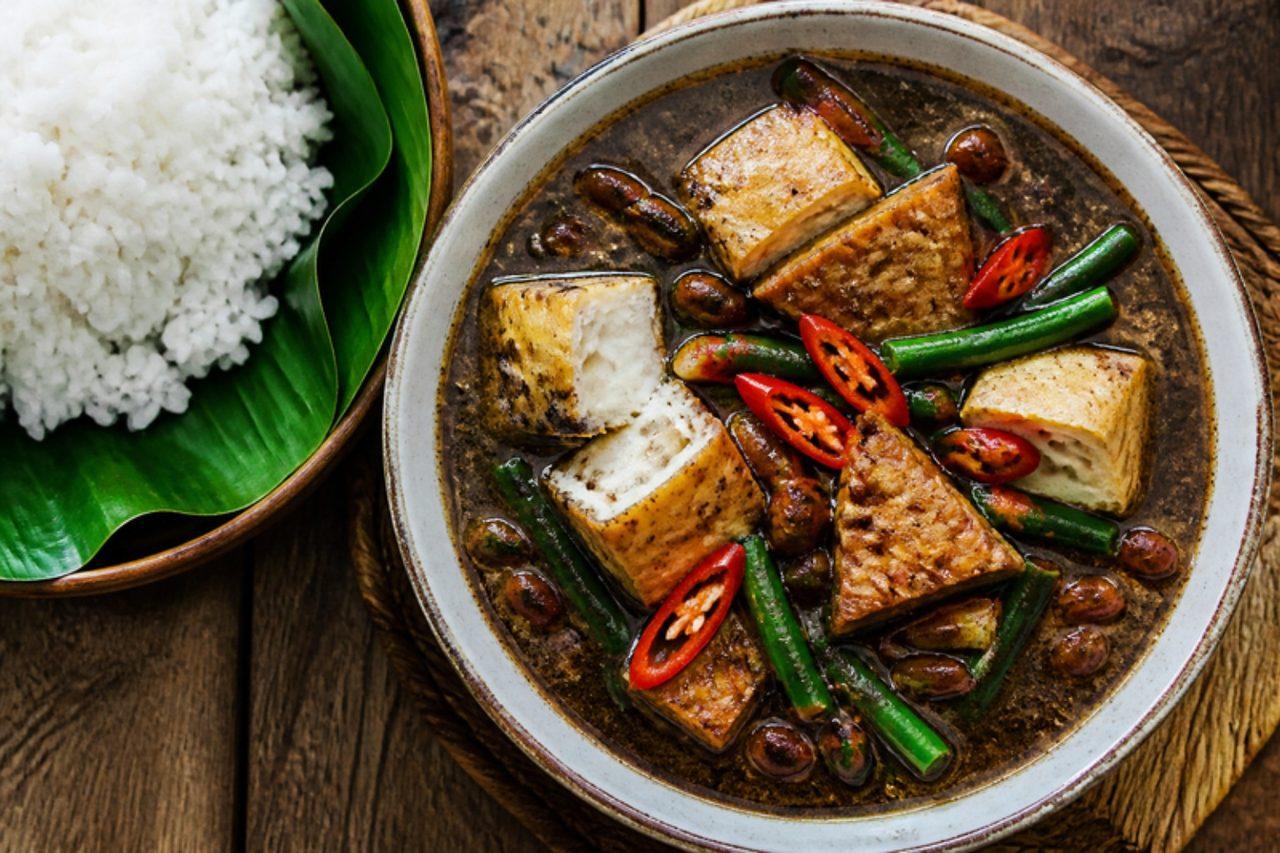
Brongkos with tofu and tempehTofu and tempeh black nut stew

Brongkos is one of Yogyakarta's old royal-kitchen dishes, a near-black stew of keluak nut paste and coconut milk eaten at lunch with rice, often alongside gudeg. The classic pot holds beef with tofu and cowpeas; this is a vegetarian version, using tofu, tempeh and red cowpeas only, which many Jogja families also cook. The keluak gives a deep, earthy, almost chocolatey flavour, softened by coconut milk and a little palm sugar. A portion gives about 29 g of protein, from the tofu, tempeh and cowpeas. The dried cowpeas need soaking for 8 hours or overnight first, which is not counted in the times. The common mistake is using keluak that has gone bad: crack each nut and smell it; the flesh should be dark and smell earthy, never sour or mouldy. Chef's tip: brongkos is better the next day, when the beans and tofu have soaked up the sauce.

by KrazyBadal 0 views

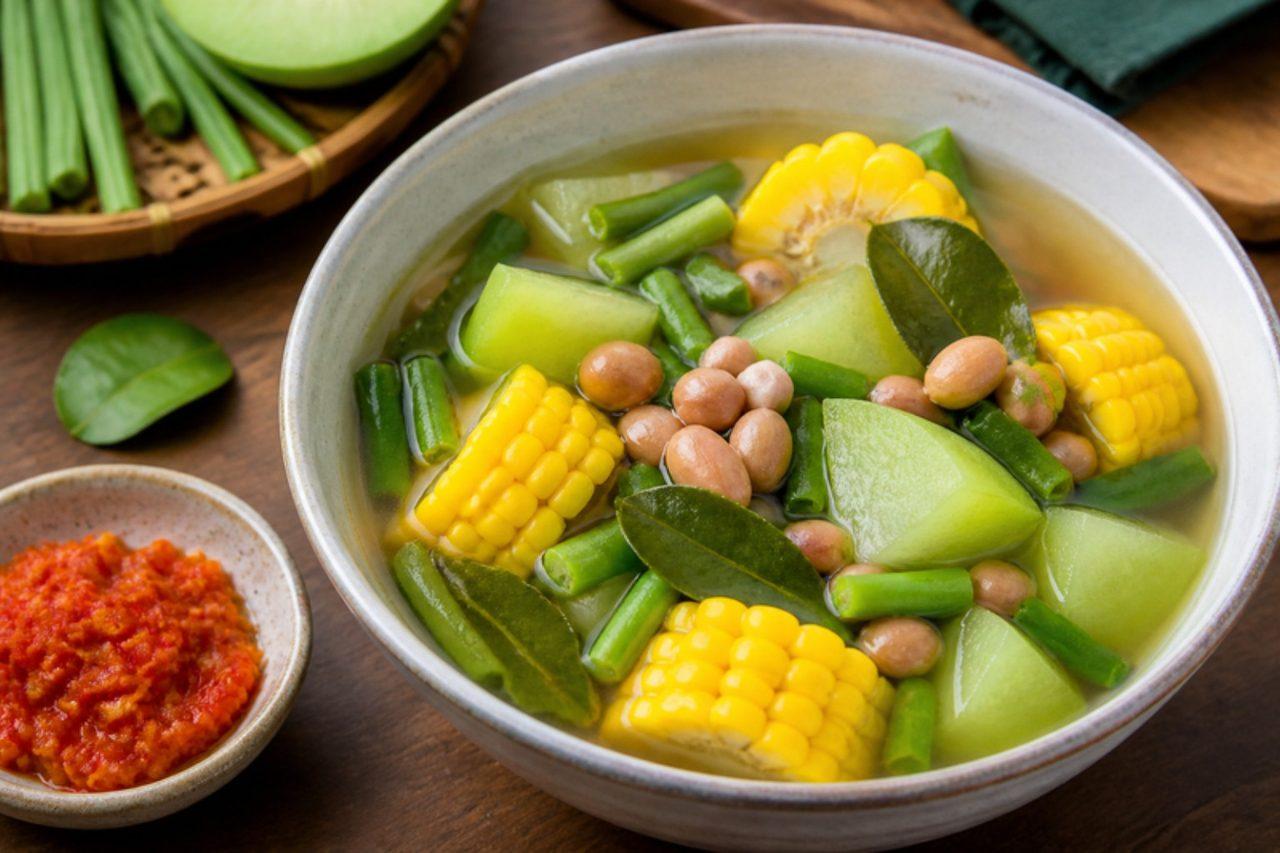
Sayur asemSour tamarind vegetable soup

Sayur asem is the soup that sits beside fried tempeh, rice and sambal on lunch tables across Jakarta and West Java, and it is most loved in the hot months, when its sharp, sweet-sour broth cools you down. Chunks of sweetcorn, chayote, long beans, raw peanuts and young melinjo leaves simmer in a clear broth soured with tamarind and rounded with a little palm sugar. It is light, with about 5 g of protein per portion, mostly from the peanuts; serve it with tempeh or tofu if you want a full meal. The most common mistake is adding all the vegetables at once: the corn and peanuts need a head start, while the long beans and leaves turn grey and soft if they boil too long. Chef's tip: dissolve the tamarind in a little hot water and add it in stages, tasting as you go, because tamarind blocks vary hugely in strength.

by KrazyBadal 0 views

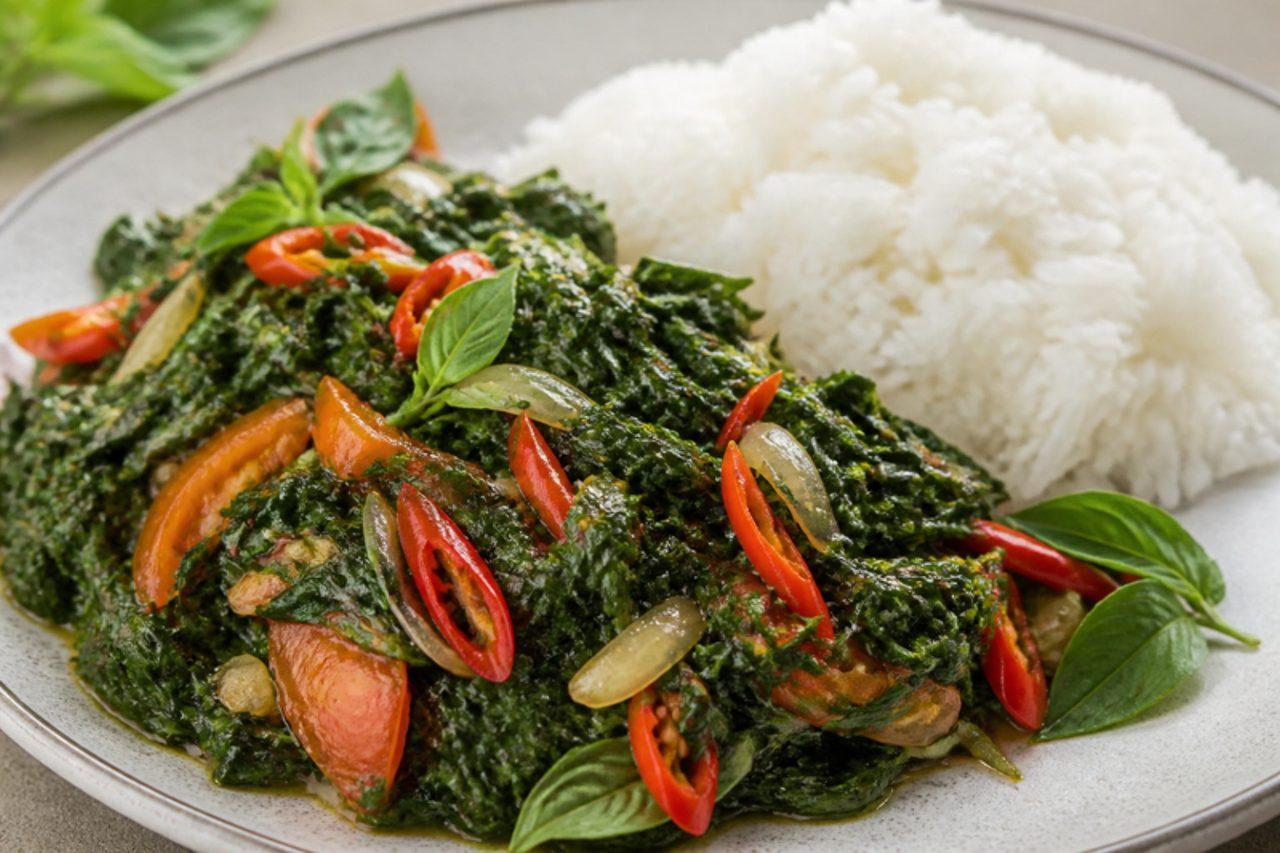
Tumis daun pepayaStir-fried papaya leaves

In Manado and across North Sulawesi and Maluku, a plate of tumis daun pepaya sits beside rice, grilled corn and sambal at everyday lunches and at big family gatherings, where its clean bitterness cuts through rich coconut dishes. The leaves are boiled first to tame them, then stir-fried hot with shallot, garlic, chilli and lemon basil until glossy. Many cooks add a little dried anchovy or fish; this version is vegetarian and gets its savouriness from a spoon of soy sauce and the fried aromatics. It is a light side with about 4 g of protein per portion, from the leaves themselves, so serve it with tofu, tempeh or beans if you want a full meal. The common mistake is skipping the pre-boil: raw papaya leaves are harshly bitter. Chef's tip: squeeze the boiled leaves hard and fry them in a hot, dry-ish pan so they take on a little colour rather than stewing.

by KrazyBadal 0 views

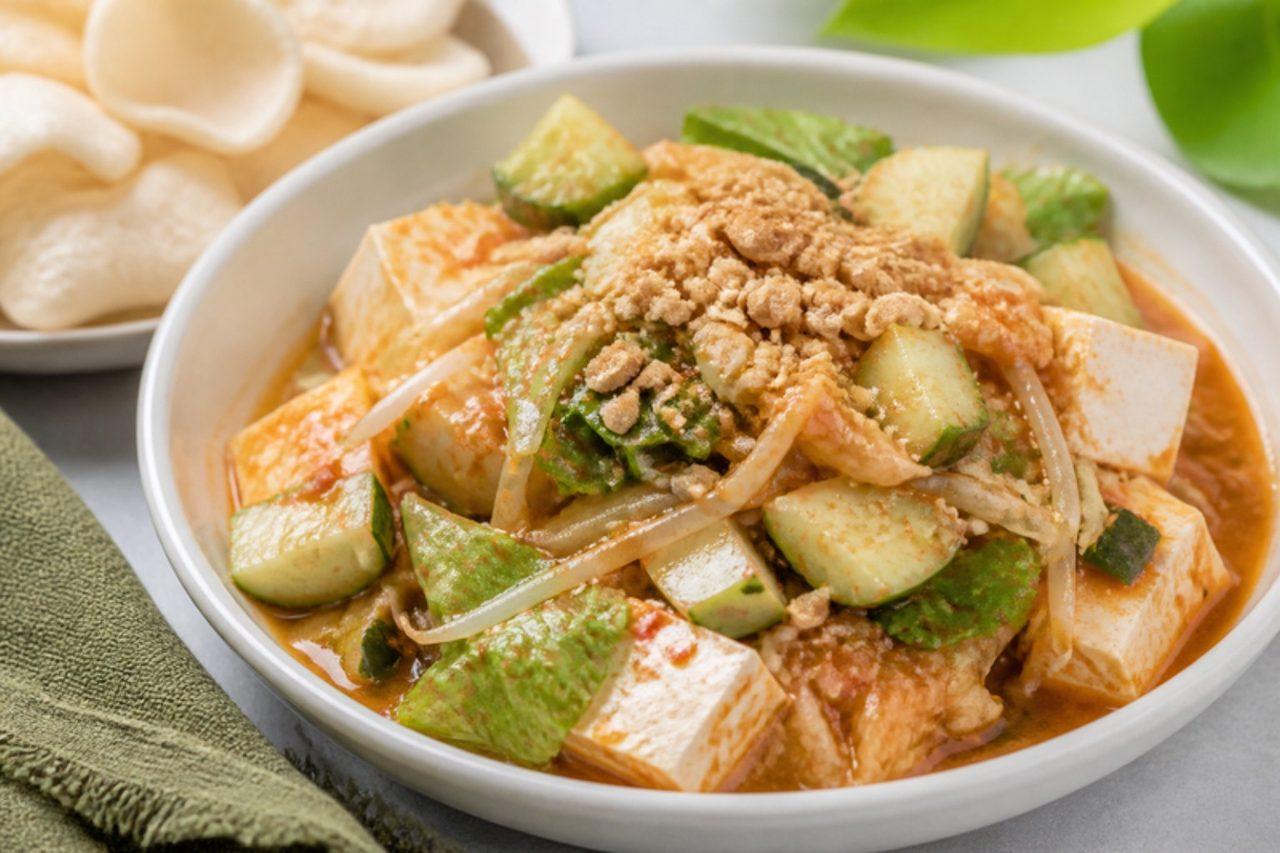
Asinan BetawiPickled vegetable and tofu salad

Asinan Betawi is the cooling salad of old Jakarta, sold from glass-sided carts and eaten mid-afternoon in the heat or brought out at family gatherings in big tubs. Quick-pickled cabbage, cucumber and bean sprouts are piled with cubes of tofu, then soaked in a thin, tangy sauce of chilli, vinegar, palm sugar and ground peanuts. It is crunchy, sour, sweet and spicy all at once. A portion has about 300 kcal and roughly 17 g of protein, from the tofu and peanuts, so it is a light meal rather than a high-protein one. The common mistake is dressing it too early; the vegetables go limp within an hour. Street versions often scatter shrimp crackers on top, so use plain rice or cassava crackers to keep it vegetarian. Chef's tip: chill the sauce well before serving; asinan should be served cold enough to fog the bowl.

by KrazyBadal 0 views

Chilcano de pescadoClear fish broth

In the fishermen's terminals of Chorrillos and Callao, chilcano is what you drink on a Sunday morning after a long night: a clear, gingery broth made from the heads and bones left over from cleaning fish for ceviche, with chunks of fish, red onion, chilli and a squeeze of lime in the bowl. It is light and warming, around 160 kcal a bowl, and still gives about 24 g of protein from the fish fillet and the broth. The common mistake is squeezing the lime into the pot while it boils, which turns it bitter; add it to each bowl at the table. Don't boil the bones for more than 30 minutes either, or the broth turns cloudy and harsh. Chef's tip: ask the fishmonger for heads and frames from mild white fish like sea bass or cod, and leave out oily fish such as mackerel, which makes the broth strong and fishy.

by KrazyBadal 0 views

ParihuelaSpicy seafood soup

Parihuela is the big weekend seafood soup of Callao and the Peruvian coast, eaten at long Sunday lunches in cevicherías and praised as a cure for tiredness and late nights. A deep red broth of ají panca, ají amarillo, tomato and fish stock is loaded with chunks of fish, prawns, squid and mussels. A portion gives about 30 g of protein, from the fish and shellfish, for roughly 300 kcal. Some cooks add chicha de jora or beer; this version has none. The common mistake is adding all the seafood at once: squid and prawns turn rubbery while the fish cooks, so they go in last. Before cooking, discard any mussels that stay open when tapped, and after cooking discard any that stay shut. Chef's tip: fry the chilli pastes in the oil until they darken and smell sweet; that toasted ají is what gives parihuela its depth.

by KrazyBadal 0 views

Showing 24 of 598 recipes

Show more recipes

Page 1 of 25