Skip to content
Recipes

All recipes

Vegetarian, or something you can't eat? Set your diet once and we'll hide recipes that don't fit.

KaguyjyWhite corn pudding

On the night of 23–24 June, Paraguayans celebrate San Juan with bonfires, games like walking over hot coals and the 'paso de fuego', and a table of traditional foods, and kaguyjy (also mazamorra) is one of them. It is a soft, creamy pudding of cracked white corn (locro) simmered slowly in water and then milk with sugar or honey, sometimes with orange peel. It is eaten warm or cold. It is gluten free. Chef's tip: soak the corn overnight and cook it until each kernel is tender before adding the milk, or it never turns creamy.

by KrazyBadal 0 views

Roasted new yam with palm-oil sauce

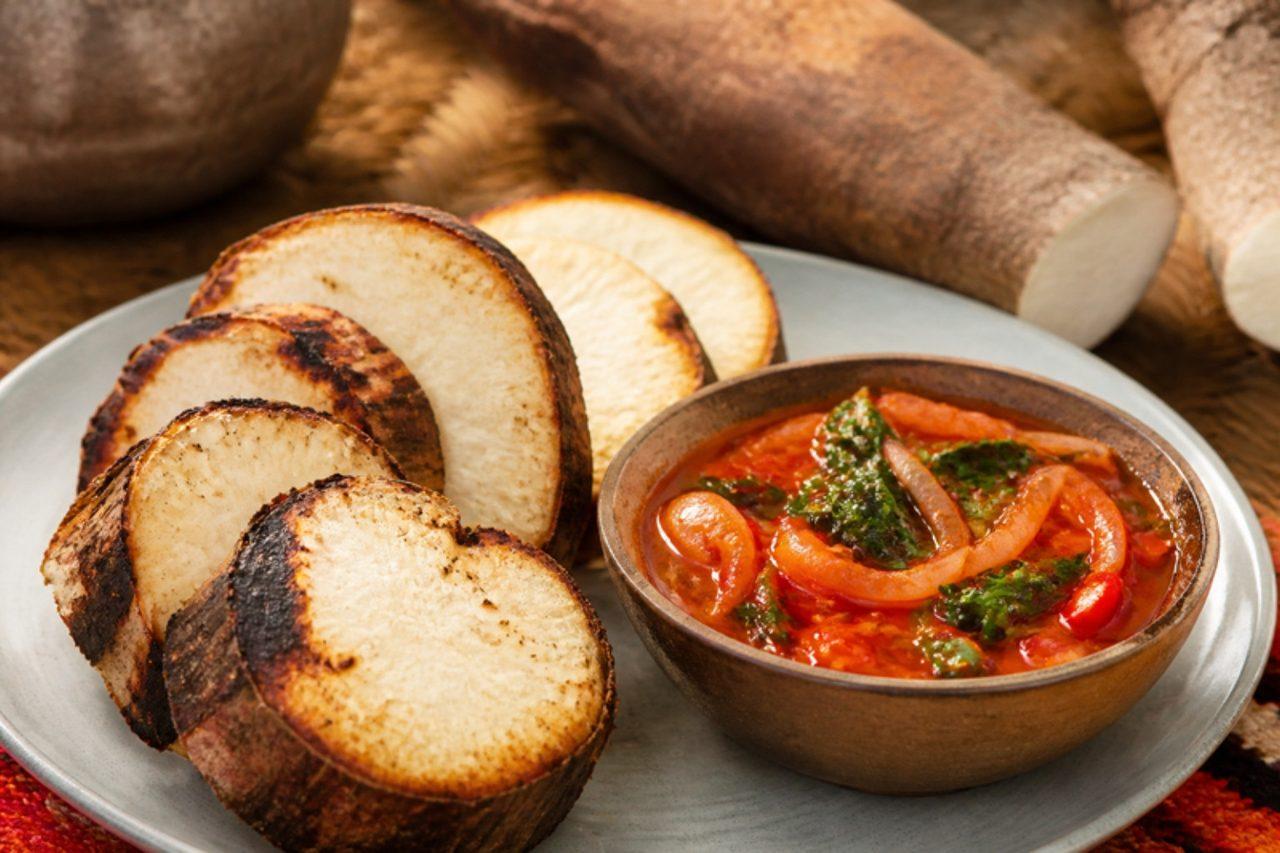
At Iri Ji, the New Yam festival held across Igboland in August, the first yams of the harvest are offered with thanks, and the chief or eldest man eats the first piece before anyone else may taste the new crop. Often that first yam is simply roasted in the embers until the skin is charred, then dipped into a sauce of red palm oil, raw onion, ground pepper and bitter utazi leaf. The inside is fluffy and sweet, the sauce rich and fiery. Chef's tip: use real West African yam, not sweet potato; it roasts dry and floury and soaks up the oil.

by KrazyBadal 0 views

DubulanHoney-drizzled dough spirals

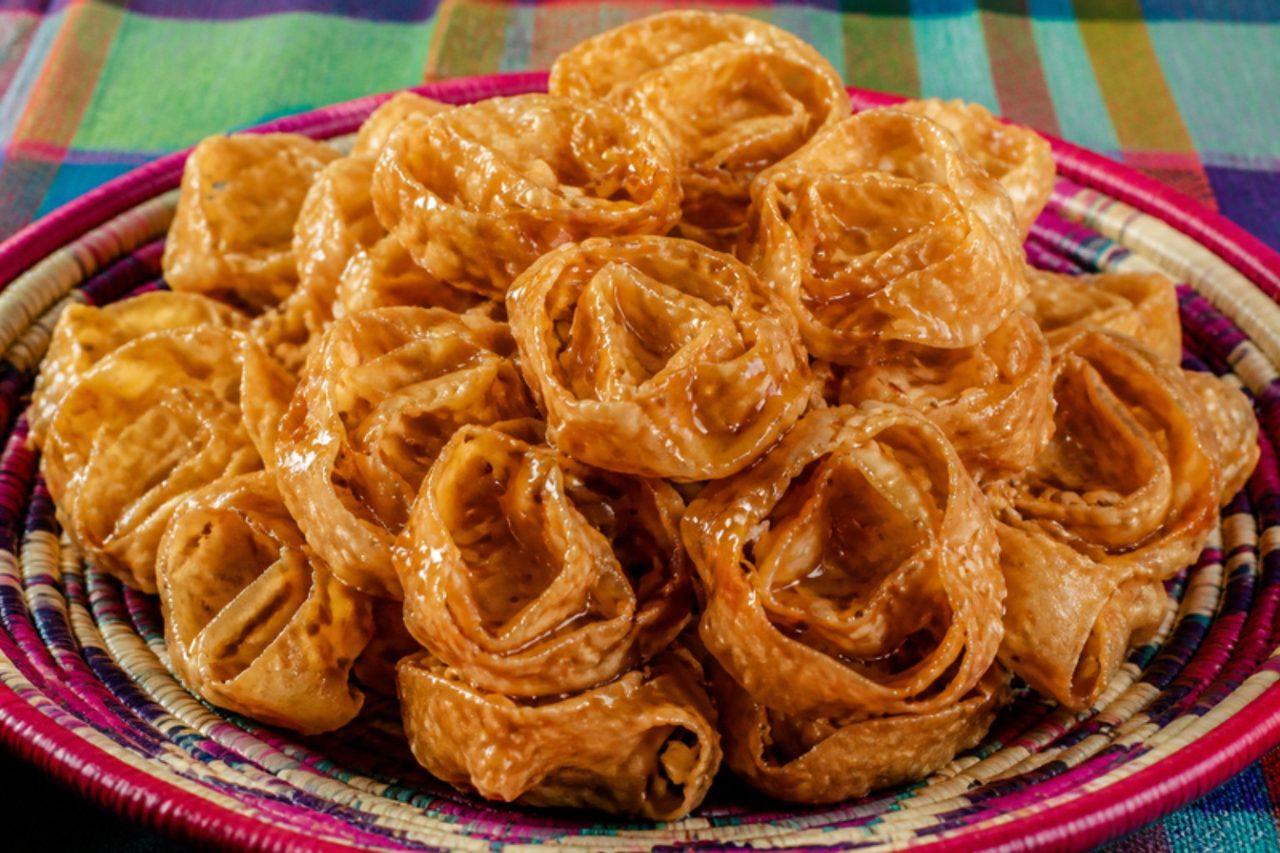
Dubulan are crisp spirals of thin fried dough from northern Nigeria, piled onto trays for Eid al-Fitr, known locally as Sallah, and for weddings among Hausa and Kanuri families. Each ribbon of rolled-out egg dough is wound loosely around a fork as it fries, so it sets into a light, crackly rosette, then honey or syrup is trickled over the top. They keep well in a tin for visitors through the festival days. Chef's tip: roll the dough so thin you can almost see through it; thick ribbons stay hard instead of shattering.

by KrazyBadal 0 views

Dowina (Kurdish yogurt soup)

Dowina, called ash-e doogh in Persian, is warming spring food in Kurdish homes around Newroz, when yogurt is plentiful and the first herbs are cut from the garden. Rice and chickpeas simmer in a tangy, lightly thickened yogurt broth, finished with fresh dill, coriander and a sizzle of dried mint in oil. It is eaten warm, never boiling hot, with flatbread. The common mistake is to heat the yogurt too fast without stirring, which makes it split into grainy curds. Chef's tip: whisk an egg yolk and a spoonful of rice flour into the yogurt before it goes on the heat; it holds the soup smooth all the way to the simmer.

by KrazyBadal 0 views

FunkasoFermented wheat pancakes

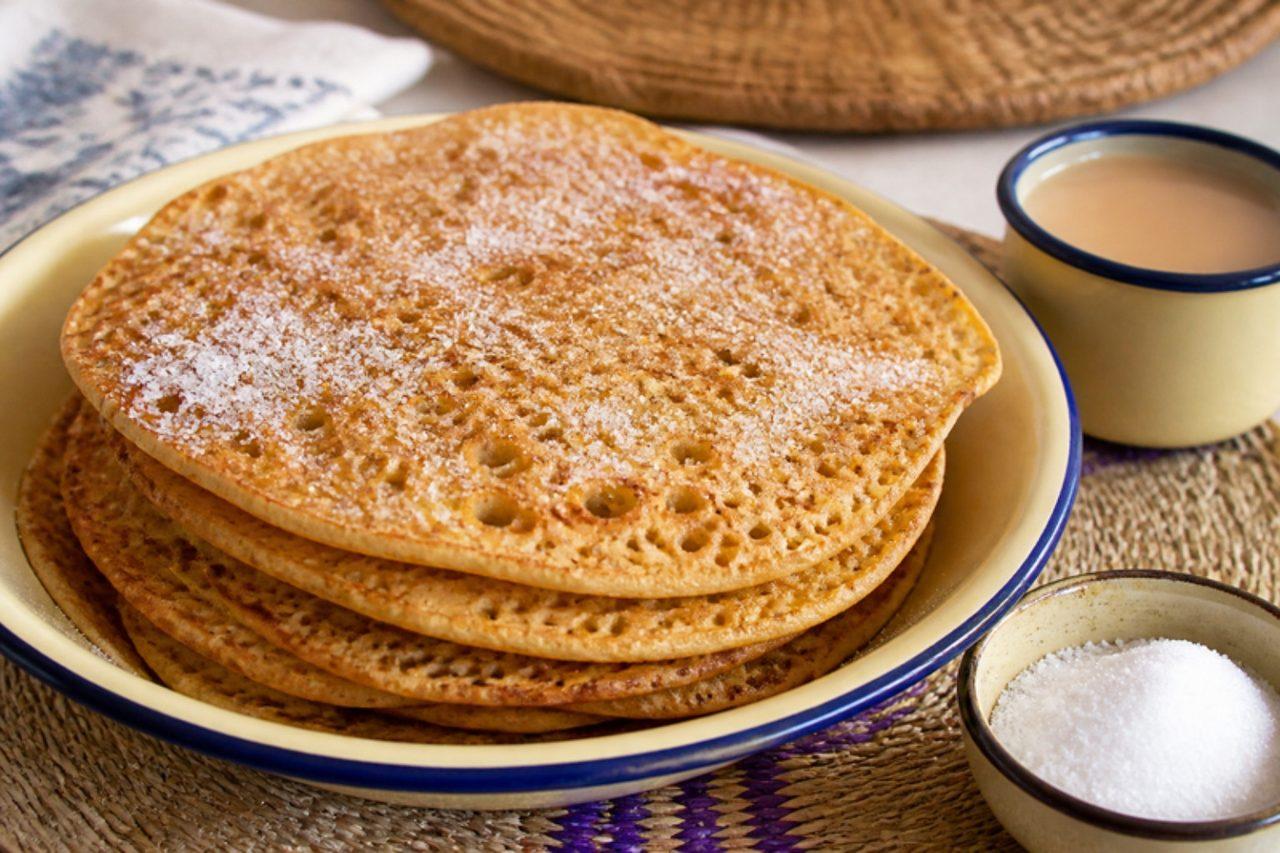
Funkaso is a Hausa pancake from northern Nigeria, made from a wheat batter left to ferment until bubbly and fried into soft, spongy rounds with crisp edges. Families cook stacks of it for the pre-dawn sahur and the evening meal during Ramadan, and again on Sallah morning for visitors. It is eaten simply, sprinkled with sugar, or dipped in a hot pepper sauce, with hot kunun or tea. Chef's tip: the batter should be as thick as double cream; too runny and the pancakes spread thin and lose their spongy middle.

by KrazyBadal 0 views

KalanehWild leek stuffed flatbread

In Kurdistan and Kermanshah, Newroz arrives with the first spring greens on the hillsides, and families gather wild leeks to fold into kalaneh, thin griddle breads cooked over a fire or a hot pan and soaked in melted butter. The dough is plain and soft, rolled very thin around a pile of chopped leek or chives with a little salt and pepper, so the greens steam inside as the bread blisters. Eat it hot, torn into strips, with yogurt and tea at a Newroz picnic. The common mistake is wet greens, which turn the dough soggy and make it tear; dry them well after washing. Chef's tip: brush the butter on the moment the bread leaves the pan so it soaks right in.

by KrazyBadal 0 views

AlewaPulled sugar sweets

Alewa is the chewy pulled sugar sweet of Hausa northern Nigeria, cooked from just sugar, water and a squeeze of lime, then stretched by hand until it turns pale and satiny. Pocketfuls are given to children on Sallah, the Eid al-Fitr holiday, as they go from house to house in new clothes. The taste is clean caramel with a little sharpness from the lime. An adult should do the hot pulling. Chef's tip: oil your hands and the worktop well and pull while the sugar is still hot enough to bend; once it cools it sets hard and won't stretch.

by KrazyBadal 0 views

KesraSemolina pan bread

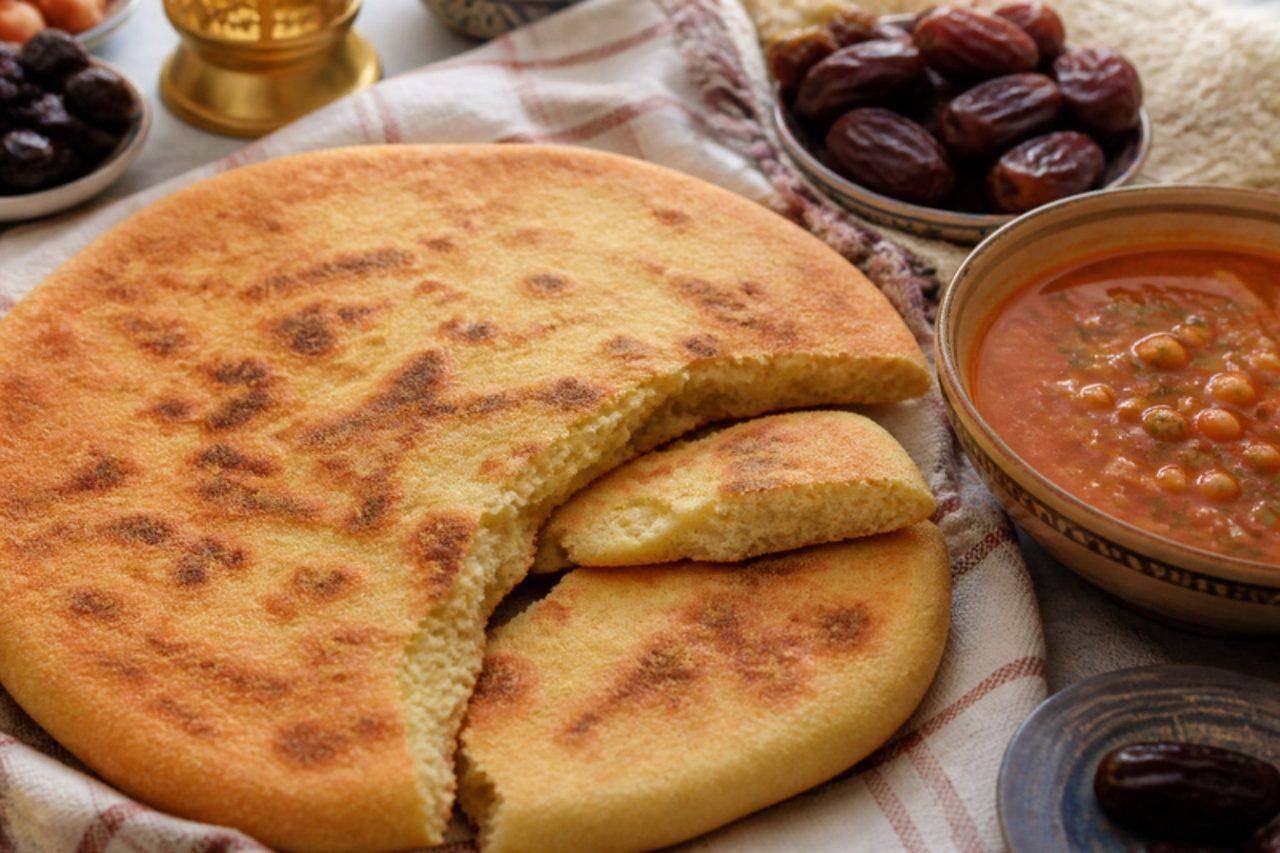
Kesra is the flat semolina bread of Algerian homes, and in Ramadan a fresh round sits on almost every iftar table, cooked on a clay tajine and torn into pieces to dip into hot chorba frik. This unleavened version is a thin, crumbly-edged galette, golden in patches and slightly chewy in the middle, with a nutty taste from the olive oil. It is made in minutes before sunset so it reaches the table still warm. Chef's tip: work the dough only until it holds together; kneading it like a yeast bread makes kesra tough instead of tender.

by KrazyBadal 0 views

Pajagua mascadaBeef and cassava patties

Pajagua mascada is a Paraguayan street-food classic that appears on every table for the San Juan festival on 24 June, when bonfires burn and the night is full of games and traditional food. Minced beef is mixed with mashed cassava, onion, garlic and a little egg and flour, shaped into flat patties and fried until crisp. The name comes from Guaraní and refers to the 'chewing' of old Paraguayan cooks, who made it from leftover meat. Chef's tip: dry the boiled cassava well and remove its woody core, which keeps the patties light and crunchy.

by KrazyBadal 0 views

UkodoYam pepper soup with goat

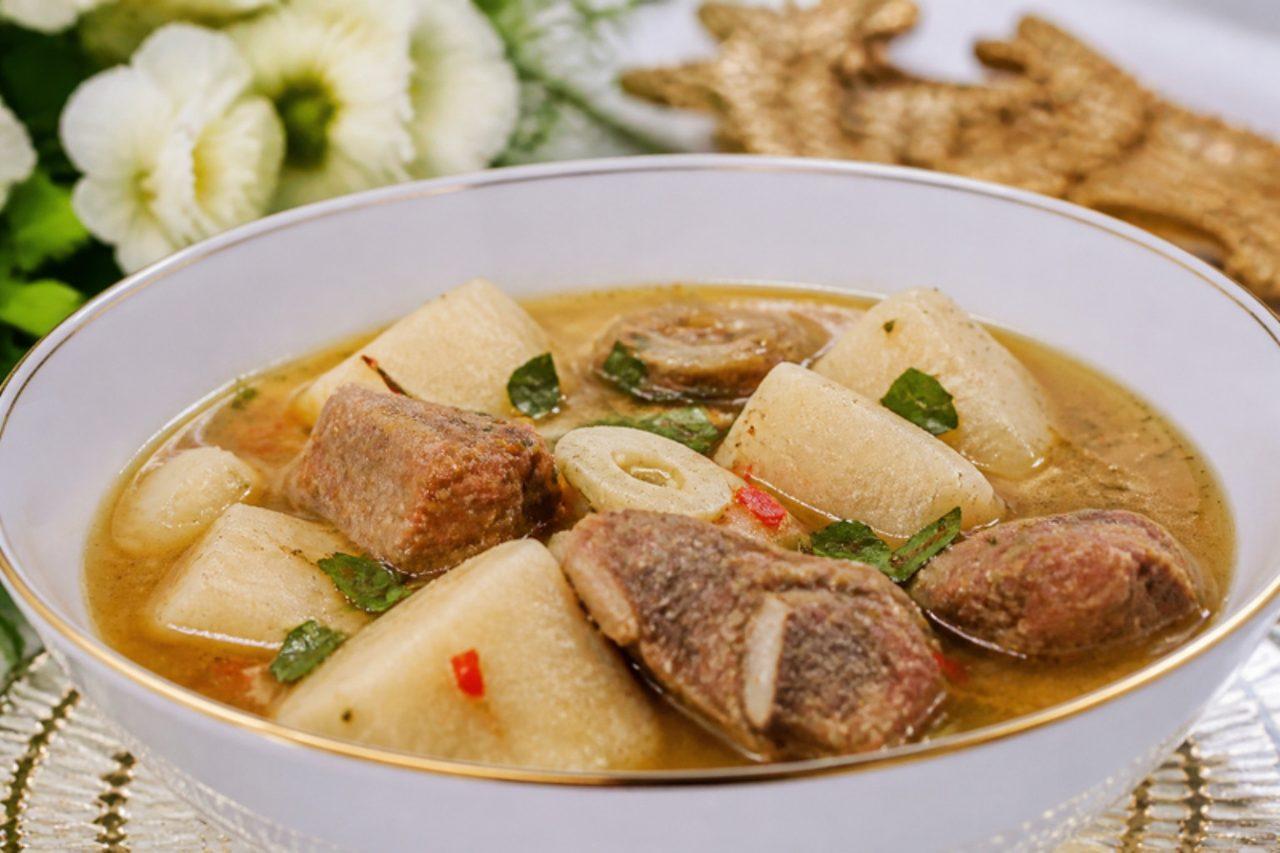
Ukodo is the Urhobo celebration soup of Delta State, served at weddings, at Christmas and on the morning after a big party, when guests are fed bowls of yam swimming in a fiery, fragrant broth. Goat is simmered with lemongrass, scent leaves and pepper soup spice, then chunks of yam cook in the broth and thicken it slightly, with dried fish for depth. It is light, hot and comforting. Chef's tip: add the yam only when the goat is nearly tender, or it collapses into mush before the meat is done.

by KrazyBadal 0 views

DouaraLamb tripe and chickpea stew

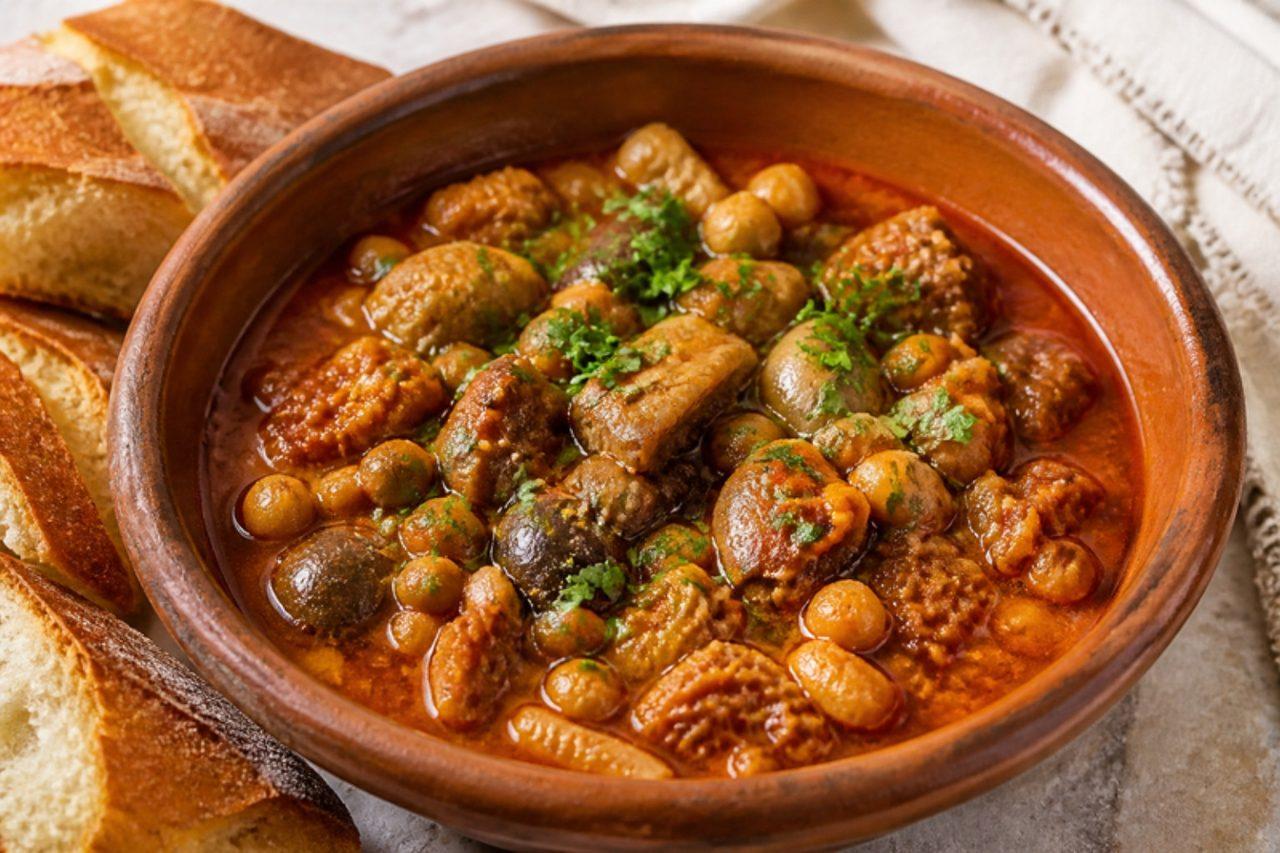
Douara is the dish that fills Algerian kitchens on the second day of Eid al-Adha, when the tripe, intestines and lung from the family's sacrifice are cleaned, cut small and stewed slowly with chickpeas, plenty of garlic, cumin and paprika. The sauce is deep red and peppery and the offal turns tender and rich. At home, cleaned lamb or beef tripe and lamb heart from a halal butcher make an easy start; lung can be added if your butcher sells it. Chef's tip: blanch the tripe first in water with a squeeze of lemon to freshen the flavour before it goes into the stew.

180 minAlgerianMeatGluten freeSpicy
by KrazyBadal 0 views

Sopa teólogaTurkey broth with bread and cheese

Sopa teóloga ('the theologian's soup') goes back to colonial convents in Lima and Arequipa, where it was cooked for feast days, and it is still served at Holy Week and family celebrations. A rich turkey (or chicken) broth is thickened with soaked bread, milk and fresh cheese, with yellow potatoes and shreds of turkey, and finished with a little ají amarillo and chopped huacatay or parsley. It is thick, comforting and filling. Chef's tip: blend part of the soaked bread with broth before adding it, which gives the soup its creamy body without lumps.

by KrazyBadal 0 views

Chipa so'oCheese bread with spiced beef

In Paraguay, families bake chipa in the clay tatakua ovens on Holy Wednesday so there is food for Thursday and Good Friday, when cooking stops. Chipa so'o ('chipa with meat') is a cassava-starch and cheese bread wrapped around a little filling of minced beef cooked with onion and egg, then baked until crisp outside and chewy within. It is naturally gluten free. Chef's tip: knead the dough until it no longer cracks at the edges when pressed; dry dough splits around the filling.

by KrazyBadal 0 views

Thịt đông (pork in aspic)

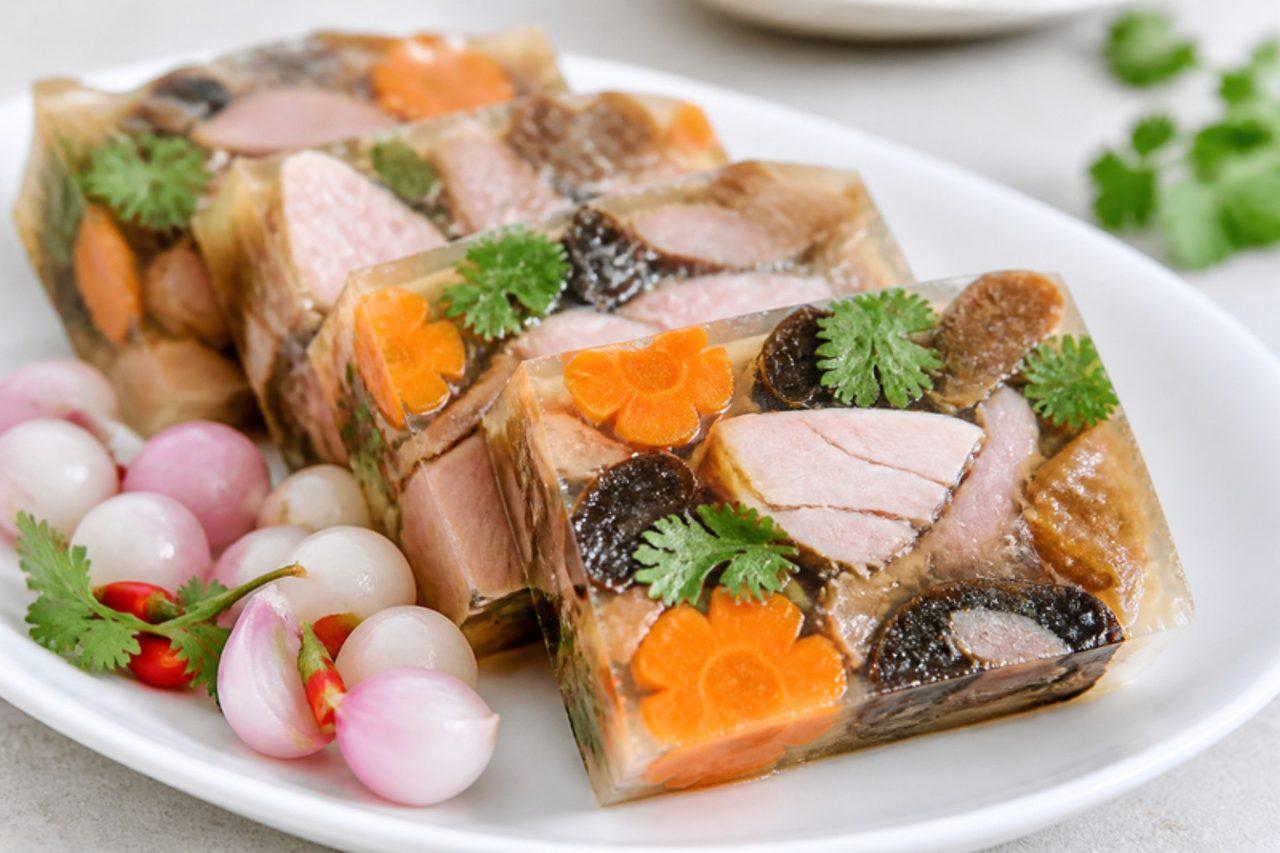
Thịt đông is a dish of the cold northern Tết, when families once left bowls of simmered pork outside overnight to set; today the fridge does the job. Pork hock and pork skin are cooked gently with shallots, fish sauce and black pepper until the meat is tender and the broth is rich in natural gelatine, then wood ear mushrooms are added for crunch and everything sets into a clear, wobbly jelly. It is eaten cold, cut into wedges, with hot rice, bánh chưng and a bowl of pickled shallots to cut the richness. No gelatine powder is needed. Chef's tip: keep the pot at a bare simmer and skim often; a rolling boil clouds the jelly.

by KrazyBadal 0 views

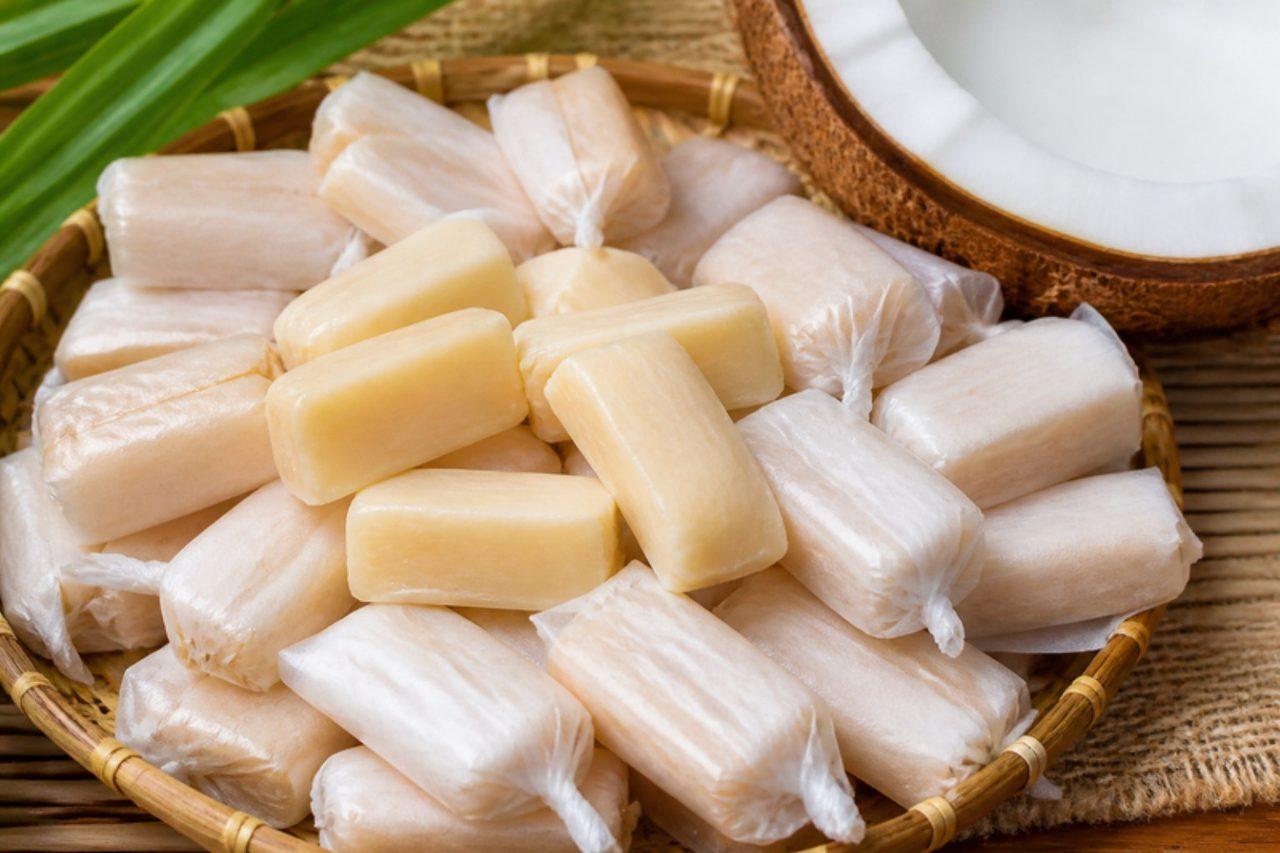
Kẹo dừa (Bến Tre coconut candy)

Bến Tre, in the Mekong Delta, is coconut country, and its workshops turn out mountains of kẹo dừa, the chewy coconut candy that Vietnamese families put on the Tết tray and bring home as a souvenir from the south. Thick coconut milk is boiled with sugar and rice malt syrup until it becomes a soft, pale caramel that tastes of toasted coconut and a little salt. Each piece is cut into a small bar and wrapped in a sheet of paper-thin edible rice paper, which melts on the tongue. Offer them with green tea, or at the end of a family meal. The candy is naturally egg-free: the long boil reduces the coconut milk until its own fat and solids, with the malt syrup, set it to a chew. Chef's tip: use a wide heavy pan and stir right across the base without stopping; the common mistake is walking away, which scorches the coconut solids and leaves brown specks and a bitter edge.

by KrazyBadal 0 views

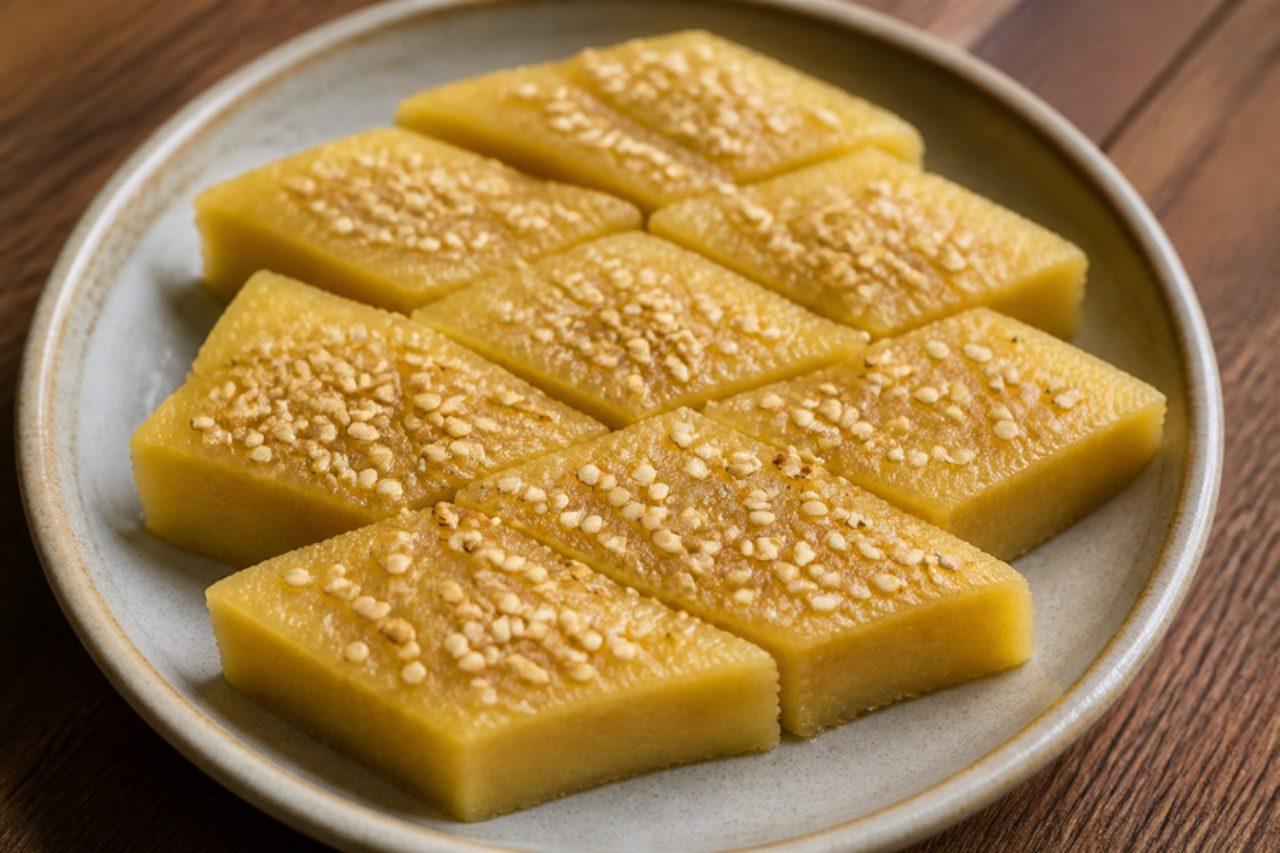
Chè kho (mung bean fudge pudding)

On New Year's Eve and the last days of Tết, Hanoi families place a plate of chè kho on the ancestors' altar: a smooth, golden mung bean fudge whose sweetness asks for a gentle, prosperous year. 'Kho' means cooked down dry, and that is the whole technique, stirring the bean purée with sugar until it becomes a thick, glossy paste that can be cut. It tastes nutty and delicately floral from grapefruit-blossom water, with a crunch of sesame on top. Serve small slices with lotus or green tea. Chef's tip: use a heavy non-stick pan and a wooden spoon, and never leave it; the paste catches in seconds once it thickens.

by KrazyBadal 0 views

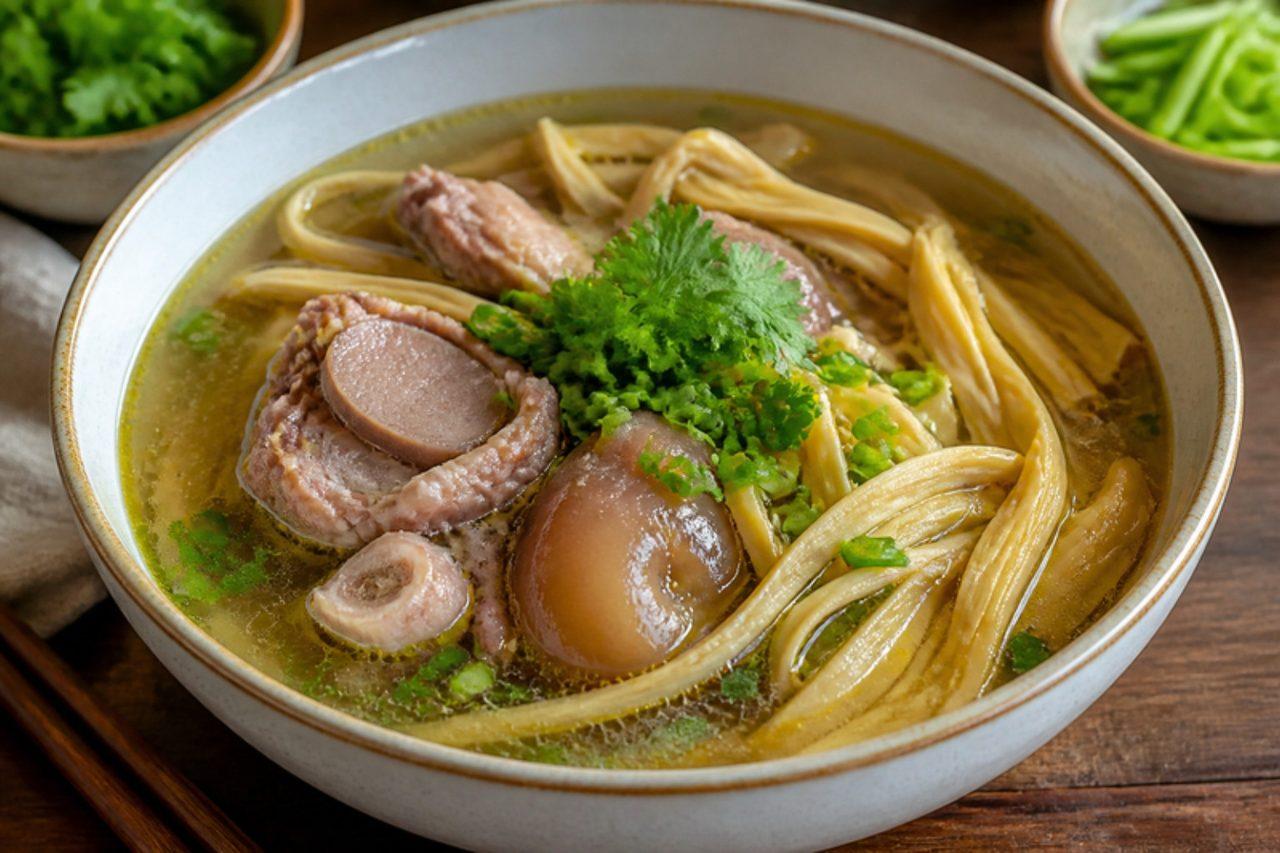
Canh măng (dried bamboo shoot soup)

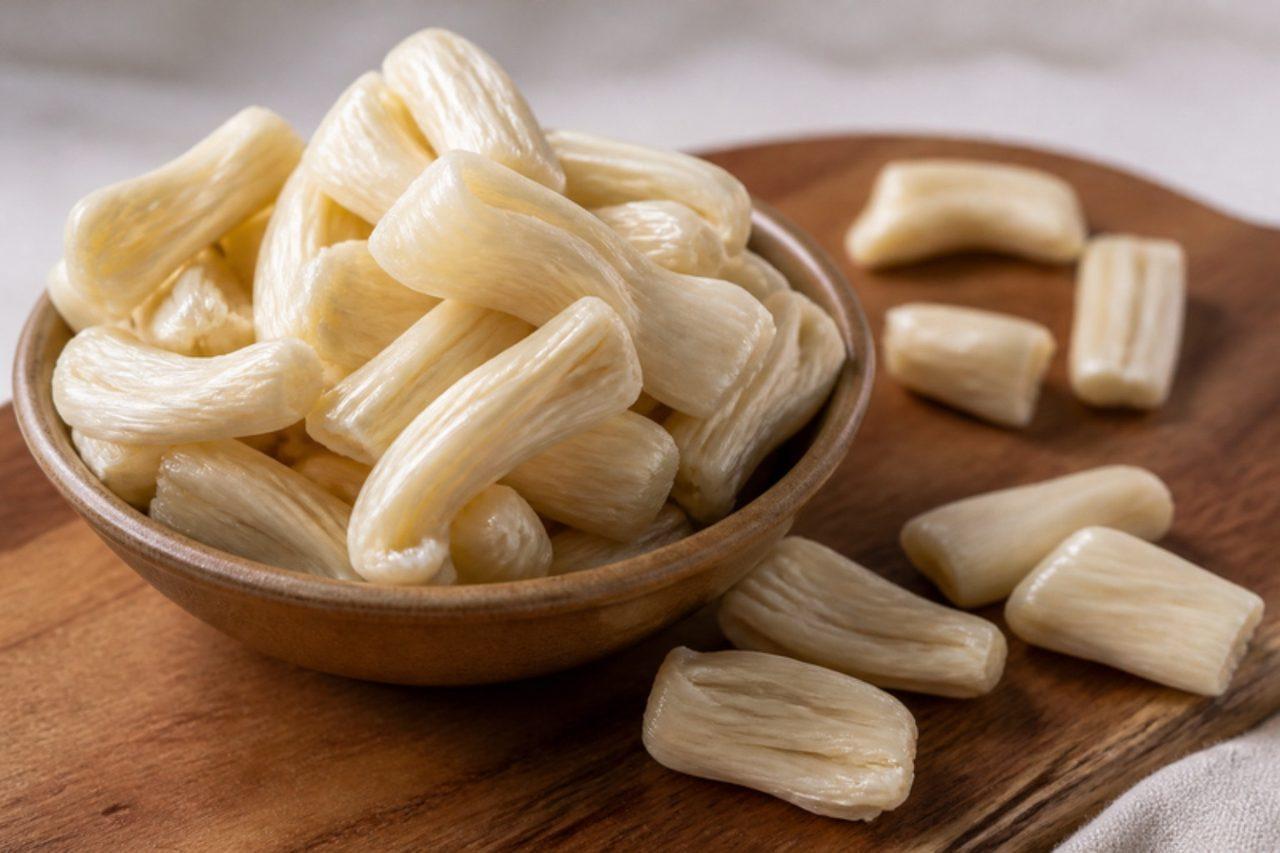
A deep bowl of canh măng sits at the centre of the northern Tết feast tray, where its long, chewy strands of bamboo stand for steady growth in the new year. The dried shoots are soaked and boiled several times until mild and tender, then simmered with pork hock until the broth is clear, sweet and lightly smoky. It is rich but clean-tasting, served with rice beside the boiled chicken, spring rolls and giò. If you prefer chicken, a variation is given in the steps. Chef's tip: tear the soaked shoots into thin strips along the grain rather than cutting across; they stay chewy and soak up more broth.

by KrazyBadal 0 views

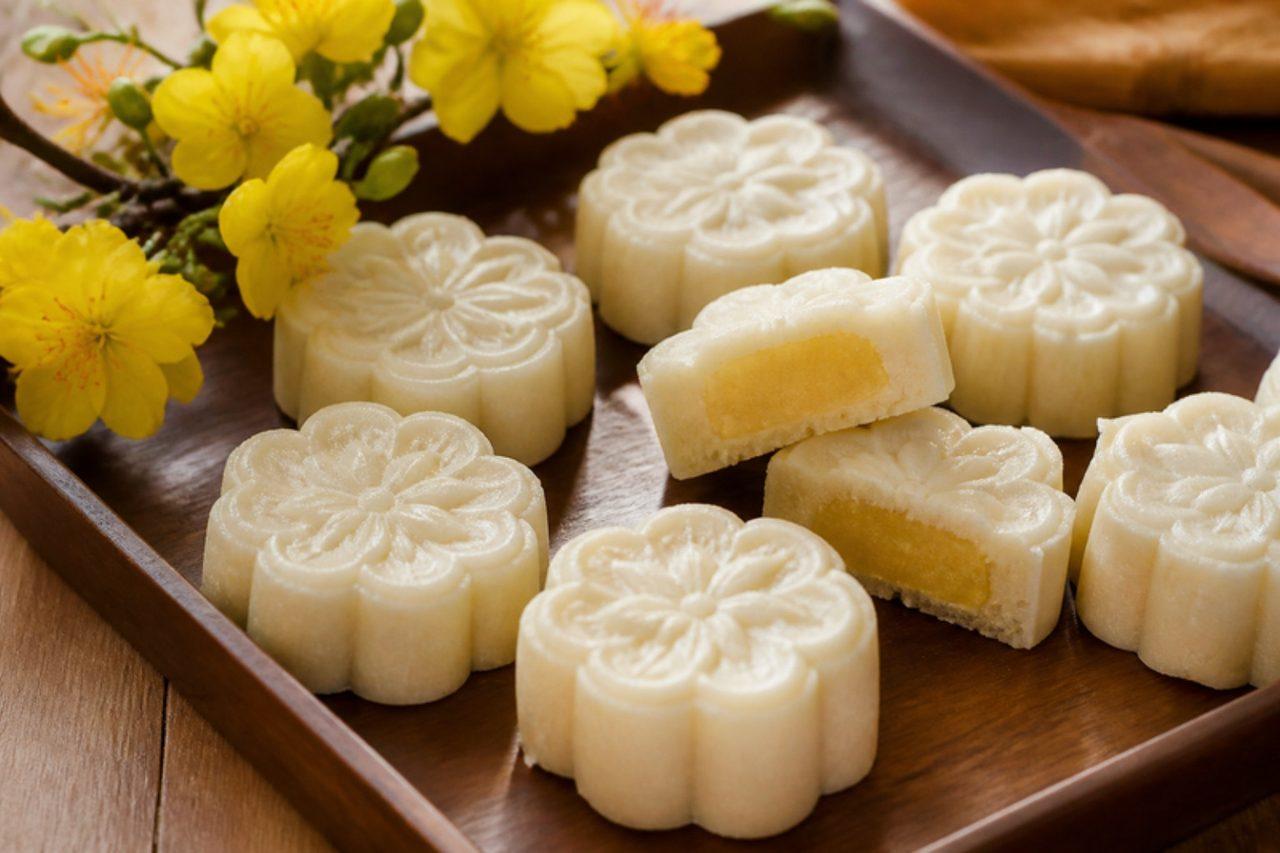
Bánh in (pressed rice-flour cakes)

Bánh in, literally 'printed cakes', come from Huế and central Vietnam, where they are stacked on the Tết altar for the ancestors and later shared with guests; the moulds stamp flowers or the characters for luck and longevity into each cake. The dough is just toasted glutinous rice flour bound with fragrant syrup, so the cakes are crumbly-soft, melt in the mouth and taste nutty, with a smooth mung bean heart. Serve them with jasmine or artichoke tea. Any wooden or plastic mooncake mould of about 40 g works. Chef's tip: let the pressed cakes rest overnight in a closed tin; they firm up and the flavour of the toasted flour deepens.

by KrazyBadal 0 views

Dưa hành (pickled shallots)

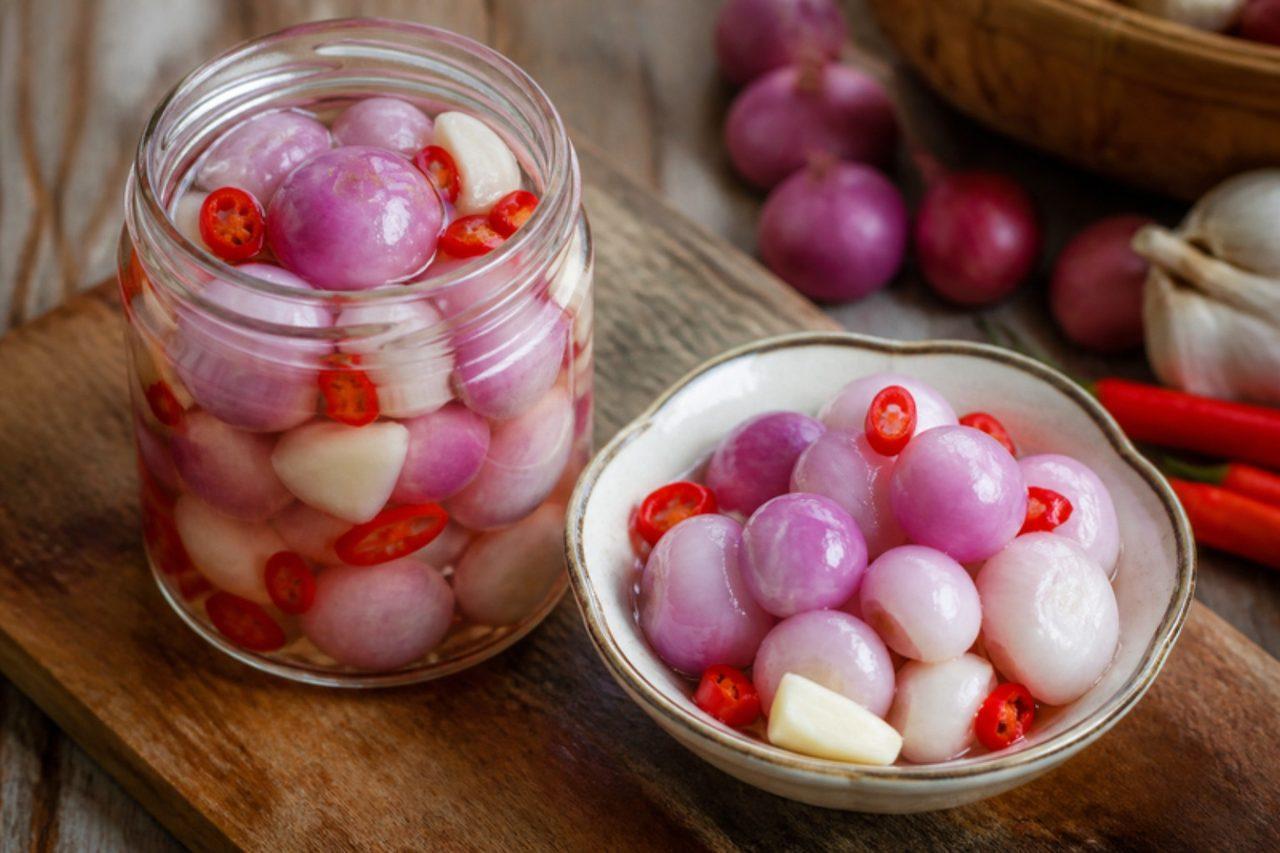
In northern Vietnam the saying goes that fatty pork, pickled shallots and red couplets make Tết, and dưa hành is that pickled shallot. It is not the same thing as southern củ kiệu: kiệu are slim scallion bulbs pickled sweet and mild, while dưa hành uses round purple shallots (hành tím) that sit in a salty brine for a few days, turning faintly sour, crunchy and pleasantly pungent. Their bite cuts through sticky bánh chưng, pork in aspic and pressed pork rolls, which is exactly why every northern family makes a jar. Chef's tip: soak the unpeeled shallots in warm water first; the skins then slip off in seconds and your eyes stay dry.

by KrazyBadal 0 views

Kẹo cu đơ (Hà Tĩnh peanut and ginger candy)

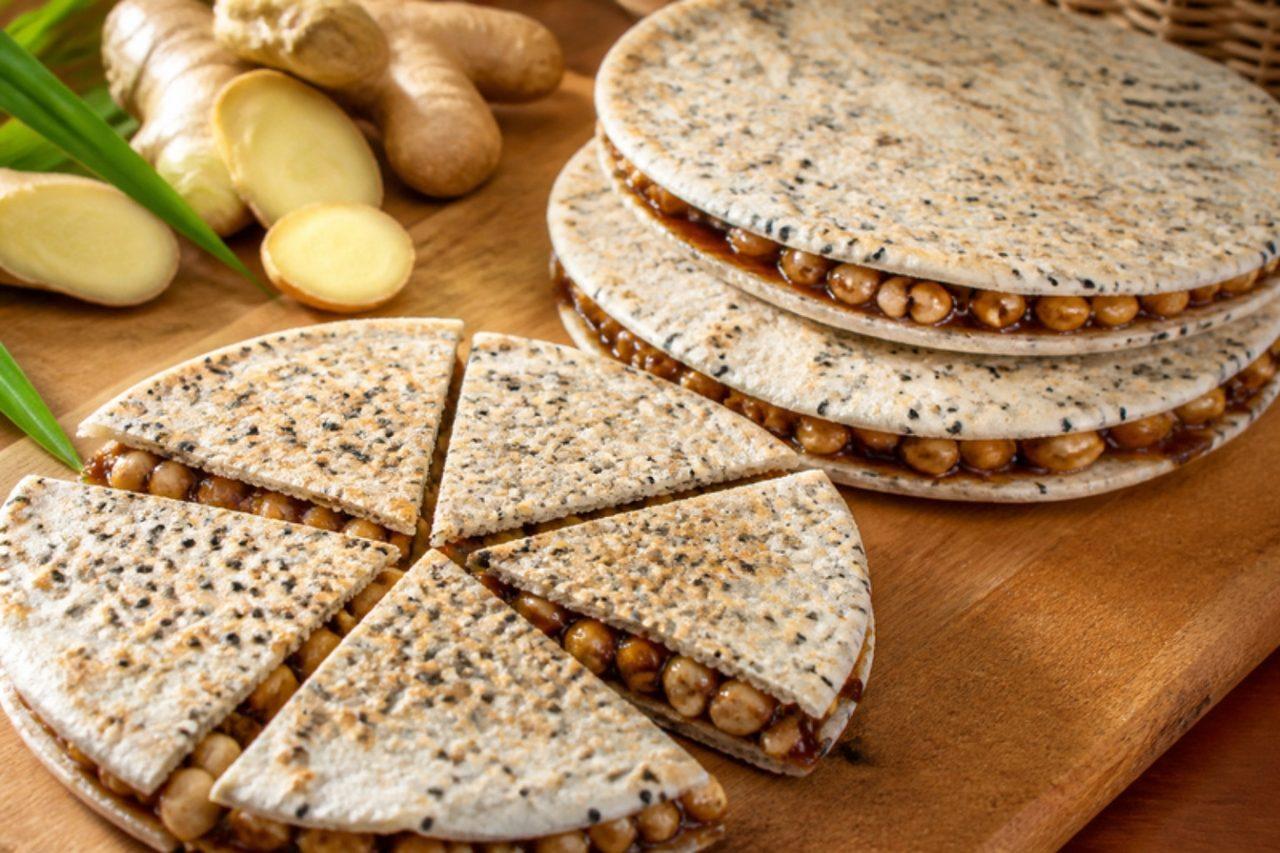
Kẹo cu đơ belongs to Hà Tĩnh province in north-central Vietnam, where it is chewed slowly with a cup of strong green tea, especially on cold mornings and during Tết visits. Roasted peanuts are folded into a dark, sticky toffee of sugarcane molasses and malt syrup, sharpened with fresh ginger, and the hot mass is sandwiched between two crisp, toasted sesame rice papers. Every bite gives a crackle of rice paper, then a chewy, slightly smoky sweetness and a warm ginger finish. Cut it into wedges and serve it with tea rather than as a pudding. It is naturally egg-free: the molasses and malt syrup are cooked to the hard-ball stage, which is what sets the candy and binds the nuts. Chef's tip: toast the rice papers until they are completely puffed and blistered; the common mistake is under-toasting them, which leaves them leathery once the hot toffee goes on.

by KrazyBadal 0 views

Giò thủ (pressed pork roll)

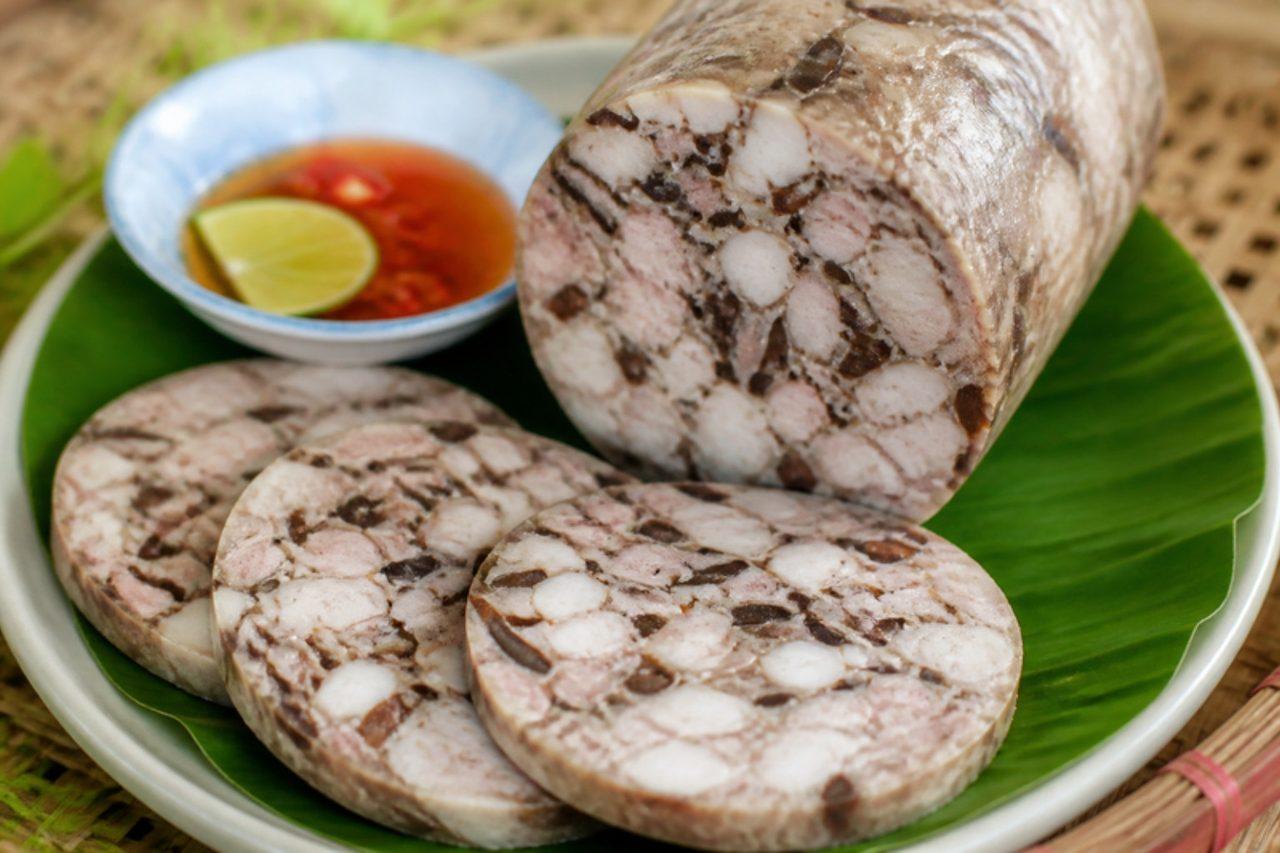
Giò thủ is a northern Tết classic, a mosaic roll made from pork ear, pork tongue and boneless pork cheek meat with crunchy wood ear mushrooms and plenty of black pepper. Using these cuts is an old way of honouring the whole animal at the year's biggest feast, and the roll's neat round slices are a wish for a complete, well-ordered year. The pieces are boiled, sliced, stir-fried with fish sauce and packed hot into banana leaf, where their natural gelatine binds them as they cool. Every slice is crunchy, chewy and peppery; serve with pickled shallots, fish sauce with lime and chilli, and bánh chưng. Chef's tip: pack and press the filling while it is still very hot; once it cools the gelatine sets and the roll will not hold together.

by KrazyBadal 0 views

Mứt tắc (candied kumquats)

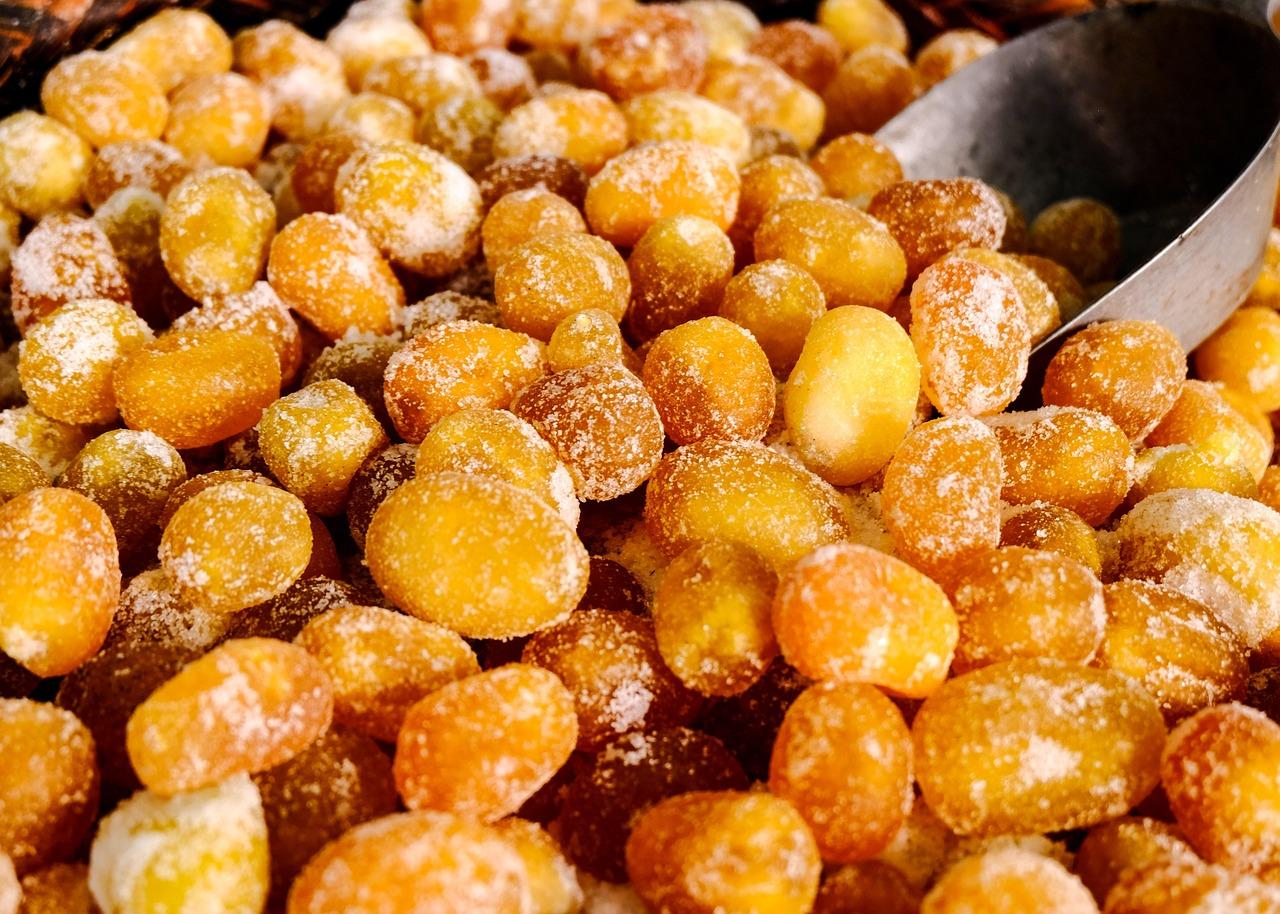
In the south, potted kumquat trees heavy with fruit stand at the door for Tết, because their round gold fruit promises plenty; mứt tắc brings that same luck to the candy tray. Each fruit is slit, gently pressed to push out the seeds and juice, firmed briefly in clear water made with food-grade slaked lime (vôi ăn), then candied until glossy and amber, with a chewy skin and a pleasant bitter-sweet edge. A no-lime method is given too. Serve with strong tea, or drop a fruit into hot water with honey for a soothing drink. Chef's tip: blanch the fruit twice in fresh water before candying; it tames the bitterness without losing the perfume.

by KrazyBadal 0 views

Bánh thuẫn (Tết sponge cakes)

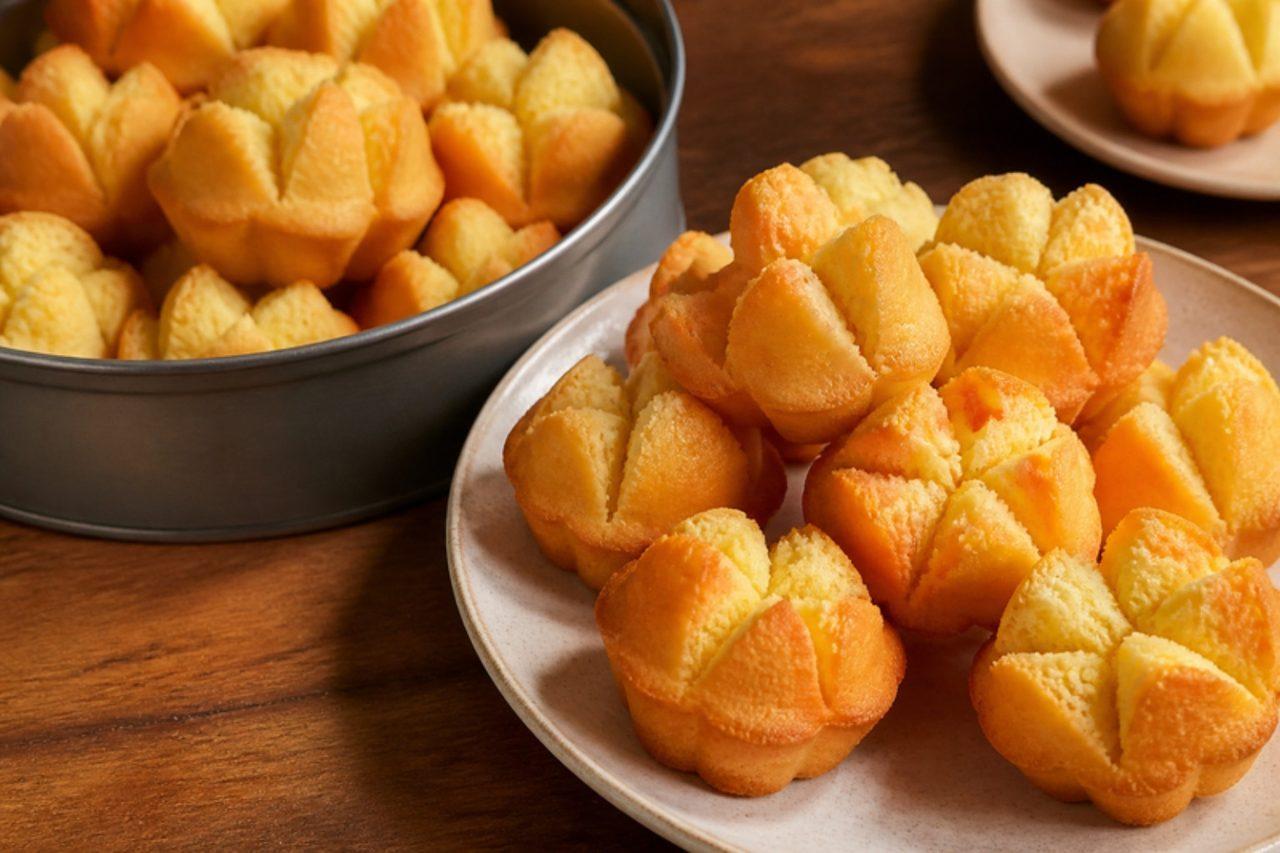
In Huế and across the south, bánh thuẫn are baked in small flower-shaped moulds for the Tết table and ancestor offerings; the top splits open like a blossom as it bakes, and a well-cracked cake is said to bring a year that blooms. They are dairy-free, made only of eggs, sugar and flour, so the texture is springy inside with a golden, crisp rim, a little like a madeleine but airier. Children love them, and they keep in a tin for days, ready for visitors with tea. Chef's tip: heat the oiled moulds in the oven before filling; the batter hitting hot metal is what makes the tops crack into petals.

by KrazyBadal 0 views

Xôi vò (mung bean coated sticky rice)

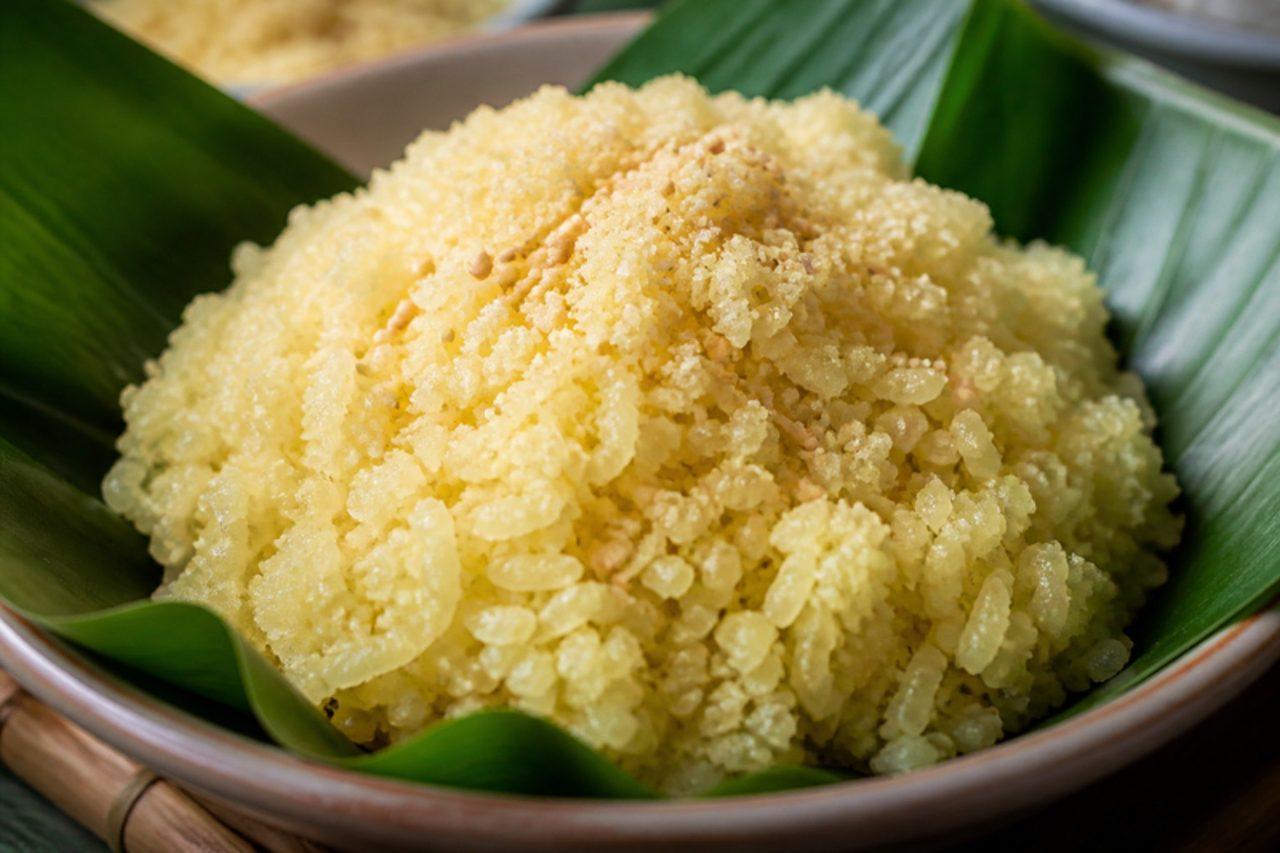
Xôi vò is a Hanoi sticky rice offered at the altar for Vu Lan, the Buddhist full moon of the seventh lunar month when people honour their parents and ancestors, and again on the first days of Tết. Unlike most xôi, it is not a sticky mass: 'vò' means rubbed, and the soaked rice is rubbed with crumbled mung bean so each grain steams up separate, glossy and pale gold. It tastes mild, nutty and lightly salty, and is eaten with chè (sweet soup), a little sugar, or toasted sesame salt. Chef's tip: crumble the warm mung bean paste through a coarse sieve; fine, dry crumbs are what keep the grains apart.

by KrazyBadal 0 views

Showing 24 of 520 recipes

Show more recipes

Page 1 of 22