Skip to content
Recipes

All recipes

Vegetarian, or something you can't eat? Set your diet once and we'll hide recipes that don't fit.

Dubu gangjeongSticky fried tofu cubes

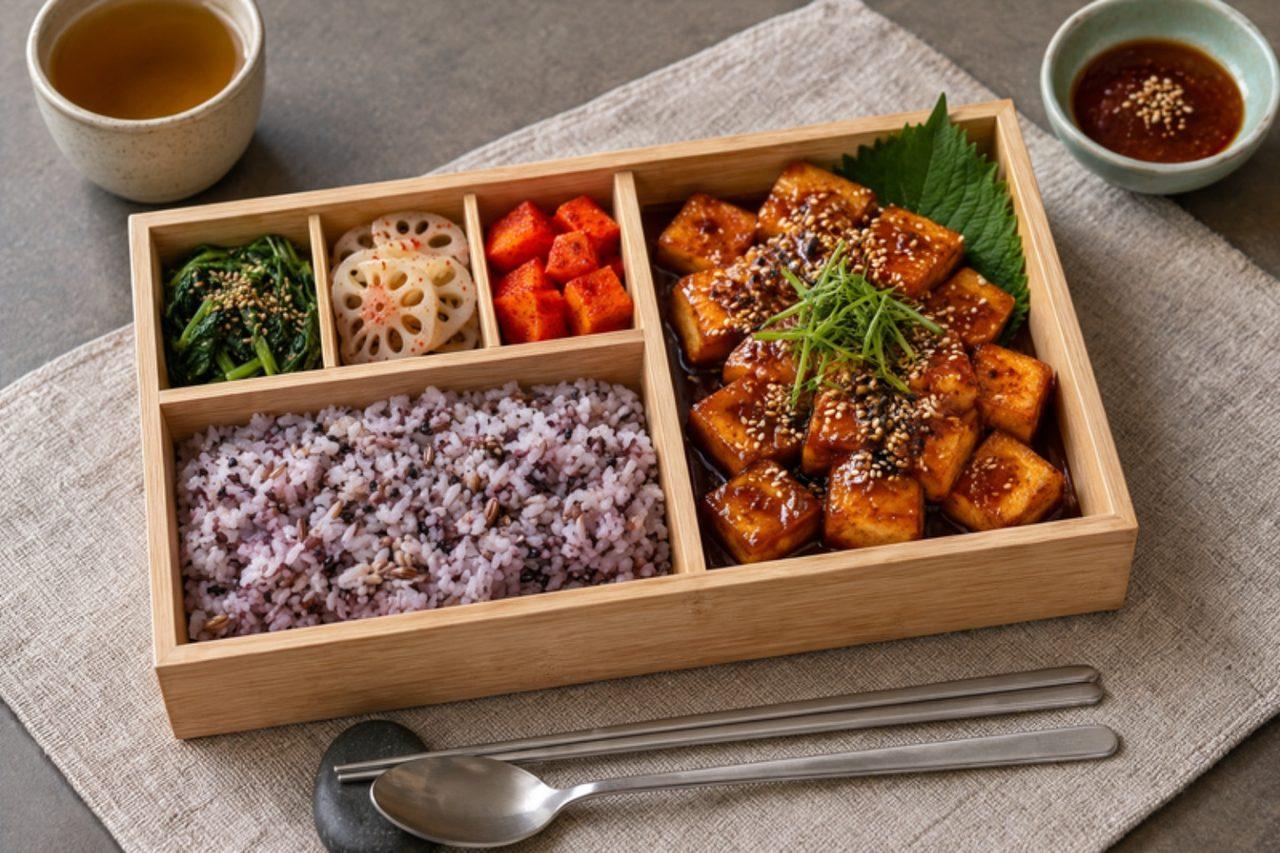
Gangjeong usually means sticky glazed fried chicken, but Korean mothers make this tofu version for the dosirak because the starch coating stays crisp even after a morning in the lunchbox. The glaze is mild, sweet and garlicky, so children love it; add gochujang for the grown-ups. The common mistake is skipping the pressing, which leaves wet tofu that spits in the oil and goes soggy under the sauce. Chef's tip: let the fried cubes cool for two minutes before glazing, and boil the sauce to large, slow bubbles first, so it clings instead of soaking in.

by KrazyBadal 0 views

Jinmichae bokkeumGlazed dried squid strips

Jinmichae, shredded seasoned dried squid, is one of the most popular banchan in Korean lunchboxes: chewy, sweet and a little spicy, and it keeps for a week. Children across Korea find it in their dosirak and parents make a big tub on Sunday. The common mistake is glazing it over the heat, which turns the squid hard as wire; mix the strips into the warm sauce off the heat. Chef's tip: soak the squid briefly in water first and squeeze it out, so it stays tender even straight from the fridge.

15 minKoreanFishSpicy
by KrazyBadal 0 views

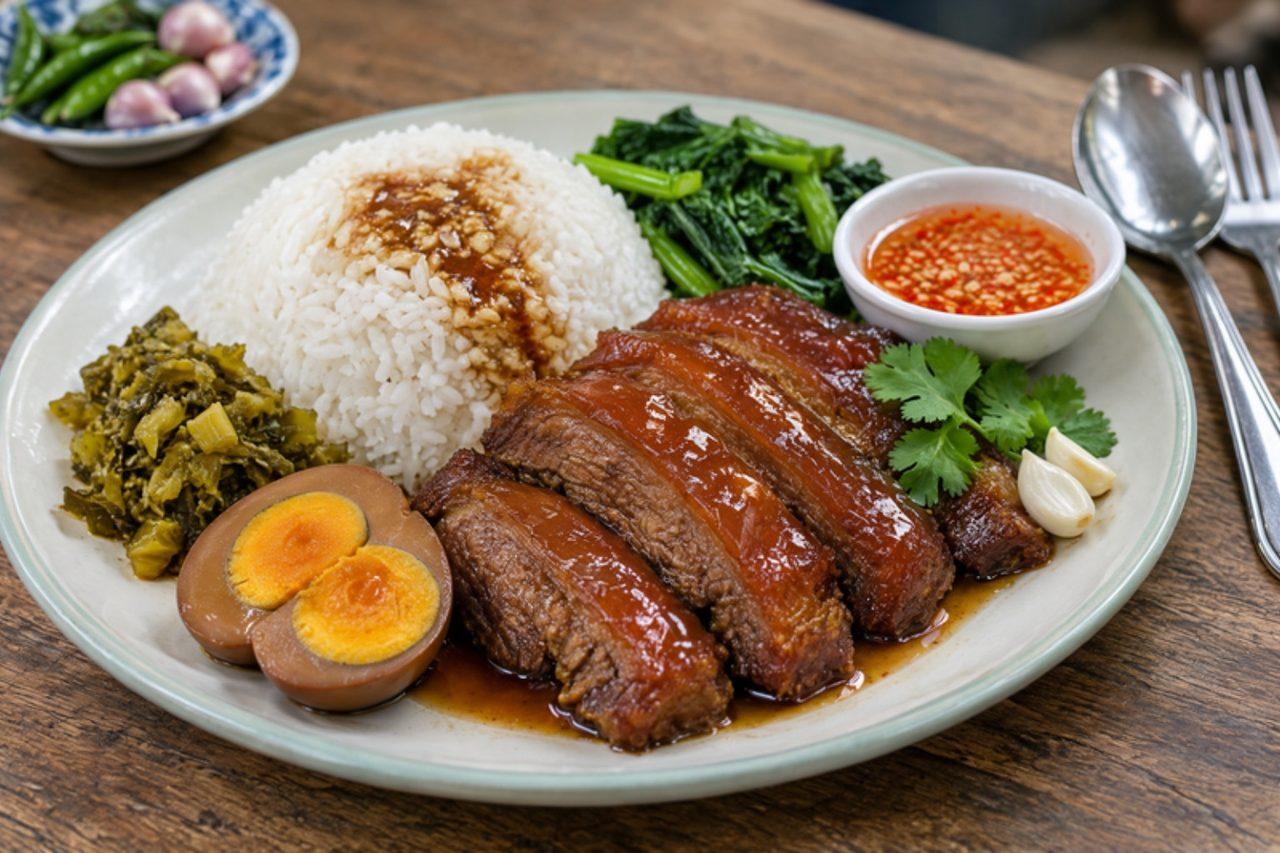
Khao kha mooBraised pork leg rice

Khao kha moo is Bangkok's great one-plate lunch, and the shophouses along Charoen Krung Road in Bang Rak have been simmering pork leg in the same dark, star-anise-scented pots for decades. Fresh pork hock is braised in soy, palm sugar and five-spice until the skin turns glossy and gelatinous and the meat falls away in tender strands. It is sliced onto jasmine rice with a soy-stained boiled egg, pickled mustard greens, blanched Chinese kale and a fierce green chilli and garlic vinegar to cut the richness. Chef's tip: keep the braise at a lazy simmer; a hard boil tears the skin and turns the meat stringy.

185 minThaiMeat
by KrazyBadal 0 views

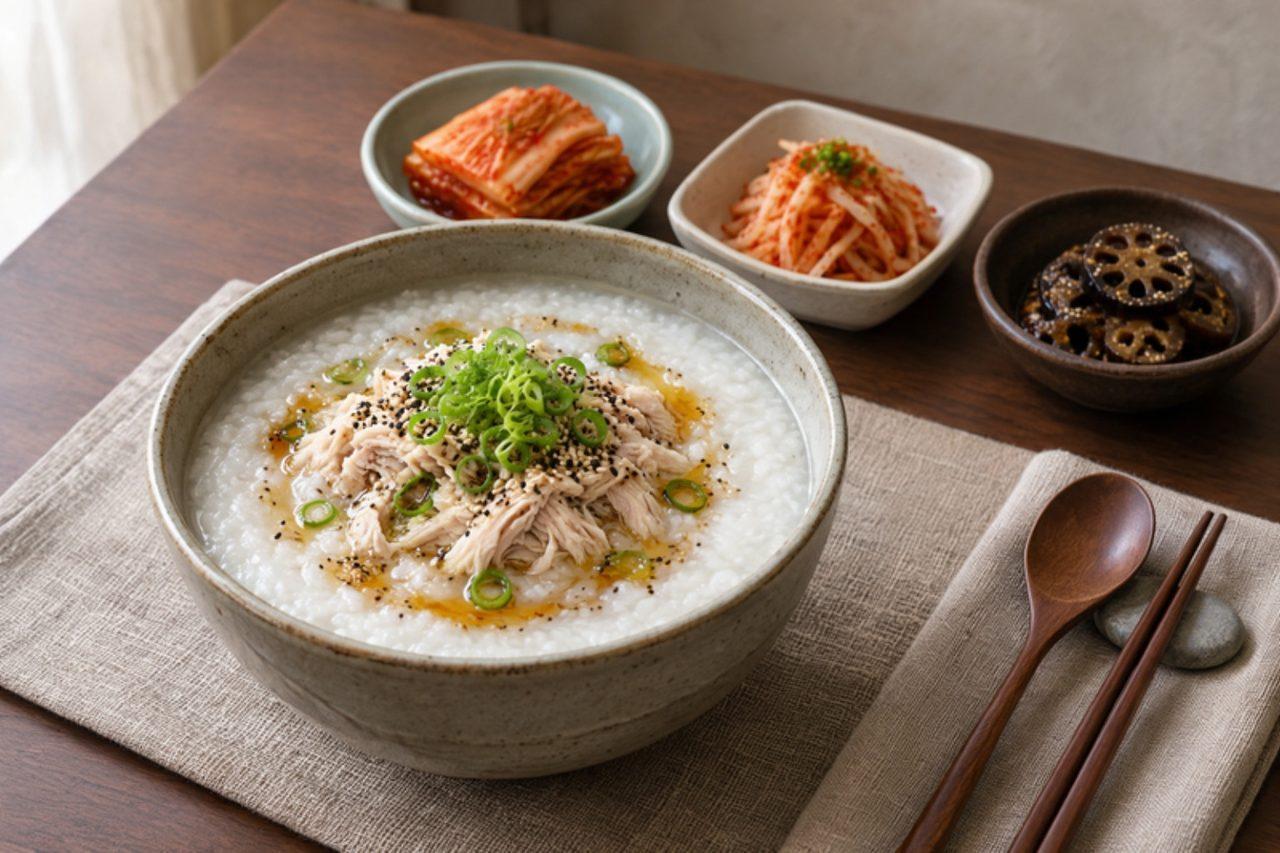
DakjukChicken and rice porridge

All over Korea, dakjuk is the bowl a mother makes on a cold morning or when someone is under the weather: chicken simmered with garlic and ginger, the meat pulled into shreds, and soaked rice cooked down in the broth until it turns into a soft, savoury porridge finished with sesame oil. It is eaten for breakfast or as a gentle lunch, with a little kimchi on the side. The usual mistake is boiling the chicken hard, which clouds the broth and toughens the meat; keep it at a lazy simmer. Chef's tip: fry the soaked rice in sesame oil for two minutes before the broth goes in, so the grains toast lightly and the porridge tastes nutty rather than flat.

by KrazyBadal 0 views

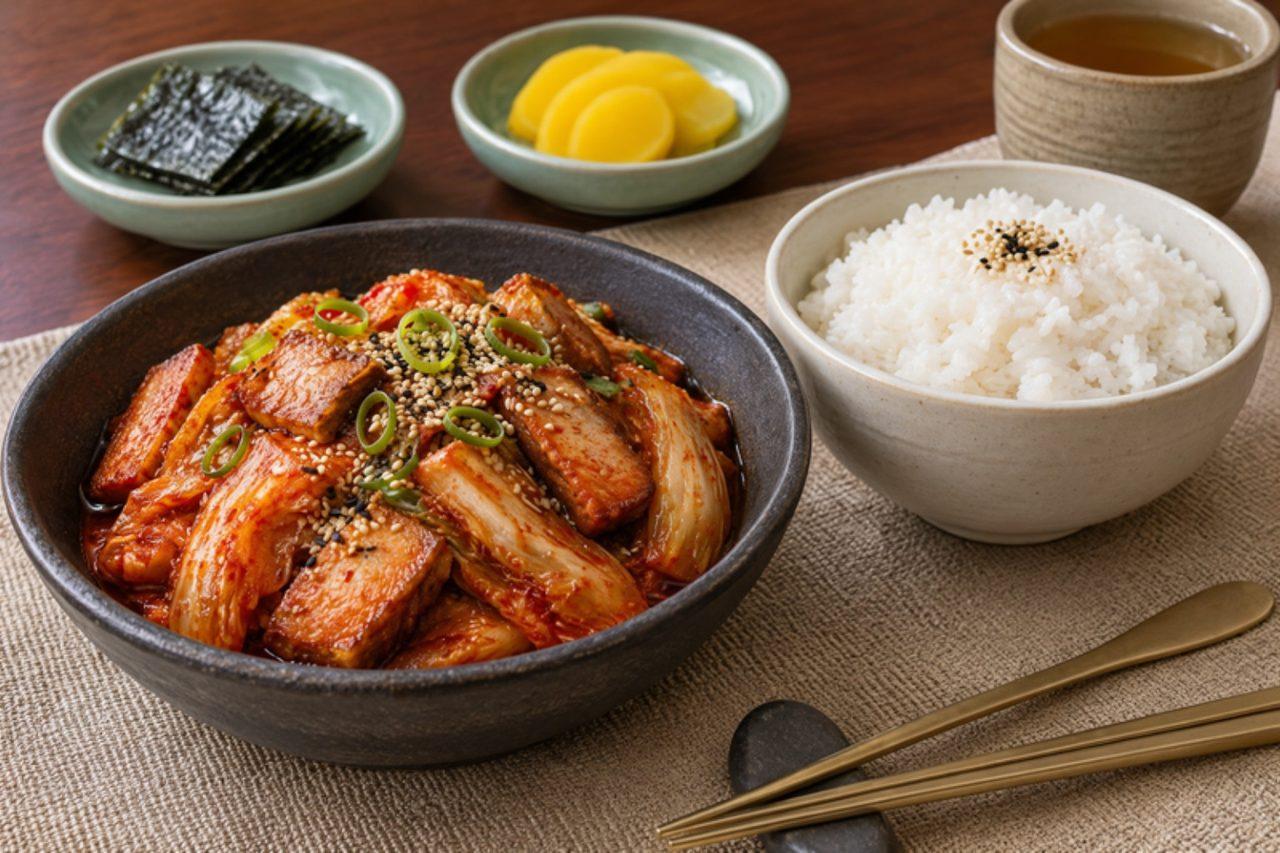
Bokkeum kimchiStir-fried kimchi with pork belly

When a jar of kimchi turns very sour in Korean homes, it gets stir-fried with a little sugar and sesame oil, and often with pork belly, into bokkeum kimchi, a deep, mellow side dish that keeps for days and is a favourite in school and office dosirak. For a vegan version, use kimchi made without fish sauce or salted shrimp and leave out the pork. The usual mistake is using fresh, crisp kimchi, which tastes harsh when fried; it needs to be properly sour. Chef's tip: fry the kimchi until the edges just begin to catch and caramelise, which is where the flavour is.

by KrazyBadal 0 views

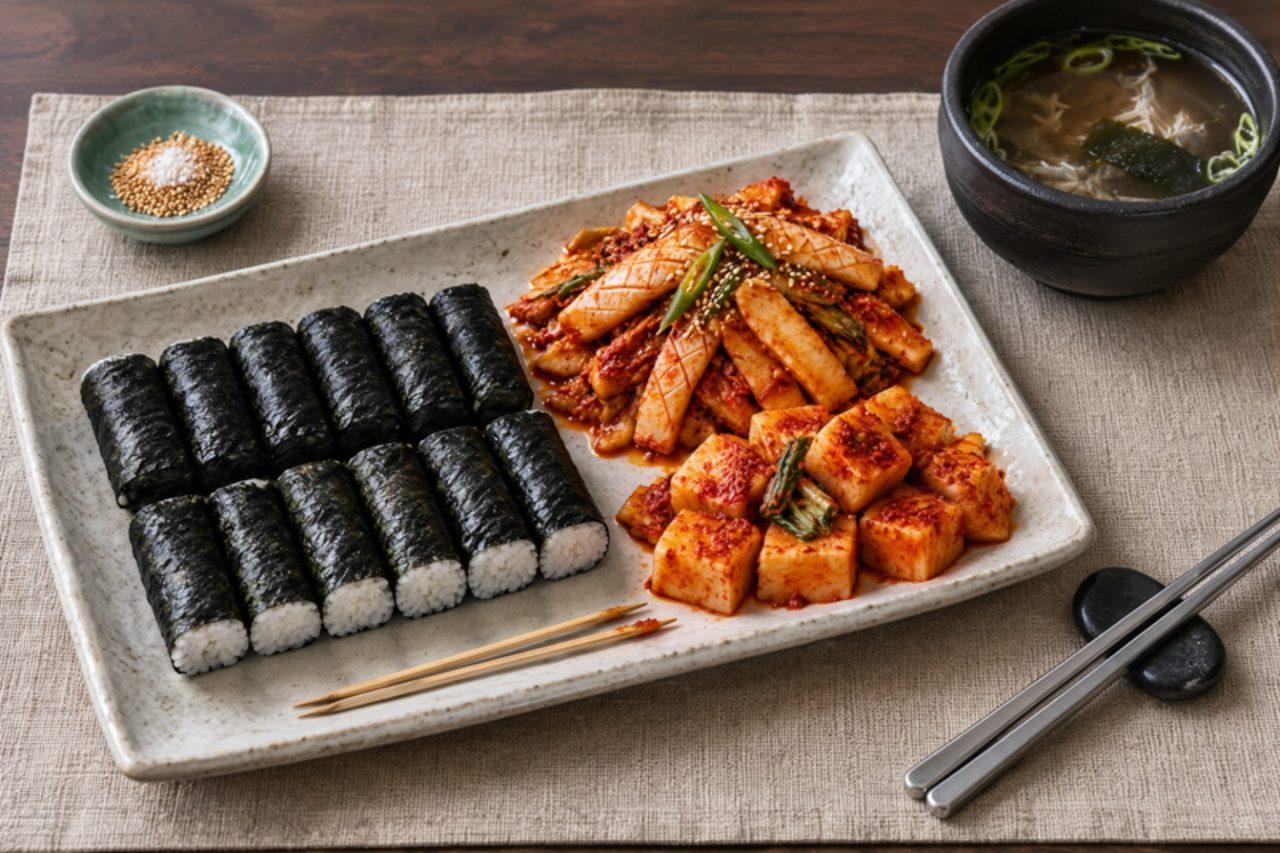
Chungmu gimbapRice rolls with spicy squid

In the harbour town of Tongyeong (once called Chungmu), fishermen's wives made plain rice rolls in laver with the spicy side dishes packed separately, because filled gimbap spoiled in the heat of the boats. Today Chungmu gimbap is a lunchbox and road-trip classic all over Korea: finger-sized rolls eaten with a toothpick, sweet-spicy squid and fish cake, and crunchy radish kimchi. The common mistake is overcooking the squid, which goes rubbery; blanch it just until it turns white and curls. Chef's tip: brush the gim lightly with sesame oil before rolling, which keeps it from going chewy.

by KrazyBadal 0 views

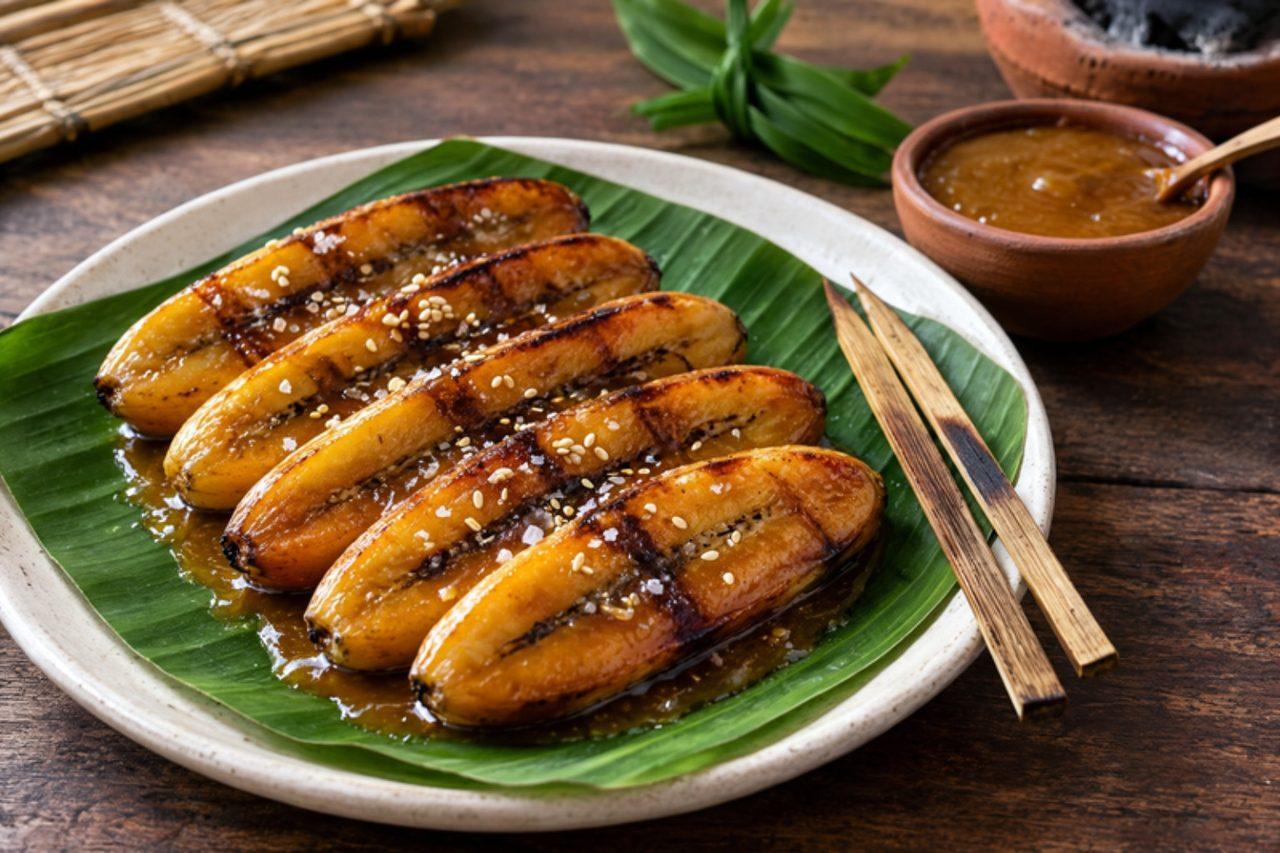
Kluay pingGrilled banana

Kluay ping carts work the pavements of Silom and the lanes off Sukhumvit from mid-morning, when office workers want something sweet with their iced coffee. The vendor grills small, starchy nam wa bananas slowly over embers, presses each one flat with a wooden board and then brushes it with coconut cream cooked down with palm sugar and a pinch of salt. The outside turns sticky and smoky; the inside stays soft and fudgy. Ladyfinger bananas or firm, just-ripe small bananas work at home. Chef's tip: choose bananas that are yellow with no brown spots; overripe fruit turns to mush on the grill.

by KrazyBadal 0 views

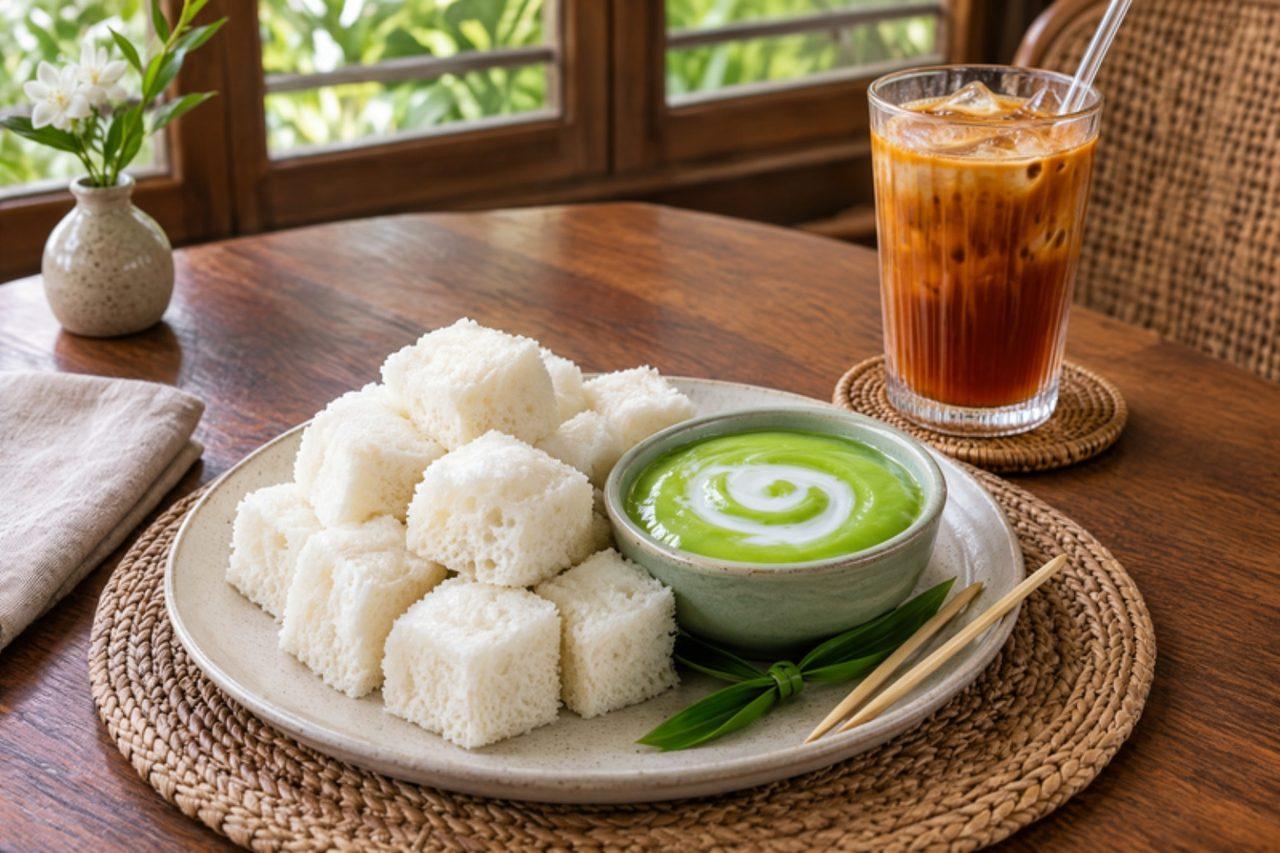
Khanom pang sangkhayaBread with pandan custard

In Bangkok, from the old Chinese coffee shops of Yaowarat to night markets, khanom pang sangkhaya is soft steamed or toasted bread dunked into a bowl of bright green pandan custard made with coconut milk and egg. It is eaten in the morning with patongko dough sticks and strong iced coffee. The mistake is cooking the custard over high heat; the egg scrambles and it turns grainy, so stir it slowly over a gentle flame. Chef's tip: blitz fresh pandan leaves with a splash of water and squeeze the juice through a cloth; it gives a colour and fragrance that essence can't match.

by KrazyBadal 0 views

Pa thong koTwin fried dough sticks

Before the shutters go up along Yaowarat Road in Bangkok's Chinatown, the pa thong ko vendors are already frying: two strips of dough pressed together, stretched and dropped into a wok of oil, where they swell into hollow, crackly sticks shaped a little like a pair of legs. Office workers buy a paper bag on the way to the skytrain and eat them with a cup of hot soy milk, or tear them into pieces and dip them in green pandan custard or condensed milk. This home version is egg-free and dairy-free and is served with sweetened soy milk. Chef's tip: let the dough rest for the full hour; a relaxed dough stretches without tearing and puffs far more in the oil.

by KrazyBadal 0 views

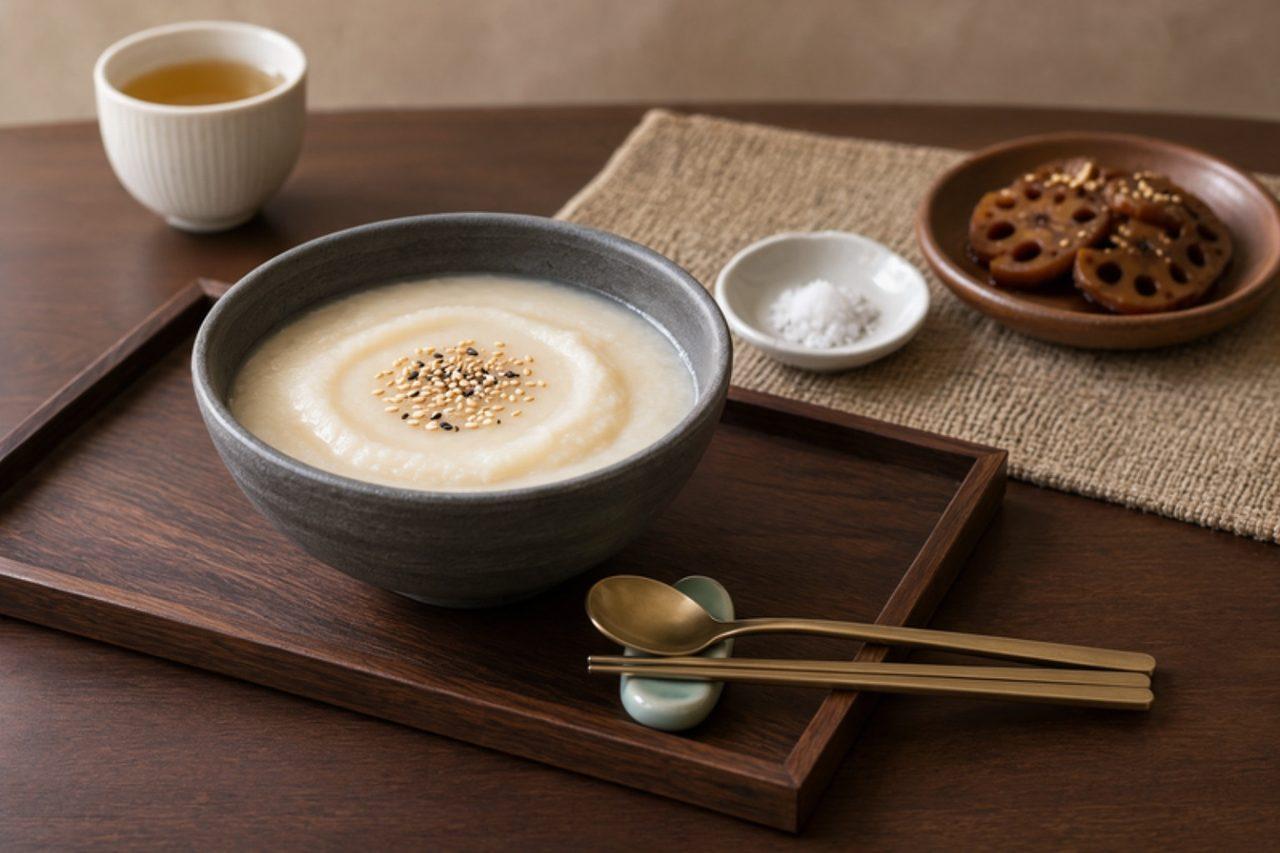
KongjukSoybean and rice porridge

Kongjuk is the porridge Korean families make when they want something filling but plain: soaked soybeans ground into a milk with rice and cooked until it is thick, pale and creamy. It is a breakfast and a summer staple in the countryside, eaten with a little salt and some kimchi or radish on the side. The mistake to avoid is under-blending the beans: gritty bean skins make the porridge grainy, so blend long and fine, or sieve it. Stir often too, because soy milk catches on the bottom quickly. Chef's tip: skim off the loose skins after soaking by rubbing the beans between your palms under water; the porridge comes out silkier and whiter.

by KrazyBadal 0 views

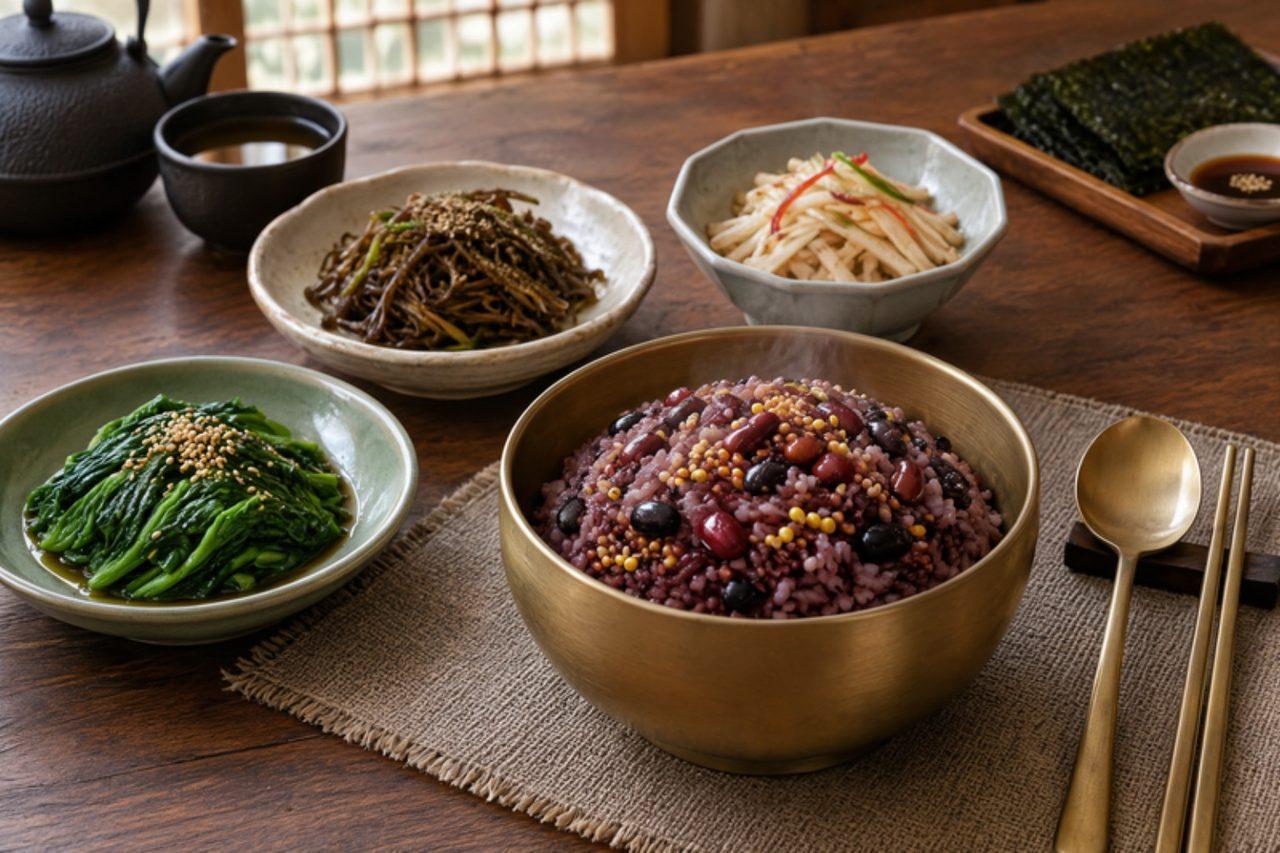
OgokbapFive-grain rice

Ogokbap is cooked across Korea for Jeongwol Daeboreum, the first full moon of the lunar year, when families share five-grain rice with nine kinds of dried namul and crack nuts to wish for good health. Sticky rice, millet, sorghum, black soybeans and adzuki beans cook together into a chewy, purple-tinged rice with a nutty, gently sweet flavour. It is good any time of year beside soup and banchan. The usual mistake is putting the adzuki beans in raw with the rice: they stay hard while the rice turns soft, so parboil them first. Chef's tip: keep a little of the adzuki cooking water for the rice, as it gives ogokbap its lovely rosy colour.

by KrazyBadal 0 views

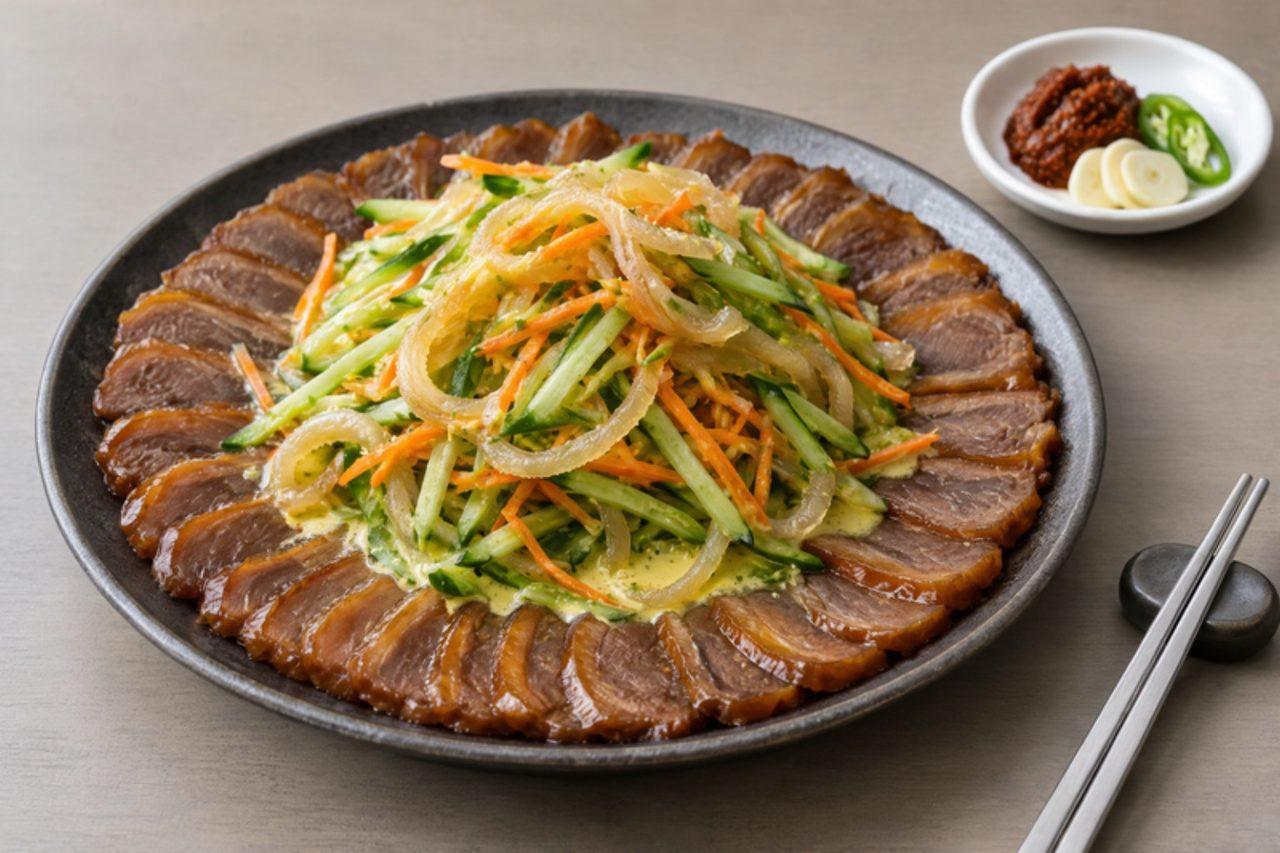
Naengchae jokbalCold sliced pork trotter

Busan's Jokbal Alley in Bupyeong-dong, beside Kkangtong Market, is where braised pork trotter was first served cold as a salad, a summer trick that spread across Korea. The pork trotters are simmered for hours in soy, ginger and spices until the skin turns sticky and tender, chilled, sliced thin and tossed with cucumber, shredded jellyfish and a nose-tingling dressing of Korean mustard, vinegar and garlic. It is evening food, shared from a big platter. Chef's tip: slice the meat only once it is fully cold; warm trotter meat tears instead of cutting into clean slices.

190 minKoreanMeat
by KrazyBadal 0 views

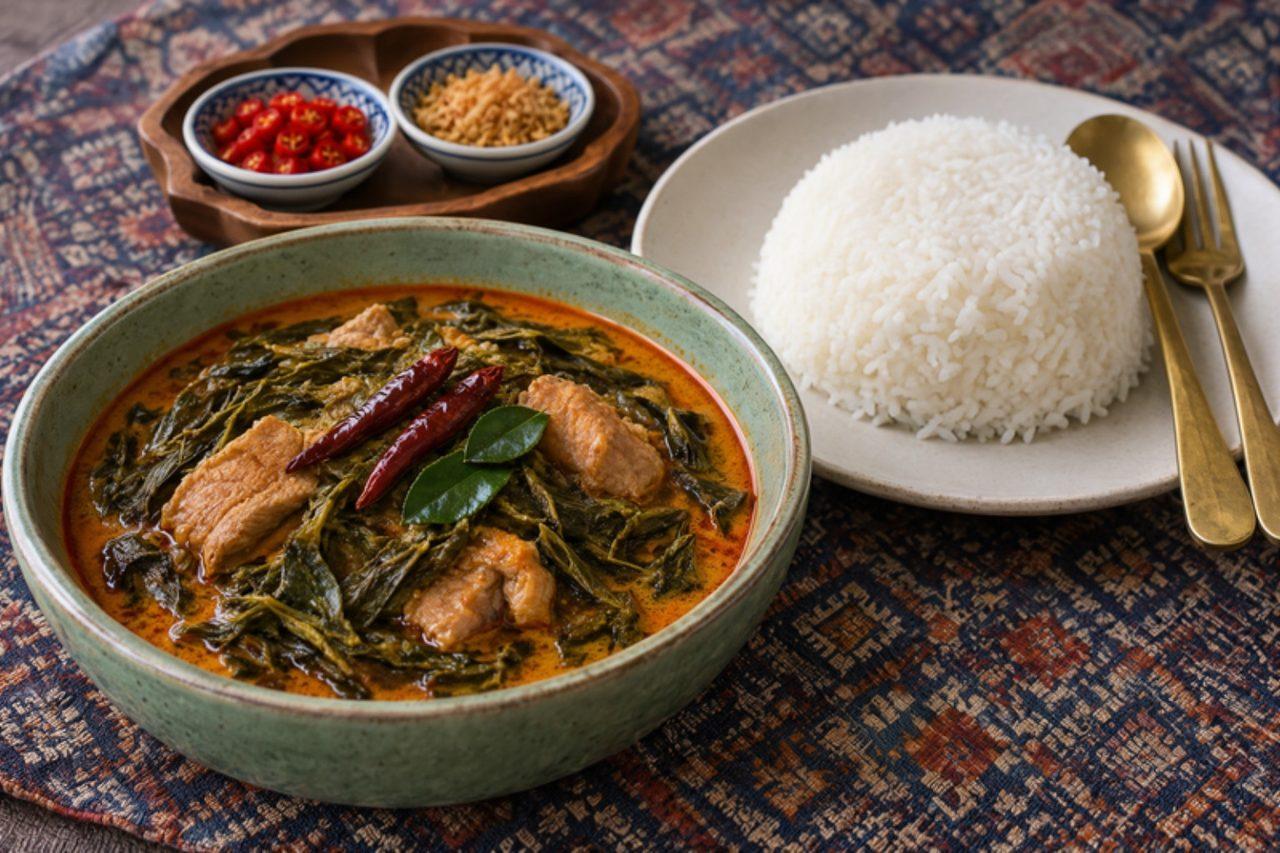
Kaeng khilekCassia leaf curry

Kaeng khilek is an old-fashioned country curry from central Thailand, cooked when the cassia (khilek) trees put out tender shoots after the rains and sold ready-boiled in bags at markets around Ratchaburi and Suphan Buri. The leaves are boiled and drained several times until their bitterness softens, then simmered with pork belly in coconut milk with red curry paste, leaving a dark green, pleasantly bitter, rich curry eaten with jasmine rice and salted egg. This recipe contains pork. The usual mistake is skipping the repeated boiling: cassia leaves must be boiled and drained at least three times, or they are harshly bitter and can upset the stomach. Frozen pre-boiled khilek from Thai shops saves work. Chef's tip: squeeze the boiled leaves firmly in a cloth so they soak up coconut milk instead of water.

by KrazyBadal 0 views

DakgangjeongSticky glazed fried chicken

Dakgangjeong is the boxed fried chicken of Sokcho's Jungang market on Korea's east coast, carried home by the tub and packed into lunchboxes the next day, because the double-fried pieces in their sticky glaze stay crunchy even when cold. The common mistake is frying only once; the second fry drives out moisture so the crust holds up to the sauce. Chef's tip: coat with potato starch rather than flour, and let the coated chicken sit for 5 minutes so the starch hydrates into a craggy crust.

by KrazyBadal 0 views

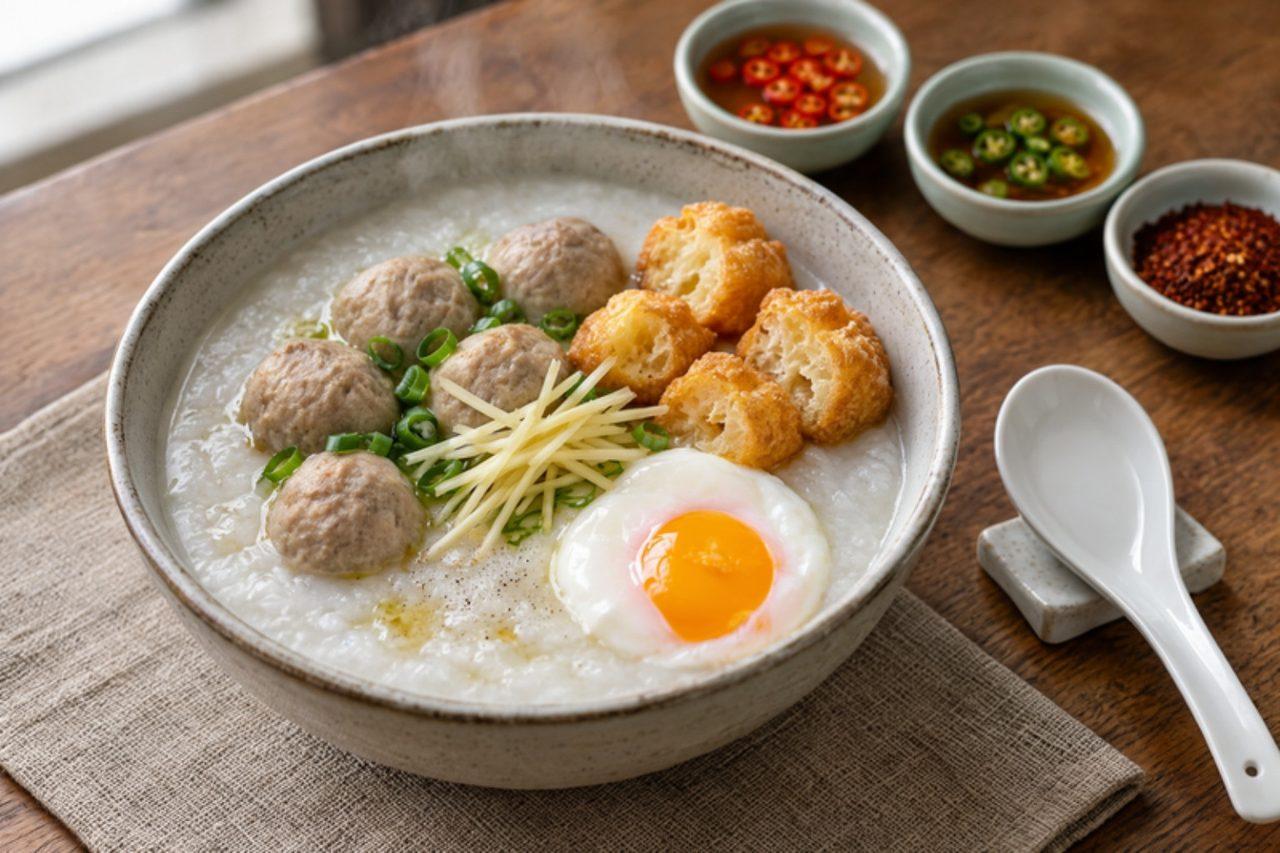
Jok mooRice porridge with pork balls

In Bangkok, jok is breakfast at a roadside stall or the market at 6 am: broken jasmine rice cooked until almost smooth, with tender pork balls, an egg cracked in at the last moment, and heaps of ginger, spring onion and crisp patongko or fried dough. Seasoning sits on the table, so everyone adds soy, white pepper and chilli vinegar to taste. For a meat-free bowl, swap the pork balls for shiitake mushrooms and cubes of silken tofu, and use soy instead of fish sauce. The common mistake is a thin, watery jok; keep simmering until it holds a soft ribbon. Chef's tip: whisk the cooked rice hard for a minute at the end; it breaks the last grains and makes the porridge creamy.

by KrazyBadal 0 views

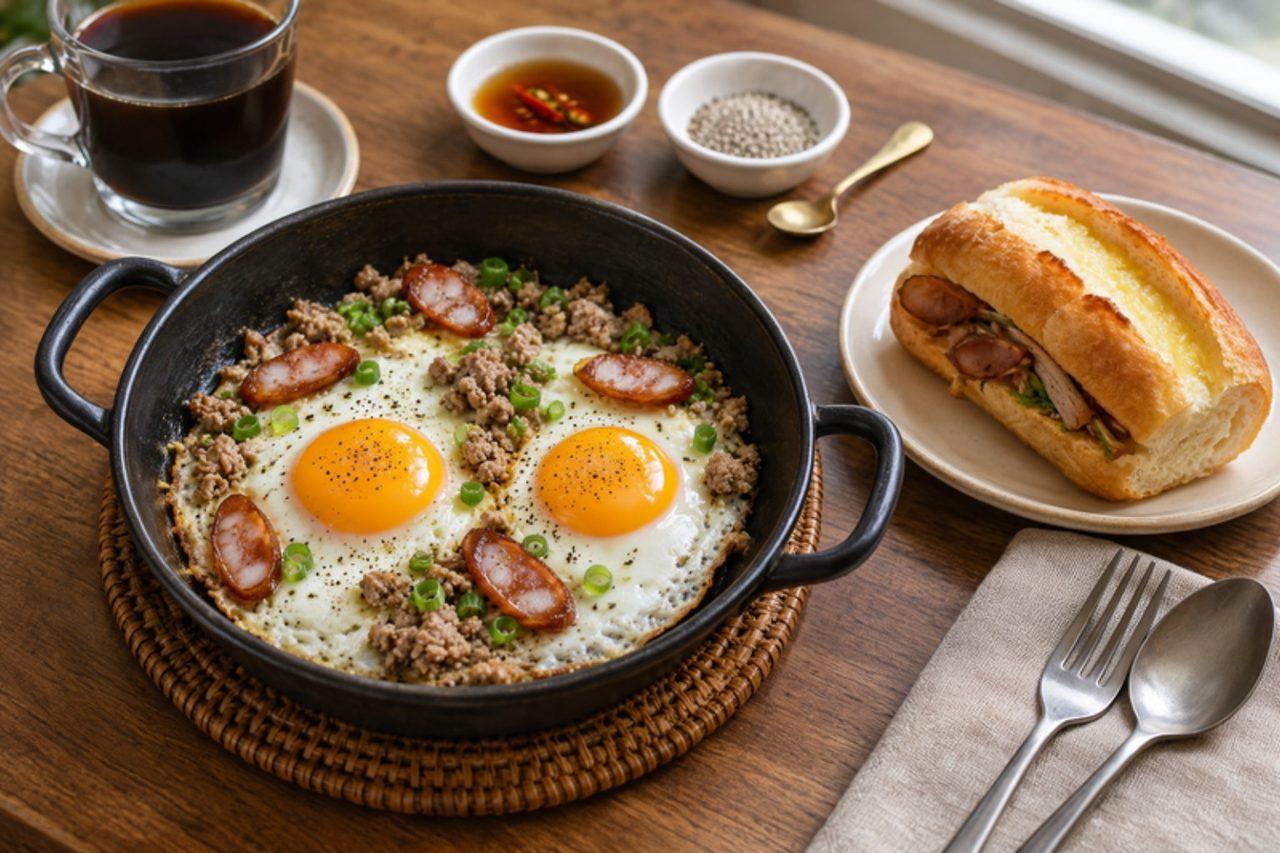
Khai kataPan eggs with pork and sausage

Khai kata, "pan eggs", came to Thailand through the Vietnamese communities of Isan, and in Udon Thani and Nong Khai, and now in Bangkok cafés too, it arrives sizzling in its own little metal pan with toppings of pork mince and sweet Chinese sausage, plus a crusty roll and a strong coffee. The eggs are cooked just until the whites set. The common mistake is cracking the eggs onto raw mince; cook the pork through first, then add the eggs. Chef's tip: heat the pan before the eggs go in, so the whites set at the edges with lacy, crisp frills.

by KrazyBadal 0 views

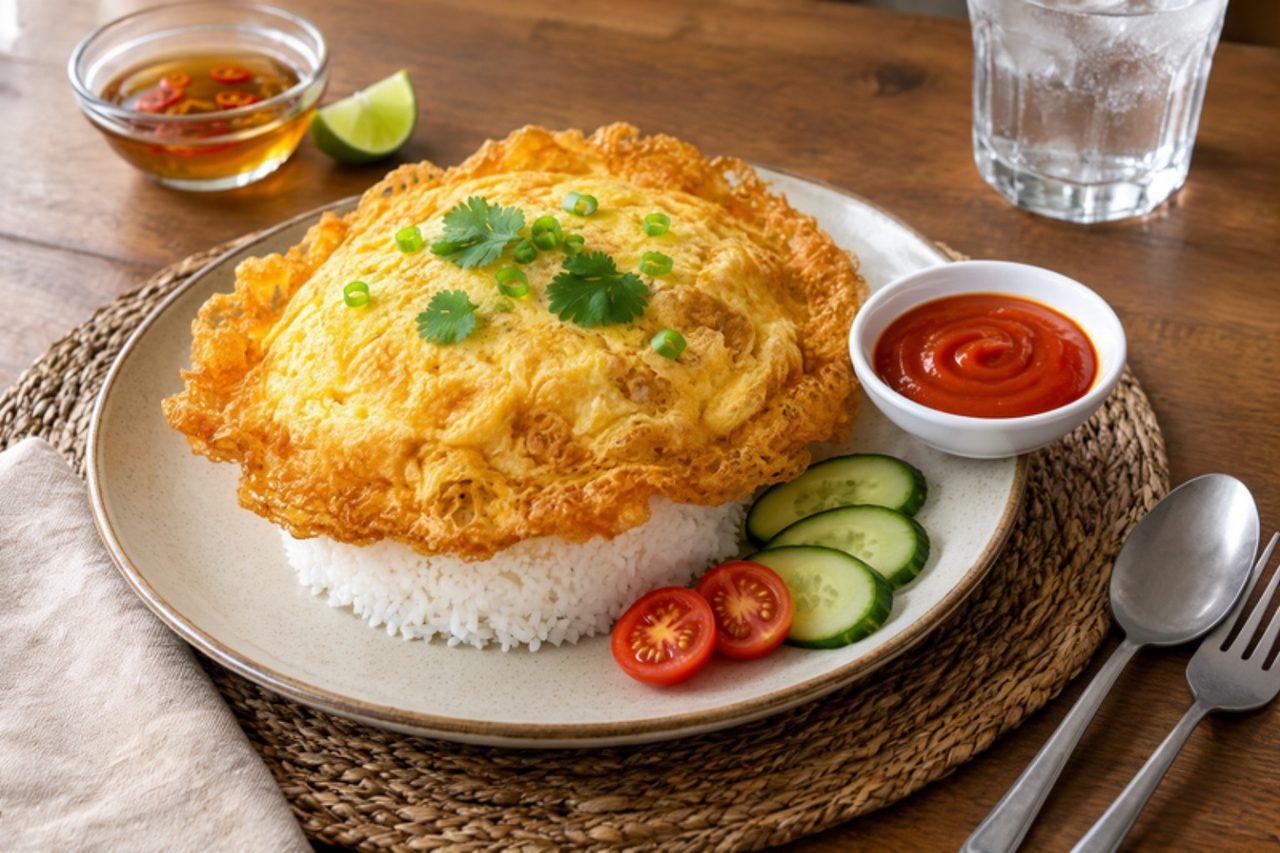
Khao kai jiaoThai omelette over rice

When there is no time for anything else, Bangkok office workers, students and taxi drivers eat khao khai jiao: eggs beaten with fish sauce and poured into very hot oil so they puff into a lacy, golden, crisp-edged omelette, slid onto a mound of jasmine rice with a squirt of chilli sauce. It is also the omelette mothers put in school lunch boxes. The common mistake is oil that is not hot enough, so the egg sits flat and greasy instead of ballooning up. For a vegetarian version, season with light soy sauce instead of fish sauce. Chef's tip: beat in a squeeze of lime and a spoon of water until very frothy; the air and steam make it puff dramatically.

by KrazyBadal 0 views

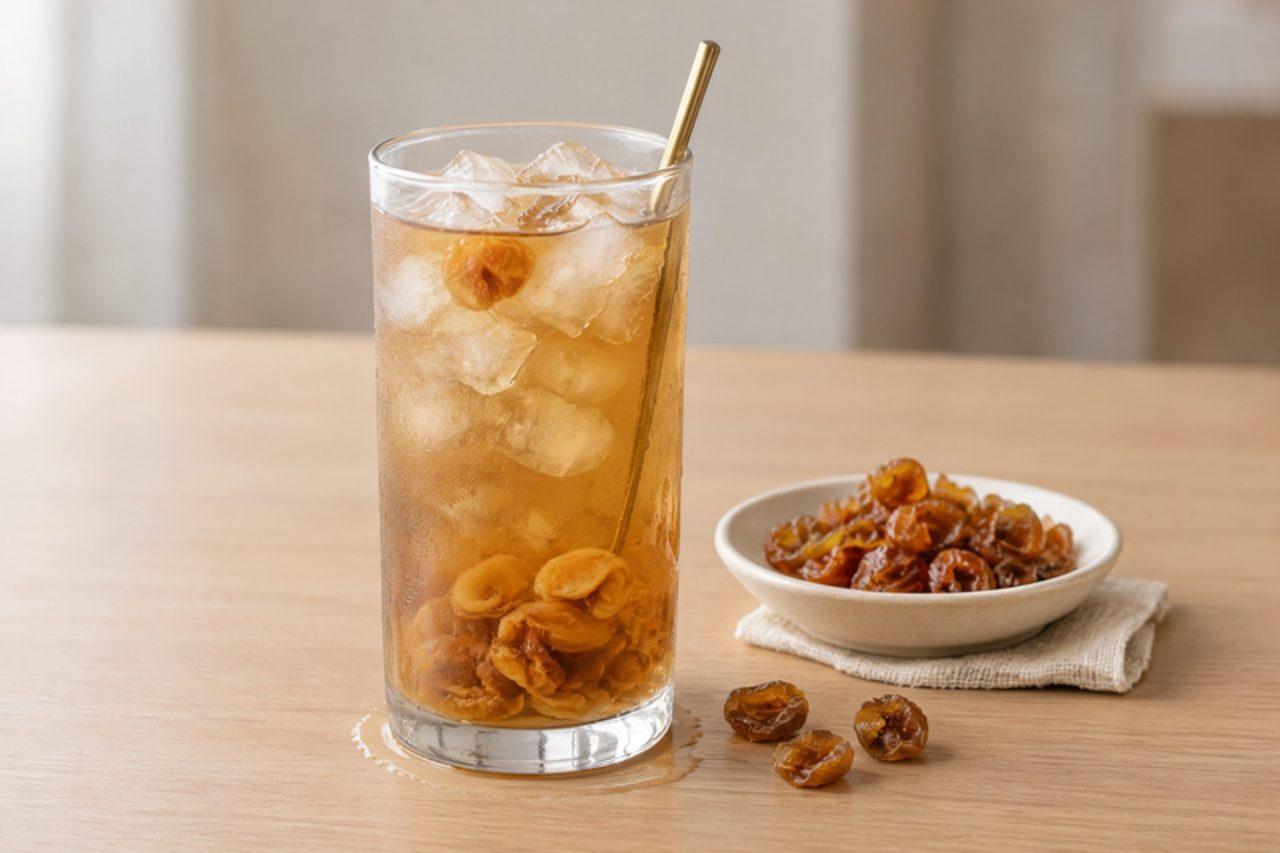
Nam lamyai (longan drink)

Longan orchards cover the valleys of Chiang Mai and Lamphun, and every August the harvest is smoked and dried in big brick ovens so the fruit lasts all year. That dried lamyai is the base of nam lamyai, sold in plastic bags with a straw at Warorot Market, at roadside stalls on the way to Doi Suthep and in school canteens across the north, especially in the hot season from March to May. It tastes like toffee and smoked honey with a light floral note, and each glass comes with a few plump, chewy longans at the bottom to fish out. The common mistake is boiling the fruit too long with all the sugar at the start: the drink turns syrupy and the longans go mushy. Simmer the fruit first, sweeten at the end and taste before adding everything. It is ready when the liquid is clear amber-brown, the longans have swollen back to roughly their fresh size and the kitchen smells of caramel. It keeps 4 days in a closed jug in the fridge. Chef's tip: a tiny pinch of salt is the street-vendor trick that makes the sweetness taste rounder and brings out the smoky edge.

30 minThaiDrinksVeganGluten free
by KrazyBadal 0 views

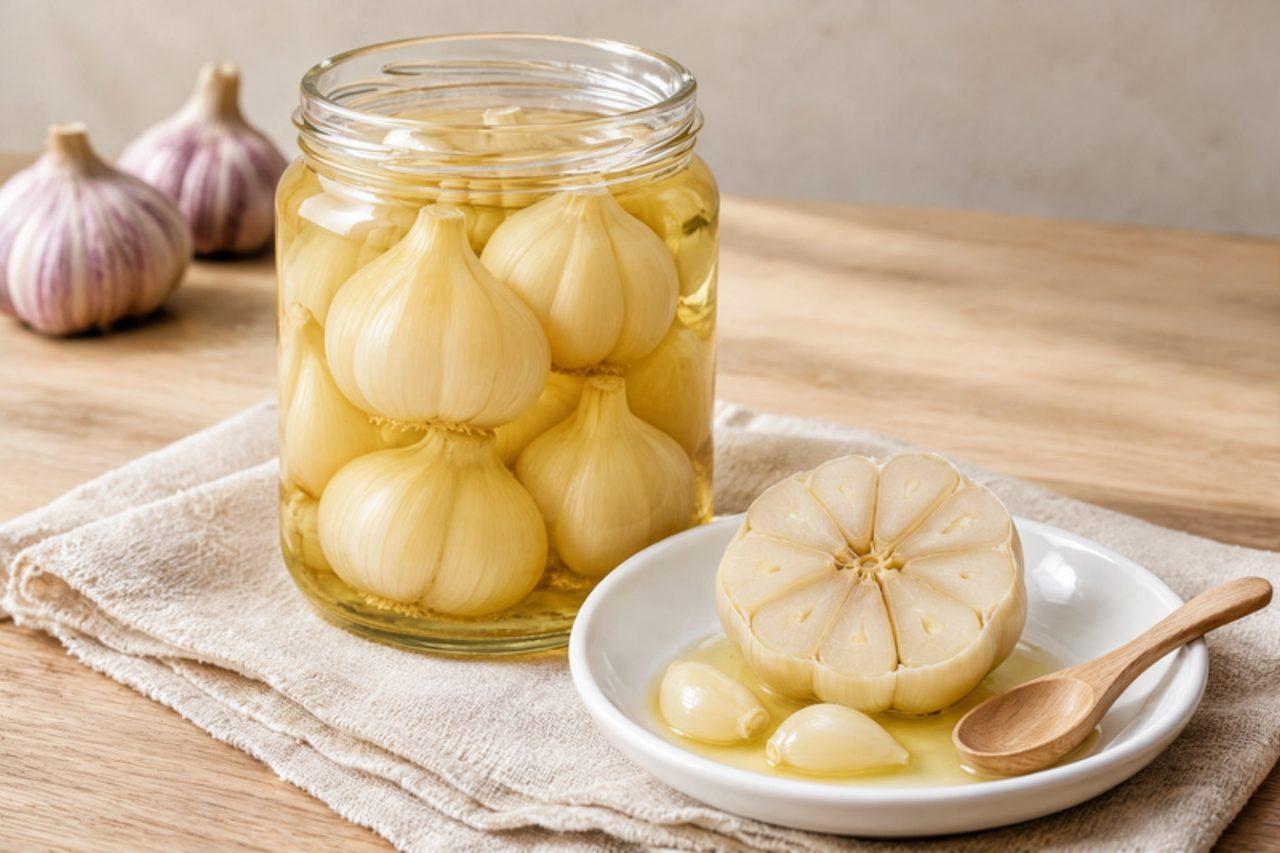
Kratiam dongPickled garlic

Order khao kha moo, the braised pork leg on rice sold from Bangkok shophouses to Chiang Mai night markets, and a few cloves of kratiam dong come on the side; they also sit in a bowl beside nam prik, congee, sai ua sausage and Isan-style sour pork. The garlic is picked young in the cool season, from December to February, when the heads are small, the skins thin and the cloves still tender, and it is cured whole so you nibble the cloves straight from the head. After about a month in brine the harshness is gone: the garlic is crunchy, sweet-sour and only faintly pungent, and the brine itself becomes a seasoning for stir-fries and dipping sauces. Common mistake: skipping the first salt-and-vinegar soak; it draws out the raw sting and some water, so the final brine stays strong. Do not worry if a few cloves turn blue-green; that is a harmless reaction between garlic and acid. They are ready when a clove bites through crisp and sweet with no burn. Chef's tip: look for small young heads at Asian grocers in early spring; large mature garlic works, but separate it into cloves and peel it.

by KrazyBadal 0 views

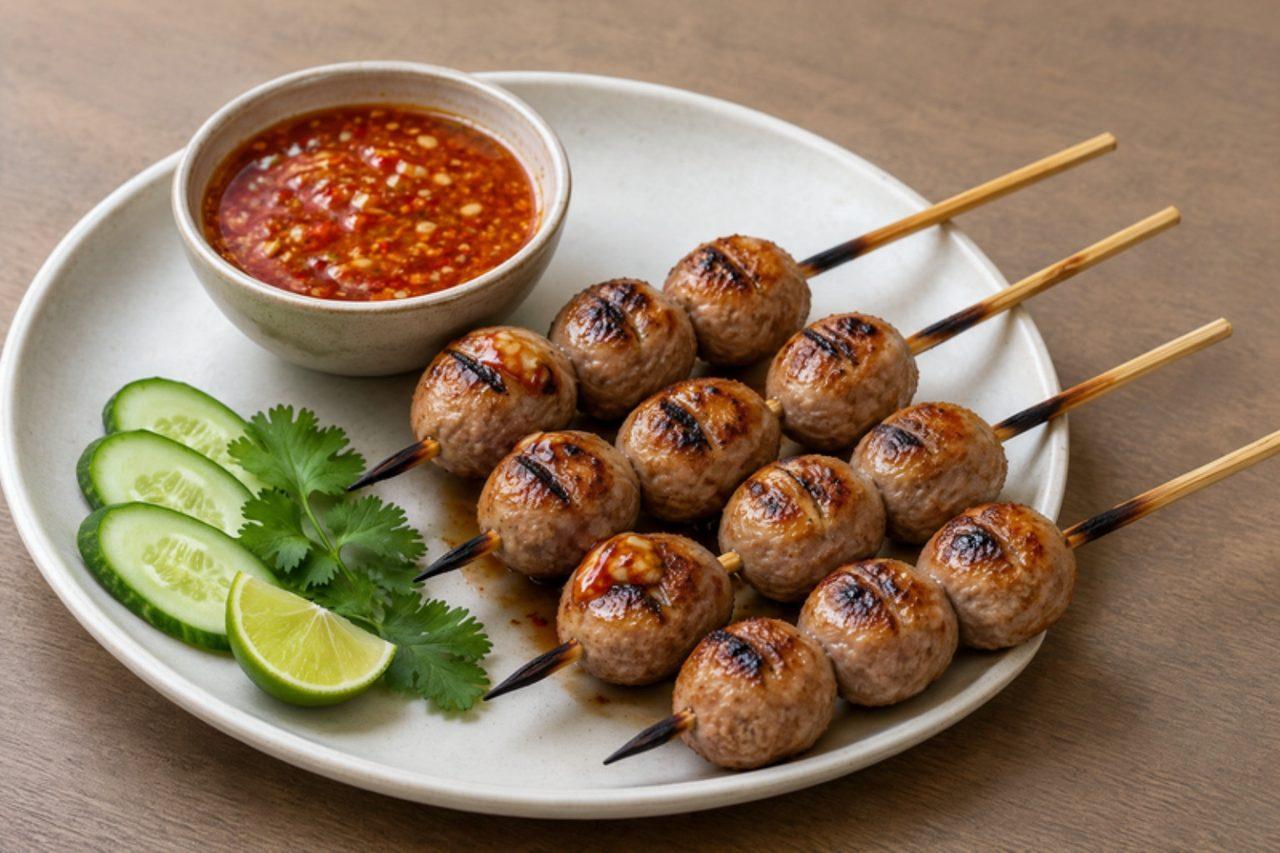
Luk chin pingGrilled pork ball skewers

Outside Bangkok's schools at going-home time, and all evening around Victory Monument, vendors fan little charcoal grills lined with skewers of luk chin, bouncy meatballs that are pulled off the coals, dunked in a tub of sticky sweet chilli sauce and handed over in a plastic bag. This home version makes the springy pork balls from scratch, poaching them first so they cook through before they char. Children love them; leave the chillies out of a portion of sauce for little ones. Chef's tip: process the pork with iced water until it turns into a sticky paste; that is what gives the balls their famous bounce.

by KrazyBadal 0 views

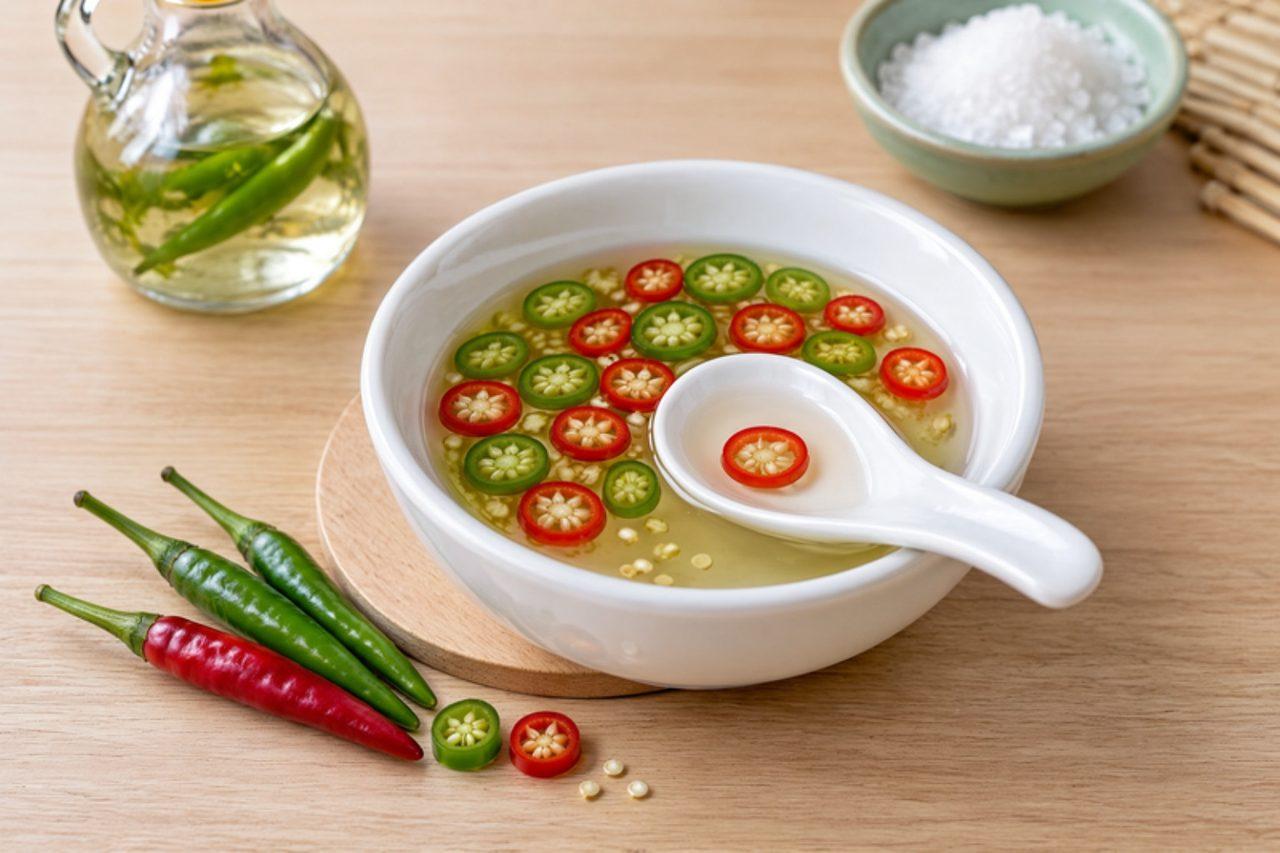
Prik nam somChillies in vinegar

On every noodle-shop table in Thailand, from Bangkok's boat-noodle stalls to small kuay teow shops in Hat Yai, there is a rack of four little jars: sugar, chilli flakes, fish sauce and prik nam som. A few drops of this sharp chilli vinegar wake up kuay teow nam, pad see ew, rad na and khao man gai at lunch or late at night, and the softened chilli slices are spooned on too. It is bright, clean and sour first, then hot, with a grassy chilli aroma; the slices stay crisp for a day or two and turn mellow after that. The Thai version uses long green or red chillies (prik chee fa) for colour and fragrance and just a few bird's-eye chillies for real heat. Common mistake: blending the chillies with the vinegar; it should be thin and clear with floating rings, so slice them by hand. It is ready after 15 minutes, once the vinegar turns faintly green-gold and smells of chilli. Chef's tip: a pinch of salt and a teaspoon of sugar round off harsh supermarket vinegar; leave them out if you have mild Thai coconut or rice vinegar.

by KrazyBadal 0 views

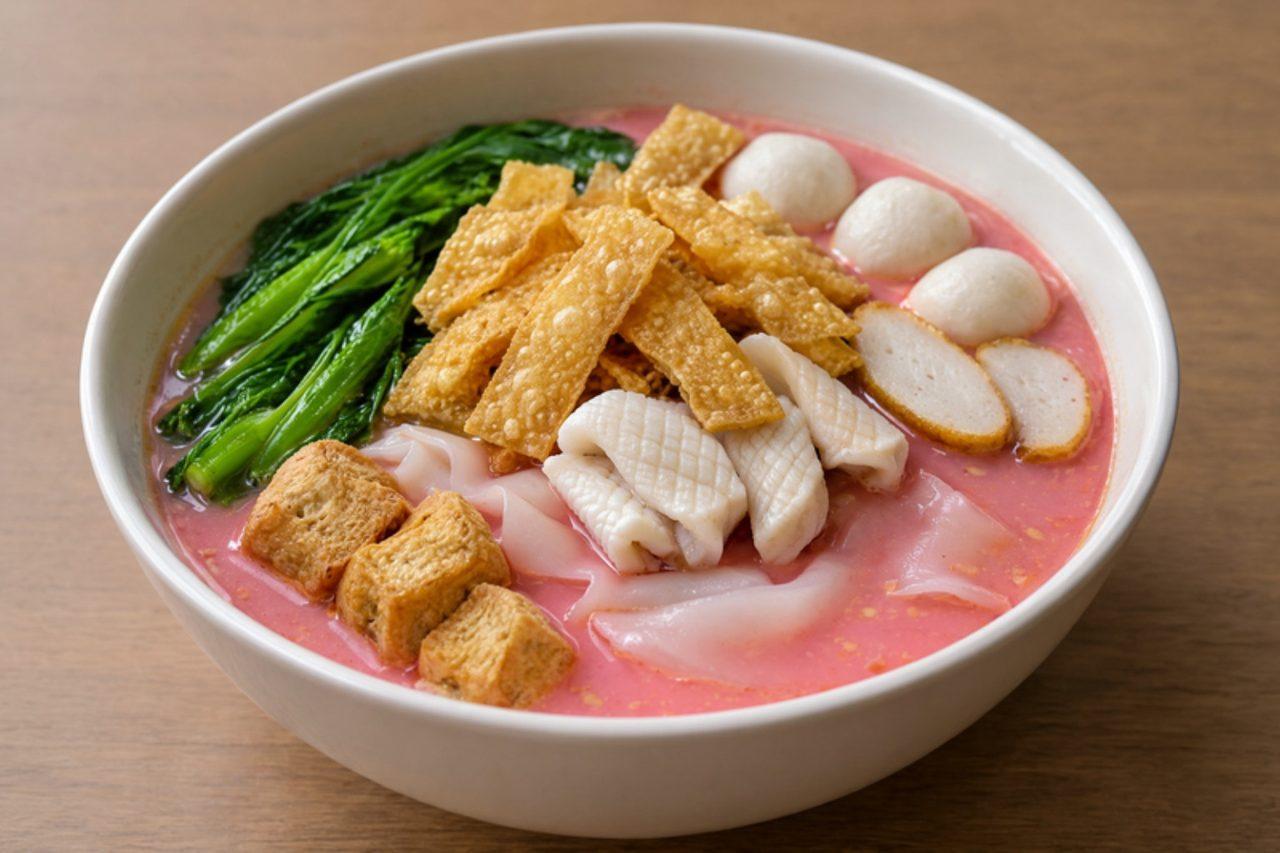
Yen ta foPink noodle soup

You recognise a bowl of yen ta fo across a Bangkok food court by its startling pink colour, which comes from fermented red bean curd stirred into the sauce. Around the soi off Sala Daeng it is a lunchtime favourite: wide rice noodles in clear stock with bouncy fish balls, tender squid, fried tofu puffs, blanched morning glory and a scattering of crunchy fried wonton skins, with a sweet, sour and gently funky flavour. Chef's tip: add the squid only in the last minute; overcooked squid turns as chewy as a rubber band.

by KrazyBadal 0 views

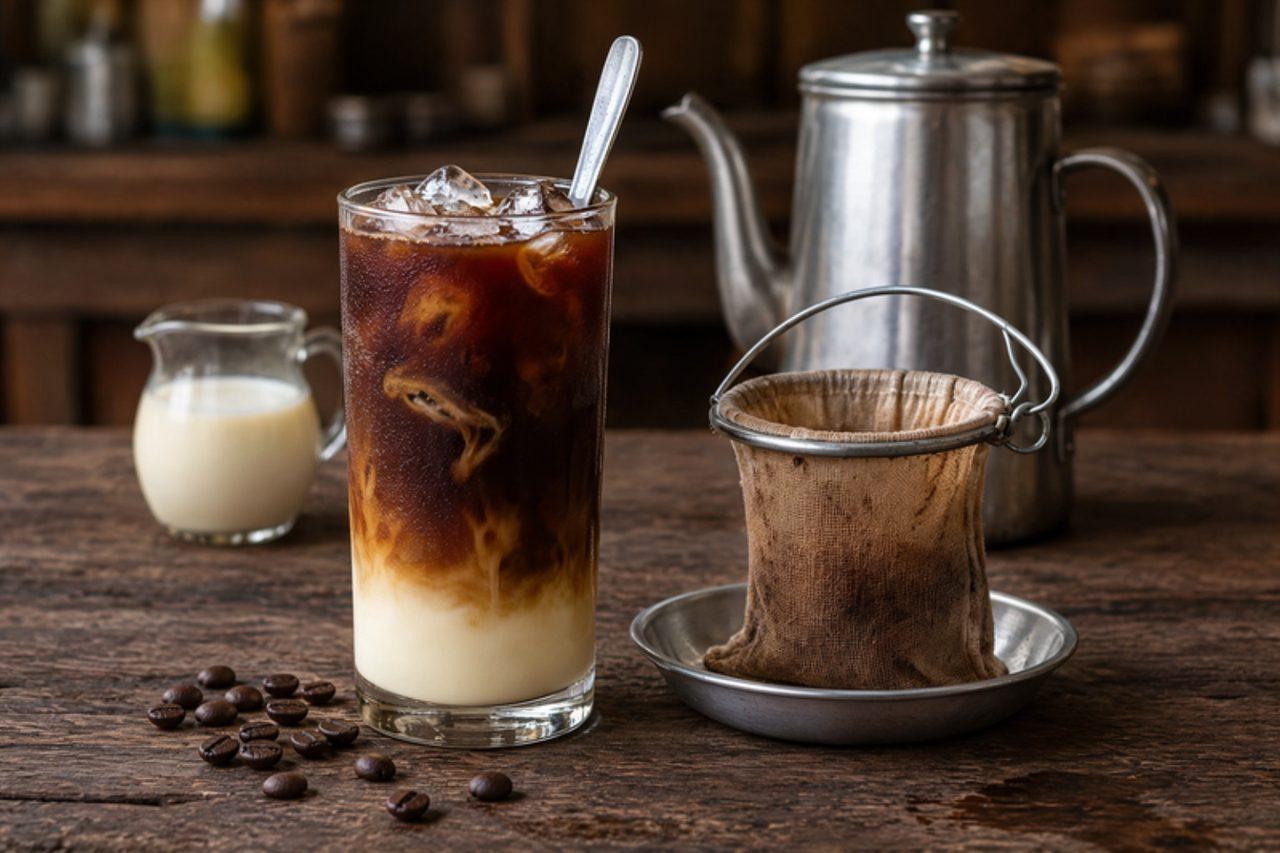
Kafae boran (old-style Thai coffee)

Before espresso bars reached Bangkok, coffee in Thailand meant kafae boran from Hainanese-Chinese shophouses and market carts: a dark robusta roast mixed with toasted grains, poured through a long cotton sock called a tung tom and stirred into thick sweetened condensed milk. Uncles still order it hot at 6 am with patongko dough sticks, and in the afternoon heat the same brew is poured over crushed ice and topped with evaporated milk as oliang or kafae yen. The taste is strong, roasty and slightly smoky, sweet and creamy, with a faint caramel-cereal edge from the grains; the iced version is silky and cold. The common mistake is brewing it like filter coffee with too little grounds: once milk and ice go in, it tastes thin. Use plenty, steep it in the sock and pour it through twice. The brew is ready when it is opaque, nearly black and leaves a brown film on a white spoon. It is high in caffeine, so not one for children or late evenings. Chef's tip: rinse the cloth sock in hot water only, never soap, and keep it in a jar of clean water in the fridge between uses so the coffee oils season it.

10 minThaiDrinksGluten free
by KrazyBadal 0 views

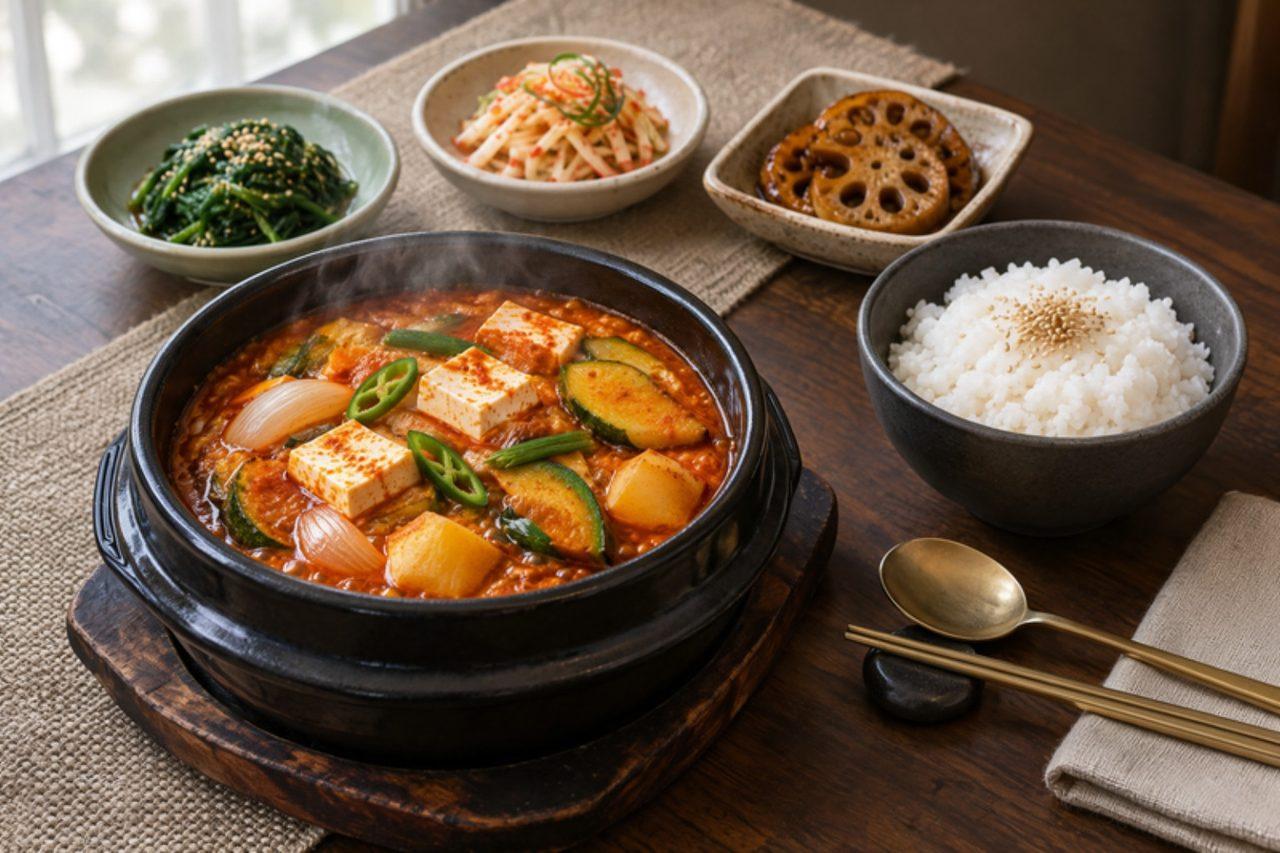
Hobak jjigaeCourgette and tofu stew

Hobak jjigae is the late-summer stew of Korean home kitchens, made when the garden throws up more courgettes (aehobak) than anyone can eat, and it lands on the table in its own pot next to rice and kimchi on any ordinary weeknight. Potato and soft tofu soften in a red, gently spicy broth of gochujang and kelp, and the courgette turns silky without falling apart. Most cooks start with anchovy stock; this one uses dried kelp and shiitake so it stays vegan. The usual mistake is adding the courgette with the potato, which leaves it mushy and grey by the time the potato is cooked. Chef's tip: a final splash of soup soy sauce (guk-ganjang) seasons the broth more deeply than salt without darkening it.

by KrazyBadal 0 views

Showing 24 of 239 recipes

Show more recipes

Page 1 of 10