
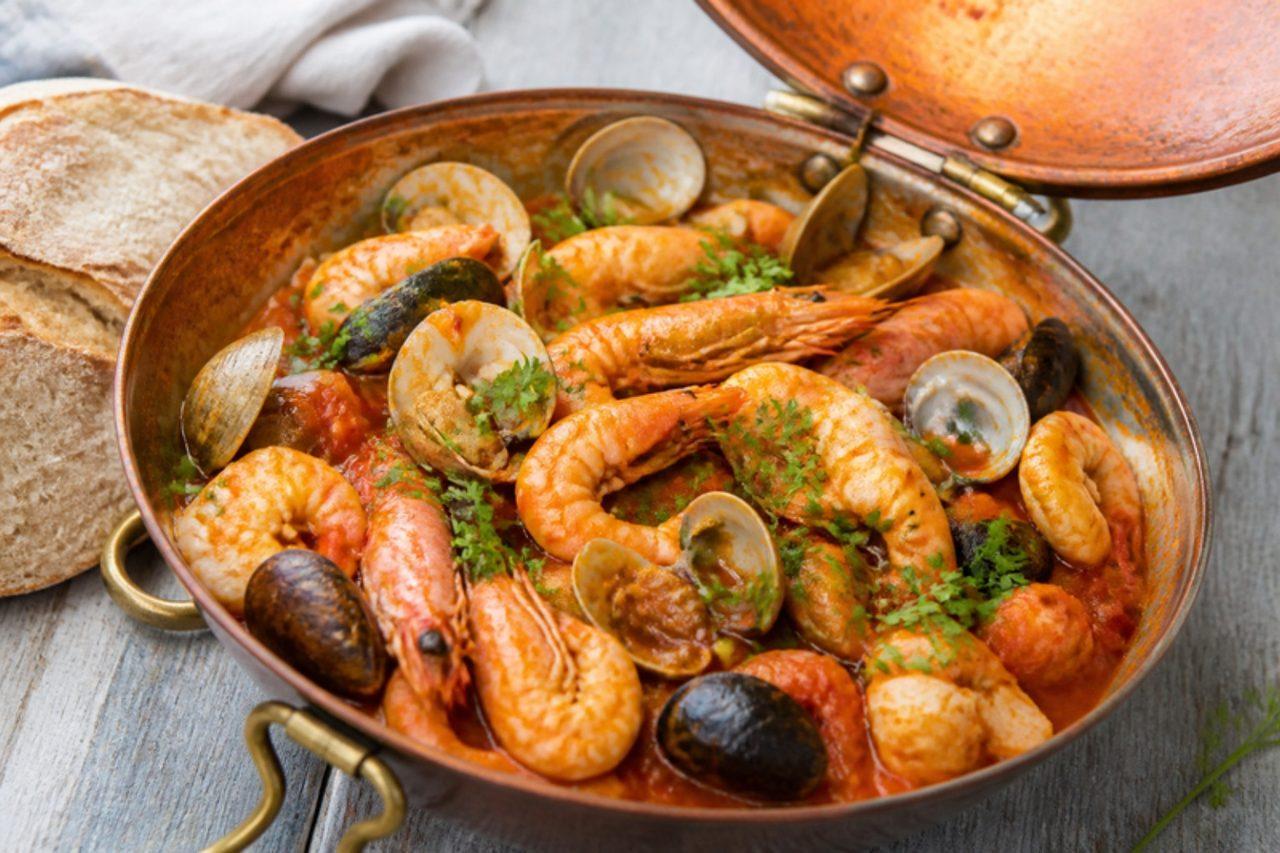
AI-generated image
Cataplana de marisco
Seafood and sausage steam pot
Cataplana de marisco: Algarve clams, prawns and fish steamed with chouriço in a shell-shaped pan


Cataplana is the Algarve's showpiece, named after the hinged, clam-shaped copper pan it is cooked in, and it is served at the table in harbour towns like Olhão and Portimão, lid opened in a puff of steam. This version contains pork: smoky chouriço sausage goes in with the onion, peppers and tomato, then clams, prawns and firm white fish steam on top in their own juices. Bring bread for the broth. No cataplana? A wide casserole with a tight lid works. Chef's tip: purge the clams in salty water in the fridge for an hour so they spit out their sand before cooking.
- Total time
- 60 min
- Difficulty
- medium
- Serves
- 4
Ingredients
For the base
- 3 tbsp olive oil
- 4 oz pork chouriço sausagesliced
- 2 onionssliced
- 4 cloves garlicsliced
- 2 red and green pepperssliced
- 4 ripe tomatoeschopped
- 1 tsp sweet paprika
- 1 piri-piri chilli or a pinch of chilli flakes (optional)
- ¾ cup fish stock
For the seafood
- 2 ¼ lb live clams
- 2 tbsp salt for purging
- 14 oz firm white fish such as monkfishcut into 4 cm chunks
- 1 handful fresh corianderchopped
- 1 lemoncut into wedges
Shop this recipe on Amazon
Spices & pantry
Fresh ingredients (8)
Links open Amazon in a new tab. As an Amazon Associate, WhatToEat.Today earns from qualifying purchases.
Method
0/6 doneStep 1: Put 2 ¼ lb live clams in a bowl of cold water with 2 tbsp salt for purging and leave in the fridge for 1 hour. Lift them out (leaving the sand behind) and tap any open ones: throw away any that stay open, or that have cracked or broken shells.
60 minStep 2: Heat 3 tbsp olive oil in the cataplana base or a wide casserole over a medium heat. Fry 4 oz pork chouriço sausage for 2 minutes until its red oil runs, then add 2 onions, 4 cloves garlic and 2 red and green peppers and cook for 10 minutes until soft.
12 minStep 3: Add 4 ripe tomatoes, 1 tsp sweet paprika, 2 bay leaves and 1 piri-piri chilli or a pinch of chilli flakes, and cook for 8 minutes until the tomatoes collapse into a thick sauce. Pour in ¾ cup fish stock and bring to a simmer.
9 minStep 4: Lay 14 oz firm white fish such as monkfish in the sauce, then 14 oz large raw prawns, shell on, then the clams on top. Close the cataplana (or cover tightly) and cook over a medium-high heat for 8–10 minutes, shaking the pan gently once or twice.
10 minStep 5: Open the lid: the clams should be wide open, the prawns pink all over and the fish opaque and flaking. Discard any clams that have stayed shut. A common mistake is opening the lid every minute; the trapped steam is what cooks the seafood evenly.
2 minStep 6: Scatter with 1 handful fresh coriander and serve straight from the pan, with 1 lemon and plenty of bread for the broth.
1 min
Nutrition per serving
- Calories
- 460 kcal
- Protein
- 52 g
- Carbs
- 18 g
- Fat
- 20 g
- Fibre
- 4 g
Nutrition values are estimates.
KrazyBadal
Good to know
- How long does cataplana de marisco take?
- About 60 minutes in total: 30 minutes to prepare and 30 minutes to cook.
- How many people does it serve?
- 4 as written. Change the servings above the ingredients and every amount scales to match.
- Is it gluten free?
- Yes, as written. Check the labels on stock, sauces and spice mixes, which sometimes contain gluten.
- What can I use instead of onions?
- 2 shallots per onion.
- What can I use instead of garlic?
- ½ tsp garlic paste or ⅛ tsp garlic powder per clove.
Reviews
No reviews yet. Be the first to cook it.
Rate this recipe
Sign in to rate and review this recipe.
You might also like

Moreton Bay bugsSlipper lobster with garlic butter
Moreton Bay bugs are the flat, shovel-nosed slipper lobsters caught off the Queensland coast around Brisbane and the Sunshine Coast, and for Queenslanders they are a summer treat, split and grilled at the beach house. The tail meat is sweet and rich, somewhere between lobster and prawn. Buy them raw, frozen or fresh, from a fishmonger and ask them to halve them if you like. A common mistake is overcooking, which makes the meat rubbery; it is ready the moment it turns white. Chef's tip: grill flesh side down first to mark it, then turn and baste in the shell.
 Australian

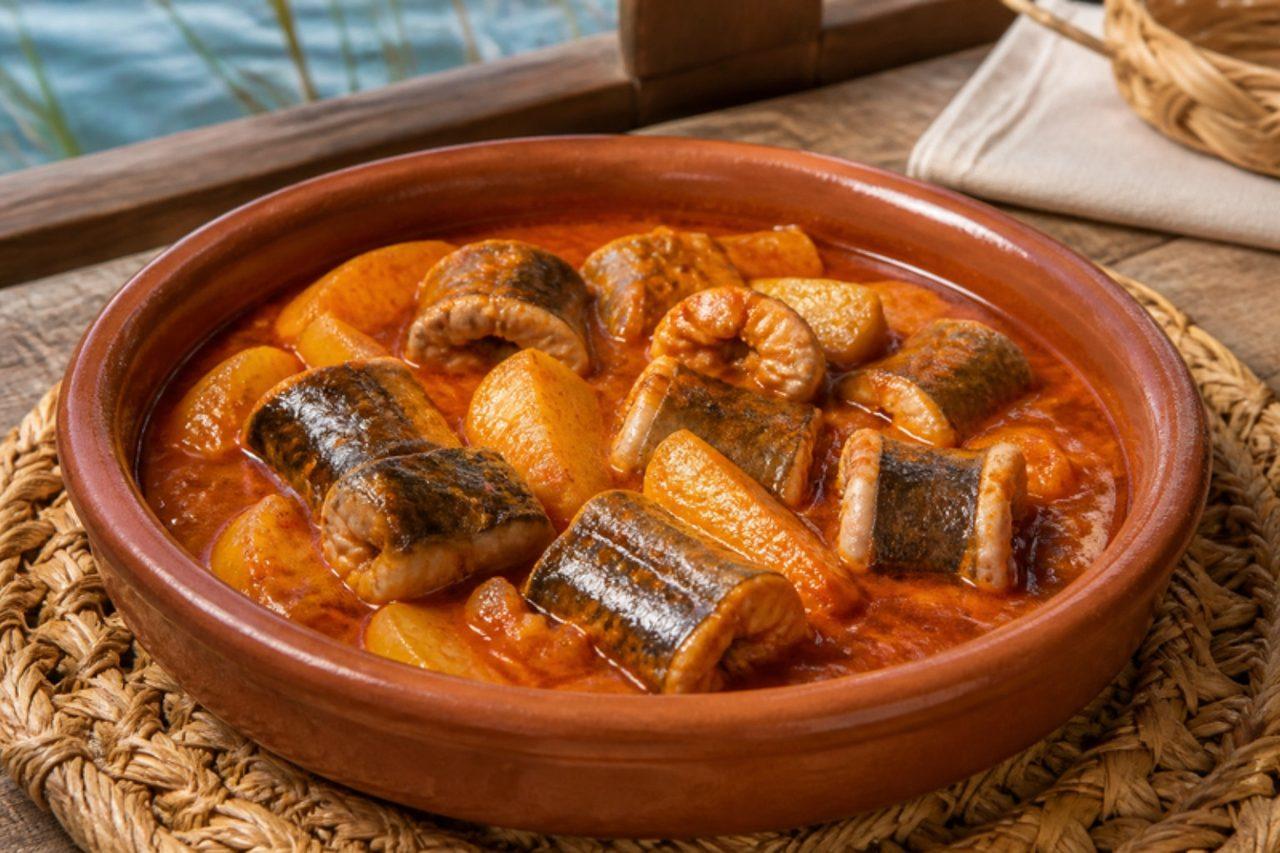
All i pebreEel and potato paprika stew
In El Palmar and the other villages around the Albufera lagoon south of Valencia, the restaurants that are famous for paella serve something older first: all i pebre, "garlic and pepper", a brick-red stew of lagoon eel and potatoes thickened with a pounded almond and fried-bread picada. It is rich, garlicky and gently hot, eaten with bread to mop up the sauce. Ask your fishmonger to skin and cut the eel, and handle it with gloves: raw eel blood is irritating, though harmless once cooked. If you can't find eel, monkfish or hake works well. A common mistake is letting the paprika burn; it turns bitter in seconds, so add it off the heat. Chef's tip: break the potatoes with a knife instead of cutting cleanly; the rough edges release starch and thicken the sauce.
 Spanish

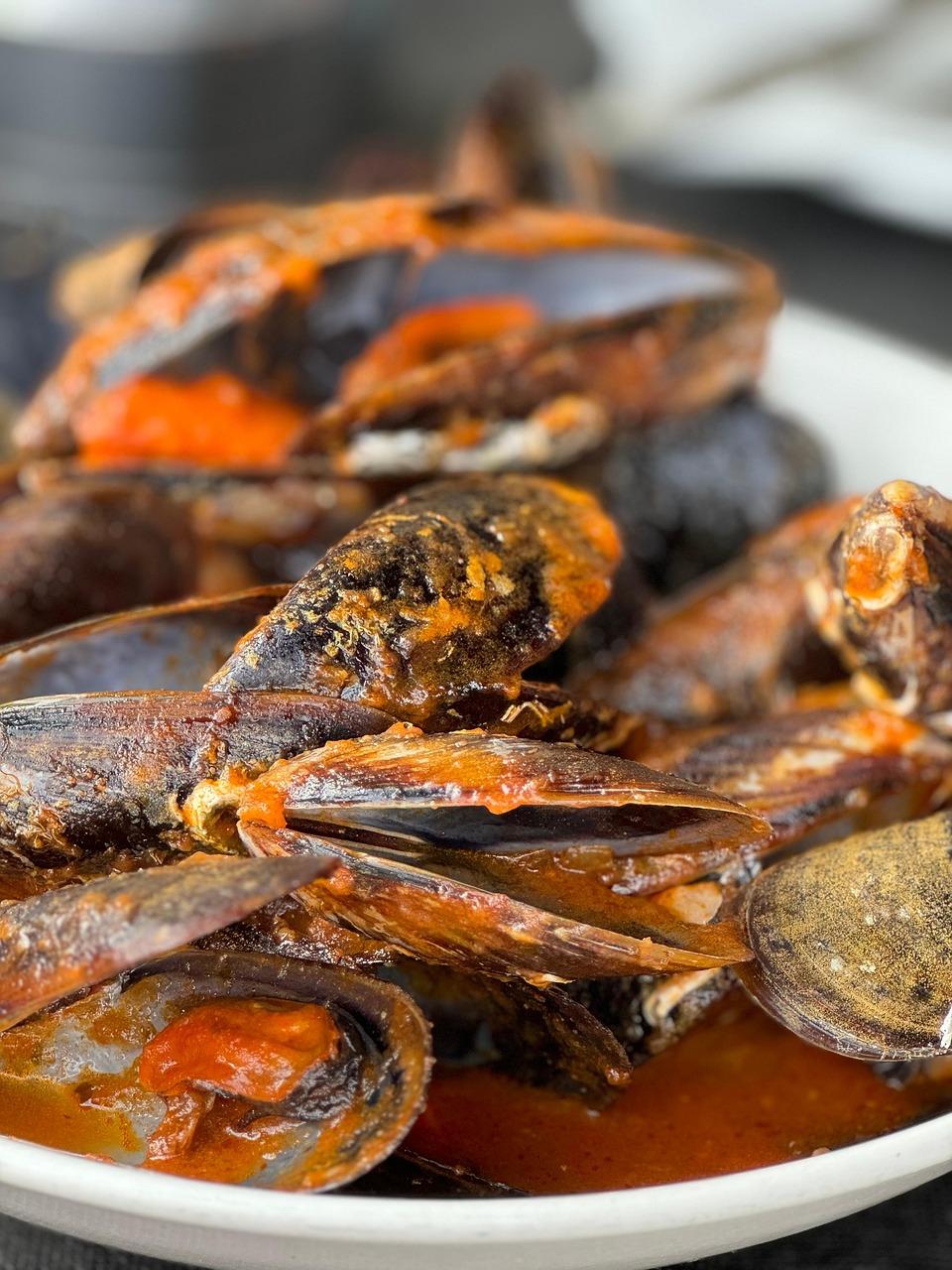
Midia saganakiMussels with tomato and feta
Thessaloniki is Greece's mussel capital, with farms in the Thermaic Gulf a few kilometres from the seafront ouzeries where this two-handled pan arrives, still bubbling, at the table. Mussels steam open in a quick sauce of peppers, tomato and chilli, and crumbled feta melts into the juices at the end. Bread is essential. The classic version adds a splash of ouzo; this one is alcohol-free, using a pinch of fennel seed for that aniseed note (add 2 tbsp ouzo with the tomatoes if you like). Common mistake: overcooking — take the pan off the heat as soon as the shells open. Chef's tip: buy mussels on the day and keep them in the fridge in a bowl covered with a damp cloth, never in water.
 Greek