
 Peruvian
 Gluten free
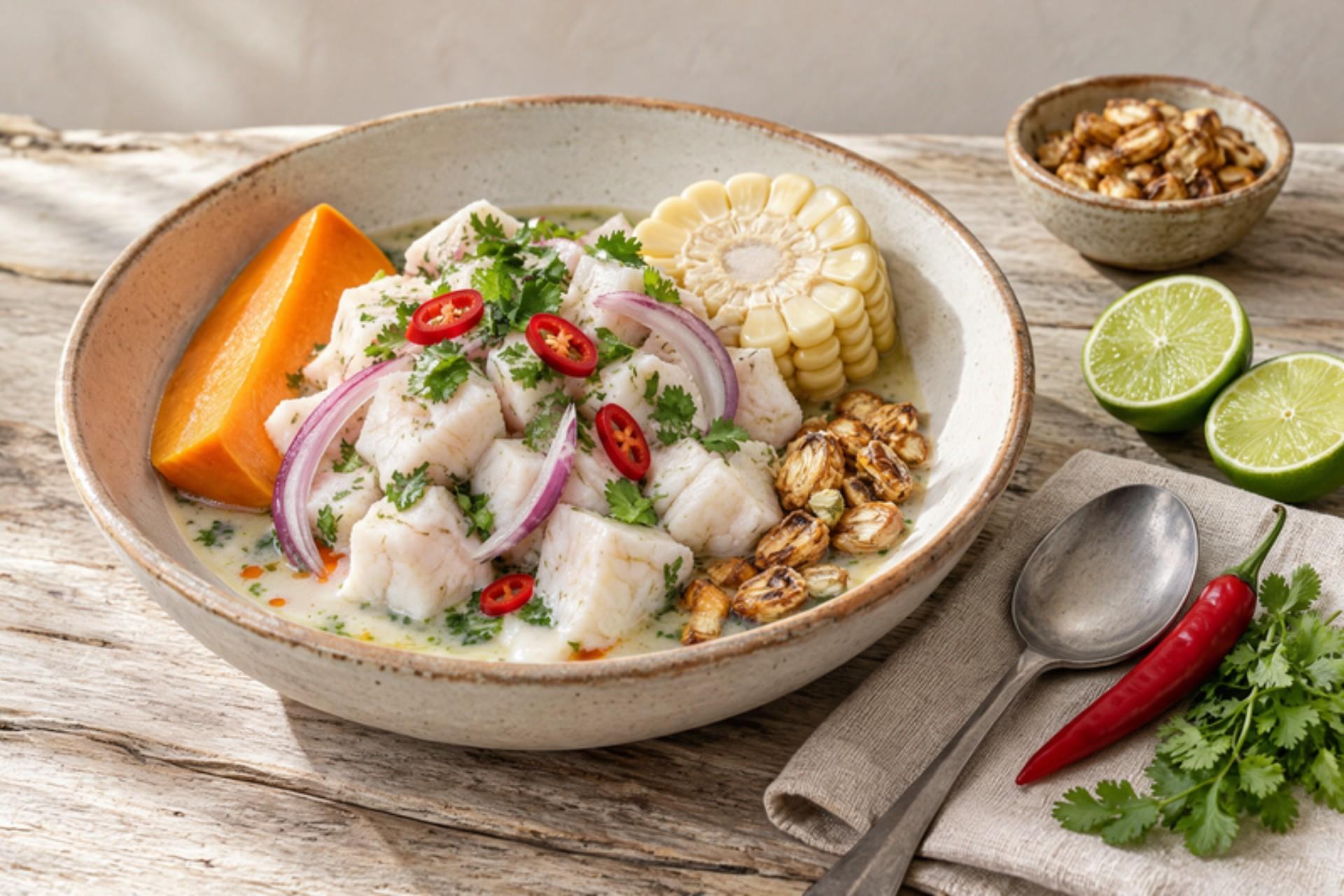
Ceviche peruano
Lime-cured white fish
Cebiche clásico: Lima's lime-cured white fish with red onion, chilli and leche de tigre, in a safer gently poached version
Ceviche is Peru's national dish, eaten at lunchtime in the cevicherías of Lima's Surquillo and Chorrillos markets, because the fish must be fresh off the morning boats and cevicherías traditionally close in the afternoon. The classic is raw white fish 'cooked' in lime juice with red onion, chilli and coriander, served with sweet potato and corn. Lime juice does not kill bacteria or parasites, so this version first poaches the fish for a minute until just opaque, then dresses it, which keeps the classic flavour and texture far safer. Even so, it is not for pregnant women, young children or anyone with a weakened immune system. The usual mistake is leaving the fish in the lime for an hour: it turns chalky and the juice goes bitter. Chef's tip: squeeze the limes gently by hand and stop before the pith; over-squeezed limes make bitter leche de tigre.
- Prep
- 30 min
- Cook
- 10 min
- Difficulty
- Medium
- Serves
- 4
- Per serving
- 260 kcal
Ingredients
For the ceviche
- 1 ⅓ lb very fresh skinless white fish fillets (sea bass, sole or halibut)cut into 2 cm cubes, kept cold
- 1 red onionsliced paper-thin
- 12 limesto give about 180 ml juice
- 1 ají limo or ají amarillodeseeded, very finely chopped (or 1 red chilli)
- 1 garlicclove, grated
- 1 tsp fresh gingergrated
- 1 tsp salt
- 3 tbsp fresh corianderfinely chopped
- 1 handful ice cubes
To serve
- 1 sweet potatolarge, boiled and sliced
- 2 corn on the cobboiled and cut into rounds
- 4 lettuce leaves (optional)
Shop this recipe on Amazon
Search Amazon for the rest
Fresh ingredients (9)
Links open Amazon in a new tab. As an Amazon Associate we earn from qualifying purchases.
Method
0/7 doneStep 1: Soak 1 red onion in a bowl of iced water with 1 handful ice cubes for 10 minutes so it turns crisp and mild. Drain well.
Step 2: Bring a wide pan of lightly salted water to a gentle simmer. Lower in 1 ⅓ lb very fresh skinless white fish fillets (sea bass, sole or halibut) and poach for 45–60 seconds, just until the outside turns opaque white and the cubes are firm at the edges. Lift out with a slotted spoon.
2 minStep 3: Spread the fish on a cold plate and chill in the fridge for 10 minutes. It must be cold before dressing.
Step 4: Halve 12 limes and squeeze gently by hand into a jug, without pressing hard enough to bring out the bitter pith. You need about 180 ml.
Step 5: In a cold glass bowl, mix the fish with 1 tsp salt, 1 garlic, 1 tsp fresh ginger and 1 ají limo or ají amarillo. Pour over the lime juice, add the onion and stir gently.
Step 6: Leave for 2–3 minutes, until the fish is opaque right through and flakes cleanly when pressed. Stir in 3 tbsp fresh coriander.
Step 7: Serve at once on cold plates with 1 sweet potato, 2 corn on the cob and 4 lettuce leaves, spooning the milky juice (leche de tigre) over. Eat within 30 minutes and do not keep leftovers.
Nutrition per serving
- Calories
- 260 kcal
- Protein
- 30 g
- Carbs
- 30 g
- Fat
- 2 g
- Fibre
- 4 g
Nutrition values are estimates.
KrazyBadal
Good to know
- How long does ceviche peruano take?
- About 40 minutes in total: 30 minutes to prepare and 10 minutes to cook.
- How many people does it serve?
- 4 as written. Change the servings above the ingredients and every amount scales to match.
- Is it gluten free?
- Yes, as written. Check the labels on stock, sauces and spice mixes, which sometimes contain gluten.
- What can I use instead of red onion?
- White onion or shallots, same amount (soak raw onion in cold water for 10 minutes to soften it).
- What can I use instead of limes?
- Lemon, same amount.
Reviews
No reviews yet. Be the first to cook it.
Rate this recipe
Sign in to rate and review this recipe.
You might also like

Moreton Bay bugsSlipper lobster with garlic butter
Moreton Bay bugs are the flat, shovel-nosed slipper lobsters caught off the Queensland coast around Brisbane and the Sunshine Coast, and for Queenslanders they are a summer treat, split and grilled at the beach house. The tail meat is sweet and rich, somewhere between lobster and prawn. Buy them raw, frozen or fresh, from a fishmonger and ask them to halve them if you like. A common mistake is overcooking, which makes the meat rubbery; it is ready the moment it turns white. Chef's tip: grill flesh side down first to mark it, then turn and baste in the shell.
 Australian

TacachoMashed roasted green plantain balls
Tacacho is the breakfast of the Peruvian Amazon, from Tarapoto to Iquitos: green plantains roasted over coals, mashed with fat and salt and shaped into balls. There it comes with cecina (smoked pork) and is mashed with lard and crackling; this vegan tacacho uses good oil and a pinch of smoked paprika for the same savoury, smoky depth. The balls are dense, chewy and starchy, crisp at the edges where the plantain charred, and they are eaten hot with a fiery chilli sauce or alongside stews. Use plantains that are fully green and firm. Chef's tip: mash the plantains while they are still very hot; as green plantain cools its starch sets and it won't bind into a smooth ball.

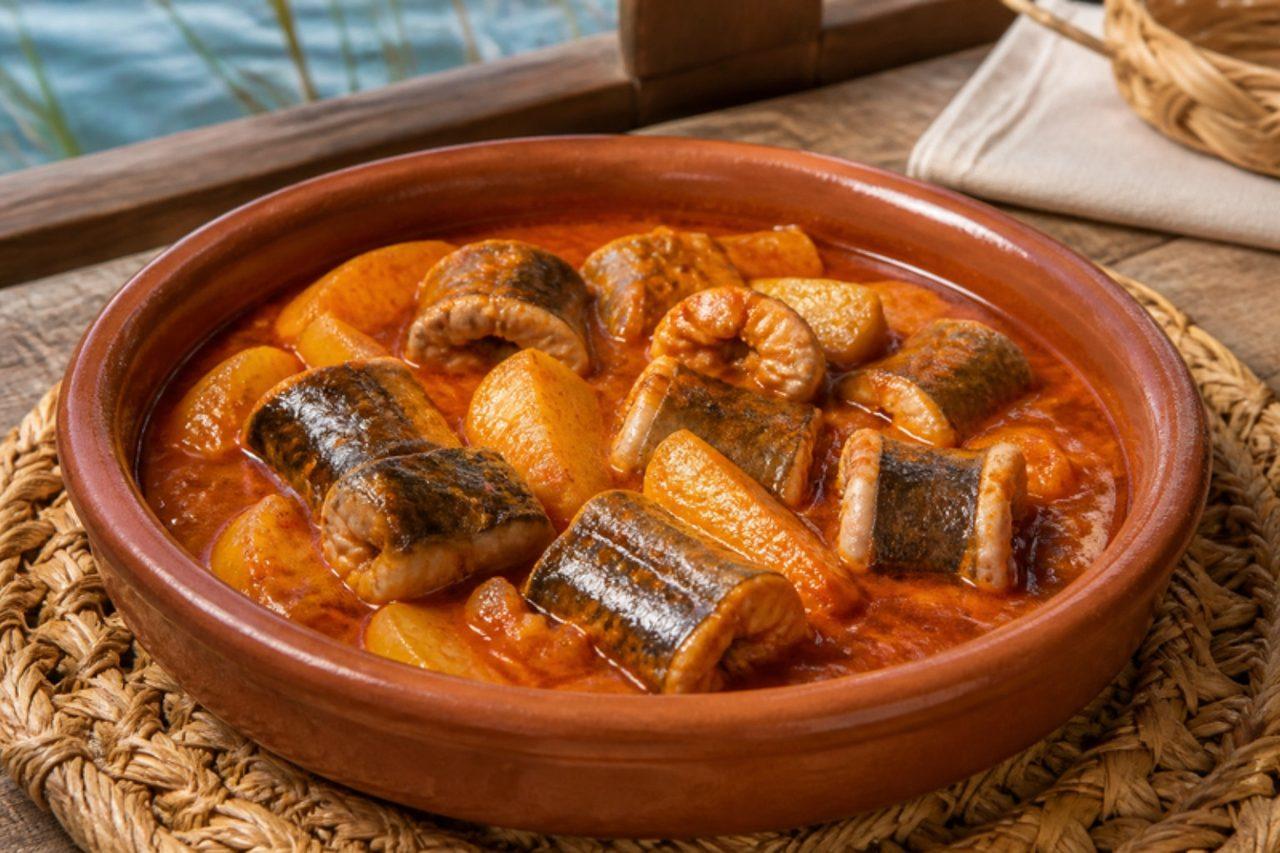
All i pebreEel and potato paprika stew
In El Palmar and the other villages around the Albufera lagoon south of Valencia, the restaurants that are famous for paella serve something older first: all i pebre, "garlic and pepper", a brick-red stew of lagoon eel and potatoes thickened with a pounded almond and fried-bread picada. It is rich, garlicky and gently hot, eaten with bread to mop up the sauce. Ask your fishmonger to skin and cut the eel, and handle it with gloves: raw eel blood is irritating, though harmless once cooked. If you can't find eel, monkfish or hake works well. A common mistake is letting the paprika burn; it turns bitter in seconds, so add it off the heat. Chef's tip: break the potatoes with a knife instead of cutting cleanly; the rough edges release starch and thicken the sauce.
 Spanish
