
AI-generated image
Chana methi nu athanu
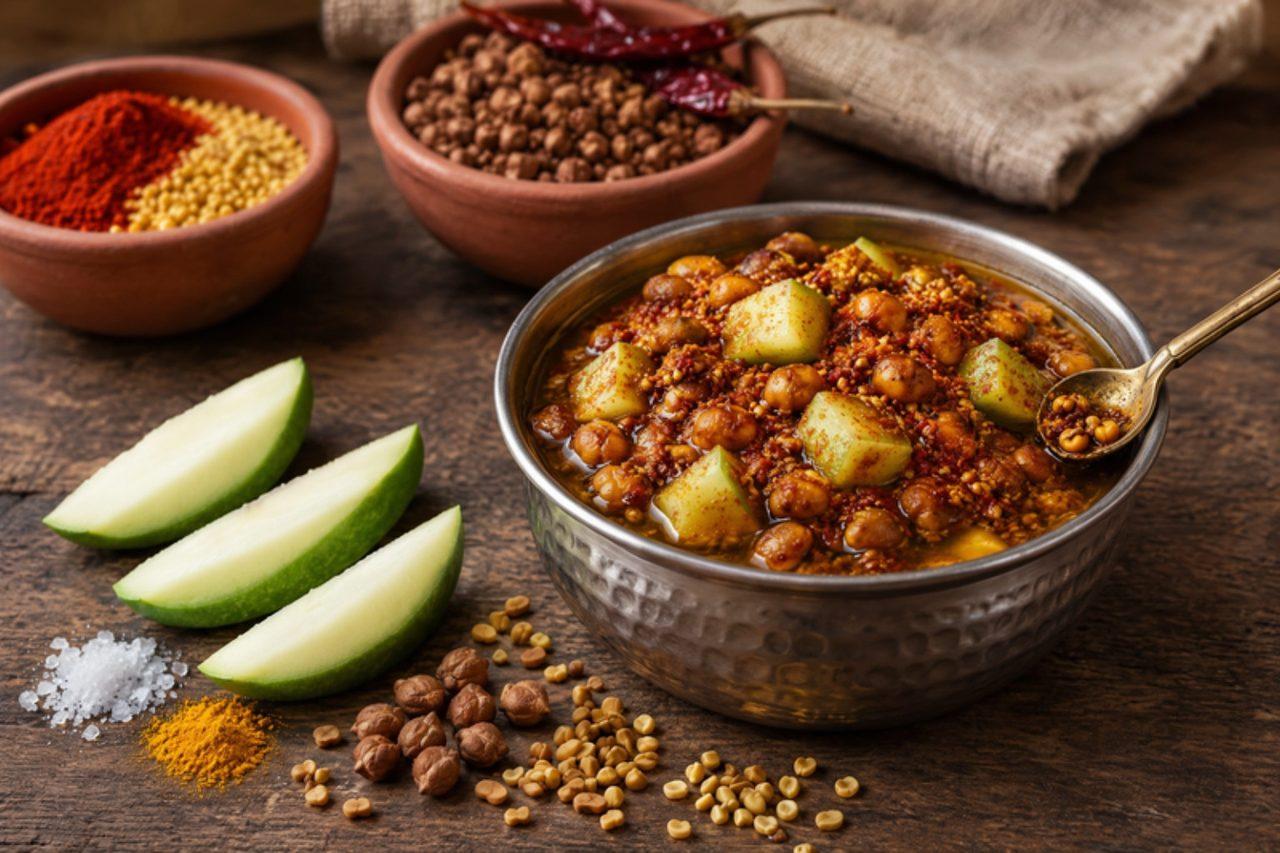
ચણા મેથીનું અથાણું: soaked chickpeas, fenugreek seeds and raw mango in a mustard-chilli athanu masala under oil



This is the thrifty, protein-rich pickle of Kathiawad and the Gujarati countryside, made in the May pickle season alongside methia keri. Brown chickpeas and fenugreek seeds are soaked until plump, then mixed with salted raw mango, split mustard, chilli and hing and sealed under oil. Over a few days the chana and methi drink up the sour mango juice and soften to a pleasant bite; the methi seeds lose most of their bitterness and turn nutty. The pickle is sour, hot and pungent, with plenty of crunch. A spoonful brightens khichdi-kadhi, bajra rotla or a plain dal-bhaat-shaak lunch. The common mistake is mixing in chickpeas that are still wet after soaking: dry them on a cloth for a few hours or the pickle will turn mouldy. It is ready in 4–5 days, when the chickpeas can be bitten through easily and taste sour all the way in. Because soaked pulses are low in acid, keep this one in the fridge once it is mixed, where it lasts up to 3 months, with the oil always covering the top. Chef's tip: use kala chana (small brown chickpeas); they stay firmer than large white ones.
- Total time
- 50 min
- Difficulty
- medium
- Serves
- 24
Ingredients
For the chana and mango
- 3 ½ oz kala chana (brown chickpeas)dried
- 1 ¾ oz fenugreek seeds
- 1 ⅛ lb raw green mangoesrajapuri or other sour mango, cut into 1.5 cm pieces with the skin on
- 1 ¾ oz saltdivided
- 2 tsp ground turmeric
For the athanu masala
- 4 tbsp Kashmiri chilli powder
- 1 tsp gluten-free asafoetida
- 1 cup groundnut or sesame oil
Shop this recipe on Amazon
Spices & pantry
Fresh ingredients (1)
Links open Amazon in a new tab. As an Amazon Associate, WhatToEat.Today earns from qualifying purchases.
Method
0/8 doneStep 1: Prepare the jar: wash jar and lid in hot soapy water, rinse well, then stand the jar upside down in a 250°F oven for 10 minutes (or boil jar and lid for 10 minutes and let them dry upside down). Let it cool completely; jar, lid, bowls and spoons must be bone dry, because a single drop of water is the usual reason a pickle goes mouldy.
Step 2: Rinse 3 ½ oz kala chana (brown chickpeas) and 1 ¾ oz fenugreek seeds and soak them separately in plenty of water for 10–12 hours. Drain and spread on a cloth to dry completely, 3–4 hours.
5 minStep 3: Meanwhile, toss the 1 ⅛ lb raw green mangoes with half the ⅞ oz salt and 2 tsp ground turmeric in a glass bowl and leave for 8–10 hours. Drain, keeping the yellow juice, and spread the pieces on a cloth to dry for 2–3 hours.
10 minStep 4: Heat 1 cup groundnut or sesame oil in a pan over a medium-high heat until it just starts to smoke, then turn off the heat and cool completely, about 30 minutes.
5 minStep 5: In a dry steel bowl, mix 4 tbsp split mustard seeds (rai kuria), 1 tbsp split fenugreek seeds (methi kuria), 4 tbsp Kashmiri chilli powder, 1 tsp gluten-free asafoetida and the remaining ⅞ oz salt. Pour over about 4 tbsp of the cooled oil and rub together into a damp, fragrant masala.
10 minStep 6: Add the dried mango, chana and methi to the masala along with 3–4 tbsp of the reserved mango juice. Mix thoroughly with a dry spoon so everything is coated.
5 minStep 7: Pack into the dry jar and pour over the rest of the oil so it sits at least 1–2 cm above the pickle. Close and keep in the fridge, stirring with a dry spoon once a day, for 4–5 days before eating.
Step 8: Keep in the fridge for up to 3 months, topping up with oil if the pickle starts to poke out. Throw it away if you see fuzzy mould, it smells rotten or sour-boozy, the chickpeas turn slimy or the lid bulges.
Nutrition per serving
- Calories
- 70 kcal
- Protein
- 3 g
- Carbs
- 6 g
- Fat
- 5 g
- Fibre
- 3 g
Nutrition values are estimates.
KrazyBadal
Good to know
- How long does chana methi nu athanu take?
- About 50 minutes in total: 45 minutes to prepare and 5 minutes to cook.
- How many people does it serve?
- 24 as written. Change the servings above the ingredients and every amount scales to match.
- Is it vegan?
- Yes. It has no meat, fish, dairy or eggs.
- Is it gluten free?
- Yes, as written. Check the labels on stock, sauces and spice mixes, which sometimes contain gluten.
- Is it very spicy?
- It has some heat. Use less chilli for a milder version, or more if you like it hot.
- Can I make it ahead?
- Yes. It keeps well, so you can cook it earlier in the day or the day before and reheat it.
- What can I use instead of fenugreek seeds?
- Leave them out, or add a little extra mustard seed (you lose the slightly bitter, maple-like note).
- What can I use instead of raw green mangoes?
- Tinned mango pulp, same weight.
Reviews
No reviews yet. Be the first to cook it.
Rate this recipe
Sign in to rate and review this recipe.
You might also like

Masala khakhra
Khakhra are thin chapaties roasted slowly on a griddle until they turn crisp, like a cracker. This masala version adds gram flour, fresh fenugreek, turmeric and chilli to the wheat dough. They are a light Gujarati breakfast or tea-time snack, and lovely with pickle, chutney or a smear of butter. You can also make them in a roti maker.


Sabudana khichdi
Sabudana khichdi is the dish that sees Maharashtra through every vrat (fast), from Navratri to Ekadashi, but it's so good that people eat it any day of the week. Soaked sago pearls are tossed in a pan with crushed roasted peanuts, cubes of potato, cumin and green chilli until each pearl turns glassy and separate, then finished with lemon and coriander. It's soft, chewy, nutty and gently hot. Fasting rules vary from family to family, so check yours; this version uses rock salt and no asafoetida, onion or garlic. Traditionally it's cooked in ghee; use ghee instead of oil if you aren't keeping it vegan. Chef's tip: soak the sago in just enough water to cover by the height of the pearls themselves, no more; too much water is the reason khichdi turns into one sticky lump.


Bagara baingan
Bagara baingan is a Hyderabadi wedding dish of small aubergines cooked whole in a dark, tangy gravy of roasted peanuts, sesame, dried coconut and tamarind. Unlike a Gujarati stuffed brinjal, the aubergines here are only quartered at the base and fried until silky, then left to soak up a thin-but-rich sauce that is finished with a tempering, the 'baghar' that gives the dish its name. It's sour, nutty and gently spiced, and is served with biryani, bagara rice or plain rice. Chef's tip: choose small, glossy purple aubergines that feel heavy for their size; soft, light ones are full of seeds and turn mushy before the gravy has a chance to cling.