Skip to content

Recipes with raw green mango

9 recipes that use raw green mango, with photos, step-by-step instructions and cook times. The quickest, Bhel puri, takes 20 minutes. It is most often cooked with turmeric, red chilli powder and fenugreek seeds.

Run out of raw green mango? Tinned mango pulp, same weight.

Got a few things in the fridge? Search by everything you have

Bhel puri

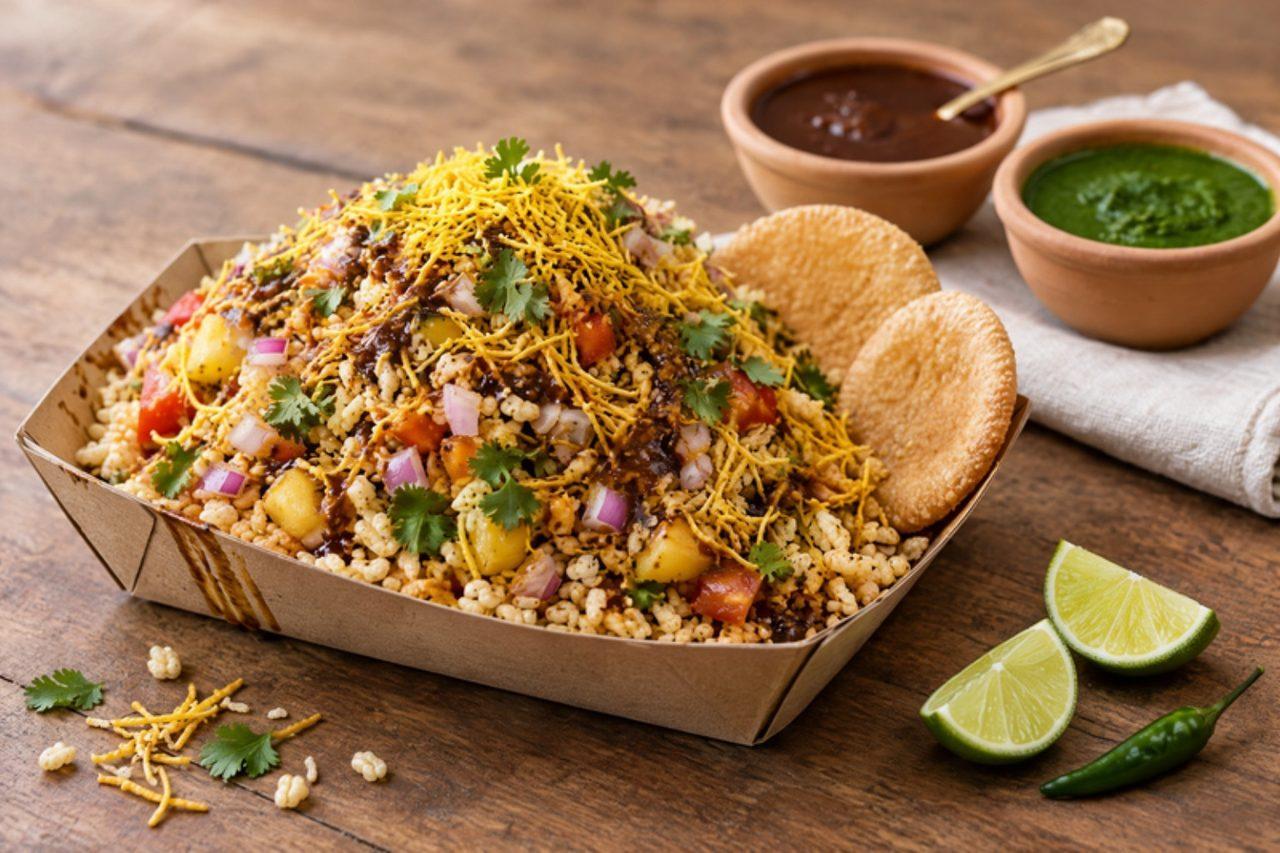
On Girgaum and Juhu Chowpatty the bhelwalas set up as the sun drops into the Arabian Sea, and bhel puri is what Mumbai eats while it walks along the sand. Puffed rice, crushed flat puris and boiled potato are tossed in a steel bowl with sweet tamarind and fiery green chutneys, then buried under fine sev and handed over in a folded paper cone with a puri for a spoon. It is crunchy, sweet, sour and hot all at once, and it has to be eaten within minutes. Chef's tip: lay out every component before you start, because the mixing takes thirty seconds and the crunch only lasts about five minutes.

by KrazyBadal 0 views

Magaya

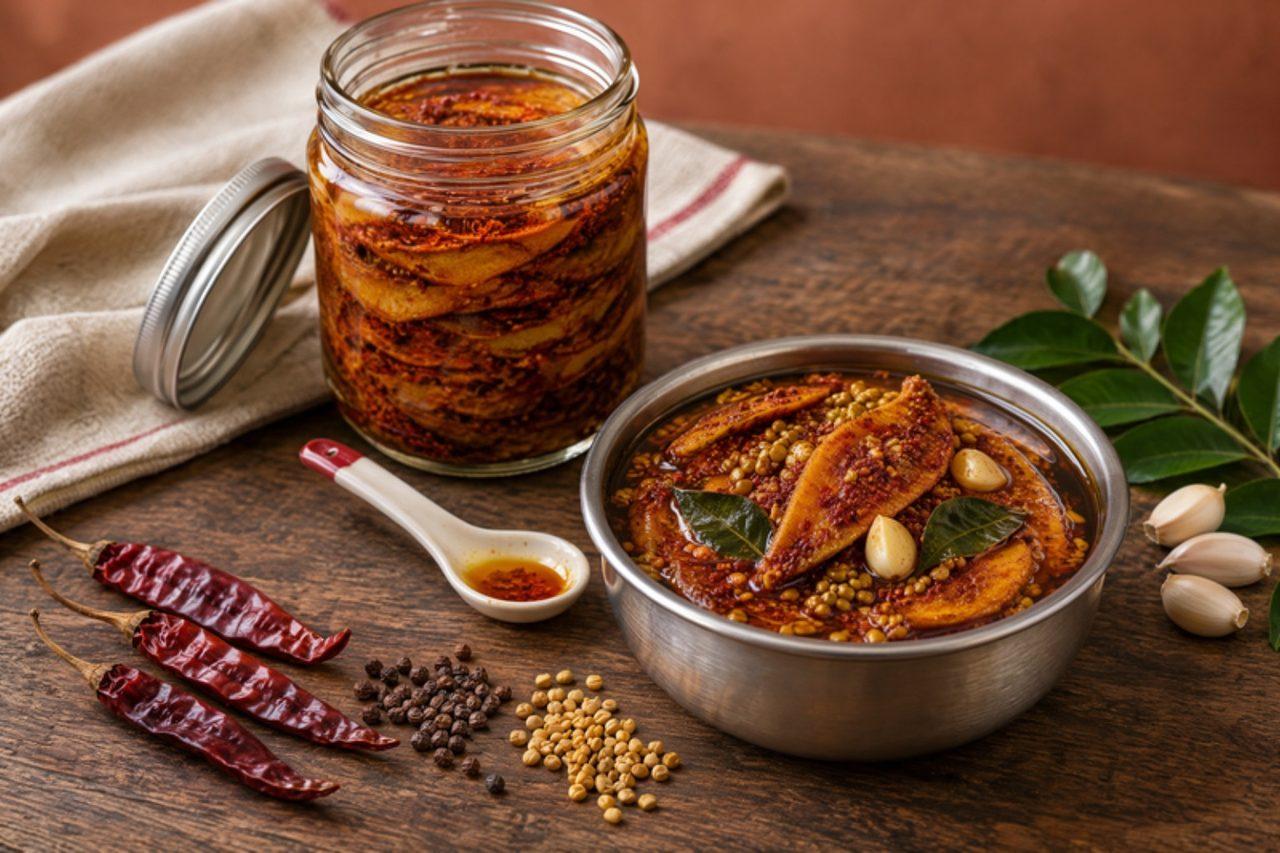
In Andhra Pradesh the pickle season opens around Ugadi, and long before the fiery avakaya is cut, many homes make magaya, the gentler mango pickle. Peeled raw mango is sliced thin and salted until it weeps a yellow brine (magaya ooru), the slices are dried in the hot April sun until leathery, then mixed back into the brine with mustard powder, chilli and fenugreek and sealed under a tempering of gingelly oil. After a week the slices are chewy and soft, tangy and salty, with a rounder heat than avakaya. It is eaten with hot rice and a spoon of ghee, stirred into curd rice, or turned into a raita-like magaya pachadi with yoghurt; the leftover brine is mixed into plain rice. The salt is about 10% of the peeled mango weight (100 g per kg), which, with the fruit's own acid, keeps it safe. Common mistake: drying the slices to hard chips, or too little so they stay wet and mould; stop when they bend without snapping. It is ready when the slices have softened, turned deep red-orange and the oil floats on top. Chef's tip: no sun? A dehydrator or oven at 50 °C dries the slices in 6–8 hours.

by KrazyBadal 0 views

Maangai thokku

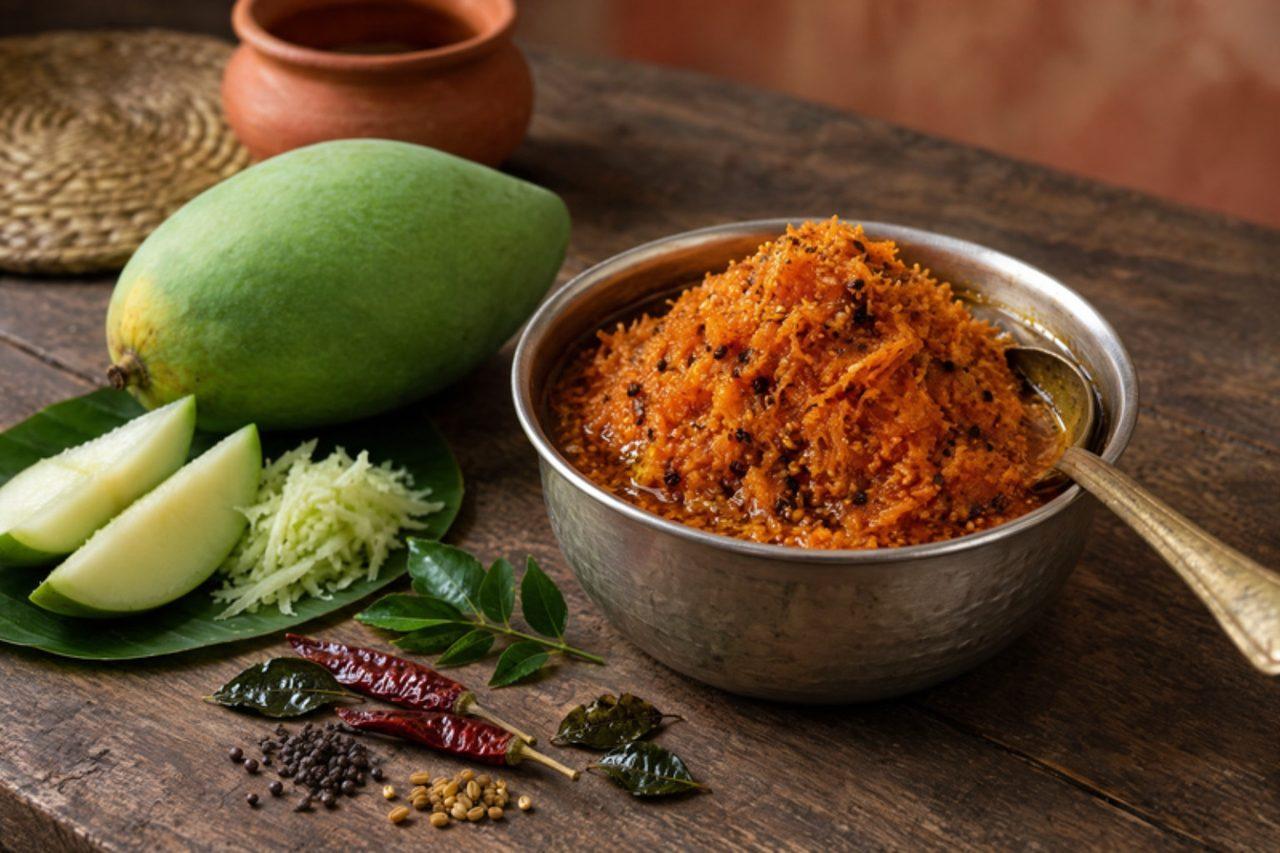
Thokku is the Tamil word for a pickle cooked down to a thick, spoonable mass, and maangai thokku is the one every Tamil Nadu home makes in April and May when the hard, sour Kili mooku (parrot-beak) mangoes are cheap. Grated mango is simmered in nallennai (gingelly oil) with chilli powder, salt and hing until it turns dark, glossy and jam-like, then finished with roasted fenugreek powder. It is sour first, then hot, with a nutty sesame taste and a little bitterness at the end. It is a classic partner for curd rice, a spoonful inside a dosa, or a travel companion with idli and lemon rice for train journeys. The usual mistake is grating the mango too fine or stirring it too little: a fine pulp sticks and burns. Use the large holes of the grater and keep stirring once it thickens. It is done when the mango has darkened, comes away from the pan in one mass and the oil oozes out around the edge. Kept in a dry jar under a film of oil it lasts about 2 weeks in a cool cupboard and 2 months in the fridge. Chef's tip: a teaspoon of jaggery at the end rounds off very sour mangoes without making the thokku sweet.

by KrazyBadal 0 views

Aam ki launji

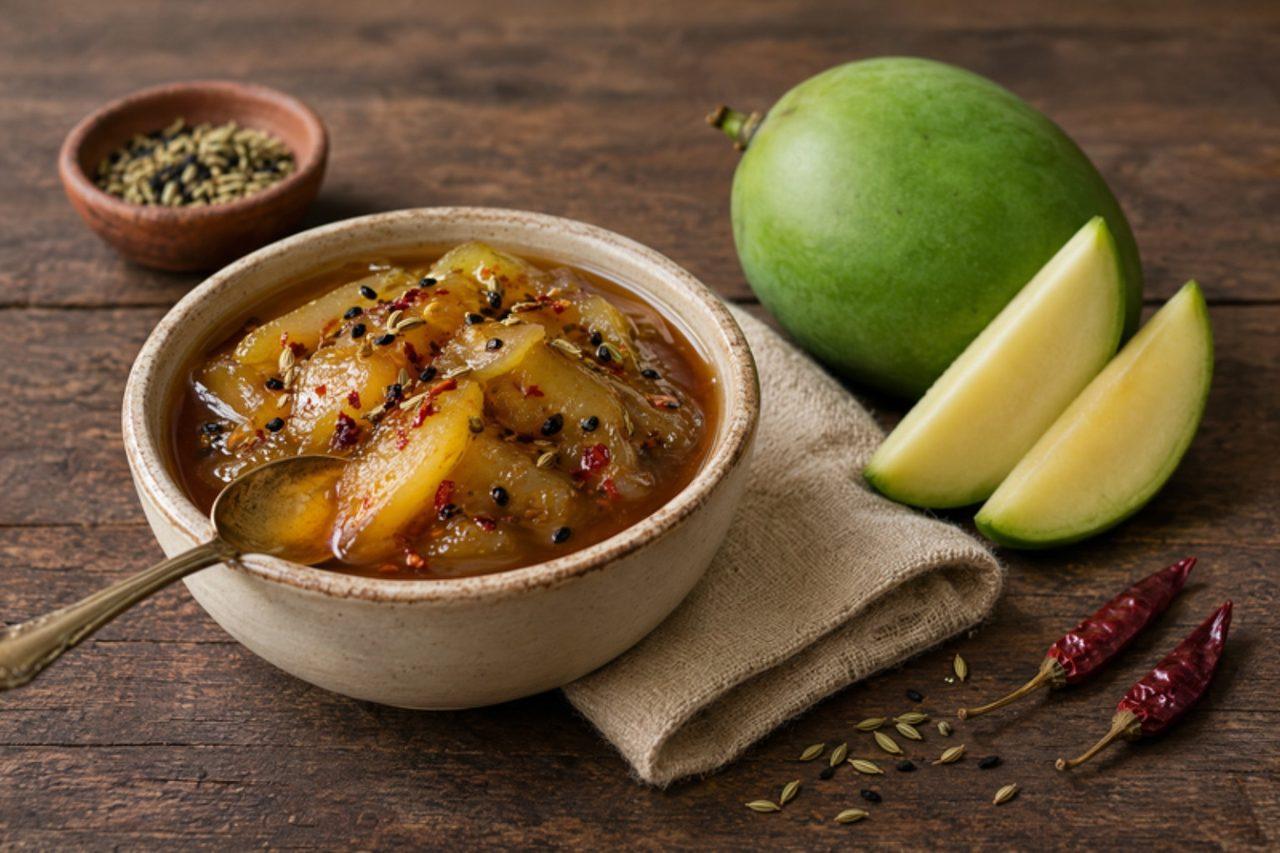
In Rajasthan and across the Hindi belt, launji is the quick mango relish made the day the first raw mangoes come home in April, and it keeps appearing on the thali all through the scorching summer. Unlike the long-cured achaars, it is cooked in 20 minutes: mango pieces in mustard oil with saunf, kalonji, methi and cumin, then simmered with jaggery until glossy. The pieces stay soft but hold their shape in a thick, amber syrup that is sweet first, then sour, with a warm hum of chilli and a liquorice note from the fennel. Eat it with dal-baati, puri, paratha or plain khichdi; in the heat it is believed to cool the body. The common mistake is adding the jaggery too early, so it caramelises and turns bitter before the mango is tender; cook the mango first, then the jaggery. It is ready when the syrup coats the back of a spoon and the mango looks translucent at the edges. It thickens as it cools. Store in a clean jar in the fridge and eat within a week to 10 days. Chef's tip: leave a little peel on some pieces; it gives a pleasant chew and stops the mango from turning to mush.

by KrazyBadal 0 views

Aam tel

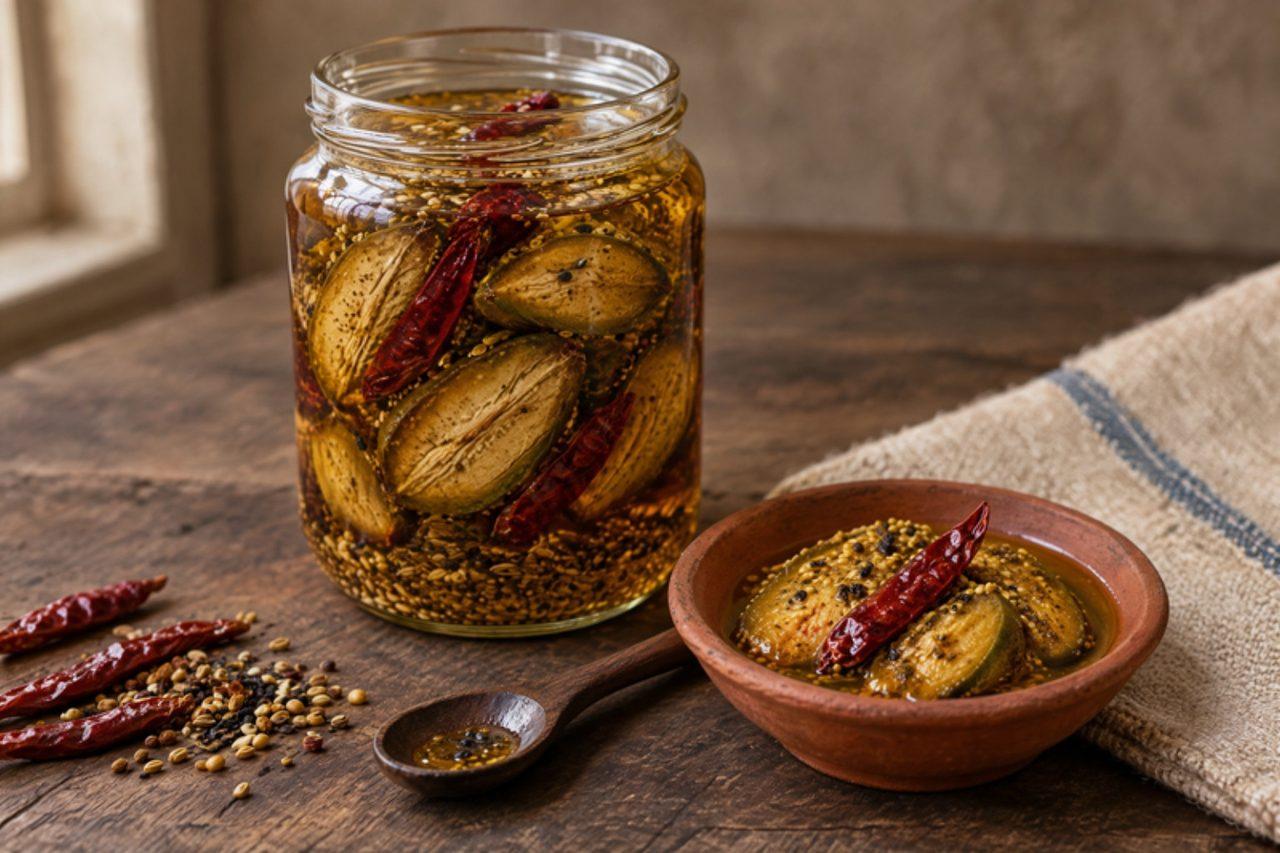
In Bengal the summer of kal-baishakhi storms is also the season of aam tel, mango oil. Slices of hard green mango are salted and sun-dried until leathery, then sunk in mustard oil with roasted panch phoron and chilli and left to steep for a couple of weeks. The mango turns chewy, salty and sour; the oil turns golden, sharp and fruity, and that oil is the real treasure. A spoonful goes into jhalmuri (spiced puffed rice) on every Kolkata street corner, over plain rice with a fried egg or mashed potato, or into a bowl of panta bhat in the heat. The common mistake is not drying the mango enough: if it still feels wet when pressed, it will grow mould under the oil. Dry it until the slices are shrunken, leathery and bend without releasing juice. The pickle is ready when the oil has turned golden and smells strongly of mango and spice. Because the mango is salt-cured and acidic and stays fully under the oil in a dry jar, with no garlic, it keeps up to a year in a cool cupboard; in hot, humid weather keep it in the fridge. Chef's tip: no strong sun? Dry the salted slices in the oven at 60–70 °C with the door propped open, for 5–6 hours.

by KrazyBadal 0 views

Keri no murabbo

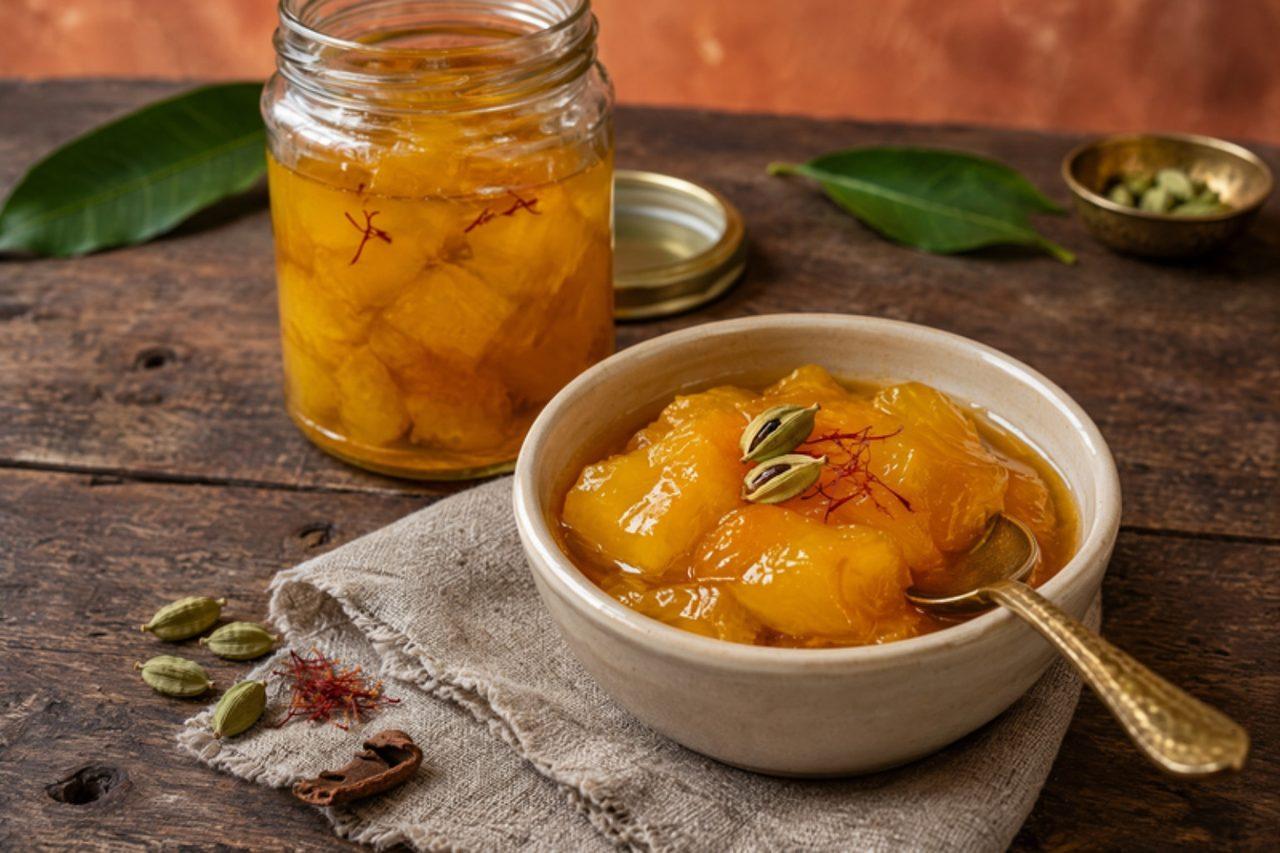
In Gujarat, when the summer stock of pickles goes up in May, murabbo is the gentle, sweet one that children are allowed to dip into freely. Pieces of firm raw mango (rajapuri or totapuri) are cooked slowly in sugar syrup until they turn translucent and glossy, then scented with saffron and cardamom. Unlike chhundo, which is grated and spiked with chilli, murabbo keeps the mango in distinct, tender-firm pieces in a clear, golden syrup; it tastes like candied fruit with a sour edge. Spread it on a warm thepla or rotli, serve it with khakhra at breakfast, or spoon a little beside a Gujarati thali. The common mistake is boiling the mango hard in the syrup, which breaks the pieces and clouds it; keep it at a gentle simmer. It is ready when the pieces look see-through at the edges and the syrup reaches one-string consistency (a cooled drop stretches into a single thread between finger and thumb). With this much sugar it keeps 6 months in a cool cupboard in a sterilised, dry jar, or longer in the fridge. Chef's tip: soak the cut mango in lightly salted water for 10 minutes first; it firms the pieces and stops browning.

by KrazyBadal 0 views

Chana methi nu athanu

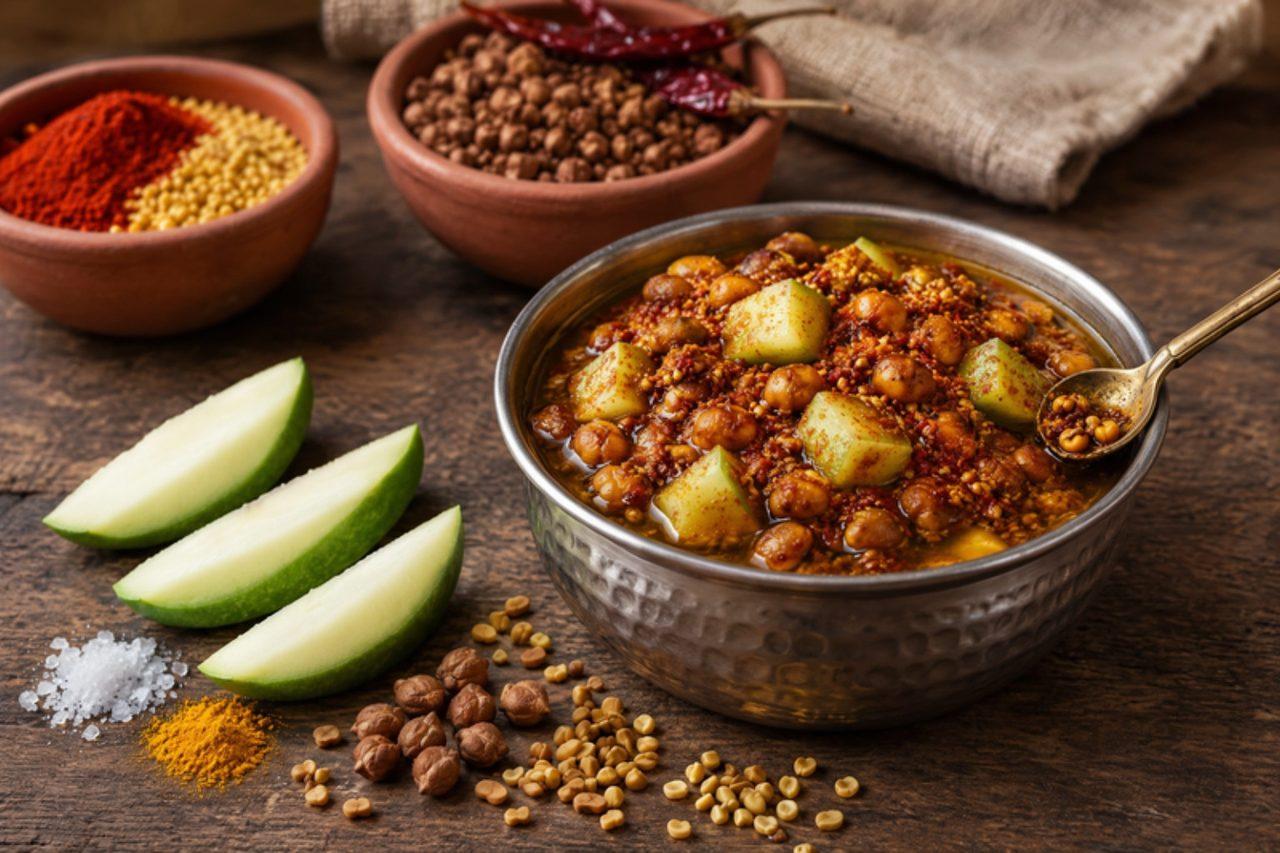
This is the thrifty, protein-rich pickle of Kathiawad and the Gujarati countryside, made in the May pickle season alongside methia keri. Brown chickpeas and fenugreek seeds are soaked until plump, then mixed with salted raw mango, split mustard, chilli and hing and sealed under oil. Over a few days the chana and methi drink up the sour mango juice and soften to a pleasant bite; the methi seeds lose most of their bitterness and turn nutty. The pickle is sour, hot and pungent, with plenty of crunch. A spoonful brightens khichdi-kadhi, bajra rotla or a plain dal-bhaat-shaak lunch. The common mistake is mixing in chickpeas that are still wet after soaking: dry them on a cloth for a few hours or the pickle will turn mouldy. It is ready in 4–5 days, when the chickpeas can be bitten through easily and taste sour all the way in. Because soaked pulses are low in acid, keep this one in the fridge once it is mixed, where it lasts up to 3 months, with the oil always covering the top. Chef's tip: use kala chana (small brown chickpeas); they stay firmer than large white ones.

by KrazyBadal 0 views

Shikarpuri achar

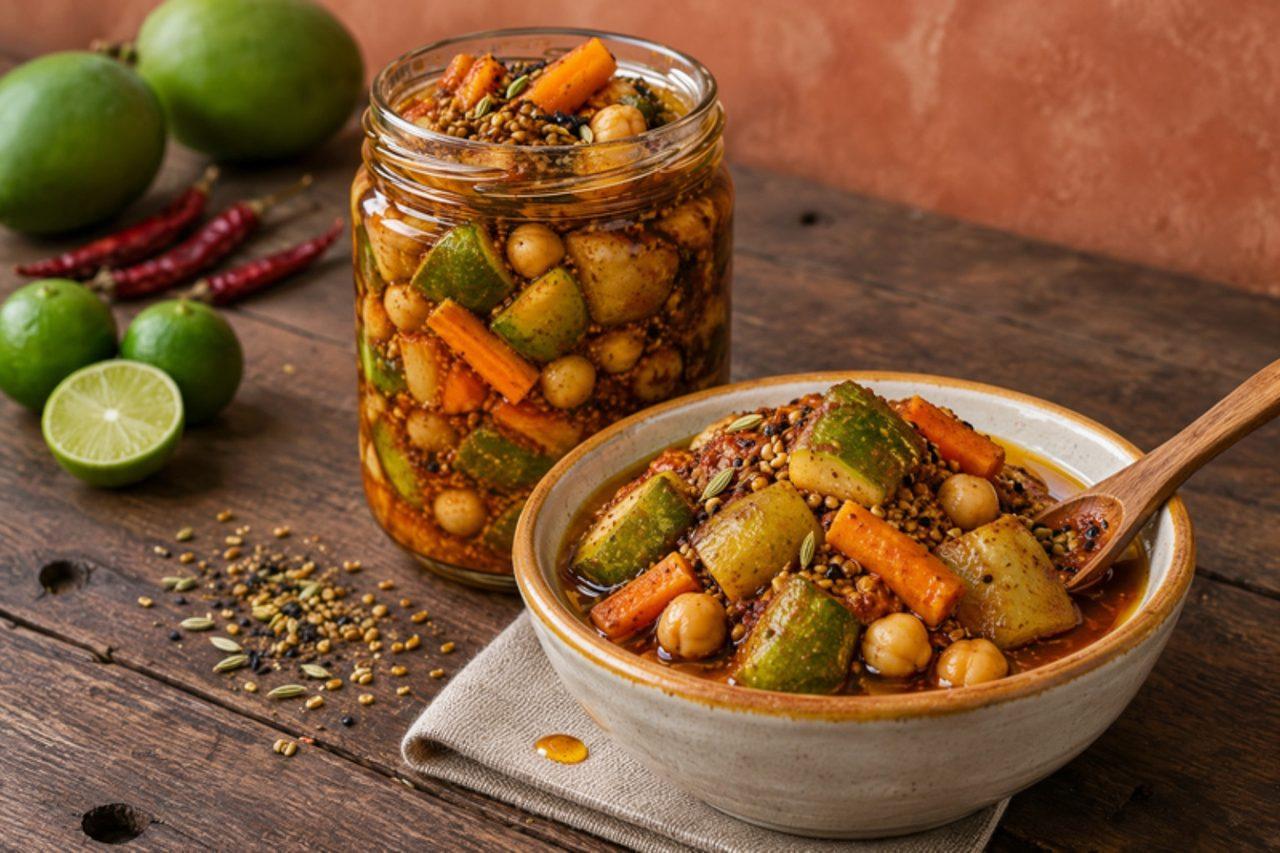
Shikarpur, the old trading town in upper Sindh, is famous across Pakistan for one thing in a jar: a dark, oily mixed pickle that families say keeps for a year. It is made in May and June when green mangoes are sour and limes are cheap, cured in the hot Sindhi sun, and eaten all year with daal chawal, aloo paratha at breakfast, Sindhi biryani and plain roti with yoghurt. The flavour is sour, salty and fiery, with the bittersweet crunch of fenugreek, anise-sweet fennel and the onion note of kalonji, all carried in pungent mustard oil; the mango stays firm, the lime rind turns soft and chewy and the chickpeas stay nutty. Its long life comes from salt, sour fruit, vinegar and a thick layer of oil, so keep every piece under the oil. Common mistake: any water at all — wet fruit, a damp jar or a wet spoon — which brings mould within days. Dry everything in the sun or a low oven. It is ready after 2–3 weeks, when the lime skins are tender and the oil has turned red and fragrant. Chef's tip: heat the mustard oil until it just smokes and let it cool; this softens its raw bite.

by KrazyBadal 0 views

Sev puri

Sev puri is the snack Mumbaikars eat standing up at Juhu and Girgaum Chowpatty, or at the chaat stall outside the office in the evening. Flat, crisp papdi are laid out on a plate, topped with potato, onion and raw mango, splashed with green, sweet tamarind and red garlic chutneys, then buried under a snowfall of fine sev. It must be eaten within a couple of minutes, before the papdi soften. Here the papdi are made at home, but good shop-bought ones work fine on a busy day. Chef's tip: assemble each plate just before it's eaten, in the order given; chutney on bare papdi makes them soggy, so the potato always goes down first.

by KrazyBadal 0 views

Goes well with raw green mango