
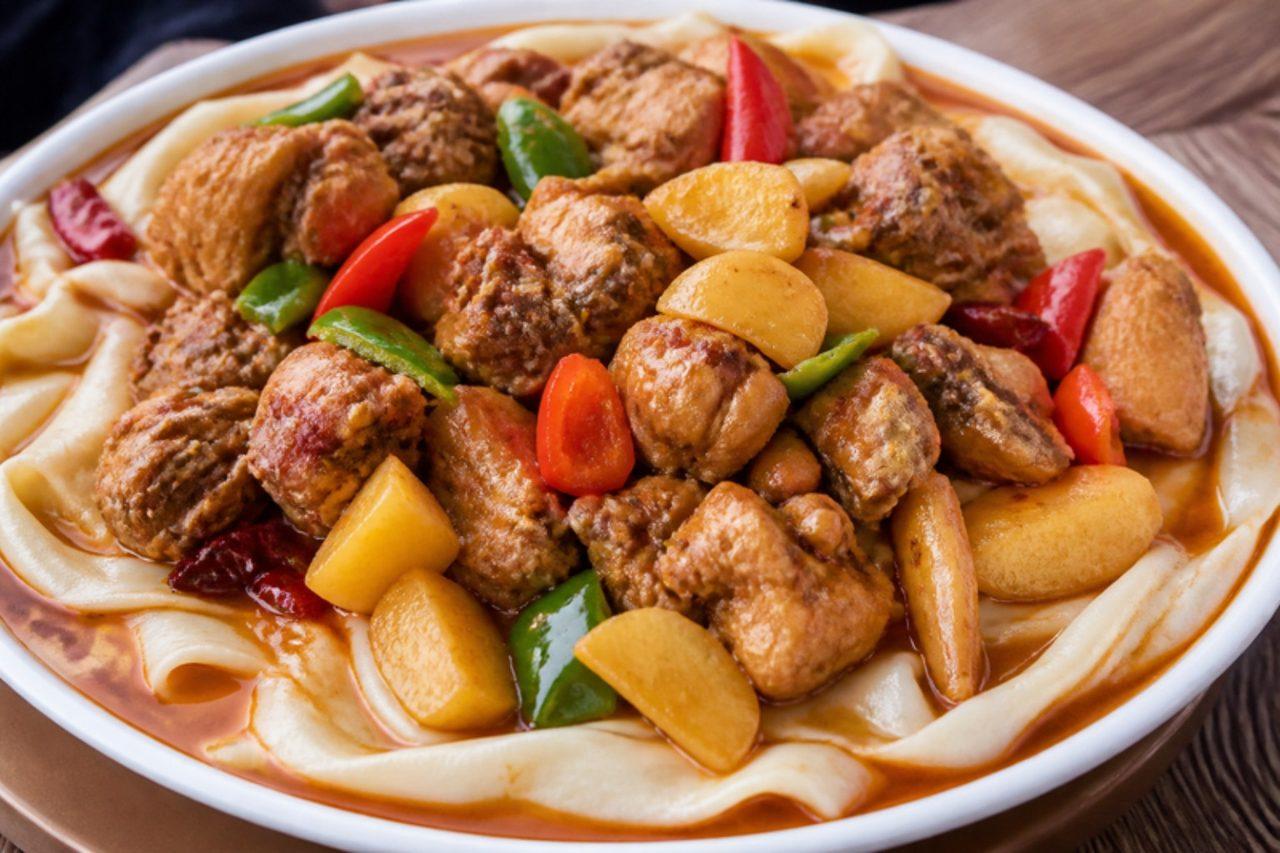
AI-generated image
Big plate chicken
Dà pán jī (大盘鸡) — Xinjiang's spicy chicken and potato stew over wide hand-torn noodles


Born in roadside restaurants along the highways of northern Xinjiang in the 1980s, when truck drivers wanted something big enough to share, this dish arrives on a platter the size of a steering wheel. Chunks of bone-in chicken and potato braise in a spicy, star anise-scented sauce with green peppers, and the leftover gravy is spooned over wide, chewy belt noodles at the end. It is warming, a little numbing and very generous. Serve it for a crowd on a cold evening, with a bowl of sliced cucumber and garlic to cool things down. Chef's tip: cook the noodles first in the same pot and toss them in a little oil; they wait happily while the stew cooks and you only have one pot to wash.
- Total time
- 60 min
- Difficulty
- medium
- Serves
- 4
Ingredients
For the noodles
- 14 oz wide flat wheat noodlesfresh or dried, or pappardelle
- 1 tbsp neutral oil
For the chicken
- 2 ⅝ lb bone-in chicken thighs and drumstickschopped into 5 cm pieces
- 3 tbsp neutral oil
- ⅔ oz rock sugar
- 10 dried red chilliessnipped in half
- 1 tsp Sichuan peppercorns
- 1 cinnamon sticksmall
- ⅔ oz fresh gingersliced
- 6 garlic cloveshalved
- 2 tbsp light soy sauce
- 1 tbsp dark soy sauce
- 3 cups hot water
- 1 ⅛ lb floury potatoespeeled, cut into 4 cm chunks
- 1 onioncut into wedges
- 2 green pepperscut into large pieces
- ½ tsp salt
To serve
- 1 spring onion (optional)sliced
Shop this recipe on Amazon
What you'll need
Spices & pantry
Fresh ingredients (5)
Links open Amazon in a new tab. As an Amazon Associate, WhatToEat.Today earns from qualifying purchases.
Method
0/8 doneStep 1: Bring a large wide pot or wok of water to the boil and cook the 14 oz wide flat wheat noodles until just tender (check the packet; fresh ones need 3–4 minutes). Drain, rinse briefly and toss with 1 tbsp neutral oil so they don't stick. Set aside and dry the pot.
10 minStep 2: On a separate board, pat 2 ⅝ lb bone-in chicken thighs and drumsticks dry. Heat 3 tbsp neutral oil with ⅔ oz rock sugar in the pot over a medium heat until the sugar melts and turns amber, about 2 minutes.
2 minStep 3: Add the chicken and stir-fry over a high heat for 5 minutes until browned all over and glazed.
5 minStep 4: Add 10 dried red chillies, 1 tsp Sichuan peppercorns, 2 star anise, 1 cinnamon stick, 2 bay leaves, ⅔ oz fresh ginger and 6 garlic cloves and stir for 1 minute until fragrant. Stir in 1 ½ tbsp Pixian chilli bean paste (doubanjiang) until the oil turns red.
2 minStep 5: Add 2 tbsp light soy sauce, 1 tbsp dark soy sauce and 3 cups hot water, bring to the boil, then cover and simmer over a medium-low heat for 10 minutes.
10 minStep 6: Add 1 ⅛ lb floury potatoes, cover again and simmer for 15 minutes until a knife slides into the potato. Adding them at the start is a common mistake: they collapse into mash before the chicken is done.
15 minStep 7: Add 1 onion and 2 green peppers and cook uncovered over a medium-high heat for 3–4 minutes until the peppers are bright and the sauce has thickened. Check the chicken: the thickest piece must reach 165°F (165 °F) with clear juices. Season with ½ tsp salt.
4 minStep 8: Spread the noodles on a large platter, pile the chicken and potatoes on top and pour over the sauce. Toss the noodles through the gravy at the table and scatter with spring onion.
Nutrition per serving
- Calories
- 760 kcal
- Protein
- 42 g
- Carbs
- 88 g
- Fat
- 26 g
- Fibre
- 6 g
Nutrition values are estimates.
KrazyBadal
Good to know
- How long does big plate chicken take?
- About 60 minutes in total: 20 minutes to prepare and 40 minutes to cook.
- How many people does it serve?
- 4 as written. Change the servings above the ingredients and every amount scales to match.
- Is it very spicy?
- It has some heat. Use less chilli for a milder version, or more if you like it hot.
- What can I use instead of rock sugar?
- Caster sugar, same amount.
- What can I use instead of star anise?
- ½ tsp aniseeds or fennel seeds per star.
Reviews
No reviews yet. Be the first to cook it.
Rate this recipe
Sign in to rate and review this recipe.
You might also like
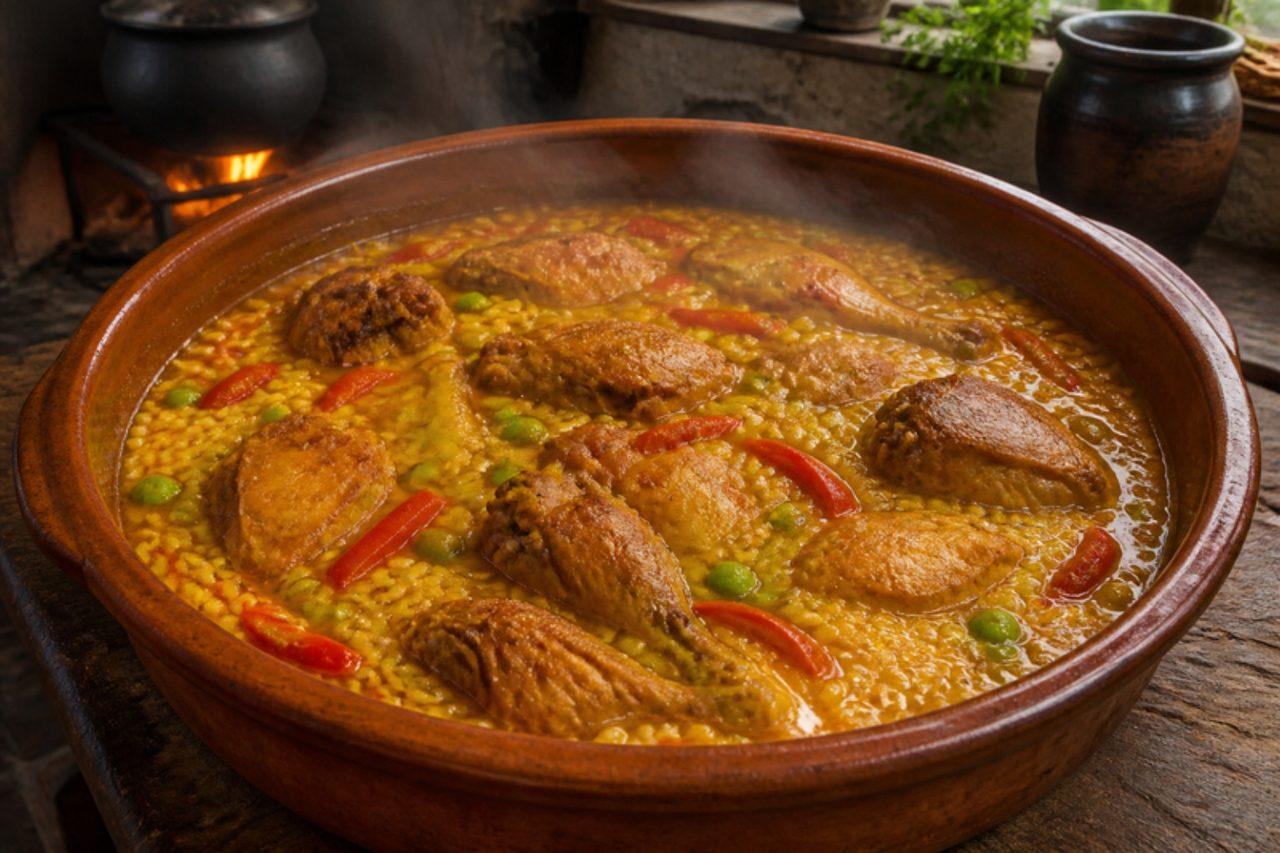
Arroz con pitu de caleyaSoupy rice with chicken
A pitu de caleya is a cockerel raised free in the lanes, or caleyas, of rural Asturias; its firm, flavourful meat needs long stewing, and families around Villaviciosa and Grado still cook it for feast days. The stew is often finished as a soupy rice, so the deep chicken juices go into every grain. Use the best free-range chicken you can find. The braise includes dry white wine; replace it with extra stock and a squeeze of lemon if you want it alcohol-free. Chef's tip: brown the chicken slowly and deeply; that colour is where the flavour of the whole pot comes from.
 Spanish
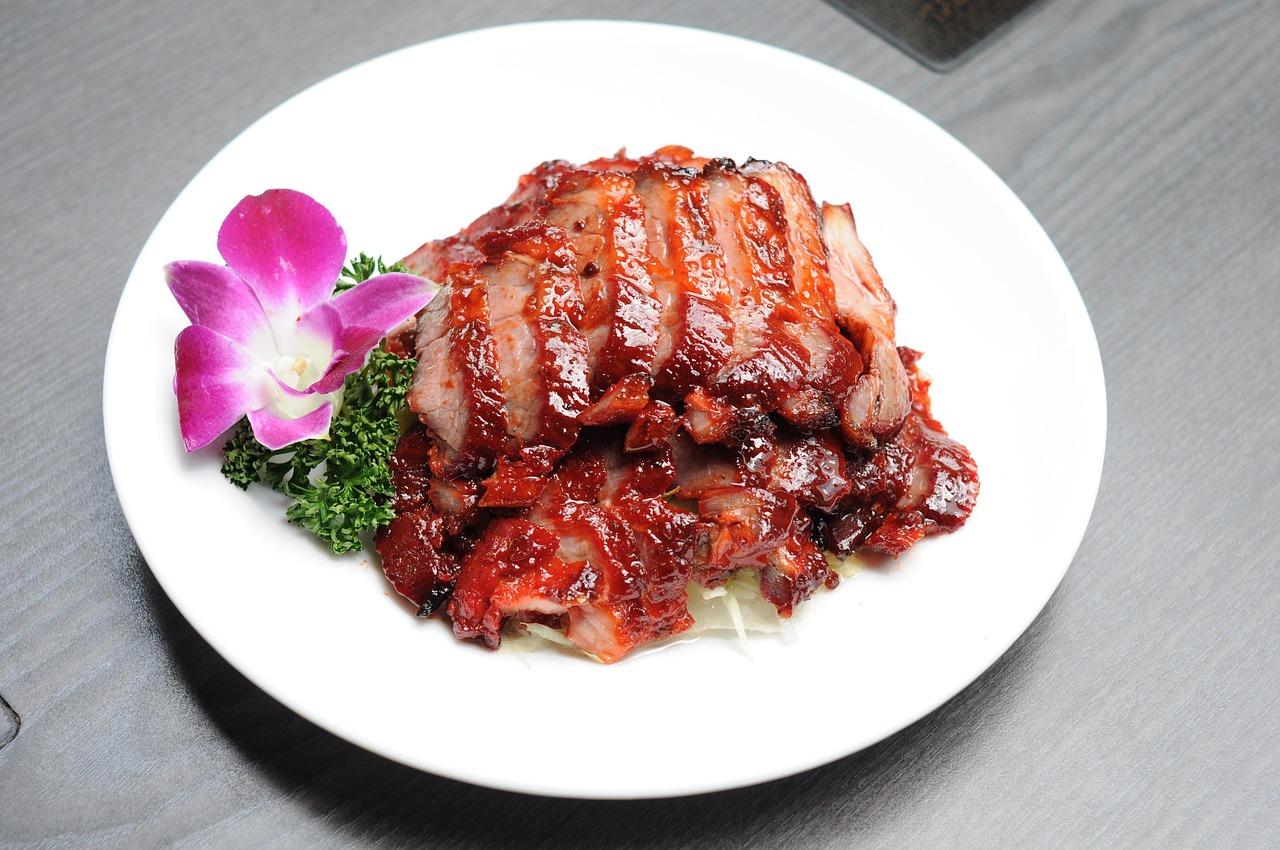
Char siuHoney roast pork
Hanging in long glossy strips in the windows of Guangzhou's siu mei shops, char siu is the roast pork Cantonese families pick up on the way home to put on rice, noodles or into steamed buns. The outside is lacquered, sweet and a little charred at the edges; the inside stays juicy, savoury and faintly scented with five-spice. Shoulder (pork butt) is the cut to use, because its marbling keeps the strips moist through a hot oven. Marinate it overnight in the fridge, roast it the next day and eat it warm with steamed rice and blanched greens, or cold in fried rice and noodle soups. Chef's tip: save the honey for the last ten minutes; brushed on at the start it burns black long before the pork is cooked.
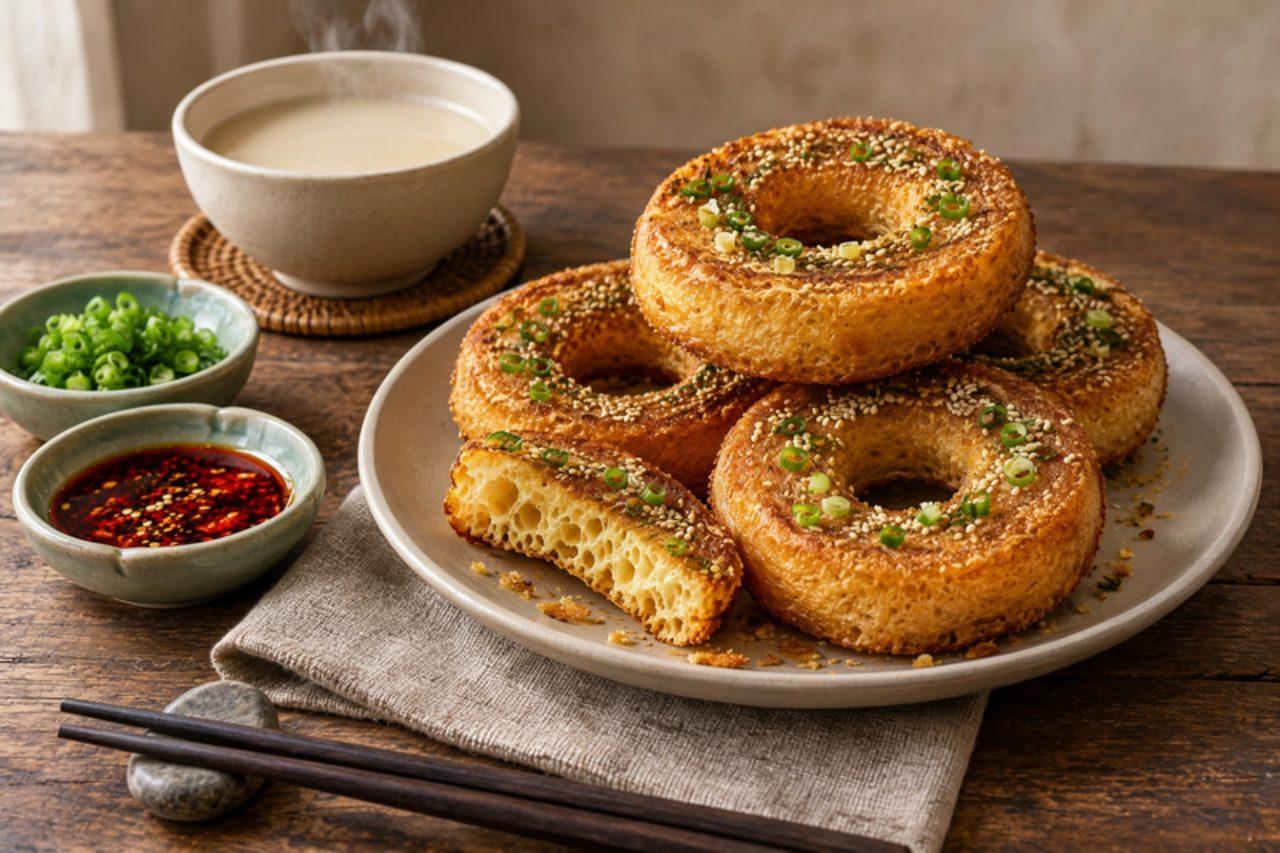
Wuhan mianwoRice and soybean fritter rings
Wuhan people call breakfast "guozao", and mianwo is one of its icons: a ring of rice and soybean batter fried in a special ladle with a raised centre, so it ends up thick and soft round the rim and thin and crackly in the middle, flecked with sesame and spring onion. It is eaten with hot dry noodles or a bowl of soy milk. The mistake is oil that is too cool: the batter soaks it up and turns greasy; it must hiss strongly the moment it goes in. Without a mianwo ladle, use a deep ladle and spread the batter thinner in the middle with a spoon. Chef's tip: give the batter a quick stir before every fritter, because the rice settles to the bottom fast.

