
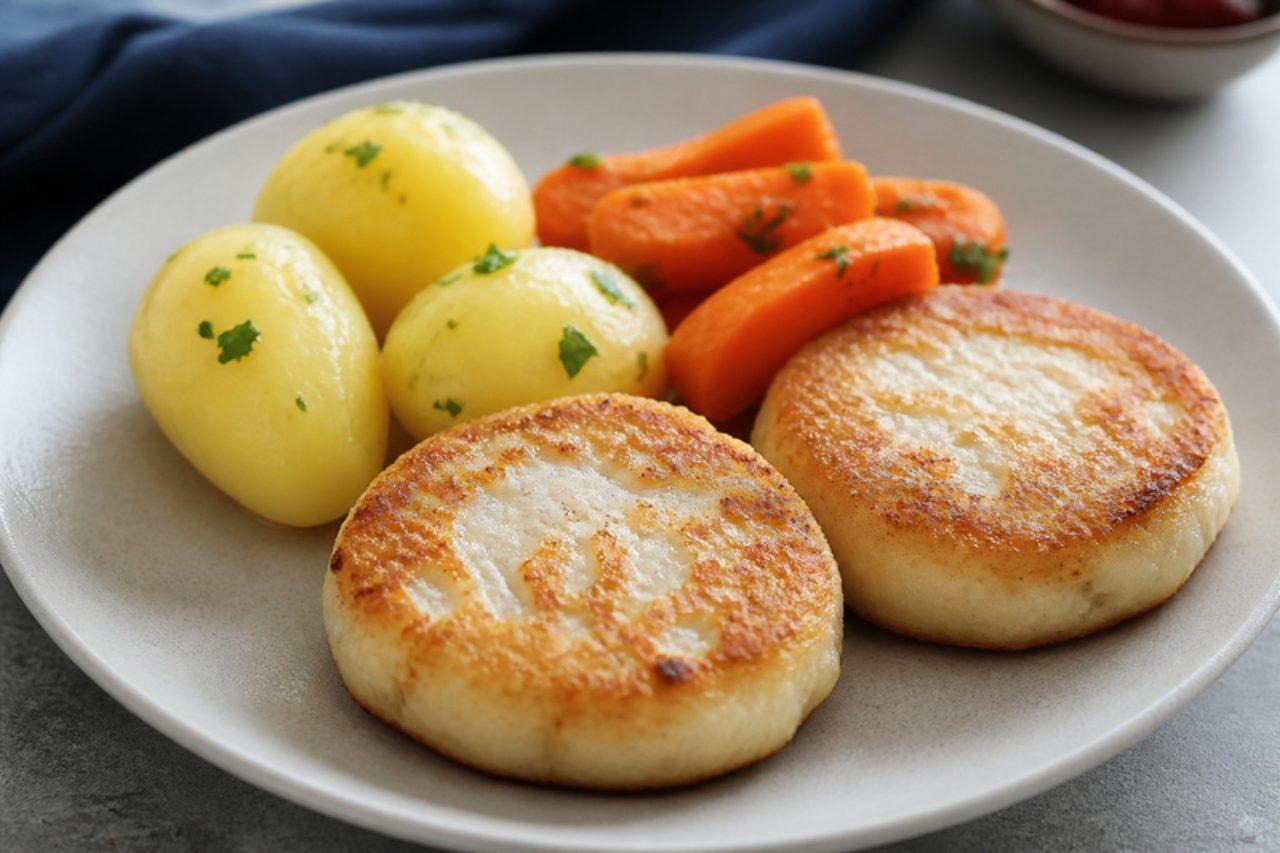
AI-generated image
Fiskekaker
Fiskekaker: soft Bergen white-fish cakes with milk and nutmeg
In Bergen, the fishmongers at the harbour fish market sell fresh fiskekaker made that morning: white fish such as haddock or pollock blended with milk, potato starch and nutmeg into a soft, pale paste, shaped into flat cakes and fried in butter. They are served with boiled potatoes, grated raw carrot and a white sauce or melted butter, or cold in a sandwich. A common mistake is adding the milk too fast, which makes the mix loose. Chef's tip: blend the fish with salt first until sticky, then add the cold milk a little at a time, so the cakes come out springy and smooth. They are cooked when firm and opaque in the middle.
- Total time
- 40 min
- Difficulty
- medium
- Serves
- 4
Ingredients
For the fish cakes
- 1 ⅓ lb haddock or pollock filletskinned and boned, chilled
- 1 tsp salt
- 2 tbsp potato starch
- ¼ tsp ground nutmeg
- ¼ tsp white pepper
- ¾ cup cold milk
- ½ oniongrated
- 1 ⅜ oz butter
Shop this recipe on Amazon
What you'll need
Spices & pantry
Links open Amazon in a new tab. As an Amazon Associate, WhatToEat.Today earns from qualifying purchases.
Method
0/5 doneStep 1: Blend 1 ⅓ lb haddock or pollock fillet with 1 tsp salt in a food processor until sticky.
1 minStep 2: Add 2 tbsp potato starch, ¼ tsp ground nutmeg, ¼ tsp white pepper and ½ onion, then pour in ¾ cup cold milk a little at a time, blending until smooth and thick. Common mistake: adding the milk all at once.
Step 3: With wet hands, shape into 12 flat cakes.
Step 4: Fry in 1 ⅜ oz butter over a medium heat for 4–5 minutes per side, until golden and firm and opaque in the centre.
10 min
Nutrition per serving
- Calories
- 340 kcal
- Protein
- 26 g
- Carbs
- 16 g
- Fat
- 19 g
- Fibre
- 1 g
Nutrition values are estimates.
KrazyBadal
Good to know
- How long does fiskekaker take?
- About 40 minutes in total: 20 minutes to prepare and 20 minutes to cook.
- How many people does it serve?
- 4 as written. Change the servings above the ingredients and every amount scales to match.
- What can I use instead of cold milk?
- Oat, soy or almond milk, same amount (use unsweetened for savoury dishes).
- What can I use instead of onion?
- 2 shallots per onion.
Reviews
No reviews yet. Be the first to cook it.
Rate this recipe
Sign in to rate and review this recipe.
You might also like

Singapore chilli crab
Chilli crab was first sold from a pushcart on the Kallang river in the 1950s and is now the dish visitors queue for along Singapore's East Coast seafood strip. Big mud crabs are cut up, wok-fried and simmered in a thick, sweet, tangy and gently hot sauce of chilli, tomato and garlic, which is then silked with beaten egg. Everyone eats with their hands and mops up the sauce with fried or steamed mantou buns. It is a weekend or celebration meal, messy and loud. Buy crabs live or freshly cooked the same day from a fishmonger you trust. Discard any live crab that doesn't move, smells of ammonia or has a cracked, leaking shell. The common mistake is boiling the sauce after adding the egg, which scrambles it into lumps; pour it in a thin stream over a low heat. Chef's tip: ask the fishmonger to clean and quarter the crab for you, and crack each claw lightly with the back of a cleaver so the sauce soaks in.
 Singaporean

Chraime
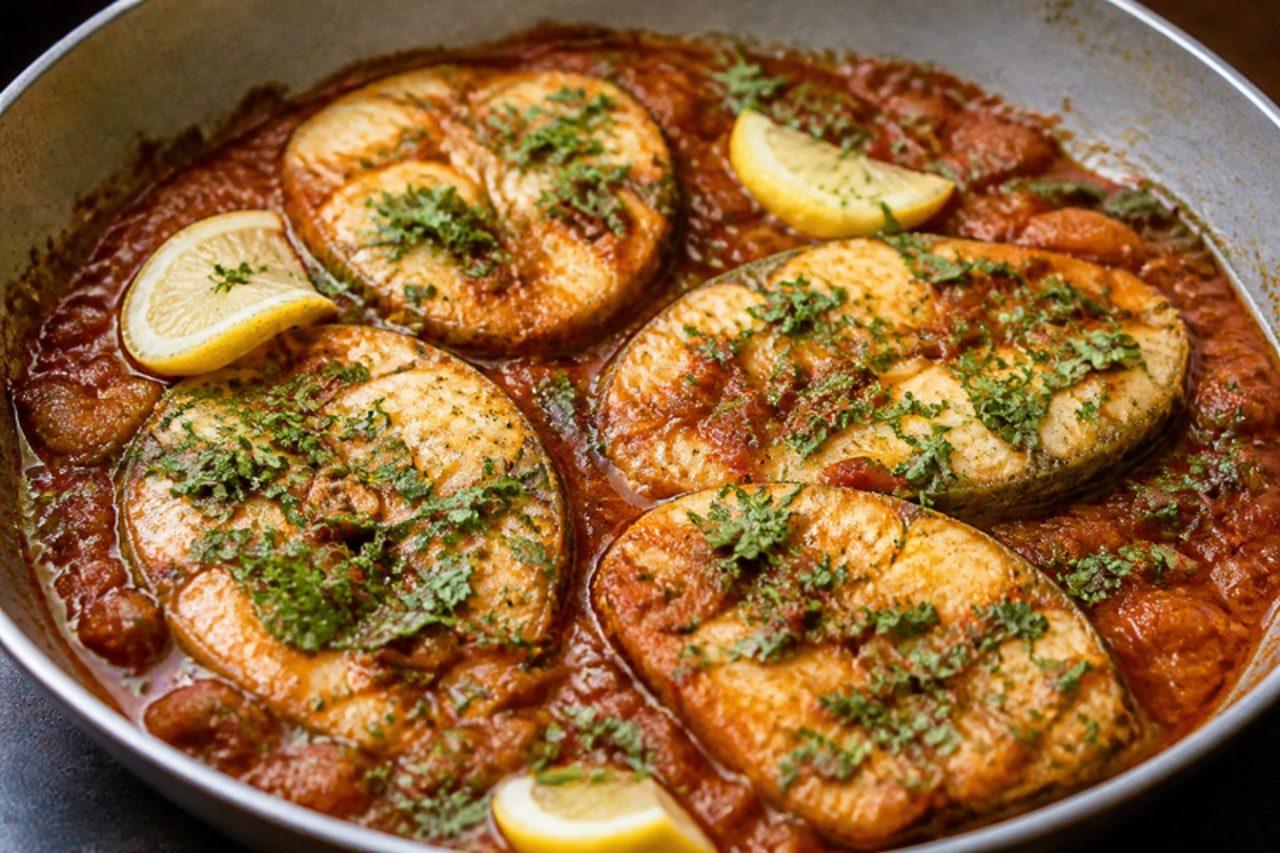
Friday night in Moroccan and Libyan Jewish homes, from Casablanca to Tripoli and now Paris and Tel Aviv, often begins with a plate of chraime before the main course. Thick fish steaks simmer in a brick-red sauce built from a frightening amount of garlic, sweet and hot paprika, chilli, caraway and cumin, loosened with oil and a squeeze of lemon. It is spicy, garlicky and very savoury, and the oily sauce begs to be mopped up with challah or other good bread. It is also eaten cold the next day. Chef's tip: cook the spices in the oil over a low heat until they smell toasty but not dark; burnt paprika tastes acrid and you cannot rescue it.
 Moroccan


Lussekatter
Before dawn on 13 December, Lucia Day, children in white gowns walk through Swedish homes, schools and offices carrying candles and trays of lussekatter: golden saffron buns twisted into an S with a raisin in each curl. The saffron colour and the light are meant to chase away the darkest days of winter. A common mistake is adding the saffron dry, which leaves the buns pale and streaky. Chef's tip: grind the saffron with a sugar cube and melt it into the warm butter and milk, so the colour spreads evenly.