
Flæskesteg
Roast pork with crackling
Flæskesteg: Danish roast pork with crackling for Christmas

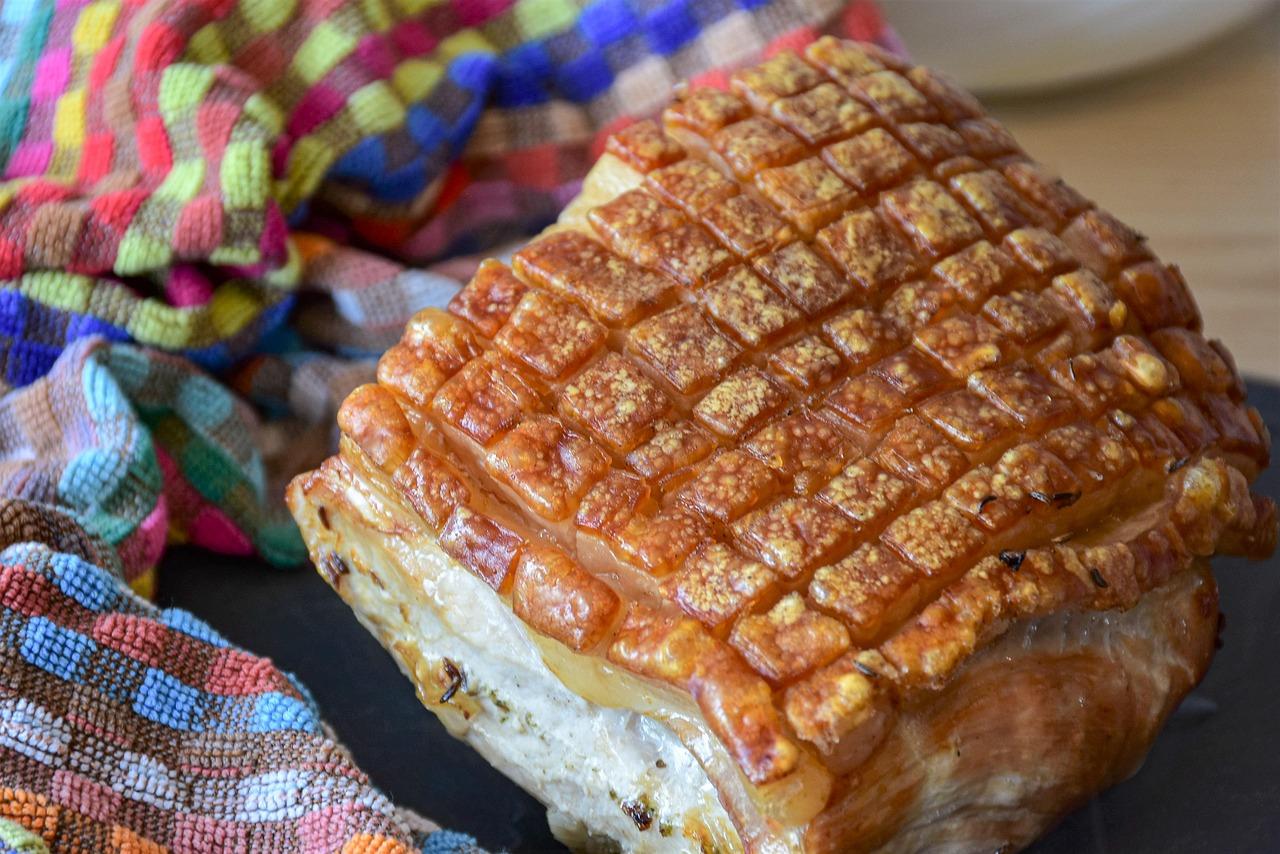
Flæskesteg is the Danish Christmas Eve roast: a pork loin or belly with its rind scored deep, rubbed with salt and bay, and roasted until the crackling puffs into crisp, golden ridges. This is a pork dish. It is served with brunede kartofler, red cabbage, plain boiled potatoes and gravy, and the crackling is the prize everyone fights over. A common mistake is scoring the rind too shallow or not all the way across, so it cracks unevenly. Chef's tip: start the joint rind-down in a little boiling water for 20 minutes, which softens the rind, then turn it up and roast; it crackles evenly. Whole pork joints are safe at 63 °C followed by a 15-minute rest.
- Total time
- 140 min
- Difficulty
- medium
- Serves
- 8
Ingredients
For the roast
- 4 ⅜ lb boned pork loin with rindrind scored 5 mm apart down to the fat
- 2 tbsp coarse salt
- 2 cups boiling water
- 1 tsp black peppercorns
Shop this recipe on Amazon
What you'll need
Spices & pantry
Fresh ingredients (1)
Links open Amazon in a new tab. As an Amazon Associate, WhatToEat.Today earns from qualifying purchases.
Method
0/5 doneStep 1: Heat the oven to 425°F (fan 400°F). Pour 2 cups boiling water into a roasting tin and lay 4 ⅜ lb boned pork loin with rind rind-down in it. Roast for 20 minutes.
20 minStep 2: Turn the pork rind-up. Rub 2 tbsp coarse salt into the scores and tuck 6 bay leaves and 1 tsp black peppercorns into the cuts. Common mistake: shallow scoring; the crackling is patchy.
Step 3: Lower the oven to 350°F (fan 325°F) and roast for 1¼–1½ hours, until the centre reaches 145°F.
90 minStep 4: Turn the oven to 475°F (fan 450°F) or the grill to high for 10 minutes, watching, until the crackling puffs and crisps.
10 minStep 5: Rest for 15 minutes before carving. Keep the tin juices for gravy.
15 min
Nutrition per serving
- Calories
- 560 kcal
- Protein
- 36 g
- Carbs
- 0 g
- Fat
- 46 g
- Fibre
- 0 g
Nutrition values are estimates.
KrazyBadal
Good to know
- How long does flæskesteg take?
- About 140 minutes in total: 20 minutes to prepare and 120 minutes to cook.
- How many people does it serve?
- 8 as written. Change the servings above the ingredients and every amount scales to match.
- Is it gluten free?
- Yes, as written. Check the labels on stock, sauces and spice mixes, which sometimes contain gluten.
- What can I use instead of bay leaves?
- Leave it out, or a pinch of dried thyme (it's a background flavour).
- What can I use instead of black peppercorns?
- Ground black pepper, a little less than the amount.
Reviews
No reviews yet. Be the first to cook it.
Rate this recipe
Sign in to rate and review this recipe.
You might also like

Pork souvlaki
This is a pork recipe. Walk through any Greek town after dark, from Athens to Thessaloniki, and the smell of souvlaki stands drifts down the street; cubes of pork shoulder grilled on thin skewers are the country's favourite cheap supper, eaten standing up or at a plastic-table taverna. At home you marinate the meat in lemon, olive oil, garlic and dried oregano, grill it hard and fast, and pile it on warm pitta with tzatziki, tomato and red onion. Chef's tip: cut the pork into even 2.5 cm cubes and leave a little fat on; lean loin dries out, shoulder stays juicy over high heat.
 Greek
Pfälzer SaumagenStuffed pig's stomach
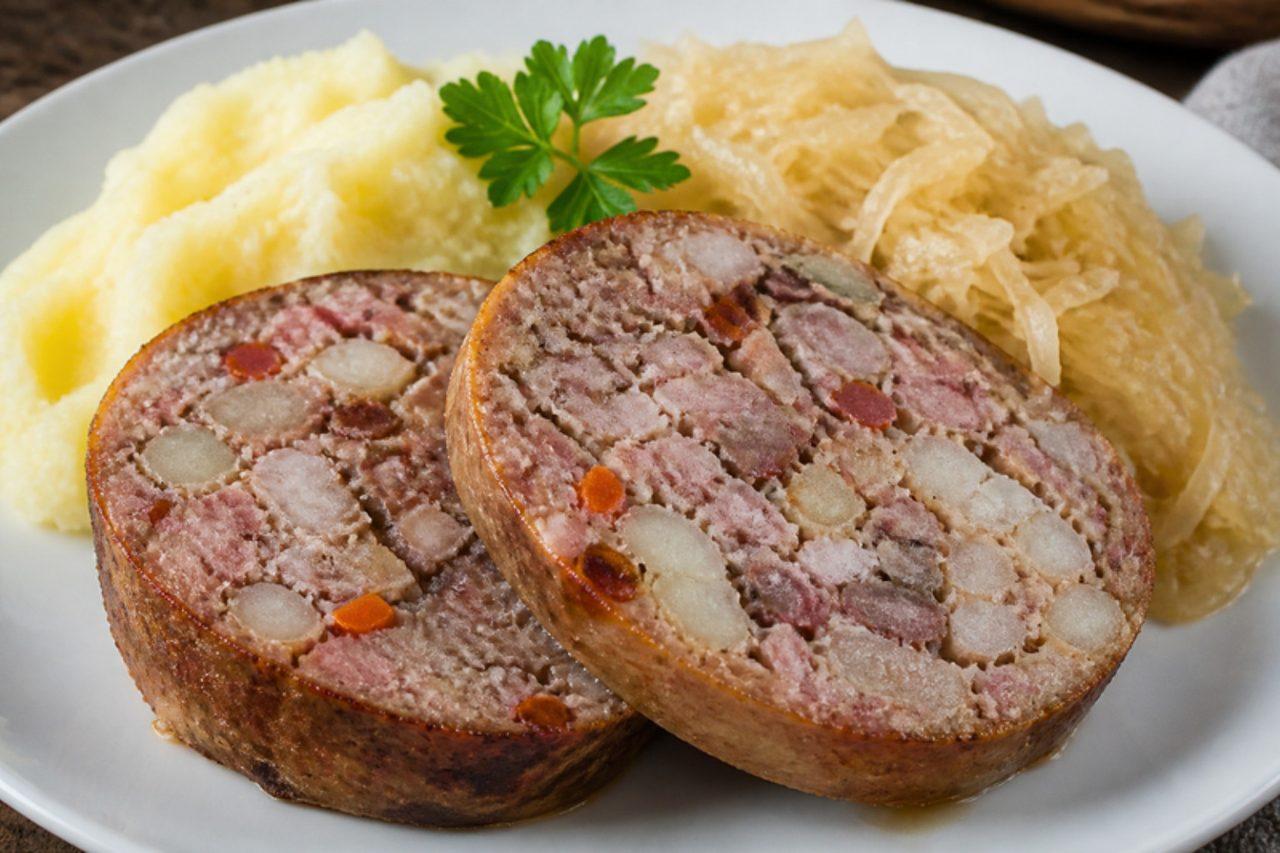
Saumagen is the pride of the Palatinate, served at wine-village festivals and family dinners from the Haardt hills to Ludwigshafen. A cleaned pig's stomach is stuffed with diced pork shoulder, pork sausage meat, potato and carrot seasoned with marjoram and nutmeg, poached slowly, then sliced thick and fried until crusty. The stomach works only as a casing and is ordered from a butcher; if you can't get one, bake the same filling in a covered terrine in a water bath. Serve with sauerkraut and mashed potato. Chef's tip: fill the stomach only three-quarters full, or it bursts as the potatoes swell.
 German

Char siuHoney roast pork
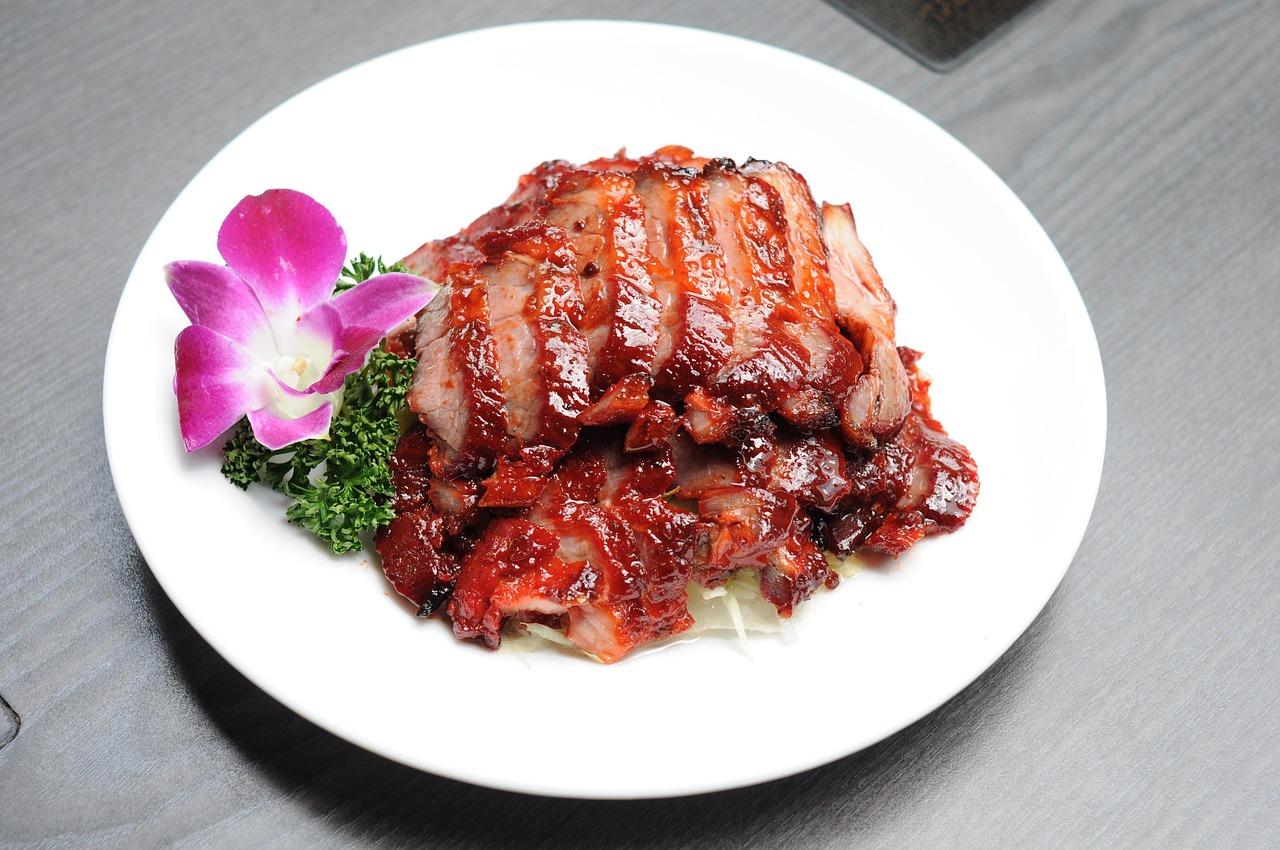
Hanging in long glossy strips in the windows of Guangzhou's siu mei shops, char siu is the roast pork Cantonese families pick up on the way home to put on rice, noodles or into steamed buns. The outside is lacquered, sweet and a little charred at the edges; the inside stays juicy, savoury and faintly scented with five-spice. Shoulder (pork butt) is the cut to use, because its marbling keeps the strips moist through a hot oven. Marinate it overnight in the fridge, roast it the next day and eat it warm with steamed rice and blanched greens, or cold in fried rice and noodle soups. Chef's tip: save the honey for the last ten minutes; brushed on at the start it burns black long before the pork is cooked.
 Chinese