
AI-generated image
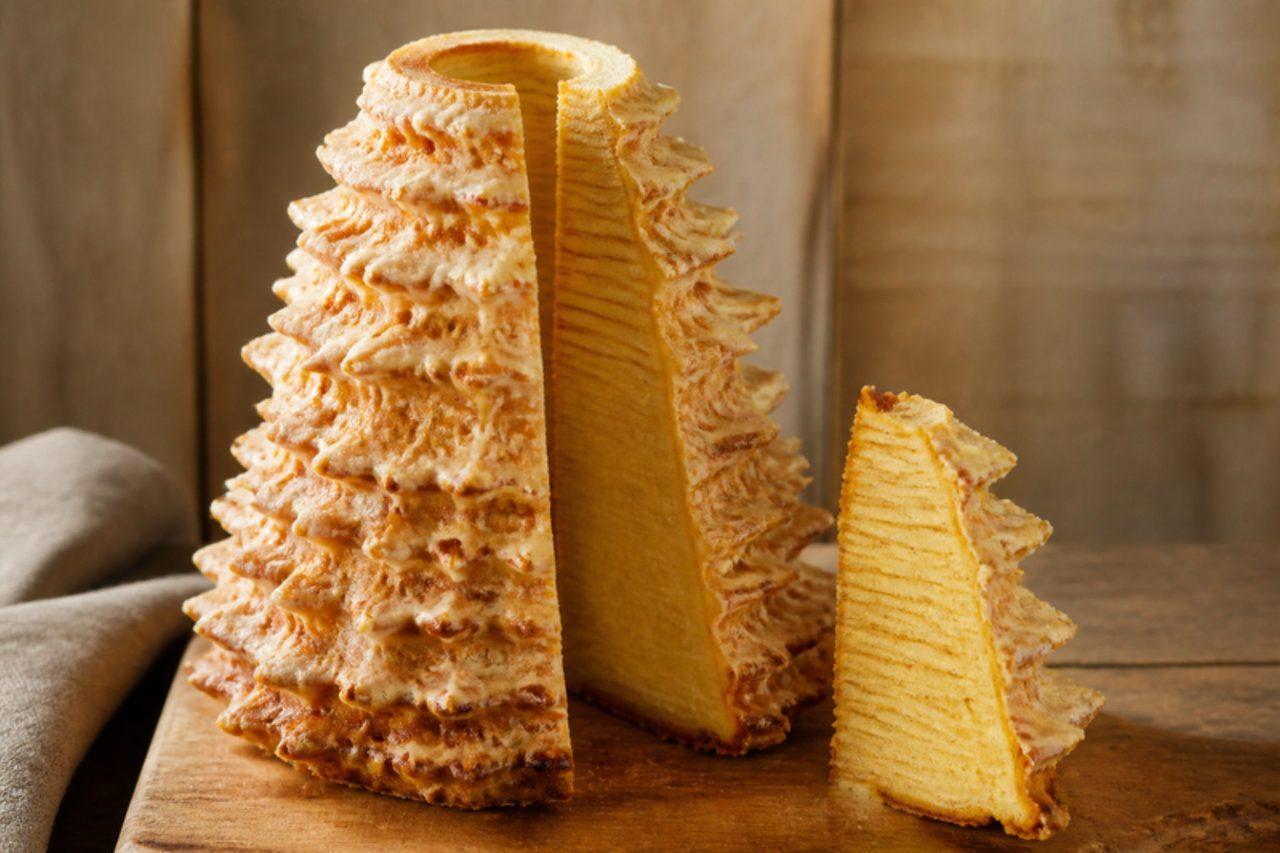
Gâteau à la broche
Spit cake
Pyrenean spit cake, made at home under the grill
 French
At weddings and village fairs in the Aveyron and the Pyrenees, gâteau à la broche is a performance: a wooden cone turns on a spit in front of a wood fire while a cook ladles batter over it, layer after layer, for hours. The drips set into the spiky ridges that make the tall, hollow cake look like a fir tree. Slices have thin golden rings, a soft, buttery, eggy crumb and a scent of orange-flower water; it is eaten at the end of the feast with sweet wine for the adults or coffee. Older recipes use rum where this one uses orange-flower water and lemon, and at home a foil-wrapped rolling pin turned under a hot grill does the job of the spit. Pouring too much batter at once is the easy mistake: thick layers stay raw inside, so ladle thinly and let each one colour. Chef's tip: keep the batter at room temperature and stir it each time; cold batter clings badly and drips off in sheets.
- Total time
- 140 min
- Difficulty
- hard
- Serves
- 12
Ingredients
For the batter
- 9 oz unsalted buttermelted and cooled
- 9 oz caster sugar
- 8 eggsseparated
- 9 oz plain flour
- 1 pinch salt
- 2 tbsp orange-flower water
- 1 tbsp lemon zest
- 2 tbsp dark rum (optional)traditional, instead of 1 tbsp of the orange-flower water
For the spit
- 1 tbsp sunflower oilfor the paper
Shop this recipe on Amazon
What you'll need
Spices & pantry
Fresh ingredients (4)
Links open Amazon in a new tab. As an Amazon Associate, WhatToEat.Today earns from qualifying purchases.
Method
0/9 doneStep 1: Wrap a straight wooden rolling pin (about 45 cm, without handles) tightly in two layers of foil, then a layer of baking paper tied on with kitchen string. Brush the paper with 1 tbsp sunflower oil.
Step 2: Set the pin across a deep roasting tin so it can turn freely, with the paper part over the tin. Put the oven shelf so the pin sits about 10 cm below the grill, and heat the grill to high.
Step 3: Beat 9 oz caster sugar with the yolks from 8 eggs for 5 minutes, until pale and thick. Beat in 9 oz unsalted butter, 2 tbsp orange-flower water, 2 tbsp dark rum (if using), 1 tbsp lemon zest and 1 pinch salt, then fold in 9 oz plain flour.
5 minStep 4: Whisk the whites to firm peaks and fold them in, in three lots, to a thick batter that runs slowly off the ladle.
Step 5: Spoon a thin layer of batter over the paper while turning the pin by its ends (use oven gloves). Slide it under the grill and turn it slowly for 2–3 minutes, until the layer is set and golden.
3 minStep 6: Take the tin out, ladle on another thin layer while turning, letting some drip; return it to the grill and colour it. Pour the drips from the tin back into the batter bowl now and then.
Step 7: Keep going, layer after layer, for 60–80 minutes, until the batter is used up. Toward the end, pour more slowly over the same spots so the drips set into spikes. Each layer should be deep golden before the next goes on; never let it burn.
75 minStep 8: When it is done, the outside is firm, ridged and deep golden, and a skewer pushed through to the pin comes out clean.
Step 9: Leave the cake on the pin to cool for 30 minutes. Stand it upright, pull out the pin and peel away the paper from inside. Cool fully, then slice across into rings.
30 min
Nutrition per serving
- Calories
- 400 kcal
- Protein
- 7 g
- Carbs
- 41 g
- Fat
- 23 g
- Fibre
- 1 g
Nutrition values are estimates.
KrazyBadal
Good to know
- How long does gâteau à la broche take?
- About 140 minutes in total: 40 minutes to prepare and 100 minutes to cook.
- How many people does it serve?
- 12 as written. Change the servings above the ingredients and every amount scales to match.
- Is it vegetarian?
- Yes. It has no meat or fish.
- What can I use instead of unsalted butter?
- The same weight of ghee or coconut oil (for frying and most baking).
- What can I use instead of caster sugar?
- Caster sugar, same amount.
Reviews
No reviews yet. Be the first to cook it.
Rate this recipe
Sign in to rate and review this recipe.
You might also like
Sandwich grecKebab baguette
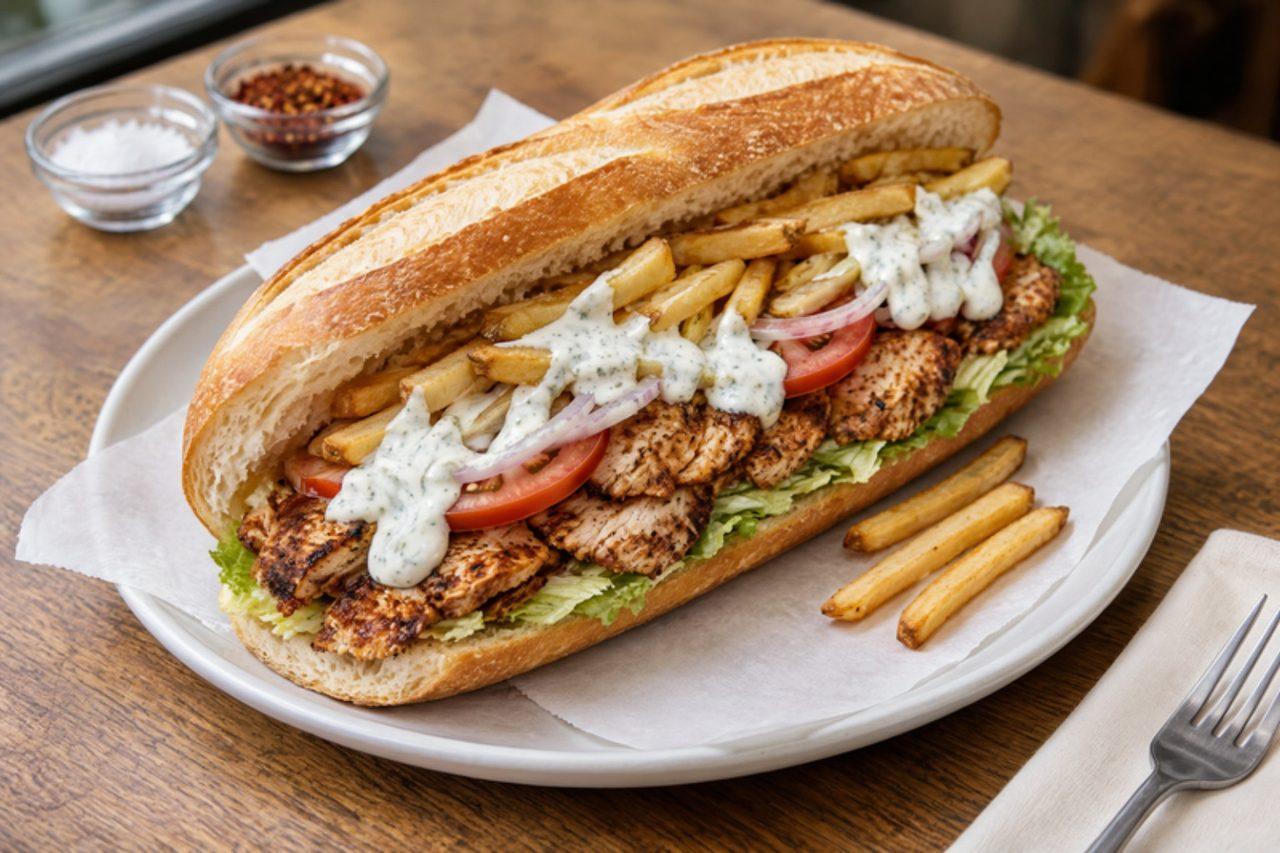
In Paris, a "grec" is the late-night kebab sandwich named after the Greek-run shops that first sold it in the Latin Quarter. On rue de la Huchette and rue Saint-André-des-Arts near Saint-Michel, students queue after a night out for crusty bread or pitta stuffed with meat shaved from a turning spit, lettuce, tomato and onion, a garlicky white sauce, and, the Paris touch, a handful of fries pushed right inside. This home version marinates chicken thighs in spiced yoghurt, sears them hard and slices them thin, with oven fries. It contains milk, egg (in the mayonnaise) and wheat. Chef's tip: slice the meat thinly across the grain after resting; thick chunks don't feel like a grec.
Basque burnt cheesecake
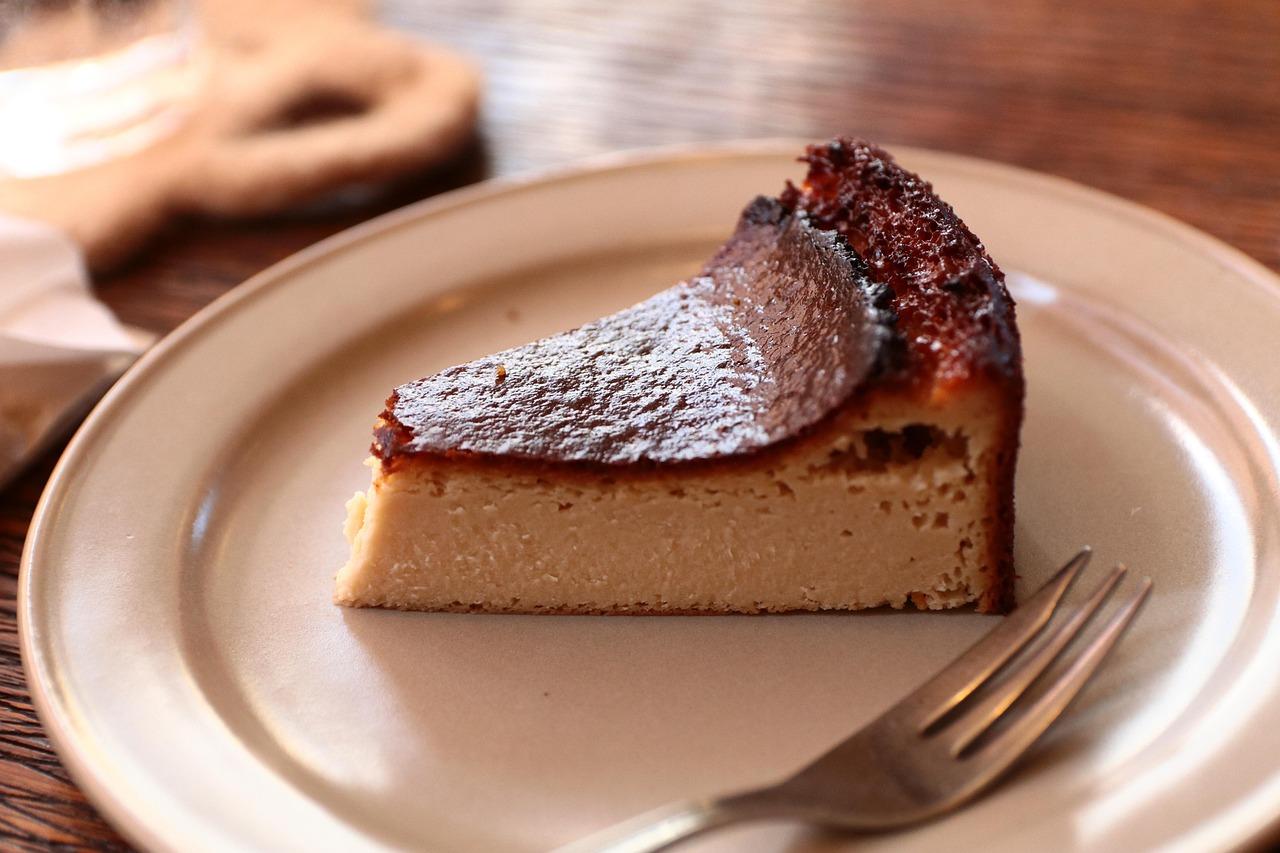
This crustless cheesecake was created in the early 1990s at La Viña, a pintxos bar in the old town of San Sebastián (Donostia) in the Basque Country, and is now famous around the world. It's baked very hot so the top caramelises almost black and the sides rise and crack, while the middle stays soft and creamy, almost runny. There's no base and no water bath, and the rough, rustic look is the point: it's lined with crumpled baking paper. La Viña uses a spoonful of wheat flour; cornflour does the same job and keeps it gluten free. Chef's tip: take it out of the oven while the centre still wobbles like a soft set custard; it firms up as it cools, and if it looks set in the oven, the middle will be dry instead of creamy.
 Spanish

BourrideFish stew with garlic sauce
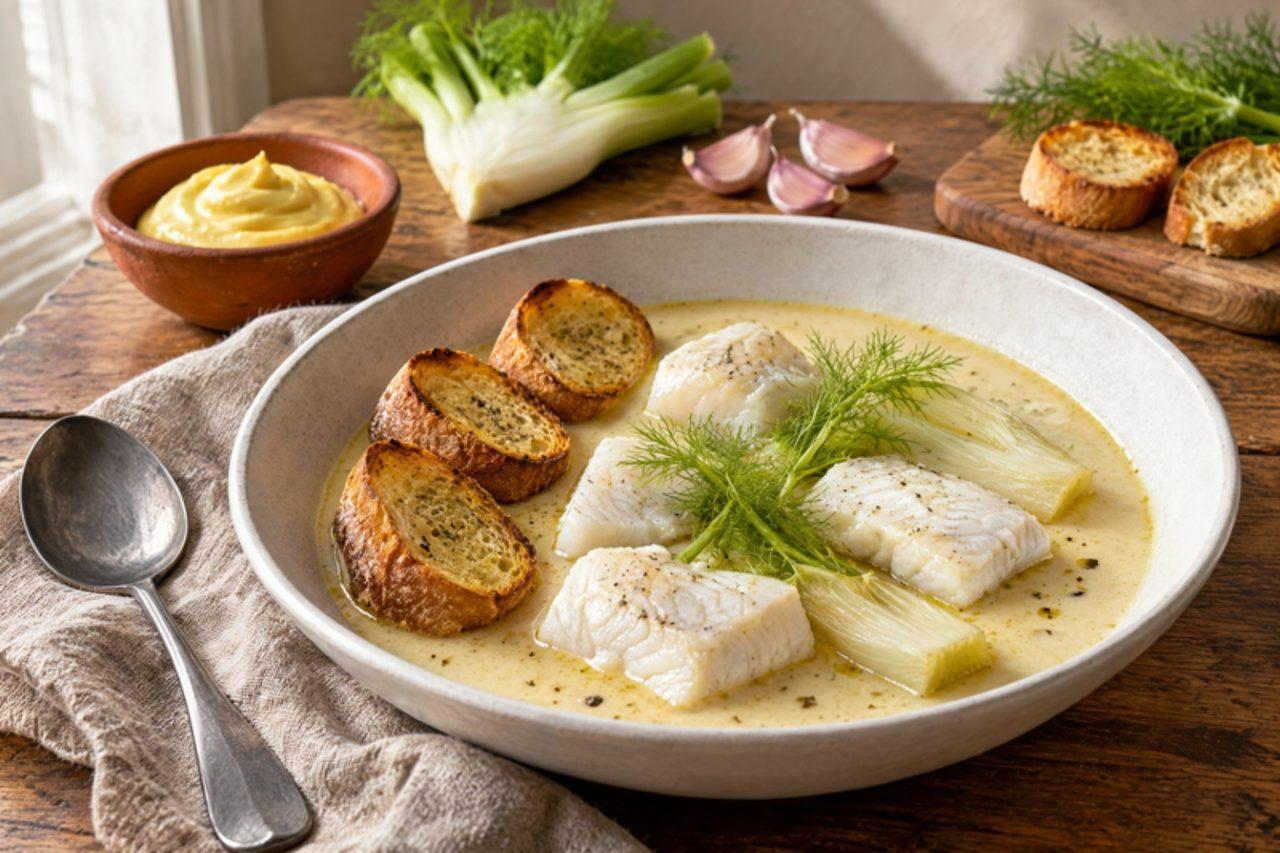
Bourride is the fish stew of Sète and the Provençal coast, a quieter, creamier cousin of bouillabaisse eaten for Friday lunch and summer dinners by the sea. Firm white fish poaches in a broth of fennel, leek, orange peel and thyme, then the broth is thickened with a rich garlic aïoli until it turns silky and pale gold. It is high in protein and suitable as part of a balanced diet; skip the traditional bread or keep it to one thin slice, and serve with steamed greens. About 400 kcal and 8 g carbohydrate per portion. The usual mistake is letting the broth boil after the aïoli goes in, which splits it like scrambled egg. Chef's tip: use pasteurised egg yolks, and stir the broth over a low heat until it coats a spoon and reaches about 72 °C.