
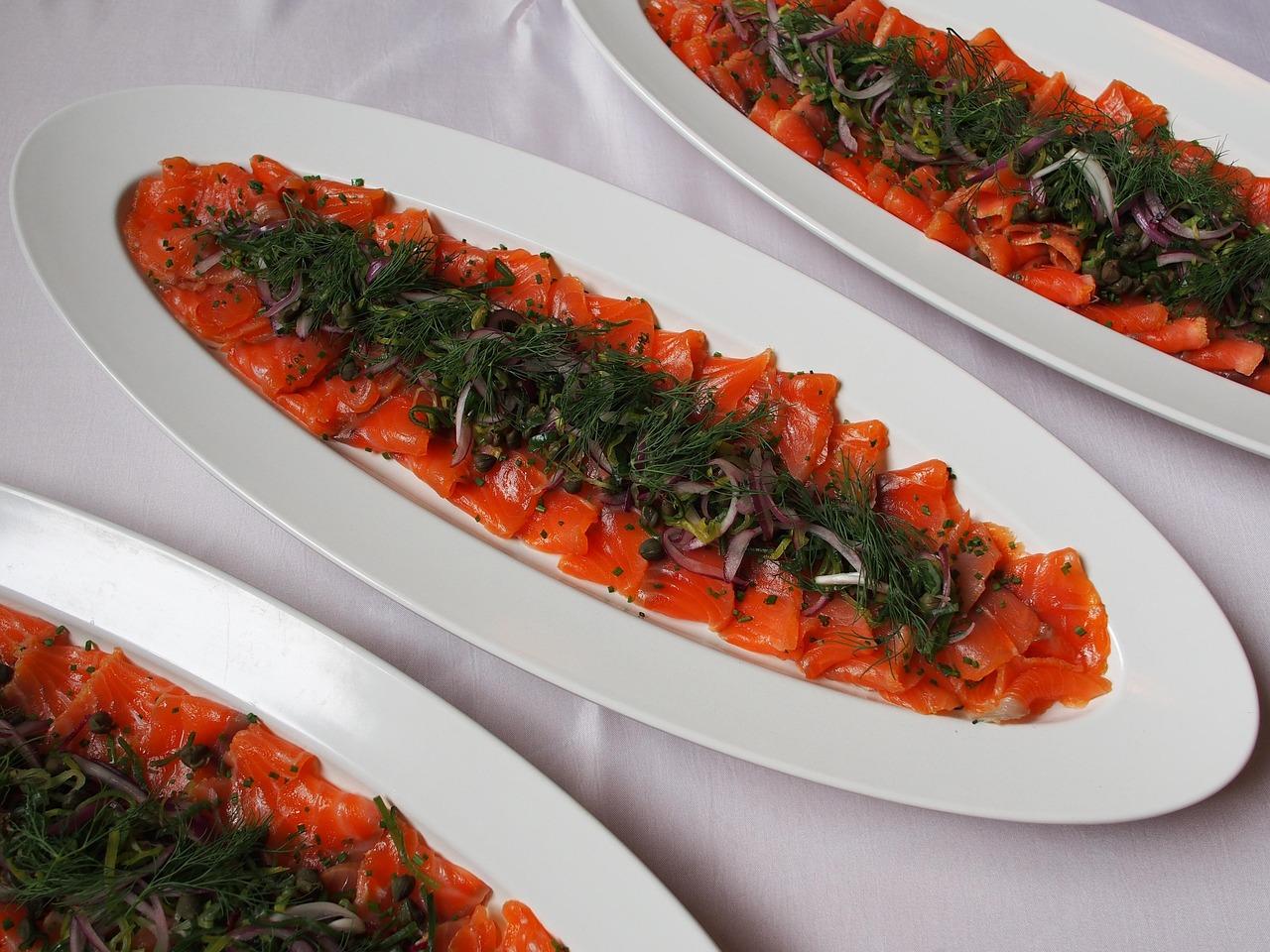
Gravlax with mustard-dill sauce
Gravlaks / gravad lax: salt-and-sugar-cured salmon with hovmästarsås

Along the coasts of Norway and Sweden, gravlax is the centrepiece of Christmas and Easter buffets and a favourite on open sandwiches through the year. A side of salmon is pressed under salt, sugar, dill and white pepper for two days in the fridge, which firms the flesh and turns it silky, then it is sliced paper-thin and served with a sweet mustard-dill sauce, rye bread or boiled new potatoes. This is cured, not cooked, fish: use very fresh salmon that has been previously frozen (or freeze it yourself at -18 °C for at least 4 days, then thaw in the fridge) to kill any parasites, and it is not suitable for pregnant women, young children or anyone with a weakened immune system. A frequent error is slicing it thick and straight down; cut long, thin slices at a low angle towards the tail. Chef's tip: turn the parcel every 12 hours and baste with the brine it releases so the cure is even on both sides.
- Total time
- 25 min
- Difficulty
- medium
- Serves
- 8
Ingredients
For the salmon
For the mustard-dill sauce
Shop this recipe on Amazon
Spices & pantry
Fresh ingredients (3)
Links open Amazon in a new tab. As an Amazon Associate, WhatToEat.Today earns from qualifying purchases.
Method
0/8 doneStep 1: Check the salmon was frozen before (or freeze it at -64°F for 4 days and thaw it overnight in the fridge). Run your fingers along 1 ¾ lb skin-on salmon fillet and pull out any pin bones with tweezers. Pat it dry and cut it in half crossways into two equal pieces.
Step 2: Mix 2 ⅛ oz coarse sea salt, 2 ⅛ oz caster sugar and 1 tbsp white peppercorns in a bowl.
Step 3: Lay one piece skin-side down in a glass or ceramic dish. Spread half the cure over the flesh, cover with 1 ¾ oz fresh dill and then the rest of the cure. Put the second piece on top, flesh-side down, so the fillets sandwich the dill.
Step 4: Wrap tightly in cling film, set a board on top and weigh it down with a couple of tins. Put it in the fridge (below 5 °C).
Step 5: Cure for 48 hours in the fridge, turning the parcel every 12 hours and spooning the liquid that collects back over the fish. It is ready when the flesh is firm right through and looks deep orange and slightly translucent.
Step 6: Meanwhile, make the sauce: whisk 3 tbsp Swedish or Dijon mustard, 1 ½ tbsp caster sugar and 1 tbsp white wine vinegar, then add ¼ cup rapeseed oil in a thin stream, whisking until thick and glossy. Stir in ½ oz fresh dill and chill.
Step 7: Unwrap the salmon, scrape off the dill and cure and pat dry. Use a long, sharp knife to cut very thin slices at a low angle, working from the tail end and leaving the skin behind.
Step 8: Serve cold with the sauce, rye bread or warm new potatoes. Keep gravlax wrapped in the fridge and eat within 4 days, or freeze slices for up to 1 month.
Nutrition per serving
- Calories
- 290 kcal
- Protein
- 20 g
- Carbs
- 9 g
- Fat
- 19 g
- Fibre
- 0 g
Nutrition values are estimates.
KrazyBadal
Good to know
- How long does gravlax with mustard-dill sauce take?
- About 25 minutes in total.
- How many people does it serve?
- 8 as written. Change the servings above the ingredients and every amount scales to match.
- Is it gluten free?
- Yes, as written. Check the labels on stock, sauces and spice mixes, which sometimes contain gluten.
- Can I make it ahead?
- Yes. It keeps well, so you can cook it earlier in the day or the day before and reheat it.
- What can I use instead of skin-on salmon fillet?
- Trout or any firm white fish, same weight (check white fish a little sooner).
- What can I use instead of caster sugar?
- Caster sugar, same amount.
Reviews
No reviews yet. Be the first to cook it.
Rate this recipe
Sign in to rate and review this recipe.
You might also like
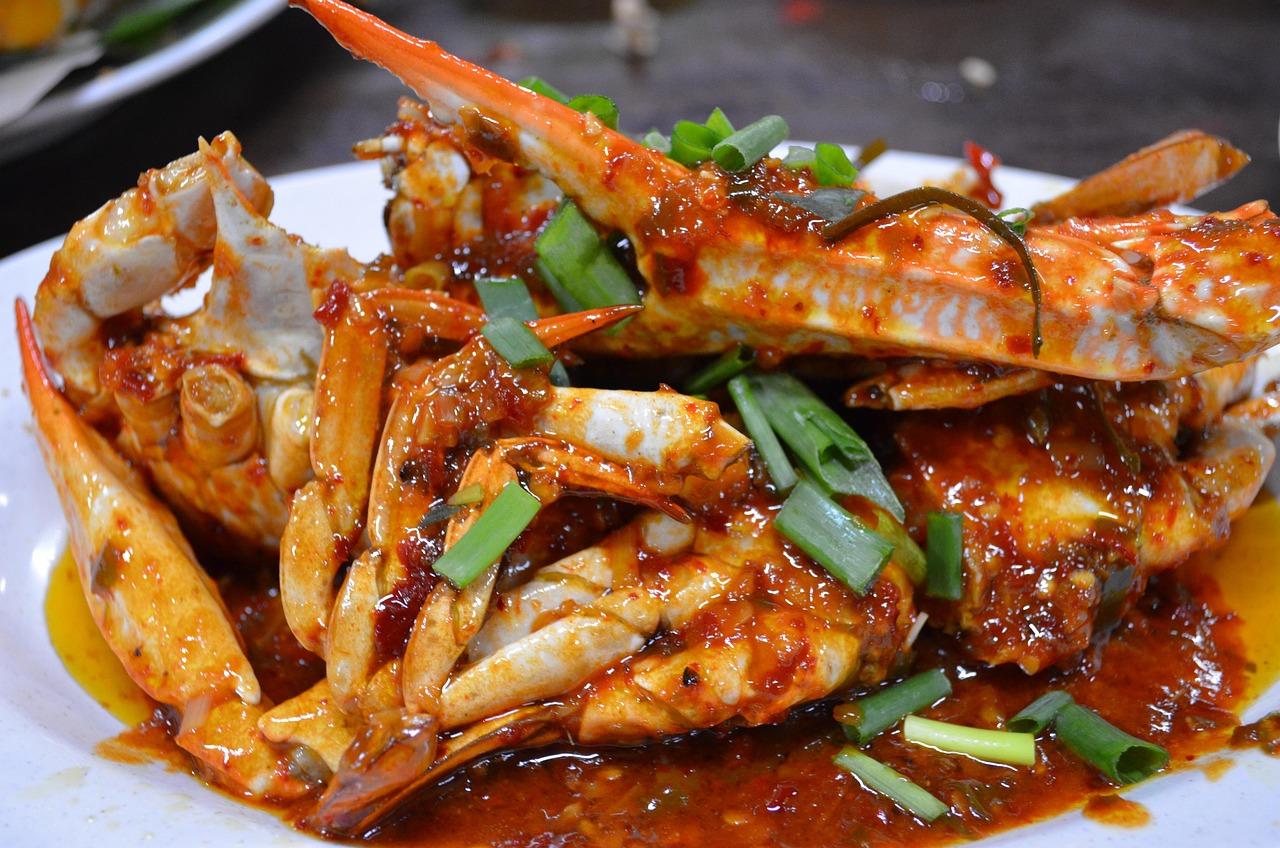
Singapore chilli crab
Chilli crab was first sold from a pushcart on the Kallang river in the 1950s and is now the dish visitors queue for along Singapore's East Coast seafood strip. Big mud crabs are cut up, wok-fried and simmered in a thick, sweet, tangy and gently hot sauce of chilli, tomato and garlic, which is then silked with beaten egg. Everyone eats with their hands and mops up the sauce with fried or steamed mantou buns. It is a weekend or celebration meal, messy and loud. Buy crabs live or freshly cooked the same day from a fishmonger you trust. Discard any live crab that doesn't move, smells of ammonia or has a cracked, leaking shell. The common mistake is boiling the sauce after adding the egg, which scrambles it into lumps; pour it in a thin stream over a low heat. Chef's tip: ask the fishmonger to clean and quarter the crab for you, and crack each claw lightly with the back of a cleaver so the sauce soaks in.
 Singaporean

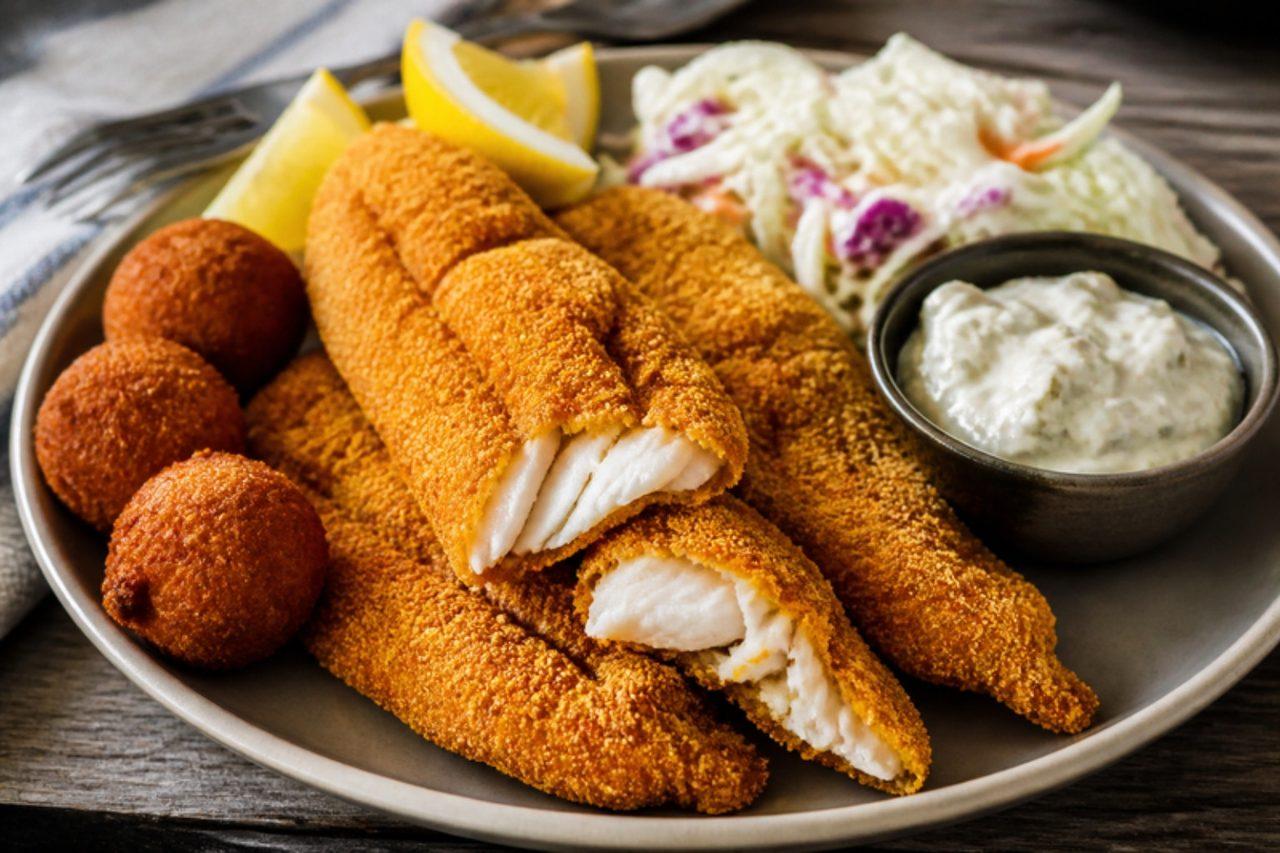
Southern fried catfish
Fried catfish is the Friday night fish-fry and Delta church supper of Mississippi and Arkansas, where much of America's catfish is farmed. Fillets are soaked in seasoned milk or buttermilk, rolled in cornmeal and fried until the crust crackles and the mild, sweet fish inside flakes apart. Serve with hushpuppies, slaw and lemon. Chef's tip: cut thick fillets in half lengthways so they cook in the same time as the crust browns.
 American

Rhode Island clam cakes
At beach shacks along Narragansett Bay and in Galilee, clam cakes are bought by the paper bag, half a dozen at a time, to dunk in a cup of clear clam chowder. They are not patties but craggy, golden fritters, crisp outside and soft inside, studded with chopped quahog clams. Chef's tip: use the clam juice as part of the liquid; it puts the sea flavour into every bite of batter.